Westerplatte Visitor Guide: Plan Your Trip to WWII's Cradle
Visiting Westerplatte offers a profound journey into a pivotal moment of history. This peninsula near Gdańsk marks where World War II tragically began on September 1, 1939. I've personally visited Westerplatte several times, always struck by its solemn atmosphere and powerful memorials. Each trip offers new reflections on courage and sacrifice. This 2026 Westerplatte visitor guide helps you choose the right transport, understand what to see on site, and avoid the common planning mistakes that make the visit feel rushed.
Why Visit Westerplatte? Understanding its Historical Significance
Westerplatte holds immense historical weight as the site of the very first battle of World War II. Polish defenders bravely resisted a German invasion for seven days against overwhelming odds. Their heroic stand became a symbol of Polish defiance and a testament to the nation's resolve. Visiting this site connects you directly to the start of a global conflict. Walking the grounds allows for a deep reflection on the sacrifices made during wartime. It offers a powerful educational experience for all ages.
The site serves as a poignant reminder of the devastating impact of war on humanity. It encourages visitors to contemplate peace and reconciliation. Many come to pay their respects and honor the memory of the soldiers who fought there. It is a vital pilgrimage for those interested in 20th-century history. Understanding Westerplatte's story enriches any visit to Gdańsk. It provides crucial context for the city's wartime experiences and its path to freedom.
Planning Your Westerplatte Visit: Essential Information
Planning your trip to Westerplatte ensures a smooth and impactful experience. Decide first whether you want the fastest route, the most scenic arrival, or a guided WWII-focused visit. The site itself is free to enter, but some exhibitions or visitor centers may have small fees. Check official websites for the most current details. Dress appropriately for walking outdoors, as much of the site is exposed. Comfortable shoes are highly recommended for exploring the grounds.
Most of the outdoor monuments are accessible year-round, typically from dawn till dusk. The Visitor Centre usually operates from 9 AM to 5 PM. It's always wise to verify current operating hours before your visit, especially outside of peak season. Schedules can sometimes change without much notice. Restroom facilities are available near the Visitor Centre. The official Visitor Centre can also help with route planning, guide information, rest space, a souvenir shop, and parking for cars and coaches.
How to Get to Westerplatte from Gdańsk
Reaching Westerplatte from Gdańsk city center is straightforward with several transport options. Your choice depends on budget, time, and desired experience. I've tried both the public bus and the ferry, and each offers distinct advantages. The bus is efficient, while the ferry is definitely more scenic. Consider your priorities, whether it's speed, cost, or a unique journey.
The public bus offers the most direct and affordable way to reach Westerplatte. Buses run frequently from various points in Gdańsk. Alternatively, a scenic pirate ship cruise provides a unique experience. This option offers beautiful views of the Gdańsk Shipyard and port. Taxis or private transfers offer door-to-door convenience for those preferring comfort. This is often the fastest but also the most expensive method.
| Option | Best for | Tradeoff |
|---|---|---|
| Public bus | Lowest-cost, year-round travel from central Gdańsk | Less scenic, and you need to watch return times |
| Pirate-style ship | Scenic harbour views and a memorable arrival by water | Seasonal, slower, and weather-dependent |
| Taxi or private transfer | Families, mobility concerns, or tight schedules | Higher cost, especially for the return trip |
Westerplatte Admission, Opening Hours, and Facilities
Access to the Westerplatte peninsula and its outdoor monuments is generally free of charge. You can walk the grounds freely during daylight hours. The site itself functions as an open-air museum, allowing visitors to explore at their own pace. This makes it a very accessible historical experience. However, the Visitor Centre and any temporary exhibitions may have a small entrance fee. These fees typically range from 5-10 PLN / ~$1.20-2.50. Always check the official Museum of the Second World War website for the most current pricing and opening times for indoor facilities.
Outdoor areas are usually open from sunrise to sunset, seven days a week. The Visitor Centre often opens from 9 AM to 5 PM, with extended hours in summer. During my last visit, the Visitor Centre closed promptly at 5 PM, so plan your arrival accordingly if you wish to see it. Restrooms are available near the Visitor Centre, which is a welcome convenience after a long walk. There are also a few snack kiosks during peak season. The Visitor Centre includes a restaurant and cafe with views of Gdańsk Bay, but bringing your own water is still smart because the walking route is exposed and food options can be uneven outside peak hours.
How Much Time to Allocate for Your Visit
To fully experience Westerplatte, plan to spend at least 2 to 3 hours exploring the site. This allows time for walking, reading the historical boards, and reflection. If you include travel time from Gdańsk, your total outing will be closer to 4 to 5 hours. This accounts for transport delays and waiting times. A quicker visit focusing only on the main monument might take 1.5 hours on site. However, you would miss many important details and ruins.
Those opting for a guided tour should factor in the tour duration, usually 1.5 to 2 hours. Tours provide deeper insights into the history. If you also plan to visit the Visitor Centre and its exhibits, add another 30-45 minutes. A practical visit flow is to start at the Visitor Centre, follow the numbered outdoor interpretation in order, pause at the barracks and cemetery, then finish at the Monument to the Defenders of the Coast before returning to your bus, boat, or transfer.
What to See at Westerplatte: Key Landmarks and Memorials
Westerplatte offers several key landmarks that tell the story of its defense. Each site contributes to understanding this historic place. A well-marked walking path guides visitors through the main points of interest. Allow ample time to pause and reflect at each location. The entire area serves as an open-air museum, requiring respectful behavior from all visitors. Keep noise levels low and stay on designated paths.
- Before You Go Checklist for Westerplatte
- Check current bus or ferry schedules online to avoid long waits.
- Wear comfortable walking shoes, as the site involves considerable walking.
- Bring water and snacks, especially if visiting outside peak season.
- Pack an umbrella or rain jacket; weather can change quickly near the Baltic Sea.
- Download an offline map of Westerplatte for easy navigation without data.
- Consider a portable power bank for your phone, especially if using navigation.
- Bring a small backpack for essentials, keeping your hands free for photos.
- Plan photos respectfully; photography is generally fine outdoors, but this is a memorial site.
The Monument to the Defenders of the Coast
The towering Monument to the Defenders of the Coast is the most iconic landmark at Westerplatte. It stands majestically on a hill overlooking the bay. This impressive monument was unveiled in 1966 and symbolizes the heroic defense of the peninsula. Its design evokes both struggle and victory. The monument's location offers panoramic views of the Baltic Sea and the surrounding area. It is a powerful focal point for remembrance. Take time to read the inscriptions and reflect on the sacrifices made here. This is often the first stop for most visitors.
Guardhouse No. 1 and the New Barracks Ruins
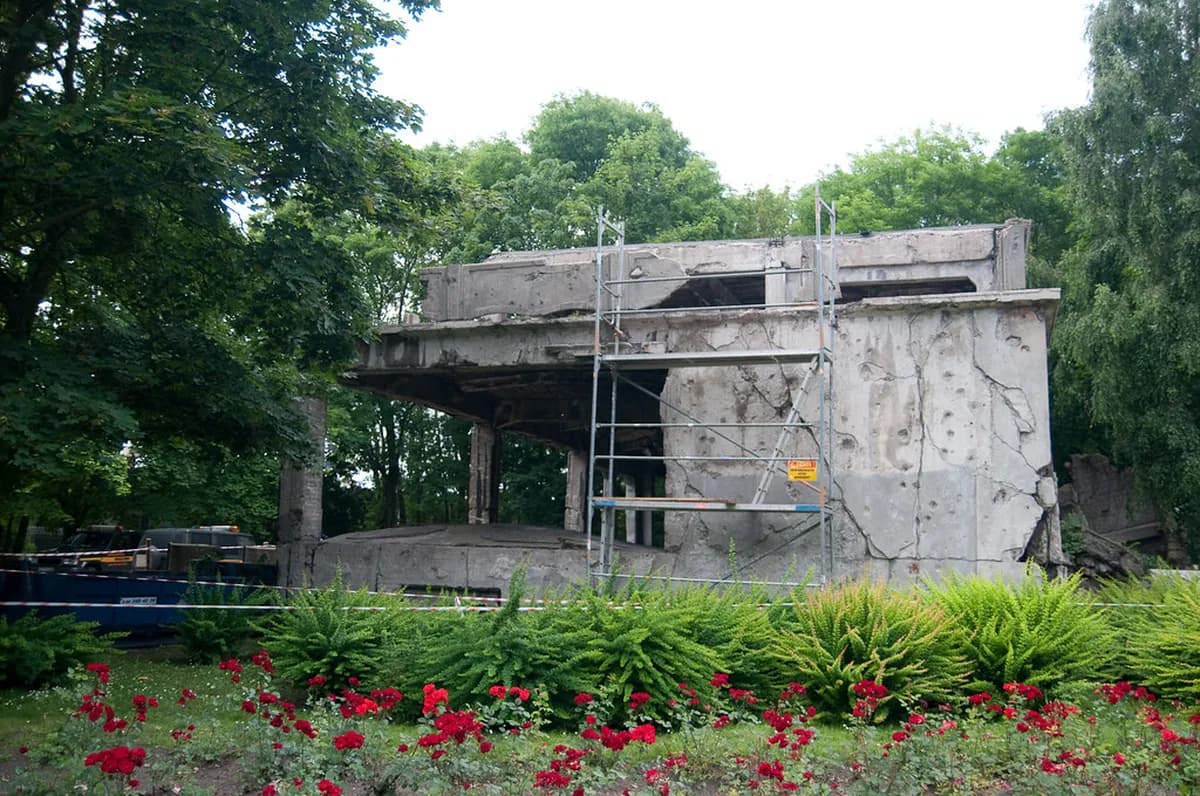
Guardhouse No. 1 is one of the few original structures that survived the battle. It has been preserved as a museum and memorial. Inside, you can find exhibits detailing the daily life of the soldiers and the defense itself. Entry might require a small fee. Nearby are the ruins of the New Barracks, offering a stark visual of the destruction. These remnants provide a tangible link to the past. Walking through these ruins truly illustrates the intensity of the fighting. It’s a sobering experience to witness the devastation firsthand.
The Symbolic Cemetery of the Defenders
The Symbolic Cemetery of the Defenders is a quiet, reflective space. It honors the fallen soldiers of Westerplatte. While not all defenders are buried here, it serves as a collective memorial. The grave of Major Henryk Sucharski, the commander, is located here. The cemetery is meticulously maintained, offering a peaceful atmosphere for contemplation. It is a place for quiet respect and remembrance. Many visitors lay flowers or small stones as a sign of tribute. This tradition adds to the solemnity of the site.
The Westerplatte Visitor Centre and Museum
The Westerplatte Visitor Centre provides essential historical context and exhibits. It is managed by the Museum of the Second World War in Gdańsk. Here, you can learn more about the strategic importance of Westerplatte before the war, ask for help planning your route, and arrange guide information if you want commentary on site. The center may feature temporary exhibitions, meetings, and cultural programming. It also has a souvenir shop, rest area, restaurant and cafe, nearby parking, and facilities adapted for visitors with disabilities. This is an excellent place to start or conclude your visit for a comprehensive overview. Check the official website for current exhibition details.
Exploring Westerplatte: Self-Guided vs. Guided Tour Options
Deciding between a self-guided exploration and a guided tour depends on your learning style. Both offer unique ways to experience Westerplatte. A self-guided visit allows for personal reflection and flexibility in pace. You can linger longer at sites that resonate most with you. Guided tours, however, provide invaluable insights from expert historians. They often share anecdotes and details not easily found elsewhere. Consider what kind of experience you are seeking before making your choice. Both approaches have distinct advantages for visitors.
Self-Guided Exploration: Tips and Suggested Route
A self-guided tour of Westerplatte is very rewarding with a little preparation. Download a map or use online resources for navigation. Start with the Visitor Centre if you arrive by road, or orient yourself at the landing area if you arrive by boat. Then follow the outdoor boards toward Guardhouse No. 1, the New Barracks ruins, the Symbolic Cemetery of the Defenders, and the Monument to the Defenders of the Coast. Allow at least 2-3 hours for this route, ensuring time for thoughtful stops. Signs around the site offer historical information in English.
Remember to bring your own headphones and listen to an audio guide if available. This enhances the experience significantly. I found that having some background knowledge before arriving made my self-guided visit much more impactful. Do some reading beforehand. The paths are generally well-maintained, but some areas can be uneven around the ruins, sand, and grass. The Visitor Centre building is adapted for visitors with disabilities, but travelers using wheelchairs or strollers should expect some outdoor sections to require assistance.
Choosing a Guided Tour: What to Expect and Benefits
Guided tours offer a deeper understanding of Westerplatte's complex history. Expert guides provide detailed commentary and answer questions. Many tours start from Gdańsk city center and include transport to the site. This removes any logistical stress from your day. Expect tour durations of approximately 3-4 hours, including travel. Costs typically range from 150-250 PLN / ~$38-63 per person. A guided tour can be particularly beneficial for first-time visitors or history enthusiasts. You can book a Gdańsk: World War II Tour for a comprehensive experience.
The guides often share personal stories and local perspectives. This adds a human element that a self-guided tour might miss. Group sizes vary, but smaller groups often allow for more interaction. Check tour descriptions for details on group limits. Some tours focus specifically on Westerplatte, while others combine it with other WWII sites in Gdańsk. Choose based on your interests.
The Unique Westerplatte Pirate Ship Experience
For a truly memorable journey, consider taking a pirate-style ship to Westerplatte. This offers a scenic route along the Motława River. These popular pirate-style ships depart from the Long Embankment in Gdańsk Old Town. The cruise itself is part of the adventure. The journey takes about 45-60 minutes each way, costing 60-80 PLN / ~$15-20 for a round trip. Enjoy views of the shipyards and port. While slower than the bus, the boat offers a unique perspective of Gdańsk's maritime history. It is a fantastic option on a sunny day.
I found the pirate ship cruise to be a delightful way to approach Westerplatte. The fresh air and river views were a pleasant contrast to the solemn destination. Boats typically operate from April to October, weather permitting. Confirm schedules before heading to the pier. This option is best if you prioritize scenery and a leisurely pace over speed. It adds an extra layer of enjoyment to your day trip.
Practical Tips for a Smooth Westerplatte Day Trip
Planning a Westerplatte day trip involves more than just getting there. Be prepared for the weather and the emotional weight of the site. The peninsula is largely exposed, so bring sun protection or rain gear as needed. Comfortable shoes are essential for walking the extensive grounds. Morning or early afternoon is usually the best time to visit in 2026: you get quieter paths, better light for photos, and more buffer if you are relying on seasonal boats. Allow yourself enough time to explore without rushing. Rushing can diminish the impact of such a historically significant place.
- Troubleshooting Common Westerplatte Visit Problems
- Problem: Missed the last bus back to Gdańsk. Fix: Take a taxi, which might cost more but ensures return.
- Problem: Pirate ship not running due to weather. Fix: Use the public bus as a reliable alternative.
- Problem: Forgot water on a hot day. Fix: Head to the Visitor Centre or a nearby kiosk for limited options.
- Problem: Unsure where to go on-site. Fix: Follow the clear signposts or use a downloaded map.
- Problem: Feeling overwhelmed by the history. Fix: Take breaks, find a quiet spot, or reflect in the cemetery.
- Problem: Language barrier with local transport. Fix: Use a translation app or have destination names written down.
- Problem: Limited cash for small purchases. Fix: Most places accept cards, but some kiosks might be cash-only.
- Problem: Visiting with limited mobility. Fix: Start at the adapted Visitor Centre and plan a shorter route focused on the main memorial path.
Beyond Westerplatte: Nearby WWII Sites and Gdańsk Attractions
Westerplatte is just one piece of Gdańsk's rich history. Combine your visit with other significant sites for a deeper understanding. The European Solidarity Centre is an excellent follow-up, exploring Poland's fight for freedom post-WWII. It offers a modern perspective on resistance. The Museum of the Second World War in Gdańsk provides extensive exhibits on the entire conflict. It’s a must-see for history buffs. These sites complement Westerplatte, painting a broader picture of the region's struggles and triumphs throughout the 20th century.
After a solemn morning, explore the charming Gdańsk Old Town. Wander through Long Market and admire the architecture. Visit St. Mary's Church, one of the largest brick churches in the world. Climb its tower for stunning city views. Don't miss a stroll down Mariacka Street, known for its amber shops and charming gables. It's a picturesque spot for souvenirs. Consider a day trip to Malbork Castle, a UNESCO World Heritage site, for a change of pace. It's an impressive medieval fortress.
Gdańsk offers a wealth of attractions for every interest. From historical sites to vibrant cultural experiences, there's much to discover. Plan your itinerary to balance historical reflection with the city's lively atmosphere. This ensures a well-rounded and memorable trip to Gdańsk.
Frequently Asked Questions About Visiting Westerplatte
Frequently Asked Questions
What is the significance of Westerplatte?
Westerplatte is significant because the first shots of World War II in Europe were fired here on September 1, 1939. The Polish defenders held out for seven days, turning the site into a lasting symbol of resistance.
What facilities are available at Westerplatte?
The Visitor Centre offers visitor information, route-planning help, a souvenir shop, rest space, restaurant and cafe, parking for cars and coaches, and facilities adapted for people with disabilities. Outdoor facilities are more limited, so carry water for the walking route.
Is Westerplatte accessible for wheelchairs or strollers?
The Visitor Centre is adapted for visitors with disabilities, and parts of the memorial route are manageable. Some outdoor areas around ruins, sand, and grass can be uneven, so wheelchair users and families with strollers may need assistance.
When is the best time to visit Westerplatte?
Morning or early afternoon is usually best, especially in summer. You will have better light for photography, fewer crowds, and more time to recover if a bus, boat, or weather-dependent connection changes.
Can you take photos at Westerplatte?
Yes, outdoor photography is generally fine at Westerplatte, including the monument, memorial paths, and harbour views. Keep photos respectful because the site is also a cemetery and place of remembrance.
What to see at Westerplatte?
At Westerplatte, you can see the Monument to the Defenders of the Coast, Guardhouse No. 1, and the New Barracks ruins. Explore the Symbolic Cemetery and the Visitor Centre for historical context.
Why visit Westerplatte?
Visit Westerplatte to witness the site where World War II began, a powerful symbol of Polish resistance. It offers a profound historical and educational experience for all visitors.
How to get to Westerplatte from Gdansk?
You can reach Westerplatte from Gdańsk by public bus (lines 138 or 106) for around 4.80 PLN / ~$1.20, taking 25-30 minutes. Alternatively, take a scenic pirate ship cruise for 60-80 PLN / ~$15-20.
How long does it take to visit Westerplatte?
Allocate 2-3 hours for exploring the Westerplatte site itself. Including travel time from Gdańsk, a full visit usually takes 4-5 hours to complete comfortably.
Is Westerplatte free to enter?
Yes, access to the outdoor historical grounds and monuments at Westerplatte is free. However, the Visitor Centre and any special exhibitions may have a small entrance fee.
Are there guided tours available at Westerplatte?
Yes, guided tours are available, often departing from Gdańsk city center and including transport. These tours provide in-depth historical commentary and typically last 3-4 hours.
Can you visit Westerplatte by pirate ship?
Absolutely, you can take a unique pirate-style ship from Gdańsk's Long Embankment to Westerplatte. This scenic cruise lasts 45-60 minutes and offers beautiful river views.
Visiting Westerplatte is more than just a day trip; it's an immersive journey into a crucial chapter of global history. It offers a powerful reminder of past sacrifices. By following this westerplatte visitor guide, you can confidently plan your trip, choose the best transport, and explore its significant landmarks. Allow yourself time for reflection. Whether you opt for a self-guided exploration or a detailed tour, Westerplatte promises a moving and educational experience. It truly enriches any visit to Gdańsk.
For official details, visit the Westerplatte on Wikipedia and Westerplatte official site.
Planning your trip? See our guides to things to do in Gdańsk, 3-day Gdańsk itinerary, and free things to do in Gdańsk.