
The Perfect 7-Day Poland Itinerary (2026)
Seven days is a genuinely rewarding amount of time to explore Poland. Spread across three cities connected by fast intercity trains, a week gives you enough depth to actually feel each place rather than simply ticking boxes from a tourist map.
This itinerary follows the route I recommend most often to first-time visitors: three nights in Krakow (including day trips to Wieliczka and Auschwitz), two nights in Warsaw, then two nights in Gdansk on the Baltic coast. Each leg is a distinct experience — medieval southern Poland, the rebuilt capital, and the Hanseatic north — and the train connections between them are straightforward and reliable.
Whether you have exactly seven days or are looking to stretch to ten, this guide gives you a concrete day-by-day plan with honest transport notes, budget figures and the flexibility to adapt it to your own pace.
Why This Route Works
Poland is a large country, but its three most visited cities sit along a natural north-south corridor that is tailor-made for a linear trip. You fly into Krakow, see the south, train north to Warsaw, then continue to Gdansk on the coast before flying home — no backtracking required. If your flights or interests do not match this shape, our Poland itinerary planner rebuilds the same low-backtracking logic around your own arrival city, trip length and pace. Among the best places to visit in Poland, these three cities consistently top every list, and for good reason: each has a completely different character and a dense enough cluster of sights to fill two or three days without filler.
Starting in Krakow makes logistical sense. Flights from most European hubs are cheap and frequent, the city is compact enough to orient yourself quickly, and the two major day trips (Wieliczka and Auschwitz) slot naturally into the Krakow leg without wasting time. Warsaw comes in the middle, where two full days is actually the right call — not because Warsaw is second-best, but because after three intense days of medieval streets and WWII memorials you will appreciate a slightly more contemporary, gallery-and-park pace. Gdansk finishes the trip with sea air, colourful merchant houses and the stirring story of Solidarity.
For the rail connections, I always recommend booking PKP Intercity trains at least a week ahead, especially in summer. Seat reservations are mandatory on Express Intercity (EIC) and EIP (Pendolino) services and the price difference between booking early and buying on the day can be significant. Our complete guide to travelling Poland by train covers booking platforms, seat classes and luggage policies in detail.
Days 1–2: Krakow — Old Town and Kazimierz
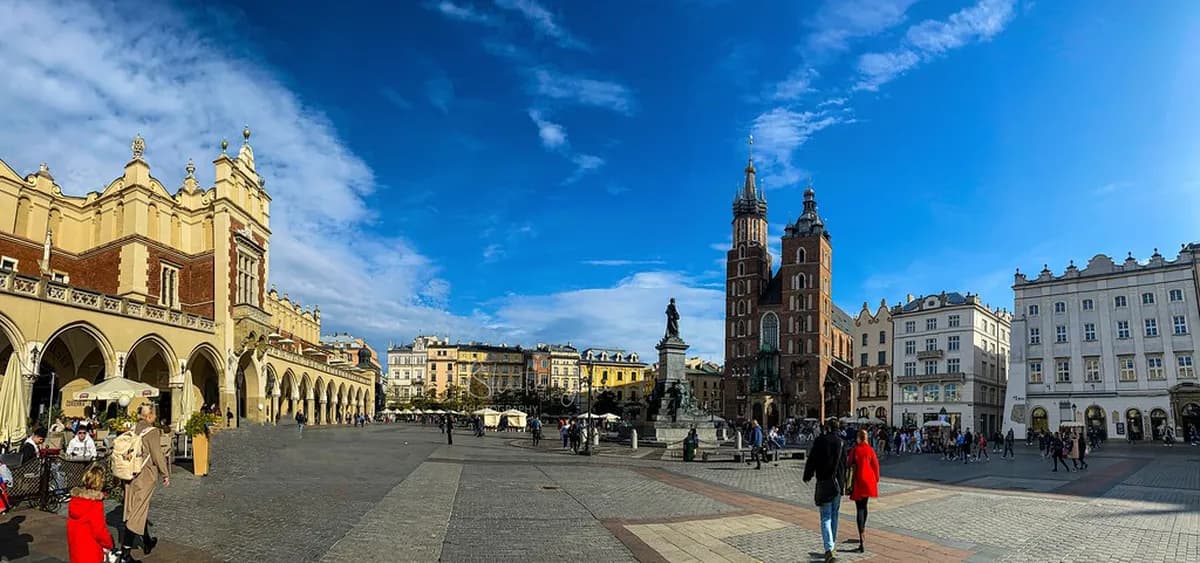
Arrive in Krakow and check in close to the Old Town or Kazimierz — both neighbourhoods put you within walking distance of almost everything. Kazimierz itself makes a far more atmospheric base than the touristy hotel blocks near the train station. Drop your bags and head straight for the Main Market Square (Rynek Glowny): Europe's largest medieval square, still buzzing with daily life despite the visitor numbers. The full picture of what to see across the city is in our guide to things to do in Krakow, but Days 1 and 2 should anchor around Old Town, Kazimierz and Wawel Hill.
On Day 1, work through the Old Town at a relaxed pace: St. Mary's Basilica (book a ticket slot online, around 15–20 PLN), the Cloth Hall, and the Rynek Underground Museum beneath the square (about 24 PLN; book ahead as slots sell out by mid-morning in peak season). In the afternoon, cross into Kazimierz for its synagogues, the Galicia Jewish Museum and the lively cafe strip on Plac Nowy. In the evening, eat at one of the Jewish-style restaurants on Szeroka Street — the borscht and potato pancakes at a few of the older establishments are as good as anywhere in Poland.
Day 2 belongs to Wawel Hill. The castle complex requires separate tickets for each section (State Rooms, Royal Apartments, Crown Treasury — budget roughly 80–130 PLN total for everything), so decide in advance which sections matter most and buy online. The cathedral is separately ticketed; the crypts holding Poland's royals and national heroes are worth the small extra fee. Afterward, walk down to the Dragon's Den for a very Polish few minutes of mythology, then follow the Vistula riverside path back toward Kazimierz for lunch.
Krakow's Old Town is almost entirely car-free. The airport bus (line 208/252) runs directly to the city centre for around 6 PLN and takes 40–50 minutes — far better value than a taxi unless you have a lot of luggage or arrive very late.
Day 3: Wieliczka Salt Mine Day Trip
Reserve a full morning for the Wieliczka Salt Mine, 15 km southeast of Krakow. This is one of those rare UNESCO World Heritage sites that genuinely exceeds expectations: 300 metres underground, stretching through chambers of salt-carved sculptures, an underground lake and a breathtaking chapel — the Chapel of St. Kinga — hewn from rock salt over two centuries. The standard Tourist Route takes about 2–2.5 hours and covers roughly 3 km of corridors, all on guided tours that depart every 30 minutes in high season.
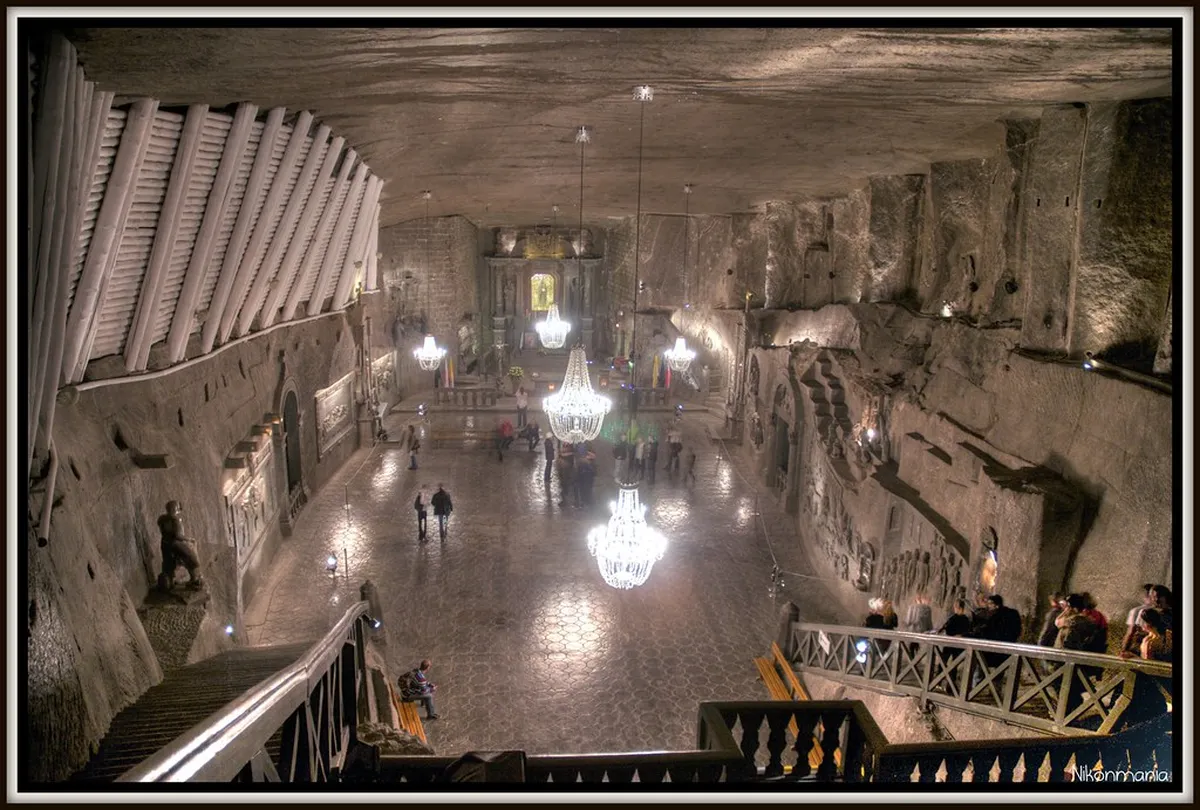
The logistics are easy: suburban trains from Krakow Glowny to Wieliczka Rynek-Kopalnia run every 30 minutes and take about 20 minutes (one ticket around 4–5 PLN). From the station it is a flat 10-minute walk to the entrance. Tickets for the guided tour cost roughly 110–130 PLN in 2026; book online at wieliczka-saltmine.com several days ahead in summer — walk-up queues can mean a 2-hour wait or a sold-out morning. Full transport and ticketing details are in our dedicated Wieliczka Salt Mine day trip from Krakow guide.
Back in Krakow by early afternoon, use the rest of Day 3 for anything you missed: a food tour, the MOCAK contemporary art museum, or simply wandering Kazimierz's side streets. The evenings here are genuinely enjoyable — the city has an excellent live music scene concentrated around Kazimierz's cellars and courtyards.
Day 4: Auschwitz-Birkenau Memorial
The Auschwitz-Birkenau Memorial and Museum, 70 km west of Krakow, is one of the most significant historical sites in the world. I would consider it essential rather than optional for anyone spending a week in Poland. It is a sober, quietly devastating few hours — and the right way to approach it is with a registered guide rather than self-guided, both for the historical context and because the site is large enough that it is easy to miss important sections without direction.
Entry to the memorial is free, but timed entry slots fill weeks in advance in summer; book at auschwitz.org as early as possible. Guided tours in English (included in the entry system) cover both Auschwitz I and the much larger Auschwitz II-Birkenau camp and take around 3.5 hours. Alternatively, organised day tours from Krakow Old Town run for 130–180 PLN including transport and a licensed guide — useful if you have not pre-booked independently. Direct minibuses from Krakow Glowny bus station depart roughly hourly (around 14 PLN each way). Full options are covered in our Auschwitz day trip from Krakow guide.
Plan to be back in Krakow by late afternoon. Pack your bags this evening — you are taking the train to Warsaw tomorrow morning.
The Auschwitz Memorial asks visitors to dress modestly and bring no large bags. Photography is permitted in most outdoor areas but is prohibited in certain buildings. Allow time to decompress after the visit — most people need it. Avoid rushing straight from the site onto public transport with a crowd.
Day 5: Train to Warsaw and First Day in the Capital
The PKP Intercity EIP Pendolino from Krakow Glowny to Warsaw Centralna takes around 2 hours 15 minutes — one of the most comfortable rail journeys in Central Europe. Morning departures run every hour or two; a standard 2nd-class seat booked a week ahead costs roughly 80–150 PLN depending on timing. Our guide to the Warsaw to Krakow train (works equally in both directions) covers booking platforms, luggage rules and the difference between EIC and EIP services. Aim for an 8–10am departure to give yourself a full afternoon in Warsaw.
Warsaw rewards a genuinely curious visitor. The Old Town is not medieval at all — it was almost entirely razed in 1944 and rebuilt brick by brick from 18th-century paintings, which is why it now has UNESCO World Heritage status as an example of post-war reconstruction rather than original architecture. Check into your hotel and walk the Royal Route from the Castle Square south through Nowy Swiat. The views from the terrace of the Royal Castle are worth the entry fee.
For a complete overview of the capital's highlights, our guide to things to do in Warsaw goes well beyond the Old Town into the neighbourhoods, museums and day trips that make the city genuinely interesting. In the evening, head to the Powiksle or Praga districts for the best contemporary restaurants and bars — Warsaw has one of the most exciting food scenes in Eastern Europe right now and it is significantly less touristed than Krakow's equivalents.
| Train route | Journey time | Typical fare (2nd class, booked ahead) |
|---|---|---|
| Krakow → Warsaw | ~2h 15min (EIP Pendolino) | 80–150 PLN |
| Warsaw → Gdansk | ~2h 50min (EIC / EIP) | 80–160 PLN |
| Krakow → Zakopane (bus) | ~2h (PKS / FlixBus) | 20–35 PLN |
Day 6: Warsaw In Depth — Uprising Museum and Wilanow
A second full day in Warsaw is the right call, and the Warsaw Rising Museum alone justifies it. This is simply one of the best museum experiences in Europe: a visceral, technically sophisticated and emotionally powerful account of the 1944 Warsaw Uprising, when the city's population fought for 63 days against the German occupation. Allow a minimum of 2–3 hours. Book tickets online at 1944.pl (around 35 PLN, reduced on Sundays) as queues in summer can be long.
In the afternoon, take a tram or ride-share south to Wilanow Palace and Park (roughly 20–30 minutes from the centre). The baroque palace is sometimes called the Polish Versailles — the comparison is a stretch, but the formal gardens and lakeside walks are genuinely lovely, especially in late afternoon light. Admission to the park is free; palace interiors are ticketed separately. It is a calming contrast to the intensity of the morning.
The Jewish Historical Institute and POLIN Museum of the History of Polish Jews (in the former ghetto district) are both worthwhile if your interests lean toward the history of Jewish Poland that you began exploring in Krakow's Kazimierz. POLIN in particular is architecturally striking and its permanent exhibition is exceptionally well-curated. Budget another 2–3 hours and pre-book tickets. Warsaw packs a lot into two days — and you will leave feeling like you have only scratched the surface, which is usually a good sign.
Days 7–8: Train to Gdansk and the Baltic Coast
The EIC train from Warsaw Centralna to Gdansk Glowny takes around 2 hours 50 minutes, with departures through the morning. This is a beautiful journey through the flat Mazovian plains and then the forested Pomerania region — get a window seat. Book ahead for around 80–160 PLN. Arrive by noon and you have a solid afternoon for Gdansk's Long Market (Dluga and Dlugi Targ), the iconic Neptune Fountain, and the medieval Green Gate before the evening crowds thin.
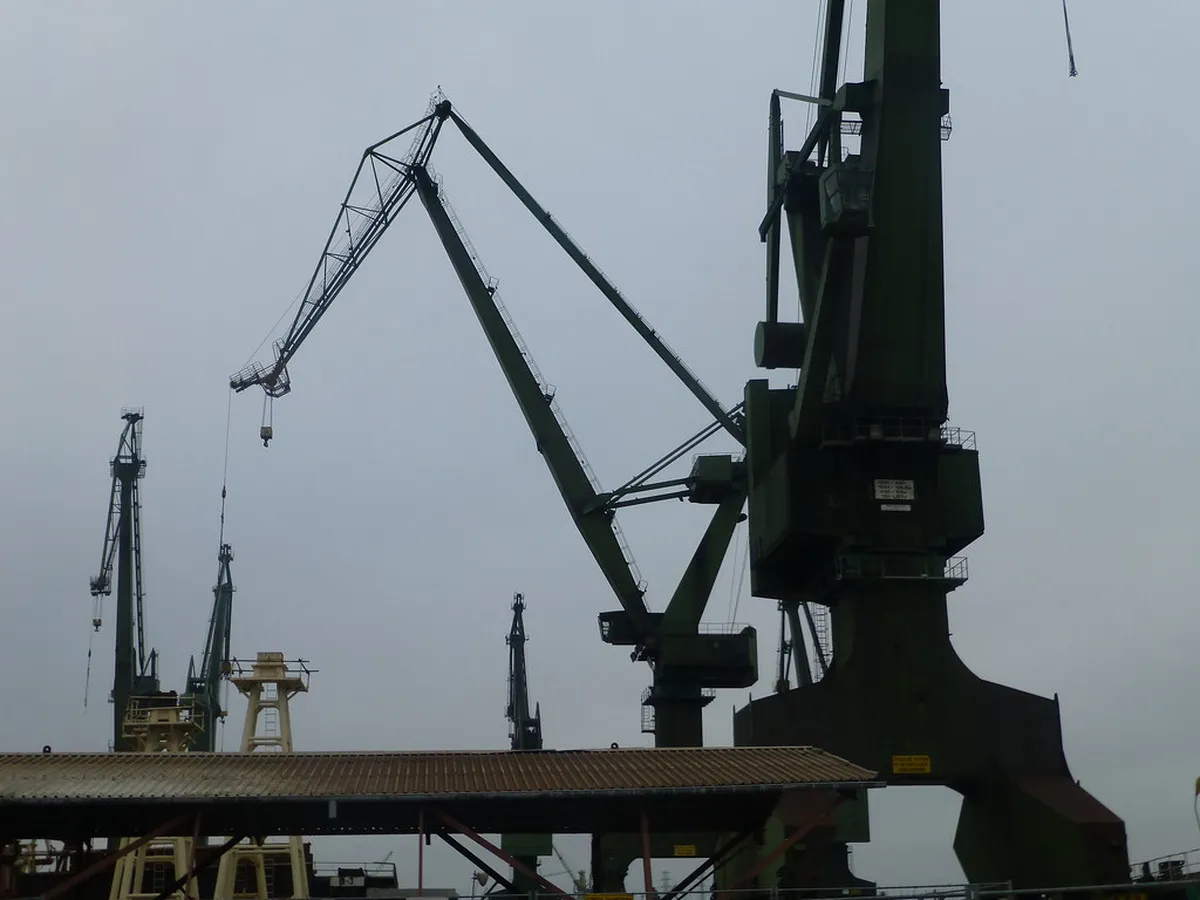
Gdansk is visually unlike anywhere else in Poland. Its tall, narrow merchant houses with ornate facades reflect the city's history as a wealthy Hanseatic League trading port — and unlike Warsaw, much of the Long Market district survived the war relatively intact or was restored to the original Flemish-Renaissance designs. For a full orientation, our guide to things to do in Gdansk covers the best routes through the Old Town, the waterfront crane (Zuraw), Solidarity Square and the beaches of Sopot and Gdynia a short train ride away.
On your final morning, the European Solidarity Centre is a must. Housed in a building designed to evoke the rusting hulls of the Gdansk Shipyard, it tells the story of the Solidarity trade union movement that helped bring down communism across Eastern Europe. The permanent exhibition is available in English and takes about 2 hours. Afterwards, walk the shipyard district itself — the juxtaposition of Soviet-era industrial infrastructure with modern memory tourism is unlike anything you will see elsewhere on this trip. Fly home from Gdansk Lech Walesa Airport (a short bus ride from the centre) or loop back to Warsaw for your onward flight.
Extending to 10 Days: Zakopane and the Tatras
If you have three extra days, add Zakopane before leaving Krakow. Poland's mountain resort town sits at the foot of the Tatra range, roughly 100 km south of Krakow, and offers a completely different texture to the cities: wooden highlander architecture, hiking trails into dramatic alpine terrain, excellent smoked sheep's cheese (oscypek), and thermal spas. It is genuinely one of the most distinctive places in the country.
Getting there from Krakow takes about 2 hours by direct bus (PKS or FlixBus, roughly 20–35 PLN) — trains require a change and are slower. The full logistics are covered in our guide to Krakow to Zakopane transport options. If you want to day-trip rather than overnight, that is also very feasible — our Zakopane day trip from Krakow guide covers the timing and what to prioritise if you only have one day in the mountains. I would personally recommend at least one overnight to catch sunrise on the Kasprowy Wierch cable car when the gondolas are empty and the views are unobstructed.
A 10-day version of this trip would look like this: Days 1–3 Krakow (Old Town, Kazimierz, Wawel), Day 4 Wieliczka, Day 5 Auschwitz, Days 6–7 Zakopane (overnight), Days 8–9 Warsaw, Days 10–11 Gdansk. If you can only add two extra days, replace one of the Krakow exploration days with Zakopane and keep the rest of the route intact.
Zakopane is extremely popular with Polish domestic tourists in July–August and during winter ski season (January–February). If your trip falls in those windows, book accommodation in Zakopane several months ahead. Late May, June and September are far quieter, the hiking trails are in excellent condition and prices are lower.
Practical Poland: Budget and Getting Around
Poland remains excellent value compared to Western Europe, though costs have risen noticeably since 2022. Budget roughly 250–350 PLN per person per day for mid-range travel (excluding accommodation): this covers two sit-down meals, a cafe breakfast, 1–2 paid attractions and local transport. Accommodation in Krakow and Gdansk runs from around 150–200 PLN/night for a clean double in a good location; Warsaw is 20–30% more expensive. Budget travellers staying in hostels and eating at milk bars (bar mleczny) can get below 200 PLN/day excluding accommodation with careful choices.
| Category | Budget (PLN/day) | Mid-range (PLN/day) |
|---|---|---|
| Food and drink | 60–90 | 100–160 |
| Attractions | 0–30 (select free sights) | 60–120 |
| Local transport | 10–20 (trams/buses) | 30–60 (includes taxis) |
| Day trip add-ons | Wieliczka ~115 PLN total | Auschwitz tour ~150 PLN |
Getting around within each city is easy on foot for the historic centres; trams and buses cover the rest for 4–6 PLN per single journey. All three cities have good public transport apps in English. Between cities, PKP Intercity is the backbone of the trip — reliable, comfortable and significantly faster than road for the distances involved. Book intercity trains at pkp.pl or intercity.pl (both have English interfaces) or via the Polish KOLEO app, which also shows regional train options useful for the Wieliczka leg. For a deeper look at the rail network and what each ticket type means, our Poland by train guide is the best place to start.
Best Time to Visit Poland for a 7-Day Trip
May and early June are the standout months for this itinerary. Days are long, temperatures are pleasant (17–22°C in Krakow and Warsaw), tourist numbers have not yet reached their July–August peak, and both Wieliczka and Auschwitz have reasonable queues rather than the two-hour waits that arrive with summer. The flowering chestnut trees along Krakow's Old Town streets in May are genuinely lovely, and Gdansk's waterfront is at its best before the Baltic beach crowds arrive.
September and early October run a close second. The summer crush has eased, accommodation prices drop noticeably (expect 15–25% lower rates in Krakow compared to August), the light is golden, and Gdansk's narrow streets are far more pleasant to walk without the peak-season throngs. The Tatra mountains near Zakopane are at their most dramatic in autumn colour if you plan to extend the trip.
July and August work but come with real trade-offs: sold-out Auschwitz entry slots (book 6–8 weeks out, not days), queue times at Wieliczka that can add an hour to your morning, and Krakow Old Town accommodation prices that approach Prague or Budapest levels. If you must travel in summer, book everything — trains, Auschwitz, Rynek Underground — at least a month ahead. December is worth mentioning for the Krakow Christmas market, one of the best in Central Europe, but Warsaw and Gdansk are bleak in midwinter and the Zakopane extension becomes ski-focused rather than hiking-focused.
Polish school holidays run roughly mid-June to early September and a week around late October. Domestic tourism surges during both windows, particularly in Zakopane and at Baltic coast resorts around Gdansk. Prices for accommodation inside Poland can actually exceed Western European equivalents during these peak domestic windows — book ahead even if you are travelling independently.
Where to Stay: Neighbourhood Guide for Each City
In Krakow, the choice is between the Old Town and Kazimierz. Old Town puts you seconds from the Rynek and Wawel but feels heavily touristed after dark; Kazimierz (a 15-minute walk south) has become the more interesting place to base yourself, with a concentration of boutique hotels, design hostels and some of the city's best restaurants along Szeroka and Plac Nowy. Either neighbourhood keeps you within walking distance of everything on Days 1 and 2. Budget: Old Town hotels run 200–400 PLN/night for a comfortable double; Kazimierz is 15–20% cheaper for equivalent quality. Avoid the cluster of large chain hotels near Krakow Glowny station — they are convenient for early trains but characterless.
In Warsaw, staying in or around the Old Town puts you on the Royal Route and within a short walk of the Rising Museum, but this is the most expensive part of the city. The Srodmiescie district (city centre) gives you metro access, a wider range of restaurant options and prices around 250–450 PLN/night for a mid-range double. The Powiksle neighbourhood along the Vistula embankment is emerging as a good base for travellers who want a contemporary, local feel — it's walkable to both the Old Town and the better evening dining options, and several well-reviewed boutique properties have opened there in recent years.
In Gdansk, Long Market-adjacent accommodation in the Main Town (Glowne Miasto) is the obvious choice for a two-night stay — you can walk everywhere that matters without touching public transport. Prices here are comparable to Krakow Old Town (200–380 PLN/night for a decent double). If you are visiting in July–August and want a few hours at the beach, the train from Gdansk Glowny to Sopot takes 15 minutes and Sopot has its own stock of good hotels closer to the sea, though they book out fast in summer and cost a premium.
What to Eat in Poland: A Practical Food Guide
Polish food is one of the underrated pleasures of this itinerary, and it is significantly more varied and interesting than the pierogi-and-bigos stereotype suggests. In Krakow, the best single thing you can eat is zurek (sour rye soup served in a bread bowl, typically 18–25 PLN) at almost any traditional restaurant in Kazimierz. Bigos (hunter's stew of cabbage, meat and mushrooms) is the quintessential Polish main — it is better at grandmotherly establishments than at tourist-facing restaurants, and the version served at milk bars in Krakow is often excellent. Oscypek, the smoked sheep's cheese from the Tatras, appears on Krakow menus as a grilled appetiser and is worth ordering at least once.
The milk bar, or bar mleczny, deserves a specific mention. These are state-subsidised canteens that survived communism and still serve hot Polish food — bigos, pierogi, kotlet schabowy (breaded pork cutlet), golabki (stuffed cabbage rolls) — at prices that are hard to believe: a full hot lunch with soup and a main course for 20–30 PLN. Every Polish city has them, they are usually excellent, and they are almost entirely absent from tourist itineraries. In Warsaw, Bar Mleczny Pod Barbakanem near the Barbican is one of the most famous; in Krakow, Bar Mleczny Pod Temida on Grodzka Street. Go early (they open from around 08:00) — queues form fast at lunch.
In Gdansk, try the smoked fish stalls along the waterfront near the Green Gate — smoked mackerel or eel (35–50 PLN) is the local fast food and genuinely good. Warsaw's food scene has moved well beyond traditional cooking: the Hala Koszyki food hall in Srodmiescie is worth a dinner visit for its combination of Polish craft beer, natural wine bars and stalls ranging from Thai to Georgian cooking, all in a restored 1906 market hall. Budget 80–120 PLN per person for a relaxed evening there including drinks.
Frequently Asked Questions
Is 7 days enough to see Poland properly?
Seven days is enough to see the three most important cities — Krakow, Warsaw and Gdansk — at a comfortable pace, including two major day trips from Krakow (Wieliczka and Auschwitz). You will not see every region of Poland in a week, but you will come away with a genuine sense of the country's history, culture and character. For a broader experience, extending to 10 days with Zakopane and the Tatra mountains adds a very different dimension without requiring major route changes.
What is the best order to visit Krakow, Warsaw and Gdansk?
The best order is Krakow first, Warsaw second, Gdansk last. This follows a natural south-to-north route with no backtracking, and it clusters the two major Krakow day trips (Wieliczka and Auschwitz) at the start of the trip when energy levels are highest. Flying into Krakow and out of Gdansk (or returning to Warsaw) is the cleanest logistics. Doing the route in reverse (Gdansk to Warsaw to Krakow) works equally well if flight options dictate it.
How do I travel between Polish cities on this itinerary?
PKP Intercity trains are the best way to connect Krakow, Warsaw and Gdansk. The Krakow to Warsaw Pendolino takes around 2 hours 15 minutes; Warsaw to Gdansk takes around 2 hours 50 minutes. Both are comfortable, frequent and significantly faster than driving. Book seats in advance at pkp.pl or intercity.pl — prices rise closer to the travel date and seat reservations are mandatory on EIC and EIP services. For the Zakopane extension, buses from Krakow are faster than trains.
Should I do Wieliczka or Auschwitz first from Krakow?
Most visitors find it better to visit Wieliczka before Auschwitz. The salt mine is a lighter, more visually spectacular experience that makes for a good early day trip on Day 3; Auschwitz on Day 4 is a heavier, more emotionally demanding visit that benefits from arriving well-rested and with a clear afternoon to decompress afterward. That said, either order works logistically — both sites are roughly half a day each and neither requires a full overnight trip.
A week in Poland is enough to understand why this country surprises so many visitors who arrive expecting little and leave planning a return trip. The route from Krakow through Warsaw to Gdansk is genuinely varied: medieval cobblestones, rebuilt wartime capitals, and Hanseatic waterfront all within a few hundred kilometres of each other.
The day trips to Wieliczka and Auschwitz are not optional extras — they are two of the most significant experiences available anywhere in Central Europe and they both fit cleanly into the Krakow leg without disrupting the rest of the route. And if the mountains are calling, Zakopane is only a bus ride away.
Book your intercity trains early, pre-book timed entry at Auschwitz and the Rynek Underground in Krakow, and leave a little room in each city for wandering without a plan. Poland rewards the curious traveller who slows down enough to notice the details.
Explore More of Poland
Planning a wider Poland trip? These related guides connect this itinerary with more of the country.
Use this guide
Make the next planning decision
These tools use the same Poland-specific context, but turn it into an answer for your trip.
You might also like

Continue reading
More guides you'll find useful