Castle Square Warsaw Visitor Guide: History & Tips
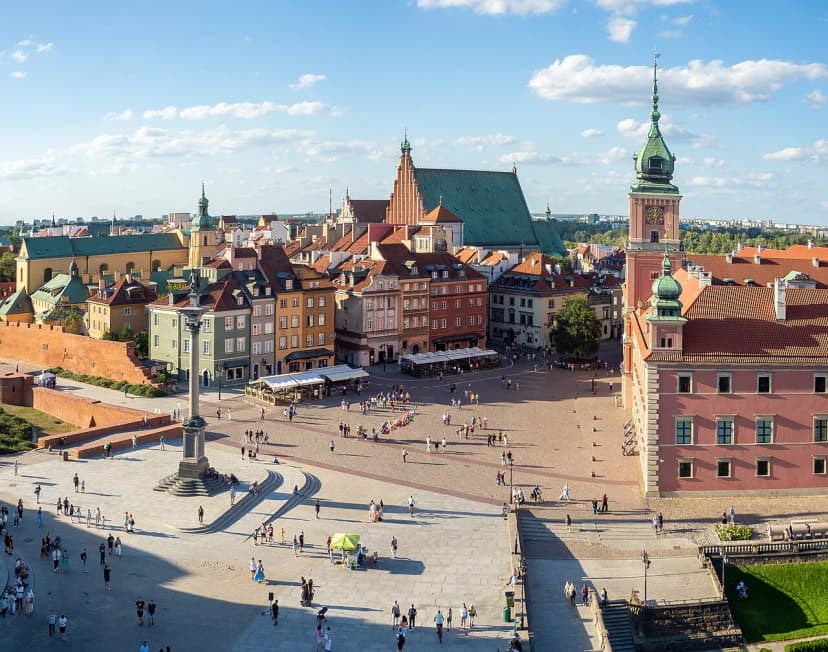
Castle Square, or Plac Zamkowy, is the grand meeting point between Warsaw's Royal Route and the lanes of the Old Town. The Royal Castle forms its eastern edge, while Sigismund's Column rises above the open plaza. It is an essential first stop when exploring Warsaw attractions and a natural place to orient yourself before walking deeper into the historic centre.
The square is free to enter and easy to combine with the Royal Castle and Warsaw Old Town. Allow time to look beyond the postcard view: the present space records the growth of the royal city, wartime destruction, and Warsaw's remarkable post-war reconstruction. This guide explains what to notice, how to arrive, and how Castle Square fits into a wider Warsaw sightseeing plan.
Castle Square at a Glance
- Polish name: Plac Zamkowy
- Location: At the meeting of Krakowskie Przedmieście, Senatorska, Podwale, and the Old Town
- Main landmarks: Sigismund's Column and the Royal Castle
- Admission: The outdoor square is free; the Royal Castle has separate tickets and opening hours
- Suggested time: About 20–30 minutes for the square, longer if you continue into the Old Town or castle
- Best for: History, architecture, city views, photography, and the start of a Royal Route walk
The official City of Warsaw history of Plac Zamkowy places the square at the junction of Krakowskie Przedmieście, Senatorska, and Podwale, with the Royal Castle's western façade defining its eastern side. That position makes the plaza a hinge between several of central Warsaw's most important walking routes.
What to See at Castle Square
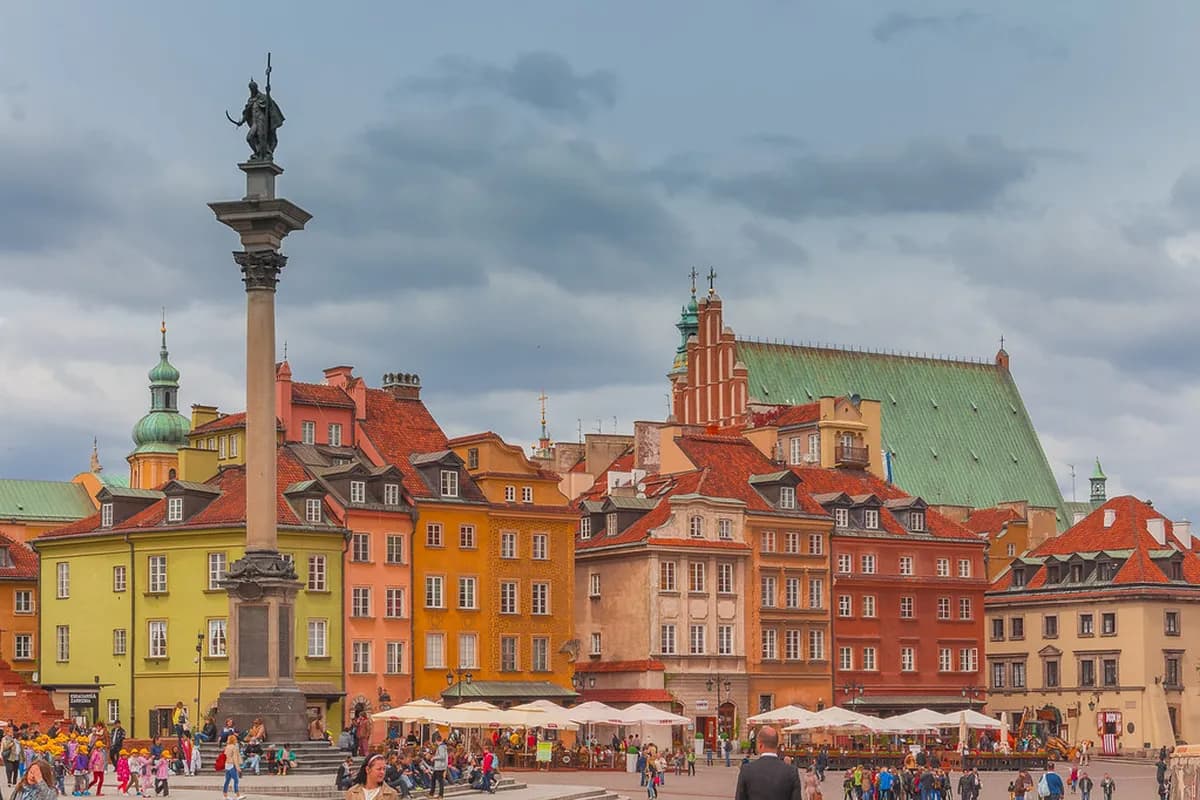
Begin with Sigismund's Column, the square's clearest landmark and one of Warsaw's traditional meeting points. Warsaw's official tourism office says the monument was erected in 1644 to honour King Sigismund III Vasa and is the city's oldest secular monument. The king moved his residence and the state administration to Warsaw, helping establish the city's role at the centre of political life.
Next, turn toward the broad façade and clock tower of the Royal Castle. The residence was used by Polish rulers and was the setting for major acts of state, including the adoption of the Constitution of 3 May in 1791. Today it is a museum rather than part of the free public square, so check the Royal Castle's official website if you want to add an interior visit.
The surrounding view is just as important. Follow Świętojańska into the Old Town, walk south along Krakowskie Przedmieście on the Royal Route, or look east toward the Vistula side of the escarpment. The square's irregular shape and reconstructed façades create different compositions from each corner. For a useful historical detail, look near the castle's south wall for earlier stone shafts from Sigismund's Column, which the city's official walking guide identifies as evidence of the monument's long history.
From City Gate to Reconstructed Landmark
Castle Square looks older than its present layout. The area once stood by the Krakowska Gate and the defensive system of old Warsaw. According to the City of Warsaw, the modern square was created between 1818 and 1821 under architect Jakub Kubicki, after the gate, sections of the walls, castle service buildings, and other structures were removed. The resulting space took on an irregular triangular form beside the castle.
The square and its monuments suffered catastrophic damage during the Second World War. Sigismund's Column was destroyed after the Warsaw Uprising began in 1944, although the statue of the king survived without serious damage. The restored monument, using the surviving statue on a new column, was ceremonially unveiled in 1949. The Royal Castle had already burned in 1939 and was later blown up by German forces during the uprising.
This history belongs to the larger story of the UNESCO-listed Historic Centre of Warsaw. UNESCO records that more than 85 percent of the historic centre was destroyed and describes its reconstruction as an exceptional example of rebuilding a deliberately devastated city. The restored urban plan included the Old Town Market, townhouses, city walls, religious buildings, and the Royal Castle.
The castle was the last major element of that reconstruction. Its official visitor history says work began in 1971 and the reconstructed interiors opened to the public in 1984. Seeing the square with that context changes the experience: the view is not simply a preserved old cityscape, but a carefully rebuilt statement about Warsaw's cultural survival.
Planning Your Visit: Access, Timing, and Cost
You do not need a ticket to stand in Castle Square or walk through it. It is an outdoor public space rather than a gated attraction. Large civic events, security arrangements, restoration work, or severe weather can occasionally affect movement, so check local notices when a major event is scheduled. Admission rules for the Royal Castle are separate and can change seasonally.
Public transport is usually more convenient than driving to the edge of the pedestrian Old Town. Warsaw's official tourism guide recommends reaching the area by tram from the Ratusz Arsenał metro station. Routes can change because of construction or events, so use the Warsaw Public Transport journey planner on the day of travel and select the Stare Miasto area as your destination.
Early morning is the calmest time for unobstructed photographs, while late afternoon and evening bring more activity and warmer light on the façades. The square is exposed, with cobbles and limited shade, so comfortable shoes are useful in every season. In winter, surfaces may be slippery; in summer, bring water and sun protection.
How to Build a Walking Route Around the Square
For a short visit, begin at Sigismund's Column, cross the square for the full Royal Castle façade, and then enter the Old Town by Świętojańska. This compact route gives you the essential views without backtracking. Continue to St John's Archcathedral and the Old Town Market Square if you have another hour.
For a half day, reserve a timed visit to the Royal Castle and then walk north through the Old Town to the Barbican. The castle and square tell complementary stories: the plaza gives you the urban setting, while the museum explains the royal residence, state rooms, saved artworks, and reconstruction in greater depth.
For a longer city walk, use Castle Square as the northern end of the Royal Route. Head south along Krakowskie Przedmieście toward the Presidential Palace and Nowy Świat. This route links Warsaw's royal and political landmarks while contrasting the intimate Old Town streets with the broader ceremonial avenue.
Practical and Responsible Visitor Tips
Castle Square remains a working public place, not an outdoor museum set. Keep clear of ceremonies, demonstrations, and guided groups, and follow temporary barriers around conservation work. Do not climb on the column's base or block entrances to the castle and surrounding buildings.
The main approaches are paved or cobbled and may be uneven. Visitors using wheelchairs, mobility aids, or strollers should approach slowly and look for the smoother lines across the plaza. Accessibility inside the Royal Castle is a separate matter; consult the museum's official accessibility information before booking.
For photographs, the edge near Krakowskie Przedmieście gives a broad view across the square toward the castle, while the Old Town side frames the column against reconstructed façades. Be considerate when using tripods during busy periods, and remember that commercial photography or filming may require permission from the relevant site manager.
Frequently Asked Questions
Is Castle Square in Warsaw free to visit?
Yes. Castle Square is an outdoor public space and there is no admission charge to walk across it, see Sigismund's Column, or view the Royal Castle exterior. Entry to the Royal Castle museum is separate and follows its own ticket prices and opening hours.
What can you see at Castle Square?
The main sights are Sigismund's Column, the Royal Castle façade and clock tower, reconstructed Old Town buildings, and the entrances to Świętojańska and Krakowskie Przedmieście. The square also provides an easy starting point for the Old Town and Royal Route.
How old is Castle Square in Warsaw?
Sigismund's Column dates to 1644, but the square's modern layout was created between 1818 and 1821 under architect Jakub Kubicki. Much of the surrounding historic centre was destroyed during the Second World War and reconstructed after 1945.
How do you get to Castle Square by public transport?
Use Warsaw public transport to reach the Stare Miasto area. One convenient option is the M1 metro to Ratusz Arsenał followed by a tram toward the Old Town. Check the official Warsaw Public Transport journey planner because routes and service patterns can change.
How much time should you spend at Castle Square?
Allow about 20–30 minutes to see the square, read the monuments, and take photographs. Add at least an hour for an Old Town walk, and plan a separate block of time if you intend to visit the Royal Castle museum.
Castle Square is the clearest introduction to historic Warsaw: a royal setting, a beloved city monument, and a reconstructed landscape shaped by destruction and recovery. Visit for the view, but stay long enough to understand why the column, castle, and surrounding streets matter. From here, Warsaw's Old Town and Royal Route unfold in opposite directions, making the square one of the most useful starting points in the city.
Continue Exploring Warsaw
Compare more places in our Warsaw attractions guide, then build a wider itinerary with our guide to things to do in Warsaw.
Official and authoritative sources: City of Warsaw: Plac Zamkowy · Warsaw Tourism Office: Old Town walk · Royal Castle official visitor history · UNESCO: Historic Centre of Warsaw.