
Royal Castle in Warsaw Visitor Guide: 6 Key Insights for Your Visit
The Royal Castle in Warsaw stands as a reconstructed masterpiece at the entrance of the historic Old Town. Visitors can explore the former residence of Polish monarchs and witness the site where history was made. This royal castle in warsaw visitor guide provides everything you need for a smooth 2026 visit. From royal apartments to hidden art treasures, the castle offers a deep look into the soul of Poland.
Walking through the main gates feels like stepping back into the height of the Polish-Lithuanian Commonwealth. The building you see today is a faithful reconstruction of the original structure destroyed during World War II. It serves as a powerful symbol of national resilience and architectural triumph. Many travelers consider this the most important cultural landmark in the capital city.
Before you arrive, it helps to understand the complex layout and the various ticket options available. The museum houses world-class art, including original works by Rembrandt and Bernardo Bellotto. This guide covers essential logistics, historical context, and the best rooms to prioritize during your tour.
The History of Warsaw’s Royal Castle: A Symbol of Resilience
The history of this site began as a wooden stronghold for the Mazovian dukes in the 14th century. It eventually became the official residence of Polish kings when the capital moved from Krakow to Warsaw. The castle famously hosted the Polish Parliament and witnessed the signing of the 3rd May Constitution in 1791. This document was the first modern constitution in Europe and the second in the world.
Tragedy struck during the 1944 Warsaw Uprising when Nazi forces systematically blew up the entire structure. Only a small fragment of the original walls remained standing after the city was liberated. In the foyer, you can still see the original 'dynamite holes' where explosives were placed. These small gaps serve as a chilling reminder of the castle's near-total destruction.
The reconstruction effort began in 1971 and was funded almost entirely by private donations from Polish citizens. Artisans used old photographs and paintings to recreate every intricate detail of the royal interiors. Many original furnishings and paintings survived because brave locals hid them in the mountains before the war. These authentic pieces were returned to the Warsaw Old Town landmark once the rebuild was complete.
Today, the museum stands as a UNESCO World Heritage site and a center for national pride. It represents the refusal of the Polish people to let their culture be erased from history. Visiting the castle allows you to appreciate both the grandeur of the past and the hard work of modern restorers.
Essential Logistics: 2026 Ticket Prices, Hours, and Location
Planning your visit requires checking the latest updates for tickets and opening hours. The museum currently offers several routes that cater to different historical interests. Most travelers choose the Great Apartment and King’s Apartment route for the most complete experience. You can find official updates on the https://www.zamek-krolewski.pl website before your arrival.
The castle is located at the southern end of the Old Town, right on the bustling Castle Square. Getting here is easy via public transport, with several tram and bus lines stopping at Plac Zamkowy. If you are staying near the city center, a short walk up the Royal Route is the best way to arrive. Early morning visits are recommended to avoid the large tour groups that arrive by midday.
Wednesdays are traditionally the days for free admission to the permanent exhibitions. Keep in mind that free tickets must still be collected at the box office and are subject to availability. The museum is generally closed on Mondays, though seasonal changes can occur throughout the year. Always verify the current schedule if you plan to visit during a public holiday.
- Royal Route Ticket Fees (2026)
- Regular: 50.00 PLN
- Reduced: 40.00 PLN
- Children up to 16: 1.00 PLN (under 7 free)
- Audio Guide: 10.00 PLN
- Public Transport Access
- Stop: Plac Zamkowy
- Trams: 4, 13, 20, 26
- Buses: 116, 160, 178, 180
- Opening Hours Schedule
- Tuesday-Sunday: 10:00 - 18:00
- Friday: 10:00 - 20:00
- Monday: Closed
- Last Entry: 1 hour before close
Interior Highlights: The Royal Apartments and Throne Room
The interior of the castle is a dazzling display of Baroque and Neoclassical design. The Great Assembly Hall is perhaps the most impressive room, featuring massive mirrors and gilded sculptures. It was used for grand balls, ceremonies, and courtly celebrations during the 18th century. The ceiling painting represents the rebirth of the world, mirroring the castle's own story.
History enthusiasts should spend extra time in the Senator’s Chamber. This room is where the historic 3rd May Constitution was debated and eventually signed. The room has been meticulously restored to look exactly as it did during that pivotal moment in 1791. It remains one of the most sacred spaces for Polish democracy and political history.
The Canaletto Room holds a unique secret that helped rebuild the entire city of Warsaw. It contains a series of paintings by Bernardo Bellotto, also known as Canaletto. Architects used these highly detailed paintings as blueprints to reconstruct the Old Town after the war. Each canvas captures the specific colors, textures, and heights of 18th-century buildings.
The Throne Room features deep red walls and silver eagles, the national symbol of Poland. It was the seat of power for King Stanislaw August Poniatowski, the last monarch of the Commonwealth. Walking through these rooms provides a clear picture of the wealth and influence of the Polish crown. The craftsmanship in the wood carvings and floor patterns is truly world-class.
The Lanckoronski Gallery: Home to Warsaw’s Rembrandts
The ground floor of the castle houses one of the most valuable art collections in the country. The Lanckoronski Gallery features two original masterpieces by the Dutch painter Rembrandt van Rijn. These paintings, 'The Girl in a Picture Frame' and 'The Scholar at His Desk', are essential stops for art lovers. They were donated to the museum by the Lanckoronski family to ensure they stayed in Poland.
The gallery also includes a wide range of European paintings from the 16th to the 18th centuries. You can see works by French, Italian, and Dutch masters in a quiet, climate-controlled environment. This section of the museum is often less crowded than the Royal Apartments upstairs. It offers a more intimate experience with some of the world's most famous artistic techniques.
Visitors should check their tickets to ensure access to the ground floor galleries is included. Some special exhibitions require a separate fee or a combined ticket package. The lighting in these rooms is kept low to protect the centuries-old pigments on the canvases. Plan to spend at least 30 minutes here to properly appreciate the fine details of the Rembrandt works.
Exploring the Exterior: The Royal Gardens and Castle Square
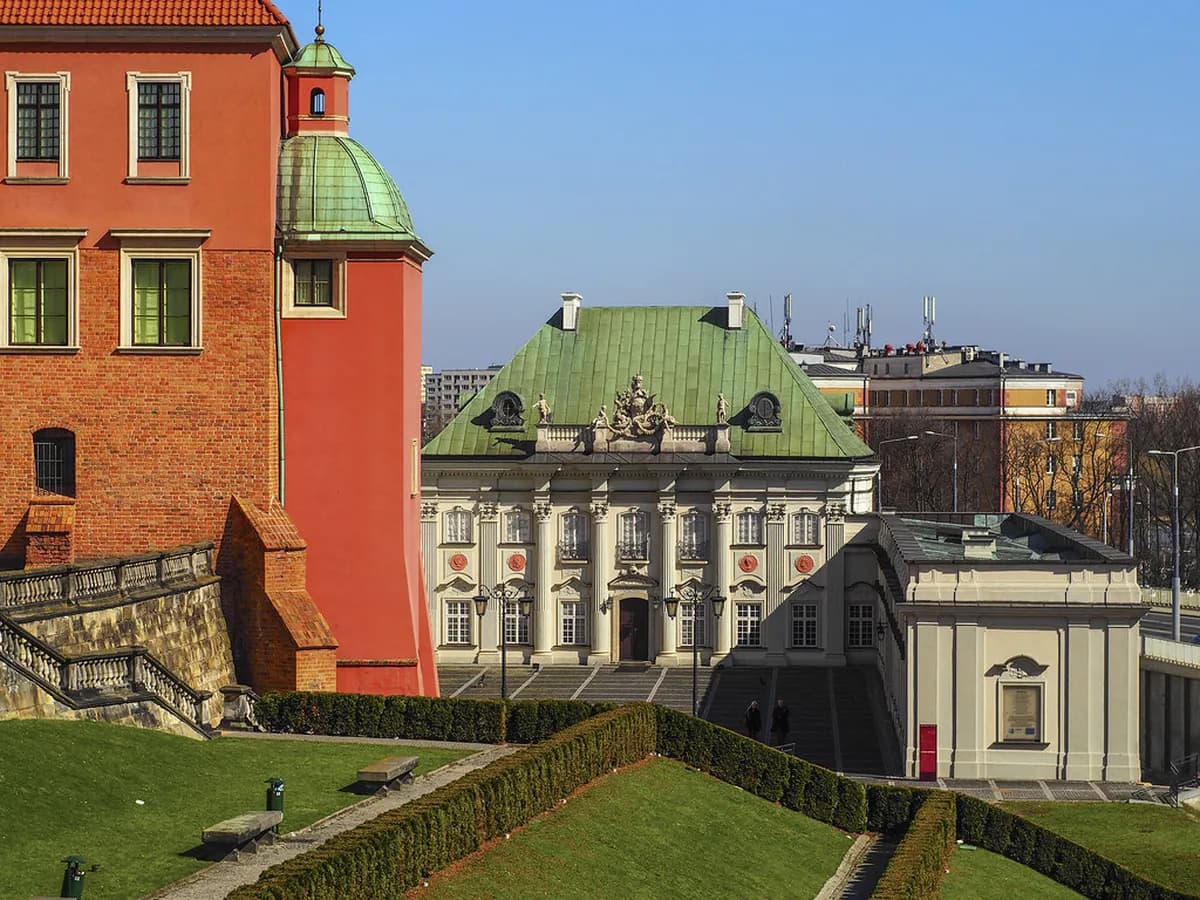
The experience of the castle extends well beyond its thick brick walls. The Royal Gardens are situated on the slope leading down toward the Vistula River. These tiered gardens offer a peaceful escape from the busy streets of the Old Town. They were recently restored to their former glory, featuring manicured hedges and elegant fountains.
Directly in front of the main entrance lies the iconic Castle Square. This plaza is dominated by Zygmunt III Vasa's Column, the oldest secular monument in the city. It is the most popular meeting point for locals and a great spot for taking panoramic photos. The square connects the castle to the colorful houses of the historic center.
From the castle walls, you can see the modern skyline of Warsaw across the river. This contrast between the old and the new is a defining characteristic of the Polish capital. Many visitors enjoy walking the perimeter of the castle to see the different architectural phases of the building. The mix of Gothic, Renaissance, and Baroque elements is visible in the exterior masonry.
Practical Tips: Duration, Photography, and Best Time to Visit
A standard tour of the main apartments usually takes about two hours to complete. If you plan to see the art galleries and the gardens, allow for at least three hours. Wear comfortable walking shoes, as the museum involves many stairs and polished wooden floors. Large bags and umbrellas must be left in the free cloakroom near the ticket office.
Photography is generally allowed for personal use without the use of a flash or tripod. Be respectful of other visitors and avoid blocking the narrow doorways between rooms. Some temporary exhibitions may have stricter rules regarding cameras and mobile phones. Always look for the signage in each room to confirm the current policy.
The best time to visit is during the shoulder seasons of spring or autumn. The weather is pleasant for walking the gardens, and the indoor crowds are manageable. If you visit in the summer, try to arrive right when the doors open at 10:00. Check the Warsaw attractions list to see how to pair the castle with nearby museums.
Frequently Asked Questions
Is the Royal Castle in Warsaw worth visiting?
Yes, the castle is a must-see for its incredible art collection and historical importance. You will see the throne room and original Rembrandt paintings. It offers a deep look into the resilience of the Polish people after the war. Many compare it to other grand European residences like the Wilanow Palace.
How long does it take to visit the Royal Castle in Warsaw?
Most visitors spend between 2 and 3 hours exploring the main routes. This time includes the Royal Apartments, the Lanckoronski Gallery, and a quick walk through the gardens. If you are an art enthusiast, you may want to add an extra hour for the Rembrandt collection. The audio guide helps keep a steady pace.
Can you take photos inside the Royal Castle in Warsaw?
Photography for private use is permitted in most areas of the museum. You must ensure your flash is turned off to protect the delicate artwork and fabrics. Tripods and selfie sticks are strictly prohibited for safety reasons. Always check for 'no photography' signs in special temporary exhibition rooms before taking pictures.
What is the best way to get to the Royal Castle?
The best way to reach the castle is by tram or bus to the 'Plac Zamkowy' stop. It is located at the entrance of the Old Town and is very well-connected to the rest of the city. If you are staying in the city center, walking up the Royal Route is a scenic and easy option. Taxis can drop you near the square.
The Royal Castle in Warsaw is more than just a museum; it is a testament to the Polish spirit. Every gilded room and painted ceiling tells a story of survival and cultural pride. Whether you are interested in 18th-century politics or world-class art, the castle will not disappoint. Make sure to book your tickets in advance during the peak summer months to guarantee entry.
By following this guide, you can navigate the complex history and logistics of this landmark with ease. Enjoy your journey through the halls where kings once walked and where a nation was rebuilt. The castle remains a shining jewel in the heart of Warsaw's historic district.
Continue exploring Warsaw
Planning your trip? Browse all our Warsaw attractions, or read our guides to Warsaw Old Town guide and things to do in Warsaw.
Official sources: Royal Castle in Warsaw official site · Wikipedia.


