
Góra Świętej Anny: A Complete Guide to the Sacred Volcanic Hill Near Opole
Last updated July 2026. Góra Świętej Anny rises 406 meters (1,332 feet) above the Opole Voivodeship as an extinct volcanic cone, an active Catholic pilgrimage sanctuary, and a memorial to the 1921 Silesian Uprisings. It sits about 30 kilometers (19 miles) from Opole via the A4, close enough for a day trip mixing pilgrimage, history, and hiking.
Why Visit Góra Świętej Anny: A Sanctuary, Battlefield, and Extinct Volcano
Góra Świętej Anny functions as three destinations in one place. Pilgrims visit for the Franciscan monastery and the statue of St. Anne. History travelers come for the 1921 Battle of Annaberg and the Silesian Uprisings monument. Geology fans and hikers come for an extinct volcanic cone, counted among the easternmost basalt outcrops of the Silesian volcanic belt. From the summit, especially from the monastery garden, the view extends across the Oder river valley and the surrounding Silesian lowlands. Poland designated the whole hill a Pomnik historii, a protected historic monument, on 14 April 2004, and the surrounding forest forms the Góra Świętej Anny Landscape Park. Administratively, the hill and village sit within Gmina Leśnica, in Strzelce County, inside the Opole Voivodeship, the same voivodeship as Opole itself. Is it worth a day trip from Opole? Yes: an active pilgrimage sanctuary, a WWII-era memorial, and a network of geopark trails rarely share one hilltop, and Opole sits close enough for a straightforward drive via the A4. Covering both the sacred sites and the nature trails in one visit is possible, but it takes most of a day, so decide ahead of time what matters most.
The Sacred Route: St. Anne Basilica, Monastery, and Calvary
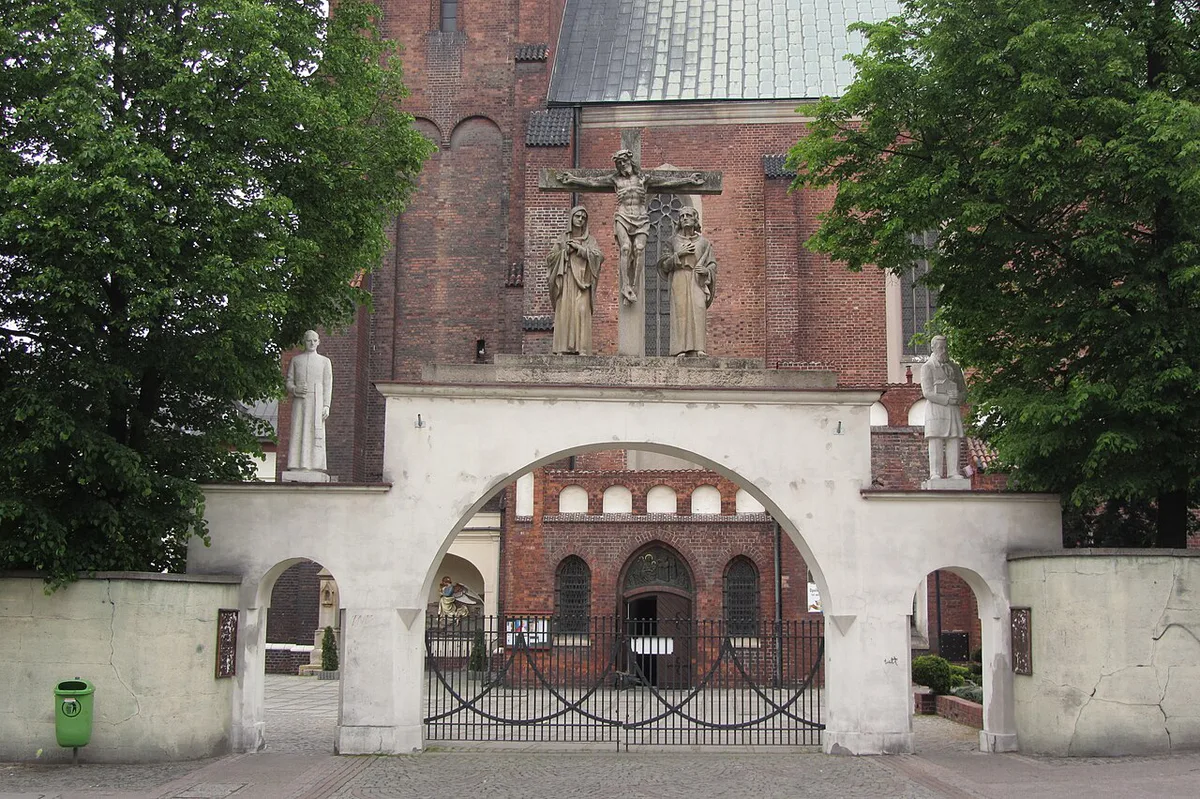
The hill carried other names before it became Góra Świętej Anny. Local legend called it Góra św. Jakuba, then Góra Chełmska, then Góra św. Jerzego, tied to stories about the Archangel Michael and St. George. In 1516 the noble Gaschin family built a church dedicated to St. Anne on the site, and the hill took its current name soon after. A wooden statue of St. Anne, donated to that church in 1560, drew growing numbers of pilgrims. Franciscans arrived on 1 November 1655 and dedicated a new stone church in 1673, the building that anchors today's monastery. Three publishing firms, run by Franz Gielnik, Michael Rogier, and Adolf Marcyago, served pilgrims' needs here through the 19th century, alongside hostels built for the growing crowds. By 1864, an estimated 400,000 pilgrims visited in a single year, a sign of how fast the sanctuary's reputation spread. The Calvary was laid out across the 17th and 18th centuries and still holds 33 chapels along its paths. Because this is an active place of worship, keep voices low near the chapels and the monastery courtyard, and dress modestly before entering the basilica. As of the sanctuary's mid-2026 published schedule, weekday Masses run at 7:00, 11:00, and 18:00, with additional services and pilgrimage Masses added most Sundays.
The Calvary features 33 chapels across its paths. Yet the surrounding 5,051-hectare Landscape Park established in 1988 protects four specialized nature reserves, making the hilltop equally significant for hikers and geologists seeking protected habitats.
- St. Anne Basilica, home to the pilgrimage statue of St. Anne first recorded at the site in 1560
- 17th-century Franciscan monastery and monastery museum, dedicated in 1673
- Calvary with 33 chapels, laid out across the 17th and 18th centuries
- Lourdes grotto and monument to Pope John Paul II
Silesian Uprisings Memory: The Monument and the Amphitheatre
A March 1921 plebiscite, held under the Treaty of Versailles, asked Upper Silesians whether the region should stay with Germany or join the reconstituted Poland. Most of the wider district favored Germany, but the local area around the hill leaned toward Poland, and the Third Silesian Uprising followed within weeks. Polish Wawelberg Group units captured Góra Świętej Anny on 4 May 1921. German Selbstschutz militia and the Bavarian Freikorps Oberland retook part of the summit on 21-23 May 1921 in the Battle of Annaberg, and losses ran heavy on both sides. Between 1934 and 1938, Nazi Germany built an amphitheater, a Thingstätte, inside an abandoned limestone quarry, and paired it with a mausoleum for 51 fallen Freikorps members. A rest stop on the new Reichsautobahn, today's A4, once sent travelers on a 10-minute walk up to that mausoleum. German nationalist propaganda leaned on the hill's symbolism again in the 1927 film Land unterm Kreuz, well before that 1934-1938 construction project. Soviet and Polish forces dynamited the mausoleum in 1945, and sculptor Xawery Dunikowski's granite monument to the Silesian insurgents replaced it in 1955. Relief carvings of the region's liberation struggles cover its columns, and an eternal flame burns inside. Both the monument and the amphitheatre sit in the western part of the village, and the Museum of the Silesian Uprisings, open since 1961, adds detail on all three uprisings for history-focused visitors.
The monument installed in 1955 replaced the mausoleum for 51 Freikorps members. Yet the stone church completed in 1673 for pilgrims continued functioning as a sanctuary throughout—merging the site's religious and political meanings into one destination.
The Volcanic Hill: Geopark Trails and Nature Routes
Góra Świętej Anny is an inselberg built from Tertiary basalt and nephelinite, and its old limestone quarry now exposes the volcanic rock face as a geological nature reserve. The reserve preserves a rock face where nephelinite and limestone layers meet, a combination rare enough in Poland to draw dedicated geology visits on its own. A lime kiln from the mid-19th century still stands near the former quarry workings. The surrounding Góra Świętej Anny Landscape Park, established in 1988, covers 5,051 hectares, though forest accounts for only about 21 percent of that area. Four smaller reserves protect the park's most sensitive habitats: Lesisko, Boże Oko, and Grafik, all designated in 1997, plus Biesiec, added in 2001. These nature routes draw far fewer visitors than the Basilica and Calvary, especially outside weekend pilgrimage hours. Quarry terrain is uneven, so sturdy, closed-toe shoes matter more here than they do on the paved sanctuary paths.
- Nature and Sightseeing Trail around Góra Świętej Anny — loops past the geological reserve and quarry viewpoints
- Flora and Fauna Green Trail — focused on the park's forest and plant life
- Góra Świętej Anny Geopark loop from Żyrowa — a longer route that starts outside the village
Planning a Day Trip to Góra Świętej Anny from Opole
Opole sits roughly 30 kilometers (about 19 miles) from Góra Świętej Anny, and the A4 highway, the modern successor to the old Reichsautobahn through this area, makes the drive direct. Parking clusters near both the monastery and the amphitheatre, so decide which cluster to visit first before setting off, since the site does not condense into a single short walk. A practical structure is a loop: park near the monastery for the Basilica and Calvary, then move to the amphitheatre and monument cluster before finishing at a geopark trailhead. Sundays bring the heaviest crowds, since the sanctuary hosts a different pilgrimage group most weeks, from firefighters to visually impaired pilgrims to rosary confraternities, based on its own 2026 announcements. A weekday morning visit, or a check of the sanctuary's published events calendar beforehand, avoids the largest crowds. Pair the hill with a wider day around the city itself. The 10 Best Things to Do in Opole, Poland (2026 Guide) guide covers other stops nearby. The Opole Zoo guide works well if kids need a lighter stop before or after the drive.
| Route | Best for | Key stops | Terrain |
|---|---|---|---|
| Sacred Route | Pilgrims and first-time visitors | Basilica, monastery, Calvary chapels, Lourdes grotto | Paved paths, some hills |
| Nature and History Route | Hikers and history readers | Amphitheatre, Silesian Uprisings monument, geopark trails, Museum of the Silesian Uprisings | Uneven quarry terrain, sturdy shoes recommended |
Where to Eat, Costs, and Accessibility
Góra Świętej Anny village has a small cluster of pilgrim-focused cafes and food stalls near the monastery gates and main parking areas, geared toward simple Polish fare rather than a wide restaurant scene. Confirm current opening hours locally, since small operations here shift with the pilgrimage season. Entry to the sanctuary grounds, the Calvary paths, and the outdoor Silesian Uprisings monument costs nothing. The Museum of the Silesian Uprisings and on-site parking are the likely paid stops, and fees are set locally, so check current rates directly with the sanctuary or the museum before visiting. Accessibility varies sharply across the site: the Calvary's paths climb across uneven historic paving, so strollers and wheelchairs struggle beyond the main basilica courtyard. Reached by a separate access road in the western part of the village, the monument and amphitheatre area is flatter and easier for visitors with mobility limitations. Outdoor areas are accessible year-round in typical conditions, though winter ice on the quarry paths and chapel steps calls for extra caution.
Mistakes to Avoid at Góra Świętej Anny
A few planning mistakes repeat often enough to flag directly. Building slack time into the plan, and picking one cluster to prioritize if the schedule is tight, prevents most of them before they happen.
- Arriving on a major feast day or pilgrimage Sunday and expecting light crowds or open parking.
- Underestimating the walk between the Monument and Amphitheatre cluster and the Basilica and Calvary cluster; treat them as two separate stops, not one.
- Forgetting this is a protected Landscape Park; stay on marked trails and keep clear of the Lesisko, Boże Oko, Grafik, and Biesiec reserves.
- Wearing sandals or flat dress shoes on the geopark's quarry trails, where footing is uneven.
Major Event Days and Crowd Planning
The feast of Saint Anne falls on 26 July and brings the sanctuary’s most important annual celebrations. Expect additional services, organized pilgrimages, and processions around the basilica. Parking near the monastery may fill early, while quiet sightseeing becomes difficult.
History commemorations are more likely around the Battle of Annaberg anniversary. The main fighting occurred from 21 to 23 May 1921. Events may center on Xawery Dunikowski’s monument and the former amphitheatre instead of the sanctuary. Exact schedules can move to a nearby weekend, so check both the sanctuary and local museum calendars.
If you are not attending an event, choose a weekday morning and decide which cluster matters most. Use the monastery side for the basilica and Calvary. Approach from the western village access for the monument and amphitheatre. A full parking area at one cluster does not necessarily mean the entire hill is inaccessible. Visitors seeking the pilgrimage atmosphere may prefer a feast day, but they should allow extra time between sites.
Frequently Asked Questions
Is Góra Świętej Anny worth a day trip from Opole?
Yes. The hill combines an active pilgrimage sanctuary, a Silesian Uprisings memorial, and volcanic geopark trails within about 30 kilometers of Opole. A single day trip can cover all three.
How do you get from Opole to Góra Świętej Anny?
Driving is the most reliable option, using the A4 highway for most of the route. Public transit options are limited outside pilgrimage events, so check current regional bus timetables for Gmina Leśnica if you do not have a car.
Is it free to visit Góra Świętej Anny?
The sanctuary grounds, Calvary paths, and outdoor Silesian Uprisings monument cost nothing to visit. The Museum of the Silesian Uprisings and parking near the amphitheatre are the likely paid stops; confirm current fees with the sanctuary or museum directly.
How high is Góra Świętej Anny, and is it a real volcano?
The hill rises 406 meters (1,332 feet) and is an extinct volcanic cone of Tertiary basalt, not an active volcano. Geologists count it among the easternmost basalt outcrops of the Silesian volcanic belt.
When should you avoid visiting Góra Świętej Anny?
Skip major feast days and Sunday mornings if you want a quiet visit, since the sanctuary hosts weekly pilgrimage groups throughout the year. Weekday visits bring easier parking and shorter waits at the Calvary chapels.
What is the Museum of the Silesian Uprisings, and is it worth the stop?
The museum has documented the three Silesian Uprisings since it opened in the village in 1961. It pairs well with the Dunikowski monument for visitors focused on 1921 history rather than the pilgrimage sites.
When is the best time to visit Góra Świętej Anny?
Late spring through early autumn gives the clearest trail conditions and the fullest calendar of open-air Masses and pilgrimages. Winter visits are quieter but bring icy paths on the Calvary and the quarry trails.
You might also like


Continue reading
More guides you'll find useful