
Malbork One Day Itinerary: A Complete Guide to the Teutonic Stronghold
Last updated August 2026, this Malbork one day itinerary treats the castle as a full day, not a rushed stopover. It walks through the Historical Castle Route, the Nogat riverside crossing, and the old town's surviving Gothic gate, plus where to eat between stops. Ticket trade-offs, station choices, and the tower's seasonal access window are covered before you book anything.
At a Glance: Your Malbork One Day Itinerary
Malbork rewards a full eight-hour day far more than the three-hour stopover most Gdańsk day-trip guides describe. Scale is the reason: the Teutonic Order's fortress covers roughly 52 acres, split across three connected castles, so the Historical Castle Route alone runs about 3.5 hours. Add the old town's surviving gate, a working parish church, and the Nogat riverside crossing, and a slow-travel day fills naturally. In our editorial assessment, Malbork is worth the extra time if you plan the stages below instead of winging it after arrival.
The eight-hour day schedule assumes standard walking pace through castle grounds and narrow medieval passages, but cobblestones dominate most surfaces, so add buffer time if pushing a stroller or managing mobility considerations.
- 9:00 AM: Take an early PKP Intercity or Polregio train from Gdańsk toward Malbork or Malbork Kałdowo.
- 9:30-9:50 AM: Walk 15 to 20 minutes from the station to the castle's ticket office, crossing the Nogat if you arrived via Kałdowo.
- 10:00 AM-1:30 PM: Tour the Historical Castle Route with the GPS-triggered audioguide, covering the Middle and High Castle.
- 1:30-2:30 PM: Eat lunch in the castle cellars or riverside at U Flisaka.
- 2:30-3:30 PM: Cross the Nogat pedestrian bridge for the reflection shot, then walk into the old town.
- 3:30-4:30 PM: See Brama Garncarska and the Parish of St. John the Baptist.
- 4:30-5:00 PM: Get coffee near the river before the return train to Gdańsk.
Getting to Malbork: Trains, Stations, and the Kałdowo Shortcut
Two operators run trains from Gdańsk to Malbork: PKP Intercity and Polregio. PKP Intercity's TLK and IC services take roughly 25 to 34 minutes and require an assigned seat booked in advance. Groups of two to six riders get 30% off TLK and IC fares when booked at least seven days ahead. Polregio's regional trains run slower, with no fixed seats. Tickets stay valid for six hours from the booked departure time, so a missed connection is not a lost fare.
Malbork's main station sits east of the castle, on the edge of town, for a 15 to 20 minute walk to the ticket office. Polregio trains also stop at Malbork Kałdowo, a smaller station across the river on the castle's western side. From there, the walk crosses the Nogat and delivers the classic castle-skyline view before you even reach the ticket office. For a slower, photo-first start to the day, Kałdowo is the stronger arrival point.
Taxis sometimes wait outside the main station, but ride-hailing apps are not reliably available in Malbork, so do not count on one. The detailed transport breakdown covers seat booking and app options in full. The Gdańsk-to-Malbork route guide compares every train type stop by stop.
Morning: Touring the Teutonic Stronghold
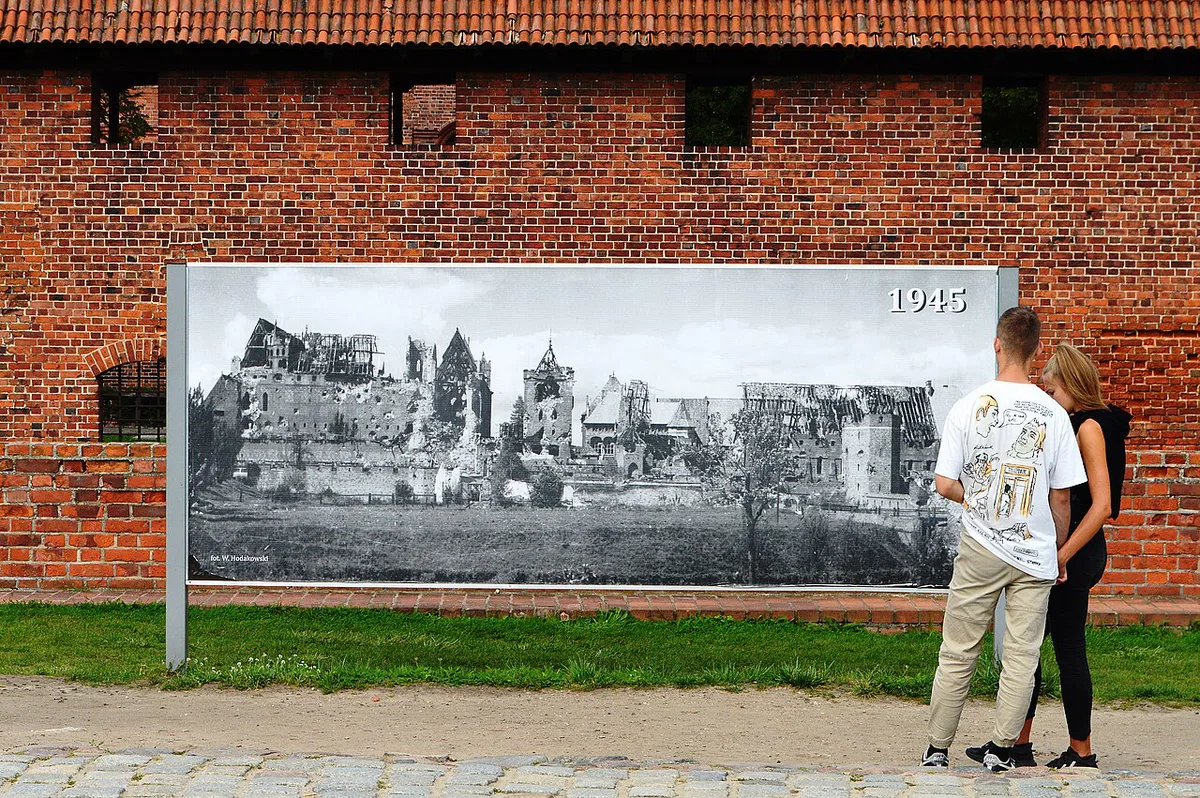
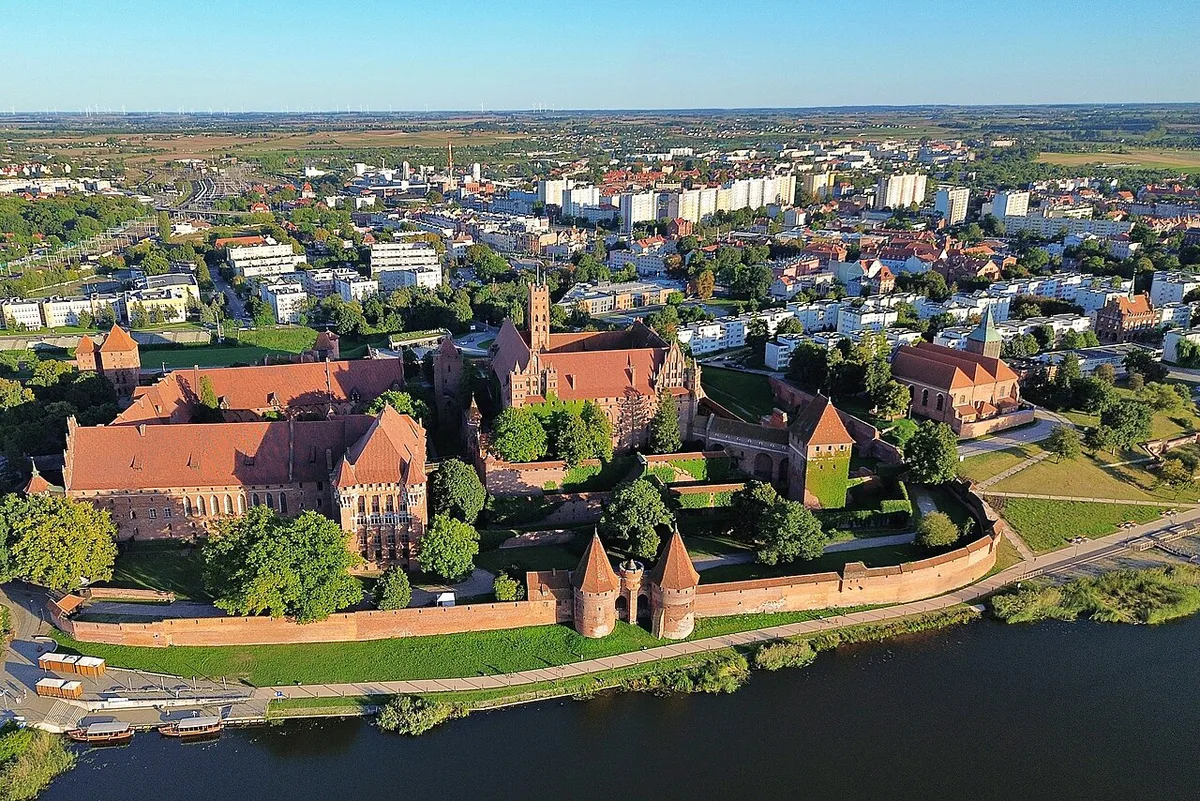
Construction on Malbork Castle began in 1257 under the Teutonic Knights, a German crusading order. They used the fortress as their headquarters and seat of government. By the time it was finished in 1406, the complex held three connected castles: the High, Middle, and Low. A double ring of defensive walls surrounded them. UNESCO listed the castle as a World Heritage Site in 1997. It is widely described as the world's largest castle by land area, covering roughly 52 acres. Fighting for the city badly damaged the complex in 1945, and a fire added more damage in 1959. Most of what visitors walk through today is a careful postwar reconstruction.
Before the ticket check, walk through the Low Castle at no charge. This outer section holds the old armoury building, known as Karwan. Moat and wall views here set the scale before the paid route begins.
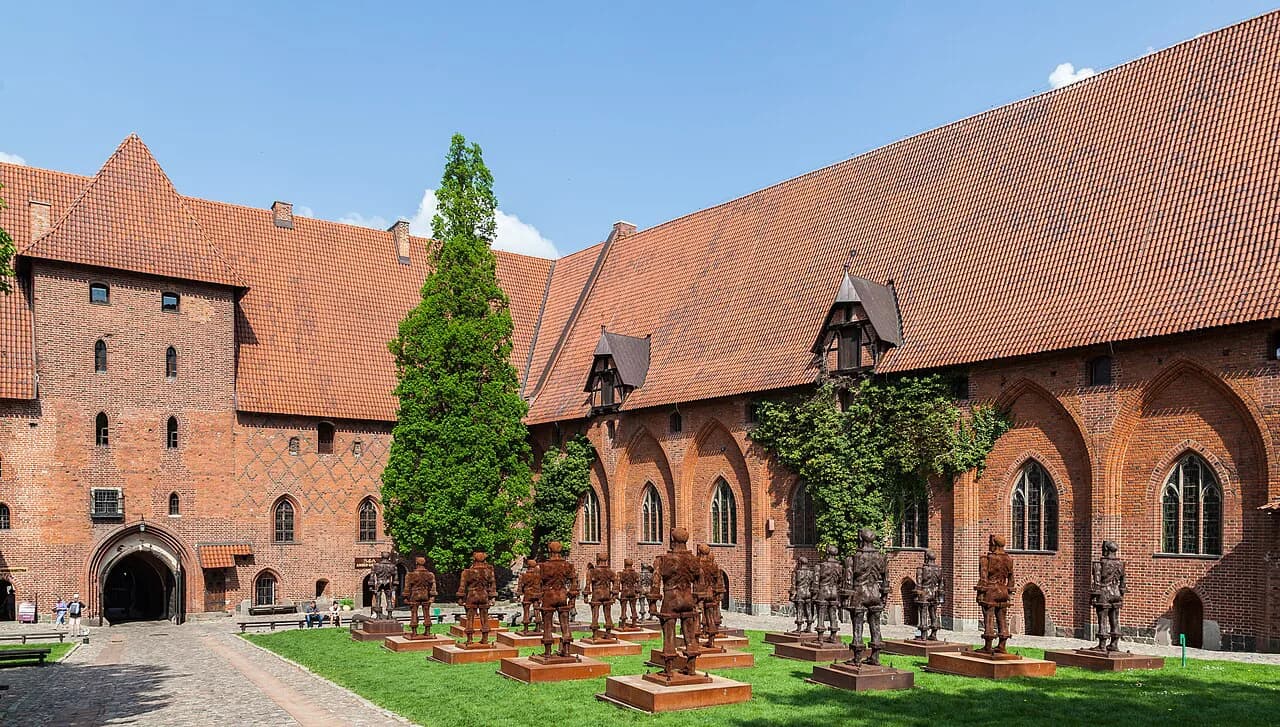
Book Historical Castle Route tickets online before arrival, since the castle uses timed entry and popular afternoon slots can sell out during peak season. This route covers the Middle Castle and High Castle, plus their courtyards and main exhibits. It takes roughly 3 to 3.5 hours at a normal walking pace. Inside the Middle Castle, the Grand Refectory is the standout hall, with vaulted ceilings and surviving wall paintings from the Teutonic Grand Masters' era. Its High Castle holds the Church of the Blessed Virgin Mary and St. Anne's Chapel, where Teutonic Grand Masters were buried. Look for the Amber Exhibit as well. These Knights controlled the regional amber trade for centuries, and the collection includes jewelry, altarpieces, and devotional objects made from it.
Audio commentary plays automatically through GPS triggers as you enter each room, and stops the moment you walk away. You can move at your own pace instead of following a fixed schedule. One detail catches almost everyone out: the Main Tower, called Wieża Główna, needs a separate ticket and sits on the High Castle's second floor, unmarked by the audioguide route. It is only open from mid-June to mid-September, so check the season before counting on the climb. The full Teutonic castle guide breaks down every hall and exhibit room by room.
Lunch: Dining in a Fortress
Lunch options split by budget and location. Gothic Cafe & Restaurant sits in the castle cellars, near the Copernicus relief in the Middle Castle courtyard. Its medieval-inspired menu covers stews, dumplings, and bread with pesto and mustard-seed butter. Some recent listings mark this restaurant as closed, so confirm it is open before building lunch around it. Across the Nogat, U Flisaka serves grilled trout, beef sirloin, and pierogi on a riverside terrace with a direct castle view. Reservations are worth making there in summer. For a cheaper meal, Bar Chomiczówka and other spots near the train station keep prices lower than the castle-adjacent restaurants. Near Kałdowo, on the castle's west side, Restauracja Piwniczka offers indoor and outdoor seating at prices that read reasonable for the location.
Afternoon: Crossing the Nogat and Exploring the Old Town
After the castle tour, cross the Nogat on the pedestrian-only footbridge on the fortress's west side. This is the best angle for the reflection shot of the full castle skyline, and it is far enough back to fit the whole complex in frame. From the far bank, walk back into the old town to see what survives of medieval Malbork beyond the castle walls.
Brama Garncarska, the 14th-century Pottery Gate, is one of the few remaining fragments of the town's defensive walls. It is privately owned and closed to visitors inside, so plan to view it from the street rather than expecting an interior tour. The Roman Catholic Parish of St. John the Baptist sits nearby and shows visible fire damage from the 1945 fighting for the city, alongside its neo-Gothic altars. Interior access has varied by season during ongoing renovation work, so check current hours before you count on going inside.
Rounding out the afternoon with these stops turns Malbork into a full day instead of a castle-only stopover. Wider context on the town lives in the Malbork attractions guide, which lists further stops if you have extra time.
Ticket Prices and Booking Strategy
Malbork Castle sells three main route tickets, plus seasonal night tours. Competing sources report the Historical Castle Route at anywhere from 70 PLN to 80 PLN, so confirm the current price on the official castle website before you book. Grounds Route and Monastery Route prices stay more consistent across sources, at 35 PLN and 70 PLN.
Annual visitor numbers reach 700,000 and 800,000, with midday summer crowds packing the interiors; booking online before arrival is essential during peak season to secure morning or late-afternoon timed slots.
Grounds Route access is free on Mondays, but you still need a physical ticket from the ticket office. There is no interior access to the Middle or High Castle on Mondays under any ticket type. Parking near the castle costs 30 PLN for three hours, so many drivers park across the river near the pedestrian bridge instead. Book Historical Castle Route tickets online during peak season, since afternoon slots can sell out under the timed-entry system. Add the Main Tower ticket at the counter once inside if you are visiting between mid-June and mid-September. It is a small extra fee on top of your route ticket.
| Route | Price | Duration | Best For |
|---|---|---|---|
| Historical Castle Route | 70-80 PLN (confirm current rate) | About 3-3.5 hours | History buffs wanting full interior access |
| Castle Grounds Route | 35 PLN | About 1.5 hours | Families or time-limited visitors |
| Castle Monastery Route | 70 PLN | About 2 hours | Visitors focused on the High Castle only |
| Night Tour (May-Aug, Wed-Sat) | 70 PLN | Evening | Photographers wanting fewer crowds |
- Skipping the Main Tower ticket, then finding out at the High Castle that it needed a separate purchase and mid-June-to-mid-September timing.
- Arriving at Malbork's main station without deciding in advance whether you are walking, taking a taxi, or continuing to Kałdowo.
- Assuming Mondays give full castle access, when only the Castle Grounds Route is open and the interiors stay closed.
Best Time to Visit: Seasonal Hours and Accessibility
From late April to late September, Malbork Castle opens daily from 9:00 AM to 8:00 PM, with the ticket office open 8:30 AM to 6:30 PM. Winter hours shrink to 9:00 AM to 1:00 PM, and the Main Tower plus some seasonal exhibits close entirely. Arrive right at opening if you are visiting in June, July, or August. Published estimates put annual visitor numbers between 700,000 and 800,000, and midday crowds bunch up inside the Middle Castle. Winter brings shorter hours but thinner crowds and a quieter walk through the courtyards.
Accessibility is mixed. The ticket office, grounds, restrooms, and parts of the interior have been adapted for wheelchair users, but older museum sections sit inside narrow medieval passages that cannot be widened. Cobblestones cover most of the grounds and the old town, so bring supportive footwear and expect a slower pace if pushing a wheelchair or stroller. If a single day feels rushed once you see the hours, overnight lodging options near the old town make it easy to split the visit across two mornings instead.
Extending the Trip: Day Trips Beyond Malbork
Malbork works well as a single stop or as part of a longer regional loop. The Elbląg Canal day trip pairs well with Malbork if you want to extend the day into a second stop. Travelers based in the Tricity area often fold Malbork into a wider swing through northern Poland. The Gdańsk attractions guide covers the anchor city. A Toruń day-trip guide covers another stop worth adding to a longer Poland itinerary. Check the train timetable for a late-afternoon departure back to Gdańsk before adding a second stop to the same day.
Frequently Asked Questions
Is one day enough time for Malbork Castle?
A full day, roughly 8 hours, covers the Historical Castle Route, lunch, and a walk through the old town. If you only have 3 to 4 hours, stick to the Castle Grounds Route and skip the old town stops.
How do you get from Gdańsk to Malbork?
PKP Intercity and Polregio both run trains from Gdańsk, with journeys taking roughly 25 to 55 minutes depending on the train type. Get off at Malbork Kałdowo instead of the main station for the riverside approach, with the castle skyline in view as you cross.
Which Malbork Castle ticket route should you book?
Choose the Historical Castle Route for full interior access. It takes about 3 to 3.5 hours and currently runs 70 PLN to 80 PLN depending on the source, so confirm the price when you book. The Castle Grounds Route costs 35 PLN and skips the interiors. The Castle Monastery Route costs 70 PLN and focuses on the High Castle only.
Is Malbork Castle free on Mondays?
The Castle Grounds Route is free on Mondays, but you still need a ticket from the on-site office. Interior access to the Middle and High Castle stays closed on Mondays under any ticket type.
Where is the best spot for Malbork Castle photos?
Cross the Nogat pedestrian bridge on the castle's west side for the classic reflection shot of the full skyline. Aim for morning or late-afternoon light, since the bridge faces the castle across open water with no obstructions.
Do you need to book Malbork Castle tickets in advance?
Yes, especially in summer, since the castle uses timed entry and popular afternoon slots can sell out. Booking online also lets you skip the ticket office line and collect your audioguide directly.
You might also like


Continue reading
More guides you'll find useful