

7 Best Things to Do in Malbork, Poland
Last updated July 2026: Malbork sits roughly 30 to 60 minutes from Gdańsk by train. Most visitors see only the castle and miss the other things to do in Malbork beyond its walls. This guide covers the fortress, the Nogat River waterfront, and the old town center in one practical day trip.
7 Best Things to Do in Malbork, Poland
Malbork rewards a full day rather than a rushed castle stop. Use this list to plan the fortress, the town center, and one easy add-on trip in order of priority.
- Explore the Three Divisions of Malbork Castle
- The complex splits into three sections: the Outer Castle, the Middle Castle, and the High Castle, built in stages by the Teutonic Knights starting in the 13th century.
- The Middle Castle holds the Grand Master's Palace and the amber exhibition, while the High Castle holds the Chapter House and St. Mary's Church.
- See the Malbork Teutonic Castle Guide: Routes, Layout, and Tips for room-by-room detail on the Grand Refectory and the armory.
- Climb the Castle's Main Tower for Nogat River Views
- Wieża Główna, the High Castle's main tower, gives elevated views over the castle roofs and the Nogat River below.
- The tower view also shows the full scale of the grounds, spread across the Outer, Middle, and High Castle sections.
- Reaching the top means climbing narrow stone stairs, so plan for flat, closed-toe shoes.
- See the Old Town Hall (Ratusz Staromiejski)
- This Gothic municipal building sits in Malbork's town center, a short walk from the castle grounds.
- Local sightseeing guides list the Old Town Hall as a featured Malbork sight alongside the castle itself.
- Visit the Latin School (Szkoła Łacińska)
- The historic Latin School building now functions as a cultural center with exhibitions and events.
- It appears on local sightseeing lists alongside the Old Town Hall as one of the town's non-castle landmarks.
- Photograph the Castle from the Nogat Riverbank
- Cross the footbridge over the Nogat River for the classic reflection shot of the castle's red-brick facade.
- Morning light works best for this angle, according to visitor accounts.
- The riverside view also puts the castle's real scale into perspective once you see the full facade at once.
- Step Inside St. John the Baptist Church
- This 14th-century parish church stands near the castle walls in Malbork's old town.
- Nearby historic gates, including Mary's Gate and Potters' Gate, round out a short walking loop through the old town's remaining medieval structures.
- Extend the Trip with an Elbląg Canal Day Trip
- Travelers based in Malbork rather than doing a Gdańsk turnaround can add the historic incline-boat waterway covered in the Elbląg Canal day trip guide.
- Add a full extra day if the goal is the canal's incline-boat sections rather than a rushed afternoon stop.
A Short History of Malbork Castle
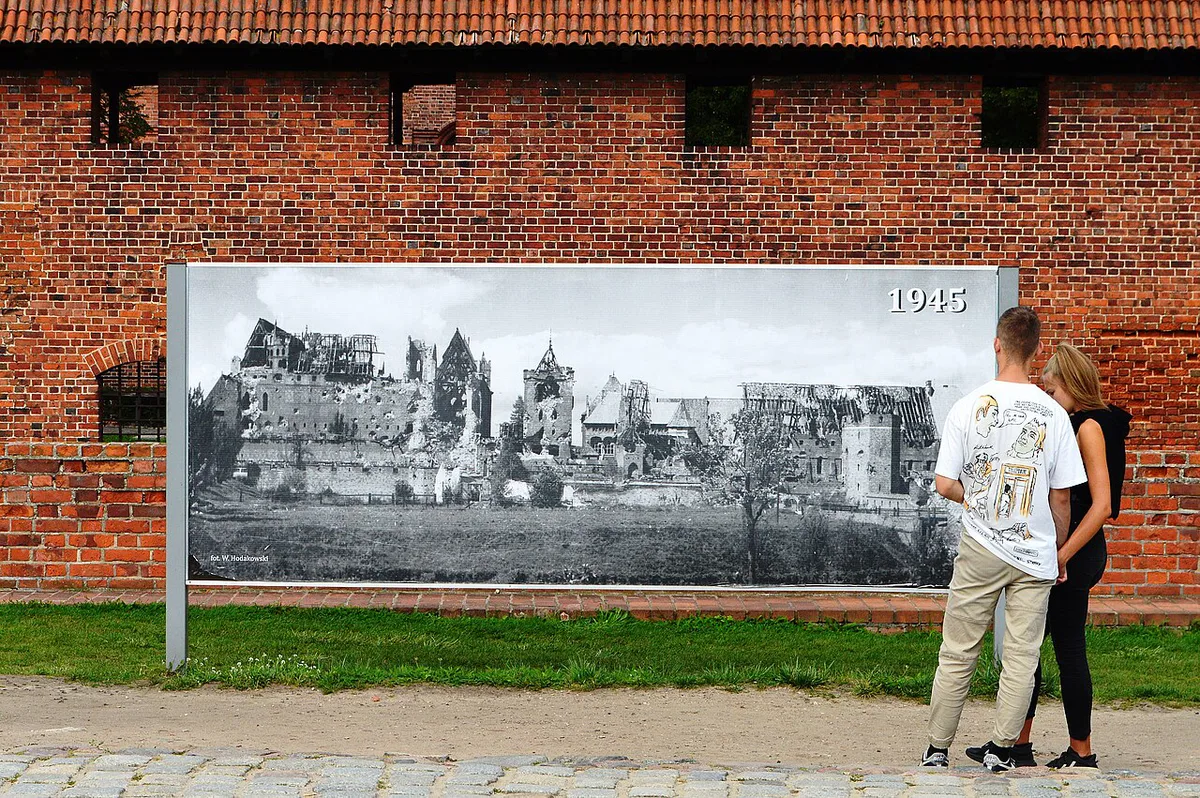
Teutonic Knights, a Catholic military order, began building the fortress in the 13th century as a regional stronghold. The castle's position on the Nogat River gave the order access to the Vistula River and the Baltic Sea beyond it. Knights collected river tolls from passing ships to help fund the order's operations. Teutonic control lasted until 1457, when King Casimir IV Jagiellon and Polish forces seized the castle. Control then shifted between German and Polish authorities over the centuries that followed. Roughly half of the structure was damaged during the Second World War. Restoration rebuilt the damaged sections in the decades after, and the castle now holds both UNESCO World Heritage status and Historic Monument of Poland status.
Why Malbork Castle Holds the 'World's Largest' Title
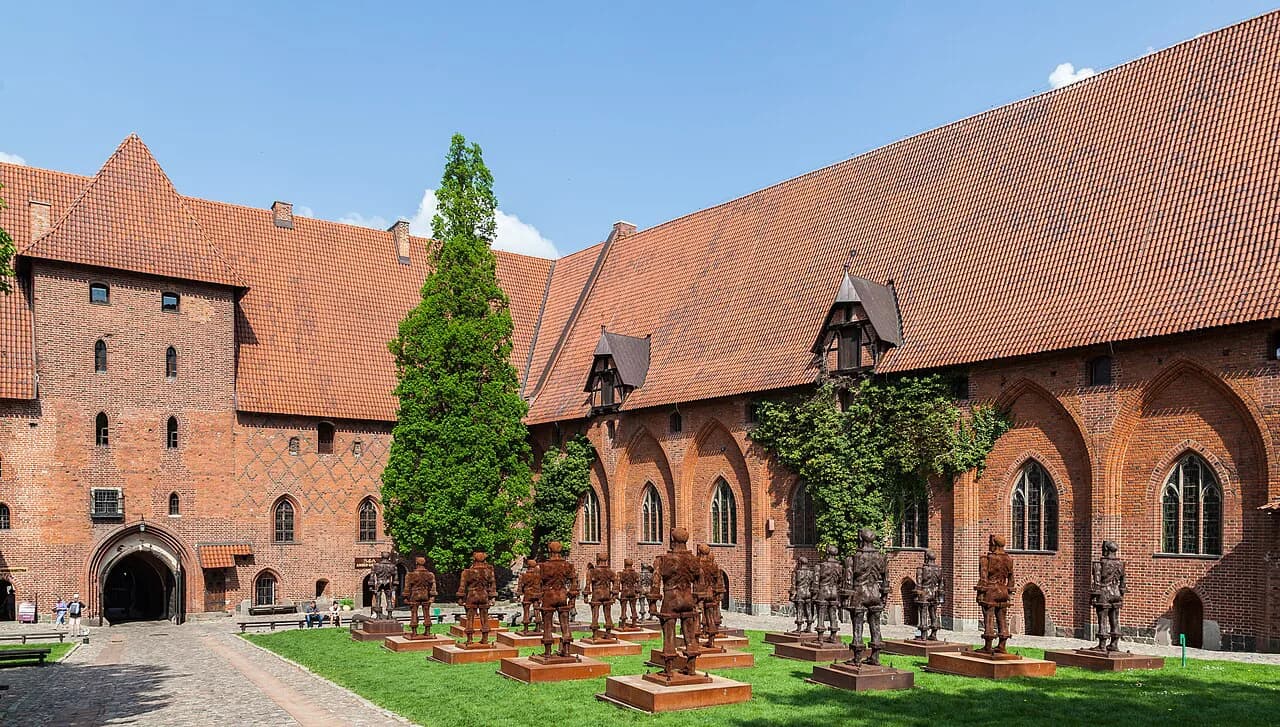
Malbork Castle is the largest castle in the world by land area, not the tallest or the longest. Construction finished in 1406, when it also ranked as the world's largest brick castle of its era. The complex covers 143,591 square meters across the Outer, Middle, and High Castle sections. The castle's red-brick Gothic style, known as Backsteingotik, defines its exterior walls and towers. That same style carries through to the Grand Master's Palace inside the Middle Castle.
Malbork Castle Tickets: Historical Route vs Green Route
Malbork Castle sells two main visiting options, shown below. Choose the Historical Route for full interior access. Choose the Green Route if time is tight or this is a repeat visit. One recent visitor account put an audio-guide admission at 39.50 PLN. Museum pricing adjusts periodically, so confirm the current 2026 rate on the official castle museum site before booking. Malbork Castle also lets you choose how you move through the complex once inside. An audio guide sets your own pace and covers each numbered stop in order. A live guided tour follows a fixed schedule for travelers who prefer a narrated walkthrough over self-pacing. Unguided wandering is the fastest option but the easiest way to miss key rooms in a complex this size.
The Green Route condenses the 143,591-square-meter complex into ~1.5 hours, trading Grand Refectory and Chapter House access for rapid exterior touring when schedule constraints limit available time.
| Route | Duration | What's Included |
|---|---|---|
| Historical Route | 3.5-4 hours | Grand Refectory, Chapter House, amber exhibition, full interior access |
| Green Route | ~1.5 hours | Courtyards and exteriors only, no interior halls |
DIY Train Trip vs a Guided Tour from Gdańsk
Independent travelers handle trains and walking directions on their own, which usually costs less overall. Guided day tours from Gdańsk bundle transportation with castle entry and a fixed itinerary. That format suits travelers who prefer not to coordinate trains and walking directions independently. Weigh both options against your schedule before deciding, since a guided tour removes the need to time trains around the castle's opening hours.
How to Get to Malbork from Gdańsk
Two train operators connect Gdańsk Główny to Malbork. PKP Intercity trains cover the route in about 30 minutes. Polregio regional trains take roughly 50 to 60 minutes but typically cost less. Both operators run multiple daily departures from Gdańsk Główny. Confirm the current 2026 timetable for exact times, since frequency shifts seasonally. A recent fare comparison put Polregio around 11 PLN and PKP Intercity around 55 PLN. Confirm current fares before booking, since regional rail pricing shifts through the year. From Malbork station, plan on a 15 to 20 minute walk to the castle ticket office.
Although PKP Intercity covers the route in about 30 minutes, the Historical Route alone demands 3.5–4 hours; a full-day plan is essential regardless of transit speed.
| Operator | Journey Time | Typical Fare |
|---|---|---|
| Polregio (regional) | 50-60 minutes | ~11 PLN, per a recent fare comparison |
| PKP Intercity | ~30 minutes | ~55 PLN, per a recent fare comparison |
Best Time to Visit Malbork Castle to Avoid Crowds
Tour buses tend to arrive in the late morning. Arrive at opening, around 9:00 AM, or return after 3:00 PM to avoid the busiest window. Weekday visits generally draw fewer tour groups than weekends. Summer brings the heaviest crowds overall, partly due to the annual reenactment event drawing extra visitors into town. Opening hours shift between summer and winter in Poland, so check the castle museum's current seasonal schedule before finalizing a start time.
Nogat River Activities Beyond the Castle Walls
The Nogat River waterfront offers more than a photo spot. Cruises, cafés, and a quiet garden path round out a break between castle sections and the old town.
- River cruises
- Short cruises depart from the riverbank near the castle for a different vantage point on the fortress walls.
- Riverside cafés
- A handful of cafés sit on the opposite bank from the castle, reachable via the footbridge.
- Castle rose garden
- A quieter garden path inside the grounds offers free lounge seating away from the main courtyards.
Seasonal Events: The Siege of Malbork and Night Tours
Malbork hosts an annual reenactment known as the Siege of Malbork (Oblężenie Malborku), typically staged in July. Confirm the exact 2026 dates on the castle's event calendar, since a specific July weekend is not fixed year to year. Guided night tours are also offered on select dates, moving through the same courtyards and halls by lamplight instead of daylight. Check current availability and booking requirements directly with the castle museum, since night-tour schedules are not published year-round.
Where to Eat and What to Bring in Malbork
Karczma Rycerska, a medieval-themed restaurant near the castle grounds, serves Polish hunter's stew (bigos) with roasted potatoes and kielbasa. Town-center cafés near the Old Town Hall offer a quieter, less touristy alternative. Menu prices are not listed in the sources for this guide. Expect casual sit-down-restaurant costs similar to other tourist-town restaurants in northern Poland, and check the current menu on-site. Pack comfortable, closed-toe shoes regardless of where you eat, since the castle grounds involve long stretches of cobblestone and stone stairs.
- Audio guides
- Available at the ticket office for an added fee, covering castle history section by section.
- Stroller and wheelchair access
- Difficult in places due to cobblestones and uneven courtyards; check accessibility details with the museum in advance.
- Lockers
- Available near the entrance for bags too large to carry through the narrow interior passages.
Malbork Quick Facts
Use this table as a fast reference while planning a visit.
| Detail | Number |
|---|---|
| Castle size | 143,591 square meters (largest by land area) |
| Construction completed | 1406 |
| Historical Route duration | 3.5-4 hours |
| Green Route duration | ~1.5 hours |
| Train from Gdańsk, PKP Intercity | ~30 minutes |
| Train from Gdańsk, Polregio | 50-60 minutes |
| Walk from station to ticket office | 15-20 minutes |
| Least crowded times | 9:00 AM opening or after 3:00 PM |
A Simple One-Day Malbork Itinerary
A full day covers the castle and the town without rushing. Adjust the order below around your train times.
- Morning: arrive and tour the castle
- Take the early PKP Intercity or Polregio train from Gdańsk Główny and arrive by 9:00 AM opening.
- Walk the 15-20 minutes from the station to the ticket office, then start on the Historical Route.
- Midday: riverbank break
- Cross the footbridge for the reflection photo, then stop at a riverside café or book a short cruise.
- Afternoon: old town
- Walk to the Old Town Hall, the Latin School, and St. John the Baptist Church before catching the return train.
- Evening: return train
- Catch a PKP Intercity or Polregio train back to Gdańsk Główny in the early evening to avoid a late walk from the station.
Mistakes to Avoid When Visiting Malbork
A few planning errors show up again and again among Malbork day-trippers.
- Buying tickets on-site during peak season
- Summer lines at the ticket counter can be long; booking online in advance avoids the wait entirely.
- Underestimating the walking distance
- The castle grounds span 143,591 square meters, and the Historical Route alone runs 3.5 to 4 hours on foot.
- Skipping the town center entirely
- The Old Town Hall, the Latin School, and the Nogat riverside cafés sit a short walk from the castle and add a few worthwhile hours.
- Confusing the Green Route with full access
- The Green Route covers courtyards and exteriors in about 1.5 hours only; choose the Historical Route instead for the interior halls.
How to Walk from Malbork Station to the Castle
The signposted walk from Malbork railway station to the castle ticket office takes about 15 to 20 minutes. Leave the station forecourt and follow Dworcowa Street toward Aleja Rodła.
At Aleja Rodła, use the two signal-controlled pedestrian crossings to reach Kościuszki Street. Continue along Kościuszki through the modern town center. The Malbork Welcome Centre is a useful landmark on this section.
From Kościuszki, turn toward Piastowska Street and continue to Starościńska Street. The museum’s visitor entrance and ticket facilities are at Starościńska 1. Tours begin near the ticket counters at Plac 60-lecia Muzeum Zamkowego.
The route is mostly flat, but the final approach includes uneven paving and cobblestones. Travelers with limited mobility can use the flatter pavement along Sierakowskich Street. Taxis are also available near the station when luggage, rain, or mobility makes the walk difficult.
For trip-planning details, see Poland - Wikivoyage and Poland - Wikipedia.
Explore things to do in other cities
Frequently Asked Questions
Is Malbork Castle really the largest castle in the world?
Yes, by land area. Completed in 1406, the castle also ranked as the world's largest brick castle of its era, and it holds UNESCO World Heritage status today.
How long does it take to get from Gdańsk to Malbork?
PKP Intercity trains take about 30 minutes. Polregio regional trains take 50 to 60 minutes and typically cost less. Both depart from Gdańsk Główny station.
How much time should you budget for a Malbork day trip?
Plan on 3.5 to 4 hours for the Historical Route alone. Add extra time for the Old Town Hall, the Latin School, and the Nogat River waterfront. A full day works better than a rushed half-day if the town matters to you too.
Do you need to book Malbork Castle tickets in advance?
Booking online ahead of a summer visit is the safer option. On-site ticket lines get long during peak season, and online booking avoids that wait entirely.
Is Malbork Castle stroller- or wheelchair-accessible?
Parts of the complex are difficult for strollers because of cobblestones and uneven courtyards. Check accessibility details with the castle museum before visiting if mobility is a concern.
Can you combine Malbork Castle with the Elbląg Canal in one day?
Combining both in a single day is tight, since the Historical Route alone runs 3.5 to 4 hours. Most travelers treat the Elbląg Canal as a separate second-day trip instead.
What is the difference between the Historical Route and the Green Route?
The Historical Route covers the full interior, including the Grand Refectory, the Chapter House, and the amber exhibition, over 3.5 to 4 hours. The Green Route only covers courtyards and exteriors in about 1.5 hours.
Explore More Malbork Guides
Keep planning your Malbork trip with these guides.
Malbork Guides
You might also like


Continue reading
More guides you'll find useful