12 Best Things to Do in Białystok, Poland
Last updated July 2026, this guide covers the best things to do in Białystok, the capital of Poland's Podlaskie Voivodeship. The city center holds a Baroque palace nicknamed the Polish Versailles and a modern museum on Soviet-era deportations, both within walking distance of the main square. Independent travelers also use Białystok as a base for day trips to the Białowieża Forest and nearby Tatar villages, well outside the usual Kraków-Warsaw tourist circuit.
Is Białystok Worth Visiting?
Białystok rarely appears on a first-time Poland itinerary, and that is largely the point. The capital of the Podlaskie Voivodeship sits close to the borders with Belarus and Lithuania. Centuries of Polish, Jewish, Belarusian, and Tatar settlement shaped its churches, street names, and food. Visitors get a full day of sightseeing in a walkable center, without the crowds that fill Kraków's main square. Białystok also sits on practical routes between Warsaw and the Baltic states, so it works as a stopover as well as a destination in its own right. Three sights anchor most visits: the Branicki Palace, Rynek Kościuszki, and the Sybir Memorial Museum, all reachable on foot from the city center.
A Quick History of Białystok
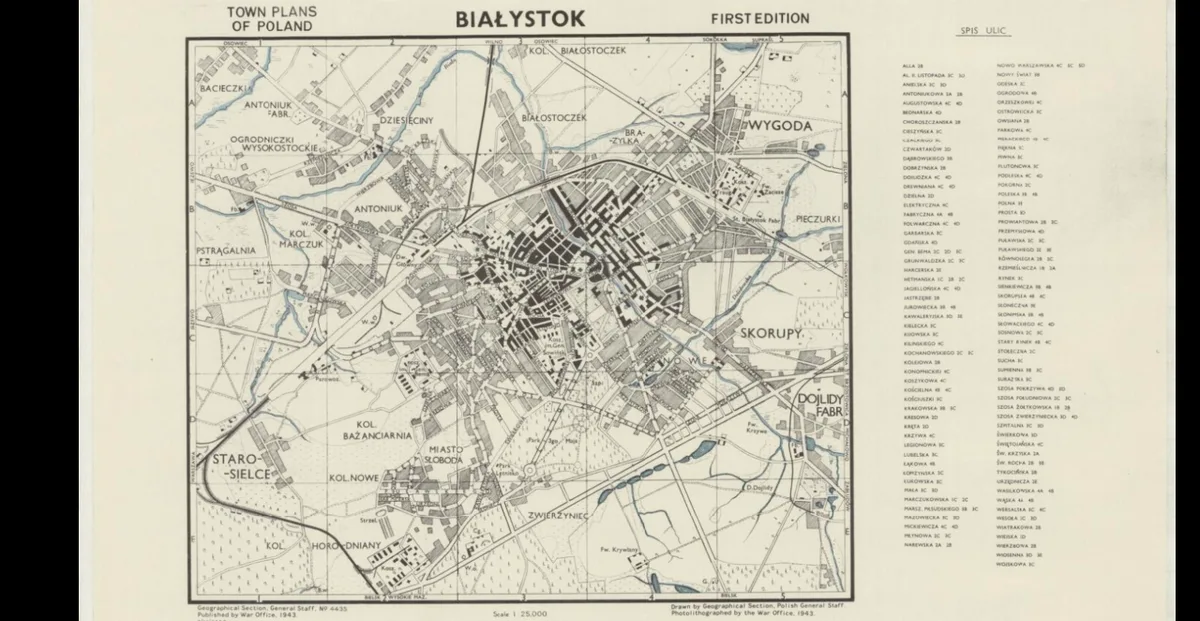
Local legend credits the 14th-century Lithuanian Duke Gediminas with founding Białystok after camping beside a clear stream. Archaeological evidence, though, shows people already lived along the Biała River before him. The name Białystok translates to white slope, a reference to that same river. Wealthy families, including the Branickis, built estates here as the city grew into a trading and textile hub between Poland, Lithuania, and Russia, with an active textile industry by the 19th century. Both World Wars hit Białystok hard. German and Soviet forces occupied the city in turn. German occupiers killed most of the city's Jewish population, and Soviet authorities deported more than 300,000 Poles to Siberia starting in 1940. A 1943 uprising in the Białystok Ghetto is remembered today along the Jewish Heritage Trail. Postwar reconstruction rebuilt the city from ruins, so today's compact center reflects that rebuilding rather than centuries of unbroken original architecture.
12 Best Things to Do in Białystok, Poland
These twelve sights cover the essential Baroque, religious, and modern landmarks inside Białystok's walkable center, ranked roughly in the order most visitors reach them from Rynek Kościuszki.
The Sybir Memorial Museum documents the 1940 Soviet deportation mentioned in Białystok's history: more than 300,000 Poles were sent to Siberia and Kazakhstan, an enormity experienced through the museum's immersive exhibits.
- Branicki Palace and Gardens
- Jan Klemens Branicki modeled this 18th-century Baroque palace on Versailles, earning it the nickname Polish Versailles; it now houses the Medical University of Białystok.
- If time is short, stick to the free gardens, which are open year-round.
- Book the paid interior tour only if Baroque architecture or the pharmacy museum interests you; the Branicki Palace guide has the current schedule.
- Rynek Kościuszki and the Town Hall Art Museum
- This 18th-century market square, laid out by Jan Klemens Branicki after the 1753 fire, is the social center of Białystok, ringed by restaurants and cafés in restored town houses.
- The baroque Old Town Hall in the middle of the square now holds the city's Art Museum, with 19th- and 20th-century regional paintings.
- Entry costs 14 zł, and the collection is small enough to see in under an hour.
- Sybir Memorial Museum
- Opened in 2021, this museum documents the Soviet deportation of Polish citizens and other ethnic groups to Siberia and Kazakhstan starting in 1940.
- Immersive exhibits recreate cattle-car interiors, barracks, and schoolrooms, and the basement holds a memorial to the 1940 Katyn Massacre.
- Entry costs 25 zł, and 1.5 hours is the minimum for a full visit; slower visitors who read every panel should budget more time.
- Cathedral Basilica of the Assumption
- This neo-Gothic cathedral looks like many other early-20th-century Polish churches, except for one detail on its western facade.
- A smaller 17th-century parish church is still attached to the cathedral wall, built there because Czarist authorities banned new Catholic church construction.
- Framing the project as an enlargement of that older church let builders get around the restriction; only the newer cathedral interior is open to visitors.
- Church of St. Roch
- This modernist, Art Deco-style church stands at the end of Ulica Lipowa and looks unlike any other church in Białystok.
- Its tall white tower and stripped-down concrete form contrast with the neo-Gothic and baroque landmarks elsewhere in the city center.
- St. Nicholas Orthodox Church
- Located midway along Ulica Lipowa, this was the first Orthodox church built in Białystok.
- It is also the only Eastern Orthodox church in the city to survive Poland regaining independence, reflecting the region's ties to Belarus and Russia.
- Ludwik Zamenhof Centre
- Białystok is the birthplace of Ludwik Zamenhof, who created the Esperanto language in the 19th century.
- The small museum, a short walk northeast across the Biała River, sets his work in the context of the city's multilingual, multi-ethnic population at the time.
- A ticket costs 8 zł, and entry is free on Sundays.
- Historical Museum
- On Warszawska Street, this museum recreates a turn-of-the-century town house interior with period furniture and everyday objects.
- A large model of historic Białystok, paired with a light-and-sound display, explains how the city's urban layout developed.
- Entry costs 14 zł.
- Bojary District
- A short walk from the center, Bojary preserves some of the wooden houses that once defined residential Białystok.
- Ulica Wiktorii and Ulica Złota hold the best-preserved examples, though only a handful of original buildings remain among newer construction.
- A signposted walking trail links the district's key houses, or you can simply pass through on the way to the Sybir Memorial Museum.
- Białystok Street Art and Murals
- Side streets off Ulica Lipowa carry murals painted on Soviet-era apartment blocks.
- The best-known piece shows a girl watering a plant; another local favorite depicts a Polish grandmother known as Grandma Eugenia.
- Ulica Lipowa
- Białystok's main shopping street runs from Rynek Kościuszki past the Church of St. Roch, connecting most of the center's landmark sights.
- Restaurants, cafés, and shops line the route, making it a natural spot to end a day of sightseeing before dinner.
- Jewish Heritage Trail and Former Synagogues
- Before World War II, Białystok had a large Jewish community and, later, a ghetto established under German occupation.
- Three former synagogue buildings survive and now form the core of a self-guided Jewish Heritage Trail through the city center.
- Without knowing their history, the buildings look ordinary, so trail markers help identify remaining traces of Jewish life.
Białystok's Multicultural Heritage: Polish, Jewish, Belarusian, and Tatar Roots
Białystok's history reads like a map of Poland's eastern borderlands. Magnate families like the Branickis built their fortunes here as the city grew into a textile and trading hub between Poland, Lithuania, and Russia. A large Jewish community once made up a significant share of the population. Tatar settlers also established communities in nearby villages, including Kruszyniany, covered in the day trips section below. That mix of languages and cultures in 19th-century Białystok pushed local resident Ludwik Zamenhof toward inventing Esperanto. He designed the language to give different ethnic groups a shared, neutral tongue. The Ludwik Zamenhof Centre, detailed above, is the place to learn how that idea took shape.
A One-Day Itinerary for Białystok
This route starts at the market square and works outward, connecting the Rynek to the murals and Bojary district before finishing back near Lipowa for dinner.
The Sybir Memorial Museum's 1.5 hours of exhibits does not account for travel time from the city center; getting there on public transit or foot takes considerable time since the location sits further out than central landmarks.
- Morning: Rynek Kościuszki and the Cathedral
- Start at Rynek Kościuszki for breakfast in one of the cafés around the square.
- Walk east a few hundred meters to the Cathedral Basilica of the Assumption, then loop past the Old Town Hall Art Museum.
- Midday: Branicki Palace and Ludwik Zamenhof Centre
- Head south to the Branicki Palace gardens, adding the paid interior tour only if Baroque architecture or the pharmacy museum interests you.
- Cross the Biała River northeast to the Ludwik Zamenhof Centre to see how the city's multilingual history shaped Esperanto.
- Afternoon: Bojary District and Sybir Memorial Museum
- Walk north through Bojary to see the surviving wooden houses on Ulica Wiktorii and Ulica Złota.
- Side streets near Bojary also carry some of the city's murals, including the well-known girl-with-a-watering-can piece, worth a short detour.
- Continue to the Sybir Memorial Museum and budget at least 1.5 hours for the exhibits.
- Evening: Ulica Lipowa
- Head back toward the center along Ulica Lipowa, passing the Church of St. Roch and St. Nicholas Orthodox Church.
- Finish with dinner at one of the restaurants near Rynek Kościuszki.
Getting Around Białystok: On Foot or by Bus
Białystok's city center is compact enough to cover on foot. Rynek Kościuszki, the cathedral, and Branicki Palace all sit within easy walking distance of each other. The Sybir Memorial Museum and the Bojary District sit further out. Local buses run by BKM, Białystok's public transport operator, connect them to the center. Check BKM's route planner for current schedules before heading to either site, since walking there from the Rynek takes considerably longer than from the surrounding neighborhoods.
Entry Prices and Budgeting for Białystok Sights
Museum entries in Białystok are inexpensive, and most cost well under 30 zł. The table below lists current entry prices; confirm exact rates on-site since museums adjust pricing periodically. The Branicki Palace interior tour runs a few times a day, so check the local schedule before planning around it. Confirm the Sybir Memorial Museum's current opening hours on its official site before visiting, since museum schedules change.
| Sight | Entry Price | Notes |
|---|---|---|
| Branicki Palace gardens | Free | Interior guided tour priced separately; confirm current rates before booking |
| Rynek Kościuszki – Art Museum (Old Town Hall) | 14 zł | Regional 19th- and 20th-century paintings; viewable in under an hour |
| Sybir Memorial Museum | 25 zł | Budget at least 1.5 hours for the exhibits |
| Ludwik Zamenhof Centre | 8 zł | Free on Sundays |
| Historical Museum | 14 zł | Includes a light-and-sound city model display |
| Cathedral Basilica of the Assumption | No published entry fee | Interior open to visitors |
Best Day Trips from Białystok
Białystok's compact center works well as a base for the wider Podlaskie region, though the three trips below carry different time commitments.
- Tykocin
- This former royal town holds a 17th-century synagogue and a Renaissance-style castle, both tied to a Jewish community that once made up much of the town's population.
- The Tykocin day trip guide covers transport options and a route for seeing both sites in a half day.
- Białowieża Forest
- Białystok is the closest city base for reaching this old-growth forest, home to the European bison.
- Without a car, the trip typically eats most of a day, so pair it with an overnight stay rather than combining it with a full day of Białystok sightseeing.
- The regional Podlaskie tourism portal lists current bus and tour options for reaching the reserve.
- Kruszyniany
- This village preserves Poland's Tatar Trail, anchored by a wooden 18th-century mosque still used by the local Tatar Muslim community.
- It sits further from Białystok than Tykocin, so a car or organized tour makes the visit far more practical than public transport.
Where to Eat Near Rynek Kościuszki
Restaurants and cafés ring Rynek Kościuszki, and a couple of specific stops stand out for regional food. Zapiecek-Podlaskie Jadło, on the south side of the square, serves regional Polish dishes including pierogi. Near the Branicki Palace, Maison du Café on Jana Kilińskiego street is a stop for coffee and cake after the gardens or the guided tour. Both sit inside the walking route described in the one-day itinerary above, so no detour is required to reach either one.
Where to Stay in Białystok
Accommodation clusters around the city center, within walking distance of Rynek Kościuszki, and covers a range from hostel to hotel.
- Budget: Hostel Białystok Centrum
- A central hostel option within walking distance of Rynek Kościuszki and the main sights.
- Midrange: Bella Vista Centrum Apartament
- Apartment-style accommodation in the city center, useful for longer stays or groups.
- Luxury: Hotel Branicki
- A higher-end hotel named for the palace and family that shaped the city's historic core.
Mistakes to Avoid and the Best Time to Visit
Skip the assumption that Branicki Palace is a furnished royal residence. Renovation turned it into the Medical University of Białystok, and most interior rooms now serve as offices and lecture halls. Don't plan to see both Białowieża Forest and central Białystok in a single day without a car, since bus connections between the two are limited. Spring and summer bring the Branicki Palace gardens into full bloom, the best season for a slow walk through the grounds. A winter visit trades the gardens for a snow-covered Rynek Kościuszki instead.
How to Get to Białystok from Warsaw
Direct PKP Intercity trains from Warszawa Centralna are usually the simplest option for reaching Białystok. Services also call at Warszawa Wschodnia, which may suit travelers staying east of the Vistula. Check departure times on the official PKP timetable because engineering work can change journey lengths.
Białystok railway station is west of the historic center, beside the main bus station. Rynek Kościuszki is roughly a 25-minute walk away via Ulica Lipowa. Local buses and taxis provide easier connections when carrying luggage.
Białystok works well as a base for Tykocin and other Podlaskie destinations. It is less convenient for a rushed visit to Białowieża Forest. The forest lies southeast of the city and has no direct railway station. Public transport may require a connection through Hajnówka or a regional bus, leaving limited sightseeing time. Travelers without a car should consider staying overnight near Białowieża. Those planning only a city break can comfortably visit Białystok by train from Warsaw and return the following day.
For trip-planning details, see Poland - Wikivoyage and Poland - Wikipedia.
Explore things to do in other cities
- Zamosc's things to do
- Czestochowa's things to do
- Sopot's things to do
- Szczecin's things to do
- Lublin's things to do
- Gdynia's things to do
- Bydgoszcz's things to do
- Rzeszow's things to do
- Lodz's things to do
- Katowice's things to do
- Torun's things to do
- Poznan's things to do
- Wroclaw's things to do
- Wroclaw's things to do
- Warsaw's things to do
- Warsaw's things to do
- Zakopane's things to do
- Krakow's things to do
- Gdansk's things to do
- Gdansk's things to do
- Malbork's things to do
- Kielce's things to do
- Opole's things to do
- Olsztyn's things to do
Frequently Asked Questions
Is Białystok worth visiting?
Yes, Białystok is worth visiting for a full day of sightseeing around Rynek Kościuszki, the Branicki Palace, and the Sybir Memorial Museum. Its lack of crowds compared to Kraków or Warsaw is also a draw, and it works well as a base for the Białowieża Forest and nearby Tatar villages.
How many days do you need in Białystok?
One full day covers the essential sights in the city center. Add a second day, or an overnight stay, if you plan to visit the Białowieża Forest without rushing.
Is the Branicki Palace still a royal residence?
No. The palace now houses the Medical University of Białystok, and most interior rooms serve as offices. The gardens remain free to visit, and a paid guided tour covers the ballroom and pharmacy museum inside.
How much does the Sybir Memorial Museum cost, and how long should you plan to spend there?
Entry costs 25 zł. Budget at least 1.5 hours for the exhibits, and allow more time if you plan to read every panel in detail.
How do you get to Białystok, and how do you reach Białowieża Forest from there?
Trains and buses connect Białystok with Warsaw; check current timetables and fares before booking. Reaching Białowieża Forest without a car takes most of a day, so pair the trip with an overnight stay rather than a same-day return.
What food should you try in Białystok?
Regional Podlaskie cooking centers on Polish staples like pierogi. Restaurants around Rynek Kościuszki, including Zapiecek-Podlaskie Jadło, serve them alongside other local dishes.
Explore More Poland Guides
Keep planning your Poland trip with these guides.
Poland Guides
You might also like


Continue reading
More guides you'll find useful