12 Best Things to Do in Lublin, Poland
Last updated June 2026 — Lublin is eastern Poland's best-kept secret, and it is easy to see why most travellers miss it: everyone zips straight between Warsaw and Kraków without once glancing east. That's their loss. Lublin is a genuine medieval royal city — a hilltop castle, a hilly cobbled Old Town of painted tenements, two respected universities that fill the streets with students, and over five centuries of layered history running from the 1569 Union of Lublin right up to the profound, harrowing weight of Majdanek, one of the best-preserved former Nazi concentration camps in Europe. It isn't a sanitised postcard version of Poland; it's the real thing, a little rough at the edges and all the more rewarding for it.
What makes Lublin compelling in 2026 is precisely what it isn't: it isn't Kraków. The Old Town is smaller, the queues barely exist, the prices are kinder, and the atmosphere is distinctly eastern Polish — warmer among locals, more student-fuelled after dark, and considerably more interesting if you want to feel like you've actually discovered somewhere rather than followed a crowd. If you're weighing up whether the detour east is worth it, our honest verdict on whether Lublin is worth visiting covers the full case; the short version is yes, emphatically. For a self-guided walk through the medieval core, our dedicated Lublin Old Town guide traces the route from Kraków Gate to Grodzka Gate step by step.
Key Takeaways
- The Holy Trinity Chapel inside Lublin Castle — Gothic architecture fused with Byzantine-Ruthenian frescoes painted in 1418 — is the single most precious medieval interior in the city; buy a separate ticket and allow extra time for it.
- The Lublin Underground Route is the flagship visitor experience: a guided 45-minute walk through medieval merchant cellars beneath the Old Town Rynek, ending with a dramatic light-and-sound depiction of the Great Fire of 1719 — book ahead, especially for English-language tours.
- Majdanek is free to enter and one of the most sobering, best-preserved former concentration camps in Europe; allow 2–3 hours and approach it with the gravity it demands.
- The Old Town, Krakowskie Przedmieście, and Plac Litewski are all walkable — the core of Lublin fits into a focused single day, but two days is far more comfortable and leaves room for the Open-Air Village Museum.
- Lublin is the ideal base for eastern Poland day trips: Kazimierz Dolny (roughly 1 hour) and UNESCO-listed Zamość (roughly 1.5 hours) are two of the most beautiful and least touristy destinations in the country.
Why Lublin Deserves a Spot on Your Poland Itinerary
Lublin is the largest city in eastern Poland, home to around 330,000 people and the capital of the Lublin Voivodeship — but none of that administrative framing captures what it actually feels like to arrive here. It is a university city: UMCS (Maria Curie-Skłodowska University) and KUL (the Catholic University of Lublin) together keep the cafés, bars, and streets alive well into the night and at a price point most other Polish cities can't match. Historically it was something far larger: in 1569 the Union of Lublin was signed here, joining the Kingdom of Poland and the Grand Duchy of Lithuania into the vast Polish–Lithuanian Commonwealth and making Lublin briefly the hinge of Central Europe. That weight of history is still visible in the stone and brick of every corner.
What makes Lublin different from the cities that dominate Poland's tourist circuit is the sheer density and variety of its stories in a small, walkable area. Christian, Jewish, royal, Soviet-era prison, student town: the city contains all of these at once. The Jewish community that once made Lublin one of the greatest centres of Jewish learning in the world — the Yeshiva of the Wise Men of Lublin was the largest in its day — is gone, destroyed in the Holocaust, but its memory is preserved at the Grodzka Gate and the NN Theatre. That absence is impossible to ignore, and essential not to. For comparison, our guide to the best things to do in Kraków shows what a bigger, busier, more famous Polish city looks like; Lublin gives you a remarkable amount of the same depth with a fraction of the tourist footfall, and it earns a prominent place in our wider places to visit in Poland guide for exactly that reason.
12 Best Things to Do in Lublin, Poland
The 12 picks below cover every layer of what Lublin does well: its medieval architecture, its underground secrets, the profound history of Majdanek, its Jewish heritage, its food, its festivals, and the remarkable countryside within an hour of the centre. I've ordered them to follow a roughly sensible walking route through the city, starting in the Old Town and working outward. For a day-by-day route through them, our perfect 2-day Lublin itinerary threads the highlights into two manageable days.
| Attraction | Type | Time needed | Cost (approx.) |
|---|---|---|---|
| Old Town & Rynek | Medieval old town | Half-day | Free |
| Lublin Castle + Holy Trinity Chapel | Castle & museum | 1.5–2 hrs | ~25–35 PLN (€6–8) |
| Lublin Underground Route | Guided underground tour | ~45 min | ~20–30 PLN (€5–7) |
| Kraków Gate (Brama Krakowska) | Historic gate & viewpoint | 30–45 min | Small entry fee |
| Trinitarian Tower + Cathedral | Tower climb & church | 1 hr | Small entry for tower |
| Majdanek memorial | Memorial & museum | 2–3 hrs | Free |
| Open-Air Village Museum | Skansen / open-air museum | Half-day | ~20–30 PLN (€5–7) |
- Walk the Old Town (Stare Miasto) and the Rynek
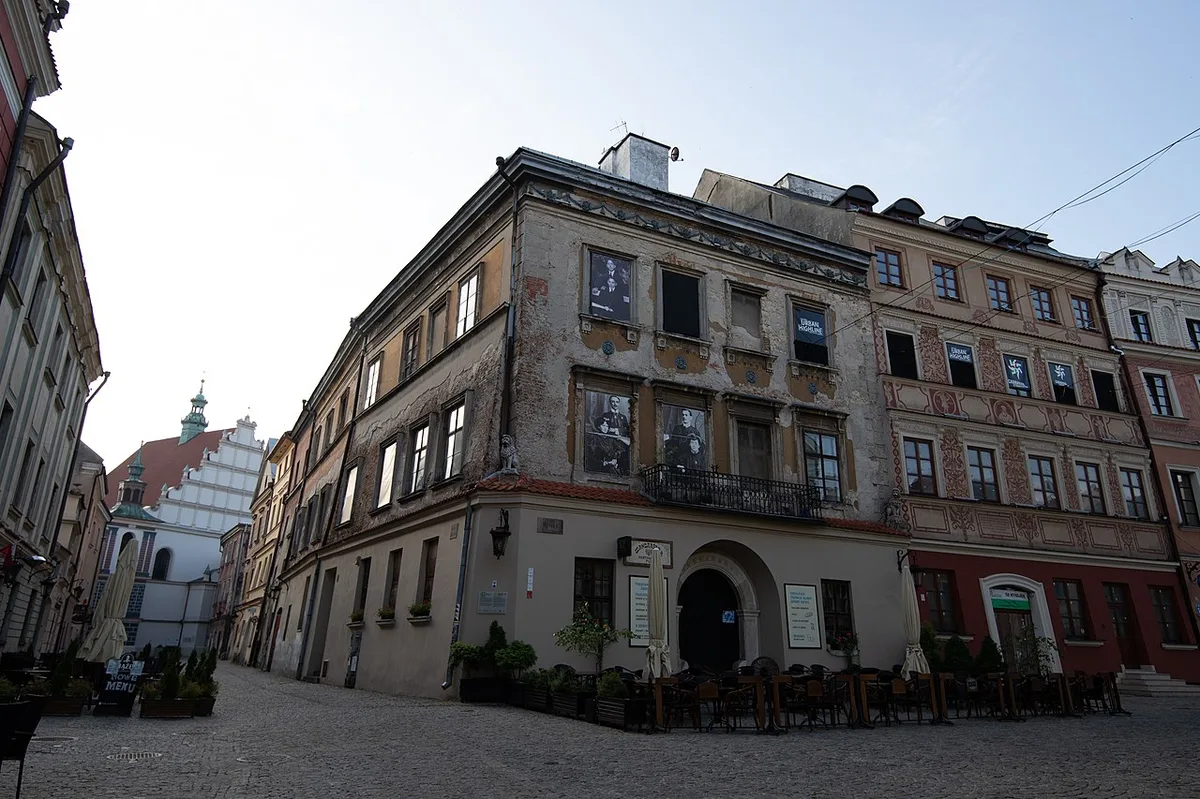
- Lublin's Old Town is small, hilly, and beautifully restored — a genuine medieval core of cobbled lanes, painted tenement facades, and quiet squares that rewards a slow ramble rather than a rushed tick-off.
- The anchor is the Old Town Market Square (Rynek), at whose centre stands the Crown Tribunal (Trybunał Koronny) — once the highest court of the Polish–Lithuanian Commonwealth's Lesser Poland, and now home to the Upper Route exhibition and the Underground Route entrance.
- Allow a half-day to wander properly: duck down the side alleys off the Rynek, note the Renaissance and Baroque facades on the tenements, and pause at a café terrace to absorb the atmosphere without rushing. The Old Town is the hub from which almost everything else on this list radiates.
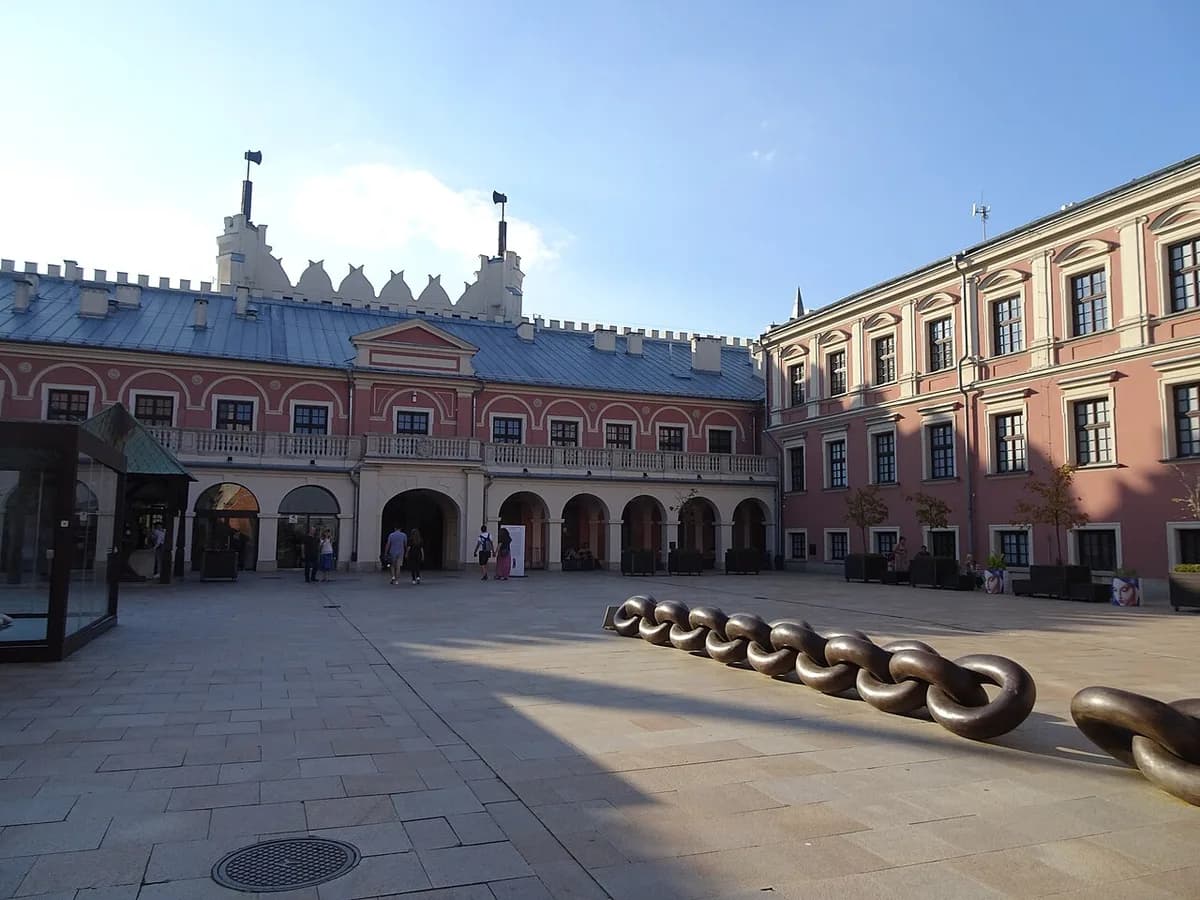
- Lublin Castle and the Holy Trinity Chapel frescoes
- The white neo-Gothic castle sits on a hill above the Old Town and is Lublin's most dramatic landmark from a distance; the oldest surviving element is the 13th-century Romanesque round keep (stołp), one of the few donjon towers still standing in Poland.
- Inside is a branch of the National Museum in Lublin, but the real reason to visit is the Holy Trinity Chapel (Kaplica Trójcy Świętej) — a unique fusion of Gothic Catholic architecture with Byzantine-Ruthenian frescoes commissioned by King Władysław Jagiełło in 1418, among Poland's most precious medieval monuments.
- The chapel requires a separate (modest) ticket on top of the main museum entry; photography may be restricted on arrival. Under the Nazis and then the communists the castle served as a prison, which adds a heavy layer to a building already dense with history. Expect around 25–35 PLN total for castle and chapel entry, though always confirm current prices on the official site.
- Explore the Lublin Underground Route (Lubelska Trasa Podziemna)
- The Underground Route is Lublin's flagship visitor experience and deservedly so: roughly 280 metres of interconnected medieval merchant cellars beneath the Old Town Rynek, joined into a single walking tour entered at the Crown Tribunal in the market square.
- The guided tour runs for around 45 minutes and climaxes with a dramatic light-and-sound diorama recreating the Great Fire of Lublin in 1719 — the fire that destroyed much of the Old Town and buried these cellars for centuries. It's cool underground (expect 8–12°C year-round), so bring a layer even in summer.
- Booking ahead is strongly recommended, especially for English-language tours which run at set times. For full details on tickets, booking, accessibility, and what to expect underground, see our complete guide to the Lublin Underground Route before you go.
- Climb the Kraków Gate (Brama Krakowska)
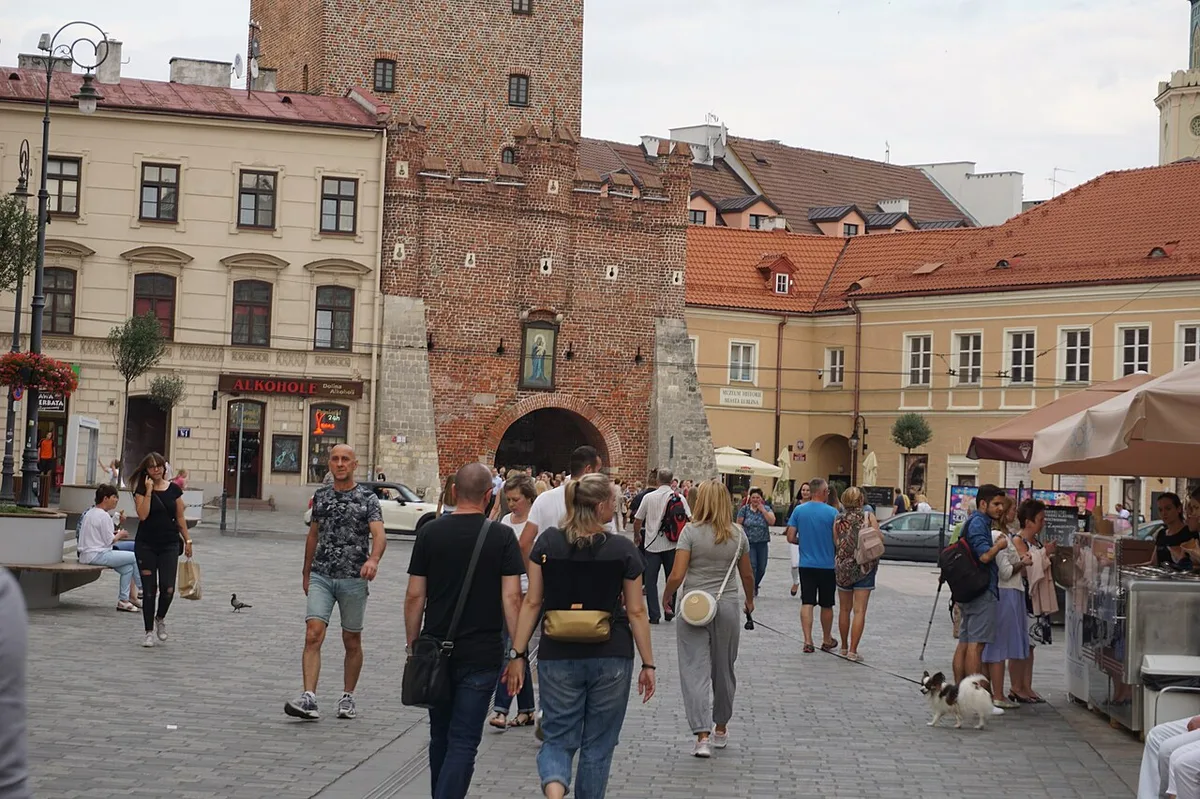
- The 14th-century Gothic brick Kraków Gate is Lublin's visual emblem and the main entrance to the Old Town from Krakowskie Przedmieście — it appears in virtually every photograph of the city and anchors the whole medieval skyline.
- Inside the tower is a small Historical Museum and a viewpoint over the rooftops and the boulevard below; the entry fee is modest and the climb is short, making it an easy addition to an Old Town morning.
- The view back down Krakowskie Przedmieście, framed by the brick arch, is one of Lublin's most satisfying vistas — worth the small effort even if you skip the museum proper.
- Climb the Trinitarian Tower and visit Lublin Cathedral
- The Trinitarian Tower (Wieża Trynitarska) is the tallest tower in the Old Town and the best panoramic viewpoint in the city — the view across the medieval rooftops to the castle on the opposite hill is genuinely arresting.
- Inside the tower is the Archdiocesan Museum (small entry fee); just beside it stands the Lublin Cathedral — the Archcathedral of St John the Baptist (Archikatedra) — a Baroque church with striking trompe-l'œil frescoes and the remarkable "Acoustic Sacristy", where a whisper in one corner travels clearly to another.
- Both the tower and the cathedral sit within a few minutes' walk of the Rynek, so they slot naturally into a compact Old Town morning alongside the Underground Route and the Kraków Gate.
- Stroll Krakowskie Przedmieście and Plac Litewski
- Krakowskie Przedmieście is Lublin's main pedestrian promenade — a lively, café-lined boulevard that runs west from the Kraków Gate through the city's commercial heart, lined with restaurants, shops, and the New Town Hall.
- It opens onto Plac Litewski (Lithuanian Square), a beautifully revitalised public square with a multimedia fountain, the Union of Lublin monument, and the Saxon Garden alongside — the social heart of the city, especially on summer evenings when the terraces fill with students and locals.
- This is the best stretch for feeling modern Lublin: come early evening for a cebularz from a bakery and a coffee on a terrace, then watch the city go about its business at a pace no tourist hotspot could replicate.
- Grodzka Gate, Jewish heritage, and the NN Theatre
- The Grodzka Gate (Brama Grodzka) — the "Jewish Gate" — was the historic threshold between the Christian Old Town and the Jewish quarter, which once housed one of the largest and most important Jewish communities in Poland; the quarter was destroyed in the Holocaust and the site is now an empty space, its absence more eloquent than any ruin.
- The gate today houses the "Grodzka Gate – NN Theatre" (Brama Grodzka – Teatr NN), a remarkable cultural centre devoted to preserving the memory of Jewish Lublin through exhibitions, oral history recordings, and multimedia installations — among the most moving sites in the city.
- Lublin was a world centre of Jewish learning: the Yeshiva of the Wise Men of Lublin (Yeshivat Chachmei Lublin), once the largest yeshiva in the world, still stands on ul. Lubartowska and can be visited. This is an essential stop for anyone interested in the Jewish heritage of Poland; approach it with time and quiet.
- Visit Majdanek — State Museum at Majdanek
- KL Lublin, known as Majdanek, was a Nazi German concentration and extermination camp on the south-eastern edge of the city. It is exceptionally well preserved — original barracks, guard towers, gas chambers, and the enormous Mausoleum dome containing victims' ashes — because Soviet forces liberated it in 1944 before the Nazis could destroy the evidence.
- Admission is free; the museum recommends allowing 2–3 hours and does not recommend the site for children under 14. Reach it by city bus or trolleybus from the centre (roughly 20–30 minutes toward Majdanek) — our getting around Lublin guide has the relevant routes.
- This is one of the most important things you can do in Lublin, and in Poland. The weight of it stays with you. Approach it with the gravity it demands.
- Spend a half-day at the Open-Air Village Museum (Muzeum Wsi Lubelskiej)
- On the western edge of the city, the Muzeum Wsi Lubelskiej is a large skansen: relocated traditional wooden cottages, manor houses, a church, windmills, and a recreated small-town street showing rural life in the Lublin region from the 18th and 19th centuries.
- It's an unexpectedly engaging half-day, especially in warm weather; expect a ticket of around 20–30 PLN (≈€5–7). Most visitors to Lublin skip this one — which is a mild shame, particularly if you're travelling with children or are interested in Polish folk architecture beyond the city walls.
- The site is on the western edge of the city and is best reached by bus from the centre; pair it with a Majdanek morning and you have a full, varied second day without retracing any ground.
- Eat a cebularz lubelski
- Lublin's signature food is the cebularz lubelski — a flat wheat roll topped with chopped onion and poppy seed, holding EU Protected Geographical Indication status — and eating one fresh from an Old Town bakery is a small ritual I never skip.
- Look for it in the bakeries and food stalls around the Rynek and Krakowskie Przedmieście; it's cheap, best eaten warm, and one of those hyper-local things that you simply can't get quite like this anywhere else in Poland.
- Beyond the cebularz, the local repertoire includes forszmak lubelski (a spiced meat-and-pickle stew), pierogi, żurek, and all the Polish classics at honest prices — milk bars (bar mleczny) scattered through the city are the cheapest and most authentic way in. For a fuller picture, see our where to eat in Lublin guide.
- Catch a festival — Carnaval Sztukmistrzów or Jarmark Jagielloński
- The Carnaval Sztukmistrzów (Carnival of Magicians and Buskers), late July, is one of Poland's most distinctive festivals: a major new-circus and street-performance event that fills the Old Town with fire-eaters, acrobats, and illusionists, riffing on the legend of Pan Twardowski — the Lublin "magician" of Polish folklore.
- The Jarmark Jagielloński (Jagiellonian Fair) in August brings traditional folk crafts and music to the Old Town with a medieval-market atmosphere; earlier in the year, Noc Kultury (Night of Culture, early June) keeps the city awake all night with art installations and performances across the Old Town and Krakowskie Przedmieście.
- Lublin was a finalist for the European Capital of Culture 2016, and the festival programme reflects a city that takes culture seriously and makes it genuinely accessible — if any of these dates align with your visit, plan the trip around them and book accommodation early.
- Take a day trip — Kazimierz Dolny or Zamość
- Lublin's greatest asset as a base is the quality of the day trips around it: Kazimierz Dolny, about 45 km and roughly an hour away, is a postcard Renaissance artists' town on the Vistula — a market square, a ruined castle, the Three Crosses viewpoint, galleries, and the local kogut (rooster) bread to rival Lublin's cebularz.
- Zamość, roughly 90 km and 1.5 hours away, is a UNESCO World Heritage Site — the "ideal Renaissance city" or "Padua of the North" — built to a plan in the 16th century and perfectly preserved, with an arcaded Great Market Square, a Town Hall, and bastion fortifications that still define the city's edge.
- For shorter outings, Nałęczów (~30 km) is a genteel spa town with a health-resort park, and Kozłówka (~40 km) has the Zamoyski Palace and a notable Socialist Realist art gallery. Full routes, transport, and timings are in our day trips from Lublin guide.
Lublin Castle and the Holy Trinity Chapel are typically closed on Mondays — confirm on the official National Museum site before you go. The Underground Route runs English-language tours at set times and they can sell out in peak summer, so book ahead at the Crown Tribunal ticket desk or online. Getting the sequence right on Day 1 (Old Town walk → Underground Route → Castle and Chapel) means you avoid the midday queue and land the best afternoon light over the Rynek.
How to Get Around Lublin
Central Lublin is easy to navigate because the most important sights are walkable. The Old Town, Krakowskie Przedmieście, Plac Litewski, and Lublin Castle all sit within a compact, largely pedestrianised area that you can cover on foot — this is one of the city's genuine practical pleasures. For Majdanek and the Open-Air Village Museum you'll need MPK Lublin, the city's bus and trolleybus network (one of the few Polish cities still running trolleybuses, a network in operation since 1953). Buy tickets from vending machines (biletomat) or via app, and validate on board the moment you step on.
Getting to Lublin from Warsaw is straightforward by train — Warsaw Central (Warszawa Centralna) to Lublin Główny, the main station south of the city centre, takes roughly 2 to 2.5 hours on direct services. Lublin Airport (IATA: LUZ), located in Świdnik about 10 km south-east of the centre, handles limited but growing routes and is connected to the centre by a dedicated train and bus link. Taxis and Bolt are inexpensive for shorter hops. For full ticket types, trolleybus routes, and airport transfer details, our getting around Lublin guide covers everything you need.
Where to Stay in Lublin
For a first visit, I'd stay in or immediately beside the Old Town or along the Krakowskie Przedmieście corridor — both put you within walking distance of the Underground Route, Lublin Castle, the Trinitarian Tower, and the best cafés, while letting you wander back into the Old Town lanes in the evening when the day-trippers have gone. The Old Town itself has a handful of atmospheric guesthouses and boutique hotels; the Krakowskie Przedmieście area offers more options across the budget range. The modern Śródmieście adds mid-range and business hotels for those who want newer facilities close to everything.
Lublin is noticeably cheaper than Warsaw or Kraków, so your money stretches further even at the mid-range. The one booking tip I'd pass on: lock in accommodation early if you're visiting during the Carnaval Sztukmistrzów in late July or the Jarmark Jagielloński in August, when Old Town hotels fill quickly. For neighbourhood-by-neighbourhood picks and price bands, see our full where to stay in Lublin guide.
Best Time to Visit Lublin
Lublin is a year-round city break, but the clearest sweet spot is late spring (May–June) and early autumn (September): weather is comfortable for walking the hills of the Old Town, the Open-Air Village Museum is at its best, the café terraces on Plac Litewski are in full swing, and Noc Kultury in early June gives you the city's creative life at full pitch. July and August are warmer and busier — which is when the Carnaval Sztukmistrzów and Jarmark Jagielloński run, so if you want festivals, summer is the time to come.
Winter in Lublin is cold but not without appeal: the Old Town quietens right down, accommodation prices drop, and the indoor sights — Lublin Castle, the Holy Trinity Chapel, the Grodzka Gate museum, the Underground Route — come into their own. For a month-by-month breakdown of weather, festival dates, and which season suits which kind of visitor, see our full best time to visit Lublin guide.
Things to Do in Lublin at a Glance
- Top sights: Lublin Castle + Holy Trinity Chapel frescoes, Old Town Rynek with the Crown Tribunal, the Lublin Underground Route, Majdanek memorial, and the Open-Air Village Museum — a full day to a day and a half combined.
- Most atmospheric corner: The Old Town between the Kraków Gate and the Grodzka Gate — hilly, cobbled, quiet lanes and painted tenements with the castle rising above.
- Getting around: Walk the Old Town and Krakowskie Przedmieście; use MPK trolleybuses and buses for Majdanek and the Open-Air Village Museum — buy tickets from a biletomat machine and validate on board.
- How long to stay: 1–2 days for the city itself; add a third day for a day trip to Kazimierz Dolny (~1 hr) or UNESCO Zamość (~1.5 hrs).
- Free highlights: Walking the Old Town lanes, Krakowskie Przedmieście promenade, Plac Litewski, Grodzka Gate museum (free or small donation), and Majdanek (free admission).
- Useful links: Lublin (Wikipedia) · Visit Lublin (official)
Explore More Lublin Guides
Plan every part of a Lublin trip — from where to stay and what to eat, to the Underground Route, nightlife, and day trips across eastern Poland.
Attractions & Old Town
- Lublin Attractions: Tickets, Hours, and Visitor Tips
- Lublin Old Town Travel Guide
- Lublin Underground Route Travel Guide
Food, Drink & Nightlife
Where to Stay
Getting Around & Practical Tips
- Getting Around Lublin Travel Guide
- Best Time To Visit Lublin Travel Guide
- How Many Days In Lublin Travel Guide
- Is Lublin Worth Visiting Travel Guide
Itineraries & Day Trips
- Lublin Itinerary 2 Days Travel Guide
- Day Trips From Lublin Travel Guide
- 6 Best Museums in Lublin (2026)
- Best Time to Visit Lublin
- Best Day Trips from Lublin
- Free Things to Do in Lublin
- Getting Around Lublin
- How Many Days in Lublin?
- Is Lublin Worth Visiting? An Honest 2026 Verdict
- The Perfect 2 Days in Lublin
- Lublin Jewish Heritage Guide
- Lublin Nightlife Guide
- Lublin Old Town Guide
- Lublin Underground Route
- Lublin with Kids
- Where to Eat in Lublin
- Where to Stay in Lublin
Explore things to do in n in other cities
Frequently Asked Questions
What is Lublin known for?
Lublin is known for its beautifully preserved medieval Old Town, the 14th-century Lublin Castle, and the Holy Trinity Chapel inside it — whose Byzantine-Ruthenian frescoes from 1418 are among Poland's most precious medieval monuments. The city is also famous for the Lublin Underground Route, the Grodzka Gate's Jewish-heritage museum, the Majdanek concentration camp memorial on the city's edge, and a lively student scene fuelled by UMCS and KUL universities. Historically, Lublin was where the Union of Lublin (1569) joined Poland and Lithuania into the Polish–Lithuanian Commonwealth.
Is Lublin worth visiting?
Yes — Lublin is one of Poland's most underrated city breaks. It offers a genuine medieval Old Town, a hilltop castle, the Majdanek memorial, and a rich multicultural history, all without Kraków's crowds or prices. Two days cover the city well, and Lublin doubles as an ideal base for day trips to Kazimierz Dolny and UNESCO-listed Zamość.
How many days do you need in Lublin?
Two days is the most comfortable amount: Day 1 for the Old Town, the Underground Route, the Trinitarian Tower, Lublin Castle, and the Holy Trinity Chapel frescoes; Day 2 for Majdanek, the Open-Air Village Museum, and Krakowskie Przedmieście at leisure. Add a third day if you plan a day trip to Kazimierz Dolny or Zamość.
How do I get from Warsaw to Lublin?
The easiest way is by train from Warsaw Central (Warszawa Centralna) to Lublin Główny, with direct services taking roughly 2 to 2.5 hours depending on the timetable. Lublin Airport (IATA: LUZ) in Świdnik handles a limited number of routes and is connected to the city centre by a dedicated train and bus link. Many visitors fly into Warsaw and take the train, making Lublin a natural add-on to a Warsaw city break.
What is the must-see sight in Lublin?
The Holy Trinity Chapel inside Lublin Castle is the single most extraordinary interior in the city — a rare fusion of Gothic Catholic architecture and Byzantine-Ruthenian frescoes painted in 1418 by order of King Władysław Jagiełło. Close runners-up are the Lublin Underground Route (a guided walk through medieval merchant cellars beneath the Old Town Rynek) and the Majdanek memorial, which is free to enter and among the best-preserved former Nazi concentration camps in Europe.
Lublin is a city that earns its place on a Poland itinerary by being quietly, stubbornly excellent at things most travellers never discover. It has a real medieval Old Town — hilly, cobbled, genuinely atmospheric — a castle with one of the most precious medieval interiors in the country, an underground world beneath the market square, Jewish heritage of world significance, and one of the most important memorial sites in Europe, all within a walkable core that costs considerably less than Kraków and attracts considerably fewer queues. The 12 things above give you the full range: the Old Town walk, the Underground Route, the Holy Trinity Chapel frescoes, Majdanek, the cebularz from a bakery, a festival in the summer heat, and the remarkable towns that wait just beyond the city limits.
For most visitors, two well-planned days are the sweet spot — and our perfect 2-day Lublin itinerary stitches these sights into a clean, practical route. Check the festival calendar against our best time to visit Lublin guide to land the trip at the right moment, and if you're still building the rest of your Poland journey around Lublin, our places to visit in Poland guide is the place to start. Eastern Poland rewards travellers who push beyond the obvious corridor — Lublin is the proof of that.
You might also like



Continue reading
More guides you'll find useful