12 Best Things to Do in Łódź, Poland
Last updated June 2026 — Łódź (pronounced roughly "wooj") is the Polish city most travellers skip on the way between Warsaw and Kraków, and for years I understood why. There's no medieval old town, no postcard market square, no castle on a hill. What there is instead is one of the most remarkable post-industrial reinventions in Central Europe: a 19th-century textile boomtown of red-brick cotton mills that has spent the last two decades turning its factories into museums, galleries, lofts, and bars. Once you stop expecting a polished Polish city break and start reading Łódź on its own terms, it becomes genuinely fascinating.
The thread running through almost everything worth doing here is the same: industrialists, immigrants, and the four cultures — Polish, Jewish, German, and Russian — who built the city from cabbage fields into "the Polish Manchester" in barely fifty years. Their mills, palaces, and workers' estates are the attractions now. When I last walked the length of Piotrkowska Street and out to Księży Młyn, I kept thinking how little of this story most visitors ever hear. Łódź works best as a focused 1–2 day stop, and it pairs naturally with Warsaw, which sits just over an hour away by train.
One honest caveat before you plan: if you come looking for the kind of Gothic-and-baroque core you'll find in Kraków or Gdańsk, you'll be disappointed, because it simply doesn't exist here. The real centre of gravity is Piotrkowska, Manufaktura, and Księży Młyn — not the modest Stare Miasto north of the mills. Read the city right and it rewards you; below are the 12 best things to do in Łódź in 2026 that actually justify the detour, and you can sanity-check the whole idea against our honest verdict on whether Łódź is worth visiting.
Key Takeaways
- Piotrkowska Street and Manufaktura are the two unmissable anchors — give Piotrkowska a slow half-day on foot and Manufaktura at least a couple of hours, ideally split across day and evening.
- Księży Młyn and the Herbst Palace are the city's most atmospheric, least crowded corner — a self-contained 19th-century mill estate that most day-trippers never reach.
- Łódź is film city ("HollyŁódź"): the EC1 complex with the National Centre for Film Culture, plus the legendary Łódź Film School that trained Polański, Wajda and Kieślowski, anchor that identity.
- An extensive MPK tram network connects everything, but central Piotrkowska is best walked — buy and validate tickets on board or via app, and consider a Migawka card only if you're staying longer.
- Łódź is noticeably cheaper and more local than Kraków, and as a city break it's a 1–2 day trip, very often paired with Warsaw, which is roughly 1h20–2h away by train.
Why Łódź Deserves a Spot on Your Poland Itinerary
Łódź is Poland's third-largest city, but for most of its history it wasn't really a city at all — it was a textile machine. In the 19th century, German, Jewish, and Russian entrepreneurs poured into a small settlement and built one of Europe's great cotton-manufacturing centres almost overnight, lining the streets with mills, factory-owners' palaces, and workers' tenements. That breakneck, money-driven origin is exactly why Łódź feels different from the rest of Poland: there's no royal heritage to perform, just the raw architecture of industry and the immigrant story behind it.
What makes it compelling in 2026 is what the city has done with that inheritance. Manufaktura turned Izrael Poznański's enormous mill into a culture-and-leisure destination. EC1 turned a power station into a film and science centre. Księży Młyn's spinning mill became lofts. Galeria Urban Forms turned blank tenement walls into a citywide open-air mural gallery. Łódź didn't bulldoze its industrial past — it moved into it. For travellers who like street art, industrial heritage, film history, and authentic city life over manicured tourism, that's a rare and rewarding combination.
What to skip: don't burn time hunting for an old town that isn't there, and don't feel obliged to "do" the modest Stary Rynek north of Manufaktura unless you're already passing. Łódź's appeal is horizontal and lived-in, not concentrated in one square. Unlike Warsaw, where the reconstructed Old Town is the headline act — see our guide to the best things to do in Warsaw for that contrast — Łódź asks you to walk its mills and streets instead. Come for that, and it's one of Poland's most underrated stops.
12 Best Things to Do in Łódź, Poland
The 12 picks below span everything Łódź does well: its flagship street, its converted mills, its film and museum culture, its street art, and one essential taste of the surrounding region. I've ordered them loosely so you can build a sensible route rather than zigzagging — most of the central items sit along or just off Piotrkowska, while Księży Młyn and Palmiarnia cluster together to the south-east. For a ready-made route through them, our 2-day Łódź itinerary threads the lot into two walkable days.
| Attraction | Type | Time needed | Cost |
|---|---|---|---|
| Piotrkowska Street | Street & street art | Half-day on foot | Free |
| Manufaktura | Mill & culture complex | 2–3 hrs | Free entry (museums extra) |
| Poznański Palace (City Museum) | Palace museum | 1–1.5 hrs | ~15–25 PLN (€4–6) |
| Księży Młyn | Industrial estate | 1.5–2 hrs | Free (outdoors) |
| EC1 / Film Culture Centre | Film & science centre | Half-day | ~20–30 PLN (€5–7) |
| Urban Forms murals | Street art trail | 1 hr+ while walking | Free |
| Orientarium (Łódź Zoo) | Zoo & aquarium | 2–3 hrs | ~60–90 PLN (€14–21) |
- Walk the full length of Piotrkowska Street
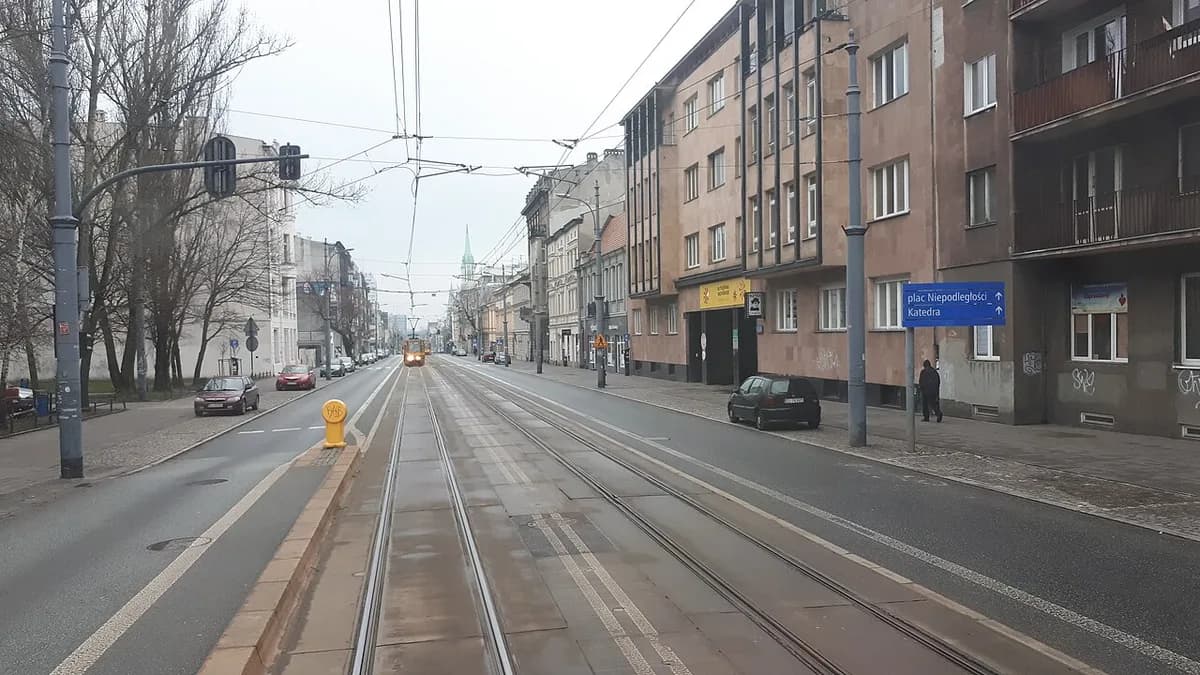
- ul. Piotrkowska — "Pietryna" to locals — runs about 4.2 km and is one of the longest commercial streets in Europe; the lively pedestrian core stretches roughly from Plac Wolności down to Plac Niepodległości.
- It's lined with restored tenement facades, cafés, restaurants, bars, design shops, and the courtyards of former factories — give it a slow half-day on foot rather than rushing it.
- If your legs give out, a bicycle rickshaw (riksza) will ferry you up or down the street for a negotiated fare — touristy, but a genuine local institution.
- Piotrkowska is the spine of any Łódź visit; our dedicated Piotrkowska Street guide breaks down what to see block by block.
- Spend an afternoon at Manufaktura
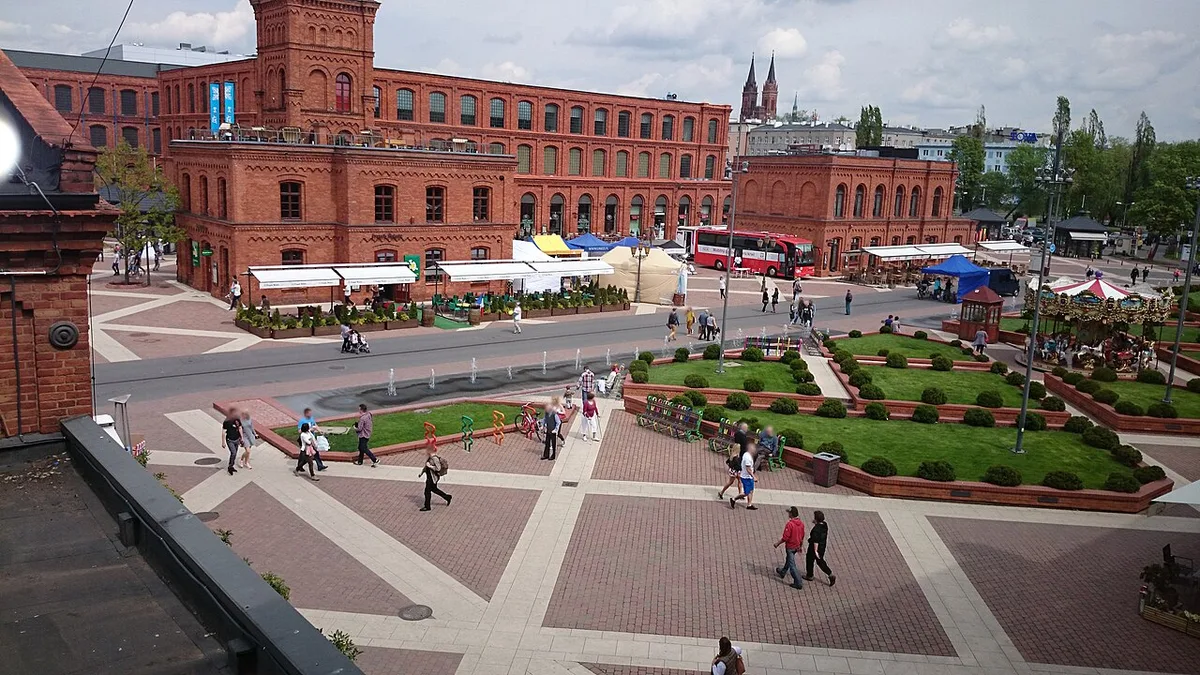
- Manufaktura is the vast red-brick complex of 19th-century industrialist Izrael Poznański's cotton mill, reborn as a shopping, culture, and dining destination around an enormous market square with fountains.
- Inside you'll find ms² (Muzeum Sztuki), one of Poland's leading modern-art collections, plus the Factory Museum that tells the story of the mill itself, alongside restaurants, cafés, and seasonal events.
- It's a short walk north of the top end of Piotrkowska, so it slots neatly onto the same day; come once in daylight for the architecture and again in the evening for the atmosphere.
- Allow at least two hours, more if you go into ms² — the scale of the place sneaks up on you.
- Explore Księży Młyn (Priest's Mill)
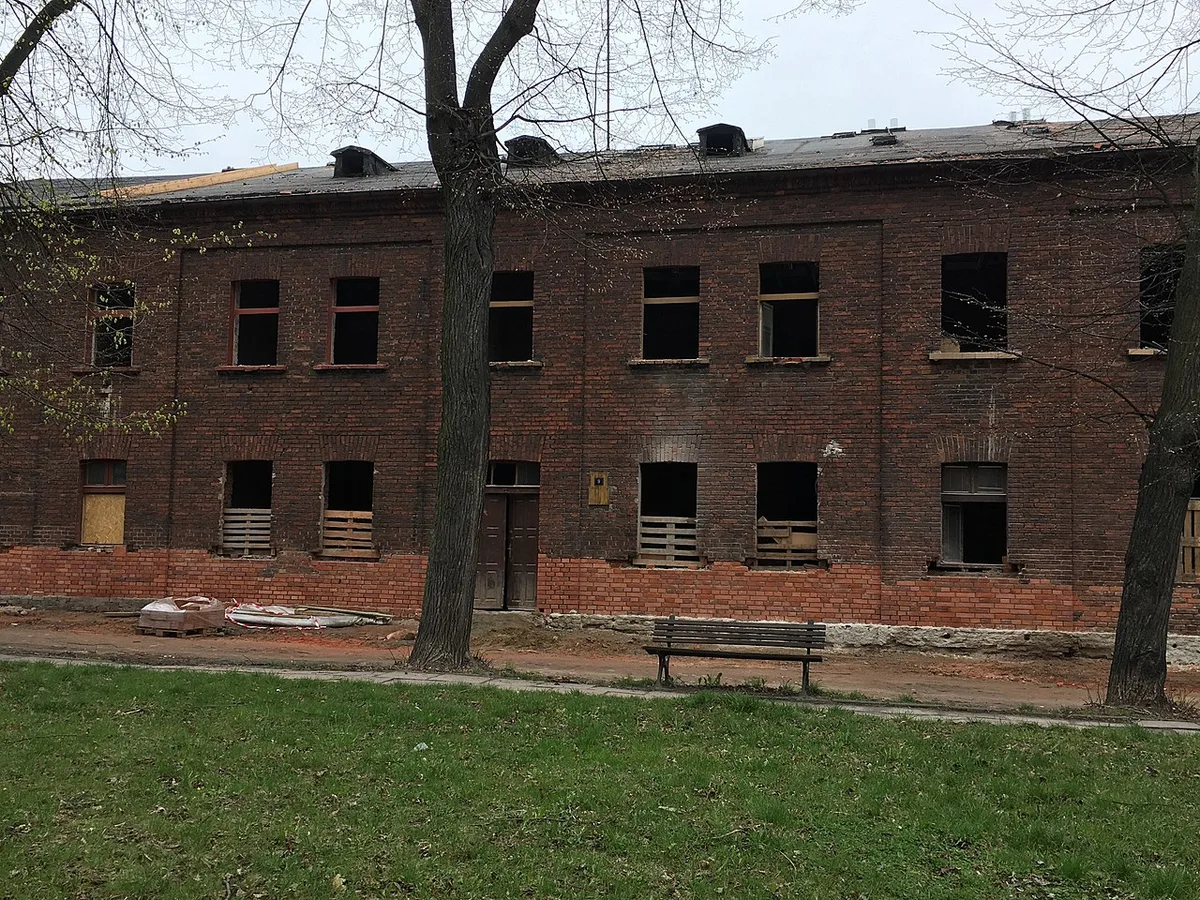
- Księży Młyn is Karl Scheibler's self-contained 19th-century industrial estate: rows of red-brick workers' housing (the famuły), the old spinning mill (now converted to lofts), and the grand factory-owner's residence.
- It's atmospheric, photogenic, and refreshingly quiet — this is the corner of Łódź that feels like stepping straight into the city's textile heyday.
- Most visitors never make it out here, which is exactly why I'd push you to: it's a 20–25 minute walk south-east of Piotrkowska, or a short tram ride.
- Pair it with the Herbst Palace (below) and the Palm House for a half-day in this part of the city.
- Tour Poznański Palace — the "Louvre of Łódź"
- Right beside Manufaktura stands the Pałac Izraela Poznańskiego, the extravagant eclectic palace of the same industrialist, often nicknamed the "Louvre of Łódź" for its sheer scale and ornament.
- It now houses the Museum of the City of Łódź, where the gilded interiors themselves are half the exhibit and the rest tells the story of the city's industrial dynasties and famous citizens.
- Expect entry in the region of 15–25 PLN (roughly €4–6); always confirm current prices and opening days on the official museum site before you go, as it closes on certain weekdays.
- Combining the palace with Manufaktura next door makes for an efficient, high-payoff morning.
- Dive into film culture at EC1
- EC1 Łódź is a beautifully converted early-1900s power plant, now a sprawling science-and-culture complex in the heart of the rebuilt station district.
- Its standout for many visitors is the National Centre for Film Culture (Narodowe Centrum Kultury Filmowej), a rich, hands-on celebration of cinema that leans into Łódź's identity as "HollyŁódź".
- EC1 also holds Planetarium EC1 and a large interactive science exhibition — easily a half-day if you have children or a soft spot for the mechanics of film and physics.
- Łódź's film credentials are no accident: the legendary Łódź Film School (PWSFTviT) trained Polański, Wajda, Kieślowski, and Zanussi, and Wajda filmed Reymont's novel Ziemia obiecana (The Promised Land), set among the city's textile barons.
- Hunt down the Urban Forms murals
- Galeria Urban Forms is a citywide collection of large-scale street-art murals by Polish and international artists, splashed across the gable ends of tenements all over the centre.
- It turns an ordinary walk between sights into a self-guided treasure hunt — keep glancing up as you move around Piotrkowska and the side streets.
- Several of the most striking works sit within a short walk of Piotrkowska, so you'll bag a few without detouring at all.
- It's completely free, and one of the best reasons to wander rather than tram between every stop.
- Escape to the Palmiarnia (Palm House)
- The Palmiarnia is a large municipal palm house and botanical greenhouse set in Park Źródliska, near Księży Młyn, packed with tropical and subtropical plants under glass.
- It's a warm, calm, and slightly surreal stop — especially welcome on a grey or cold day when you want an hour out of the weather.
- Entry is modest (expect a few złoty); pair it with Księży Młyn and the Herbst Palace since they're all in the same south-eastern pocket.
- This is the kind of low-key local spot that rounds out an itinerary without demanding much time.
- Eat and drink at OFF Piotrkowska
- OFF Piotrkowska Center is a former cotton-mill courtyard (entrance around ul. Piotrkowska 138/140) reborn as the city's coolest hub of bars, design studios, street food, and creative businesses.
- By day it's coffee, concept stores, and casual lunches; by night it's craft beer, clubs, and a young, student-heavy crowd — it's the single best place to feel modern Łódź.
- It's a few minutes' walk off the main drag and easy to miss from the street, so look for the gateway and head into the yard.
- For a deeper night out, see our Łódź nightlife guide — OFF Piotrkowska is its beating heart.
- Meet the Gallery of Great Citizens
- Strung along Piotrkowska is the Gallery of Great Citizens of Łódź — a series of bronze monuments honouring the people who shaped the city, woven right into the pavement and street furniture.
- Look for Julian Tuwim's bench (rub the nose for luck, as locals do), Artur Rubinstein's piano, and Władysław Reymont's trunk, among others.
- They make a fun, free, photo-friendly thread to follow as you walk the street — a low-effort way to absorb who Łódź is proud of.
- Kids and reluctant walkers tend to enjoy ticking them off, which makes the long street feel shorter.
- Trace the Four Cultures and Jewish heritage
- Łódź was built by four cultures — Polish, Jewish, German, and Russian — and that layered identity is one of its most moving stories, commemorated each autumn at the Festival of Four Cultures (Festiwal Czterech Kultur).
- The Jewish chapter is especially profound: during WWII the Nazis ran the Litzmannstadt Ghetto here, and the legacy is visible at the Radegast station memorial and the Jewish Cemetery on ul. Bracka — among the largest in Europe.
- These are sombre, important sites; approach them with the respect they deserve and allow time to absorb rather than rush.
- Together they reveal a Łódź far older in spirit than its young buildings suggest.
- Visit the Herbst Palace Museum
- The Muzeum Pałac Herbsta, part of Księży Młyn, was the elegant residence of the Herbst family, who married into the Scheibler industrial dynasty.
- Today it's a beautifully restored palace-museum with period interiors and an art collection, set in gardens that make a lovely contrast to the mills next door.
- It's the cultural anchor of the Księży Młyn visit — do the estate, then step inside the palace to see how the owners lived.
- Check current opening days and ticket prices on the official site; like most Łódź museums it closes on a fixed weekday.
- Take a day trip into the surrounding region
- Łódź sits in easy reach of some genuinely characterful day trips: Łowicz for its famous folk paper-cutouts (wycinanki) and striped costumes, and the baroque Nieborów Palace with the romantic Arkadia landscape park beside it.
- History lovers can head to Tum's Romanesque collegiate church near Łęczyca (with its castle and the devil-Boruta legend), or relax in the forests of Spała, a former presidential retreat on the Pilica.
- And of course Warsaw is barely over an hour away by train, making the capital itself a feasible long day out.
- For routes, timings, and which trips are worth it, see our full guide to day trips from Łódź.
Almost every Łódź museum — Poznański Palace, ms², the Herbst Palace, the Factory Museum — closes on a fixed weekday (usually Monday), and several still offer one free-entry day a week in 2026, so I always check each museum's official site before locking in a route. Get the order right and you can shave a few złoty off the day and avoid turning up to a shut door.
How to Get Around Łódź
Getting around Łódź is easy once you understand the shape of it. The city runs MPK Łódź, one of the largest tram networks in Poland, backed up by buses — between them they connect Piotrkowska, Manufaktura, Księży Młyn, and the outlying districts cheaply. Buy single tickets from machines or the relevant ticketing app, and validate on board the moment you step on. If you're staying several days and riding often, a Migawka city card is worth considering, but for a one- or two-day visit, paper or app tickets are simpler.
Crucially, central Łódź is best walked. The whole Piotrkowska corridor — and most of the Gallery of Great Citizens, OFF Piotrkowska, and the murals — is a continuous on-foot experience, and a tram is only really useful for hopping out to Manufaktura at the top or Księży Młyn and the Palm House to the south-east. The main rail hub, Łódź Fabryczna, is a striking modern underground station rebuilt in 2016, with Łódź Kaliska and Łódź Widzew also serving trains. For ticket types, validation, tram routes, and airport transfers, our getting around Łódź guide covers the practical detail.
Where to Stay in Łódź
For a first visit, I'd stay on or near the Piotrkowska corridor. Basing yourself along the street puts you within walking distance of the cafés, restaurants, nightlife, and most of the central sights, and means you can dip in and out of your hotel between blocks of sightseeing. The northern end near Manufaktura and the Old Town is a solid alternative if shopping and the market square are your priority, while quiet, atmospheric Księży Młyn suits travellers who want calm over convenience.
Łódź is noticeably cheaper than Kraków or Warsaw, so your money stretches further across hostels, mid-range hotels, and the boutique loft conversions carved out of old mills — the last of which are a characterful, very Łódź way to stay. One booking tip: lock in rooms early for event weekends, especially around the Light Move Festival in late September and any big concerts, when central availability tightens fast. For neighbourhood-by-neighbourhood picks and price bands, see our full where to stay in Łódź guide.
Best Time to Visit Łódź
Łódź is a year-round city break, but two windows stand out. Late spring (May–June) and early autumn (September) bring the most comfortable weather for walking the long street and the open mill courtyards, which is where you'll spend most of your time. Autumn also carries the city's signature events: the Light Move Festival (Festiwal Kinetycznej Sztuki Światła) typically lights up Piotrkowska and Manufaktura in late September or early October, and the Festival of Four Cultures runs in the same season.
Winter is cold and grey, but it's also when the indoor attractions — Poznański Palace, ms², the National Centre for Film Culture, the Herbst Palace, and the warm Palmiarnia — earn their keep, and crowds and prices are at their lowest. For a month-by-month breakdown of weather and festival dates, see our best time to visit Łódź guide.
The Orientarium, Łódź Zoo, and Offbeat Łódź
The 12 picks above are my core route, but a handful of attractions sit just outside it that I'd happily fold in if you have a third day or you're travelling with children — and they're some of the most-searched things to do in Łódź in 2026, so I understand why people ask. The headline is the Orientarium at Łódź Zoo, a major redevelopment opened in 2022 in the green Park na Zdrowiu west of the centre. It's built around a Southeast-Asian theme, with an underwater tunnel where you walk beneath sharks and rays and a free-ranging elephant house, and it's consistently the city's top-rated family attraction. Expect a combined adult ticket somewhere in the region of 60–90 PLN (roughly €14–21), with cheaper concessions; I'd confirm the current price and book on the official zoo site, since summer weekends can sell out.
For something stranger, the Detka is a tiny underground canal museum hidden beneath Plac Wolności at the top of Piotrkowska — a preserved stretch of Łódź's original 1920s storm sewer that you tour on a raised walkway. It's cheap (just a few złoty), only open in the warmer months, and over in about half an hour, but it's exactly the kind of offbeat stop I remember longer than the obvious sights. If you'd rather go deeper into the city's history than its quirks, weave in the sombre Radegast station memorial and the vast Jewish Cemetery on ul. Bracka, or simply slow down over coffee in an OFF Piotrkowska courtyard — Łódź rewards unhurried time as much as a ticked-off list.
The Detka opens only in the warmer months (roughly spring to autumn) and the Orientarium gets busy on summer weekends, so I book the zoo online a day ahead. If you're tram-hopping, Park na Zdrowiu is a straightforward MPK ride west from the centre — well worth checking the route before you set off rather than walking it.
Things to Do in Łódź at a Glance
- Top sights: Piotrkowska Street (~4.2 km), Manufaktura, Księży Młyn, Poznański Palace, and EC1's film centre — a comfortable half-day to a full day combined.
- Most atmospheric corner: Księży Młyn with the Herbst Palace and the Palmiarnia — quiet, photogenic, and skipped by most day-trippers.
- Getting around: Walk the Piotrkowska corridor; use MPK trams for Manufaktura and Księży Młyn — buy tickets from machines or the app and validate on board.
- How long to stay: 1–2 days is the sweet spot, very often paired with Warsaw (~1h20–2h by train from Łódź Fabryczna).
- Free highlights: the Urban Forms murals, the Gallery of Great Citizens monuments, OFF Piotrkowska's courtyard, and the walk down Piotrkowska itself.
- Useful links: Łódź (Wikipedia) · Manufaktura (official)
Explore More Łódź Guides
Plan every part of a Łódź trip — from where to stay and what to eat, to its industrial heritage, nightlife, and day trips across central Poland.
Attractions & Neighborhoods
- Łódź Attractions: Tickets, Hours, and Visitor Tips
- Piotrkowska Street Łódź Travel Guide
- Łódź Old Town Travel Guide
Food, Drink & Nightlife
Where to Stay
Getting Around & Practical Tips
- Getting Around Łódź Travel Guide
- Best Time To Visit Łódź Travel Guide
- How Many Days In Łódź Travel Guide
- Is Łódź Worth Visiting Travel Guide
Itineraries & Day Trips
- Łódź Itinerary 2 Days Travel Guide
- Day Trips From Łódź Travel Guide
- 9 Best Museums in Lodz
- Best Time to Visit Łódź
- Best Day Trips from Łódź
- Free Things to Do in Lodz
- Getting Around Łódź
- How Many Days in Łódź?
- Is Łódź Worth Visiting? An Honest 2026 Verdict
- Łódź Industrial Heritage Guide
- The Perfect 2 Days in Łódź
- Łódź Nightlife Guide
- Łódź Old Town Guide
- Łódź With Kids
- Piotrkowska Street, Łódź
- Where to Eat in Łódź
- Where to Stay in Łódź
Explore things to do in other cities
Frequently Asked Questions
What is Łódź famous for?
Łódź is famous for its 19th-century textile-industry heritage, earning it the nickname "the Polish Manchester". Today it's best known for Piotrkowska Street — one of Europe's longest commercial streets — the Manufaktura mill complex, the Księży Młyn industrial estate, its film culture as the home of the legendary Łódź Film School ("HollyŁódź"), and the citywide Urban Forms street-art murals.
Is one day enough for Łódź?
One day is enough to cover the essentials if you focus: walk the length of Piotrkowska Street with its Gallery of Great Citizens monuments, then spend the afternoon at Manufaktura and Poznański Palace. A second day lets you reach Księży Młyn, the Herbst Palace, EC1's film centre, and the Palm House without rushing, which is why most visitors find two days the comfortable amount.
Does Łódź have an old town?
Not in the traditional Polish sense. Łódź grew explosively as a 19th-century industrial boomtown, so it has no medieval old town — the Stare Miasto and Stary Rynek area north of Manufaktura is modest. The city's real historic core is its industrial architecture: Piotrkowska Street, the Manufaktura and Poznański Palace complex, and the Księży Młyn mill estate.
How do I get from Warsaw to Łódź?
The easiest way is by train. Direct services run between Warsaw and Łódź Fabryczna, the modern underground station rebuilt in 2016, taking roughly 1 hour 20 minutes to 2 hours depending on the service. Because Łódź Airport is small with limited routes, many international visitors fly into Warsaw and take the train, making Łódź a natural add-on to a Warsaw trip.
Is Łódź worth visiting?
Yes, if you come with the right expectations. Łódź rewards travellers who like industrial heritage, street art, film history, and authentic, affordable city life rather than a polished postcard old town. It's a 1–2 day city break, noticeably cheaper and more local than Kraków, and it pairs perfectly with Warsaw thanks to the short train connection.
Łódź is a city you have to read correctly to enjoy, and once you do, it's hard to forget. It isn't a baroque showpiece — it's a textile empire that reinvented itself, where the mills, palaces, and workers' estates of a vanished industry have become the museums, lofts, galleries, and bars of a confident modern city. The 12 things above give you the full spectrum: the long walk down Piotrkowska, the spectacle of Manufaktura and Poznański Palace, the quiet of Księży Młyn, the film culture at EC1, the murals overhead, and the bittersweet weight of the four cultures who built it all.
For most travellers, two well-planned days are the sweet spot — and if you're tight on time, our perfect 2 days in Łódź itinerary stitches these sights into a clean route. Pin down your dates against the festival calendar in our best time to visit Łódź guide, book a base early on the Piotrkowska corridor, and let the city surprise you. Łódź doesn't try to charm you on arrival — it earns it block by block, and that's exactly why the travellers who finally make the detour tend to leave talking about it.
You might also like


Continue reading
More guides you'll find useful