

Katowice was Poland's coal and steel capital for over a century, and its 2026 identity runs almost entirely on turning that industrial legacy into culture rather than hiding it. The city's flagship museum sits inside a working coal mine's shafts, its concert hall and arena share reclaimed pit land in the same Culture Zone, and its most photographed neighborhoods are still-inhabited red-brick miners' housing estates rather than roped-off heritage sets. UNESCO named Katowice a Creative City of Music in 2015, and the NOSPR concert hall and Spodek arena keep booking the kind of programming — from symphonic premieres to Intel Extreme Masters esports — that made the label stick.
That reinvention plays out across four distinct kinds of attraction. The central Culture Zone groups the Silesian Museum, Spodek Arena, and NOSPR Concert Hall within a few minutes' walk of each other and of the historic Rynek and Mariacka Street's bar-lined pedestrian strip. East of downtown, Nikiszowiec and Giszowiec are two of Europe's best-preserved company-town estates — one dense red-brick tenement blocks, the other a looser garden-city of cottage rows — both still home to the mining families whose descendants built them. South of the center, the Valley of Three Ponds turns an old mining-subsidence site into a free lakeside beach and paddling park, while Silesian Park, just over the border in Chorzów, ranks among the largest urban parks in Europe.
2026 brings updated ticket prices across the paid sights and the same event calendar that anchors the year: IEM Katowice fills Spodek every February or March, and NOSPR's concert season runs alongside it. The guide below groups Katowice's 8 essential attractions by neighborhood, by category, and by price, then lays out 1-day and 2-day itineraries so you're not improvising a route between tram stops.
Top 8 attractions in Katowice
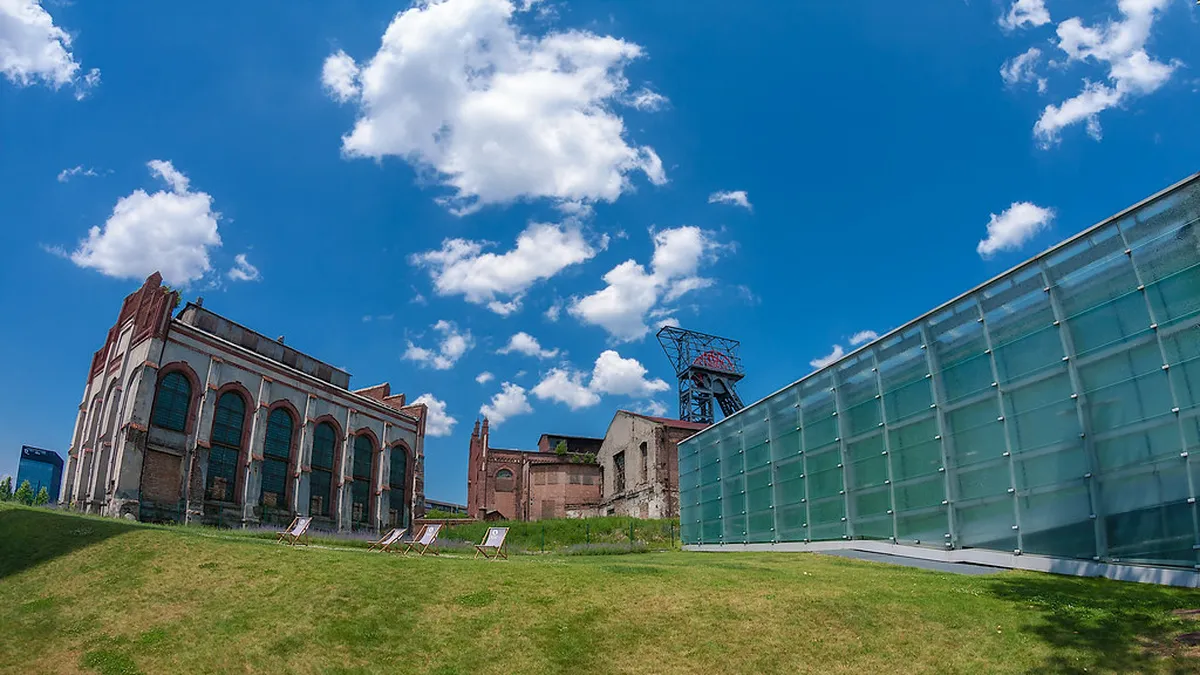
Silesian Museum
The Silesian Museum is Katowice's flagship cultural landmark, built into and beneath the decommissioned "Katowice" coal mine, which hauled over 120 million tonnes of coal - nicknamed "black diamonds" - across 176 years of operation before closing in 1999. Completed in 2015, the striking glass-and-steel complex sits up to 14 meters below ground, with permanent galleries devoted to Upper Silesian history, Polish art from 1800-1945 and after 1945, Silesian sacred art, and folk/non-professional art, alongside rotating temporary exhibitions. It's one of the most architecturally distinctive museums in Poland and the centerpiece of Katowice's post-industrial Cultural Zone, drawing visitors for both its art collections and its immersive repurposed-mine setting.
Visitor guide →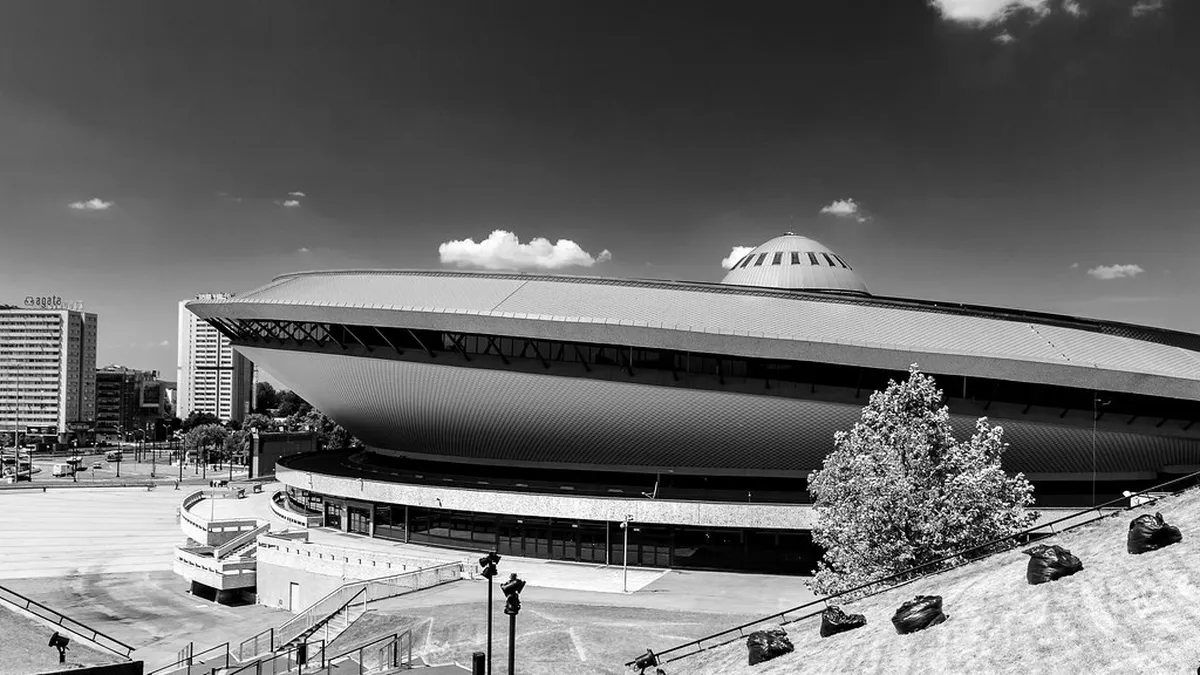
Spodek Arena
Spodek — Polish for "saucer" — is Katowice's iconic flying-saucer-shaped arena and the anchor of the city's Culture Zone alongside the Silesian Museum, NOSPR concert hall, and International Congress Centre. Since opening in 1971, its cable-suspended, aluminum-clad dome has made it one of Poland's most photographed pieces of modernist architecture and an unofficial symbol of the city. Inside, the roughly 11,500-seat multi-purpose hall has hosted acts from Metallica to Elton John and Deep Purple, the EuroBasket 2009 finals, FIVB Volleyball World Championships, and — every year since 2013 — the Intel Extreme Masters (IEM) Katowice esports tournament, which turned the arena into a pilgrimage site for gaming fans worldwide. There's no museum-style walk-in visiting: seeing the interior means either attending a scheduled event or booking one of Spodek's occasional pre-registered guided tours, so it's worth checking the calendar before planning a stop.
Visitor guide →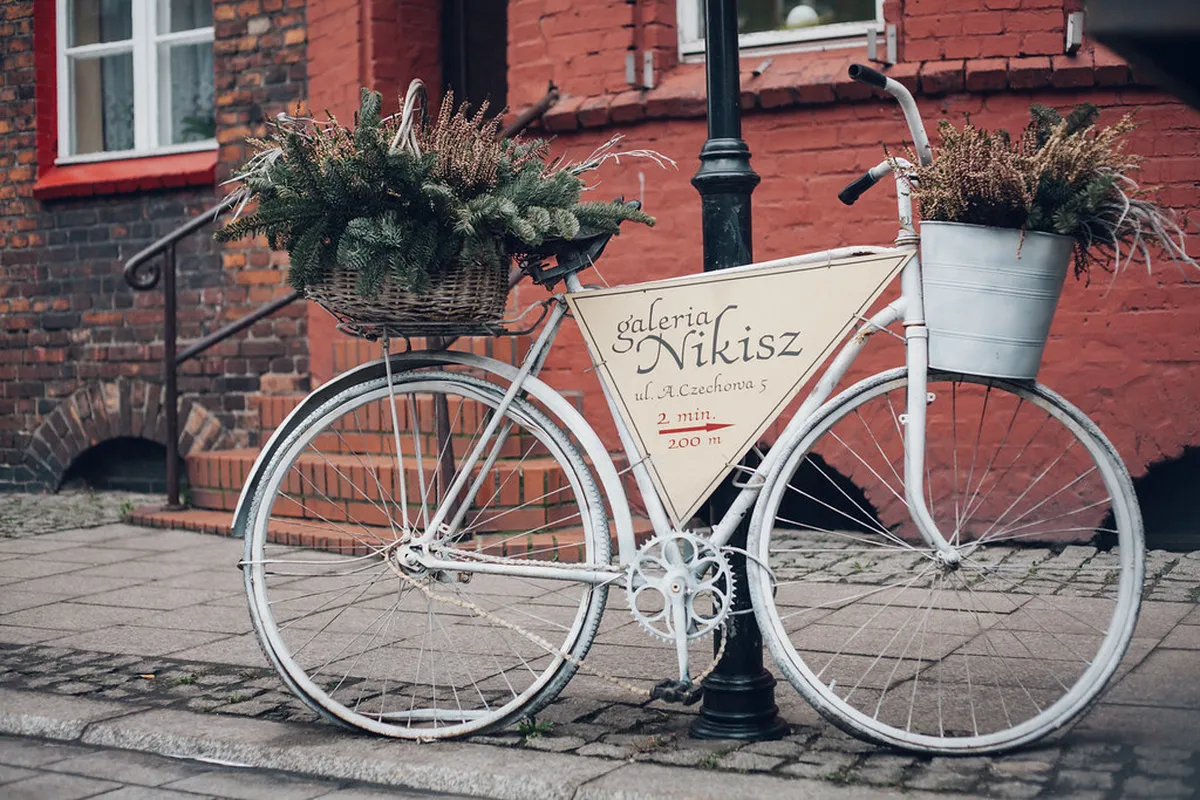
Nikiszowiec
Nikiszowiec is a remarkably preserved coal miners' housing estate in the Janów-Nikiszowiec district of Katowice, built between 1908 and 1919 for workers of the Giesche coal mine. Designed by German architects Emil and Georg Zillmann for the Georg von Giesches Erben mining company, the estate is built almost entirely from unplastered red brick, its roughly 1,000 apartments arranged in interlinked blocks around shared courtyards and connected by covered brick arcades — a self-contained company town that once included its own school, bathhouse, shops, police station, and inn. At its heart, Plac Wyzwolenia square faces the neo-Baroque, twin-towered Church of St. Anne. Unlike a museum piece, Nikiszowiec is a living neighborhood: families, many descended from mining generations, still occupy the historic tenements, and its streets, courtyards, and square are open to the public at no cost. Inside the estate's former communal laundry building on ul. Rymarska sits a branch of the Museum of Katowice History — the City Ethnology Department, known locally as 'Sztygarka' — displaying reconstructed miners' apartments and exhibits on Silesian working-class culture for a small admission fee. Recognized as one of Poland's official Monuments of History since 2011 and used as a location in several Polish films, Nikiszowiec draws architecture enthusiasts and photographers for its atmospheric red-brick streetscape, among the best-preserved workers' housing estates in Europe.
Visitor guide →
Silesian Park (Park Śląski)
Silesian Park (Park Śląski) is a vast green escape spanning three Upper Silesian cities — Chorzów, Katowice, and Siemianowice Śląskie — and, at roughly 600 hectares, ranks among the largest urban parks in Europe. Entry to the park grounds themselves is completely free: visitors come to walk or cycle the shaded forest paths, picnic by the ponds, wander the Rosarium's rose gardens, and ride the iconic 'Elka' chairlift, which glides for over 2 km above the treetops between the park's far ends and offers sweeping views over the greenery and the Silesian conurbation beyond. The park's origins date to the early 1950s, when reclaimed post-industrial and post-mining land was transformed into a planned recreation area for the region's mining and steel communities — a green counterpoint to Upper Silesia's heavily built-up landscape that still draws an estimated 3 million visitors a year. Beyond the free grounds, Silesian Park is also home to a cluster of major paid attractions that operate independently, each with its own tickets and hours: the Silesian Zoo, the Legendia amusement park, the Silesian Planetarium, and the open-air Upper Silesian Ethnographic Park. Families, cyclists, and anyone looking for a full day outdoors near Katowice will find the park itself — its trails, gardens, lakes, and the Elka ride — worth the trip on its own, with the option to add one or more of the ticketed attractions inside.
Visitor guide →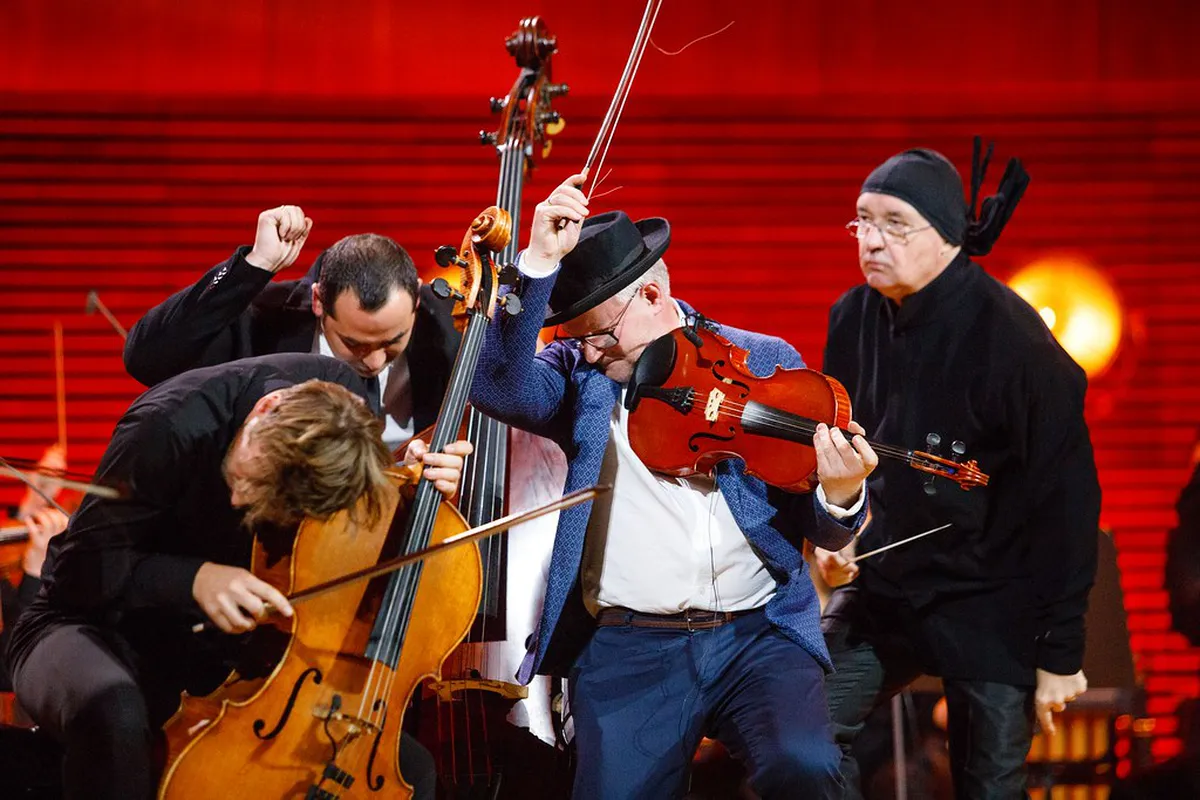
NOSPR Concert Hall (Polish National Radio Symphony Orchestra)
NOSPR is the purpose-built home of the Polish National Radio Symphony Orchestra and the architectural anchor of Katowice's Culture Zone, standing alongside the Silesian Museum, the International Congress Centre, and the saucer-shaped Spodek arena on reclaimed coal-mine land. Opened in 2014 and designed by Tomasz Konior with acoustics engineered by Yasuhisa Toyota of Nagata Acoustics — advised in the selection process by Katowice-born pianist Krystian Zimerman — the 1,794-seat Great Concert Hall is routinely ranked among Europe's best-sounding rooms, using a widened 'shoebox' layout that wraps audience seating around the stage for maximum intimacy. Its brick facade quotes the historic Nikiszowiec miners' housing estate, tying the ultra-modern interior to Upper Silesia's industrial past. NOSPR is both a working philharmonic venue (with a full season of symphonic and chamber concerts) and a symbol of Katowice's 2015 UNESCO Creative City of Music designation. Visitors who aren't attending a concert can still explore the building on a separate ticketed guided tour, browse the Bookiestra bookshop, or eat at the in-house restaurant, making it a worthwhile stop for architecture and design fans even outside concert nights.
Visitor guide →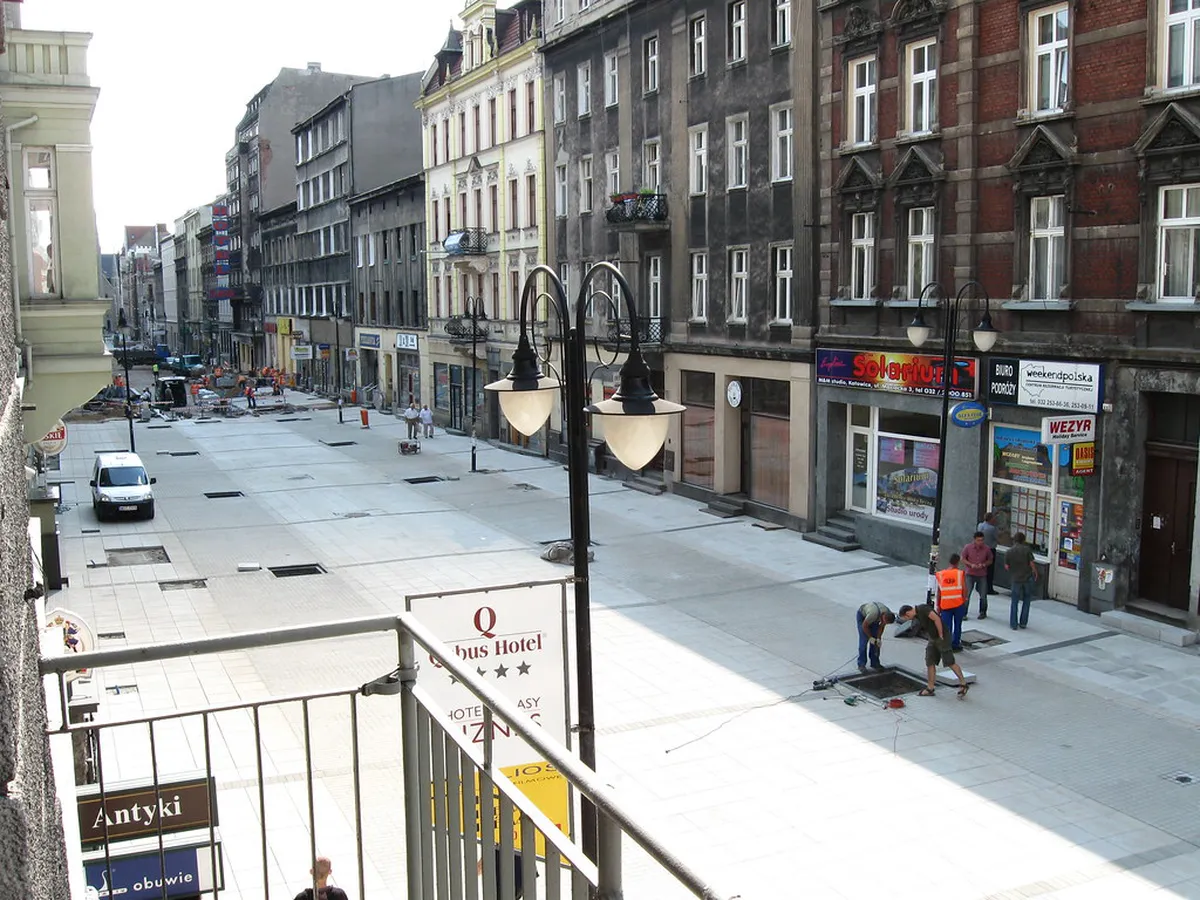
Mariacka Street
Mariacka Street (ulica Mariacka) is Katowice's best-known nightlife strip, a short pedestrian promenade in the city-center Śródmieście district just a five-minute walk from the Rynek (market square). By day it's a quiet, café-lined lane framed by restored 19th-century tenements; after dark it transforms into the liveliest bar-hopping corridor in the city, with roughly 20 pubs, cocktail bars, beer gardens and clubs packed into just 378 meters. The western end near ul. Mielęckiego holds the highest concentration of bars and clubs, while the eastern stretch toward the neo-Gothic Church of Mary (Kościół Mariacki) — the street's namesake and visual anchor — has a calmer mix of restaurants and cafés. Pedestrianized in 2008, Mariacka now hosts open-air concerts and festivals in summer and stays busiest on Friday and Saturday nights, when crowds spill from venue to venue until the early hours. It's free to walk at any hour, making it as easy to explore over a daytime coffee as it is to bar-hop after sunset — and it remains the natural starting point for any Katowice pub crawl.
Visitor guide →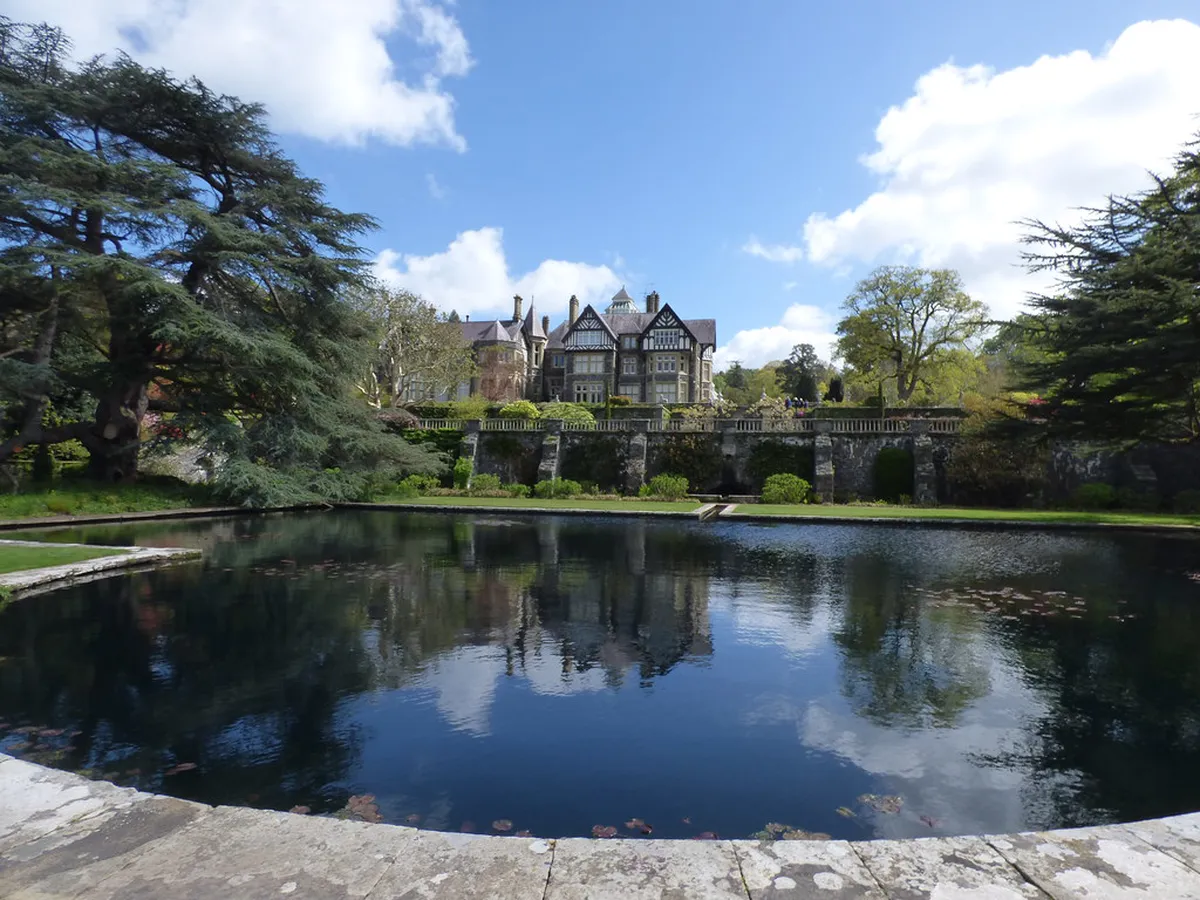
Valley of Three Ponds (Dolina Trzech Stawów)
Free 65-hectare lakeside park in Katowice with a sandy beach, kayaking and paddleboarding, cycling trails and 11 former mining-subsidence ponds — the city's favorite summer escape, minutes from Spodek.
Visitor guide →
Giszowiec
Giszowiec is a historic garden-city district on the eastern edge of Katowice, built between 1907 and 1910 on the initiative of mining director Anton Uthemann for workers of the Georg von Giesches Erben company's Giesche coal mine. Designed by Berlin (Charlottenburg) architects Georg and Emil Zillmann, Giszowiec applied Ebenezer Howard's garden-city concept to a Silesian mining settlement: rather than the dense red-brick tenement blocks the same architects built a few years later for the neighboring Nikiszowiec estate, Giszowiec was laid out as a loose network of picturesque, cottage-style single- and two-family houses modelled on traditional rural Silesian farmhouses, each with a pitched mansard roof and its own garden plot, threaded through preserved beech and oak-hornbeam forest within the quadrangle formed by Pszczynska, Gorniczego Stanu, Pod Kasztanami and Myslowicka streets. At its heart lies Plac Pod Lipami ('Under the Linden Trees Square'), the estate's original marketplace, ringed by a school, the former Karczma Slaska (Silesian Tavern/Inn), a forestry lodge and a cooperative store, and shaded by century-old linden trees around a protected beech tree nicknamed 'Anton.' About two-thirds of the original nine-quarter, 300-plus-house estate was demolished in the 1970s-80s for prefabricated high-rise housing, but the surviving cottages and market square are listed on Poland's Register of Cultural Property and form part of the Silesian Industrial Monuments Route (Szlak Zabytkow Techniki). Unlike a museum, Giszowiec is a living, inhabited neighborhood of around 15,000 residents, so visitors explore its streets and square freely and self-guided, or follow the city of Katowice's marked walking route, to see one of Europe's best-preserved early-20th-century garden-city company towns.
Visitor guide →Katowice attractions by neighborhood
Three of Katowice's 8 attractions sit inside the compact Culture Zone, built on reclaimed coal-mine and coking-plant land just east of the main train station: the Silesian Museum, Spodek Arena, and the NOSPR Concert Hall are all within a 5-10 minute walk of each other, and the whole cluster sits five to ten minutes on foot from the historic Rynek (market square) and the bar-lined Mariacka Street. This is the version of Katowice most first-time visitors see, and it's genuinely walkable — you won't need transit at all if you're sticking to a one-day plan.
The other four attractions sit further out, in three different directions. East of downtown, Nikiszowiec and Giszowiec are historic mining estates roughly 4-6 kilometers from the center — a bus or taxi ride rather than a walk, though the two districts are close enough to each other (about 1.5 km) to combine in one outing. South of the center, the Valley of Three Ponds is a 20-25 minute walk (or short bus ride) from Spodek, making it the easiest green-space add-on to a Culture Zone day. And just over the city line in neighboring Chorzów, Silesian Park — technically outside Katowice proper, but the classic day trip from it — is a short ride from the center and worth budgeting a half-day or more if you want to add the zoo, planetarium, or Elka chairlift.
Katowice attractions by category
Post-industrial museums and architecture: The Silesian Museum is the city's signature reinvention story — permanent galleries built into and beneath a decommissioned coal mine's shafts, up to 14 meters underground.
Historic mining districts: Nikiszowiec's dense red-brick tenement blocks and Giszowiec's looser garden-city cottage rows are both lived-in company towns built for the same Giesche coal mine's workers in the early 1900s, and both are recognized heritage sites on Poland's Industrial Monuments Route.
Music and culture venues: NOSPR's acoustically-engineered concert hall and Spodek's flying-saucer arena anchor Katowice's UNESCO Creative City of Music status — one hosts a full philharmonic season, the other everything from IEM Katowice esports to touring rock acts.
Green spaces: Silesian Park's roughly 600 hectares and the Valley of Three Ponds' 65-hectare lakeside grounds are Katowice's two big outdoor escapes — one built around a zoo and amusement park, the other around a free beach and paddling ponds.
Nightlife: Mariacka Street's 378-meter pedestrian strip packs around 20 bars, pubs, and cocktail lounges into the city center, and it's the natural evening pairing for a daytime Culture Zone visit.
Free vs paid Katowice attractions
Four of the 8 attractions cost nothing to visit: the streets, courtyards, and squares of Nikiszowiec and Giszowiec are open to the public year-round (only Nikiszowiec's small Sztygarka museum charges admission), Mariacka Street is a free 24-hour pedestrian zone, and both the grounds of Silesian Park and the Valley of Three Ponds — including its beach — are free every day of the year.
The Silesian Museum is the one straightforward paid ticket on this list: 29 PLN standard, 19 PLN reduced for students and seniors, with the whole museum free to enter every Tuesday. Spodek and NOSPR work differently again — neither sells a walk-in sightseeing ticket. Seeing Spodek's interior means attending a scheduled event or booking one of its occasional 8 PLN guided tours (pre-registration by email), and NOSPR's interior requires either a concert ticket (roughly 25-200 zl depending on the program) or a separate 15-20 zl guided architecture tour on select dates — though NOSPR's Bookiestra shop and restaurant are open to browse without any ticket at all.
Suggested itineraries
1 day: the Culture Zone core
Start at the Silesian Museum in the morning — budget 2-3 hours for the underground galleries — then walk to Spodek to see the arena's exterior and check whether anything's on that night. From there it's a short walk to NOSPR, where you can browse the Bookiestra bookshop or grab lunch even without a concert ticket. Finish the day at Mariacka Street in the evening, working from the quieter church end toward the livelier bars near ul. Mielęckiego. This route covers 3 of the 8 attractions plus the Rynek and needs no transit at all.
2 days: add the mining districts and a green space
Day 1 is the Culture Zone route above. On day 2, take bus 920 or 930 (or tram 6, 11, or 23) out to Nikiszowiec for the morning — budget extra time if you want to catch the Sztygarka museum on one of its free Tuesday or Saturday slots — then walk the roughly 20-25 minutes to Giszowiec for a quieter second stop among its garden-city cottages. Use the afternoon for whichever green space fits your pace: the Valley of Three Ponds is a short bus ride back toward the center for a beach or paddling session, or Silesian Park in neighboring Chorzów if you'd rather add the zoo or Elka chairlift to the day.
Getting around Katowice's attractions
The Culture Zone is fully walkable and sits right behind Katowice Główny, the main train station — Spodek is a 5-10 minute walk from the platforms, and NOSPR and the Silesian Museum are a few minutes further. You won't need a ticket or a tram for this cluster.
Nikiszowiec and Giszowiec need a bus or taxi: city buses 920 and 930 stop directly inside Nikiszowiec, and tram lines 6, 11, and 23 run close by, with the ride from the station taking about 20 minutes. Giszowiec is less frequently served by bus, so a taxi (roughly 15-20 minutes by car from downtown) or the flat 20-25 minute walk from Nikiszowiec along ul. Zamkowa and ul. Pszczyńska are the practical options. Silesian Park is a short ride to Chorzów by car, bus, or tram from central Katowice. For the Valley of Three Ponds, most visitors simply walk the 20-25 minutes south from Spodek, or take bus 110, 674, or 910. A single GZM Metropolis ticket covers buses and trams across all of these routes and more than 40 towns in the wider conurbation — buy it from a stop machine or an app like Jakdojade before boarding.
Best time to visit Katowice
Event-goers should build a trip around the calendar: Spodek hosts the Intel Extreme Masters (IEM) Katowice esports tournament every February or March, one of the biggest annual draws for international visitors, while NOSPR runs a full concert season alongside its philharmonic programming — check both venues' listings before you book flights if a specific event matters to your trip.
For the outdoor attractions, May through September is the strongest window: the Valley of Three Ponds' lifeguarded beach only operates late June through early September, and Silesian Park's Rosarium peaks in bloom from June to September, with the longest hours of the year at every ticketed attraction inside the park. Nikiszowiec and Giszowiec are year-round destinations — their appeal is architecture and streetscape rather than seasonal programming — though early morning light on a quiet weekday makes for the best photos and the fewest other visitors.
How to save money on Katowice attractions
Time your museum visits to the free days: the Silesian Museum opens free of charge every Tuesday, and Nikiszowiec's Sztygarka museum turns free on both Tuesdays and Saturdays — a detail many visitors miss. Silesian Park's grounds and the Valley of Three Ponds, including its beach, are always free, with no day-of-week condition attached.
Beyond the free days: walk between Nikiszowiec and Giszowiec (about 20-25 minutes on flat streets) instead of paying for a taxi between the two, and buy a single GZM Metropolis ticket rather than separate fares if you're combining several bus or tram rides in one day. If you're not attending a concert, NOSPR's Bookiestra shop and restaurant, and Spodek's illuminated exterior after dark, are both free ways to experience the Culture Zone's two ticketed venues without paying for an event.
Frequently asked questions about Katowice attractions
How many days do you need in Katowice?
One day covers the walkable Culture Zone core — the Silesian Museum, Spodek, NOSPR, and Mariacka Street. Two days lets you add Nikiszowiec and Giszowiec's historic mining districts plus one of the city's green spaces, Silesian Park or the Valley of Three Ponds.
Is Katowice worth visiting?
Yes — Katowice's appeal is its post-industrial reinvention rather than a conventional old-town skyline: a coal mine turned into an award-winning museum, working-class housing estates recognized as heritage sites, and a UNESCO Creative City of Music label backed by a genuine concert and esports calendar. It rewards visitors looking for something other than another Gothic market square.
What is Katowice known for?
Katowice is known as the historic capital of Poland's coal and steel industry, now reinvented as Upper Silesia's cultural and business hub — home to the Silesian Museum's mine-shaft galleries, the saucer-shaped Spodek arena, the NOSPR concert hall, and the Intel Extreme Masters esports tournament held every year since 2013.
Is Katowice safe?
Yes, Katowice is generally very safe for visitors, including at night in the central Culture Zone and around Mariacka Street. As in any city, use normal caution and avoid wandering alone into unfamiliar residential side streets after dark.
What is the difference between Nikiszowiec and Giszowiec?
Both are early-1900s company towns built for workers at the same Giesche coal mine, but they look very different. Nikiszowiec is dense, unplastered red-brick tenement blocks arranged around shared courtyards; Giszowiec, designed by the same architects, is a looser garden-city layout of cottage-style houses with individual gardens. Nikiszowiec is the more visited and photographed of the two and has a small museum inside; Giszowiec is quieter and purely residential streetscape.
Are Katowice's attractions free?
Roughly half. Nikiszowiec and Giszowiec's streets, Mariacka Street, and the grounds of Silesian Park and the Valley of Three Ponds cost nothing. The Silesian Museum charges a standard ticket (free on Tuesdays), and Spodek and NOSPR require an event or tour ticket rather than a walk-in fee.
What's the best time of year to visit Katowice?
May through September is best for the green-space attractions — Silesian Park's Rosarium and the Valley of Three Ponds' beach both peak in this window. If you're planning around an event, February or March brings IEM Katowice esports to Spodek, and NOSPR runs concerts through its philharmonic season outside summer.
Can you visit Spodek and NOSPR without buying an event ticket?
Partially. Neither venue sells a general walk-in sightseeing ticket — Spodek requires attending an event or booking one of its occasional pre-registered guided tours, and NOSPR requires a concert ticket or a separate guided architecture tour. You can browse NOSPR's Bookiestra bookshop and restaurant, or simply view Spodek's exterior, without any ticket at all.
Plan your Katowice trip
Once you've picked which of these 8 attractions fit your schedule, the next step is deciding how many days to budget and building out the rest of your trip around them. Our things to do in Katowice guide rounds out this list with practical transport and neighborhood tips, and the 2-day Katowice itinerary maps a route that pairs directly with the attraction list above. If you're still deciding whether the city belongs on your Poland itinerary at all, is Katowice worth visiting makes the case with the same free-vs-paid framing used here.


