

Bydgoszcz doesn't look or feel like anywhere else in Poland, and that's the whole appeal. The city grew up as a river port where the Brda meets the 250-year-old Bydgoszcz Canal, and that watery inheritance still shapes everything worth seeing here: a row of 18th-century granaries reflected in the current, a green river island threaded with footbridges, and a three-sailed modern opera house rising from the same bend. Locals call the riverside district the "Venice of Bydgoszcz," and after a walk along the canal's towpaths and lock chambers, the nickname stops sounding like a stretch.
What separates Bydgoszcz's attraction list from bigger Polish cities is how much of the best of it costs nothing, and how offbeat the paid half gets. The historic core — Mill Island, the Granaries, Stary Rynek, the Canal towpath — is free to explore on foot, day or night. The ticketed side, by contrast, swings between somber and playful: a converted Nazi-era explosives factory you walk through on marked underground routes, a hands-on soap-making museum inside a restored 19th-century townhouse, and Poland's largest municipal park with its own zoo, botanical garden, and dinosaur-themed family park on the city's edge.
This guide breaks down the 8 Bydgoszcz attractions worth building a 2026 trip around — grouped by where they sit in the city and by the kind of visit they suit — plus a free-vs-paid breakdown, itineraries from a half-day to two full days, and the transport and seasonal details the individual visitor guides below don't repeat. Start with the card grid for tickets, hours, and practical tips on each site, then use the sections after it to plan how they fit together.
Top 8 attractions in Bydgoszcz
Mill Island (Wyspa Młyńska)
Mill Island (Wyspa Młyńska) is the green, walkable heart of Bydgoszcz's Old Town — a 6.5-hectare river island framed by the Brda River and its Młynówka branch, just a few minutes' stroll from the Old Market Square. Its name comes from the mills that lined the waterway from the 14th century onward, and from 1594 to 1688 the island even hosted a royal mint, whose memory survives in the name of Mennica ('Mint') Street running through it. Wandering the tree-lined paths today, visitors pass a cluster of beautifully restored 18th- and 19th-century granaries and mill buildings — including the half-timbered White Granary with its 15th-century Gothic cellar, the brick Red Granary, and Leon Wyczółkowski's house — most of which now house branches of the Bydgoszcz Regional Museum or the modern Młyny Rothera science and culture center. Entry to the island's parkland, footbridges, weirs, and riverside promenades is completely free and open around the clock; only the individual museum and exhibition buildings charge separate admission. Add a playground, amphitheater, marina, and small sandy riverbank, and Mill Island works equally well for a quiet morning walk, a family afternoon, or a deeper dive into Bydgoszcz's industrial history.
Visitor guide →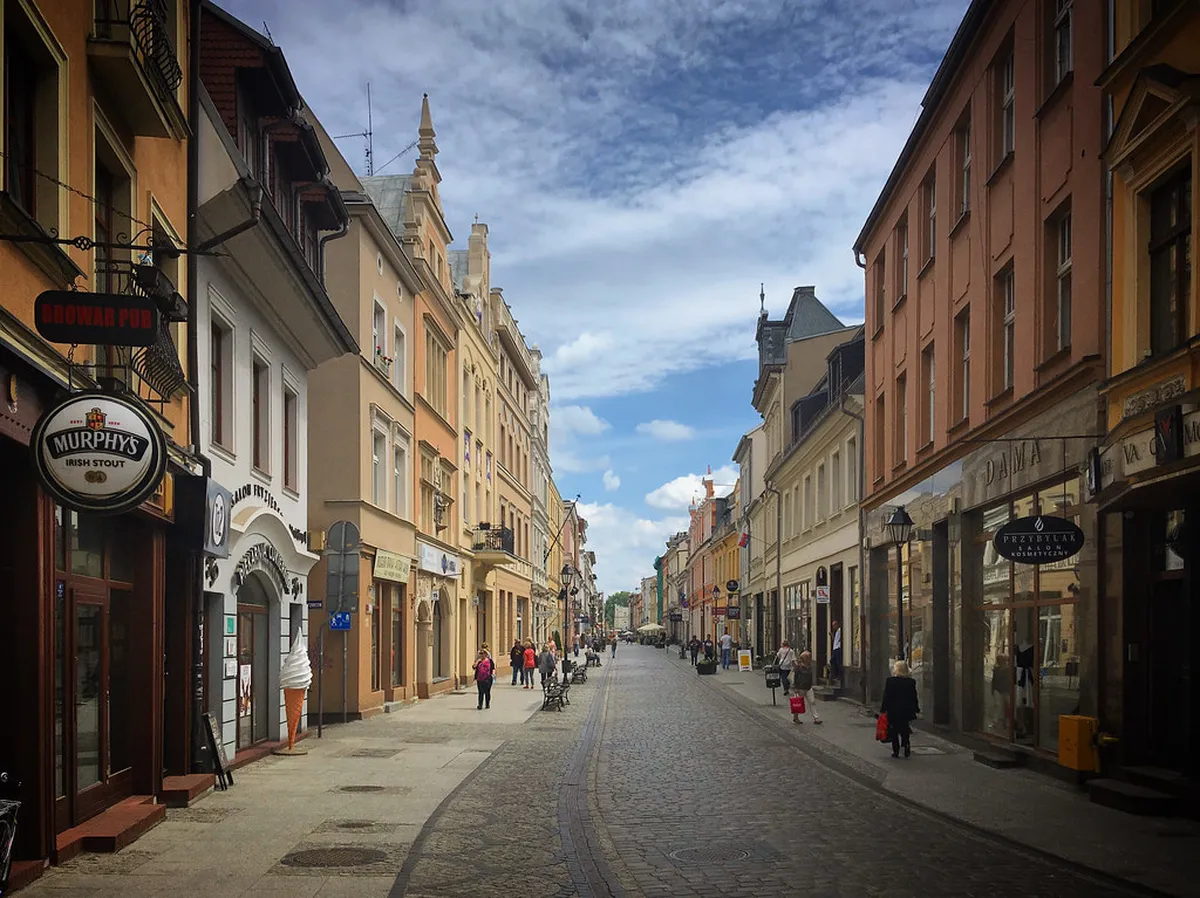
Bydgoszcz Old Town
Bydgoszcz's Old Town centers on Stary Rynek, the Old Market Square that has anchored the city since its founding in 1346. Strolling its cobblestones, you're surrounded by colorful tenement houses whose Neoclassical, Art Nouveau, and Neo-Renaissance facades have been photographed for postcards since the early 1900s. The historic Town Hall presides over one side of the square, while cafes, restaurants, and small shops fill the surrounding ground floors, giving the square a relaxed, lived-in atmosphere day and night. A short walk brings you to the banks of the Brda River, where the city's most famous piece of public art, the 'Crossing the River' tightrope-walker sculpture, appears to balance on a wire suspended above the water. From there, riverside paths lead past the timber-framed granaries that once stored the city's grain trade and now house the Leon Wyczółkowski Museum. Because it's a fully open, free public space, the Old Town rewards unhurried wandering — architecture, street performers, seasonal markets, and river views are all included, with no entrance fee or fixed hours to plan around.
Visitor guide →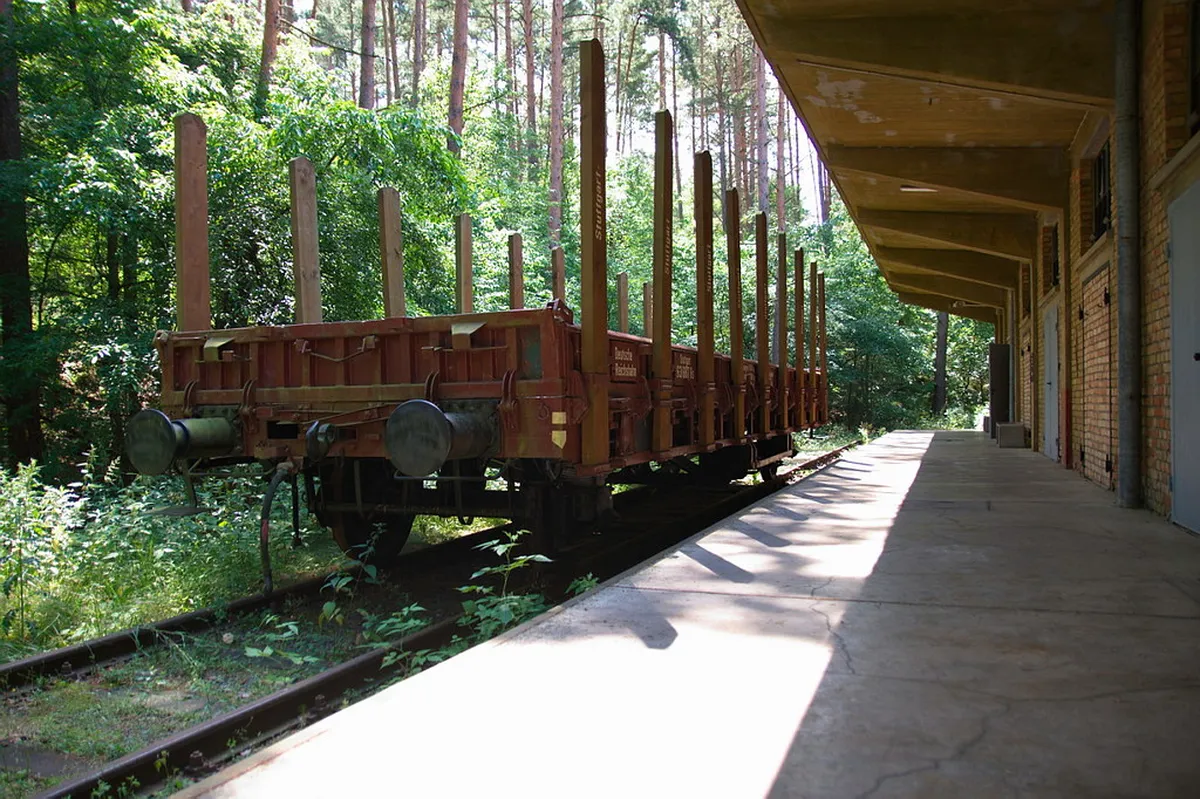
Exploseum
Exploseum occupies the surviving concrete bunkers and blast-proof buildings of DAG Fabrik Bromberg, a WWII-era Nazi German explosives factory hidden in the forests southeast of Bydgoszcz. Marked routes lead through roughly two kilometers of overground and underground passages that once carried nitroglycerine between production halls, past reinforced walls, escape tunnels, and blast-relief structures engineers built to contain accidental detonations. Exhibits document the factory's operation between 1939 and 1944, including the forced labor of prisoners of war and civilians from across occupied Europe who were compelled to build and run it, alongside the wider history of dynamite and its inventor, Alfred Nobel. Standard admission covers the permanent exhibition, while a guided Alternative Route and a more physically demanding Extreme Route reach deeper, less-accessible tunnels for an added fee. Tours run in Polish and English, and advance booking by phone or email is recommended, especially for the guided routes, which have limited capacity. Plan for a couple of hours of walking on uneven surfaces, so comfortable shoes matter. The museum operates Tuesday through Sunday from March through October, closing for the winter off-season.
Visitor guide →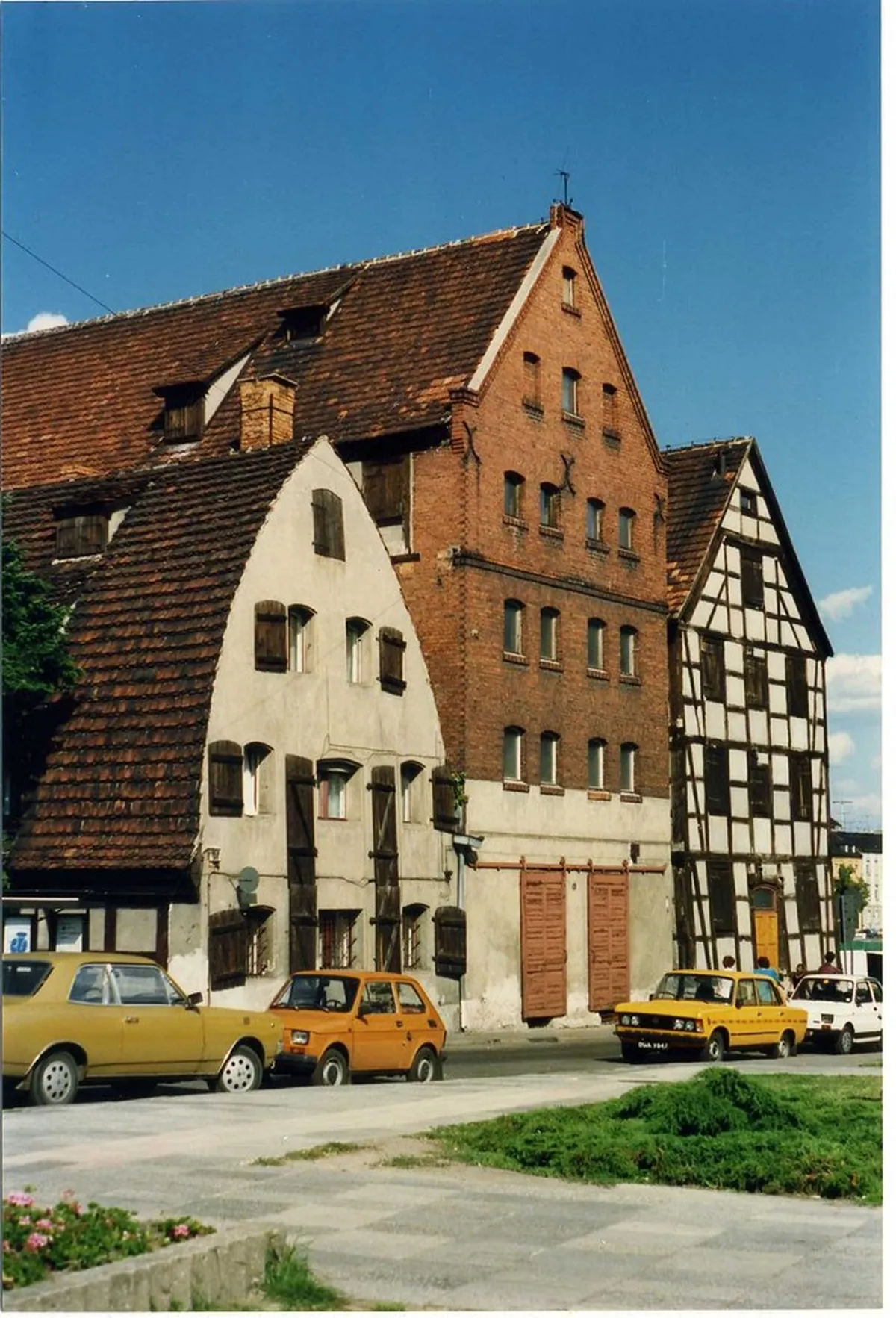
Bydgoszcz Granaries
Rising directly from the bank of the Brda River in the heart of Bydgoszcz's Old Town, the Granaries are the single most photographed sight in the city — three tall, half-timbered warehouses built around 1800 to store grain bound for Gdańsk by barge. Two sister buildings were lost to a 1960 fire, but the surviving trio at ul. Grodzka 7-11 was carefully restored and now anchors the riverside promenade, their reflection in the Brda appearing on postcards, city branding and countless Instagram feeds. Walking the boulevards along the water to view the granaries, cross the nearby footbridges, and watch the sunset light up the timber facades costs nothing and is open around the clock. Step inside any of the three buildings, though, and you're in the Leon Wyczółkowski District Museum, whose History, Ethnography, Music and Graphics departments trace Bydgoszcz's story from its medieval port days through the interwar years. Pair a riverside stroll with a stop at the museum's permanent exhibition for the fullest picture of why these old grain stores became the city's defining landmark.
Visitor guide →
Opera Nova
Rising from a bend in the Brda River between Bydgoszcz's Old Town and Downtown, Opera Nova is the city's most photographed modern landmark - three sweeping white circular volumes linked by footbridge to Mill Island, often likened to a miniature Sydney Opera House. This is a working performance venue, not a walk-through museum: the Bydgoszcz Opera and Operetta company (rooted in a 1956 ensemble) has staged productions here since the building's completion in 2006, and the riverside terrace and exterior are freely viewable at any time, day or night, making it worth a stop even without a ticket. To actually experience the interior, plan around the program: the 809-seat main auditorium and 189-seat chamber hall host opera, ballet, operetta, and musicals year-round, with the spring Bydgoszcz Opera Festival (running since 1994) drawing international companies. Tickets are sold per performance and priced by seating zone - regular repertoire runs roughly 40-160 zł, with festival and gala shows priced higher - so check the current schedule and book ahead rather than expecting walk-up general admission.
Visitor guide →
Myślęcinek Park
Myślęcinek is Poland's largest municipal park, an 830-hectare green escape on the northern edge of Bydgoszcz, just a few kilometers from downtown. Locals come here to walk, cycle, and picnic among mixed pine and deciduous forest, ponds, and a bird-nesting islet on the main lake, while visitors with more time can spend a full day working through its paid attractions. The Bydgoszcz Zoo is the anchor draw, home to roughly 1,000 animals of over 200 species across 14 hectares. Next door, the Botanical Garden spans some 60 hectares, the second-largest of its kind in Poland, with an arboretum and alpine rock garden. Families gravitate toward Zaginiony Świat, a dinosaur-and-amusement park with rides and a paleontology exhibit, plus a rope park with zip-lines, a wakepark, mini-golf, and a horse-riding center with a hippodrome. In winter, a small ski slope on Góra Myślęcińska opens with lifts. A miniature park train loops the grounds in about 35-45 minutes for visitors who want an overview before choosing where to linger, and public tram and bus lines connect the park directly to central Bydgoszcz.
Visitor guide →
Museum of Soap and History of Dirt
Tucked into three restored townhouses on Długa Street in Bydgoszcz's Old Town, the Museum of Soap and History of Dirt is one of Poland's most unexpected small museums — and, by its own claim, the only one of its kind in Europe. Rather than static glass cases, every visit is a live, guided 45-50 minute experience: a resident soapmaker walks you through the centuries-long story of hygiene, from medieval bathhouses and mutton-fat soap to the Persil and Cypisek brands once manufactured right here in Bydgoszcz, before letting you make your own bar of soap to take home, choosing its scent, colour, and shape. The museum has picked up real recognition since opening in 2012, including a National Geographic Traveler nod as Poland's most interesting museum and a Polish Tourism Organization "Best Tourism Product" award. It's a compact, family-friendly stop — allow about an hour, book ahead since capacity is limited, and expect a playful, hands-on counterpoint to Bydgoszcz's grander historical sights.
Visitor guide →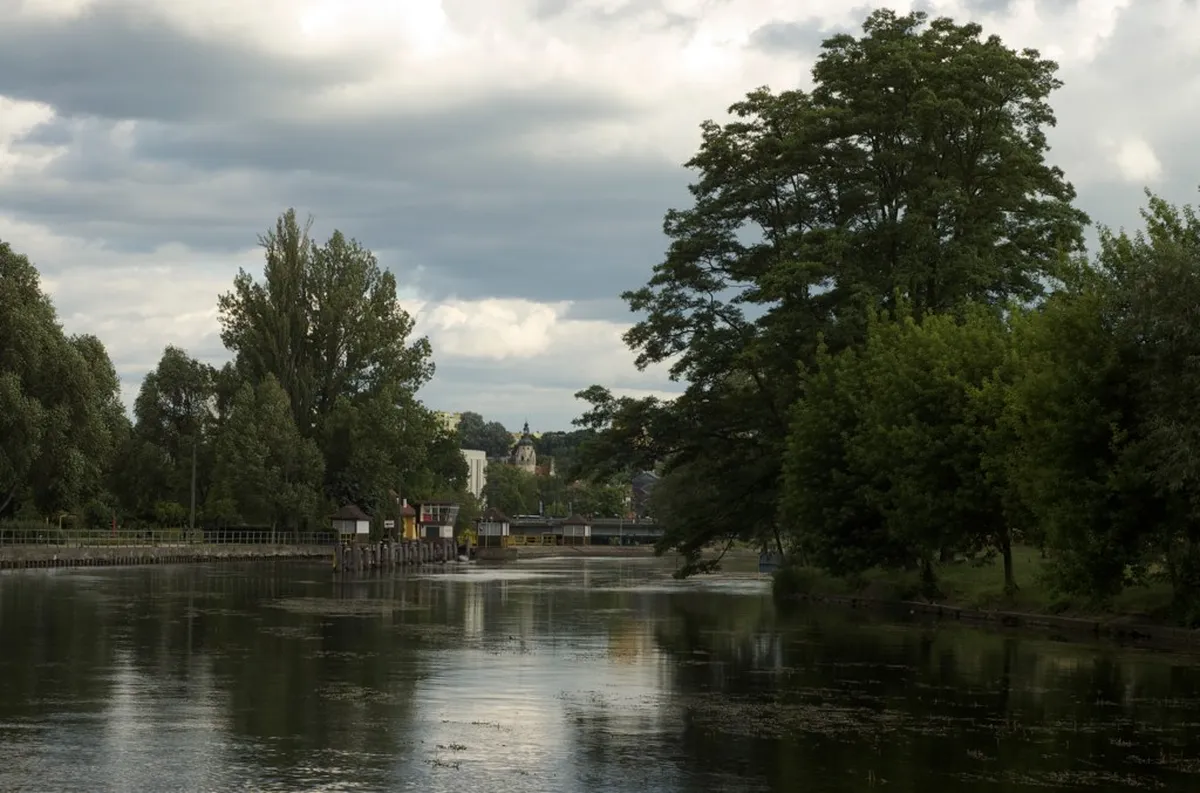
Bydgoszcz Canal (Kanał Bydgoski)
The Bydgoszcz Canal is a 250-year-old engineering landmark that still does its original job: linking the Vistula and Oder river systems via the Brda and Noteć. Built in just 18 months in 1773-1774 under Frederick the Great, it once carried timber rafts and cargo barges past nearly 3,000 rafters working the water for the Lloyd Bydgoski shipping line; today its towpath is a free, leafy promenade for walking and cycling past preserved 18th- and 19th-century brick lock chambers, willow-lined banks, and resident swans and ducks. The most atmospheric stretch is the 'Old Canal' running through the Okole district, where the Bydgoszcz Canal Museum (free entry) explains the waterway's history and the lives of the people who built and worked it. Beyond the walking path, seasonal electric-boat cruises let visitors ride sections of the Brda and the canal itself, including a dedicated 'Along the Locks' route that transits the working Okole and Czyżkówko locks. No ticket is needed to explore the canal on foot — only the optional boat cruises and marina services carry a fee.
Visitor guide →Bydgoszcz attractions by area
Bydgoszcz's 8 headline attractions split into four zones, and knowing which zone you're in decides how much walking a day requires.
Riverside core: Mill Island, Bydgoszcz Granaries, Opera Nova
These three sit within a five-minute walk of each other along the Brda, connected by footbridges. Mill Island's parkland spills onto the same bank as the three granary buildings, and Opera Nova's white curved volumes rise directly across the water, linked to the island by its own footbridge. This trio is the most photographed stretch of the city and the easiest to cover without a map.
Old Town and Market Square: Stary Rynek, Museum of Soap and History of Dirt
A ten-minute walk from the riverside core, the Old Town centers on Stary Rynek, the market square Bydgoszcz was founded around in 1346. The Museum of Soap and History of Dirt sits just off the square on Długa Street, making it an easy add-on to an Old Town wander rather than a separate trip.
City outskirts: Exploseum and Bydgoszcz Canal
Both sit outside the walkable center. Exploseum occupies forest southeast of the city at the former DAG Fabrik Bromberg site, while the Canal's most atmospheric stretch runs through the Okole district to the west. Neither is reachable on foot from the Old Town in a reasonable time — budget for a tram, bus, or taxi.
Edge of the city: Myślęcinek Park
Poland's largest municipal park sits on Bydgoszcz's northern edge, a tram or bus ride from downtown. At 830 hectares, it's large enough to fill most of a day on its own, so treat it as a separate excursion rather than something to squeeze in alongside the central sights.
Bydgoszcz attractions by category
If you're picking attractions by interest rather than geography, they split cleanly into four categories.
Heritage and riverside
Mill Island, the Bydgoszcz Granaries, and the Bydgoszcz Canal all trace the city's centuries as a river-trade port — granaries that stored grain bound for Gdańsk, a canal that linked two river systems, and an island that hosted mills and even a royal mint.
Culture and architecture
Bydgoszcz Old Town's Stary Rynek and Opera Nova bookend the city's architectural range, from 14th-century founding streets to a 2006 performance venue shaped like sails on the water.
Museums
Exploseum and the Museum of Soap and History of Dirt are Bydgoszcz's two standout museum experiences — one somber and underground, one hands-on and playful — and both reward pre-booking over walk-up visits.
Nature and family
Myślęcinek Park covers the zoo, botanical garden, dinosaur park, and seasonal ski slope in one green space, making it the default pick for a family day or a break from historic-center walking.
Free vs paid Bydgoszcz attractions
A visitor sticking to the free half of this list can still cover 4 of the 8 headline sights without spending a złoty on admission.
Free to visit
- Bydgoszcz Old Town and Stary Rynek — always open, no ticket
- Mill Island's parkland, footbridges, and promenades — the museum buildings on the island charge separately, but the grounds don't
- The Bydgoszcz Granaries' exterior and riverside promenade — only the Leon Wyczółkowski Museum galleries inside require a ticket
- Opera Nova's riverside terrace and exterior — viewable any time; only performance tickets cost money
- The Bydgoszcz Canal towpath and the Canal Museum in the Okole district — free entry
- General entry to Myślęcinek Park's forest, ponds, and walking paths
Paid
- Exploseum — standard admission, with pricier Alternative and Extreme guided routes
- Museum of Soap and History of Dirt — guided 45-50 minute experience
- Museum branches inside the Granaries and Mill Island buildings
- Opera Nova performance tickets — roughly 40-160 zł depending on seating zone and show
- Myślęcinek Park's Zoo, Botanical Garden, Zaginiony Świat dinosaur park, rope park, wakepark, mini-golf, horse-riding center, and winter ski lift
- Seasonal Bydgoszcz Canal boat cruises
Suggested itineraries
Half-day (about 4 hours)
Start at Stary Rynek in the Old Town, walk to the river and cross to Mill Island, then finish along the Granaries' riverside promenade. All three are free to view, connected by footbridges, and cover the most photographed stretch of the city in one loop.
Full day
Add the Museum of Soap and History of Dirt to the morning Old Town stop (book your slot ahead), continue to Mill Island and the Granaries for lunch riverside, then close the day at Opera Nova — walk the terrace at golden hour, or book a performance if the schedule lines up with your visit.
Two days
Use day one for the central core above. Reserve day two for the outskirts: a morning at Myślęcinek Park (the Zoo and Botanical Garden alone fill several hours), then Exploseum in the afternoon — allow at least two hours for the standard route and comfortable shoes for the uneven tunnel surfaces. In summer, swap the afternoon for a Bydgoszcz Canal boat cruise instead.
Getting around Bydgoszcz's attractions
The riverside core is compact and entirely walkable: Bydgoszcz Old Town, Mill Island, the Granaries, the Museum of Soap, and Opera Nova all sit within about a 15-20 minute walk of each other, linked by pedestrian bridges over the Brda. You won't need transit for a day spent only in the center.
Myślęcinek Park and Exploseum are a different story — both sit on the city's outskirts, reachable by Bydgoszcz's tram and bus network (check current MZK Bydgoszcz routes and timetables before you go, since services to Exploseum's forest location run less frequently than central-city lines). A taxi or rideshare is the simplest option if you're short on time or traveling outside peak service hours. The Bydgoszcz Canal's Okole stretch is also tram-accessible from downtown.
Best time to visit Bydgoszcz's attractions
Summer (June-August)
Peak season for the water: seasonal electric-boat cruises run on the Brda and the Canal, including the "Along the Locks" route through the working Okole and Czyżkówko locks, and Myślęcinek's outdoor attractions (Zoo, Botanical Garden, Zaginiony Świat) are all in full swing. This is also the warmest weather for walking the riverside core.
Shoulder season (April-May, September-October)
Mild temperatures, thinner crowds, and Exploseum's full operating season — it runs Tuesday through Sunday from March through October. The spring Bydgoszcz Opera Festival, running since 1994, also draws international companies to Opera Nova in this window, worth timing a visit around if you want to catch a performance.
Off-season (November-March)
Exploseum closes for winter and the Canal's boat cruises stop running, but the free riverside walks, Old Town, Museum of Soap, and Opera Nova's indoor performances continue year-round. Myślęcinek's small ski slope on Góra Myślęcińska opens if snow cooperates, giving the park a winter draw of its own.
How to save money on Bydgoszcz attractions
Build your day around the free half of this list first: Bydgoszcz Old Town, Mill Island's grounds, the Granaries' riverside promenade, and the Bydgoszcz Canal towpath together cover a full afternoon of sightseeing without a single ticket. Several municipal museum branches — including sections of the Leon Wyczółkowski Museum inside the Granaries and on Mill Island — offer a free-admission day each week; check the current schedule for each branch before you visit, since the specific day varies by location. For the paid sights, book Exploseum and the Museum of Soap in advance rather than walking up — both run on guided time slots, and a confirmed booking avoids paying for a route you can't take that day. If Myślęcinek Park is on your list, its Zoo and Botanical Garden typically offer combined or family tickets that undercut paying for each separately — check current pricing at the gate or online before you go.
Frequently asked questions about Bydgoszcz attractions
How many days do you need to see Bydgoszcz's main attractions?
One full day covers the walkable riverside core — Old Town, Mill Island, the Granaries, the Museum of Soap, and Opera Nova. Add a second day if you want to include Myślęcinek Park and Exploseum, both of which sit on the city's outskirts and deserve unhurried time of their own.
What is the #1 must-see attraction in Bydgoszcz?
The Bydgoszcz Granaries and Mill Island, viewed together along the Brda riverside promenade, are the city's most photographed and most recognizable sight — free to view and within a few minutes' walk of the Old Town.
Are Bydgoszcz's attractions free?
About half are. The Old Town, Mill Island's parkland, the Granaries' exterior, Opera Nova's terrace, the Canal towpath, and general park entry to Myślęcinek cost nothing. Museum galleries, Exploseum, the Museum of Soap, Opera Nova performances, and Myślęcinek's Zoo and other paid zones charge separate admission — see the free-vs-paid breakdown above for the full split.
Do you need to book Bydgoszcz attractions in advance?
Yes for the guided experiences: Exploseum's Alternative and Extreme routes and the Museum of Soap's 45-50 minute sessions both run on limited-capacity time slots, so book ahead by phone, email, or the museum's website. Opera Nova tickets are sold per performance and should be bought once you know the schedule. The free outdoor sights need no booking at all.
What is the best time of year to visit Bydgoszcz?
Summer (June-August) is best for canal and river boat cruises and Myślęcinek's full outdoor season; shoulder season (April-May or September-October) brings milder weather, thinner crowds, and the spring Bydgoszcz Opera Festival. Exploseum only operates March through October, so plan around that window if it's on your list.
Is Bydgoszcz expensive for tourists?
No — Bydgoszcz is affordable relative to Western European cities and even many other Polish cities. A large share of its headline attractions cost nothing to visit, and paid museum tickets and Exploseum admission are priced in the tens of złoty rather than requiring a big daily attractions budget.
Can you see Bydgoszcz's main attractions in one day?
The central riverside core — Old Town, Mill Island, the Granaries, Museum of Soap, and Opera Nova — fits comfortably into one day on foot. Myślęcinek Park and Exploseum are better treated as a separate day, since both sit outside the walkable center and each can absorb several hours on its own.
What's the best way to get between Bydgoszcz attractions?
Walk the riverside core — everything from Old Town to Opera Nova sits within about 15-20 minutes of everything else, linked by footbridges over the Brda. For Myślęcinek Park and Exploseum, use Bydgoszcz's tram or bus network (check current MZK Bydgoszcz timetables) or a taxi, since both attractions are on the city's outskirts.
Plan your Bydgoszcz trip
This hub covers the 8 attractions worth anchoring a Bydgoszcz trip around, but the individual visitor guides linked in the card grid above go deeper on each one — ticket-booking links, exact opening-hour exceptions, and the best photo spots. For the full rundown of what else the city offers beyond these 8, see our complete things-to-do-in-Bydgoszcz guide. If the riverside core is your priority, start with the Mill Island guide and the Bydgoszcz Old Town guide — between them they cover the most walkable, most photographed half of this list.


