
Mill Island (Wyspa Młyńska) Visitor Guide: 7 Essential Tips
Bydgoszcz hides a green jewel right in its historic center. Mill Island, known locally as Wyspa Młyńska, offers a peaceful escape surrounded by flowing water. You can explore centuries of history while walking through modern park spaces. This comprehensive guide helps you navigate the best spots on the island.
Visitors often find themselves drawn to the unique blend of industrial heritage and nature. The island sits just a few steps away from the bustling Old Town streets. Planning a visit here allows you to see the city from a different perspective. Explore the Bydgoszcz Old Town before crossing the water to this island retreat, one of the highlights of our guide to Bydgoszcz's attractions.
What is Mill Island (Wyspa Młyńska)?
Mill Island sits in the exact center of Bydgoszcz, formed naturally where the Brda River splits into its main channel and the narrower Młynówka mill race. For centuries this narrow strip of land was the industrial engine of the city, powering grain mills and, later, a royal mint. Today it is one of the most walkable green spaces in Poland, small enough to cross end to end in under ten minutes yet dense with history.
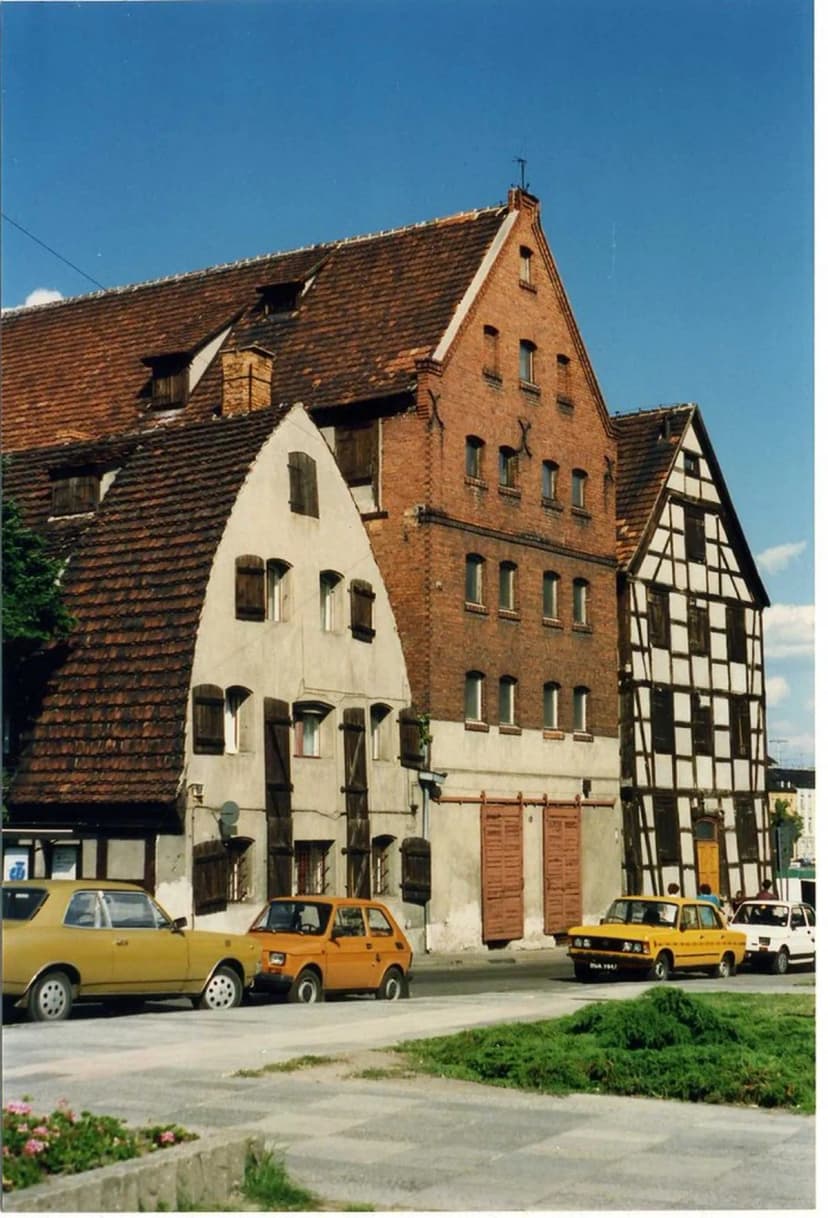
The island's oldest institution was the Bydgoszcz Mint, chartered by the Polish crown and striking coins here from 1594 to 1688 — locals still sometimes call this stretch the "royal island" because of that charter, and the street running through it, Mennica ('Mint') Street, keeps the memory alive. Visit Bydgoszcz's official island page covers the same royal history in more depth. Timber-framed granaries and mill buildings still line the water, giving the island its picturesque, faintly industrial look even after a century of renovation.
The transition from working mill complex to public park happened gradually over the 20th and early 21st centuries. Vast lawns, modern footbridges, and an amphitheater have replaced the horse carts and grain sacks of the old milling economy. On the western edge, where old tenement houses rise straight out of the Młynówka canal, residents call the neighborhood "Bydgoszcz Venice" (Wenecja Bydgoska) — a nickname that shows up on almost every postcard of the city.
None of this history gets in the way of using the island as an actual park. Mature trees shade the paths in summer, families picnic on the central lawn, and the sound of moving water is constant thanks to the weir at the island's northern tip. It remains the single most popular meeting point in Bydgoszcz for residents and visitors alike, in 2026 as much as in any previous year.
Getting Onto the Island: Footbridges and Orientation
Reaching the island is easy: it's just a 2-minute walk from the Old Market Square, down toward the river where the granaries come into view almost immediately. Several footbridges connect the island to different parts of the center, and the most photogenic approach runs directly from the Opera Nova building, giving you a dramatic first view of the modern opera house reflected in the water.
A second footbridge on the far side leads to Bydgoszcz Venice (Wenecja Bydgoska), where 19th-century tenement houses rise directly from the Młynówka mill race — a layout that echoes actual Venice visually more than historically. Standing on that bridge and looking back toward the island gives you the granaries reflected in the canal, softest in early morning light, and most photographers rate it the single best shot in the city.
To avoid backtracking over the same bridge twice, start at the Old Market Square entrance and walk the loop clockwise: hit Rother's Mills and the White Granary first, loop past the museum branches and the weir, then finish at the Wenecja Bydgoska footbridge so your last view of the trip is that postcard shot back across the water. The whole loop is flat, well signed in Polish and English, and easy to finish in under an hour even with a few photo stops.
If you arrive by car, use the parking lots near the opera house or the cathedral rather than trying to find space on the island itself. Bicycles are welcome on the wide paths, and most of the loop is wheelchair- and stroller-friendly — the one exception is the older cobbled apron directly around the White Granary, where a smoother detour path runs a few meters further from the water.
Industrial Heritage: Rother's Mills and the White Granary
Rother's Mills (Młyny Rothera) dominates the island's skyline, a red-brick 19th-century complex that once processed grain for the entire region. Its renovation into a cultural and science center is one of the more successful adaptive-reuse projects in Poland, and our companion Bydgoszcz Mill Island guide breaks down its exhibition spaces floor by floor.
The comparison that comes up most often is Manufaktura in Łódź, Poland's best-known industrial-to-retail conversion. Rother's Mills takes a different path: instead of shopping malls, the building emphasizes hands-on science exhibits, art workshops, and community events, while keeping the original wooden beams and brick walls exposed rather than hidden behind drywall.
Nearby, the half-timbered White Granary (Biały Spichlerz, 1789–1799) is the older of the two structures, built with a Gothic cross-vaulted cellar that predates the granary above it by roughly three centuries. It now houses an archaeology collection from the Bydgoszcz Regional Museum, and its pale facade is the most photographed building on the island after Rother's Mills.
The 1861 brick Red Granary rounds out the trio, hosting a Modern Art Gallery inside walls originally built for grain storage. Together, the three buildings trace the island's shift from working port to museum district, and walking between them — even without paying for a single ticket — gives a clear sense of what Mill Island looked like before it became a park.
Art and History: Leon Wyczółkowski District Museum
The Leon Wyczółkowski District Museum operates several branches spread across the island's historic buildings rather than one central hall. For a lighter, more playful contrast, the Museum of Soap and History of Dirt sits a short walk away — worth pairing with a Mill Island visit if museums are the focus of your day.
Museum ticket prices are roughly 10–20 PLN (approx. €2–4) as of 2026, and several branches sell combined tickets that cover more than one exhibit at a discount. One detail worth knowing before you plan your day: permanent exhibitions across the district museum branches are free to enter on Thursdays, which stacks nicely with the free 24-hour park access if you're traveling on a tight budget.
The Wyczółkowski house branch is the most intimate stop, displaying the painter's personal studio items alongside his canvases in the rooms where he actually worked. It's a quieter experience than the larger granary exhibits and rewards visitors who like a slower pace.
Plan to spend at least 75–100 minutes if you intend to visit a museum branch, on top of the walking loop itself. English descriptions cover most major displays, and staff are generally happy to fill in extra context about the island's industrial past that the placards don't cover.
Riverside Relaxation: The Weir, Marina, and Urban Beach
The Bydgoszcz Marina is a striking piece of modern wooden architecture on the island, with berths for boaters and a cafe terrace open to anyone just passing through. Sit here for twenty minutes and you get a clear view across to the Opera Nova, plus the comings and goings of the short river excursions that launch from the same dock in warmer months — In Your Pocket's river guide has the fuller rundown of what runs on the Brda season by season.
A small urban beach near the marina gives the island a genuine sandy strip on the river — not the Baltic coast, but a real spot to sit with deck chairs and watch the water rather than just walk past it. Swimming isn't allowed, but the beach fills with locals rather than tourists on warm afternoons, a nice contrast to the busier Old Town squares.
The island hosts the Pozytywka Festival (the Magic Festival of the World of Fairy Tales) each summer, turning the park into a themed wonderland aimed squarely at families with young children. It's genuinely worth building a trip around if you're traveling with kids, but check the festival's own program before you go — several of the ticketed evening shows and workshops sell out and require booking in advance through the city's cultural calendar, rather than being available at the gate.
That same festival is exactly when to avoid the island if quiet photography is the goal — crowds swell noticeably during Pozytywka, and the quiet reflective shots from the Wenecja Bydgoska footbridge are much easier to get on an ordinary weekday. The weir itself, meanwhile, is worth a slow look any time of year: it's still the mechanism regulating water levels between the Brda and the Młynówka, audible well before you see it.
Planning Your Visit: Costs, Timing, and Weather
A full loop of the island's exterior takes approximately 45–60 minutes at a steady pace, covering every landmark and both signature footbridges without stepping inside a single building. That's the express version for travelers passing through Bydgoszcz on a layover or a stopover between Warsaw and the Baltic coast. Budget more time if you want to add a museum branch or sit down for coffee at the marina.
The island doubles as a launch point for larger green spaces: the seasonal water tram (Bydgoski Tramwaj Wodny) stops near the marina and connects Mill Island to Myślęcinek Park, Poland's largest municipal park. The service typically runs weekends and holidays from spring through early autumn rather than year-round, so if the boat ride is part of your plan, check the current timetable before building your day around it — the schedule shifts slightly each season.
Entry to the island park itself is free and open 24 hours a day. Combine that with the district museum's free-Thursday policy on permanent exhibitions (see above) and it's possible to see almost everything on Mill Island — mills, granaries, weir, marina, beach, and one full museum branch — without spending more than a few złoty, if you plan the day around it.
Spring and summer bring the lushest greenery and the longest daylight for photography; autumn adds color to the trees; winter turns the frozen weir and snow-dusted granaries genuinely striking, if cold. The island is exposed to wind year-round, so check the forecast before committing to a slow, unhurried walk in any season.
- Mill Island Quick Facts for 2026
- Island Entry: Free of charge
- Museum Prices: 10-20 PLN
- Walking Loop: 45-60 minutes
- Best Photo: Venice Footbridge
Beyond the Island: Nearby Bydgoszcz Highlights
After exploring the island, walk back toward the Old Market Square, home to the Town Hall, the Cathedral, and a cluster of restaurants serving pierogi and local beer — see our guide to where to eat in Bydgoszcz for specific picks near the square.
Follow the water further to the historic Bydgoszcz Canal, an engineering project that once connected the Vistula and Oder river basins. Walking its paths leads through quieter residential neighborhoods and gives a deeper sense of the city's long relationship with water transport, beyond the tourist-facing stretch around Mill Island.
The Opera Nova sits just across the footbridge and is worth a look even if you're not catching a performance — its circular modern design is a deliberate contrast to the old island granaries a few meters away.
Mill Island works well as a standalone stop or as the centerpiece of a longer day; for a fuller itinerary, our guide to things to do in Bydgoszcz maps out how to combine it with the Old Town, Exploseum, and the rest of the riverside sights. Bring comfortable shoes either way — the cobblestones around the Old Town add up faster than they look.
Frequently Asked Questions
Is Mill Island in Bydgoszcz free to visit?
Yes. Walking the island's parkland, footbridges, weirs, and riverside promenades is completely free and accessible 24 hours a day. Only the individual museum buildings on the island — such as the White Granary, Red Granary, and Młyny Rothera — charge separate admission.
How big is Mill Island?
Mill Island covers about 6.5 hectares in the middle of Bydgoszcz's Old Town, bounded by the main channel of the Brda River on one side and its Młynówka branch on the other.
Why is it called Mill Island?
The island takes its name from the mills built there from the 14th century onward, which reached peak activity in the 19th century. A royal mint also operated on the island from 1594 to 1688, which is why the street running through it is named Mennica ('Mint') Street.
What are the main historic buildings on Mill Island?
Highlights include the half-timbered White Granary (1789-1799), which has a Gothic cross-vaulted cellar dating to the 15th century; the 1861 brick Red Granary; Leon Wyczółkowski's house (1899); the former mint/European Money Centre building; and the 1848-1850 Rother's Mills complex, now the Młyny Rothera cultural center.
What museums can you visit on Mill Island?
Mill Island hosts several branches of the Bydgoszcz Regional Museum (Muzeum Okręgowe) — including an archaeology exhibit in the White Granary, a Modern Art Gallery in the Red Granary, the European Money Centre, and Leon Wyczółkowski's house — plus the Młyny Rothera science and culture center in the former Rother's Mills.
What are the museum opening hours and ticket prices?
Muzeum Okręgowe buildings on the island are open Tuesday-Thursday 10:00-18:00, Friday 12:00-20:00, and Saturday-Sunday 11:00-17:00 (closed Monday), with standard tickets around 17 PLN and reduced tickets around 12 PLN; permanent exhibitions are free on Thursdays. Młyny Rothera keeps separate hours and sells tickets per exhibition via its own website.
How do you get to Mill Island from Bydgoszcz's Old Market Square?
Mill Island is just a short walk from the Old Market Square via Mennica Street and a series of modern footbridges that connect the island to the surrounding Old Town.
Is Mill Island good for families with children?
Yes. Beyond the historic buildings, the island has a children's playground, an amphitheater for open-air events, a marina, and a small sandy riverbank area, making it a relaxed spot for a family outing as well as a history stop.
When is the best time to visit Mill Island?
The island is open year-round as an outdoor space, but spring through early autumn is best for enjoying the tree-lined walkways, riverside benches, and outdoor events such as the annual Bydgoszcz Water Festival held each June.
Mill Island is more than a park; it's the clearest single window into how Bydgoszcz turned an industrial waterfront into a public space without erasing its history. The mix of restored mills, working museums, and free green space makes it worth a visit whether you have twenty minutes or half a day.
Check the local event calendar before you go in 2026, especially around Pozytywka Festival dates, and budget your visit around the free-Thursday museum window if cost matters. Either way, Mill Island rewards an unhurried walk more than almost any other stop in the city.
To verify current details, consult the Mill Island (Wyspa Młyńska) on Wikipedia, Mill Island (Wyspa Młyńska) on Wikipedia, Mill Island (Wyspa Młyńska) official site and Mill Island (Wyspa Młyńska) official site.