

Things to Do in Bydgoszcz: A 2026 Guide to the City's Best Sights
Last updated July 2026 — cross the footbridge onto Mill Island in the evening and look back at the granaries glowing orange in the low light, and it becomes obvious why Bydgoszcz keeps surprising visitors who only planned a quick stop on the way to somewhere else. This is Poland's eighth-largest city, and one of its most water-shaped: the Brda River splits the centre in two, the historic Bydgoszcz Canal threads through a green park on the western edge, and nearly every landmark worth seeing sits within a comfortable walk of the riverbank.
I've put together this guide the way I'd plan the day myself, roughly in the order the sights actually earn your attention, from Mill Island and the famous "Man Crossing the River" sculpture to the granaries above the Old Market Square. If you're deciding how long to stay, our how many days in Bydgoszcz guide breaks that down, and if you want the full case for visiting at all, see is Bydgoszcz worth visiting. Many visitors also use the city as a base for a side trip to Toruń, Copernicus's UNESCO-listed hometown, less than an hour away by train.
Key Takeaways
- Mill Island (Wyspa Młyńska) is the single best first stop — restored granaries, museum branches, and a riverside park right in the centre.
- The "Man Crossing the River" sculpture by Jerzy Kędziora, suspended on a wire above the Brda near Opera Nova, is Bydgoszcz's signature photo.
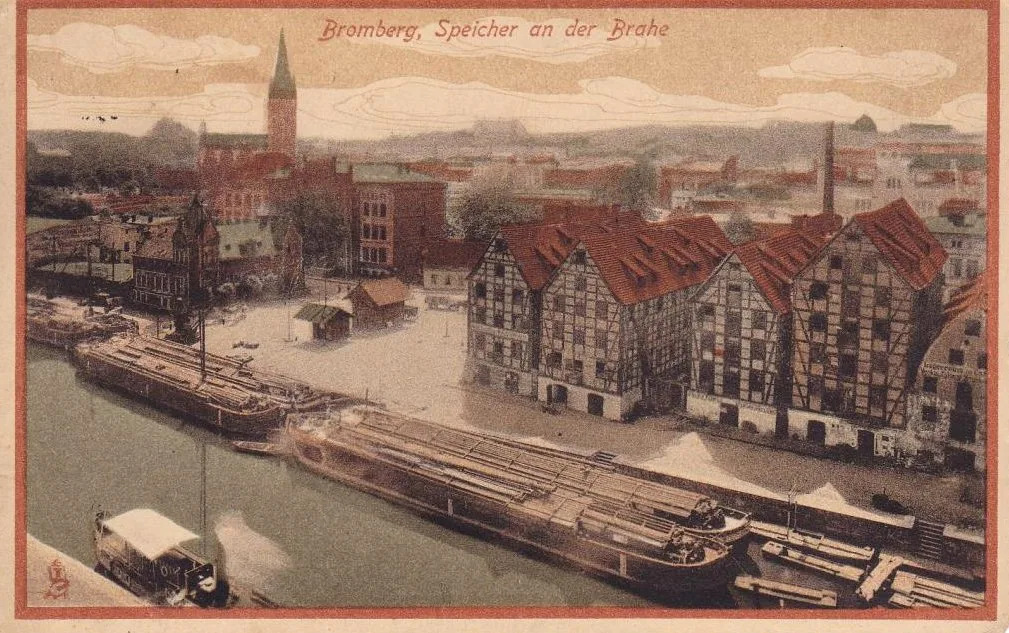
- The granaries on the Brda (Spichrze nad Brdą) beside the Old Market Square give the city's most photographed skyline view.
- Exploseum, inside the former WWII DAG Fabrik Bromberg explosives works, is a sobering half-day trip for anyone interested in 20th-century history.
- Most of the core sights sit within a 2-3km riverside loop, so a first visit is genuinely walkable in a single day.
- Toruń is the standout day trip from Bydgoszcz — see day trips from Bydgoszcz for the full list.
Mill Island (Wyspa Młyńska)
If you only have an hour in Bydgoszcz, spend it here. Mill Island sits in the Brda River right in the middle of the city, and it's been turned into the kind of green, unhurried district that makes a strong first impression: restored red-brick granaries and mills, including Rother's Mills (Młyny Rothera) and the White Granary (Biały Spichlerz), now house branches of the Leon Wyczółkowski District Museum. There's a working weir, a small marina, a stretch of urban beach in summer, and enough benches and lawns that locals treat it as much as a park as a heritage site.
I'd budget 45 minutes to an hour for a walking loop, longer if you go into one of the museum branches. It connects directly to the Old Market Square by footbridge, which is what makes the whole central riverside area so easy to string together on foot. For a slower, dedicated visit with a full walking route, see our Mill Island guide.
"Man Crossing the River" Sculpture
A short walk from Mill Island, near Opera Nova, you'll spot a life-size bronze figure balanced on a wire high above the Brda — arms out, mid-step, seemingly one gust of wind from falling in. This is "Przechodzący przez rzekę" ("Man Crossing the River"), a 2004 installation by Polish sculptor Jerzy Kędziora, who's known for these gravity-defying balancing figures. It's become the single most photographed thing in the city, and for good reason: it's genuinely striking, free to see any time of day, and best appreciated with a slow walk along both riverbanks so you catch it from a few different angles.
Evening is the best time to see it, when the opera house lights and the water together make the whole scene feel a little theatrical.
Old Market Square and the Granaries on the Brda
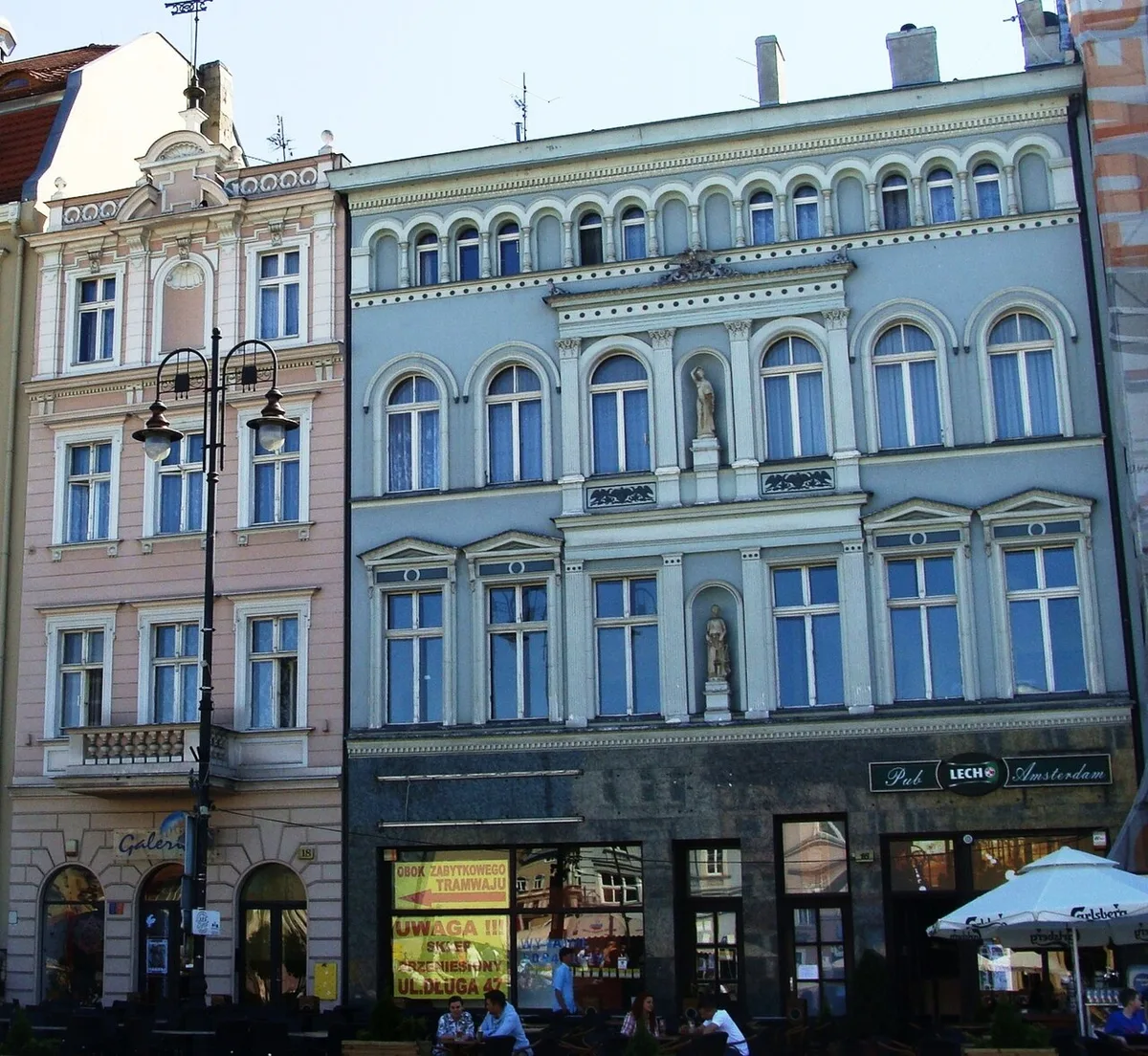
The Old Market Square (Stary Rynek) is the historic heart of Bydgoszcz — colourful tenement facades, cafe tables spilling onto the cobbles, and the parish church anchoring one corner. But the view that actually ends up on every postcard is just below it, on the waterfront: the granaries on the Brda (Spichrze nad Brdą), three iconic half-timbered 18th- and 19th-century grain stores standing almost in the river itself, now part of the district museum. Photograph them from the opposite bank in the late afternoon and you'll see why.
A few streets further along the water, the tenements of the "Bydgoszcz Venice" (Wenecja Bydgoska) district rise straight out of the old mill race — a smaller, quieter echo of the granaries view, and usually free of the crowds. Our dedicated Old Town guide covers the full walking route through this part of the city, including the Cathedral of St Martin and St Nicholas (locally called "Fara"), a Gothic brick church that holds the venerated "Madonna with a Rose" painting.
Opera Nova and Filharmonia Pomorska
Opera Nova is hard to miss — a striking modern, circular building right on the riverbank that hosts the annual Bydgoszcz Opera Festival and a full season of performances the rest of the year. Even if you're not catching a show, it's worth walking the riverside promenade past it, since this stretch is where the "Man Crossing the River" sculpture and some of the best river views cluster together.
Music lovers should also make time for Filharmonia Pomorska (the Pomeranian Philharmonic), named for Ignacy Jan Paderewski and considered one of Poland's most acoustically respected concert halls. Checking both venues' schedules before you go is worth the five minutes it takes — Bydgoszcz punches well above its size for classical music and opera.
Exploseum
For something completely different, Exploseum sits on the edge of the city inside the former DAG Fabrik Bromberg, a WWII-era dynamite and explosives works linked to the Alfred Nobel-founded DAG concern. Guided routes take you through preserved industrial and underground buildings scattered through forest, and the site does a genuinely good job of contextualising a difficult chapter of the city's 20th-century history rather than just showing off derelict architecture. It's not a quick stop — plan for a half-day including transport out and the guided tour itself — but it's one of the more memorable industrial-history museums in Poland.
Exploseum requires a half-day including transport and the guided tour. Tickets typically cost 20-30 PLN (≈€4.50-7).
Bydgoszcz Canal and the Water Tram
The Bydgoszcz Canal (Kanał Bydgoski) is easy to overlook on a first visit, but it's a genuine piece of engineering history: opened in 1774, it's one of the oldest artificial waterways still in use in Europe, built to link the Vistula and Oder river basins. Today the canal-side stretch is a green, quiet park with old lock structures still visible — a good place for a slower walk if the centre feels busy, and a reminder of just how much of Bydgoszcz's identity is tied to moving water and goods rather than tourism.
In the warmer months (roughly May through September, though exact dates shift year to year — check locally before you plan around it), the Bydgoszcz Water Tram (Bydgoski Tramwaj Wodny) runs small passenger boats along the Brda, which is a relaxed way to see Mill Island, the granaries, and the sculpture from the water instead of the bank. The city also runs one of Poland's older tram networks alongside its bus system, both useful for reaching the canal park or Exploseum without a car.
The Bydgoszcz Water Tram operates May through September with seasonal dates that shift year to year. Check locally before planning. Tickets run 15-20 PLN (≈€3.50-4.50) per trip as of 2026.
Długa Street, the Soap Museum, and Myślęcinek
Once the riverside classics are ticked off, the streets just south of the Old Market Square hold a quirkier layer of the city. Długa Street (ulica Długa) is the old town's main historic thoroughfare — a long, low-rise run of tenements, cafes, and independent shops that was the commercial spine of Bydgoszcz for centuries. Walk it slowly and look down as much as up: set into the pavement is the Bydgoszcz Autograph Alley, a growing trail of brass plaques carrying the cast signatures of well-known Poles who have visited the city, from athletes to musicians. It costs nothing, takes ten minutes, and is exactly the kind of small local tradition most visitors walk straight past.
Halfway along the street sits the Museum of Soap and the History of Dirt (Muzeum Mydła i Historii Brudu), one of the more entertaining small museums in northern Poland. Visits are guided, last around an hour, and walk you through several centuries of European hygiene — medieval bathhouses, plague-era fear of washing, communist-era detergent shortages — before finishing with a hands-on session where you press and scent your own bar of soap to take home. Tickets typically run around 30-40 PLN (≈€7-9); book ahead on summer weekends, since group sizes are capped and English-language slots are limited.
Two short detours round out the centre. In the Theatre Square area near Filharmonia Pomorska stands the Łuczniczka ("Archer Girl"), a 1910 bronze by Ferdinand Lepcke that has become the city's unofficial symbol — you'll see her silhouette on everything from tram liveries to the local arena's name. A few blocks away in Kazimierz Wielki Park, the reconstructed Deluge Fountain (Fontanna Potop) is a dramatic, multi-figure bronze scene of people and animals struggling against rising floodwaters; the 1904 original was melted down for metal during WWII and rebuilt decades later through a local fundraising campaign, which tells you something about how much this city values it.
Travelling with kids, or simply want green space at scale? Myślęcinek Forest Park (Leśny Park Kultury i Wypoczynku), about 5km north of the centre and reachable by tram, is commonly cited as Poland's largest city park at over 800 hectares — with a fauna garden, botanical garden, rope courses, and enough walking and cycling trails to fill a half day when the weather cooperates.
How to String It All Together
The good news is that almost everything above sits inside a compact riverside loop, so you don't need to overplan. A natural route starts at the Old Market Square, drops down to the granaries on the Brda for the classic photo, crosses toward Opera Nova to see the "Man Crossing the River" sculpture, then finishes on Mill Island before looping back. That core walk takes half a day at an unhurried pace; add Exploseum or a canal-park walk and you've got a full day.
| Sight | Time to budget | Typical cost (2026) |
|---|---|---|
| Mill Island (Wyspa Młyńska) | 45–60 min | Free to walk; museum branches ~15-25 PLN (≈€3.50-6) |
| "Man Crossing the River" sculpture | 15–20 min | Free |
| Old Market Square + granaries | 45–60 min | Free to walk |
| Opera Nova (performance) | 2-3 hrs if attending a show | Varies by production; check listings |
| Exploseum | Half day incl. transport | ~20-30 PLN (≈€4.50-7), guided tour |
| Bydgoszcz Canal park walk | 45–90 min | Free |
| Water tram (seasonal) | 30–45 min | ~15-20 PLN (≈€3.50-4.50) per trip, as of 2026 — confirm current fares before visiting |
Getting here is straightforward by Polish standards. Bydgoszcz Główna station sits on the main Gdańsk–Poznań and Toruń–Piła lines, with direct PKP Intercity services from Warsaw in roughly 2.5-3 hours, Gdańsk in about 1.5-2 hours, and Poznań in around 1.5 hours; regional trains shuttle to Toruń several times an hour at peak, taking 45-60 minutes. The station is a 20-25 minute walk from the Old Market Square, or a few stops on the tram — Bydgoszcz runs one of Poland's older tram networks, and single tickets cost just a few złoty. For current event listings, water tram timetables, and seasonal opening hours, the city's official Visit Bydgoszcz portal is the most reliable single source.
If you're wondering when to time your trip around the water tram, festivals, or simply better weather, our best time to visit Bydgoszcz guide covers it season by season.
Where to Eat and Stay
Bydgoszcz sits in the Kuyavia (Kujawy) region, and while I wouldn't invent a single "signature Bydgoszcz dish," you'll find honest regional and Polish staples everywhere: pierogi, żurek, and around St Martin's Day (11 November) the Kuyavia/Wielkopolska tradition of roast goose. Duck-blood soup (czernina) also shows up on more traditional menus. For a cheap, filling lunch, look for a milk bar (bar mleczny) near the centre — reliably good value, if a little unpredictable on any given day.
For where to actually stay and eat in more depth, including neighbourhoods and price ranges, see our dedicated where to stay in Bydgoszcz and where to eat in Bydgoszcz guides.
Explore Bydgoszcz
- Bydgoszcz Attractions — compare tickets, hours, and visitor tips for the city's main sights.
- Where to Stay in Bydgoszcz — the best neighbourhoods and hotel picks near the river and Old Town.
- Where to Eat in Bydgoszcz — milk bars, riverside restaurants, and regional Kuyavian dishes.
- Day Trips from Bydgoszcz — Toruń, Biskupin, Chełmno, and Inowrocław, all under an hour away.
- Mill Island Guide — a full walking route through the city's restored riverside granaries and mills.
- Best Time to Visit Bydgoszcz — seasonal weather, festivals, and the water tram schedule.
- How Many Days in Bydgoszcz — realistic itineraries from a single day to a long weekend.
- Is Bydgoszcz Worth Visiting — an honest take on who should (and shouldn't) prioritise this stop.
- Bydgoszcz Old Town Guide — the Old Market Square, the Cathedral, and the "Bydgoszcz Venice" district.
- Bydgoszcz Itinerary 2 Days
- Bydgoszcz With Kids
- Free Things to Do in Bydgoszcz
- Getting Around Bydgoszcz
Explore things to do in other cities
Frequently Asked Questions
What is Bydgoszcz most famous for?
Bydgoszcz is best known for Mill Island (Wyspa Młyńska), its restored riverside granaries, and the "Man Crossing the River" sculpture by Jerzy Kędziora suspended above the Brda near Opera Nova. It's also historically important as the site of the Bydgoszcz Canal, opened in 1774 and one of the oldest artificial waterways still in use in Europe.
How many days do you need in Bydgoszcz?
A focused half-day to full day covers the core riverside sights — Mill Island, the sculpture, the Old Market Square, and the granaries. Add a second day if you want to include Exploseum or a day trip to Toruń. See our how many days in Bydgoszcz guide for detailed itineraries.
Is Bydgoszcz worth visiting?
Yes, especially if you enjoy walkable riverside cities with genuine architectural character and far fewer crowds than Kraków or Gdańsk. It's less of a headline destination than nearby Toruń, but the combination of Mill Island, the granaries, and the sculpture makes for a memorable stop. Full breakdown in our is Bydgoszcz worth visiting guide.
What is the best day trip from Bydgoszcz?
Toruń is the standout — a UNESCO-listed medieval old town, Copernicus's birthplace, and famous for its gingerbread (pierniki), roughly 40-50 minutes away by train. Biskupin, Chełmno, and Inowrocław are also within about an hour. See day trips from Bydgoszcz for the full list.
Can you walk between the main Bydgoszcz sights?
Yes — Mill Island, the "Man Crossing the River" sculpture, the Old Market Square, and the granaries on the Brda all sit within about a 2-3km loop along the riverbanks, easily covered on foot in half a day at an unhurried pace.
Final Thoughts
Bydgoszcz rewards exactly the kind of unhurried riverside walking it's built for — cross to Mill Island, find the sculpture, take in the granaries from across the water, and you've already seen what makes this city worth the stop. Pair it with a short train ride to Toruń and you've got one of the most underrated short trips in this part of Poland.
You might also like


Continue reading
More guides you'll find useful