

Gdynia is Poland's youngest major city — a fishing village of a few hundred people in 1926 that the newly independent Polish state built, almost from nothing, into its principal deep-water port within little more than a decade. That origin story shapes nearly every attraction on this page. Where Gdańsk trades on centuries of Hanseatic brick and Kraków on a medieval royal core, Gdynia's sights are almost entirely products of the interwar 1920s-30s building boom: the clean lines and porthole windows of its Modernist Trail, a working harbor that still handles container ships and cruise liners, and a downtown laid out around the sea rather than a market square.
That waterfront orientation is what makes a 2026 trip to Gdynia distinctive. Two decommissioned vessels — the wooden-hulled 1909 sailing frigate Dar Pomorza and the WWII destroyer ORP Błyskawica, one of the oldest preserved destroyers afloat — sit moored a few hundred meters apart as museum ships, right beside the NMFRI Aquarium's tanks of Baltic and tropical marine life. A short walk inland, the Emigration Museum occupies the same 1930s Marine Station building that once processed hundreds of thousands of Poles leaving for new lives abroad, telling that history through a genuinely moving reconstructed departure hall. South of downtown, the city's built environment gives way abruptly to nature: the eroding clay cliff and rebuilt wooden pier at Orłowo, backed by protected coastal forest, feel a world away from the naval architecture just a short train ride north.
The 8 attractions below cover this full range — maritime history, modernist urban design, and coastal nature — and each links to a dedicated visitor guide with current 2026 ticket prices, opening hours, and practical tips. Use this hub to decide which sights fit your schedule, then the sections further down to plan routes, budget, and timing around them.
Top 8 attractions in Gdynia

NMFRI Gdynia Aquarium (Akwarium Gdyńskie MIR-PIB)
Perched on Gdynia's South Pier where the Baltic meets the harbour, the NMFRI Gdynia Aquarium is Poland's oldest and best-known marine attraction, run by the National Marine Fisheries Research Institute since its formal opening in 1971. Spread across multiple floors and around 1,800 square metres, its tanks hold over a million litres of water and more than 250 species, from tropical clownfish and an electric eel to the giant Amazonian arapaima. The dedicated Baltic Room turns attention to the sea just outside the windows, anchored by the mounted skeleton of the largest cod ever caught in the Baltic, while the newer 'Cold Seas' galleries trace marine life from the Atlantic up to home waters. Multimedia guides help visitors navigate the eight exhibition halls, and a seasonal café offers a coffee break mid-visit. Families get reduced family-ticket pricing and free entry for under-5s, and the whole route is comfortably covered indoors - making it a reliable rainy-day plan as well as a dedicated day out for anyone exploring the Tricity coast.
Visitor guide →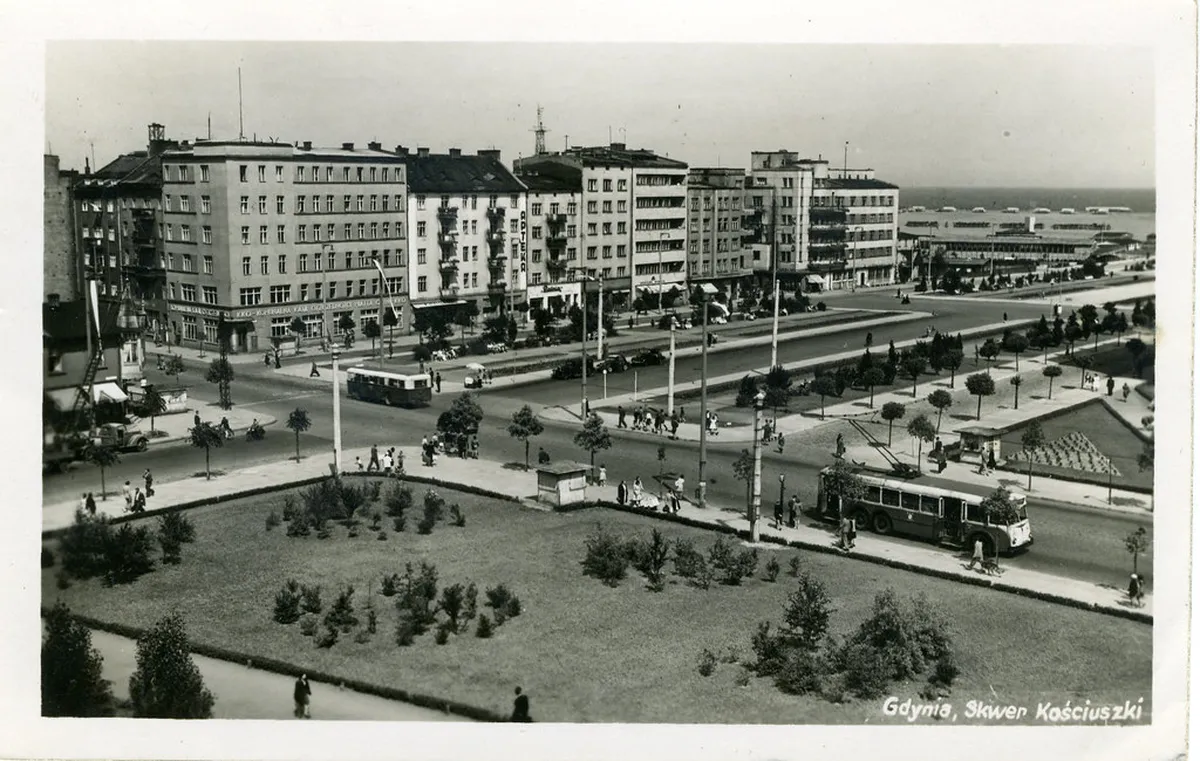
Kościuszko Square (Skwer Kościuszki)
Kościuszko Square is Gdynia's beating heart — a lively, waterfront plaza where the city's interwar modernist architecture meets the open Baltic Sea. Laid out in the 1920s as the young port city's grand approach to the water, the square today buzzes with street performers, ice-cream kiosks, and locals strolling between café terraces and 1930s tenement houses like the Pręczkowski and Peszkowski townhouses. At its center rises the striking Monument to Polish Maritime Heritage, its sail-like steel form nodding to Gdynia's identity as Poland's gateway to the sea. From here the square flows directly into the Southern Pier and Aleja Jana Pawła II, passing the historic destroyer ORP Błyskawica and the tall ship Dar Pomorza — both now floating museums moored at the quay, alongside the Gdynia Aquarium. Surrounding streets hold the Music Theatre of Danuta Baduszkowa, Hotel Gdynia, and the modern Sea Towers skyline. Free to enter and open around the clock, the square suits a sunrise walk along the water, a midday coffee break, or an evening among the summer festival crowds that regularly gather here.
Visitor guide →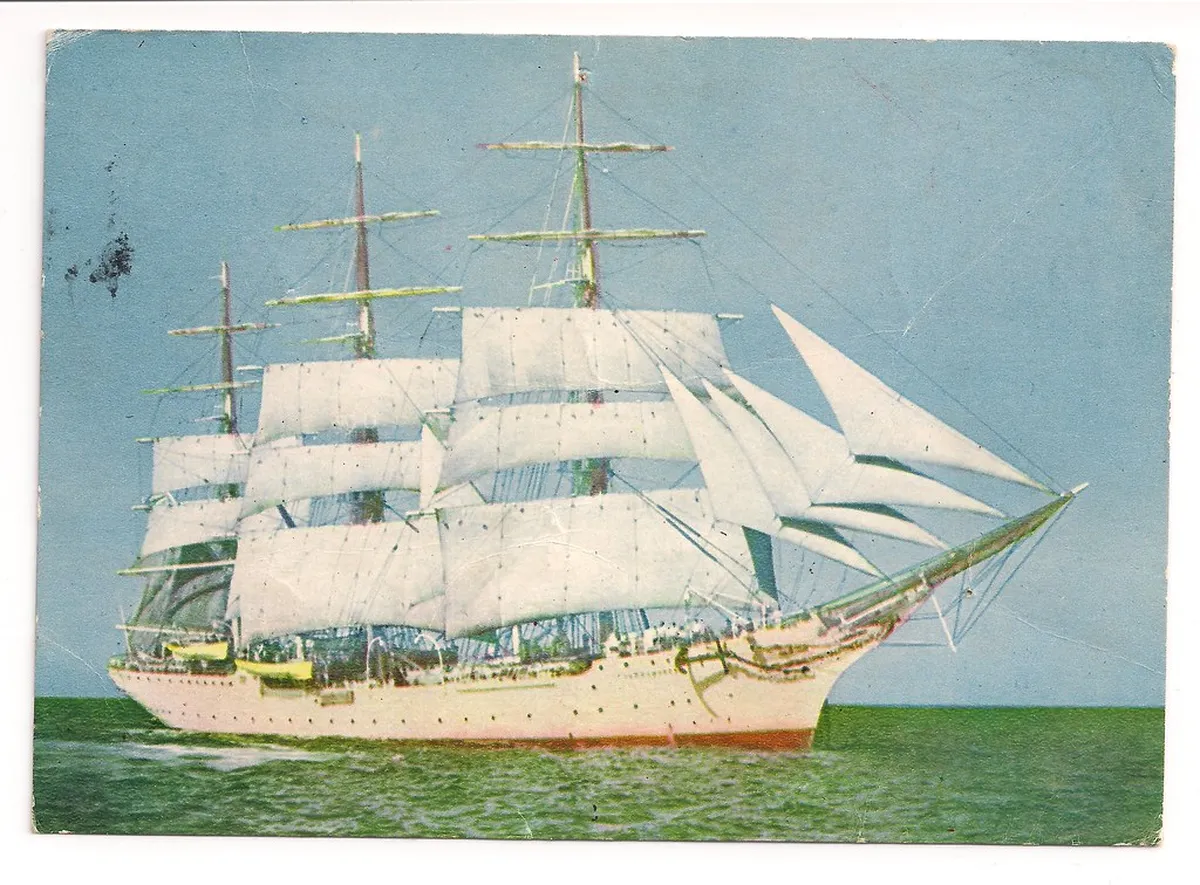
Dar Pomorza
Moored on Gdynia's waterfront along Aleja Jana Pawła II, Dar Pomorza is one of Poland's most cherished maritime landmarks - a three-masted, full-rigged sailing frigate built in 1909 at the Blohm & Voss shipyard in Hamburg. Originally a German training ship, she passed through French hands before Polish sailors and coastal communities pooled funds to buy her in 1929, renaming her "Dar Pomorza" (Gift of Pomerania) in gratitude. For 51 years she served as the training vessel of the State Maritime School in Gdynia, carrying more than 13,000 cadets across half a million nautical miles, including a 1934-35 circumnavigation via the Panama Canal and a 1937 rounding of Cape Horn - both firsts for a Polish-flagged ship. Nicknamed the "White Frigate" for her pale hull, she capped her sailing career by winning the 1980 Cutty Sark Trophy before retiring in 1982. Since 1983 she has welcomed visitors as a museum ship, moored near the destroyer ORP Błyskawica by Skwer Kościuszki. A roughly 40-minute self-guided walk takes visitors through four deck levels - commander's quarters, crew mess, hospital, wheelhouse, and engine room - bringing the working life of Polish sailors vividly to life.
Visitor guide →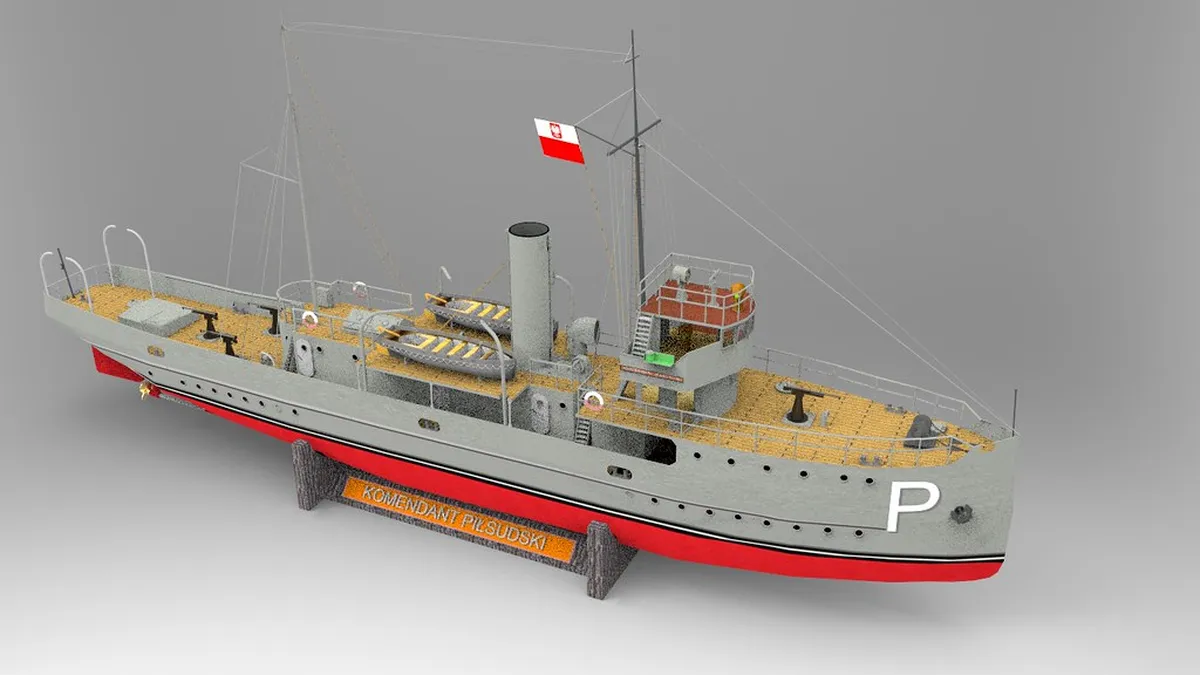
ORP Błyskawica
Moored on the waterfront promenade of Aleja Jana Pawła II in the heart of Gdynia, ORP Błyskawica is one of Poland's most cherished naval relics - a steel-hulled Grom-class destroyer that fought from the first day of World War II to the last. Built in England in the mid-1930s, she escaped to Britain just before the German invasion, screened Atlantic and Mediterranean convoys, took part in the Dunkirk evacuation, and helped defend the English town of Cowes from a Luftwaffe raid - service so distinguished it earned her the Virtuti Militari, an honor no other Polish Navy ship holds. Since 1976 the destroyer has stood open to the public, and visitors can walk her weather deck, climb into gun turrets and torpedo tubes, and descend into the engine and boiler rooms that once drove her to nearly 40 knots. A self-guided route through crew quarters and command spaces brings WWII naval life to life in under an hour, making the ship an easy stop beside the Gdynia Aquarium. Note: Błyskawica is a different vessel from the older wooden-hulled sailing frigate Dar Pomorza berthed nearby - don't confuse the two when planning a visit.
Visitor guide →
Emigration Museum
Housed inside Gdynia's beautifully restored 1933 Marine Station on the harbourfront, the Emigration Museum tells the deeply human story of the millions of Poles who left home to build new lives abroad. The permanent exhibition unfolds like a journey: visitors pass through a recreated train carriage, a bustling port terminal, and a mock ocean-liner cabin before arriving at a reconstruction of an Ellis Island-style immigration hall - retracing the real route thousands of emigrants took from this very building between the 1930s and the late 1980s. Along the way, personal letters, ship manifests, suitcases, and family photographs bring individual stories to life, while a large model of the ocean liner MS Batory shows the scale of the transatlantic crossing. A dedicated Polish Diaspora room maps communities from Chicago to Australia, and free on-site Ancestry.com access lets visitors research their own family history. Interactive stations and a children's trail make it engaging for families, and a café overlooks the marina. Budget 1.5-2 hours, and visit on a Wednesday for free admission to the permanent exhibition.
Visitor guide →
Orłowo Cliff and Pier
Where Gdynia's southern shoreline gives way to open water, the Orłowo Cliff rises in golden-brown tiers of glacial clay and sand, its slopes gripped by yarrow and wind-bent sea buckthorn. Walk out along the adjoining wooden pier — a 180-meter promenade rebuilt after decades of storms and reconstruction — and the cliff unfolds in full: a near-vertical wall climbing up to 40 meters above the Bay of Gdańsk, with the Hel Peninsula and Sopot's own pier visible on a clear day. This is one of Poland's most photographed coastlines, especially at sunrise, when the cliff's carved contours catch the first light. A bronze statue of marine painter Antoni Suchanek sits near the pier's entrance, a nod to the district's long pull on artists. Paths climb from the beach to a clifftop lookout and continue along a marked coastal trail toward Sopot, past the protected Kępa Redłowska nature reserve and the nearby Kolibki Landscape Park. The cliff is actively eroding — roughly a meter a year — so stick to marked paths and keep a respectful distance from the unfenced edge, especially with children. Entry to both the cliff viewpoint and the pier is free, any time of day.
Visitor guide →
Kamienna Góra
Kamienna Góra ("Stone Mountain") is Gdynia's most scenic overlook — a hilltop rising straight out of the city centre, wrapped by one of Poland's most exclusive villa districts. Reach the summit the easy way: hop on the free glass funicular from Plac Grunwaldzki, right by the Musical Theatre, for a two-minute, roughly 40-metre climb up the hillside (stairs and a yellow-marked footpath work too, any time the lift is closed). At the top, the panoramic terrace opens onto sweeping views of Gdynia's working harbor, the downtown skyline, and the Bay of Gdańsk stretching toward the Hel Peninsula — bring binoculars on a clear day to pick out ships at anchor. The summit itself holds a 25-metre steel cross and a stone memorial to the Defenders of the Coast who fell here in September 1939, alongside a small amphitheatre and the leafy paths of Maria and Lech Kaczyński Park on the lower slope. Wander the surrounding streets afterward to admire 1920s-30s villas — a mix of manor-style Renaissance Revival houses and streamlined Modernist seaside homes — that made this hill one of interwar Poland's most fashionable addresses. It's free, quick, and arguably Gdynia's best photo stop.
Visitor guide →
Gdynia City Beach
Gdynia City Beach — locally Plaża Miejska w Gdyni — is the golden-sand shoreline anchoring the heart of Gdynia's Baltic waterfront, right where the city centre meets the sea. Tucked beside Kościuszko Square at the start of the 1.5-kilometre Bulwar Nadmorski promenade, it's the most convenient beach in Gdynia for anyone staying downtown — no car needed, just a short walk from Świętojańska Street or the SKM train station. The beach covers roughly 40,500 square metres of sand, with a 200-metre buoy-marked zone patrolled by lifeguards through the summer season and divided into separate swimmer and non-swimmer areas. Wooden boardwalks and an on-request beach wheelchair make it one of the more accessible stretches of coast in the Tri-City. Families gravitate to the beachside playground and volleyball courts, while the promenade above is lined with cafés, bars, and a brewery terrace, all facing Gdańsk Bay. Free to enter and open around the clock, it doubles as a social hub, hosting open-air concerts and sports events through summer, and puts the South Pier's museum ships and the Gdynia Aquarium within easy walking distance.
Visitor guide →Gdynia attractions by area
Six of the eight sights on this page sit within a single walkable waterfront district; the other two are a short ride south. Knowing the geography before you land makes it far easier to decide how to split your time.
Waterfront / Skwer Kościuszki zone. Kościuszko Square is the anchor — from here it's a flat, five-minute walk in either direction to the NMFRI Aquarium and the two museum ships, Dar Pomorza and ORP Błyskawica, both moored along Aleja Jana Pawła II. The City Beach sits directly beside the square, and the Emigration Museum is a further 10-minute walk along the harborfront in the restored Marine Station building. This one zone covers five of the eight attractions and is entirely walkable without a car or taxi.
Kamienna Góra. A separate, uphill pocket just inland from the Musical Theatre and Plac Grunwaldzki, reached by a free glass funicular. Kamienna Góra (Gdynia's viewpoint hill, not the same-named town in Lower Silesia) is wrapped by an interwar villa district worth a slow wander after the summit views.
Orłowo. The furthest-flung of the eight, roughly 5 km south of downtown along the coast. Orłowo Cliff and Pier pairs a wooden promenade with an eroding clay headland and sits beside its own beach and the protected Kępa Redłowska nature reserve — treat it as a separate half-day rather than an add-on to the waterfront cluster.
For scale, this is a far more compact footprint than Gdańsk's sprawling Old Town or Kraków's historic center — the whole waterfront zone can be crossed on foot in under 20 minutes, which is exactly why a single well-planned day gets through most of the list.
Gdynia attractions by category
Maritime & museum ships: Dar Pomorza (1909 wooden-hulled sailing frigate) and ORP Błyskawica (steel WWII Grom-class destroyer) are distinct ships moored near each other — don't conflate them when booking. The NMFRI Aquarium adds a living-marine-life angle to the same waterfront.
Culture & history: The Emigration Museum is Gdynia's strongest cultural stop, tracing the city's role as the departure point for Polish transatlantic emigration through the 1930s-1980s.
Nature & viewpoints: Kamienna Góra delivers the best panoramic harbor view in the city; Orłowo Cliff and Pier delivers the best coastal-nature walk.
Beaches: Gdynia City Beach is the convenient, central option; Orłowo's own beach beneath the cliff is the quieter alternative.
Architecture & public space: Kościuszko Square is the clearest single dose of Gdynia's interwar Modernist Trail, framed by 1930s tenement houses and the Monument to Polish Maritime Heritage.
Free vs paid Gdynia attractions
Four of the eight cost nothing to visit, which makes Gdynia a genuinely budget-friendly city break:
Free: Kościuszko Square, Kamienna Góra (including the funicular), Orłowo Cliff and Pier, and Gdynia City Beach are all open around the clock at no charge.
Paid: the NMFRI Aquarium, Dar Pomorza, ORP Błyskawica, and the Emigration Museum all charge standard adult admission, mostly in the 20-45 PLN range, with family tickets and under-5s-free policies at several. The Emigration Museum waives its fee for the permanent exhibition every Wednesday — the single best free-culture window in the city.
Pricing isn't uniform across the four paid sights: the Aquarium and Emigration Museum are ticketed independently through their own operators, while Dar Pomorza and ORP Błyskawica both fall under the National Maritime Museum and occasionally bundle. Don't assume a ticket to one museum ship covers the other — check current pricing on each linked guide before you budget your day.
Suggested itineraries
Half-day (3-4 hours): Start at Kościuszko Square, walk the pier to tour one museum ship (Dar Pomorza or ORP Błyskawica), then finish at the Aquarium or a café on the square. Enough to say you've seen Gdynia's waterfront without rushing.
1 day: Cover the entire waterfront zone — Kościuszko Square, both museum ships, the Aquarium, and the Emigration Museum — in a single loop of under 2 km total walking. Start early (the Aquarium and Emigration Museum both get busiest from late morning) and budget roughly 1-1.5 hours per stop.
2 days: Day 1 is the full waterfront loop above. Day 2 splits between Kamienna Góra in the morning (funicular up, viewpoint, villa-district walk) and Orłowo in the afternoon (cliff, pier, beach, and a stretch of the coastal trail toward Sopot).
Day trip from Gdańsk or Sopot: Gdynia is the third point of the Tricity and an easy SKM train ride from either neighbor. A single day is enough to cover the waterfront cluster (Square, ships, Aquarium, Emigration Museum) before heading back — see our Gdynia from Gdańsk guide for train times and a route.
Whichever length you choose, start with the free sights first — Kościuszko Square, and Kamienna Góra or Orłowo if they're on your route — then move into the paid museum ships and Aquarium once you've got a feel for the layout. Traveling with kids or want to stretch a half-day into a lazy full one? Pair the Aquarium with the City Beach right next door; both are a five-minute walk apart and give children a mix of indoor and outdoor time on the same stop.
Getting around Gdynia's attractions
Gdynia rewards visitors who skip the car. The SKM (Szybka Kolej Miejska) commuter rail is the backbone of the Tricity, linking Gdańsk, Sopot, and Gdynia on one line — Gdynia Główna station sits about a 10-minute walk from Kościuszko Square and the whole waterfront cluster. A Tricity metropolitan ticket (ZTM/ŻKA zone ticket covering all three cities) is the simplest way to combine Gdynia with a Gdańsk or Sopot base.
Within the waterfront zone, everything — the square, both museum ships, the Aquarium, and the City Beach — is within a 10-15 minute walk, so plan on foot rather than by taxi. Kamienna Góra is reached via the free funicular from Plac Grunwaldzki, a two-minute ride. Orłowo sits about 5 km south; take the SKM one stop to Gdynia Orłowo station and walk down to the pier, or follow the coastal Bulwar Nadmorski promenade on foot or by bike if you have more time.
SKM trains run frequently — every 10-15 minutes during the day at peak season, less often late evening and off-season — so there's rarely a long wait. Buy your ticket from the platform machine or a mobile ticketing app before boarding; Polish rail operators do enforce fare checks on board, and there's no ticket office on the train itself. If you're day-tripping in from Gdańsk or Sopot, factor roughly 25-40 minutes of ride time each way depending on which station you start from.
Best time to visit Gdynia's attractions
Peak summer (June-August): Full access to every sight, longest Aquarium hours (open until 8-9pm in July and August), warm-weather cliff walks at Orłowo, and full beach season — but the busiest crowds and highest accommodation prices of the year. Two major events add to the squeeze: the Open'er Festival (late June) and the Gdynia Film Festival (September) both draw large crowds and push accommodation rates up citywide, so book ahead if your visit overlaps.
Shoulder season (April-May, September-October): The sweet spot for most visitors. Both museum ships and the Aquarium stay open through this window with fewer crowds, and walking weather along the waterfront and at Orłowo is comfortable without summer heat.
Winter (November-March): ORP Błyskawica closes entirely from 1 November to 31 March for maintenance, so build your museum-ships visit around that window if a specific ship matters to you. The Aquarium stays open but on shorter winter hours (roughly 10am-5pm) and closes on Mondays from November through February; Dar Pomorza's hours also shrink off-season, so check the current schedule before visiting. The free outdoor sights — Kościuszko Square, Kamienna Góra, Orłowo's cliff and beach — stay accessible year-round, just colder and windier.
How to save money on Gdynia attractions
- Visit the Emigration Museum on a Wednesday for free entry to the permanent exhibition.
- Four of the eight attractions — Kościuszko Square, Kamienna Góra (plus its funicular), Orłowo Cliff and Pier, and Gdynia City Beach — are free every day, so a budget-conscious itinerary can lean heavily on them.
- Dar Pomorza and ORP Błyskawica are both operated by the National Maritime Museum — check nmm.pl before buying separate tickets, as combined-entry pricing across its branches is sometimes available.
- If you're basing yourself in Gdańsk or Sopot, a Tricity metropolitan day ticket usually works out cheaper than single SKM fares if you're making more than two trips.
- Family tickets and under-5s-free policies apply at the Aquarium and several other paid sights — worth checking before buying individual adult tickets for a family group.
Frequently asked questions about Gdynia attractions
How many days do you need to see Gdynia's main attractions?
One full day covers the entire waterfront cluster — Kościuszko Square, both museum ships, the Aquarium, and the Emigration Museum. Add a second day to take in Kamienna Góra's viewpoint and Orłowo's cliff and pier without rushing.
What is the #1 must-see attraction in Gdynia?
Kościuszko Square is the natural starting point — it's free, central, and puts the Aquarium and both museum ships within a five-minute walk. For a single most-memorable stop, though, most visitors rate the Emigration Museum highest for its storytelling.
Are Gdynia's attractions free?
Half of them are. Kościuszko Square, Kamienna Góra (including the funicular), Orłowo Cliff and Pier, and Gdynia City Beach cost nothing. The Aquarium, Dar Pomorza, ORP Błyskawica, and the Emigration Museum charge standard admission, though the Emigration Museum is free on Wednesdays.
Do you need to book Gdynia attractions in advance?
Usually not. Advance booking isn't required at any of the eight, but the Aquarium and Emigration Museum can develop queues on summer weekends and holidays, so arriving right at opening or booking a timed slot online helps in peak season.
What is the best time of year to visit Gdynia?
April through October covers every attraction, including both museum ships (ORP Błyskawica specifically closes 1 November-31 March). Shoulder season — May, June, or September — offers the best balance of open sights and manageable crowds.
Is Gdynia expensive for tourists?
Not by Western European standards. Four of the eight main attractions are free, and standard adult tickets at the paid sights mostly fall in the 20-45 PLN range, well below comparable museum and attraction pricing in Western Europe.
Can you see Gdynia's main attractions in one day?
Yes, if you focus on the waterfront cluster — Kościuszko Square, the Aquarium, both museum ships, and the Emigration Museum are all within a 10-15 minute walk of each other. Kamienna Góra and Orłowo are better saved for a second day.
What's the best way to get between Gdynia attractions?
Walk within the waterfront zone — nothing there is more than a 15-minute walk from Kościuszko Square. Take the free funicular up to Kamienna Góra, and use the SKM train (one stop) or the coastal promenade to reach Orłowo.
Plan your Gdynia trip
These 8 attractions cover Gdynia's full range — maritime history on the waterfront, modernist architecture around Kościuszko Square, and coastal nature at Orłowo — and each links above to a dedicated guide with 2026 pricing and hours. Use our broad things to do in Gdynia guide for neighborhoods, food, and trip context beyond individual sights. For route planning, see our 2-day Gdynia itinerary and museum ships guide; if you're staying in Gdańsk, our Gdynia from Gdańsk guide covers the day-trip logistics.


