Sopot isn't just another stop on the Polish coast — it's the country's premier seaside resort, a compact spa town where a 511-metre wooden pier, belle-époque villas, and one of Poland's liveliest promenades all sit within a 20-minute walk of each other. Unlike sprawling Gdańsk next door, Sopot's attraction landscape is dense rather than wide: eight sights anchor almost everything worth doing here, from the record-holding Sopot Pier and its adjoining lighthouse to the surreal Crooked House on Monte Cassino Street, the sandy Baltic beach that wraps the pier on both sides, and the forest-ravine amphitheatre that turns into a world-class concert stage each summer. That density is what makes Sopot rewarding on a tight schedule — you can genuinely see the headline attractions in half a day, or slow down and stretch them across two, pairing beach time with Aquapark Sopot on a cool or rainy afternoon and an evening on Monciak's restaurant terraces. This guide organizes the eight attractions in the card grid below by neighborhood and by category, breaks down what's actually free versus ticketed with current 2026 prices, lays out half-day, one-day, and two-day itineraries (including a straightforward day-trip version from Gdańsk or Gdynia), and answers the questions most first-time visitors have about timing, budget, and getting between the sights. Whether you're basing yourself in Sopot for a proper spa-town stay or squeezing it in as a Tricity day trip, everything below is built around the same eight attractions, verified for the 2026 season.
Top 8 attractions in Sopot
Sopot Pier (Molo w Sopocie)
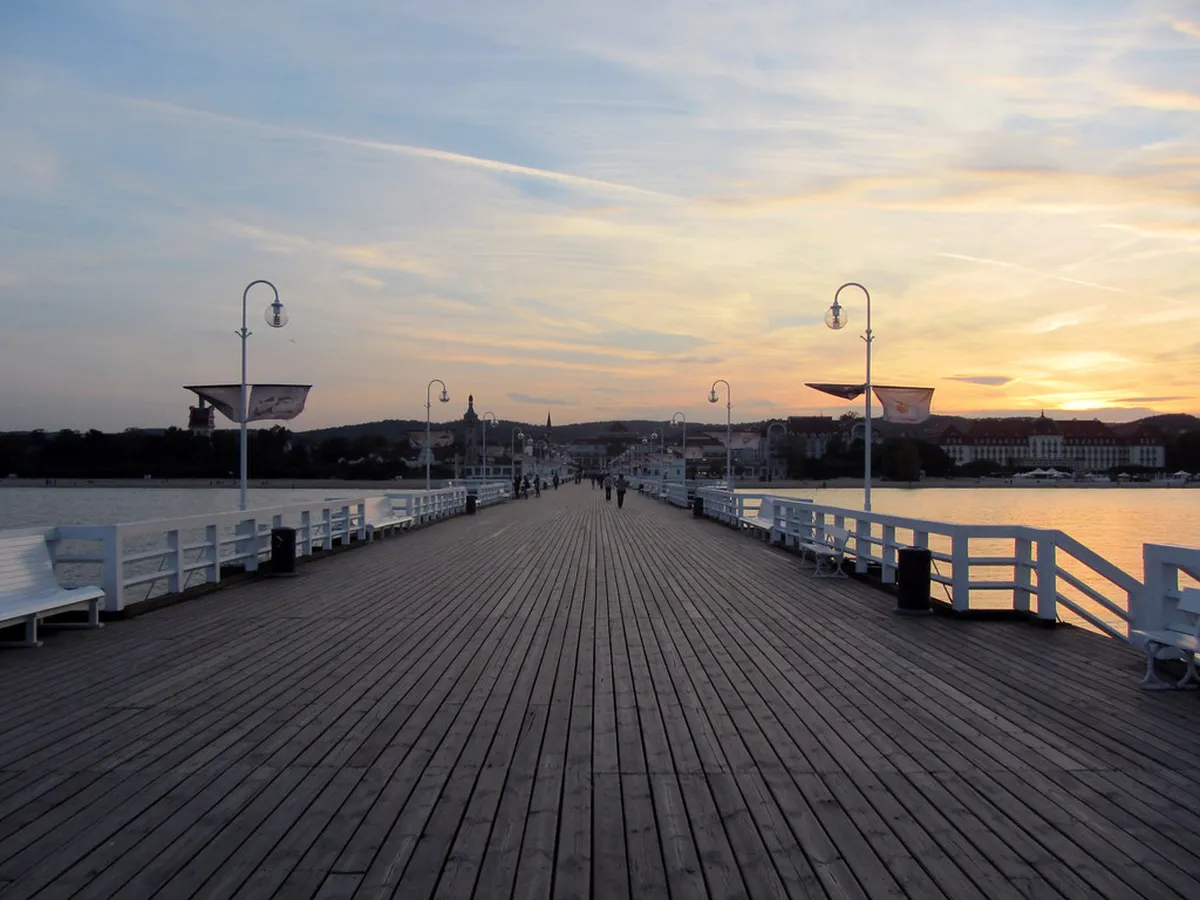
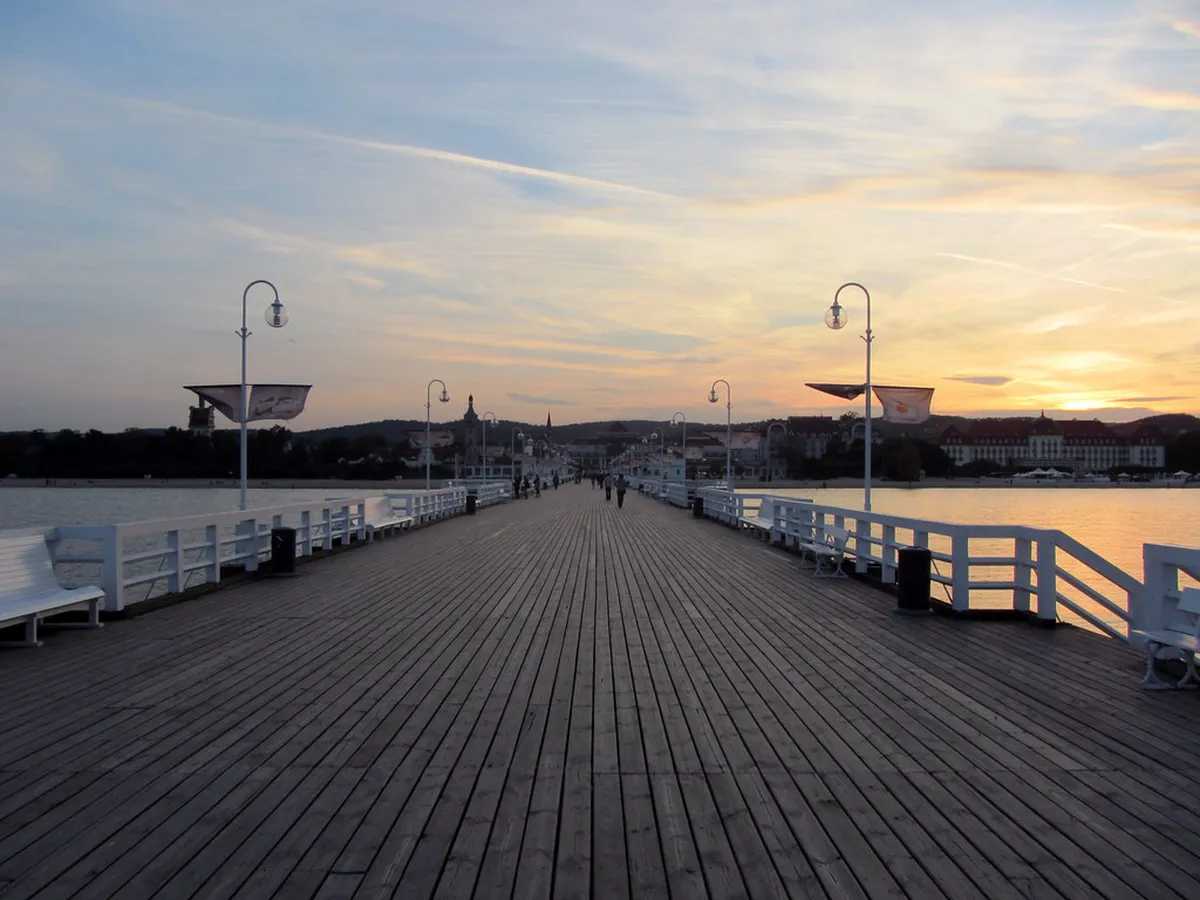
Sopot Pier is the signature landmark of Sopot, Poland's premier Baltic seaside resort, and at 511.5 metres it holds the title of the longest wooden pier in Europe. Built in stages since 1827 - starting as a short hydrotherapy jetty for the town's spa and reaching today's length in 1928 - the pier extends from the historic Spa Square, past cafes, benches and a lighthouse viewpoint, out to Marina Sopot at its tip, where sightseeing boats, yachts and water taxis depart for cruises around the Gulf of Gdansk. Entry is ticketed during the peak season (roughly mid-April through September) and free the rest of the year. Visitors come for sunrise and sunset views over the Baltic Sea, summer concerts and an open-air cinema on the pier's wide platform, and boat trips to Gdansk, Hel or sunset yacht cruises departing from the marina at the end.
Visitor guide →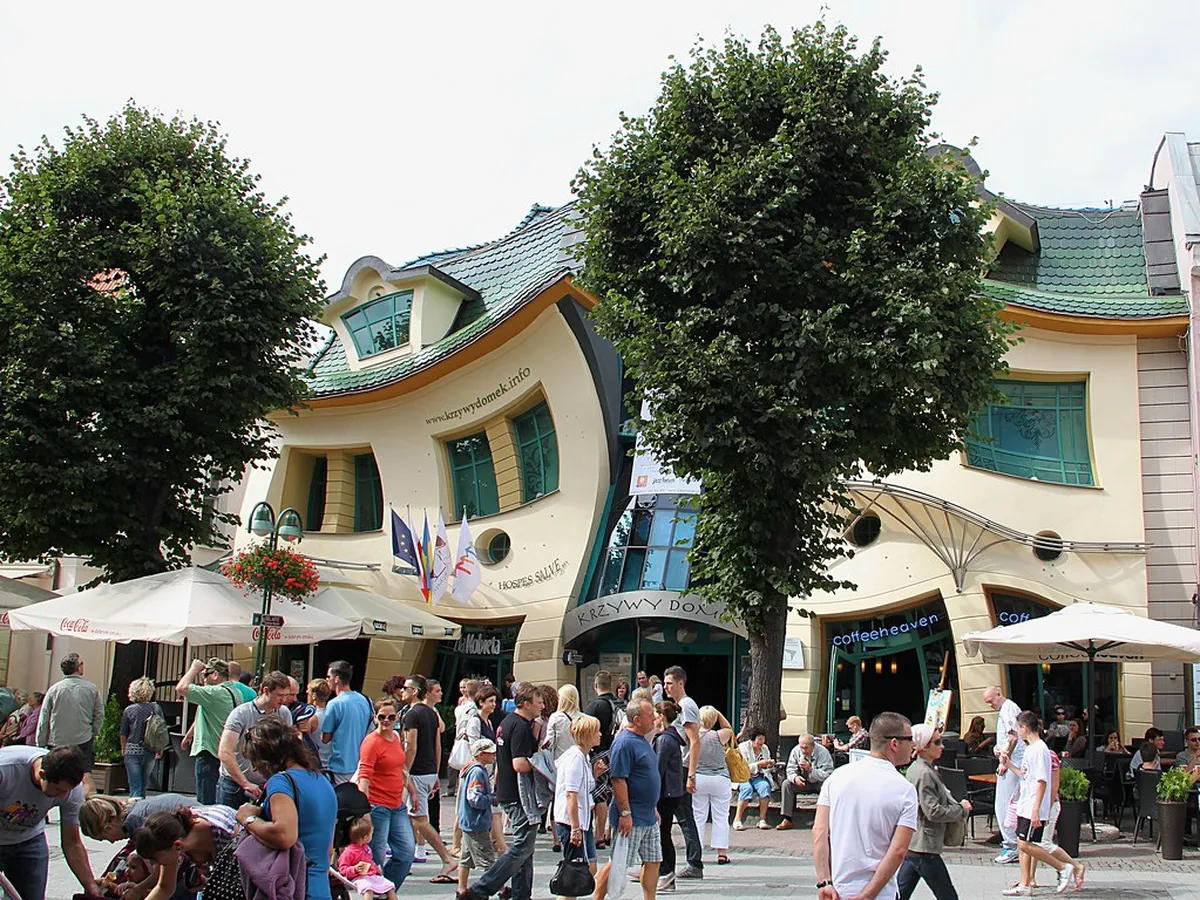
Crooked House (Krzywy Domek)
The Crooked House (Krzywy Domek) is the whimsical, fun-house-mirror building that anchors Sopot's main pedestrian promenade, ul. Bohaterów Monte Cassino ("Monciak"), just steps from the pier and beach. Built in 2004 by architects Szotyńscy & Zaleski, its wavy, dripping-candle facade and porthole-like windows were inspired by fairy-tale book illustrations rather than any structural necessity — the building is perfectly solid, and the crookedness is a deliberate optical illusion. Today it functions as a small shopping-and-entertainment complex (part of the Rezydent centre), packed with cafés, a multi-concept food hall, souvenir shops, offices, and the Amaze World Museum of Illusions. There's no admission fee to see or photograph the building itself — most visitors simply stroll past, snap photos of its impossible angles, and duck inside one of its cafés or shops, making it an easy, free add-on to any walk along Monciak toward the Sopot pier.
Visitor guide →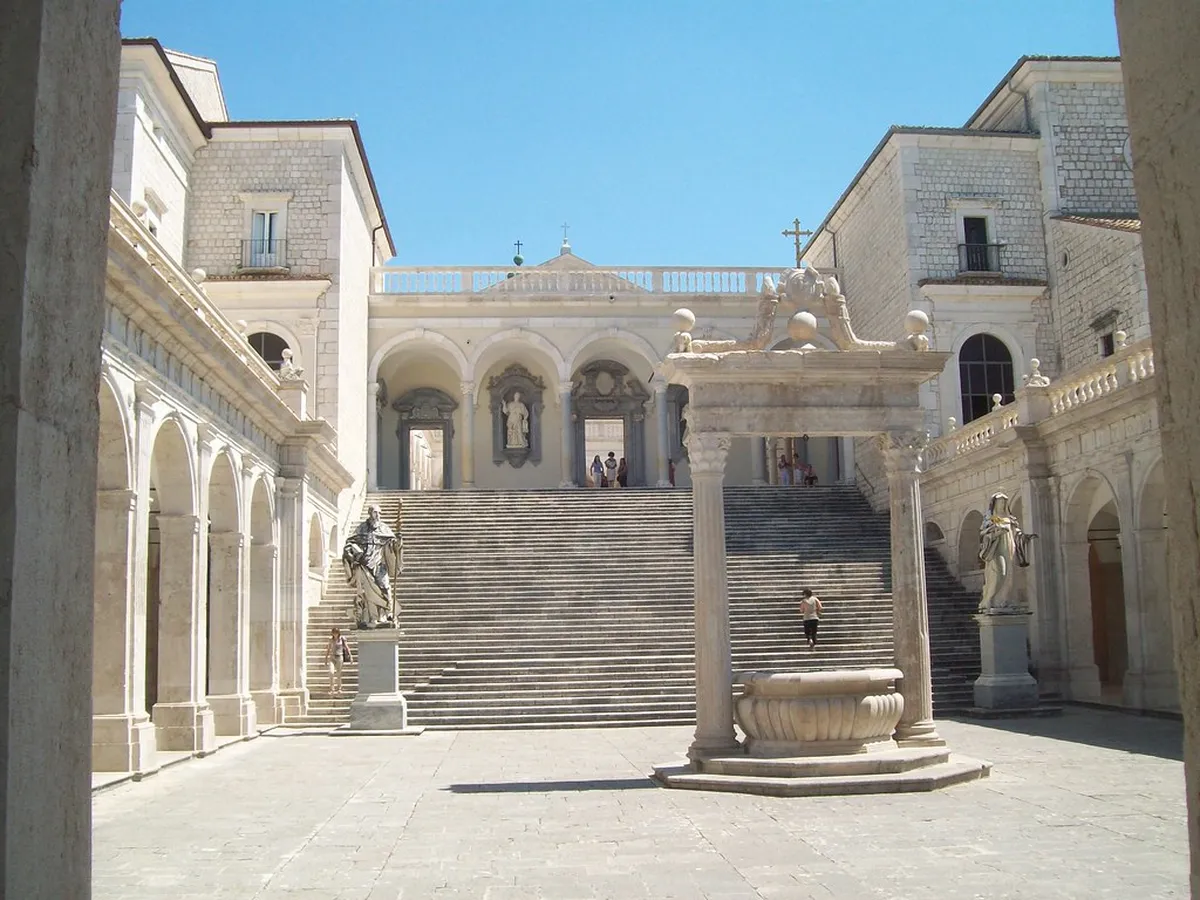
Monte Cassino Street
Known to locals simply as "Monciak," Monte Cassino Street is Sopot's 600-metre pedestrian spine, running dead straight from the railway station down to Spa Square (Plac Zdrojowy) and the wooden pier on the Baltic shore. Originally a dirt track linking the farming hamlet of Upper Sopot to the fishing settlement below, it was renamed after 1945 to honor the Polish soldiers of the Battle of Monte Cassino and pedestrianized for good in 1963. Today it is Poland's best-known promenade: a car-free run of restaurants, cocktail bars, amber galleries, ice-cream stands, and street musicians that stays busy from mid-morning coffee through late-night clubbing. Midway along the strip stands the Crooked House (Krzywy Domek), the melting, funhouse-mirror building that has become one of Poland's most photographed structures — a five-minute diversion off Monciak rather than a destination in itself. By day the street suits a slow stroll between shopfronts and church spires (including neo-Gothic St. George's); after dark it turns into Sopot's nightlife artery, packed with bar crawls and terrace crowds all summer, before spilling out onto the pier and beach at its eastern end.
Visitor guide →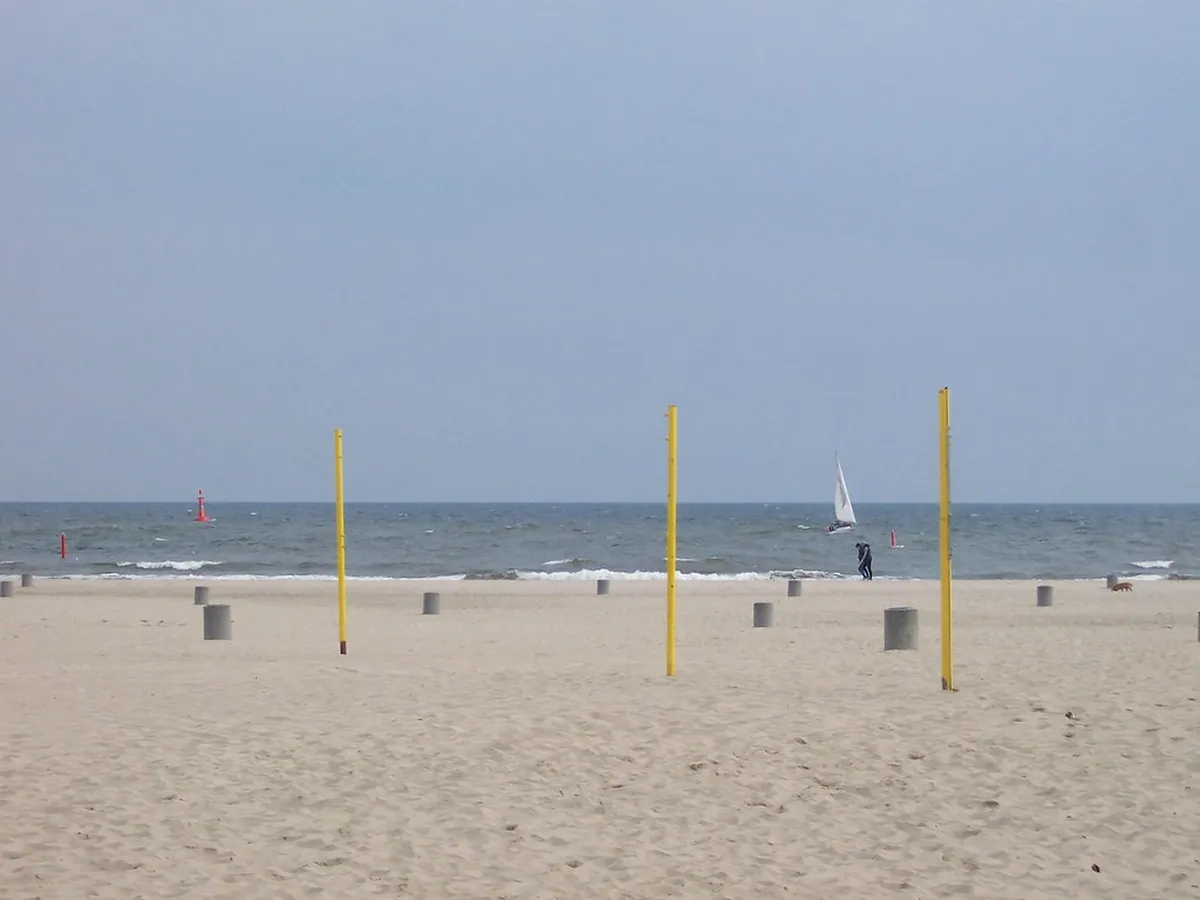
Sopot Beach
Sopot Beach is the wide, golden-sand Baltic Sea beach that wraps around both sides of Sopot's iconic wooden pier in northern Poland. A free public beach open around the clock, it draws crowds each summer for swimming, sunbathing, beach volleyball, and waterfront dining and nightlife along the adjoining promenade. The Baltic Sea stays cool even in peak season (roughly 17-20°C in July-August), so most visitors treat a dip as brisk and refreshing rather than tropical, while lifeguard-supervised bathing zones operate in July and August. Sunbeds, beach-equipment rentals, and beachfront bars line the shore, making it an easy half-day or full-day stop alongside a walk on the pier and Sopot's Monte Cassino Street.
Visitor guide →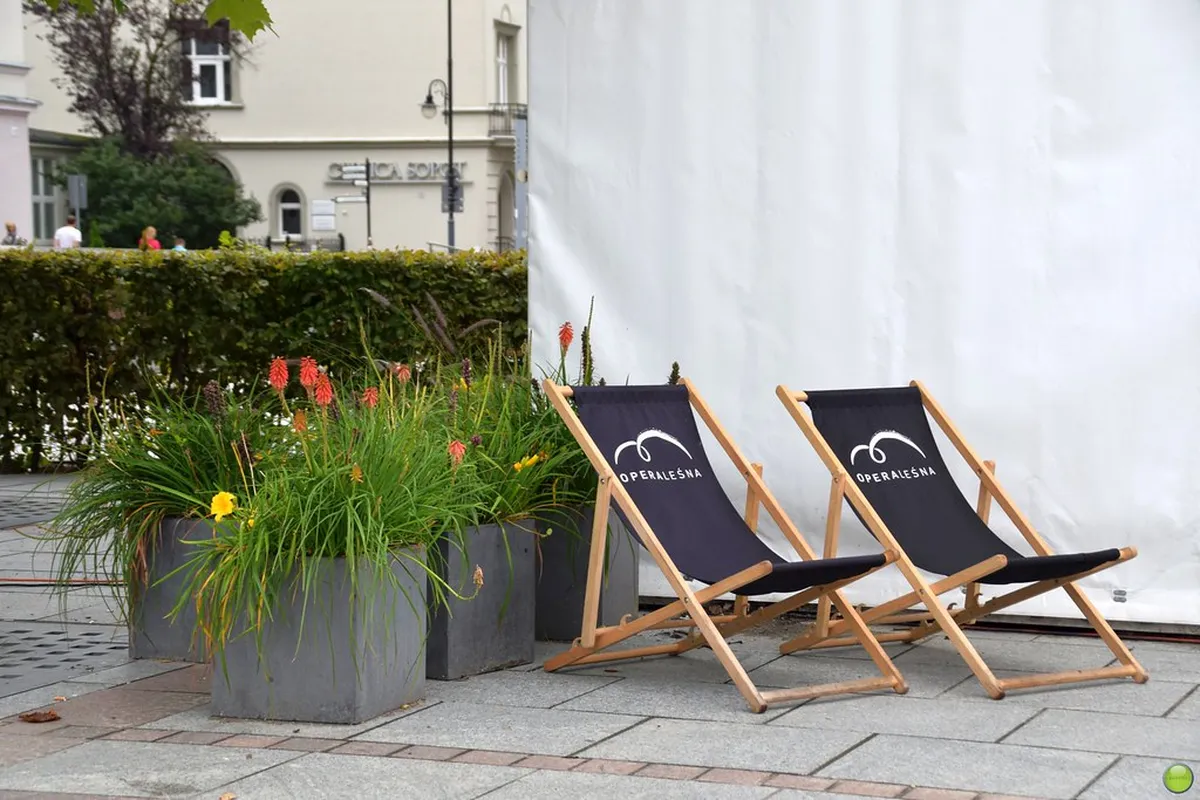
Forest Opera (Opera Leśna)
Carved into a natural forest ravine on the edge of Sopot, the Forest Opera (Opera Leśna) is one of Europe's most atmospheric concert venues - an open-air amphitheatre where more than 5,000 seats face a stage framed by tall pines rather than walls. First built in 1909, it spent decades as a stage for Wagnerian opera festivals before reinventing itself in 1964 as the home of the Sopot International Song Festival, drawing performers from Whitney Houston and Elton John to Lionel Richie and Bryan Adams. Today it functions primarily as a working concert venue - hosting summer festivals like Top of the Top Sopot Festival and touring international artists - rather than a static sightseeing stop, so there's no walk-in 'general admission' the way there is at a museum. On non-event days, though, the amphitheatre opens for low-cost daytime visits, letting travelers walk the tiered seating, step onto the stage, and see exhibitions about the venue's century of history. For most visitors, though, the real draw is catching a live show under the open sky, with the forest itself acting as a natural acoustic chamber.
Visitor guide →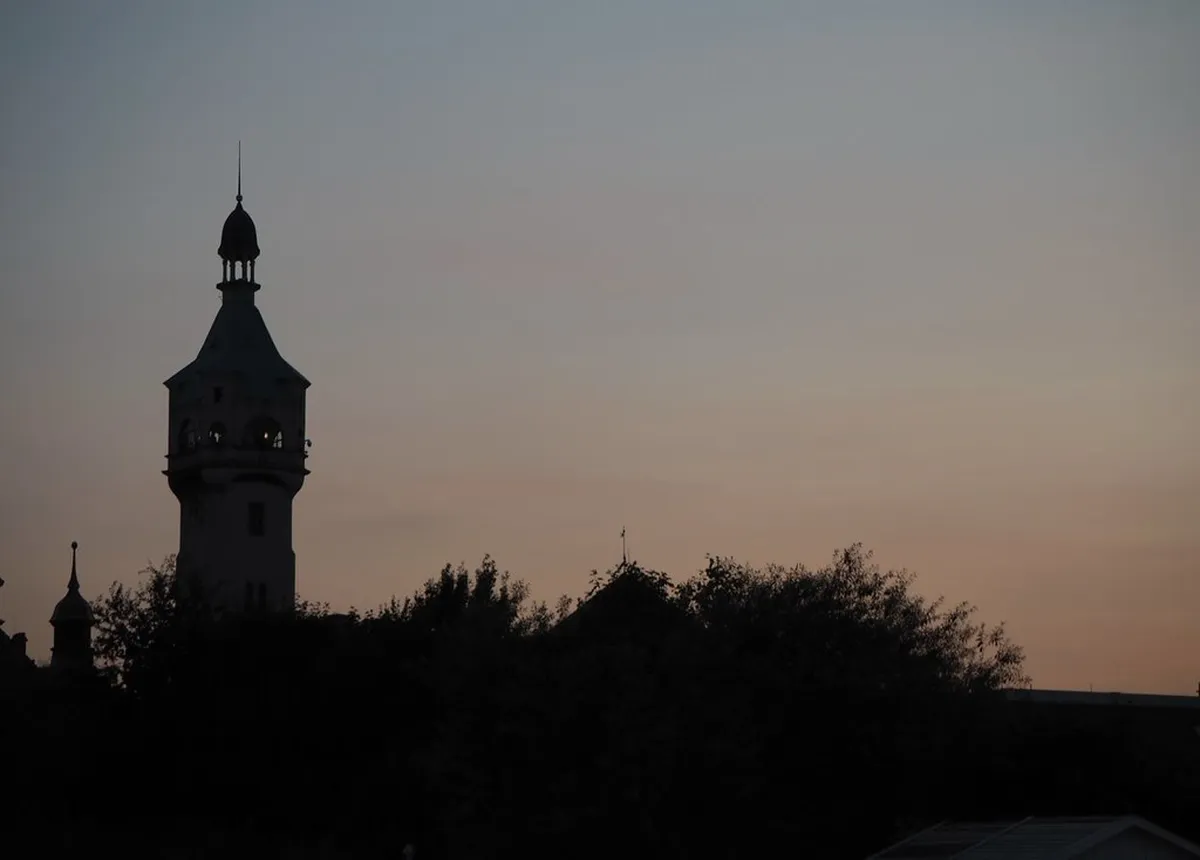
Sopot Lighthouse (Latarnia Morska w Sopocie)
Rising above the rooftops right beside the famous Sopot Pier, the Sopot Lighthouse is one of the Baltic coast's most unusual landmarks — a navigational light that began life in 1903 as a decorative chimney for the town's spa boiler house, only becoming an actual working lighthouse decades later. Climb the roughly 135 stone spiral steps inside the square masonry tower and you're rewarded with a 360-degree observation deck about 25 meters up, looking straight down the length of Europe's longest wooden pier, across the sweep of Gdańsk Bay, and over Sopot's resort rooftops toward the Tricity skyline. It's a quick, affordable climb (a handful of złoty) that pairs naturally with a walk on the pier itself, and it's one of the best perches in town for a sunset photo. Because it isn't a free-standing tower but the ornamental cap of the old health-resort building it shares its skyline moment with the pier below — a genuinely offbeat bit of Sopot history hiding in plain sight.
Visitor guide →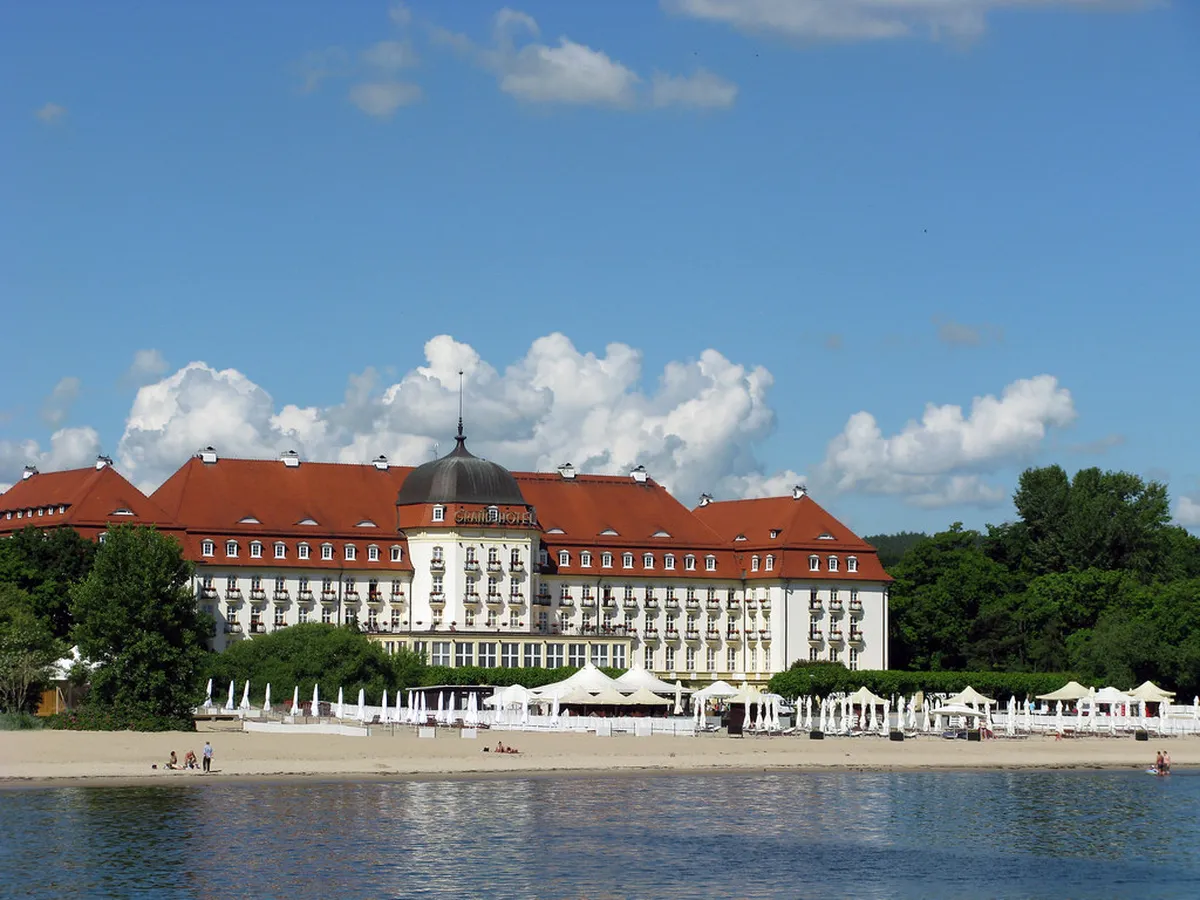
Grand Hotel Sopot (Sofitel Grand Sopot)
The Grand Hotel Sopot — operated today as the Sofitel Grand Sopot — is a five-star, beachfront landmark that has defined Sopot's skyline since it opened as the Kasino-Hotel in 1927. Built in an opulent Art Deco style by architect Otto Kloeppel, it has hosted heads of state and celebrities from Marlene Dietrich to Fidel Castro, briefly served as a German WWII headquarters, and remains one of the most photographed buildings on the Polish Baltic coast. There's no admission ticket — it's a fully operating hotel, not a museum — but visitors can freely view its beachfront exterior next to the Sopot Pier, or step inside to the lobby, Grand Blue Restaurant, Le Bar, and spa (paid, à la carte).
Visitor guide →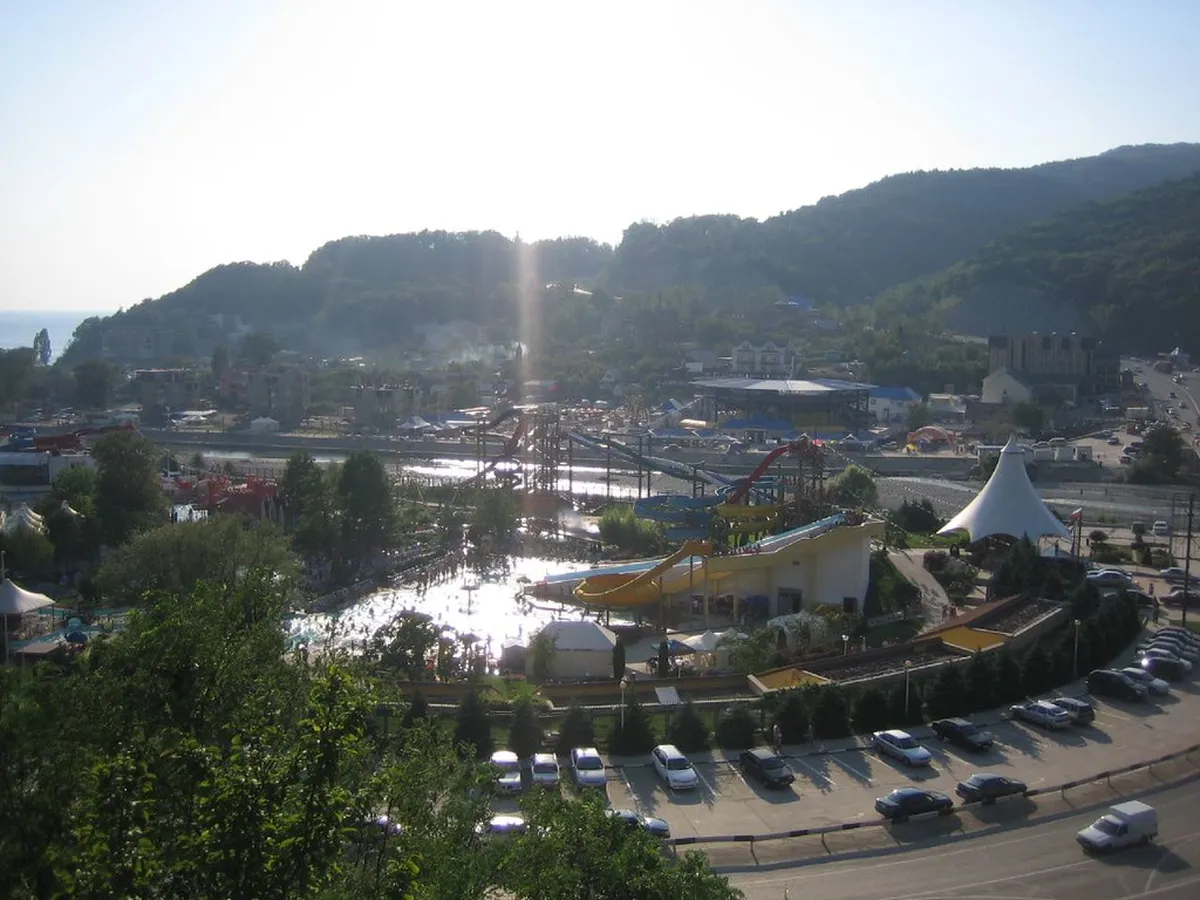
Aquapark Sopot
Aquapark Sopot is an indoor/outdoor water park complex on Zamkowa Góra hill in Sopot, a short walk from the Sopot Kamienny Potok train station. It combines a lap pool, a recreational pool with cascades and a water grotto, a dedicated children's pool with geysers and water cannons, six water slides (including the Wild River, Family, Turbo, and a two-track family slide), and an extensive 'World of Saunas' zone with Finnish, Nordic, Baltic, Aroma, Bio, and steam saunas plus a brine graduation tower and Serail bath. Tickets are sold in time blocks (1 hour, 3 hours, or unlimited/whole day) rather than as a single flat entry fee, with separate combos for pool-only, saunas-only, or pool-and-sauna access. It's a popular rainy-day and off-season family activity in the Tricity (Gdańsk–Sopot–Gdynia) area, though it's a compact facility rather than a large-scale resort-style water park.
Visitor guide →Sopot attractions by area
Sopot's compact footprint means almost every attraction sits within one of four walkable zones, so the fastest way to plan is by geography rather than jumping back and forth across town.
- Pier & waterfront (Plac Zdrojowy area): Sopot Pier, Sopot Lighthouse, Sopot Beach, and Grand Hotel Sopot all sit within a two-minute walk of Spa Square, right where Monte Cassino Street meets the Baltic shore.
- Monte Cassino Street & town centre: Monte Cassino Street ("Monciak") and the Crooked House anchor the 600-metre pedestrian run between the railway station and the waterfront — the busiest stretch of shops, restaurants, and nightlife in town.
- Forest hills above town: Forest Opera sits in a wooded ravine a 20-25 minute walk (or short bus/taxi ride) inland from Monciak, worth the detour on a festival night or during its low-cost daytime open hours.
- Zamkowa Góra, near Kamienny Potok: Aquapark Sopot sits apart from the other seven, close to the Sopot Kamienny Potok SKM station rather than central Sopot — plan it as its own outing rather than a stop between other sights.
Sopot attractions by category
If you'd rather group sights by what you're actually in the mood for, the eight break down into four clear categories.
- Landmarks & architecture: Sopot Pier (Europe's longest wooden pier), Sopot Lighthouse (a former spa-boiler chimney turned working light), the Crooked House (a 2004 fairy-tale-inspired facade), and Grand Hotel Sopot (a 1927 Art Deco beachfront hotel).
- Nature & the Baltic: Sopot Beach, the free public sand that wraps both sides of the pier and is the town's default half-day activity in warm weather.
- Street life & nightlife: Monte Cassino Street, the pedestrian spine that carries Sopot's café culture by day and its bar crawls by night.
- Entertainment & recreation: Forest Opera (open-air concerts and festivals in a natural amphitheatre) and Aquapark Sopot (indoor/outdoor pools, slides, and a sauna world) — the two attractions built around a ticketed event or session rather than a simple walk-through visit.
Free vs paid Sopot attractions
Sopot rewards budget travelers more than most Baltic resorts — half of the eight core attractions cost nothing to see at all.
Free:
- Monte Cassino Street — always free to walk, day or night.
- Crooked House — free to view and photograph from outside; only the shops, food hall, and Amaze World Museum of Illusions inside charge admission.
- Sopot Beach — a free public beach around the clock; only sunbed and equipment rental (around 25 PLN/day) and the on-site public toilets (2-5 PLN) cost anything.
- Grand Hotel Sopot — free to view the Art Deco exterior and step into the public lobby; only dining, drinks, and spa treatments are paid.
- Sopot Pier, outside the paid season — free and open 24 hours from around October 1 through April 9.
Paid (2026 prices):
- Sopot Pier, peak season (April 10-September 30) — 10 PLN adult, 5 PLN reduced (ages 3-16), 8 PLN senior (70+), 21-23 PLN family tickets.
- Sopot Lighthouse — 10 PLN standard, 8 PLN discounted (children/students/seniors), 6 PLN per person for groups of 15+.
- Aquapark Sopot — pool-only from 79 PLN (1 hour) to 189 PLN (unlimited/day); combined pool-and-sauna from 125 PLN to 245 PLN.
- Forest Opera — 12 PLN regular / 8 PLN discounted for a non-event daytime walk-through; concert and festival tickets range from roughly 115 PLN up to 850 PLN depending on the artist and seating section.
Suggested itineraries
How much time you give Sopot depends on whether you're basing here or treating it as a Tricity day trip — all three plans below start from Sopot's SKM train station.
Half-day (3-4 hours): Walk Monte Cassino Street from the station to Spa Square, detour to the Crooked House, climb Sopot Lighthouse for the view, then walk the length of Sopot Pier out to the marina. This covers the four most-photographed sights in one loop.
One full day: Add a few hours on Sopot Beach either side of lunch, and end with a sunset drink near Grand Hotel Sopot's beachfront terrace. If it's overcast or you're travelling with kids, swap the beach block for Aquapark Sopot instead. See our how many days in Sopot guide for a slower breakdown by traveller type.
Two days: Follow the one-day plan above, then use day two for Forest Opera — either a low-cost daytime walk-through of the amphitheatre or, if the dates line up, an evening concert — plus a longer beach or Aquapark session and time to explore beyond the core eight, using our day trips from Sopot guide to fold in Gdańsk or Gdynia.
Day trip from Gdańsk or Gdynia: All eight attractions are walkable from Sopot's SKM station in a single day if you start by mid-morning — the half-day loop above plus the beach, with the SKM train back to your base by early evening.
Getting around Sopot's attractions
Sopot is small enough that you rarely need transport within the town itself, but the Tricity's SKM commuter rail is what gets you here and to the one outlying attraction.
- Walking: The pier, lighthouse, Grand Hotel, Monte Cassino Street, and Crooked House all sit within a 10-minute walk of each other around Spa Square — this cluster is entirely walkable and rarely needs a taxi or bus.
- To Forest Opera: It's roughly a 20-25 minute uphill walk from Monciak, or a short local bus/taxi ride if you'd rather save the legs for the amphitheatre's own tiered seating.
- To Aquapark Sopot: This is the one attraction that sits apart, near Sopot Kamienny Potok station rather than central Sopot — take the SKM one stop further or a short taxi.
- SKM commuter rail: Trains connect Gdańsk Główny to Sopot in about 15-17 minutes (roughly 6-9 PLN one-way) and Sopot to Gdynia in around 12 minutes, running frequently throughout the day. Full route and fare details are in our guide to getting to Sopot.
- Tricity ticket: If you're combining Sopot with Gdańsk and/or Gdynia the same day, a zone ticket covering the wider Tricity area works out cheaper than buying single fares each way.
Best time to visit Sopot's attractions
Sopot's attraction experience changes more with the season than almost any other Polish city, because so much of it revolves around the Baltic and an open-air concert venue.
Peak summer (June-August): Warm-enough Baltic swimming (roughly 17-20°C in July-August), Sopot Pier's full paid season in effect, and Forest Opera's festival calendar in full swing, including the Top of the Top Sopot Festival. Expect the busiest beach crowds and the fullest restaurant terraces on Monciak.
Shoulder season (April-May, September-October): Sopot Pier is already (or still) in its paid season, but crowds thin noticeably and walking and photography conditions are excellent even though the sea is generally too cold to swim. This is the best window for visiting the lighthouse, pier, and Monte Cassino Street without queues.
Winter (November-March): Sopot Pier reverts to free, 24-hour access, the town is at its quietest, and a seasonal ice rink typically operates on Kuracyjny Square near Spa Square. Forest Opera has no events, Aquapark Sopot becomes the default activity on the coldest days, and hotel rates drop well below summer levels. See our best time to visit Sopot guide for month-by-month detail.
How to save money on Sopot attractions
Sopot can be done on a tight budget without skipping the attractions that matter.
- Visit Sopot Pier between October and early April, when entry is completely free instead of the 10 PLN peak-season ticket.
- Lean on the free attractions first — Monte Cassino Street, the Crooked House exterior, Sopot Beach, and Grand Hotel Sopot's exterior and lobby cost nothing and cover half the cluster.
- Climb Sopot Lighthouse and walk the pier in the same visit — they sit a minute apart, so you avoid paying for transport between them.
- At Aquapark Sopot, buy the time block that matches your actual plans; overstaying is billed at roughly 2 PLN per extra minute at checkout, so a longer block bought upfront is usually cheaper than running over a short one.
- Skip a festival-night Forest Opera ticket (which can run 115-850 PLN) in favor of a non-event daytime walk-through at 12 PLN regular / 8 PLN discounted if the amphitheatre itself is what you want to see, not a specific act.
- If you're combining Sopot with Gdańsk and/or Gdynia, a single Tricity zone ticket beats paying for separate SKM fares each way.
Frequently asked questions about Sopot attractions
How many days do you need to see Sopot's main attractions?
A half-day (3-4 hours) covers the pier, lighthouse, Monte Cassino Street, and Crooked House; a full day adds the beach and Grand Hotel Sopot at a relaxed pace. Two days lets you fold in Forest Opera and Aquapark Sopot without rushing, and most visitors find that plenty even without leaving Sopot itself.
What is the #1 must-see attraction in Sopot?
Sopot Pier is the town's signature sight and the reason most people come — at 511.5 metres it's the longest wooden pier in Europe, and it sits directly beside the lighthouse, beach, and Grand Hotel, making it the natural starting point for any visit.
Are Sopot's attractions free?
About half are. Monte Cassino Street, the Crooked House exterior, Sopot Beach, Grand Hotel Sopot's exterior and lobby, and the pier itself outside its April-September paid season cost nothing. The lighthouse, peak-season pier access, Aquapark Sopot, and Forest Opera events or its daytime walk-through are ticketed.
Do you need to book Sopot attractions in advance?
No advance booking is required for the pier, lighthouse, Crooked House, Monte Cassino Street, beach, or Grand Hotel's public areas — all sell tickets on-site or are simply walk-in. Aquapark Sopot and Forest Opera concerts are the exceptions worth pre-booking in peak summer, when weekend sessions and popular shows can sell out.
What is the best time of year to visit Sopot?
June through August is peak season for warm-enough Baltic swimming and Forest Opera's festival calendar, but April-May and September-October offer milder crowds with the pier still open and most attractions running normal hours — a strong trade-off if you don't need to swim.
Is Sopot expensive for tourists?
Sopot is pricier than most Polish cities — it's the country's most upscale seaside resort — but the core attractions themselves are inexpensive: lighthouse and pier tickets run single digits to the low twenties in PLN, and half the cluster is free. Accommodation and beachfront dining are where costs rise, especially in July-August.
Can you see Sopot's main attractions in one day?
Yes. All eight core attractions sit within a compact area reachable on foot or by a short SKM ride, so a single well-paced day covering the pier, lighthouse, Monte Cassino Street, Crooked House, beach, and Grand Hotel Sopot — plus either Forest Opera or Aquapark Sopot — is realistic for most visitors.
What's the best way to get between Sopot's attractions?
Walking. Six of the eight — the pier, lighthouse, Grand Hotel, Monte Cassino Street, and Crooked House — sit within a 10-minute walk of Spa Square. Forest Opera is a 20-25 minute walk uphill, and Aquapark Sopot is best reached by the SKM train one stop to Sopot Kamienny Potok.
Plan your Sopot trip
Sopot rewards a slower visit if you have the days for it, but it also compresses cleanly into a single Tricity day trip if you don't. If you're still deciding whether it earns a spot on your Poland itinerary, our honest verdict on whether Sopot is worth visiting weighs it against a straight Gdańsk day trip, and our fuller list of things to do in Sopot goes beyond these eight core sights into restaurants, walks, and nearby detours. Whichever pace you choose, start with the attraction cards above and build outward from there.