
A Complete Crooked House (Krzywy Domek) Visitor Guide: 8 Essential Tips
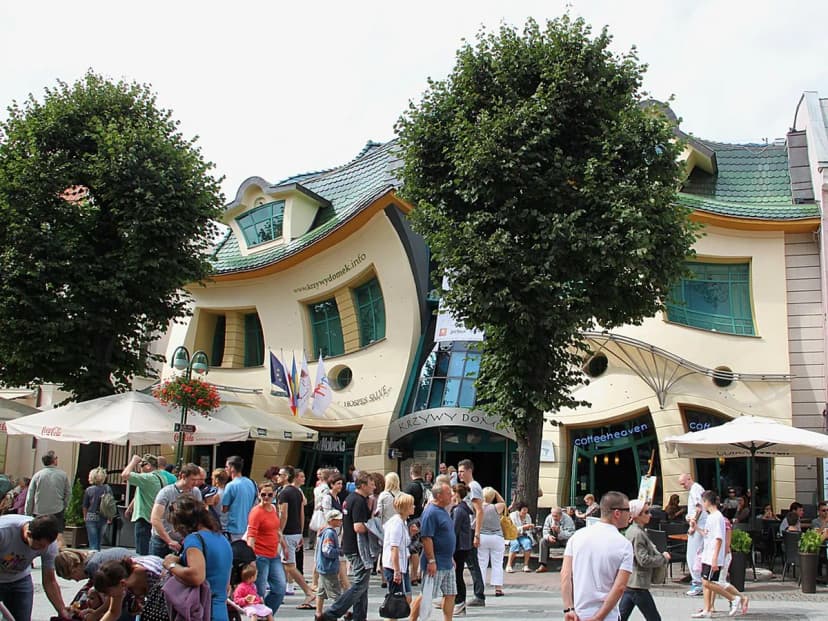
Walking down the main pedestrian street in Sopot often leads travelers to a sight that looks like a melting dream. The Crooked House stands as one of the most photographed buildings in all of Poland due to its surreal and warped appearance. This iconic landmark sits right in the heart of the city on the bustling Monte Cassino Street. It serves as a functional part of the local landscape while doubling as a world-famous architectural wonder.
Many visitors wonder if the building is a trick of the eye or a masterpiece of modern engineering. The structure appears to sag and bend as if it were made of liquid rather than solid stone and glass. Locals often call it the Drunk House because of its dizzying lines and unconventional shape. This guide provides everything you need to know for a successful visit in 2026.
Finding the right angles for photos can be tricky because of the narrow street and surrounding trees. Understanding what lies behind the warped facade will help you manage your expectations before you arrive. Whether you are an architecture buff or a casual tourist, this spot is a mandatory stop on any Baltic itinerary.
The History and Inspiration Behind Krzywy Domek
Architects Szotynscy and Zaleski drew their primary inspiration from the whimsical drawings of Jan Marcin Szancer and Per Dahlberg. Szancer was a famous Polish illustrator known for his work in children’s fairytales and classic storybooks. His style often featured elongated shapes and dreamlike perspectives that defied the laws of physics. The building successfully translates those two-dimensional sketches into a massive three-dimensional structure.
The project was completed in 2004 as part of the Rezydent shopping center expansion in the coastal city. It quickly became a symbol of modern Sopot and a point of pride for the local community. The design team wanted to create something that felt alive and organic rather than rigid and industrial. They achieved this by using curved lines for every major structural element of the front facade.
Per Dahlberg, a Swedish artist living in Sopot, also contributed his unique artistic vision to the concept. His drawings added a touch of mystery and complexity to the overall aesthetic of the building. The collaboration between these artists and architects resulted in a landmark that feels both ancient and futuristic. It remains one of the most daring examples of fairytale architecture in Europe today.
Architectural Design: How the "Drunk House" Defies Gravity
The most striking feature of the building is the complete lack of straight lines on its exterior face. Every window, door, and wall segment curves in a way that suggests the building is under immense pressure. Specialized construction techniques were required to ensure the glass panes could fit into these irregular frames. The result is a visual effect that mimics the reflection in a funhouse mirror.
The roof is another marvel of design, featuring blue-green enameled shingles that resemble the scales of a dragon. These tiles catch the light differently throughout the day, changing the mood of the building as the sun moves. Intricate metalwork and stained glass elements further enhance the magical feeling of the entrance. Even the drainpipes and gutters are integrated into the curves to maintain the visual illusion.
Despite its sagging appearance, the structure is incredibly stable and meets all modern safety standards. Steel supports and reinforced concrete provide the backbone for the artistic exterior shell. Engineers had to calculate the weight distribution carefully to prevent the warped sections from creating structural stress. This blend of art and science makes it a fascinating study for students of architecture.
What’s Inside: Shops, Cafes, and the Wall of Fame
Many travelers are surprised to find that the interior of the building is much more conventional than the outside. It operates as a commercial hub housing several offices, retail shops, and dining establishments. You can find a variety of businesses ranging from law firms to cozy coffee houses within its walls. The interior layout follows a standard shopping mall format with multiple floors connected by stairs and elevators.
One of the highlights inside is the Sopot Wall of Fame, which is modeled after the Hollywood version. It features the handprints and signatures of famous Polish personalities and international guests who have visited. This area serves as a cultural record of the many events and celebrities that have passed through the city. Visitors can spend a few minutes identifying the names of famous actors, musicians, and athletes.
The building also hosts several bars and clubs that become active during the evening hours. Sopot is known for its vibrant nightlife, and this landmark is a central part of that scene. You might find live music or special events happening in the basement or upper-level venues. It is a great place to grab a drink while discussing the bizarre architecture you just witnessed outside.
Practical Visitor Info: Location, Hours, and Costs
The Crooked House is located at Bohaterów Monte Cassino 53, which is the most famous street in the city. It is very easy to find as it sits directly on the main walking path from the train station to the pier. Most visitors arrive on foot after exploring the nearby shops and boutiques that line the promenade. The central location makes it an ideal meeting point for groups and guided tours.
There is no entry fee to view the building from the outside or to walk through the public hallways. Since it is a commercial building, you are free to enter during the standard business hours of the shops. Most businesses inside open around 9:00 AM and close late in the evening, especially the restaurants. Always check the Krzywy Domek Official Site for specific holiday closures or event schedules.
For the most accurate and up-to-date information on local events, consult the Sopot Tourism Board. They provide details on seasonal festivals that might take place right in front of the building. Prices for coffee and meals inside are comparable to other establishments in the tourist district. Plan to spend about fifteen to thirty minutes here unless you intend to sit down for a meal.
- Essential Visitor Logistics for 2026
- Address: Monte Cassino 53
- Cost: Free exterior access
- Best Time: Early morning
- Access: Pedestrian only
Access is straightforward for wheelchair users and families with strollers. The entire Monte Cassino promenade is a flat, car-free pedestrian zone with dropped curbs, and the Rezydent complex's main entrances use ramps rather than stairs. A few individual shop thresholds inside are narrower or slightly raised, so allow extra time if you plan to browse rather than just view the facade from the street. The nearest public restrooms are inside the shopping section rather than out on the promenade, which is worth knowing if you are traveling with young kids.
Photography Tips for the Perfect "Morphed" Photo
Capturing the full scale of the warping can be difficult because the street is relatively narrow. Large trees stand directly in front of the facade, which can block the view during the summer months. Try standing near the entrance of the Costa Coffee across the street to get a wider perspective. A wide-angle lens is highly recommended if you want to fit the entire building into a single frame.
Early morning light provides the best illumination without the harsh shadows of the midday sun. This is also the best time to avoid the large crowds of tourists that gather later in the day. Night photography is also popular because the building is beautifully lit with colorful spotlights. Long exposures can capture the movement of people walking by, adding to the surreal atmosphere.
Experiment with low angles to emphasize the height and the strange curves of the roofline. Crouching down near the pavement can make the building look even more imposing and distorted. Be mindful of the delivery trucks that often park nearby during the early hours of the day. Patience is key when waiting for a clear window between the passing groups of pedestrians.
My Experience: Is the Crooked House Overrated?
Many people wonder if the building lives up to the hype generated by social media photos. The exterior is truly a work of art and looks even more impressive in person than in pictures. However, the interior can be a bit of a letdown if you are expecting more crooked rooms. Most of the inside space looks like a standard office building or a modern shopping mall.
I recommend visiting for the photo opportunity but not planning your entire day around the interior. It is a perfect "stop and go" attraction while you are walking toward the beach or the pier. The real value lies in the creativity of the facade and the skill of the craftsmen who built it. If you go in with the right expectations, you will find it to be a charming and unique stop.
Comparing the building to other global landmarks, it holds its own as a quirky piece of roadside architecture. It does not take long to see, so it rarely feels like a waste of time for travelers. Combine your visit with a trip to the Sopot Pier to make the most of your afternoon. This helps balance the quick photo stop with a more substantial sightseeing experience.
- Expectation vs Reality for Visitors
- Exterior: 10/10 visual impact
- Interior: 4/10 standard mall
- Crowds: High in summer
- Photos: Challenging but rewarding
The Legend of the "Drunk House" in Sopot
The building has earned several nicknames from locals over the years due to its disorienting shape. The most common name is the Drunk House because it looks like a person's vision after too many drinks. Local guides often joke that if the house looks straight to you, it is time to stop partying. This humorous take on the architecture has become a part of the city's modern folklore.
Some residents also refer to it as the Melting House or the Fairytale Building. These names reflect the different ways people interpret the fluid lines and strange proportions. The building has become a staple of local postcards and souvenir shops throughout the Tri-City area. It represents the playful and artistic spirit that defines much of Sopot's coastal culture.
The legend of the building continues to grow as more people share their photos online. It has appeared on numerous lists of the world's strangest buildings, bringing global fame to Sopot. This international attention has helped the city maintain its status as a top destination in Poland. Even after twenty years, the building still manages to surprise and delight first-time visitors.
One mix-up trips up even seasoned travelers: the Crooked House is not the same landmark as the Upside-Down House (Dom Do Góry Nogami) in Szymbark, roughly an hour's drive west in the Kashubian Lake District. Szymbark's house was built in 2007 as a literal, walk-through satire of communist-era Poland, with furniture bolted to the ceiling and a ticketed tour through its inverted rooms. Krzywy Domek, by contrast, stays free to view from the outside and its warping is a facade effect on an otherwise upright, working building rather than a structure flipped on its roof. If a search for "upside down house Poland" is what led you here, Szymbark, not Sopot, is the one with rooms you walk through ceiling-first.
Best Nearby Spots on Bohaterów Monte Cassino Street
After seeing the Crooked House, you are perfectly positioned to explore the rest of the city center. A short walk down the street will lead you directly to the entrance of the Sopot Pier. This is the longest wooden pier in Europe and offers incredible views of the Baltic Sea. It is a great place for a brisk walk or to enjoy a sunset over the water.
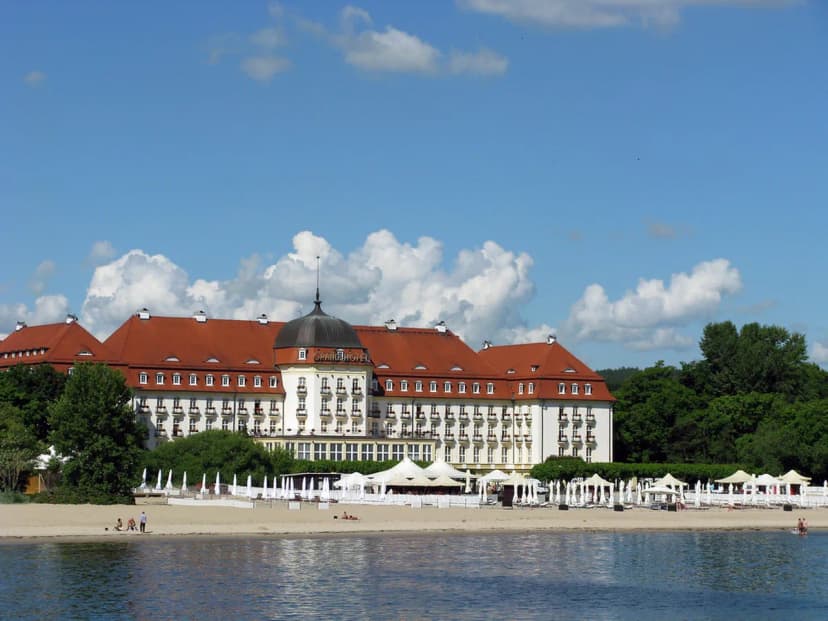
You can also head toward the Sopot beach for some relaxation on the sand. The coastline is lined with high-end hotels and historic villas that showcase the city's wealthy past. For a different perspective, climb the Sopot Lighthouse located near the pier entrance. The view from the top provides a great look at the layout of the city and the surrounding forests.
The entire Monte Cassino Street is filled with excellent restaurants and bakeries for every budget. Try some traditional Polish pierogi or fresh fish caught daily from the nearby waters. The area is also home to many galleries and small theaters that showcase local artistic talent. Spending a full day in this district allows you to see the best Poland attractions in one compact area.
Frequently Asked Questions
Is the Crooked House in Sopot free to visit?
Yes. The Crooked House is a working shopping and office building, not a ticketed attraction — you can walk right up to it, circle it, and photograph it from the promenade at no cost, any time of day. The only paid element is the Amaze World Museum of Illusions inside, which sells its own separate admission ticket; the building's cafés, food hall, and shops simply charge normal retail prices.
Why is the Crooked House built crooked?
The distorted, melting facade is a deliberate design choice, not structural damage or an accident. Architects Szotyńscy & Zaleski modeled the warped walls and rippling windows on the fairy-tale illustrations of Jan Marcin Szancer and the paintings of Swedish artist Per Dahlberg (with a nod to Antoni Gaudí's organic style), then engineered a completely solid, conventional building underneath the whimsical skin.
What's inside the Crooked House?
Behind the surreal facade is a functioning commercial complex: a multi-concept food hall with international cuisines, cafés (including a well-known coffee chain outlet), bars, a bookstore, beauty and medical clinics, a law firm, and the Amaze World Museum of Illusions with a mirror maze and 3D oceanarium. It has also historically hosted Polish radio station studios.
When was the Crooked House built and who designed it?
It opened in 2004, designed by the Polish architectural duo Szotyńscy & Zaleski for developer Rezydent S.A. as the centrepiece of the Rezydent shopping and office complex on Sopot's main promenade.
What's the best time to photograph the Crooked House?
Early morning (before roughly 9–10am) offers the best light and the fewest crowds jostling for photos, since Monte Cassino promenade fills up by midday in peak season (May–September). Golden hour in the late afternoon/early evening also flatters the building's warm-toned facade, and the illuminated night view is worth a second visit if you're staying in Sopot.
Is the Crooked House worth visiting?
For most travelers, yes — it costs nothing, takes only a few minutes to see and photograph, and sits directly on the walking route between central Sopot and the pier/beach, so it requires no detour. It's less essential if you're not otherwise passing through central Sopot, since the appeal is almost entirely the exterior photo rather than anything to "do" inside (unless you also want to visit the Museum of Illusions).
Where exactly is the Crooked House located?
It's at ul. Bohaterów Monte Cassino 53 (also addressed as ul. Haffnera 6), 81-767 Sopot — right on Sopot's main pedestrian promenade, a short walk from Sopot Pier and the beach, and easily reached on foot from Sopot's train station.
Is the Crooked House structurally safe despite how warped it looks?
Yes. The wavy, uneven appearance is purely a facade and roofline design effect — the building rests on standard solid foundations and has operated safely as a shopping and office centre since 2004, with no structural issues linked to its unusual shape.
The Crooked House remains a must-see destination for anyone traveling to the Polish coast. Its whimsical design and artistic history provide a refreshing break from traditional architecture. While the interior is functional, the exterior continues to capture the imagination of thousands of visitors each year. Make sure to bring your camera and an open mind when you visit this fairytale landmark.
Planning your visit for 2026 ensures you can enjoy the building alongside the many other charms of Sopot. From the long wooden pier to the sandy beaches, the city offers a perfect blend of relaxation and sightseeing. The Crooked House is the literal and metaphorical center of this vibrant coastal community. Enjoy your time exploring one of the most unusual buildings in the world.
To verify current details, consult the Crooked House (Krzywy Domek) on Wikipedia and Crooked House (Krzywy Domek) official site.
For more Sopot planning, read our 13 Best Things to Do in Sopot, Poland (2026 Guide) and Gdansk Beaches and Sopot Day Trip: 8 Essential Planning Tips guides.