
Sopot Lighthouse (Latarnia Morska w Sopocie) Visitor Guide
Sopot is a beautiful seaside town on the Baltic coast of Poland, and the tower everyone photographs beside the pier is the Sopot Lighthouse, known locally as Latarnia Morska w Sopocie. It's a separate attraction from the pier itself — a squat, ornamental brick tower that started life disguising a hospital chimney and only became a working navigation light decades later. Is the climb worth it? For the price of a coffee, yes: the 360-degree view over the Bay of Gdańsk from the top is one of the best in the Tricity. This guide covers everything you need for a 2026 visit — history, hours, prices, and what the climb actually feels like.
The tower is impossible to miss once you're near the beach and Plac Zdrojowy, since it rises directly above the pier's landward entrance. It doubles as a genuine piece of local history: part spa infrastructure, part maritime landmark. Most visitors pair the climb with a walk out along the wooden pier itself. Together the two give you the clearest sense of scale of the whole Tricity coastline.
History of Sopot Lighthouse: From Hospital Chimney to Navigation Tower
The tower did not start life as a beacon for sailors. Architects built it in 1903–04 as a disguised chimney for the boiler room of Sopot's new balneological (spa) facility, dressed up in ornamental brick so it wouldn't spoil the look of the fashionable resort. In 1956 the building passed to the Rheumatology Hospital, which still occupies the surrounding complex today — making this one of the very few "lighthouses" in Europe that began life bolted to a hospital's heating system.
The chimney only gained a genuine navigation light in 1975, once the hospital's boiler room was modernized and the old flue was fitted with a lamp. That first light was weak — about 5 nautical miles — and wasn't considered official. A better optical unit installed in 1977 pushed the range past 17 nautical miles, and that's the year the tower was formally reclassified as a lighthouse. A later equipment change trimmed the nominal range back to about 7 nautical miles, which falls below the modern threshold for an official lighthouse, though locals and mapmakers never stopped calling it one.
Between 2021 and 2023 the tower underwent a full revitalization — new roofing, restored interior brickwork, replaced doors and windows, and a refreshed facade across the historic Balneology Department building it's attached to. That's why the tower looks noticeably sharper in recent photos than in older travel guides. Understanding this layered history — chimney, weak light, official lighthouse, quiet declassification, restoration — adds real context to a visit to the wider attractions in Sopot.
Planning Your Visit: 2026 Visiting Hours and Ticket Prices
Check the official Latarniamorskasopot.pl site before you go, since Latarnia Morska w Sopocie keeps different hours in every season. Summer (July–August) is the longest window, open roughly 9:00 to 21:00; winter months trim that to a few hours around midday. Because the deck is open-air, staff can also close it early on days with strong wind or an incoming storm, so a same-day check is worth it outside peak summer.
Admission is a genuinely modest paid climb: a standard adult ticket is about 10 PLN, a discounted ticket for children, students, and seniors is around 8 PLN, and groups of 15 or more pay roughly 6 PLN per person. The ticket booth sits right at the base of the tower and takes cash and card. Sopot residents holding a Sopot Card get in free year-round.
Early morning is the quietest time to climb, before tour groups working along the pier arrive mid-morning. Late afternoon and golden hour draw photographers, so expect to share the narrow deck if you time it for sunset. Whatever the season, build in a few spare minutes at the ticket window in case wind has pushed the closing time earlier than posted.
How to Reach Sopot Lighthouse and Getting Around
Latarnia Morska w Sopocie sits at the seaward end of Monte Cassino Street, right where the pedestrian boulevard meets Plac Zdrojowy and the pier entrance. Most visitors simply walk down from the town center — it's hard to miss once the crowds around the pier come into view.
From Gdańsk or Gdynia, the SKM commuter train is the easiest approach: trains call at Sopot station every few minutes at peak times, and it's a flat ten-minute walk from the platform down Monte Cassino Street to the coast. Local buses and taxis run frequently to the beach area too, and Sopot's bike paths make cycling in from either neighboring city realistic in good weather.
Driving is the least convenient option in season — parking right by the pier fills up fast and gets expensive from May through September, so look at lots a few streets back from the beachfront instead. Outside peak summer weekends, parking is easier to find and considerably cheaper.
What to Expect: The 136-Step Climb and Panoramic Views
Budget five to ten minutes for the climb: 135 to 136 stone steps up a narrow spiral staircase to an observation gallery roughly 25 to 30 meters above street level. The stairwell is one-directional at busy times, so a steady, single-file pace works better than trying to rush past other visitors.
At the top, the payoff is a 360-degree view: the Sopot Pier stretching into the bay directly below, the cliffs of Gdynia's Kamienna Góra to the north, and on a clear day the cranes and port of Gdańsk to the south. The extra elevation is what makes it worth the climb over just walking the pier — you're looking down its full length rather than along it, which is the photo most visitors come for.
Visibility changes noticeably with the season. Crisp, cold winter air after a front passes through often gives the longest sightlines across the Bay of Gdańsk, while summer haze and humidity can shorten what you can pick out toward Gdynia and Hel. The light itself flashes white every four seconds — boaters know it as Fl W 4s — and carries only about 7 nautical miles today, a fraction of the 17-plus it reached after its 1977 upgrade, which is part of why the tower no longer meets the technical bar for an official lighthouse even though everyone still calls it one.
- Technical Specifications of the Tower
- Height: 30 meters
- Steps: 135–136 spiral
- Light Range: 7 nautical miles
- Built: 1903–04 (Chimney)
- Viewpoint Comparison for Tricity
- Sopot Lighthouse: Best for pier views
- Olivia Star: Tallest in Gdańsk
- St. Mary’s Church: Historic city views
- Kamienna Góra: Best for Gdynia port
Insider Tips for a Memorable Sopot Lighthouse Experience
Bring a small camera or a phone with a good wide-angle lens for the best shots. The narrow balcony makes it hard to use a large tripod during busy hours. Early morning light gives a beautiful glow over the wooden pier below, and you can capture the contrast between the red brick and the blue sea clearly.
Check the wind speed before you buy your ticket at the base. Strong Baltic winds can make the top deck feel cold and shaky, so dress in layers even during the summer. A light jacket is often helpful once the sea breeze picks up in the afternoon.
Accessibility is a real constraint here, not just a footnote: there's no elevator, the staircase is a single narrow spiral, and there's no ramp or lift for wheelchairs or strollers. Leave prams at the ticket booth, where staff will generally keep an eye on them, rather than trying to carry one up. If stairs are a problem, the promenade around the pier and the view from Kamienna Góra in Gdynia both give you a comparable sense of the coastline without the climb.
Beyond the Lighthouse: Exploring Sopot Pier and Nearby Attractions
After descending, the natural next stop is the pier itself — Europe's longest wooden pier, and the reason most visitors find their way to this stretch of coast in the first place. The Pomorskie regional tourism board covers the pier's own history if you want more background before you walk it. Walking to the far end gives you the reverse view — the lighthouse rising over the beach from out on the water.
The historic Grand Hotel Sopot is a short walk from the tower. This iconic building has hosted famous guests for over a century, and its architecture is a good example of the luxury found in old-world Baltic resort towns. The gardens around the hotel are a good spot for a quiet break after the climb.
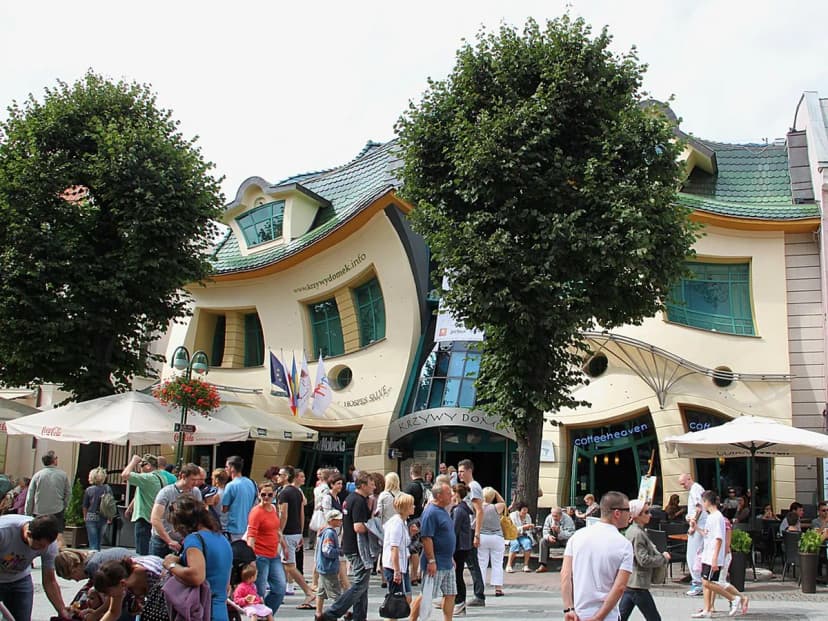
Monte Cassino Street is the heart of the town's social life and dining scene, lined with cafes, restaurants, and shops along a busy pedestrian stretch. It's a good place for a Polish meal after the morning climb, and it's also home to the Crooked House, a much-photographed architectural oddity worth the short detour.
Nature and Relax: Parks and Outdoor Spots Near the Tower
The Sopot Beach sits right beside the lighthouse and offers soft sand for sunbathing or a walk along the shoreline. North Park and South Park provide green escapes a short walk from the tower, with paths good for jogging or a slow stroll and benches tucked under old trees for a quieter break from the pier crowds.
One local habit most guides skip: after a strong autumn or winter storm, walk the beach directly below the lighthouse at first light and look for Baltic amber. Storms churn up the seabed and wash small, honey-colored pieces onto the sand between Sopot and Gdańsk, and dawn — before the tide and other beachcombers disturb the wrack line — is when locals say the finds are best. It costs nothing beyond an early alarm, and climbing the tower the day before gives you a good look at which stretch of shoreline the wind is pushing debris toward.
The area looks different across the year: spring brings blossoms to the gardens near the tower, summer is busiest, autumn brings golden leaves and the storms that turn up amber, and winter gives you the clearest long-distance views from the deck with almost none of the crowds.
Family-Friendly and Budget-Friendly Tips for Sopot
Visiting the lighthouse is one of the most affordable activities in the city, with discounted tickets for children and a lower group rate for parties of 15 or more. Children often find the spiral staircase an exciting mini-adventure, though younger kids should hold hands on the steeper turns near the top.
There's plenty to see nearby for free: street performers on Plac Zdrojowy, public art around the old Balneological facility, and the beach itself, where budget travelers can bring their own snacks rather than eating at the square. If your visit lines up with rough weather, the amber-hunting walk described above costs nothing and works well as a free add-on to the paid climb.
Look for combo offers that pair the lighthouse with the pier or other local sights, and check whether your hotel offers a small discount for either. Planning meals a block or two away from the main square, rather than directly on it, is one of the simplest ways to stretch a Sopot travel budget.
Frequently Asked Questions
Can you climb the Sopot Lighthouse?
Yes. It's open to the public and you can climb roughly 135–136 stone spiral steps up the inside of the tower to an observation gallery at about 25 meters, with 360-degree views of the pier, Gdańsk Bay, and Sopot's rooftops. The climb is moderate — not steep or claustrophobic — and there's reportedly a bench partway up if you need a breather.
How much is the entrance ticket for the Sopot Lighthouse?
Admission is inexpensive: a normal ticket is 10 PLN, a discounted ticket (children, students, seniors) is 8 PLN, and groups of 15+ pay 6 PLN per person. Sopot residents with a Sopot Card can enter free year-round. Confirm current pricing locally, as small increases happen from season to season.
What are the Sopot Lighthouse's opening hours?
Hours change by season — shortest in winter (roughly 11:00–16:00 in Jan–Feb, 10:00–16:00 Oct–Dec) and longest in peak summer (9:00–21:00 in July–August). Because it's an open-air observation deck, it can also close early or unexpectedly in high wind or storms, so it's worth double-checking same-day hours before you go, especially outside summer.
Why is the Sopot Lighthouse built on top of another building?
It isn't a free-standing tower by design. When Sopot's balneological (spa) facility was built in 1903–04, its boiler room needed a chimney, and the architects disguised it as an ornamental square tower so it wouldn't spoil the look of the fashionable new resort. The chimney only gained a genuine navigational light in 1975 after the boiler room was modernized and the flue became redundant, and it was formally classified as a lighthouse in 1977.
Is the Sopot Lighthouse still an official, active lighthouse?
Technically, no longer by strict definition. Its light range was reduced to about 7 nautical miles (from a peak of roughly 17 nm) after a 1999 change, which falls below the minimum range typically required to be classed a lighthouse. It still flashes white every 4 seconds (Fl W 4s) as a minor navigational aid, and everyone — maps included — still calls it a lighthouse.
How close is the Sopot Lighthouse to Sopot Pier?
It's essentially right next to it — the tower stands at Plac Zdrojowy 3, immediately beside the entrance to Sopot Pier (Molo), Europe's longest wooden pier. Most visitors combine the two, climbing the lighthouse first for the overview, then walking the pier out over the bay.
What's the best time to photograph the Sopot Lighthouse or the view from it?
Golden hour — shortly before sunset — is the favorite window, when the light warms the pier, the Grand Hotel Sopot, and the bay below the observation deck. From ground level, the tower itself photographs well against the pier and beach in late afternoon light, and it occasionally features in evening light-projection displays.
Is the Sopot Lighthouse free to visit?
No — it's a small paid admission (around 10 PLN standard, less for discounted/group tickets), unlike simply walking the promenade around it. Only Sopot Card–holding residents get free year-round entry.
The Sopot Lighthouse is a must-see landmark that combines history with stunning views. Climbing the 135–136 steps provides a rewarding experience for visitors of all ages. Its unique origin as a hospital chimney makes it a standout feature of the Polish coast. Make sure to include this historic tower in your 2026 travel plans to Sopot.
You will walk away with great photos and a better understanding of the region. The proximity to the pier and beach makes it a very convenient stop. Enjoy the fresh sea air and the beautiful horizon from the observation deck. Sopot continues to be a top destination for those seeking beauty and history.
To verify current details, consult the Sopot Lighthouse (Latarnia Morska w Sopocie) on Wikipedia, Sopot Lighthouse (Latarnia Morska w Sopocie) on Wikipedia and Sopot Lighthouse (Latarnia Morska w Sopocie) official site.
For more Sopot planning, read our 13 Best Things to Do in Sopot, Poland (2026 Guide) and Gdansk Beaches and Sopot Day Trip: 8 Essential Planning Tips guides.