

Łódź spent the 19th century as the "Polish Manchester" — a boomtown of red-brick textile mills that grew, almost overnight, into the Russian Empire's second-largest industrial city. That single-industry fortune collapsed after 1989, and what could have been a rust-belt afterthought instead reinvented itself as one of Poland's most interesting design and culture cities, repurposing its factory floors into museums, galleries, and shopping arcades rather than demolishing them. The result is an attractions list unlike anywhere else in the country: Manufaktura and the Izrael Poznański Palace tell the textile-baron story from opposite sides of the same street, the Central Museum of Textiles preserves the machinery that made the fortune in the first place, and Piotrkowska Street — at roughly 4.2 kilometers, one of Europe's longest pedestrianized commercial promenades — still functions as the city's living room. Łódź carries a second, less expected identity as Poland's film capital. The Łódź Film School trained Roman Polański, Andrzej Wajda, and Krzysztof Kieślowski, earning the city its "HollyŁódź" nickname and a genuine cluster of film-heritage sites: the Museum of Cinematography inside the former Scheibler Palace, and the National Centre for Film Culture housed at EC1, a converted power station that doubles as a science center and planetarium. A third, more somber layer runs alongside the industrial and cinematic ones — the Jewish Cemetery on Bracka Street, one of the largest in Europe and the burial ground for the Łódź Ghetto's victims, a site visited for remembrance rather than sightseeing. And at the city's northeastern edge, Łagiewniki Forest offers a genuine escape: at roughly 1,200 hectares, it's one of the largest forests inside any European city's limits. This guide groups Łódź's attractions by neighborhood and by category, flags what's free versus ticketed, and lays out 1-day and 2-day itineraries so a short visit doesn't turn into a scramble between opening hours.
Top 8 attractions in Lodz
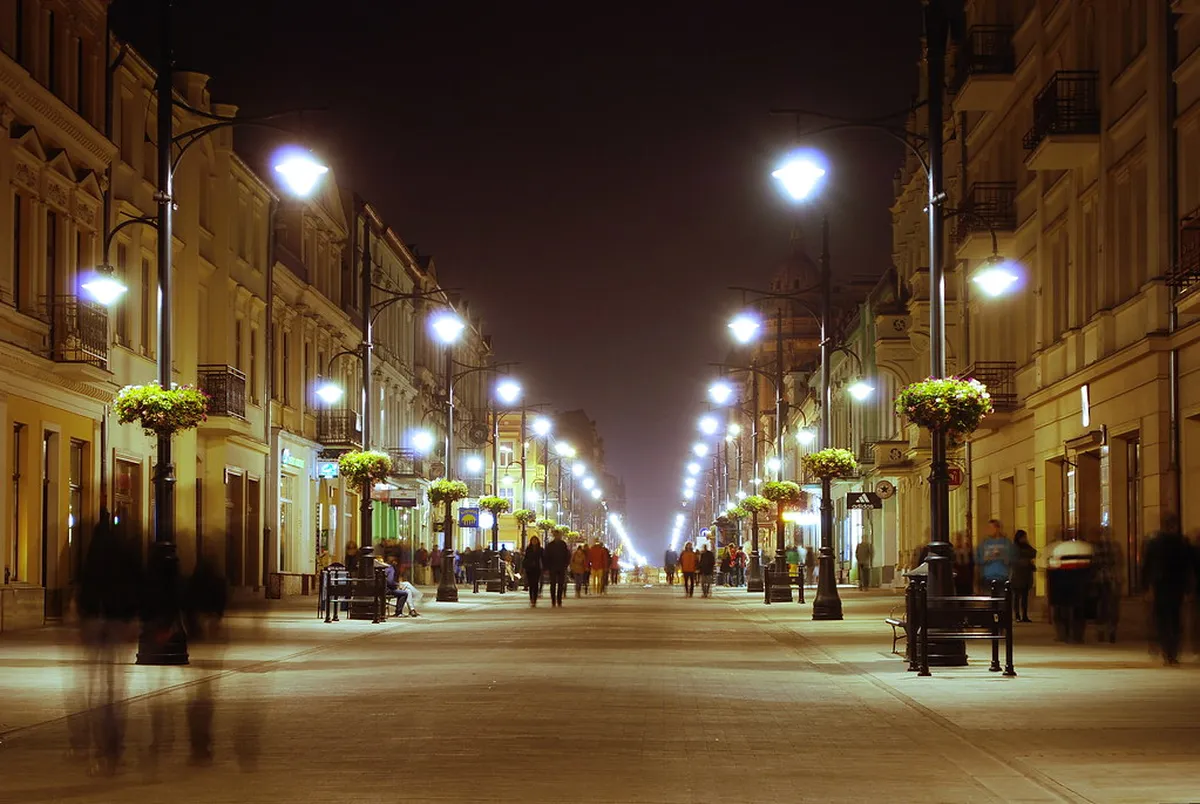
Piotrkowska Street
Piotrkowska Street is Łódź's historic and cultural main street — a roughly 4.2-kilometer promenade of 19th-century tenement houses and industrialists' palaces that grew up around the city's textile boom and now forms one of the longest pedestrianized commercial strips in Europe. Walking its cobbled, café-lined pedestrian core (from Plac Wolności south past Aleja Piłsudskiego/Mickiewicza) turns up bronze curiosities like Artur Rubinstein's piano and Władysław Reymont's traveling trunk, the sprawling Monument of Łódź Citizens made from thousands of inscribed cobblestones, building-sized murals, and the Łódź Walk of Fame — a Hollywood-style row of star plaques honoring the directors, cinematographers, and actors of Poland's film industry, historically centered in Łódź. Renovated courtyards such as Rose Passage and the OFF Piotrkowska creative complex (a converted 19th-century cotton mill now packed with bars, galleries, and design studios) power the street's after-dark scene, while by day it doubles as the city's principal shopping and dining strip. It's free to walk at any hour, busiest and liveliest from late morning through the evening, and sits an easy walk or tram ride from the Poznański Palace museum and the Manufaktura entertainment/shopping complex.
Visitor guide →
Manufaktura
Manufaktura is the vast red-brick former textile factory of 19th-century industrialist Izrael Poznański, reborn in 2006 as Łódź's largest shopping, culture, and entertainment complex. Spread across 27 hectares in the Bałuty district, it pairs preserved Victorian-era mill buildings with glass-and-steel additions around a three-hectare pedestrian market square lined by Europe's longest fountain (300 meters). Walking the square, browsing the arcades, and people-watching among the old factory chimneys costs nothing — it functions as a genuine public space, turning into a sandy urban beach with deck chairs and beach volleyball each summer and an ice rink each winter. Layered inside and around that free public core are separately ticketed attractions: the Museum of the Factory tells the Poznański story inside an original warehouse; MS2, a branch of the Museum of Art in Łódź, shows 20th- and 21st-century Polish and international art; the Experymentarium science center offers hands-on exhibits for families; and a multiplex cinema, bowling alley, go-kart park, and climbing wall round out the entertainment side. A four-star Andel's hotel anchors one corner. Most visitors combine Manufaktura with Piotrkowska Street, Łódź's historic mile-long promenade a short tram or 15-20 minute walk to the south, making the two the anchor stops of any Łódź itinerary.
Visitor guide →
EC1 Łódź – Miasto Kultury (EC1 Łódź – City of Culture)
EC1 Łódź – Miasto Kultury (EC1 Łódź – City of Culture) is a former early-20th-century power station in the heart of Łódź, transformed into one of Poland's most ambitious science-and-culture complexes. Inside the restored turbine halls, boiler rooms, and brick cooling towers of the old Elektrociepłownia 1 plant, visitors explore the Centrum Nauki i Techniki (Science and Technology Centre) — Poland's largest science center, with over 150 interactive exhibits on energy, space, and the micro/macro world plus a spherical cinema — and the EC1 Planetarium, whose 18-metre dome and 8K projection system have made it one of the most modern planetariums in Central-Eastern Europe. Because Łódź is Poland's historic film capital (nicknamed 'HollyŁódź,' home to the famed Łódź Film School that trained Polanski, Wajda, and Kieślowski), EC1 also hosts the National Centre for Film Culture, the country's largest cinematography museum, tracing 120 years of Polish cinema. A children's science zone, a comics and gaming center, and a rooftop cooling-tower viewing terrace round out a site recommended for a half-day (3-5 hour) visit.
Visitor guide →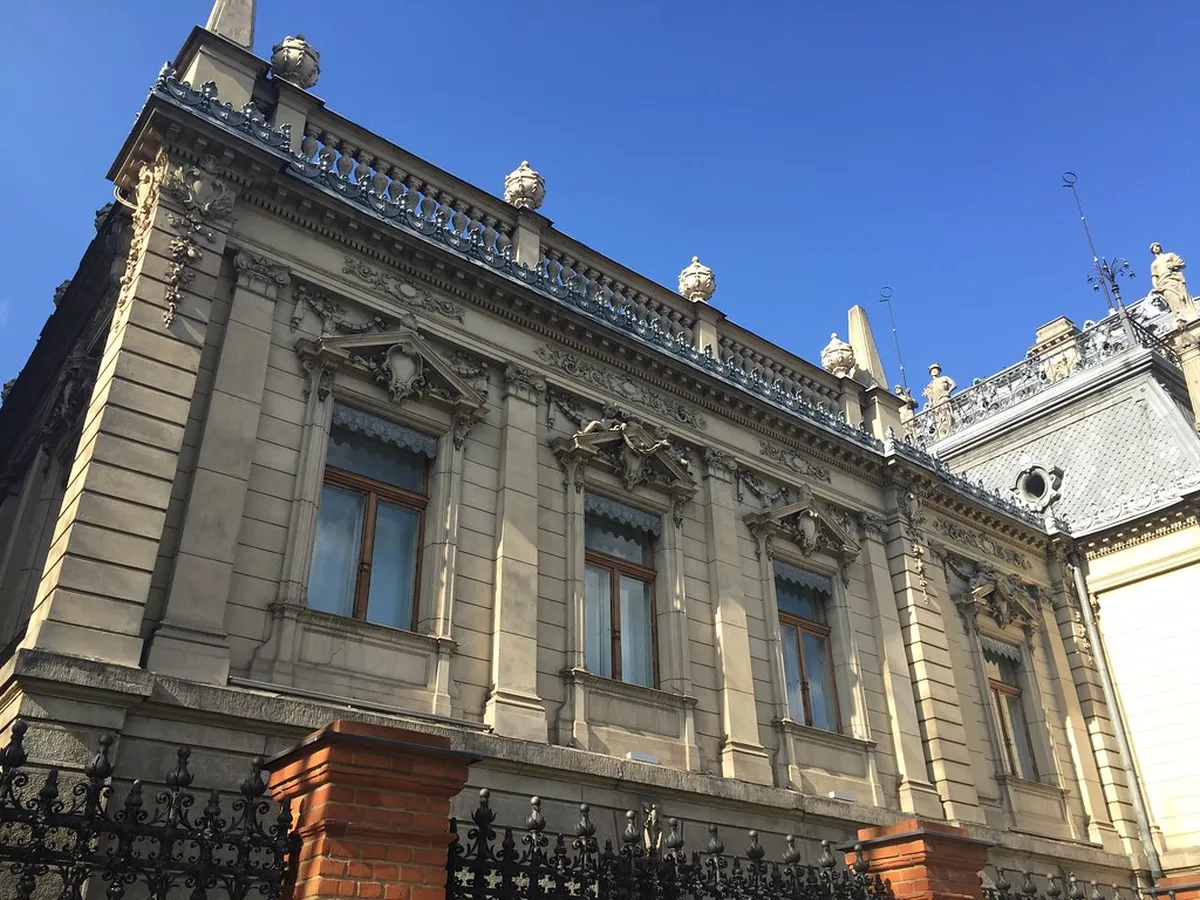
Izrael Poznański Palace
Rising on Ogrodowa Street in Łódź's historic Bałuty district, the Izrael Poznański Palace is the most opulent of the city's 'cotton king' residences — a sprawling eclectic-style mansion built between 1888 and 1903 for textile magnate Izrael Poznański, whose factory empire once employed thousands of workers just steps away. Architect Hilary Majewski (later assisted by Adolf Zeligson) blended Neo-Renaissance and Neo-Baroque motifs into an L-shaped palace crowned with tall domes, while painter Samuel Hirszenberg decorated the ceilings of the Dining Room and Ballroom. Inside, visitors move through gilded reception rooms, a mirrored former ballroom, and a glass-ceilinged winter garden before descending to exhibits tracing Łódź's textile-era history, the Poznański family, and pianist Artur Rubinstein, a native son of the city. Since 1975 the palace has served as the Museum of the City of Łódź (Muzeum Miasta Łodzi), and it earned a place on Poland's national Historic Monuments list in 2015 after a major renovation completed in 2020. Note for visitors: the palace is a standalone museum attraction, distinct from — though directly adjacent to — the Manufaktura complex, the shopping, dining, and museum district built inside Poznański's former factory buildings across the street.
Visitor guide →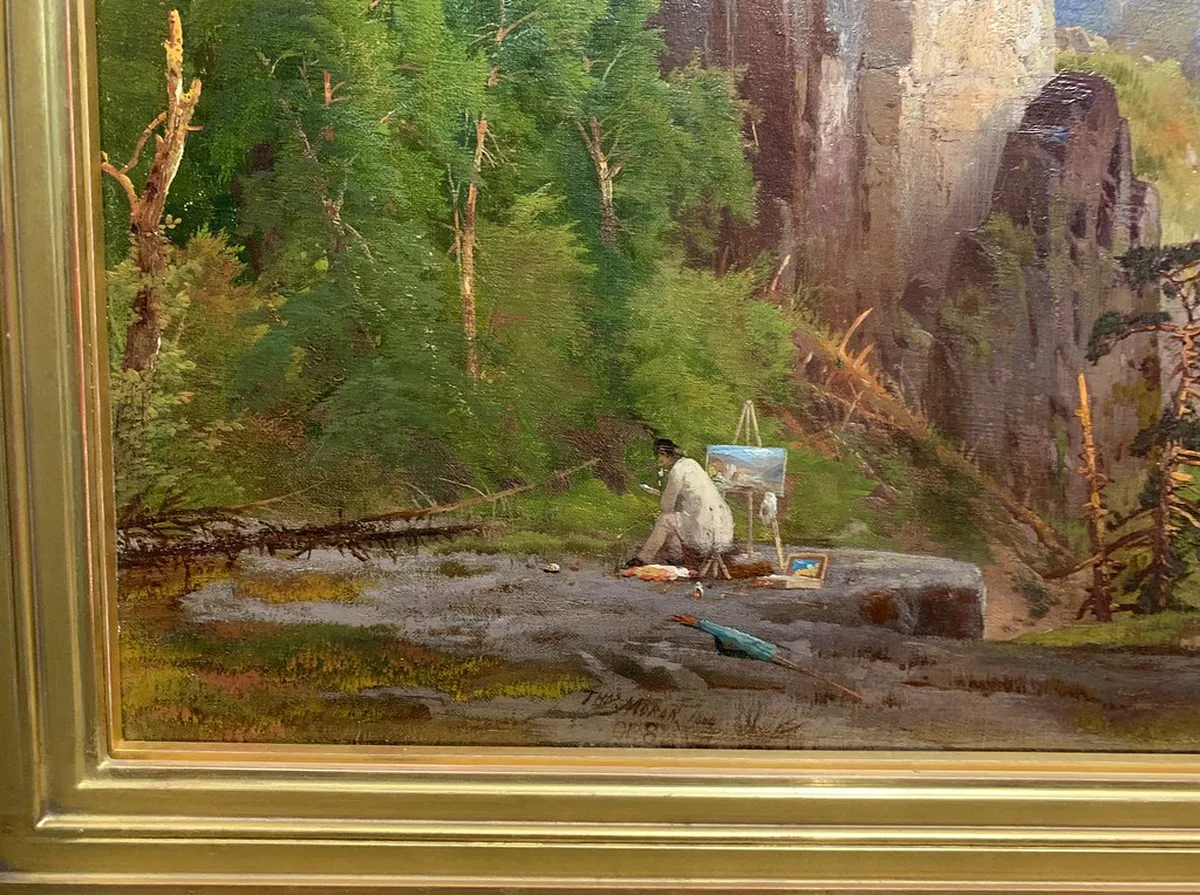
Central Museum of Textiles
The Central Museum of Textiles (Centralne Muzeum Włókiennictwa) occupies Ludwik Geyer's 'White Factory,' a classicist 1835-1886 mill complex on ulica Piotrkowska that was one of the first fully mechanized, steam-powered textile factories in what was then Congress Poland. Note that this is a distinct institution from both the Museum of the City of Łódź (housed in the Poznański Palace) and the Manufaktura retail-and-culture complex (built around Izrael Poznański's former mill) - the Central Museum of Textiles is dedicated specifically to the history, technology, and art of textile production. Inside, visitors walk through a preserved 19th-century weaving hall with working period machinery, galleries tracing raw fiber to finished fabric, and rotating exhibitions of contemporary textile and fashion design, plus the separately-ticketed 'Boiler House' interactive exhibition in the old steam-power plant. Behind the main building, the associated Open-Air Museum of Łódź Wooden Architecture (skansen) displays relocated 19th-century timber houses, a summer villa, workers' cottages, a former tram-stop ticket office, and a wooden church, offering a rare look at the vernacular architecture that once surrounded the city's brick-and-steam factories. With around 200,000 catalogued items, it holds the largest textile collection in Europe and has run the International Triennial of Tapestry since 1982.
Visitor guide →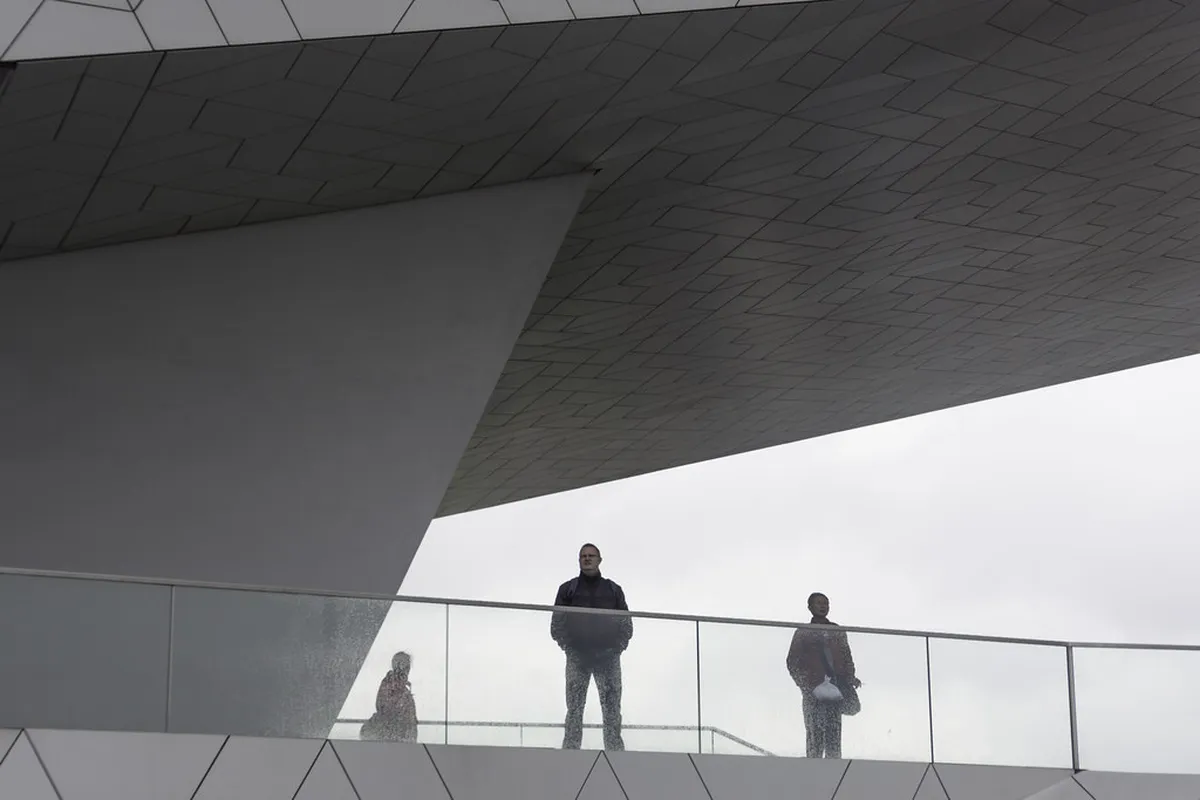
Museum of Cinematography (Muzeum Kinematografii w Łodzi)
Housed in the opulent 19th-century Scheibler Palace on Plac Zwycięstwa, the Museum of Cinematography (Muzeum Kinematografii w Łodzi) is Poland's only museum devoted entirely to the art and history of film. Unlike the nearby Poznański Palace - home to the Museum of the City of Łódź - this neo-Renaissance mansion belonged to a different textile magnate, Karol Scheibler, and his widow Anna, and its lavishly preserved interiors (a Moorish smoking room, mirrored ballroom, dining room, and winter garden) still appear on camera today, most famously in Andrzej Wajda's 'Ziemia obiecana.' Inside, roughly 50,000 artifacts - vintage cameras and projectors, hand-painted posters, animation puppets, magic lanterns, and a rare 19th-century photoplasticon - trace cinema's evolution alongside Łódź's own transformation from a smoke-stacked textile city into Poland's postwar film capital, the 'HollyŁódź' that shaped Film School alumni Wajda, Polański, and Kieślowski and later earned Łódź UNESCO City of Film status. A working on-site cinema, Kinematograf, screens classics and festival titles year-round. For anyone tracing Poland's cinematic heritage, this palace-museum pairs architectural grandeur with genuine industry history in one walkable Łódź stop, a short walk from the Księży Młyn workers' estate.
Visitor guide →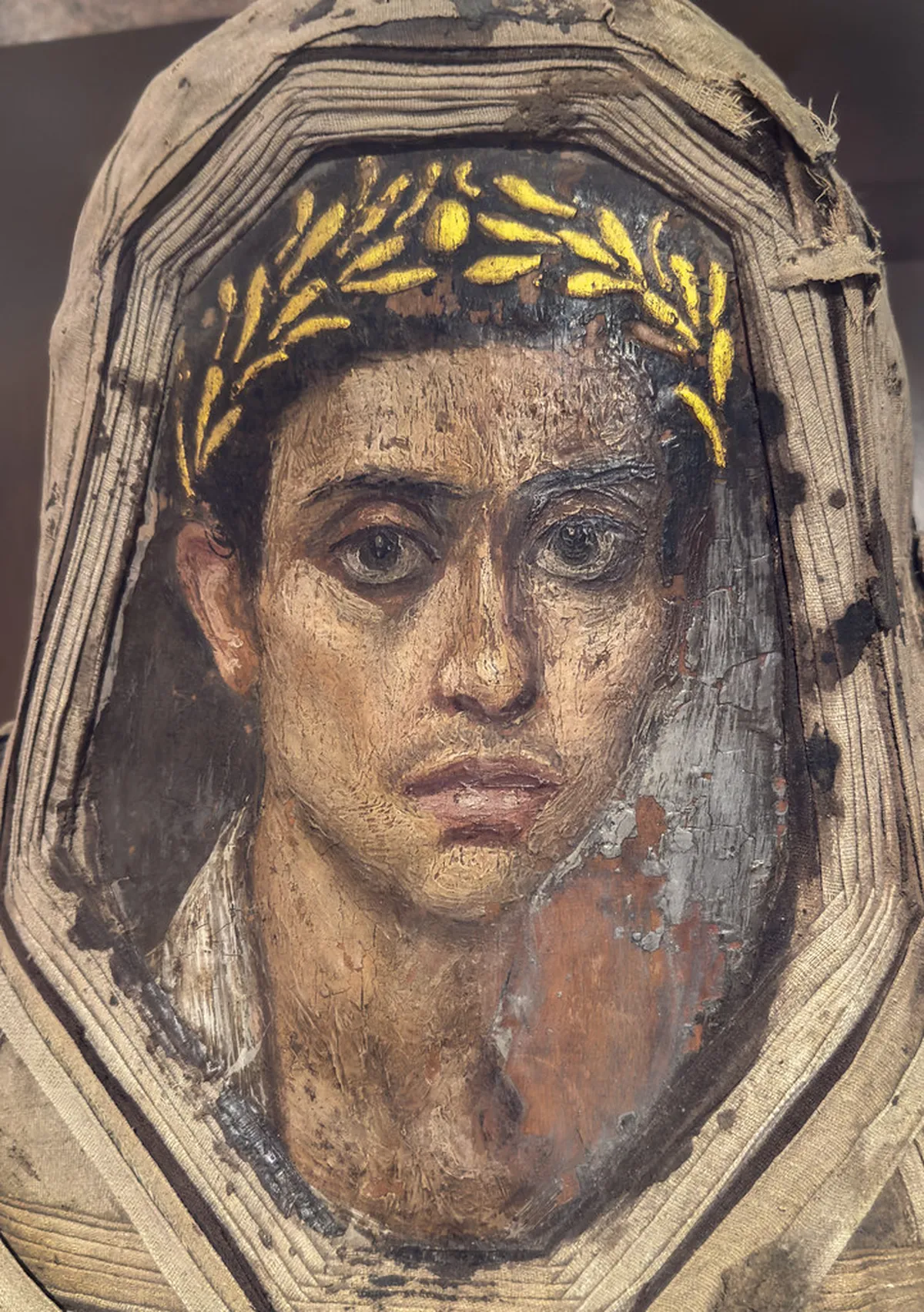
Jewish Cemetery in Łódź (Bracka Street)
The Jewish Cemetery in Łódź is one of the largest Jewish burial grounds in Europe, occupying roughly 40 hectares on Bracka Street in the city's Bałuty district. It was founded in 1892, after a cholera outbreak forced the Tsarist authorities of Congress Poland to permit its construction on land donated by the textile industrialist Izrael Poznański. An estimated 180,000 to 230,000 people are buried here, and around 160,000 headstones survive, tracing the growth and eventual destruction of a Jewish community that was, before the Second World War, the second-largest in Poland. Near the main entrance stands the mausoleum of Izrael Poznański, an elaborately decorated structure often cited as the largest Jewish tombstone in the world. In the cemetery's southern section lies the Ghetto Field (Pole Gettowe), where more than 43,000 residents of the Łódź Ghetto (Litzmannstadt Ghetto) who died of starvation, disease, and mistreatment between 1940 and 1944 are buried, many in unmarked or collective graves. The cemetery also holds the graves of Roma and Sinti victims held in the ghetto and of Polish resistance fighters killed during the war. Recognized as a Historic Monument of Poland since 2015, the cemetery remains an active burial ground for Łódź's small present-day Jewish community and is visited primarily as a place of remembrance rather than as a conventional tourist attraction.
Visitor guide →
Łagiewniki Forest (Las Łagiewnicki)
Łagiewniki Forest (Las Łagiewnicki) is a sprawling stretch of woodland on the northeastern edge of Łódź, Poland — at roughly 1,200 hectares, one of the largest forests found within any city's limits in Europe, and just a short bus ride from the city center. Dozens of kilometers of marked walking and cycling trails wind through oak, pine, and birch woodland that's home to deer, wild boar, and well over 100 bird species. At its heart, the Arturówek recreation area draws locals and visitors alike with three interconnected lakes for swimming, kayaking, and pedal boats, plus a treetop rope course and lakeside snack bars. History and pilgrimage seekers can find the Baroque wooden chapels of St. Roch and St. Anthony — among the oldest surviving buildings in Łódź, dating to the late 17th century — and the 18th-century Franciscan sanctuary of St. Anthony, still a working monastery and site of organ concerts. Entry to the forest itself is completely free, making it an easy, low-cost day trip for hikers, cyclists, birdwatchers, and families looking to escape the city without actually leaving it.
Visitor guide →Łódź attractions by neighborhood
Łódź's sights sit in four distinct pockets, and knowing which one you're in saves a lot of backtracking. The central Piotrkowska Street corridor is the busiest and most walkable: Piotrkowska Street itself runs the length of it, and both EC1 Łódź (a few hundred meters east, near Łódź Fabryczna station) and the Museum of Cinematography (at the street's northern end, on Plac Zwycięstwa) sit within easy walking distance of the promenade. A short tram ride or a 15-20-minute walk northwest brings you to the Poznański textile quarter, where Manufaktura and the Izrael Poznański Palace face each other across Ogrodowa Street — the palace was the family's private residence, Manufaktura their factory floor, and the two are close enough to combine in a single visit. The White Factory area, home to the Central Museum of Textiles inside Ludwik Geyer's 1835-1886 mill complex, sits toward the southern stretch of Piotrkowska Street, a longer walk (or a short tram hop) from the northern cluster of sights. Finally, two outlying sites require a deliberate trip out of the center: the Jewish Cemetery in the Bałuty district, and Łagiewniki Forest on the city's northeastern edge, reachable by bus or tram in 20-30 minutes.
Łódź attractions by category
If you'd rather plan by interest than by geography, Łódź's attractions split cleanly into five categories. For historic street life, Piotrkowska Street is the single essential stop — a working promenade rather than a museum piece, lined with bronze monuments, murals, and the Łódź Walk of Fame. For textile-industry heritage, don't conflate the three sites that cover it: Manufaktura is the repurposed factory-turned-mall, the Izrael Poznański Palace is that same industrialist's private residence-turned-museum, and the Central Museum of Textiles is a separate institution entirely, built around a rival mill owner's (Ludwik Geyer's) factory and dedicated specifically to textile production history rather than to any one family's biography. For film and science culture, EC1 and the Museum of Cinematography are equally easy to mix up but distinct: EC1 occupies a former power station and houses a planetarium and science center alongside its film-heritage wing, while the Museum of Cinematography is a 19th-century mansion, the Scheibler Palace, whose lavishly preserved interiors have themselves appeared on camera. For Jewish heritage and memorial, the Jewish Cemetery on Bracka Street is the city's principal site — approached, appropriately, as a place of remembrance rather than a conventional sightseeing stop. And for nature, Łagiewniki Forest is the only entry in the category, but at 1,200 hectares it's more than enough for a half-day of trails, lakes, and woodland chapels.
Free vs paid Łódź attractions
Łódź is an inexpensive city to sightsee in, and several of its best-known attractions cost nothing to experience. Piotrkowska Street is free at any hour, as is walking Manufaktura's three-hectare pedestrian market square — you only pay once you step inside one of the ticketed museums built into the complex, such as the Museum of the Factory or MS2. Łagiewniki Forest is likewise free to enter, whether you're there for a short walk or a full day of trails and lake swimming at Arturówek. On the paid side: the Jewish Cemetery charges a modest entrance fee, as do the Izrael Poznański Palace, the Central Museum of Textiles, the Museum of Cinematography, and EC1's science center and planetarium exhibits — all in the range of a light lunch rather than a major expense, and all covered in more detail (with current prices) on each attraction's own guide.
Suggested itineraries
With one day, anchor your visit around the two neighborhoods closest together: walk the length of Piotrkowska Street in the morning, taking in the murals and monuments, then head northwest to spend the afternoon at Manufaktura and the adjoining Izrael Poznański Palace — enough time to browse the market square, step inside one of the museums, and still make an early dinner back on Piotrkowska. With two days, keep day one as above and dedicate day two to Łódź's film-industry heritage: start at EC1 for the planetarium and National Centre for Film Culture, then walk north to the Museum of Cinematography inside the Scheibler Palace. If you have half a day left, add either Łagiewniki Forest for a nature break or the Jewish Cemetery for a more reflective, historically grounded stop — both make a fitting close to a trip that's otherwise dense with museums and shopping.
Getting around Łódź's attractions
The central Piotrkowska Street corridor and the Poznański textile quarter are both entirely walkable, and the two are close enough (roughly 1-1.5 kilometers) that most visitors cover them on foot rather than bothering with transit, though Łódź's trams run frequently along Piotrkowska if you'd rather not walk the full length twice. The Central Museum of Textiles, at the southern end of Piotrkowska, is a longer walk or a short tram ride from the northern cluster. The two outlying sites are where you'll actually need public transport: both the Jewish Cemetery and Łagiewniki Forest sit well outside the walkable center and are best reached by tram or bus, each roughly 20-30 minutes from central Łódź.
Best time to visit Łódź
Łódź works as a city break in any season, but spring and summer make the biggest difference to two specific attractions: Łagiewniki Forest is at its best for hiking, lake swimming, and boating at Arturówek from late spring through early autumn, and Manufaktura's market square converts into a sandy urban beach with deck chairs each summer, adding an outdoor draw that isn't there in winter (when the same square instead hosts an ice rink). If a visit to the Jewish Cemetery is part of your plans, build it around its schedule rather than your own — the cemetery is open Sunday through Friday and closed on Saturdays out of respect for Shabbat, so a Saturday-only itinerary will need to substitute another outlying site that day.
How to save money on Łódź attractions
Beyond the sights that are free year-round (Piotrkowska Street, Manufaktura's square, Łagiewniki Forest), several of Łódź's paid museums offer a genuinely free day each week rather than just a discount. The Central Museum of Textiles waives its permanent-exhibition entry fee on Wednesdays, the Izrael Poznański Palace (Museum of the City of Łódź) does the same on Wednesdays, and MS2, the contemporary-art branch inside Manufaktura, is free every Friday. Timing a visit around these days can cover three of the city's best museums at no cost. The other reliable saving is simply walking: because the central corridor and the Poznański quarter are both compact and connected by a short tram line, there's rarely a need to pay for taxis between attractions, and the walk itself takes you past murals, monuments, and street life you'd otherwise miss from a car.
Frequently asked questions about Łódź attractions
How many days do you need in Łódź?
One full day covers the essentials — Piotrkowska Street, Manufaktura, and the Izrael Poznański Palace — comfortably. Two days lets you add the film-heritage sites (EC1 and the Museum of Cinematography) plus either Łagiewniki Forest or the Jewish Cemetery without rushing, which is the pace most first-time visitors settle on.
Is Łódź worth visiting?
Yes, particularly for travelers who like industrial heritage, design, and film history over a polished old-town postcard — Łódź doesn't have one, having grown as a 19th-century factory boomtown rather than a medieval city. It's noticeably cheaper than Kraków or Warsaw and pairs easily with a Warsaw trip thanks to the roughly 90-minute train connection.
What is Łódź known for?
Łódź is known for its 19th-century textile-industry boom (earning it the nickname "the Polish Manchester"), the red-brick factory architecture that boom left behind — now repurposed into museums and the Manufaktura complex — and its film industry heritage as home to the Łódź Film School, which trained Polański, Wajda, and Kieślowski.
Is Łódź safe?
Łódź is generally a safe city for visitors, with normal city-travel precautions applying in busier areas like Piotrkowska Street at night and around the main train station. The central attractions covered here — Piotrkowska Street, Manufaktura, and the Poznański Palace — sit in well-trafficked, well-lit parts of the city.
What's the difference between Manufaktura and the Izrael Poznański Palace?
They're two parts of the same industrialist's estate but serve different purposes. Manufaktura is Izrael Poznański's former factory complex, now a shopping, dining, and museum destination built around a public market square. The Izrael Poznański Palace, directly across the street, was the family's private residence and is now the Museum of the City of Łódź — a standalone museum, not part of the Manufaktura complex itself.
Is the Central Museum of Textiles the same as the Museum of the City of Łódź?
No — they're separate institutions in separate buildings. The Museum of the City of Łódź occupies the Izrael Poznański Palace and covers the Poznański family and the city's broader history. The Central Museum of Textiles is housed in a different mill owner's factory, Ludwik Geyer's "White Factory," and is dedicated specifically to the history and technology of textile production.
Can you visit the Jewish Cemetery in Łódź?
Yes, the cemetery is open to visitors as a site of remembrance, open Sunday through Friday and closed on Saturdays. It's one of the largest Jewish cemeteries in Europe and includes the Ghetto Field, where tens of thousands of Łódź Ghetto victims are buried — most visitors approach it with the same quiet respect they'd bring to any memorial site.
Do I need to book tickets for Łódź attractions in advance?
Generally no — Łódź's museums are far less crowded than Kraków's or Warsaw's major sights, and walk-up tickets are the norm at the Izrael Poznański Palace, the Central Museum of Textiles, the Museum of Cinematography, and EC1. Booking ahead only tends to matter around major holidays or for special exhibitions.
Plan your Łódź trip
With its attractions clustered into four walkable pockets, Łódź is an easy city to plan around even on a short visit — pair two or three sights per neighborhood per day rather than sprinting between districts, and let the free museum days shape your schedule if budget matters. For the fuller trip-planning picture, see our things to do in Łódź guide, a 2-day Łódź itinerary, a deeper Piotrkowska Street guide, and our take on whether Łódź is worth visiting.


