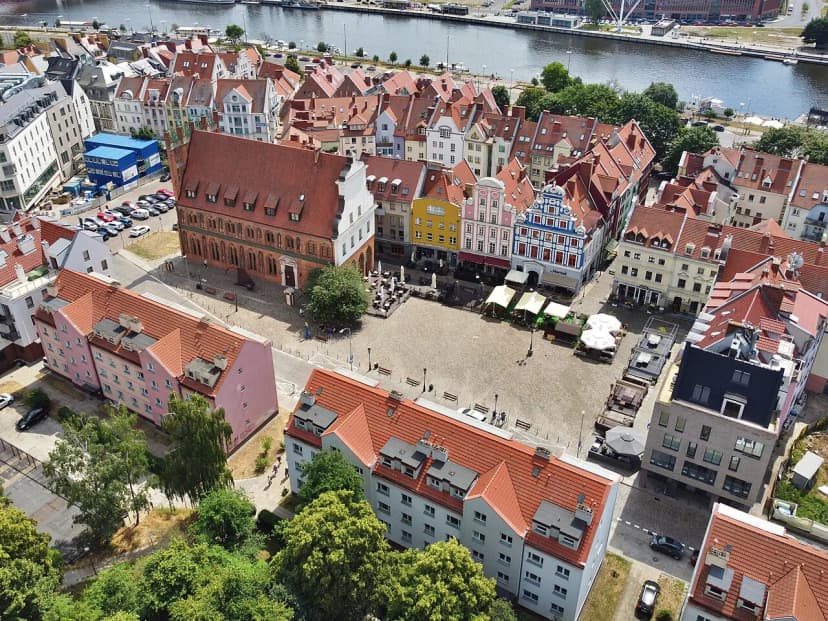
Szczecin doesn't get the tourist numbers of Kraków or Gdańsk, and that's arguably its selling point: this Baltic-facing port city on the Oder River, tucked into Poland's northwest corner just 20 km from the German border, gets skipped by itineraries that never make it this far west. What's here instead is a genuinely different mix from Poland's bigger names — a Renaissance castle whose Griffin dynasty ruled the Duchy of Pomerania for five centuries, a riverside terrace of monumental early-1900s German civic architecture, and a concert hall so architecturally radical it won Europe's top prize for contemporary buildings the decade it opened. Szczecin's Old Town deserves an upfront caveat: unlike Kraków's or Toruń's cores, which survived WWII largely intact, roughly 90% of Szczecin's historic quarter was destroyed in 1944 Allied bombing raids and rebuilt from the 1990s onward — atmospheric and walkable, but a faithful reconstruction rather than an original medieval streetscape. Layer in a WWII bunker turned underground museum beneath the main train station and a strange, chalky-turquoise flooded quarry called Emerald Lake in the eastern woods, and Szczecin's attraction list reads less like a checklist and more like a study in a city that rebuilt itself twice — after WWII bombing, and after a change of nationality from German Stettin to Polish Szczecin. This guide sorts the city's 8 must-see things to do by neighborhood, by category, and by budget, then bundles them into 1- and 2-day itineraries so you can see the highlights without doubling back across town — updated for 2026, with the current opening-hours caveats for the sites that run seasonal or day-restricted access.
Top 8 attractions in Szczecin
Castle of the Pomeranian Dukes (Zamek Książąt Pomorskich)
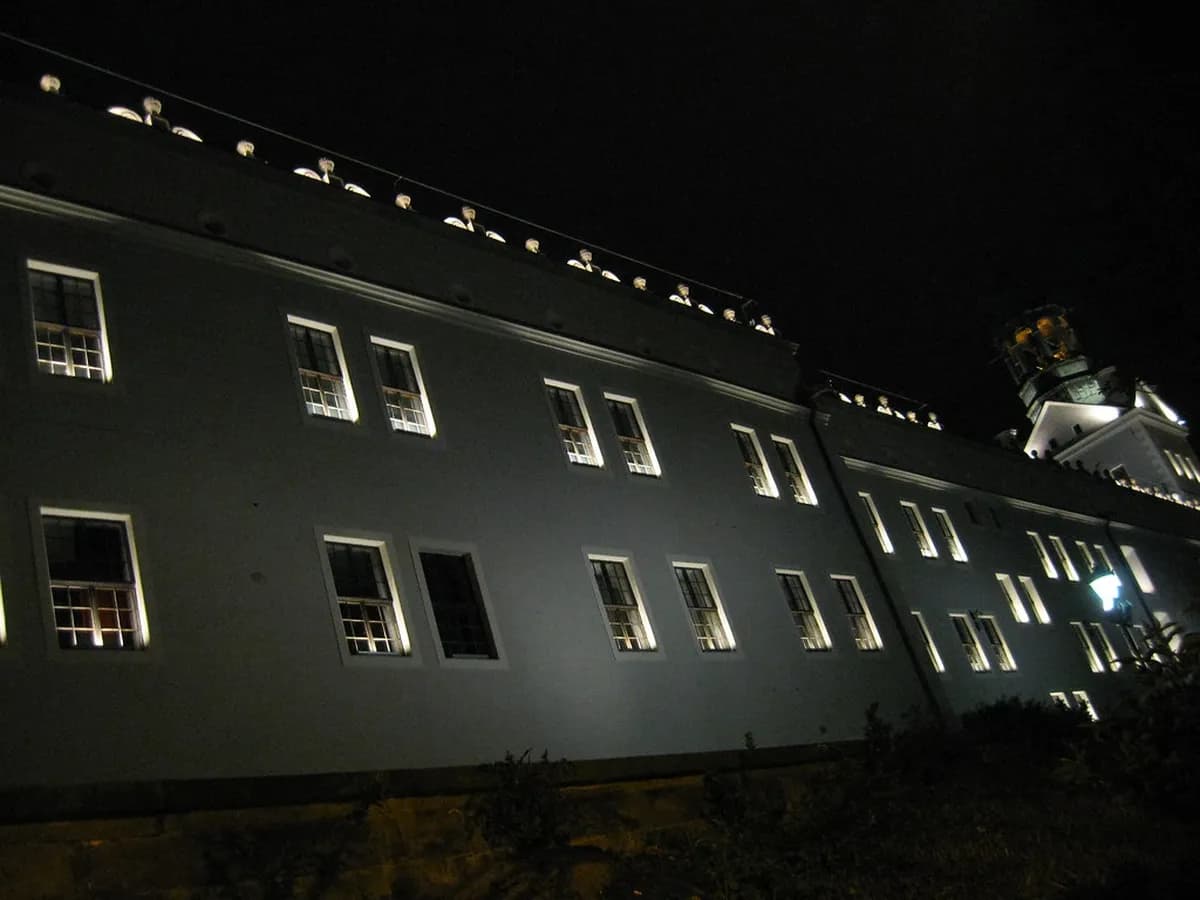
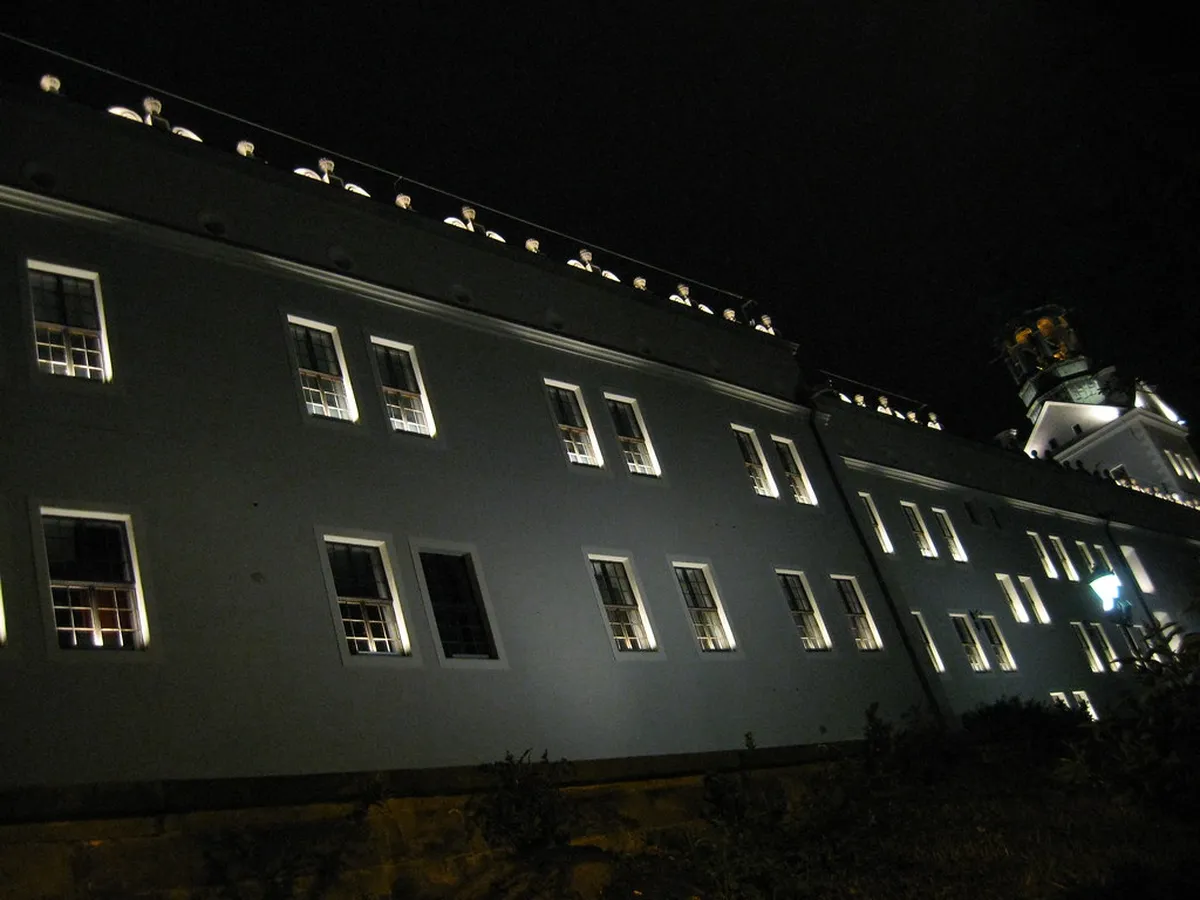
Rising over the Oder River on Castle Hill, the Castle of the Pomeranian Dukes is Szczecin's grandest historic landmark and the former seat of the Griffin dynasty, who ruled the Duchy of Pomerania for over 500 years. Its green-domed towers and red-brick Renaissance facade — rebuilt after near-total destruction in WWII bombing raids — enclose five wings and two courtyards that mix living history with an active cultural program. Inside, visitors descend into the Crypt of the Griffins to see the sarcophagi of six Pomeranian dukes, examine a 17th-century astronomical clock and the curious "Witches' Cell," then climb the Bell Tower for panoramic views over the Old Town and the river. The castle courtyards are free to wander daily, while the exhibitions, crypt, and tower require inexpensive timed tickets. Beyond its museum role, the castle remains a genuine working venue — hosting opera, theatre, concerts, and festivals in halls first built for 16th-century dukes — making it as much a night out as a heritage stop for anyone visiting Szczecin.
Visitor guide →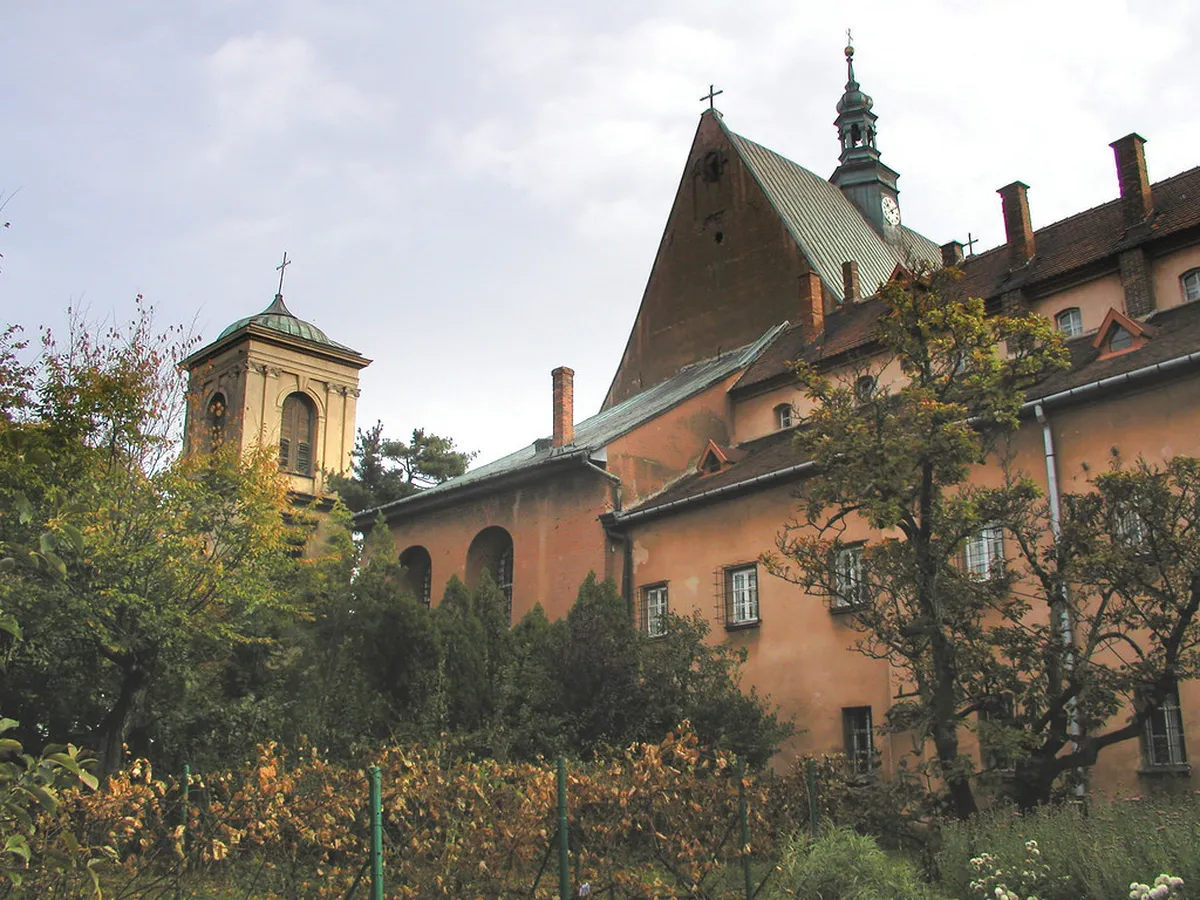
Wały Chrobrego (Chrobry Embankment)
Wały Chrobrego is Szczecin's grandest public space: a sweeping, balustraded terrace stretched along the escarpment above the Oder river, built in the early 1900s as the German 'Hakenterrasse' and renamed after WWII for Poland's first king, Bolesław Chrobry. Walking its full 500-metre length costs nothing — the terrace, its monumental staircases, and its Hercules-and-centaur statue and fountain are all open around the clock as a public promenade. Three grand early-20th-century buildings line it: the National Museum in Szczecin (with the Contemporary Theatre wing), the Maritime Academy building, and the Voivodeship Office, whose matching neo-Baroque facades make the ensemble one of the most photographed skylines in Poland. From the top of the terrace, wide stone stairs descend to a quay on the Oder where sightseeing cruise boats dock, offering paid river cruises past Grodzka Island, the historic shipyards, and 'Szczecin Venice.' The National Museum itself charges separate admission for its galleries and, seasonally, for a 230-step climb up its tower to a small viewing terrace with panoramic port views. Wały Chrobrego is best experienced at golden hour or after dark, when the museum and government buildings are floodlit and the Oder reflects the lights of the port below — widely rated the finest sunset viewpoint in Szczecin.
Visitor guide →
Szczecin Philharmonic (Mieczysław Karłowicz Philharmonic in Szczecin)
The Szczecin Philharmonic (Filharmonia im. Mieczysława Karłowicza w Szczecinie) is less a conventional concert hall than a piece of architecture that draws visitors to Szczecin specifically to see it. Opened in 2014 at ul. Małopolska 48, its faceted, snow-white glass-and-aluminum form — designed by Barcelona's Studio Barozzi Veiga — won the 2015 EU Mies van der Rohe Award, the continent's top architecture prize, the first Polish building ever to do so. By day its jagged rooflines echo the spires of Szczecin's neo-Gothic skyline; by night the ribbed glass facade glows from within like a lantern. Music lovers come for the acoustics of the roughly 1,000-seat Symphony Hall and the more intimate 192-seat Chamber Hall; architecture fans can join a dedicated 45-minute guided building tour (10 PLN, no concert ticket needed) that runs on select Fridays, covering the lobby, both halls, the level-4 gallery, and the gift shop. Outside of concerts and scheduled tour times, the interior is not open for casual walk-in visits, so timing a trip around the tour schedule or a concert date is the way to actually get inside.
Visitor guide →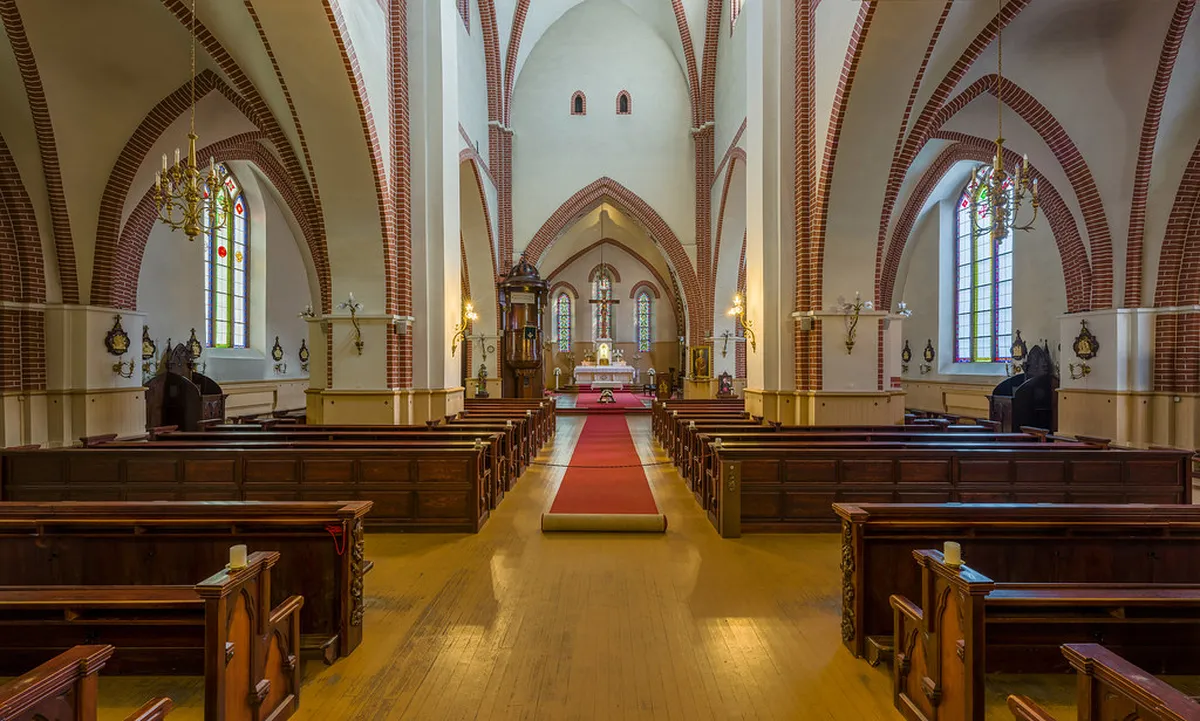
St. James's Cathedral, Szczecin
St. James's Cathedral is Szczecin's defining Gothic landmark, a red-brick basilica rebuilt more than once after storms, war, and bombing since its 12th-century founding. Its free-to-enter nave holds a mix of restored Gothic and postwar features, while the 110-meter tower's 56-meter-high viewing platform, reached by elevator rather than stairs, delivers one of the best panoramic views over the Odra River and the Old Town roofscape in Western Pomerania.
Visitor guide →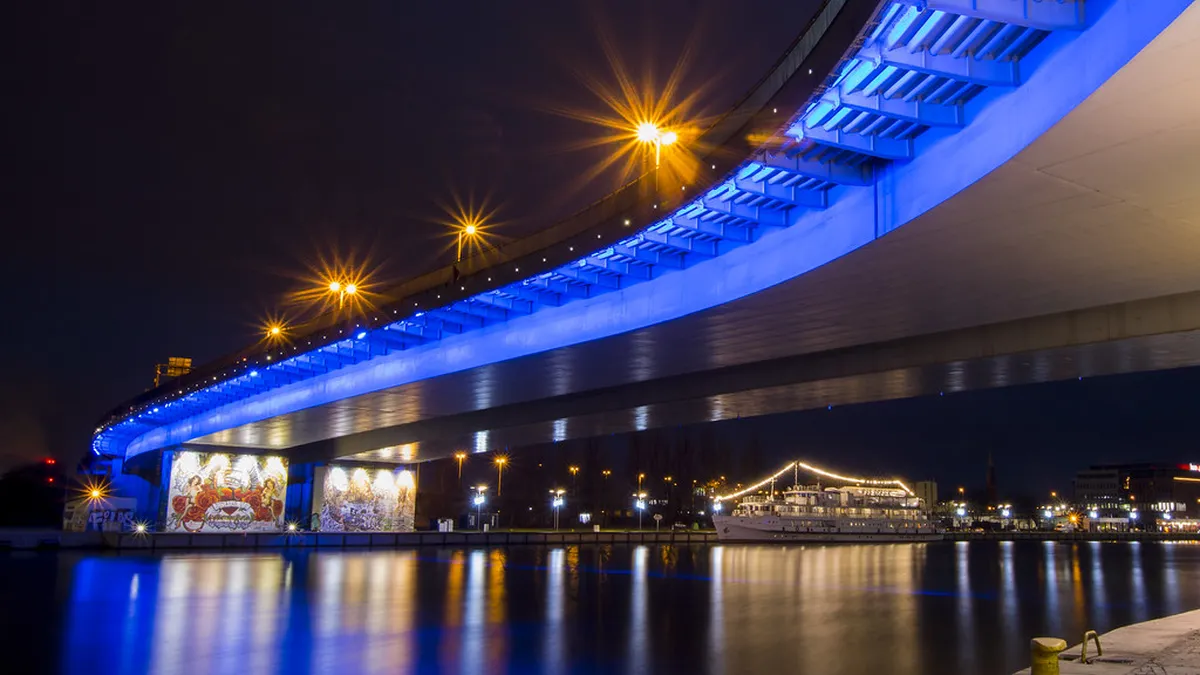
Szczecin Old Town (Stare Miasto)
Szczecin's Old Town (Stare Miasto) is the historic core of the city on the left bank of the Oder River, built around two adjoining squares: Hay Market Square (Rynek Sienny) and New Market Square (Nowy Rynek). Founded in 1243, the district is honest about one thing most visitors don't expect — it isn't a surviving medieval old town. Allied bombing in 1944 destroyed an estimated 90% of its buildings, and unlike Kraków's or Toruń's old towns, which came through the war largely intact, Szczecin's quarter sat in ruins for decades. Rebuilding didn't start until the 1990s, and it proceeded street by street: historic tenement facades were replicated around the market squares on the original medieval street grid, rather than restored from surviving fabric. The centrepiece is the Gothic-Baroque Old Town Hall, itself reconstructed in the 1970s and now home to the Szczecin History Museum, alongside the Gothic Church of St John the Evangelist, whose brickwork is one of the district's few genuine medieval survivors. Reconstructed merchant houses around the squares are now filled with cafes, bars, and restaurants, making the Old Town more of a compact, walkable evening and nightlife pocket than a formal sightseeing circuit — most people cover it on foot in well under an hour. It sits just next to the Pomeranian Dukes' Castle and Szczecin Cathedral, both separate attractions that visitors typically combine with an Old Town walk into a single loop.
Visitor guide →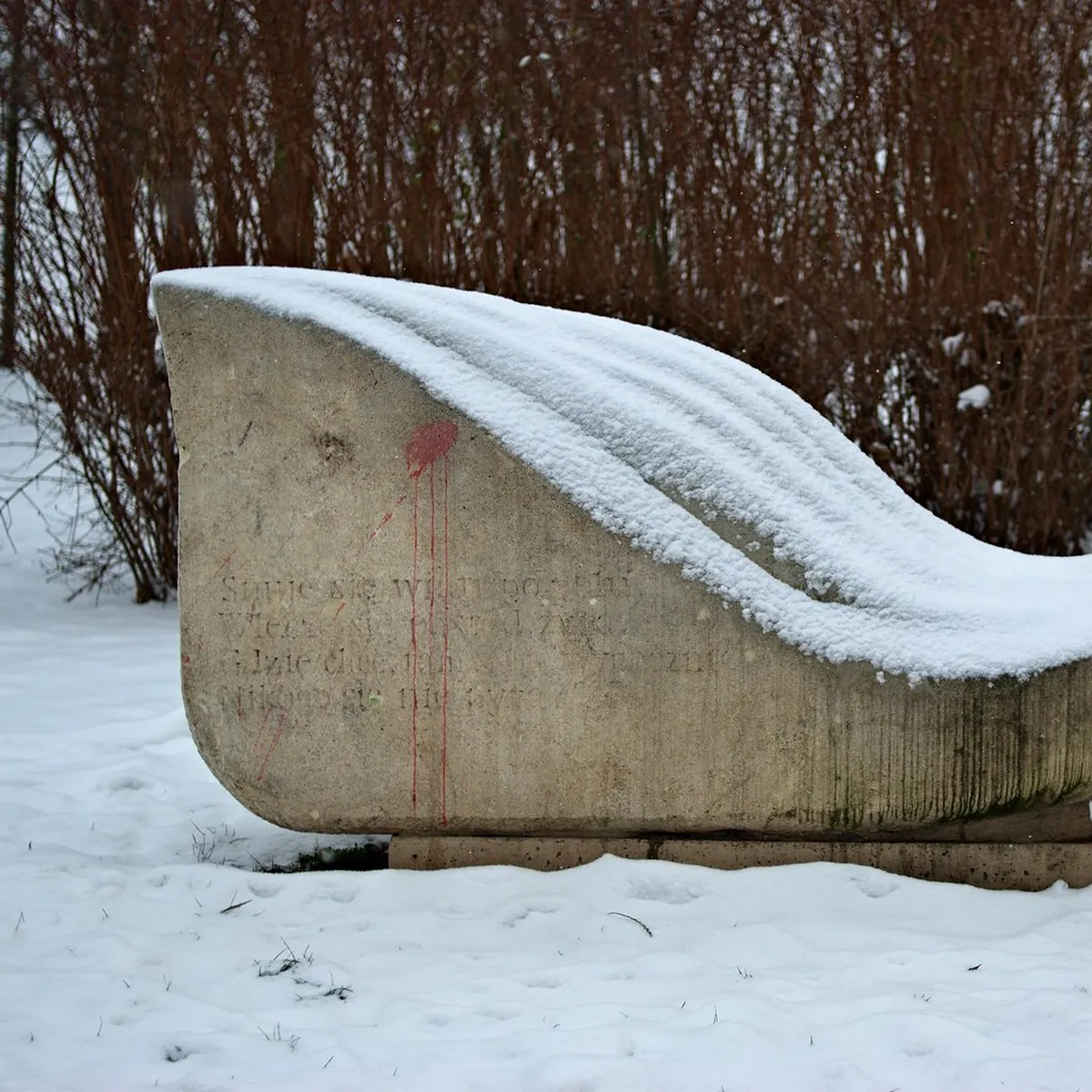
Kasprowicz Park
Kasprowicz Park (Park Kasprowicza) is Szczecin's largest and greenest city park, a roughly 27-hectare landscape of wooded hills, winding paths, and open lawns tracing its roots to the 1900 Quistorp Park, gifted to the city by industrialist Johann Heinrich Quistorp. Free and open around the clock, it draws locals and visitors alike for lakeside strolls along Lake Rusałka, picnics near neighboring Jasne Błonia meadow, cycling and jogging through shaded avenues, and seasonal blooms in the restored Różanka rose garden. Highlights include the open-air Summer Theatre, striking sculptures like Władysław Hasior's 'Flaming Birds,' and rare specimen trees planted during the park's 19th- and 20th-century development. A relaxed, no-ticket counterpart to Szczecin's museums and historic core, it's ideal for a slow afternoon of nature, art, and fresh air in the heart of the city.
Visitor guide →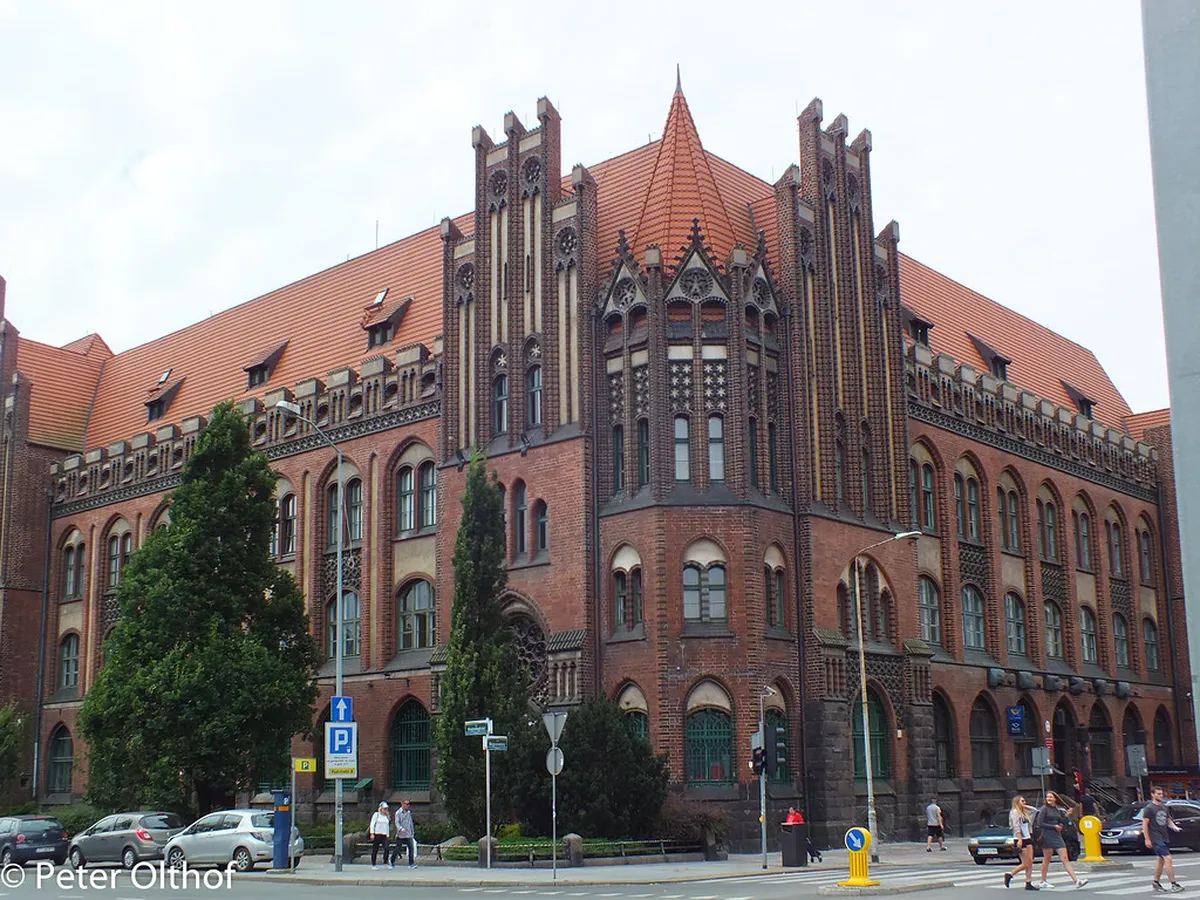
Szczecin Underground Routes
Hidden beneath the platforms of Szczecin Główny, the city's main railway station, the Szczecin Underground Routes take visitors into one of Poland's largest surviving non-military air-raid shelters. Built in 1943 by forced laborers on top of 18th-century Prussian fortification tunnels, the bunker could shelter up to 5,000 people during Allied bombing of the strategic port city then called Stettin — reached via a staircase plunging roughly 21 meters underground across some 3,000 square meters. After WWII it became a Cold War civil-defense and fallout shelter, used for secret drills into the 1990s, before reopening as a tourist attraction in 2006. A single ticket unlocks three themed routes packed with over 500 original artifacts, 200 information boards, 40 mannequins, archival film and sound, and UV murals: "World War II" (the shelter as used during 1944–45 bombing raids), "Cold War" (its life as a fallout shelter), and the lighter, photo-friendly "Selfie with PRL" walk through communist-era daily life. Unlike some Polish wartime-shelter tours that run guided-only, Szczecin offers both self-guided individual visits on set days/hours without reservation and bookable guided tours for groups and private parties — with warm blankets on loan for the roughly 14°C underground temperature. Entry is through a glass-walled ticket pavilion on Platform 1 of the train station at ul. Kolumba 2, and it's a genuinely offbeat, low-cost way to understand Szczecin's WWII devastation and Cold War past in one stop.
Visitor guide →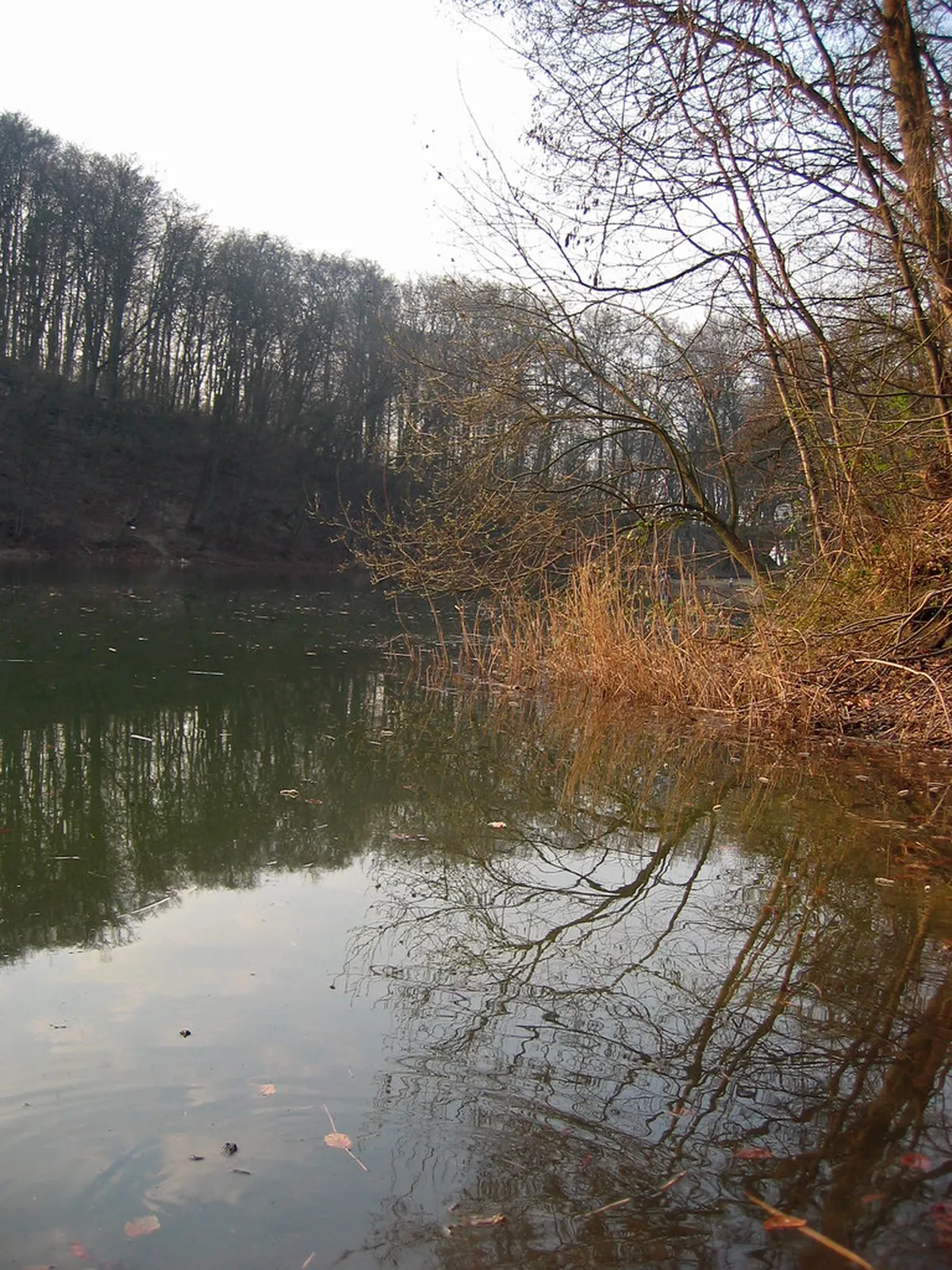
Emerald Lake (Jezioro Szmaragdowe)
Emerald Lake, known in Polish as Jezioro Szmaragdowe, is one of Szczecin's most photographed natural curiosities: a small, startlingly turquoise-green lake hidden in the beech woods of the Puszcza Bukowa Landscape Park on the city's eastern edge, in the Zdroje district. The lake isn't natural in origin — it's a flooded 19th-century chalk and marl quarry that fed a Portland cement works, abandoned after a catastrophic groundwater breach on 16 July 1925 submerged the pit almost overnight, reportedly burying mining machinery that is still down there. The dazzling color comes from a high concentration of dissolved calcium carbonate (chalk/calcite) in the water, which scatters sunlight off the pale limestone lakebed to produce shades that shift from jade to teal depending on the light and time of day — best seen on a sunny midday or early-afternoon visit, when the sun penetrates the shallower shelf areas. Steep, tree-lined slopes ring the water, and short forest trails (including the marked Blue Trail) climb the old quarry rim to viewpoints over the lake and, from higher ground nearby, the Oder valley beyond. It is completely free and open around the clock, with no ticket booth, fence, or official visitor center — just a woodland clearing reached via ul. Kopalniana. Despite its inviting color, swimming is officially banned and enforced with fines: the lake retains submerged metal quarry equipment, drops off sharply and unpredictably from the shoreline, stays cold and deep year-round, and has been the site of at least one fatal diving accident. Visitors come to walk the surrounding trails, photograph the water from the shore and overlooks, and explore nearby historic features like the artificial 1880s grotto and WWII bunker remains — not to enter the water.
Visitor guide →Szczecin attractions by neighborhood
Most of Szczecin's headline sights fall into one tight historic cluster, easy to link on foot. The Pomeranian Dukes' Castle, Szczecin Cathedral, Szczecin Old Town, and Wały Chrobrego embankment sit within a 10-15 minute walk of each other on and around Castle Hill on the west bank of the Oder — start at the castle, cut through the Old Town's rebuilt market squares, detour to the cathedral tower, then finish at the embankment for river views. The Szczecin Philharmonic sits a bit further out, roughly a 15-20 minute walk (or a short tram ride) south of that central cluster, on ul. Małopolska — worth timing around a Friday building tour or an evening concert rather than a casual walk-by, since it isn't open for browsing outside those windows. Two attractions sit well outside the historic core and need transit: Kasprowicz Park and the neighboring Jasne Błonia meadow are a tram ride northwest of downtown, while Emerald Lake is further still, in the Zdroje district on the city's eastern edge, reached by bus and then a short walk through Puszcza Bukowa forest. The Szczecin Underground Routes are a geographic outlier of a different kind — not a walk away from anything, but literally inside the main railway station (Szczecin Główny), making them an easy add-on whenever you're arriving, departing, or connecting through the station.
Szczecin attractions by category
Royal and historic architecture: the Pomeranian Dukes' Castle and Szczecin Cathedral are the city's two headline heritage buildings, spanning Renaissance ducal rule and Gothic ecclesiastical history respectively, with the Wały Chrobrego embankment adding a third layer — the monumental early-1900s German civic architecture built when the city was Stettin. Honestly-reconstructed old town: Szczecin's Old Town belongs in its own category rather than alongside genuine medieval survivors — it's a faithful, street-grid-accurate rebuild completed from the 1990s on, valuable for atmosphere and cafe culture rather than centuries-old fabric. Modern award-winning architecture: the Szczecin Philharmonic is the city's one unmissable 21st-century building, a Mies van der Rohe Award winner that draws architecture travelers who'd otherwise skip Szczecin entirely. WWII and Cold War heritage: the Szczecin Underground Routes turn a real air-raid shelter and Cold War fallout bunker into the city's most tangible history lesson, more visceral than a museum display case. Green space: Kasprowicz Park is Szczecin's largest park and the closest thing to a free, unstructured afternoon the city offers. Natural curiosities: Emerald Lake's near-fluorescent turquoise water — the byproduct of a flooded 19th-century chalk quarry — is Szczecin's most-photographed non-urban attraction and unlike anything else on this list.
Free vs paid Szczecin attractions
Several of Szczecin's best sights cost nothing at all. The Old Town's market squares and reconstructed streets are open to wander any time, the Wały Chrobrego terrace and its staircases are a 24-hour public promenade, Kasprowicz Park has no entry fee or gate, and Emerald Lake has no ticket booth, fence, or visitor center whatsoever — just a woodland clearing you walk into. On the paid side, admission is modest rather than steep: the Pomeranian Dukes' Castle charges separately for its exhibitions, the Crypt of the Griffins, and the Bell Tower climb (its courtyards remain free), Szczecin Cathedral's nave is free to enter but its 56-meter viewing platform requires a paid ticket, the Szczecin Philharmonic charges a small fee only for its guided building tour or a concert ticket (there's no casual paid walk-in option), and the Szczecin Underground Routes charge for both self-guided and guided visits, with guided tours pricier than the self-guided route. Budget roughly a day of free wandering (Old Town, embankment, park, lake) against a second day of modest ticket spend (castle, cathedral tower, underground routes) if money is tight.
Suggested itineraries
One day: Cover the central historic cluster in a single loop. Start at the Pomeranian Dukes' Castle for the crypt and courtyards, walk to the neighboring Szczecin Cathedral to climb the tower, cut through Szczecin Old Town's market squares for lunch and a look at the rebuilt Town Hall, then finish at Wały Chrobrego for sunset over the Oder — all four sights sit within a compact, walkable radius, so a single day covers Szczecin's essential architecture and history without a single transit ride.
Two days: Keep day one as above, then use day two for the sights that need more planning or transit. Add the Szczecin Underground Routes in the morning (easy, since it's inside the main train station — good timing if you're catching a train later that day), then either the Szczecin Philharmonic (if your visit lands on a Friday tour day or you can catch an evening concert) or a half-day out to Kasprowicz Park and Emerald Lake if you'd rather trade architecture for green space and a swim-free but photogenic natural curiosity. Either combination rounds out the full 8-attraction list across two unhurried days.
Getting around Szczecin's attractions
The central historic cluster — castle, cathedral, Old Town, and embankment — is entirely walkable, with the longest single stretch (castle to embankment) under 15 minutes on foot. The Szczecin Philharmonic is a further 15-20 minute walk south, or a short tram hop if you'd rather save your legs. The Szczecin Underground Routes need no separate trip at all: the entrance is a glass-walled pavilion on Platform 1 of Szczecin Główny station, so it slots naturally into an arrival or departure. Kasprowicz Park and Emerald Lake are the two sights that genuinely require public transit — the park is a tram ride northwest of downtown, while Emerald Lake, out in the Zdroje district, needs a bus followed by a 10-15 minute walk through Puszcza Bukowa forest to reach the lake itself. Szczecin's tram and bus network covers both comfortably; a single or day ticket bought from a machine or the mobile app covers either trip.
Best time to visit Szczecin
Szczecin rewards visiting with an eye on specific access windows rather than just season. As of 2026, the National Museum's tower on Wały Chrobrego is closed for renovation, so budget that view out of your plans until it reopens. The Szczecin Philharmonic's guided building tours run only on select Fridays — check the current schedule before building an itinerary around seeing the interior, since there's no general walk-in access outside tour times or concerts. The Szczecin Underground Routes' self-guided individual visits (no reservation needed) run only Thursday through Monday; travelers arriving Tuesday or Wednesday will need to book a guided tour instead or adjust their route through the station accordingly. Weather-wise, late spring through early autumn (May-September) is most comfortable for the outdoor sights — Wały Chrobrego, the Old Town streets, Kasprowicz Park, and the forest walk to Emerald Lake — while winter still works well for the indoor and semi-indoor sights (castle, cathedral, Philharmonic, Underground Routes).
How to save money on Szczecin attractions
A surprising amount of Szczecin is already free: the Pomeranian Dukes' Castle's courtyards, Szczecin Cathedral's nave (only the tower climb is ticketed), Kasprowicz Park, and Emerald Lake all cost nothing to visit. The National Museum, whose main building anchors Wały Chrobrego, offers free admission on Saturdays — worth timing a museum visit around if the gallery collections interest you more than the (currently closed) tower. For everything else, the Szczecin Tourist Card bundles public transit with discounts across several paid attractions and museums, and typically pays for itself once you're combining two or more paid sights with tram or bus rides on the same day. Booking the Szczecin Underground Routes' self-guided route instead of a guided tour is also the cheaper way in, if you're comfortable following the exhibits at your own pace.
Frequently asked questions about Szczecin attractions
How many days do you need in Szczecin?
One focused day covers the central historic cluster — the castle, cathedral, Old Town, and Wały Chrobrego embankment. Two days lets you add the Underground Routes, the Philharmonic, or a half-day out to Kasprowicz Park and Emerald Lake, without feeling rushed.
Is Szczecin worth visiting?
Yes, particularly for travelers who've already covered Poland's bigger-name cities — Szczecin's mix of Renaissance castle heritage, Mies van der Rohe-award architecture, and offbeat WWII/Cold War sites is genuinely distinct, even if it lacks a single blockbuster landmark.
Is Szczecin's Old Town really medieval?
Not in its fabric. Around 90% of the district was destroyed in 1944 Allied bombing, and reconstruction of the market squares and townhouses didn't begin until the 1990s, following the original medieval street grid rather than restoring surviving buildings. It's worth visiting for atmosphere, not for original architecture.
Is Szczecin safe?
Yes — Szczecin is a low-crime European city, and its main attractions (castle, cathedral, Old Town, embankment) sit in well-trafficked, well-lit central areas. Standard city-travel precautions apply, especially around the train station at night.
Can you swim in Emerald Lake?
No — swimming is officially banned and enforced with fines. The flooded former quarry drops off unpredictably from the shoreline, stays cold and deep year-round, still holds submerged mining equipment, and has been the site of at least one fatal diving accident. Visit for the view and the trails, not the water.
Do you need to book Szczecin Underground Routes in advance?
Not for the self-guided route, which runs on set days and hours (Thursday-Monday) without reservation. Guided tours for groups or private parties do need advance booking.
What is the best free attraction in Szczecin?
Wały Chrobrego is the strongest free experience — a 500-meter riverside terrace with monumental architecture on one side and Oder river views on the other, especially at golden hour.
Can you visit the Szczecin Philharmonic without a concert ticket?
Yes, but only via its guided building tour, which runs on select Fridays for a small fee. Outside tour times or concert dates, the building isn't open for casual walk-in visits.
Plan your Szczecin trip
Eight sights won't exhaust Szczecin, but they'll give you a properly rounded sense of the city in a day or two — enough to decide whether you want to come back for the day trips and neighborhoods this guide doesn't cover. For a deeper dive into scheduling, read our 2-day Szczecin itinerary or the broader things to do in Szczecin guide, and if you're still deciding whether the trip is worth it at all, our is Szczecin worth visiting breakdown lays out the honest case. For more on the city's rebuilt historic core specifically, see our Szczecin Old Town guide.