Is Szczecin Worth Visiting? My Honest Take After Walking the City
Last updated July 2026 — I get asked this a lot, usually by people scanning a map of Poland and wondering why a port city near the German border keeps showing up in their search results. The short answer: yes, but with caveats. Szczecin isn't Kraków, and it isn't trying to be. It's a working Baltic and Oder river port with a genuinely unusual layout — wide, tree-lined boulevards and traffic circles laid out in the late 1800s and early 1900s under planners who studied Paris and Vienna, which is why locals still half-jokingly call it the "Paris of the North." Walking those avenues at golden hour, past the sweep of Wały Chrobrego above the river, I understood the nickname more than I expected to.
This isn't a generic "top things to do" piece — I've covered that ground in the full Szczecin things-to-do guide. This is the candid version: who Szczecin rewards, who it doesn't, and what to weigh before committing the days. If you're deciding how long to stay, pair this with my how many days in Szczecin breakdown once you've made the call to go.
Key Takeaways
- Szczecin's biggest draw is architecture and urban design — the Pomeranian Dukes' Castle, Wały Chrobrego, and the Mies van der Rohe-winning Szczecin Philharmonic.
- Underground Szczecin's WWII shelter tours add a genuinely different, slightly eerie layer most first-time Poland visitors never see.
- Proximity to the German border (Berlin is roughly 2 hours by direct train) makes Szczecin a realistic add-on to a Germany trip.
- It suits history and architecture travelers, Baltic-coast trip combiners, and Berlin-adjacent itinerary builders far more than checklist-style sightseers.
- It's light on "wow" landmarks compared to Kraków or Gdańsk — temper expectations if you need dense, postcard-perfect Old Town streets.
The short verdict
Szczecin is worth visiting if you're drawn to architecture, city planning, and layered 20th-century history rather than a dense, tourist-perfect Old Town. It's Poland's seventh-largest city, and it doesn't perform for visitors the way Kraków's Main Square does. What it offers instead is texture: a Renaissance castle rebuilt from WWII rubble, a promenade designed to impress from a river approach, and a contemporary concert hall that architecture critics still cite a decade after it opened. I'd rank it below Kraków and Gdańsk for a first, single Poland trip, but worth 1-2 days if you're routing through northwestern Poland, combining it with the Baltic coast, or crossing over from Germany.
The green boulevards and the castle that survived the war
What struck me first wasn't a single building but the streets themselves. Szczecin's late-1800s/early-1900s redesign gave the city broad, green boulevards and generous roundabouts modeled loosely on Parisian and Viennese planning — a deliberate attempt to make a Prussian provincial capital feel cosmopolitan. It mostly worked, and it still does: even on a grey afternoon, the avenues around plac Grunwaldzki and plac Zwycięstwa feel spacious in a way few Polish city centers do.
From there it's a short walk to the Pomeranian Dukes' Castle (Zamek Książąt Pomorskich), the Renaissance seat of the Griffin dynasty (Gryfici) who ruled Pomerania for centuries. Heavily damaged in WWII bombing and rebuilt afterward, it now houses a ducal crypt, an opera and philharmonic hall, and a bell and clock tower with a working 1693 astronomical clock. Climbing to the rooftop terrace for the view over the Oder (Odra) and the port cranes beyond is, for me, the single best five minutes in the city.
The cathedral most first-timers skip
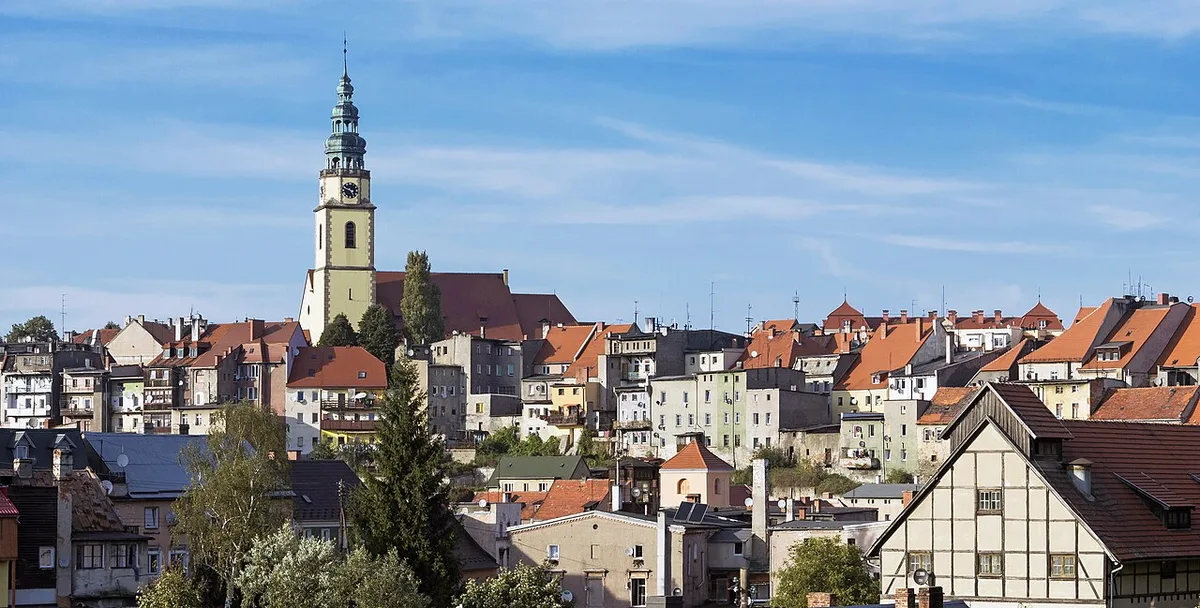
Most visitors head straight from the castle to the river and never notice the other landmark a few streets back: St. James' Cathedral (Bazylika Archikatedralna św. Jakuba Apostoła), a hulking red-brick Gothic basilica that's among the tallest churches in Poland. Its tower was rebuilt in a deliberately modern style after wartime bomb damage destroyed the original spire, and the observation deck near the top gives a different angle on the city than the castle terrace — you look down on the boulevards instead of across the river.
It sits inside the compact core covered in my Szczecin Old Town guide, and pairing the two towers (castle and cathedral) in one afternoon is an easy, low-effort way to add real architectural range to a short visit without adding much walking distance.
An award-winning philharmonic and a city underground
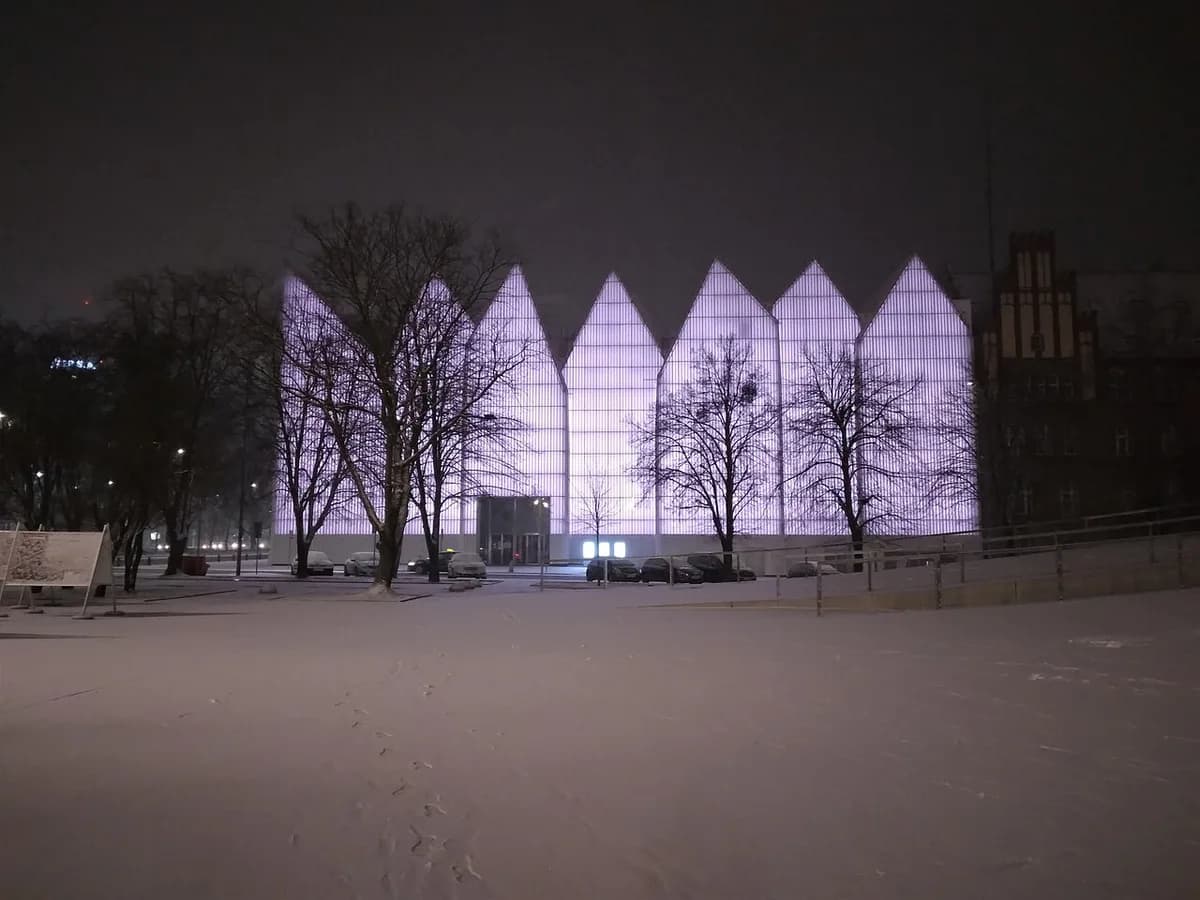
The Szczecin Philharmonic (Filharmonia im. Mieczysława Karłowicza) is the building that put the city on architecture blogs internationally. Its stark white, angular facade won the EU Mies van der Rohe Award in 2015, one of the most prestigious prizes in European architecture. You don't need a concert ticket to appreciate it from outside, though catching a performance if the schedule lines up is worth the detour — the current season's program is posted at filharmonia.szczecin.pl.
Then there's Underground Szczecin (Szczecińskie Podziemia): guided tours through WWII-era air-raid shelters beneath the city center. It's not a polished museum experience — it's closer to an actual bunker, and a reminder of how much of the city's modern layout was shaped by wartime destruction and postwar rebuilding.
The Berlin-border angle most guides skip
What separates Szczecin from most Polish destinations is geography: it sits close enough to Germany that Berlin is roughly two hours away by direct train. Szczecin isn't just competing with Kraków or Wrocław for your Poland time — it's competing with "one more day in Berlin," and for a certain kind of traveler, it wins that comparison. It's also why the city has long functioned as a practical Baltic-Oder gateway rather than a tourist honeypot — plenty of visitors here are business travelers or Germans on a short cross-border trip, not backpackers ticking off landmarks.
The question I get from Berlin-based travelers most often isn't "should I go" — it's "day trip or overnight?" A day trip works if you only want the castle, the boulevards, and the cathedral tower; the direct trains run early enough to give you six or seven usable hours. Staying overnight is the better call if you want to add the Philharmonic, an Underground Szczecin tour (both need slotted time and don't rush well), and a proper milk-bar dinner instead of a snack before the last train back.
Who Szczecin actually suits
| Traveler type | Should you go? | Why |
|---|---|---|
| Architecture / history travelers | Yes | Castle, philharmonic, Wały Chrobrego, and the wartime shelters give real depth |
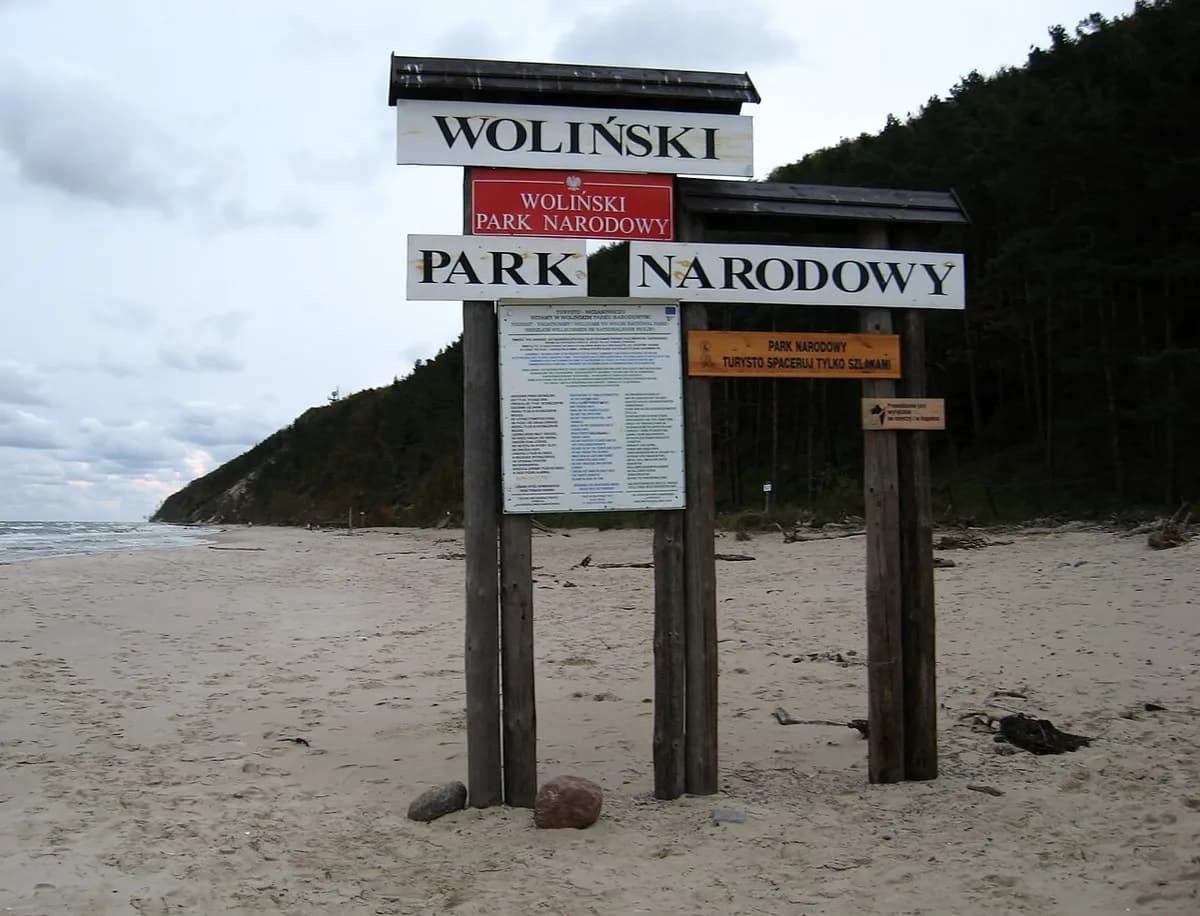
| Baltic-coast trip combiners | Yes | Świnoujście's beaches and Wolin National Park's bison reserve are 1.5-2 hours away |
| Berlin-adjacent itinerary builders | Yes | ~2 hours by direct train makes it a realistic side trip either direction |
| First-time Poland visitors with limited days | Maybe not | Kraków, Gdańsk, and Warsaw offer denser, more iconic sightseeing per day |
| Checklist sightseers wanting a compact Old Town | Probably not | Szczecin's charm is spread across boulevards and river views, not one walkable core |
Pair it with a broader day-trip strategy — Świnoujście's beaches, Wolin's forests, or Stargard's medieval walls are all realistic options — and Szczecin becomes a base rather than the whole trip, which tips the scale further toward "worth it."
Berlin is roughly 2 hours away by direct train from Szczecin, making it an ideal add-on to a Germany-Poland itinerary.
The honest trade-offs
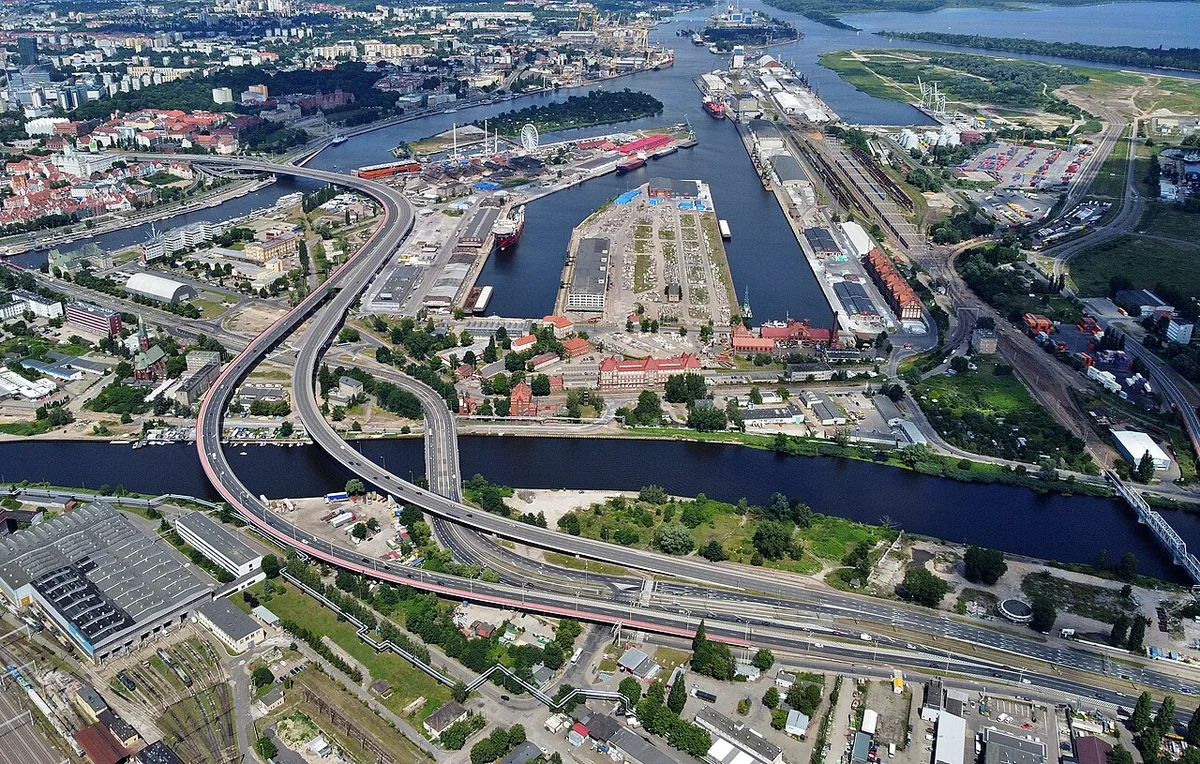
I won't oversell it. Szczecin doesn't have the tight, photogenic Old Town core that makes Kraków or Toruń so easy to fall for on a short visit — much of its historic fabric was lost in WWII and rebuilt in a more utilitarian postwar style. It also has a real maritime-industrial identity — shipbuilding, the port, cargo traffic on the Oder — that some visitors find atmospheric and others find unglamorous.
What tips it back into "worth it" for me is that Szczecin rewards travelers who like discovering a city rather than checking off a list: trying paprykarz szczecinski (a local fish-and-rice paste invented here in the 1960s-70s) at a milk bar, riding one of Poland's largest tram networks, or timing a visit for Dni Morza (Sea Days) in early June — dates and event listings live on the city's official portal, szczecin.eu.
There's also a practical argument that gets less attention than the architecture: value. A milk-bar lunch runs roughly 25-35 PLN (about €6-8), a museum ticket rarely tops 20-25 PLN, and a short taxi across town is a fraction of the Berlin equivalent. For travelers crossing over specifically to stretch a Germany-Poland trip further on the same budget, Szczecin does that job quietly well — it's not marketed as a "cheap city break," but it functions as one.
Milk-bar meals run 25–35 PLN (about €6–8), and museum tickets rarely top 25 PLN, making Szczecin one of Poland's most affordable city breaks.
Frequently Asked Questions
Is Szczecin worth visiting for a first trip to Poland?
If you only have a handful of days, Kraków, Warsaw, or Gdańsk generally offer denser sightseeing. Szczecin fits better as a second or third Poland trip, a Baltic-coast combination, or part of a Germany-Poland itinerary via Berlin.
How many days do I need to see the highlights of Szczecin?
Most travelers cover the core sights — the Pomeranian Dukes' Castle, Wały Chrobrego, the Philharmonic, and Underground Szczecin — comfortably in 1-2 days. See the how-many-days guide for pacing options.
Is Szczecin closer to Germany or the rest of Poland in feel?
Geographically it's genuinely close to Germany — Berlin is about 2 hours away by direct train — and the boulevard layout gives it a distinct feel, but daily life is thoroughly Polish.
What makes Szczecin's architecture different from other Polish cities?
Its late-1800s/early-1900s redesign gave it wide green boulevards and roundabouts modeled on Paris and Vienna, sometimes earning it the nickname "Paris of the North," alongside the award-winning Szczecin Philharmonic building.
Is Szczecin worth it if I'm not interested in architecture or history?
It's a harder sell without that interest, since the main draws — the castle, the philharmonic, the underground shelters, the boulevard layout — are architectural and historical. Travelers wanting mainly nightlife or beaches may prefer the coast.
Final Thoughts
My honest take: Szczecin is worth visiting, but as a deliberate choice, not a default one. Go if you want a city that rewards attention — green boulevards, a rebuilt ducal castle, an award-winning concert hall, and a different underground history — and if it fits into a Baltic-coast or Berlin-adjacent itinerary. Skip it, or save it for a later trip, if you have only a few days in Poland and want maximum landmark density. For the full rundown of what to do once you've decided, start with the things to do in Szczecin guide.
You might also like


Continue reading
More guides you'll find useful