
Częstochowa occupies a singular place among Poland's cities: it is simultaneously the country's spiritual capital and an underrated base for exploring the limestone hills of the Polish Jura. At its heart sits Jasna Góra Monastery, the walled Pauline complex that has drawn Catholic pilgrims since the 14th century to venerate the Black Madonna — the icon of the Virgin Mary and infant Christ credited with saving the monastery during the 1655 Swedish siege. Millions of pilgrims visit every year, many walking the final kilometres on foot, making Jasna Góra one of the most important tourist attractions in Częstochowa and the reason most travelers first search for Czestochowa attractions in the first place. But the city's appeal for 2026 visitors extends well past the monastery walls. The grand Aleje Najświętszej Marii Panny boulevard — laid out in 1818 to link the old and new towns — is both the traditional pilgrim's approach route and a genuinely handsome promenade of 19th-century architecture in its own right. A short walk from the historic core, the Match Factory Museum preserves a slice of Częstochowa's quirky industrial past: the only place in Europe where visitors can watch matches produced on nearly century-old machinery. And beyond the city limits, the ruined medieval strongholds of the Trail of the Eagles' Nests — Olsztyn Castle Ruins and the twin fortresses of Mirów and Bobolice — turn Częstochowa into a natural base for a day among the Jura's limestone crags.
That dual identity — pilgrimage destination and Jura gateway — is what makes the best things to do in Czestochowa unusually varied for a city this size. We've narrowed the field to 7 sights that consistently reward the time and ticket price for 2026 visitors: two inside the Jasna Góra complex, two along the city-center boulevard, one in the industrial quarter, and two Jura castle sites for travelers with an extra day to spare. The card grid above links each to a full visitor guide with verified 2026 opening hours and pricing; the sections below organize them by area, by category, and by budget, then walk through tested half-day, 1-day, and 2-day plans so you can turn the list into a real itinerary.
Top 7 attractions in Czestochowa
Jasna Góra Monastery
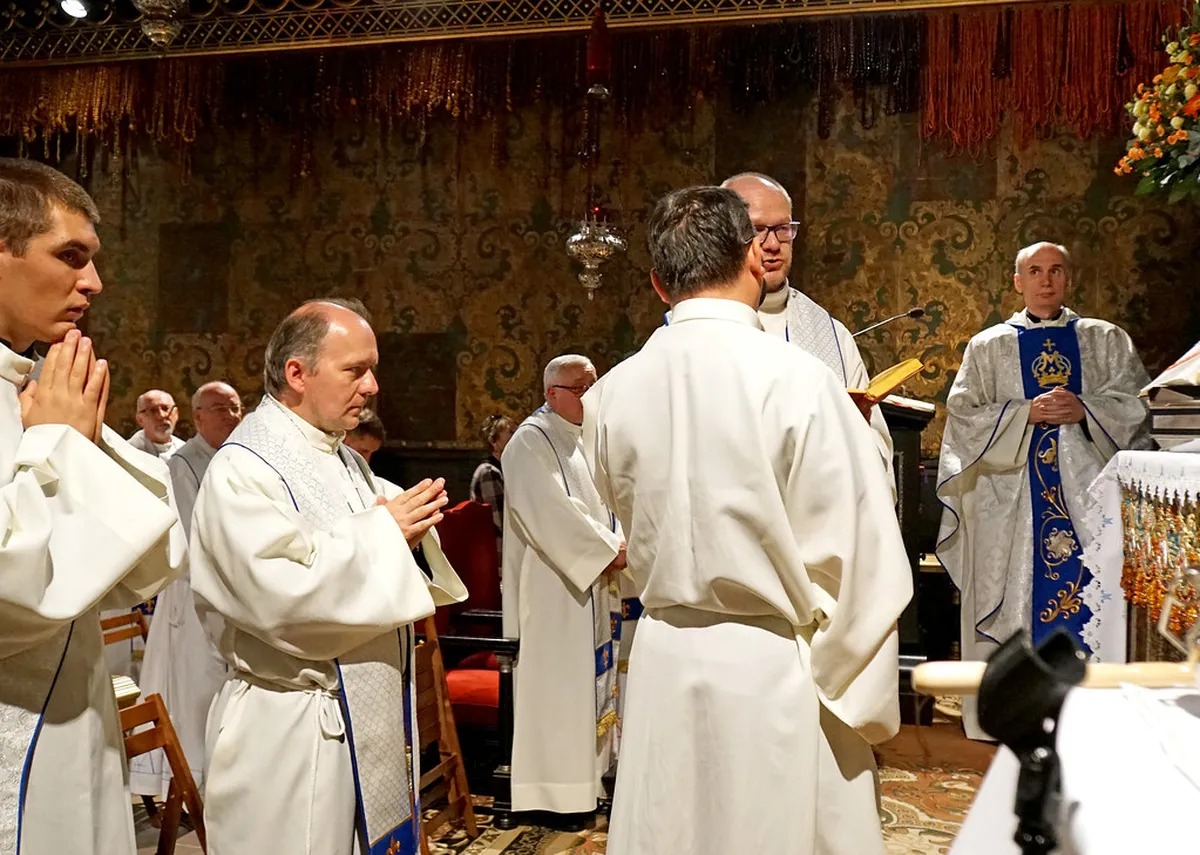
Rising on a fortified hilltop above Częstochowa, Jasna Góra Monastery has stood as the spiritual heart of Poland since Pauline monks established it in 1382. Walking through its bastioned walls — built to withstand the 1655 siege that Polish tradition credits with turning back the Swedish 'Deluge' — visitors move from an active place of worship into a working repository of national memory. The Baroque Basilica of the Holy Cross and Nativity of Mary, rebuilt in the 1690s, anchors the complex alongside the chapel housing the venerated Black Madonna icon. Beyond the chapel, the Treasury and 600th Anniversary Museum display centuries of votive gifts, vestments, and royal offerings, while the Knights' Hall and bastion galleries trace the site's military and religious history side by side. From April to November, climbing the monastery's 106-metre bell tower — the tallest historic church tower in Poland — rewards visitors with sweeping views over the ramparts and the city below. Because Jasna Góra remains a functioning pilgrimage site rather than a static attraction, visitors should expect crowds, ongoing liturgies, and an atmosphere of quiet devotion alongside the historical sightseeing — modest dress is expected throughout the grounds.
Visitor guide →
Black Madonna Chapel
Within the fortified walls of Jasna Góra monastery, the Chapel of Our Lady safeguards Poland's most venerated religious image: the Black Madonna, a Byzantine-style icon of the Virgin Mary and infant Christ that has drawn pilgrims for over six centuries. Legend credits the original painting to St. Luke the Evangelist, though its documented history at Jasna Góra begins in the 1380s under the patronage of Duke Władysław of Opole. Two faint scars cross the Virgin's right cheek — marks left by a 15th-century raid that restorers could never fully erase — a quiet testament to the icon's turbulent past and to Poland's own history of resilience. Visitors gather before dawn as Pauline monks unveil the image to trumpet fanfare and the hymn 'Bogurodzica,' a ritual repeated at set hours through the day until the icon is covered again at night. The chapel remains a working place of worship rather than a museum exhibit — Mass is celebrated here multiple times daily, entry is free for all, and quiet, respectful conduct is expected of every visitor regardless of faith.
Visitor guide →
Match Factory Museum (Częstochowa)
Tucked inside a working 19th-century match factory on Ogrodowa Street, the Match Factory Museum is a genuine rarity: the only place in Europe where you can watch matches being manufactured on the same machinery the plant has used since around 1930. A guided, hour-long tour (guides speak Polish, though the process is easy to follow visually) walks you through the entire production cycle - pine logs debarked and sliced into splints, dipped in sulfur and phosphorus compounds, dried, sorted, and packed into boxes just as it was done a century ago. Two exhibition halls round out the story with antique machinery, factory archives, and an evocative collection of matchbox labels tracing Polish graphic design from the interwar years to today, plus a short 1913 film - among the oldest surviving pieces of Polish cinematography - documenting a fire at the plant. It's a compact, offbeat stop best paired with Częstochowa's other industrial-heritage sites, but book ahead: weekday hours are limited and weekend visits require a pre-arranged group of ten or more.
Visitor guide →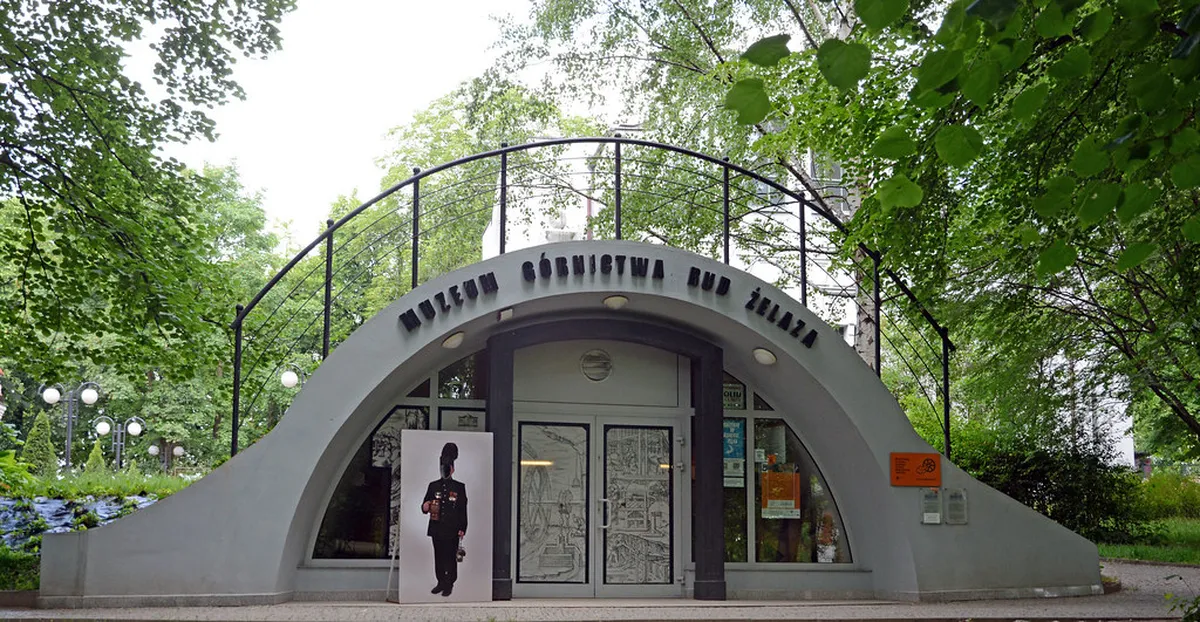
Częstochowa Museum
Housed in Częstochowa's grand former Town Hall on Plac Biegańskiego, the Częstochowa Museum is the best starting point for understanding the city beyond its famous Jasna Góra monastery. Built in the 1820s-30s as the seat of the newly merged Old and New Częstochowa, the classicist Ratusz building now holds the permanent exhibition "Częstochowa - A Look into the Past," walking visitors through archaeological finds, city artifacts, and portraits of notable local figures from prehistory to the early 1900s. Rotating exhibitions fill the attic gallery, and a climb up the building's tower rewards visitors with sweeping views over the historic square and city rooftops - one of the best free-standing viewpoints in town. Admission is inexpensive, with reduced and family pricing available, and the permanent exhibition is free to visit on Wednesdays. Budget roughly 45-90 minutes for a visit. It pairs naturally with a stroll around Plac Biegańskiego and the pedestrianized Aleja NMP, and makes an easy half-day combination with the Jasna Góra pilgrimage route.
Visitor guide →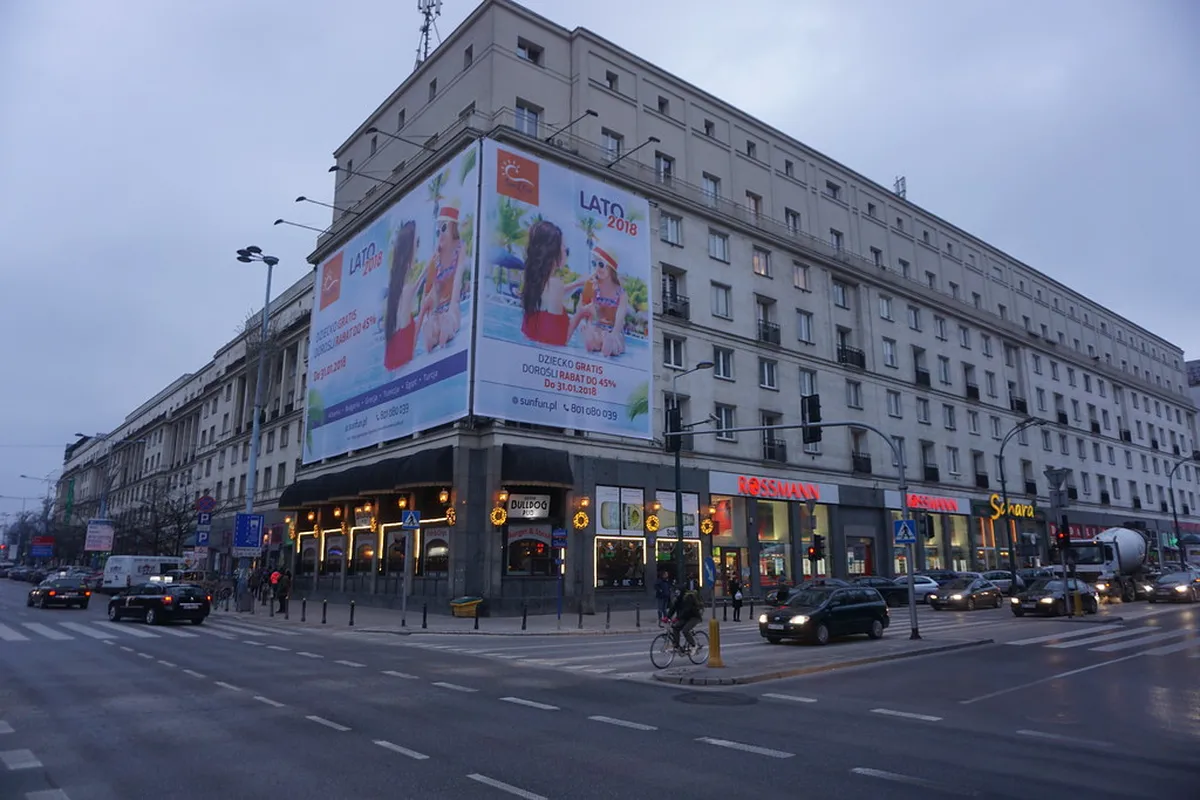
Aleje Najświętszej Marii Panny
Stretching about 1.5 kilometers from Częstochowa's main railway station toward the Jasna Góra Monastery, Aleje Najświętszej Marii Panny is the city's grandest promenade and the traditional path walked by pilgrims heading to see the Black Madonna icon. Laid out from 1818 by engineer Jan Bernhard to link the old and new towns before their 1826 merger, the avenue is unusually wide at 44 meters, with two carriageways framing a leafy central walkway shaded by lindens and maples. Strolling its length, visitors pass 19th-century tenement houses, former banks, theaters, and churches, alongside details like the bronze "Girl with Doves" fountain and memorial benches dedicated to Częstochowa figures such as physician Władysław Biegański and poet Halina Poświatowska. The avenue widens into Plac Biegańskiego, the city's main square, ringed with cafés and restaurants that make a natural rest stop midway through the walk. Free and open around the clock, it functions less as a single sight than as the connective spine of Częstochowa's Old Town — the walk nearly every visitor takes on the way to Jasna Góra.
Visitor guide →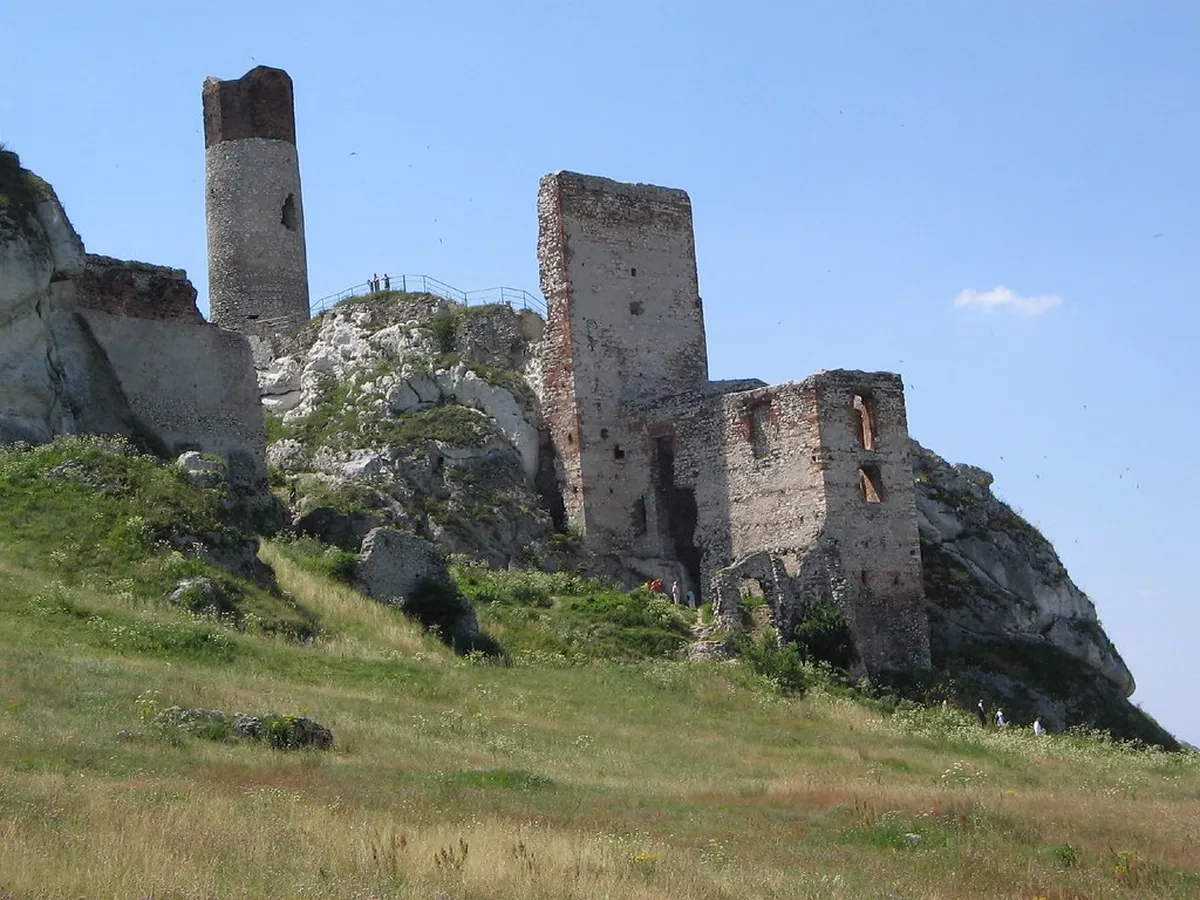
Olsztyn Castle Ruins (near Częstochowa)
Perched on a jagged limestone crag in the tiny village of Olsztyn, about 15 km south of Częstochowa, this ruined 14th-century royal castle is one of the most striking stops on the Trail of the Eagles' Nests (Szlak Orlich Gniazd) — the chain of medieval strongholds built under King Casimir the Great to guard the old Silesian border. Important: this is a completely different place from the city of Olsztyn in Warmia-Masuria, the larger, far more famous northern Polish city linked to Nicolaus Copernicus — this Olsztyn is a small Jura village near Częstochowa with its own separate castle. A short, steep, rocky climb to the ruins rewards visitors with sweeping views across the Kraków-Częstochowa Upland's limestone hills. The centerpiece is a cylindrical keep rising roughly 35 metres, built of pale limestone capped with brown brick, alongside the remains of the square starost tower, defensive walls, and rock-cut caverns beneath the former residential quarters. Restoration since 2018 has reopened the well tower and added exhibition rooms on the castle's history. Allow about an hour for a self-guided visit; a modest entrance fee applies, with an optional add-on to climb the tower. A children's playground and food stalls line the approach street.
Visitor guide →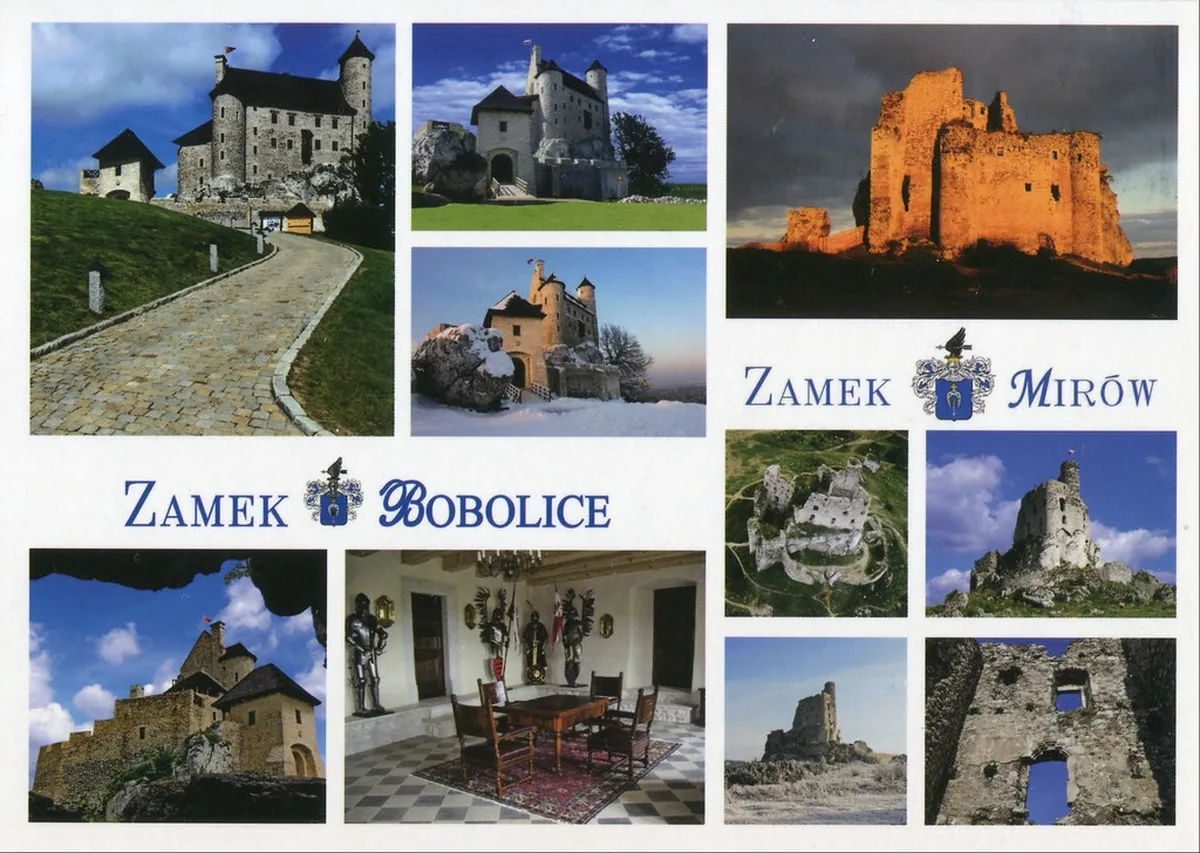
Mirów and Bobolice Castles
Rising from twin limestone outcrops in the Polish Jura about 44 km southwest of Częstochowa, Mirów and Bobolice are the storybook centerpiece of the Trail of the Eagles' Nests. Bobolice, painstakingly reconstructed between 1999 and 2011 by the Lasecki family after centuries as a ruin, greets visitors with whitewashed Gothic walls, a drawbridge over a dry moat, and a small museum and viewing terrace inside — plus a working hotel and restaurant for those who want to sleep within castle walls. A short walk away across a ridge of jagged limestone rock formations (Grzęda Mirowsko-Bobolicka), Mirów offers the flip side of the same story: a raw, weathered ruin abandoned since the late 18th century, still under careful restoration, rewarding the short rocky trail with sweeping Jura views and a genuinely medieval atmosphere. Local legend ties the two together with a tale of twin brothers, a hidden treasure, and a guardian witch in an underground tunnel. Budget half a day to see both castles, wear sturdy shoes for the uneven ridge trail, and arrive early in the day to beat coach-tour crowds and catch the best light on Bobolice's pale stone façade.
Visitor guide →Częstochowa attractions by area
Częstochowa's seven attractions fall into four distinct zones, and understanding them is the key to a sane itinerary. Two sights share the pilgrimage hilltop, two anchor the city-center boulevard, one sits in a quieter industrial quarter, and two lie well outside the city on the Trail of the Eagles' Nests.
The Jasna Góra hilltop
Two of the seven attractions sit within the fortified walls of Jasna Góra Monastery, on the hill that anchors the western edge of the city. The monastery itself, with its Baroque basilica, Treasury, 600th Anniversary Museum and climbable bell tower, forms one visit; the Black Madonna Chapel, holding the venerated icon, is technically a separate stop inside the same complex but functions as its own devotional destination, with pilgrims often lingering here longest of anywhere in the city. Budget at least half a day for the hilltop alone if you want to see the basilica, treasury and chapel without rushing.
City center along Aleje NMP
Aleje Najświętszej Marii Panny runs about 1.5 km from the railway station to the foot of Jasna Góra, and two of the seven attractions sit directly on or just off it. Częstochowa Museum, in the former Town Hall on Plac Biegańskiego, sits roughly at the boulevard's midpoint and makes an obvious stop to break up the walk. The avenue itself — with its lindens, 19th-century tenements, and the "Girl with Doves" fountain — is worth treating as an attraction in its own right rather than just a route between the other two.
The Ogrodowa Street industrial quarter
A short distance from the historic core, the Match Factory Museum occupies a still-functioning 19th-century match factory on Ogrodowa Street. It sits slightly off the main pilgrim route, so it's best treated as a deliberate detour — allow an hour for the guided tour, and check ahead, since weekday hours are limited and weekend visits require a pre-arranged group of ten or more.
Polish Jura day trips
The remaining two attractions lie well outside the city on the Trail of the Eagles' Nests. Olsztyn Castle Ruins is the closer of the two, about 15 km south in the small Jura village of Olsztyn — not to be confused with the much larger city of the same name in Warmia-Masuria, far to the north. Mirów and Bobolice Castles sit further out, roughly 44 km southwest, and pair naturally as a single stop since the two ruins face each other across a limestone ridge. Neither is walkable or well served by regular public transport from Częstochowa — plan on a car, tour, or day-trip service for this pair.
Częstochowa attractions by category
If you'd rather plan by interest than by geography, here's how the seven sights sort out:
- Religious & pilgrimage sites: Jasna Góra Monastery and the Black Madonna Chapel — the working heart of Poland's most important pilgrimage destination.
- History & museums: Częstochowa Museum, tracing the city's story from prehistory to the early 1900s, and the Match Factory Museum, a rare working document of 20th-century industrial life.
- Historic streets & promenades: Aleje Najświętszej Marii Panny, the grand 1818 boulevard that doubles as both a pilgrim route and a city landmark in its own right.
- Castle ruins & day trips: Olsztyn Castle Ruins and Mirów and Bobolice Castles, three medieval strongholds on the Trail of the Eagles' Nests amid the Polish Jura's limestone crags.
Free vs paid Częstochowa attractions
Częstochowa's most important sight costs nothing to see. Here's the breakdown for 2026.
Free to visit
- Jasna Góra Monastery — the grounds, ramparts and Basilica of the Holy Cross and Nativity of Mary are free to enter; only the Treasury, 600th Anniversary Museum and bell tower climb carry a fee.
- Black Madonna Chapel — free, as with every part of Jasna Góra reserved for prayer and worship.
- Aleje Najświętszej Marii Panny — a free, always-open public boulevard.
Paid attractions (verified 2026 info)
- Jasna Góra Monastery extras — the Treasury and 600th Anniversary Museum, plus the bell tower climb (open April–November), each carry a modest separate ticket.
- Częstochowa Museum — inexpensive admission with reduced and family pricing, and the permanent exhibition is free to visit on Wednesdays.
- Match Factory Museum — a paid guided tour is the only way to see the production line; book ahead, as weekday slots are limited and weekends require a group of ten or more.
- Olsztyn Castle Ruins — a modest entrance fee, with an optional add-on to climb the keep.
- Mirów and Bobolice Castles — separate small entrance fees at each site; there's no unified combo ticket, so budget for both if you're visiting the pair.
Stack the free elements where you can: the Jasna Góra grounds and chapel cost nothing regardless of how long you stay, and timing a visit for Wednesday saves the Częstochowa Museum's admission fee entirely. Always confirm the current figure on each linked visitor guide before you travel, as Polish heritage sites adjust prices periodically.
Suggested Częstochowa itineraries
How you sequence these seven attractions depends on how long you have and how much of the visit you want to spend on pilgrimage versus sightseeing.
Half a day — the pilgrimage-focused visit
If Jasna Góra is the whole reason for your trip, a half day covers it properly. Arrive in the morning — weekday mornings are quietest, and the icon is covered by a protective screen at noon, so early is best if seeing the Black Madonna unveiled matters to you. Walk the ramparts, step into the Basilica, then spend time in the Black Madonna Chapel itself. Add the Treasury and 600th Anniversary Museum, or the bell tower climb between April and November, if you have an extra hour or two.
1 day — the full city visit
A full day lets you pair the hilltop with the city center. Spend the morning at Jasna Góra as above, then walk Aleje Najświętszej Marii Panny — about 1.5 km and 20 minutes end to end — down to Częstochowa Museum on Plac Biegańskiego for an hour or so among the city's civic history. If you're moving efficiently and the Match Factory Museum's tour times line up, it can be added as a late-afternoon detour, though it's easier to treat as its own half-day the next morning given its limited slots.
2 days — add a Jura castles day trip
With a second day, dedicate it entirely to the Trail of the Eagles' Nests. Olsztyn Castle Ruins, the closer of the two Jura stops at about 15 km out, makes a good first stop; continue on to Mirów and Bobolice Castles, roughly 44 km from the city, where the two facing ruins pair naturally into an afternoon. This day requires a car or organized tour rather than city transit, so arrange it in advance.
Getting around Częstochowa's attractions
Częstochowa's city-center attractions are genuinely walkable. From the railway station, Aleje Najświętszej Marii Panny runs about 1.5 km straight to Jasna Góra, passing Częstochowa Museum on Plac Biegańskiego roughly at the midpoint — the whole walk takes 20–25 minutes at an easy pace, and it's the same route pilgrims have walked since the avenue was laid out in 1818. The Match Factory Museum, on Ogrodowa Street, sits a little further from this core; budget a short taxi ride or a 15–20 minute walk if you're combining it with the city-center sights in one day. The two Jura castle sites are a different matter entirely — Olsztyn Castle Ruins (about 15 km south) and Mirów and Bobolice Castles (about 44 km southwest) sit outside the city with no direct, frequent public transport connection. A rental car, an organized day tour, or a private transfer is the practical way to reach them; infrequent regional PKS buses exist but aren't a reliable option if you're working around limited daylight or a return train.
Best time to visit Częstochowa's attractions
Jasna Góra is a year-round pilgrimage site with no closed season — the monastery, chapel and grounds welcome visitors and worshippers every day of the year, and daily Masses and devotions continue regardless of weather. That said, timing matters enormously if you want to avoid (or, for some travelers, experience) the crowds. August 15, the Feast of the Assumption, is by a wide margin the single busiest day at Jasna Góra: tens of thousands of pilgrims arrive on foot in organized walking groups from across Poland, some having walked for days, and the monastery has recorded gatherings in the hundreds of thousands on this date. August 26, the Feast of Our Lady of Częstochowa, draws a similarly large crowd a few weeks later. If you'd rather see the site without the pilgrimage-day intensity, aim for a weekday outside these two dates — weekday mornings are the quietest time of the daily cycle, and worth prioritizing if seeing the Black Madonna icon unveiled (before the protective screen lowers at noon) is a priority. For the Jura castle day trip, spring and early autumn bring the most comfortable hiking conditions on the exposed limestone ridges at Olsztyn and Mirów-Bobolice, avoiding both summer heat on shadeless trails and winter ice on the rocky approach paths.
How to save money on Częstochowa attractions
The city's biggest attraction is also its best value: Jasna Góra's grounds, ramparts, Basilica and the Black Madonna Chapel are free to enter, and most travelers can build a satisfying pilgrimage visit without buying a single ticket. Beyond that, Częstochowa Museum's permanent exhibition is free every Wednesday, so shifting a city-center day to that weekday saves its admission fee outright. At the Match Factory Museum, booking your slot in advance rather than showing up avoids the risk of arriving to a fully booked tour and wasting the trip. For the Jura castles, there's no combined ticket across Olsztyn, Mirów and Bobolice, so budget for separate small entrance fees at each; the real saving there is logistical rather than ticket-based — grouping both stops into one day trip spreads the cost of a rental car or tour across more sights than visiting them separately. Finally, treat the Jasna Góra bell tower, Treasury and 600th Anniversary Museum as optional add-ons rather than a bundled package, since the free core of the monastery already covers the reason most people come to Częstochowa.
Frequently asked questions about Częstochowa attractions
How many days do you need to see Częstochowa's main attractions?
Most visitors can cover the essentials in one to two days. A single day is enough for Jasna Góra Monastery, the Black Madonna Chapel, and a walk down Aleje Najświętszej Marii Panny to Częstochowa Museum. A second day frees you up for either the Match Factory Museum or a Jura castles day trip to Olsztyn, Mirów and Bobolice — fitting in both usually takes a third day.
What is the #1 must-see attraction in Częstochowa?
Jasna Góra Monastery, and specifically the Black Madonna Chapel inside it, is the reason most people visit Częstochowa. It's Poland's most important pilgrimage site and the closest thing the city has to an unmissable sight.
Are Częstochowa's attractions free?
The most important one is. Jasna Góra's grounds, ramparts, Basilica and the Black Madonna Chapel cost nothing to enter, as does the Aleje Najświętszej Marii Panny boulevard. You pay only for the monastery's Treasury, museum and bell tower climb, plus Częstochowa Museum (free on Wednesdays), the Match Factory Museum tour, and the Jura castle sites.
Do you need to book Częstochowa attractions in advance?
Jasna Góra itself doesn't require booking — you can walk in any day. The Match Factory Museum is the exception: its guided tours run on limited weekday slots, and weekend visits require a pre-arranged group of ten or more, so book that one ahead regardless of season.
What is the best time of year to visit Częstochowa?
Any time works for the pilgrimage sites, since Jasna Góra operates year-round, but avoid August 15 and August 26 if you want to dodge the two biggest pilgrimage crowds of the year. Spring and early autumn are best for the Jura castle day trip, when hiking the exposed limestone ridges at Olsztyn and Mirów-Bobolice is most comfortable.
Is Częstochowa expensive for tourists?
No — Częstochowa is inexpensive by Western European standards. Its single most important attraction is free, museum admissions are modest, and the main costs are the Match Factory Museum tour and transport or a tour to reach the Jura castles.
Can you see Częstochowa's main attractions in one day?
Yes, if you focus on the city center: Jasna Góra Monastery, the Black Madonna Chapel, a walk down Aleje Najświętszej Marii Panny, and Częstochowa Museum all fit comfortably into a single well-paced day. The Match Factory Museum and the Jura castle day trip are better treated as additions on a second day.
What's the best way to get between Częstochowa attractions?
On foot for the city center — the walk from the railway station along Aleje Najświętszej Marii Panny to Jasna Góra is about 1.5 km and takes 20–25 minutes, passing Częstochowa Museum along the way. For the Match Factory Museum, budget a short taxi ride or a 15–20 minute walk. For the Jura castles at Olsztyn, Mirów and Bobolice, you'll need a car, organized tour, or private transfer, since public transport connections are infrequent.
Plan your Częstochowa trip
Ready to turn this list into an itinerary? Start with our overview of the best things to do in Czestochowa, then check the best time to visit Czestochowa against the pilgrimage calendar above and decide how many days in Czestochowa you'll need. If you're adding the Jura castles, our guide to day trips from Czestochowa covers the logistics for Olsztyn, Mirów and Bobolice in more depth.