Jasna Góra Monastery Visitor Guide
Jasna Góra stands as the spiritual capital of Poland on a limestone hill in Częstochowa, and in 2026 it remains one of the most visited pilgrimage sites in Europe, drawing an estimated 4 to 5 million visitors a year to the Black Madonna icon. This jasna góra monastery visitor guide focuses on what actually matters for a visit: the icon's exact unveiling times, the difference between what's free and what costs a small fee, how to reach Częstochowa without losing half a day to the wrong train station, and how to handle the crowds on the busiest feast days.
The monastery complex functions as a fortress and a working sanctuary at once, not a museum piece. Its bastioned walls have outlasted a 17th-century siege, partitions, and a communist government that could never fully suppress it. Whether you arrive as a pilgrim or a history-minded traveler, the atmosphere of continuous worship should shape how you plan the visit.
The Significance of Jasna Góra: Poland’s Spiritual Heart
The monastery was founded in 1382 by Pauline monks invited from Hungary by Duke Władysław of Opole, who donated the hill — known as the Bright Hill — to the order. Two years later the Paulines brought the Byzantine icon that became the Black Madonna, and the site's elevated position soon made it a fortress as much as a sanctuary.
The site's fame dates to the Swedish Deluge of 1655, when a small garrison under Prior Augustyn Kordecki held Jasna Góra through a roughly 40-day siege against a much larger Swedish force. Poland read the successful defense as divine protection, and in 1656 King Jan Kazimierz proclaimed the Virgin Mary Queen and Protector of Poland at Lwów Cathedral — a title the country has never rescinded.
Jasna Góra sits on Poland's UNESCO World Heritage Tentative List and remains one of the country's most-visited attractions in Poland. The Pauline Fathers still run the sanctuary today, and the mix of Baroque architecture, active worship, and military history sets a visit here apart from a typical castle or museum stop.
The Miraculous Black Madonna: History and Viewing Schedule
The Chapel of Our Lady holds the icon known as the Black Madonna of Częstochowa, a Byzantine-style Hodegetria painting of Mary gesturing toward the infant Christ. Centuries of candle smoke and varnish have darkened the image, and two scars remain visible on Mary's right cheek from a 1430 raid — restorers have tried to repair them more than once, but the marks return, and are now treated as part of the icon rather than damage to fix.
The icon is not on permanent open display. A silver riza (jeweled covering) hides everything but the faces of Mary and Christ, and a further screen closes over the image outside set hours. The 2026 schedule remains what it has been for years: unveiled roughly 6:00 AM to noon, covered through early afternoon, then unveiled again at 1:30 PM until the closing prayer near 9:20 PM. Arrive during the midday gap and you'll find the image covered, not missing — plan around the two viewing windows, not the monastery's overall opening hours.
Both unveilings open with a fanfare of silver trumpets, a detail many first-time visitors don't expect. Photography is permitted in the chapel, but flash is prohibited near the icon, and quiet is expected throughout. Check en.Jasnagora.pl before traveling, since the schedule can shift around feast days.
Architectural Wonders: The Basilica and the 106-Meter Tower
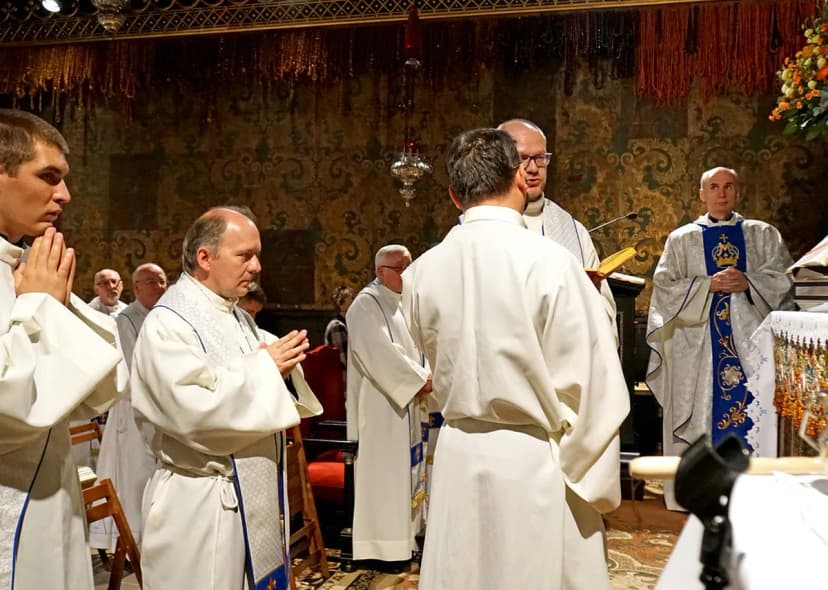
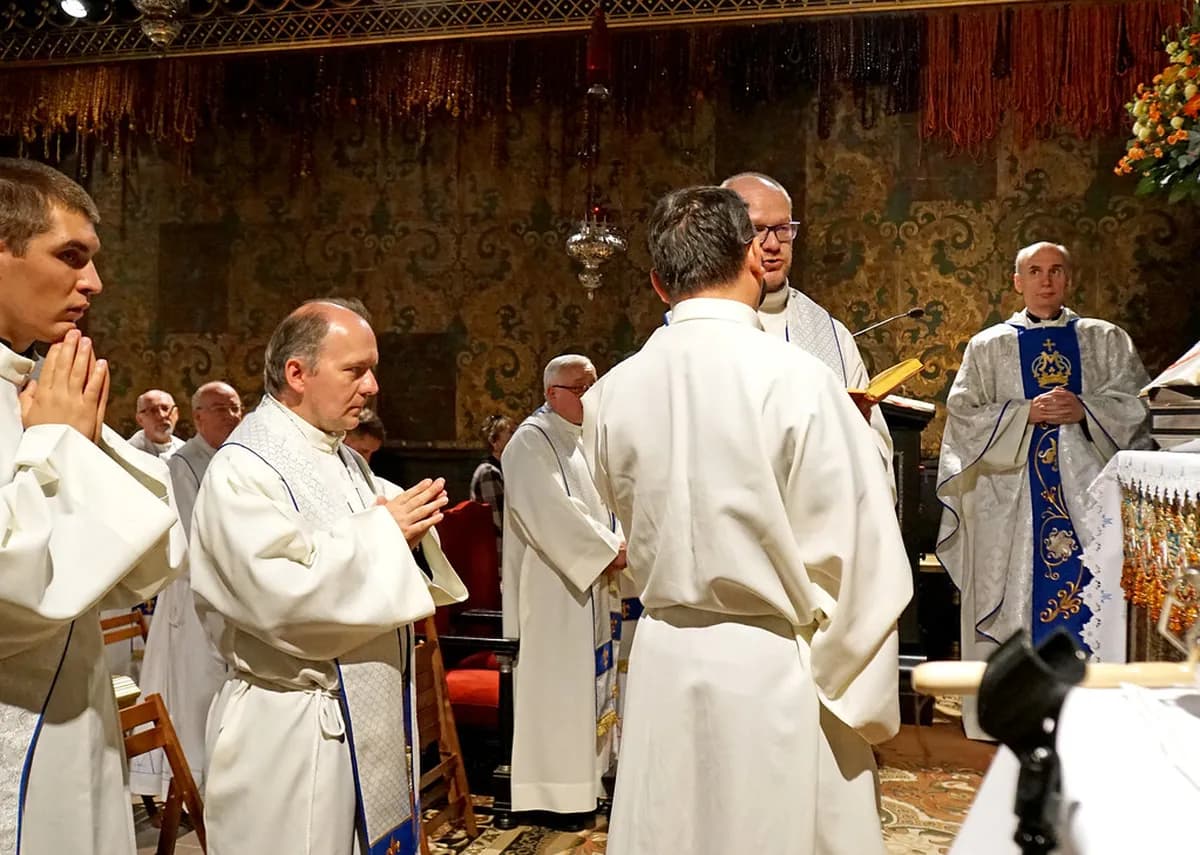
The Basilica of the Finding of the Holy Cross carries the monastery's architectural weight — a Gothic structure re-dressed in Baroque gold leaf, ceiling frescoes, and an elaborately carved main altar. Mass is said here throughout the day, so expect ongoing worship rather than a static exhibit.
At 106.3 meters, the bell tower is the tallest historic church tower in Poland, built in stages between the 14th and 18th centuries. Climbing it means 170 steps to a lower terrace and 300 more to the upper terrace — no elevator, and the tower only opens April through November, weather permitting. On a clear day the view stretches roughly 10 kilometers over Częstochowa and the surrounding plain, but check conditions first, since the tower can close without notice in poor weather.
The Treasury and 600th Anniversary Museum hold six centuries of votive gifts — jewelry, military decorations, and royal offerings. For the icon and its chapel specifically, see our Black Madonna Chapel guide; this page covers the wider fortress-monastery around it.
Planning Your Visit: Hours, Transport, and Practical Tips
The monastery sits at ul. o. Augustyna Kordeckiego 2, on the western edge of Częstochowa's center. The grounds and Basilica open daily from 5:00 AM and close after the final prayer at 9:30 PM, and entry to both is free. The Treasury, 600th Anniversary Museum, and Arsenal charge a small separate fee, roughly 10 PLN each, with shorter hours than the grounds — typically 9:00 AM–5:00 PM from March through October, and 9:00 AM–4:00 PM the rest of the year.
Weekday mornings are quietest; weekends and dates near a religious holiday bring larger crowds. Wear shoes suited to cobblestones and dress modestly — shoulders and knees covered — since this remains an active place of worship, not a sightseeing stop.
Getting there from Kraków or Warsaw is straightforward, though timing varies more than most guides suggest:
| From | Method | Approx. time | Approx. cost |
|---|---|---|---|
| Kraków | Car (A1 motorway) | 1.5 hours | fuel + tolls |
| Kraków | Train | 2 hours | 30–60 PLN |
| Kraków | Bus | 2.5 hours | 30–60 PLN |
| Warsaw | Train (PKP Intercity) | 2–2.5 hours | 50–90 PLN |
| Warsaw | Car | 3 hours | fuel + tolls |
One detail that trips up first-time train travelers: Częstochowa has two stations. Częstochowa Główna is the main long-distance stop, but it sits roughly 2 km from the monastery — a 25-to-30-minute walk, a short taxi ride, or a local bus. Częstochowa Stradom, on some routes, sits much closer, within an easy 10-minute walk along Aleja Najświętszej Maryi Panny. Check your train's stopping pattern before booking if a shorter walk matters.
Accessibility is worth planning around too, since few guides cover it. The grounds, ramparts, and Basilica are wheelchair accessible via ramps, and the Chapel of Our Lady is reachable without stairs. The bell tower is stairs-only with no elevator, so it isn't an option for wheelchair users or visitors with significant mobility limitations. Accessible parking near the main gate is limited, so taxis or public transport often beat driving yourself. Consult Polandtraveltours.com for guided packages that handle the logistics for you.
The Pilgrimage Tradition and National Identity
Walking to Jasna Góra is one of Europe's oldest continuously maintained pilgrimage traditions, with groups from across Poland converging on Częstochowa each summer for the Assumption of Mary on August 15. The Warsaw Pilgrimage alone has walked the same route since 1711, covering roughly 250 km over about nine days; other parish groups cover similar distances over one to two weeks, sleeping in fields, schools, and church halls along the way.
Planning around August 15 specifically, expect the grounds to hold well over a million people at peak, with Masses running almost continuously and surrounding streets closed for the arriving processions. Coming that week for the atmosphere is worth it if you don't mind serious crowding and long queues for the chapel; for the icon and architecture without the crush, avoid the days immediately around August 15 and visit on an ordinary weekday instead, or plan around the smaller — but still busy — feast days of May 3 and September 8.
Pope John Paul II's repeated visits, including the 1991 World Youth Day, cemented the site's modern global profile, and a statue of him now overlooks the prayer fields. Through partitions, two world wars, and the communist era, Jasna Góra kept functioning as a place where Polish identity could be expressed when little else was permitted.
Beyond the Monastery: Exploring Częstochowa’s Hidden Gems
After the monastery, Aleje Najświętszej Marii Panny runs from the base of the hill into the city center, lined with cafés, shops, and historic townhouses. It is the natural link between the sacred and the everyday, and a good stretch for a meal once you have finished at Jasna Góra.
The Częstochowa Museum fills out the region's story beyond the monastery, with branches across the city covering archaeology, local art, and industrial history — a reasonable way to spend an afternoon after exploring the sacred hill.
With a car, the Olsztyn Castle ruins, part of the Trail of the Eagles' Nests, make a striking contrast to Jasna Góra's intact fortifications — a short drive and a good half-day add-on for anyone with time to spare in Częstochowa in 2026.
Frequently Asked Questions
Is Jasna Góra Monastery free to visit?
Yes. Entry to the monastery grounds, ramparts, and the Basilica is free, though donations are welcomed. A small separate admission fee (roughly 10 PLN) applies to the on-site museums — the Treasury, the 600th Anniversary Museum, and the Arsenal — which sit apart from the main pilgrimage route.
When was Jasna Góra Monastery founded?
Pauline monks invited from Hungary by Duke Władysław of Opole founded the monastery in 1382, entrusting it with the icon now known as the Black Madonna of Częstochowa.
What happened during the 1655 Siege of Jasna Góra?
During the Swedish invasion of Poland known as 'the Deluge,' a garrison of roughly 70 monks, about 160 hired soldiers, and around 80 noble volunteers under Prior Augustyn Kordecki held Jasna Góra's fortified walls against a Swedish force for about 40 days (November 18–December 26, 1655). The successful defense became a rallying point for Polish resistance, and in 1656 King Jan Kazimierz proclaimed the Virgin Mary Queen and Protector of Poland.
How tall is the Jasna Góra bell tower, and can visitors climb it?
The Basilica's bell tower rises 106.3 meters, making it the tallest historic church tower in Poland. It is open to climb from April through November, weather permitting, via 170 steps to the lower terrace and 300 steps to the upper terrace — there is no elevator.
What are the opening hours for the monastery grounds?
The monastery grounds and Basilica are open daily from 5:00 AM to 9:30 PM. The on-site museums keep shorter hours: 9:00 AM–5:00 PM from March through October, and 9:00 AM–4:00 PM from November through February.
Is there a dress code for visiting Jasna Góra?
As an active place of Catholic worship, Jasna Góra expects modest dress — shoulders and knees covered — along with quiet, respectful behavior inside the chapels and during Mass. Photography is restricted during services.
What is inside Jasna Góra besides the Black Madonna chapel?
The complex includes the Baroque Basilica of the Holy Cross and Nativity of Mary, the Knights' Hall, the Treasury and 600th Anniversary Museum, the Bastion of St. Roch's National Memory Treasury exhibition, and the fortified ramparts and bastions built to defend the hill.
How do I get to Jasna Góra Monastery from Krakow or Warsaw?
Częstochowa is about 100 km from Kraków (roughly 1.5–3 hours by direct train, depending on service) and about 206 km from Warsaw (around 2 hours 15 minutes by direct train). The monastery is a short walk from Częstochowa's main train station along Aleja Najświętszej Maryi Panny.
Why is Jasna Góra considered Poland's most important pilgrimage site?
Jasna Góra houses the venerated Black Madonna icon and is where Poland's 1655 defense against Swedish invasion became a national symbol of resilience, leading to the Virgin Mary's proclamation as Queen and Protector of Poland in 1656. It is an officially designated Historic Monument (Pomnik Historii) that draws millions of pilgrims annually from more than 80 countries and was visited repeatedly by Polish-born Pope John Paul II, including the 1991 World Youth Day.
Jasna Góra is a working sanctuary before it is a tourist attraction, and the best visits respect that order. Time your arrival around the icon's unveiling windows, dress modestly, and decide in advance whether you want the crowds of a major feast day or the quieter version of the monastery on an ordinary weekday.
Check the sanctuary's official schedule before you travel, since hours around major holy days can shift with little notice. Whether you come as a pilgrim following centuries of tradition or as a traveler drawn by the history and architecture, Jasna Góra rewards visitors willing to slow down inside its walls. Safe travels through Częstochowa and the Bright Hill in 2026.
To verify current details, consult the Jasna Góra Monastery on Wikipedia.
For more Czestochowa planning, read our 11 Best Things to Do in Częstochowa (2026) and Jasna Gora Monastery Guide: Hours, Tickets & Tips guides.