
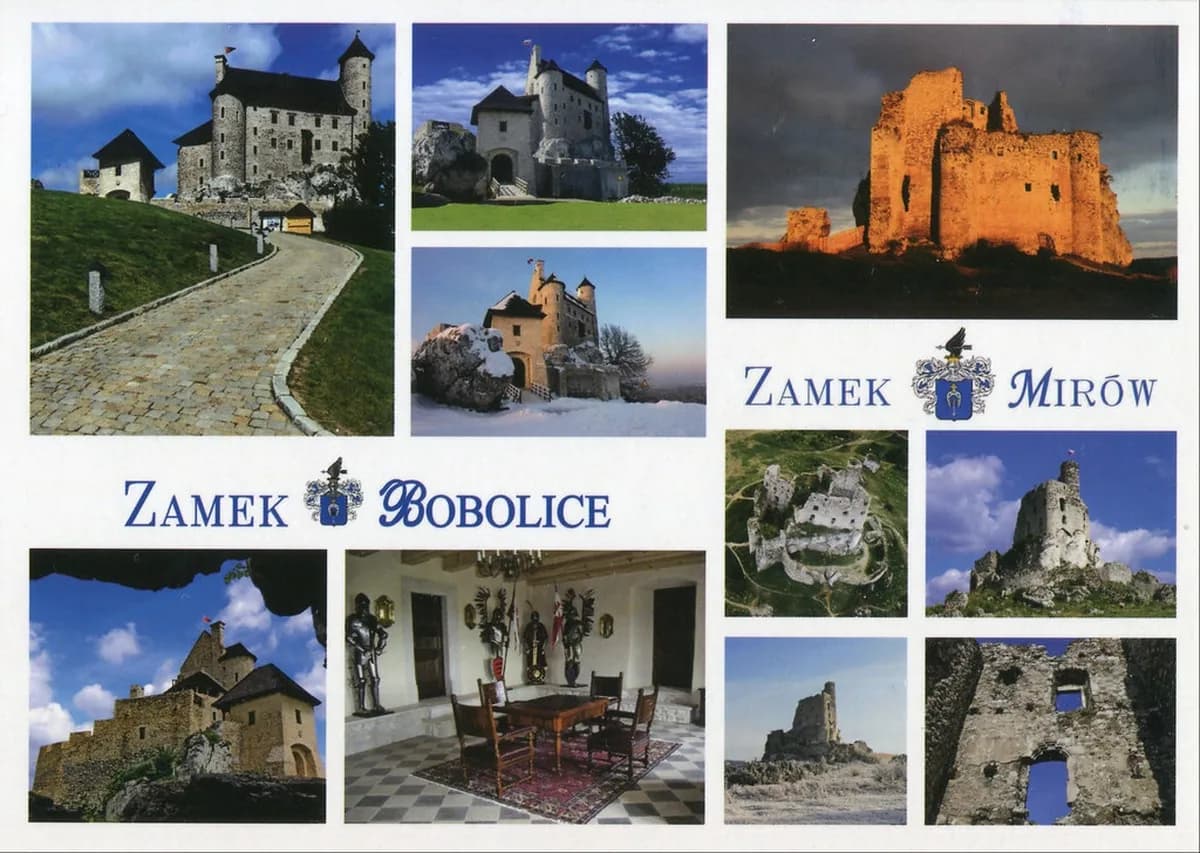
Mirów and Bobolice Castles Visitor Guide for 2026
The Trail of the Eagle’s Nests features some of the most stunning medieval fortresses in Central Europe. Among these historic gems, the twin fortresses of Mirów and Bobolice stand out for their dramatic limestone settings. This Mirów and Bobolice Castles visitor guide will help you navigate these two iconic landmarks with ease.
Travelers often visit these sites together because a scenic ridge trail connects them through the Polish Jurassic Highland. While one castle shines with a full modern restoration, the other remains a hauntingly beautiful permanent ruin. Exploring both provides a unique perspective on how Poland preserves its rich knightly heritage.
Located just a short drive from the spiritual hub of southern Poland, these castles offer a perfect day trip. Nature lovers and history buffs alike will find the surrounding landscape both peaceful and inspiring.
Planning Your Trip from Czestochowa
Reaching these medieval sites is straightforward from Czestochowa. The drive covers about 44 km and takes 45 to 60 minutes, following local roads southeast into the Jura region. A car remains the most practical option in 2026, since the two castles sit in separate villages, Bobolice and Mirów, roughly 3 to 4 km apart by road rather than being one single site.
Public transportation options remain limited. A few local buses run from Częstochowa's main station toward Niegowa, but schedules are seasonal and infrequent, and the nearest stop still leaves a walk of a kilometre or more to either gate. Confirm the current timetable before relying on it, since the last bus back often departs mid-afternoon.
Parking sits at both ends of the ridge trail: a free lot below Bobolice Castle, and a smaller paid lot at Mirów for around 10 PLN a day. Arriving before 10:00 gives you the best chance at a close spot before coach tours appear around midday.
Navigate to the village you plan to see first, entering "Bobolice, Niegowa" or "Mirów, Niegowa" separately, since a single search sometimes drops a pin between the two. Keep PLN cash on hand, since not every ticket window accepts foreign cards.
Exploring Bobolice Castle: A Royal Restoration
Bobolice Castle is a rare example of a private restoration completed from foundation to finished fortress. The Lasecki family rebuilt it between 1999 and 2011, turning stones abandoned since the 1657 Swedish invasion back into a working castle. Historians have debated some reconstruction choices, but the finished building, with its whitewashed Gothic walls and dry-moat drawbridge, is now the most visited stop on this stretch of the Trail of the Eagles' Nests.
Inside, a small museum displays archaeological finds recovered during the rebuild alongside period furniture and armor, and the upper gallery opens onto wide views across the limestone ridge. Guided interior tours run on a fixed schedule and typically last 30 to 40 minutes, covering the great hall, chapel, and towers.
As of 2026, pricing runs in tiers. A grounds-only (błonia) ticket costs 20 PLN adult / 18 PLN reduced; adding the guided interior tour brings the total to about 30 PLN. The combined two-castle ticket, both grounds plus the Bobolice interior tour, runs about 40 PLN adult / 34 PLN reduced and works out cheaper than buying separately. Bobolice opens daily 10:00-18:00 April through October, then Wednesday-Sunday 10:00-16:00 (last entry 15:30) through winter.
The courtyard, restaurant, and hotel reception stay open outside interior-tour hours, so a walk-in for grounds access and photos is always possible. Budget at least an hour inside for the full tour, longer if a legend-focused guided session is running.
The Romantic Ruins of Mirów Castle
Mirów Castle is the deliberate contrast to its restored neighbor: a preserved ruin, not a rebuild, with jagged walls rising straight out of white limestone outcrops. The Lasecki family, who rebuilt Bobolice, also owns Mirów and continues stabilizing it, but restoration here trails years behind and the site still reads as a genuine ruin.
A common misconception is that Mirów is free to visit because it looks abandoned. It is not. Grounds access is ticketed separately, at roughly 10 to 15 PLN, and interior or courtyard access is currently limited, reported as weekend-only while restoration continues, so call +48 34 328 80 02 same-day to confirm before making the ruin your priority. Fencing marks off sections closed for safety, since falling debris is a real risk in an unrestored medieval structure.
None of that diminishes the walk around the perimeter, where the scale of the original defensive walls is still obvious. The grassy slopes below make a good picnic spot with a valley view, and the limestone carries visible Jurassic-era fossils if you look closely.
The approach path is steep in places and slippery after rain, so wear real hiking shoes even for a short visit. Golden-hour light on the broken towers is why local photographers favor Mirów over Bobolice for sunset shots.
Hiking the Ridge Between the Two Castles
The walking trail connecting the two fortresses is the highlight of any visit. It runs about 1.2 to 1.4 km across the Mirowsko-Bobolicka Ridge and takes 20 to 40 minutes each way, depending on pace. The path is rocky and uneven throughout, so it is not suitable for wheelchairs, strollers, or anyone unsteady on loose stone.
If the trail is not workable for you, a paved alternative exists: a local road links Bobolice and Mirów villages directly, roughly 3 to 4 km by car, so drivers can park at each castle separately and skip the ridge walk entirely. Most guides describe only the hiking option and rarely mention that both parking lots are reachable by car for anyone traveling with young children, mobility limitations, or heavy camera gear.
Unique rock formations known as monadnocks line the ridge and create a prehistoric feel, with benches at intervals for photo stops over the Jura valley. This trail is also more scenic than the Olsztyn Castle ruins path further north. Spring brings wildflowers across the meadows, and hawks ride the thermals above the towers; stay on the marked path, since the thin soil supports rare plants that do not recover from foot traffic.
Photographers get the best light starting at Mirów in the morning and finishing at Bobolice, since the towers face east. The trail stays open year-round, but ice on the limestone makes winter crossings risky; most visitors walk from Bobolice to Mirów and back along the same route.
The Legend of Mirów and Bobolice
Local folklore ties the two castles together more tightly than their shared ticket does. The best-known version involves twin brothers who inherited the two strongholds, fell into a bitter rivalry, and ended with one brother's death and a curse on the family fortune. A hidden treasure is said to remain sealed beneath the ridge, guarded by a witch who appears as a black hen or a white lady depending on who tells the story.
Guides at Bobolice occasionally weave the legend into evening or group tours, worth asking about when booking if folklore interests you as much as architecture. None of this is confirmed by any historical record; the twin-brothers story reads as a 19th-century romantic invention layered onto genuinely medieval walls, but it explains why locals still speak of an underground tunnel between the two castles that has never been found despite repeated searches.
The real history is less dramatic but solid: both castles began under Casimir III the Great in the mid-14th century as links in the same defensive chain, passed through several noble families, and were left to ruin after the Swedish "Deluge" invasion of the 1650s. Bobolice's reconstruction reversed three centuries of decay in just over a decade; Mirów's is still in progress.
Essential Visitor Tips for 2026
Eating near the castles is easy: an on-site restaurant at the Bobolice gate serves traditional Polish dishes, pierogi, żurek, and grilled trout, in a rustic dining room. Budget travelers can grab a quicker bite from the small kiosks in the Mirów parking area instead.
Pairing this trip with the Jasna Gora Monastery back in Częstochowa makes a full day: spiritual sites in the morning, Jura hills after lunch. The monastery sits directly on the route back into the city, so combining both keeps driving time reasonable.
Check the forecast before you go, since the exposed ridge catches wind and lightning fast, and summer storms roll in with little warning. A light rain jacket earns its space in the bag even on a clear morning.
July sometimes brings medieval reenactments, archery displays, and craft markets to the Bobolice courtyard; check the castle's site close to your travel date, since the schedule shifts year to year. Booking a room at the on-site Hotel Zamek Bobolice lets you walk the grounds after day-trippers clear out, the best way to see the towers lit at dusk.
- Best Visiting Times
- Season: May to September
- Time: Early morning
- Avoid: Sunday afternoons
- Duration: 3-4 hours
- Photography Hotspots
- Spot 1: Mirów ridge
- Spot 2: Bobolice gate
- Light: Golden hour
- Subject: Limestone rocks
Frequently Asked Questions
How far apart are Mirów and Bobolice castles?
They sit about 1.2-1.4 km apart, connected by a scenic ridge-top walking trail across the Mirowsko-Bobolicka Ridge — roughly 20-40 minutes on foot each way over rocky, uneven ground.
Can you go inside Mirów Castle?
Only partially. Mirów is still undergoing restoration by the Lasecki family, and visitor reports describe courtyard/interior access as limited (often weekends only), with the ruins otherwise viewable from outside. Grounds (błonia) access is ticketed separately from any interior visit.
How much does it cost to visit Bobolice Castle?
A grounds (błonia) ticket costs 20 PLN adult / 18 PLN reduced; adding the guided castle-interior tour brings it to about 30 PLN. A combined ticket covering both castles' grounds plus the Bobolice interior is about 40 PLN adult / 34 PLN reduced.
Is Bobolice Castle original or a modern rebuild?
Both. It was originally built in the mid-14th century under King Casimir III the Great, then destroyed by Swedish forces in 1657 and left in ruins for centuries. The current structure is a ground-up reconstruction completed in 2011 by the private Lasecki family, based on archaeological and historical research using local limestone.
What is the Trail of the Eagles' Nests?
A roughly 163 km marked trail linking about 25 medieval castles and watchtowers between Częstochowa and Kraków, built mostly under Casimir the Great as a 14th-century defensive chain along the Lesser Poland-Silesia border. Mirów and Bobolice are among its best-known and most photographed stops.
How long is the walk between Mirów and Bobolice?
About 20-40 minutes one way, depending on pace, along a roughly 1.2-1.4 km ridge trail through limestone rock formations. The path is rocky and not suitable for wheelchairs or strollers.
How far is Bobolice Castle from Częstochowa?
Roughly 44 km, about a 45-60 minute drive. Public bus service exists but is infrequent, so most visitors arrive by car.
Can you stay overnight at Bobolice Castle?
Yes. Bobolice Castle operates as a working hotel (Hotel Zamek Bobolice) with rooms inside the reconstructed castle building, plus an on-site restaurant, banquet hall, and event spaces.
Is there parking at the castles?
Yes — a free lot sits directly below Bobolice Castle, while Mirów has its own small paid parking area (around 10 PLN); some visitors instead park free at Bobolice and walk the connecting trail to Mirów.
Visiting Mirów and Bobolice pairs Polish history with the natural drama of the Jura's limestone ridges. One castle stands fully restored; the other endures as a weathered ruin under active repair. Seeing both, via the ridge trail or the connecting road, gives the fullest picture of Poland's medieval heritage in 2026.
Bring sturdy shoes, a camera, and PLN cash for parking and tickets at both gates. The short trip from Czestochowa keeps these castles an easy add to any southern Poland itinerary.
To verify current details, consult the Mirów and Bobolice Castles on Wikipedia.
For more Czestochowa planning, read our 11 Best Things to Do in Częstochowa (2026) and Day Trips From Częstochowa: 2026 Travel Guide guides.


