Castle of the Pomeranian Dukes (Zamek Książąt Pomorskich) Visitor Guide
Welcome to the Castle of the Pomeranian Dukes (Zamek Książąt Pomorskich) in Szczecin — the Renaissance palace above the Oder River that was the Gryfici dynasty's seat for nearly 500 years. If your search also turned up a "Castle of the Pomeranian Dukes" in Słupsk, that's a separate building about 120 km southeast; this guide covers the Szczecin castle in full, with Słupsk addressed near the end. Here's what to see across its five wings for your 2026 visit.
History and Architecture of the Ducal Seat
The castle sits on Castle Hill above the Oder River, where a wooden stronghold guarded Duke Warcisław I's court before 1124. Duke Barnim I moved the Duchy of Pomerania's capital to Szczecin in 1235, and in 1346 Duke Barnim III began the first stone residence here.
The Gryfici (Griffin) dynasty ruled from this site for centuries, expanding it under Duke Casimir V by 1428 and again in 1573–1582, when Italian stonemasons rebuilt the palace in Mannerist style for Duke John Frederick. The male line ended in 1637, passing the castle to Swedish, then Prussian, rule.
Frederick II the Great founded a royal mint here in 1752, giving the Mint Wing its name. Allied bombing destroyed roughly 60% of the complex in 1944; Polish conservators rebuilt it from historical engravings between 1958 and 1980, with the northern wing renovated again in 2014–2015.
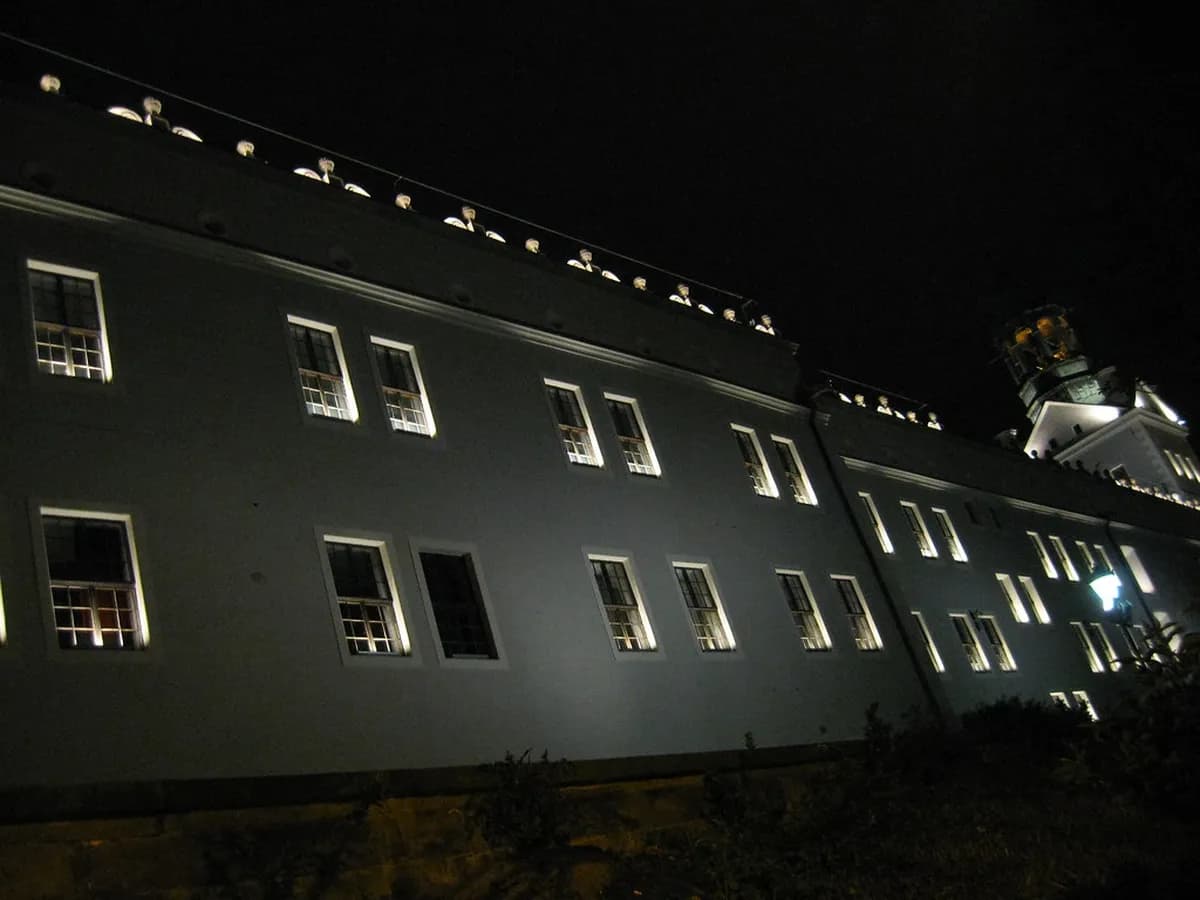
The result — white stucco, green copper domes, and cloistered courtyards — makes the castle one of the most recognizable landmarks in Szczecin.
Must-See Attractions: Courtyards, Towers, and Clocks
The 17th-century astronomical clock in the main courtyard is the single most photographed feature. It tracks the moon's phases and the date, and mechanical figures move whenever it strikes the hour.
Access to the two main courtyards is free daily from 06:00 to 23:00, and in summer they occasionally host an outdoor concert or theatre performance.
Two viewpoints reward the climb. The Bell Tower's steep spiral stairs — capped at 10 visitors at a time — lead to the widest view over Szczecin's Old Town and the harbor. The Ducal Terrace, reached separately from the northern wing on its own ticket, gives a flatter, easier vantage over the courtyard and river — the better choice if you're short on time or can't manage stairs. For the classic postcard shot, skip both and shoot from the courtyard steps near the clock.
The mint courtyard offers a smaller, quieter space with a sundial and architectural fragments from earlier building phases, and it stays noticeably less crowded than the main courtyard.
- Top Castle Highlights to See
- Clock: 17th-century astronomical
- Cell: Witches' exhibition
- View: Bell Tower terrace
- Terrace: Ducal Terrace, northern wing
- Vault: Ducal sarcophaguses
Museums and Exhibitions: From the Mint to the Witches’ Cell
The Witches' Cell holds the region's most enduring legend: Sydonia von Borck, a noblewoman said to have fallen for Prince Philip I's son and been cast aside when he married elsewhere. Spurned, she is said to have cursed the Gryfici line to die out — a curse locals still cite, since the dynasty's last duke died without an heir in 1637. Von Borck was accused of witchcraft, tortured, and executed in 1620, and her cell remains the castle's single most visited exhibit.
Beneath the northern wing, a quiet vault holds the sarcophagi of six Pomeranian princes. The lead and pewter coffins show striking 17th-century craftsmanship, and the crypt is a somber but genuinely fascinating stop.
Most original furnishings were dispersed over the centuries — many pieces now sit in the National Museum Szczecin rather than the castle itself — so don't expect opulent furnished rooms like Wawel Castle in Kraków. Interior spaces here function mainly as galleries, an opera house, and event halls, not preserved period rooms.
The Mint Wing displays coins and medals struck in Pomerania, tracing the duchy's economic history in miniature. Rotating art exhibitions elsewhere focus on West Pomeranian artists — check zamek.szczecin.pl for current shows, since lineups change often.
Practical Visitor Information: Tickets, Hours, and Access
Courtyard access and interior museum hours don't match. Exhibitions, the crypt, and the Ducal Terrace run Tuesday–Sunday, typically 10:00–17:00, closed Mondays — the courtyards stay open far later, into the evening.
Ticket prices depend on how many exhibitions you enter — the permanent exhibition, temporary shows, Bell Tower, and Ducal Terrace are priced separately, though a combined "ducal ticket" covers all for less. Confirm current rates on visitszczecin.eu.
The Szczecin Tourist Card offers a discount on entrance fees and pairs with free public transport, useful if you're also headed to the Szczecin Cathedral area.
Give yourself at least two hours for the full complex — courtyards, one tower or terrace, and the museum galleries. Arrive at opening to beat the tour groups that cluster around midday.
Getting There and Accessibility
Solidarity Szczecin–Goleniów Airport sits roughly 30 minutes from the city center by car or bus. From Szczecin Główny train station, the castle is an easy 15–20 minute uphill walk through the Old Town, or a short tram ride if you'd rather skip the climb.
The main and mint courtyards are flat and paved, manageable for wheelchairs and strollers, and the ground-floor Mint Wing galleries are step-free from the courtyard entrance. The Bell Tower's spiral stairs and the below-ground crypt aren't wheelchair accessible, so visitors with mobility limitations get more value from the courtyards, ground-floor exhibitions, and the flatter Ducal Terrace.
Family-Friendly and Budget-Friendly Tips
Families with children generally gravitate to the courtyards and the mechanical clock. The Witches' Cell can feel intense for young kids, so use your judgment, and lean on the outdoor spaces for a break if needed.
Budget travelers can enjoy the exterior and courtyards without spending a złoty — walking through the gates is free, and the small cafés inside the walls sell affordable snacks.
The castle also hosts free cultural events and seasonal markets year-round. Check for posters near the Wały Chrobrego promenade for what's on during your visit.
Beyond Szczecin: The Castle in Słupsk
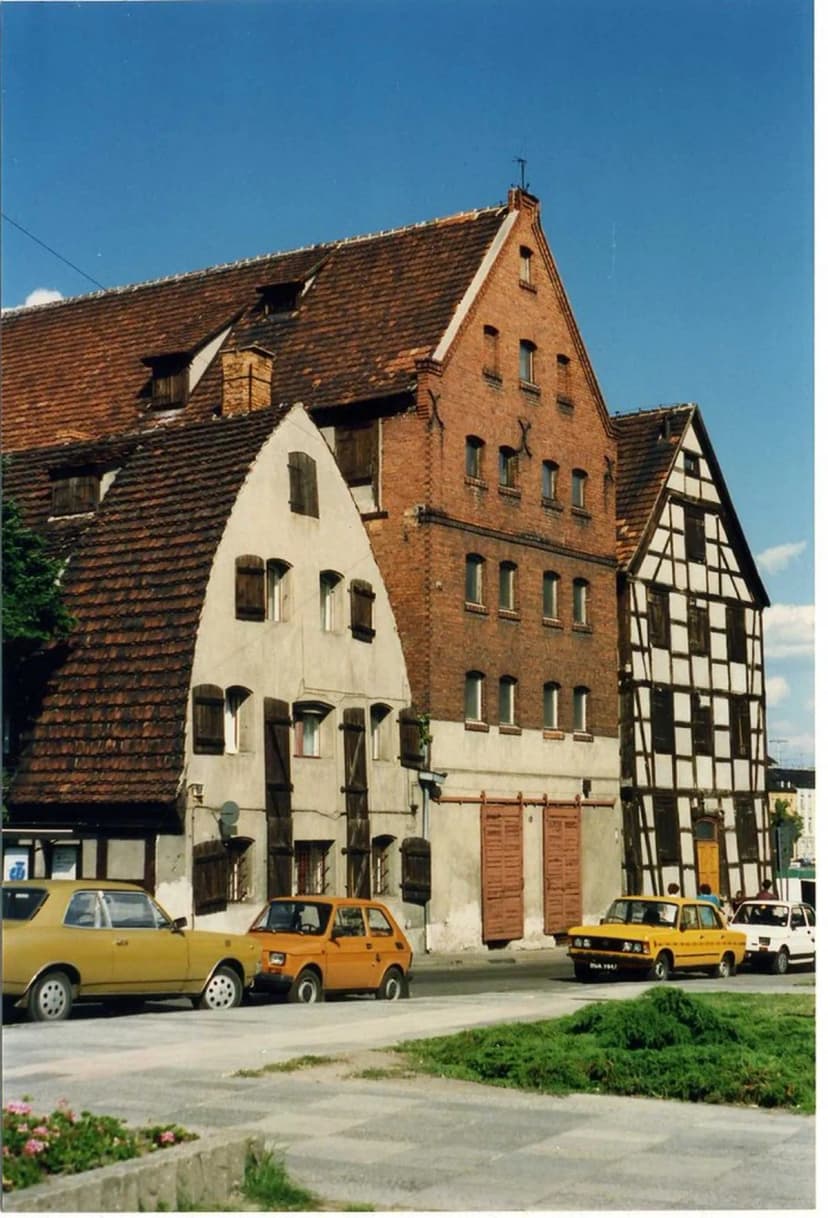
Travelers heading east should visit the other Castle of the Pomeranian Dukes in Słupsk, about 120 km southeast. It houses the Museum of Central Pomerania and offers a different angle on the Gryfici family's legacy.
The Słupsk castle holds the world's largest collection of works by Stanisław Ignacy Witkiewicz — Witkacy — known for his unusual portraits and philosophical writings. Details on the current display are on pomorskie.travel.
Nearby, the Castle Mill ranks among Poland's oldest surviving industrial buildings and now runs as an ethnographic museum. Visiting both sites back-to-back gives a fuller picture of how the same dynasty shaped two corners of Pomerania.
- Szczecin vs. Słupsk Castles at a Glance
- Style: Renaissance ducal palace (Szczecin) vs. Gothic-Renaissance castle (Słupsk)
- Signature draw: 17th-century astronomical clock and Crypt of the Griffins vs. the world's largest Witkacy art collection
- Today's role: opera, theatre, and concert venue vs. Museum of Central Pomerania
- Distance apart: about 120 km, roughly 2 hours by car or train
Frequently Asked Questions
How much are tickets to the Castle of the Pomeranian Dukes?
A ticket to the permanent exhibitions costs 30 PLN (20 PLN reduced). Temporary exhibitions cost 20 PLN (15 PLN reduced), and the Bell Tower and Ducal Terrace are each 10 PLN (7 PLN reduced). A combined "ducal ticket" covering the exhibitions, tower, and terrace costs 40 PLN (28 PLN reduced), and holders of the Szczecin Tourist Card get further discounts.
Can you climb the tower at the castle?
Yes. The castle's Bell Tower is open daily from 10:00 AM to 6:00 PM (weather permitting) and can be climbed for 10 PLN (7 PLN reduced). The viewing terrace at the top gives panoramic views over Szczecin's Old Town and the Oder River, though only 10 visitors are allowed up at a time.
What is inside the Castle of the Pomeranian Dukes?
The castle houses several permanent exhibitions, including the Crypt of the Griffins (Krypta Gryfitów) with the sarcophagi of six Pomeranian dukes, a 17th-century astronomical clock, an exhibit on cartographer Eilhard Lubinus, and the "Witches' Cell." It also functions as an active cultural center with an opera house, theatre, cinema, and a concert hall inside Duke Bogusław X's former chapel.
Who is buried in the crypt of the Pomeranian dukes?
The castle's basement crypt, the Crypt of the Griffins, holds the sarcophagi of six rulers from the House of Pomerania (the Griffin dynasty), the family that governed the Duchy of Pomerania from the 12th century until the line died out in 1637.
What are the castle's history and origins?
The castle began in 1346 when Duke Barnim III started a stone ducal residence on Castle Hill, was expanded by 1428 under Casimir V, and was rebuilt in Mannerist style between 1573 and 1582 for Duke John Frederick by Italian stonemasons. About 60% of the complex was destroyed in Allied bombing raids in 1944, and Polish conservators rebuilt it between 1958 and 1980, restoring its 16th-century Renaissance appearance from historical engravings.
What are the opening hours of the castle?
The permanent and temporary exhibitions and the Ducal Terrace are open Tuesday–Sunday, 10:00 AM–5:00 PM (closed Mondays, last entry 30 minutes before closing). The Bell Tower is open daily 10:00 AM–6:00 PM, and the open-air courtyards and terraces are accessible daily from 6:00 AM to 11:00 PM.
How long does it take to visit the castle?
Most visitors spend 1.5–2.5 hours exploring the permanent exhibitions, the crypt, and the tower. Allow extra time if a concert, opera performance, or temporary exhibition is also part of your visit.
Is it free to walk around the castle courtyards?
Yes. The castle's outdoor courtyards and terraces are open to the public free of charge daily from 6:00 AM to 11:00 PM, so you can admire the Renaissance architecture and green-domed towers without a ticket — only the exhibitions, crypt, and tower climb require paid admission.
The Castle of the Pomeranian Dukes remains an essential stop for anyone visiting Szczecin. It blends deep regional history with striking Renaissance architecture and an active cultural calendar, from opera to seasonal markets. Plan your 2026 visit around the courtyards, one tower or terrace, and the museum wings, and you'll leave with a clear sense of why the Gryfici dynasty ruled from this hill for five centuries.
For official details, visit the Castle of the Pomeranian Dukes (Zamek Książąt Pomorskich) on Wikipedia.
Discover more Szczecin travel planning in our Things to Do in Szczecin: 2026 Top Sights Guide and the Pomeranian Dukes' Castle Szczecin: Full 2026 Visitor Guide.