

The Perfect 2 Days in Gdynia: Itinerary
Gdynia is not what most people expect. Arrive braced for a lesser version of Gdańsk and you'll find something completely different: a city of bold interwar Modernist architecture, two extraordinary museum ships on the waterfront, a cliff-backed seaside quarter with almost no tourist crowds, and Baltic sea air strong enough to clear your head after a long journey. Two days is exactly the right amount of time. Last updated June 2026.
Day 1 is built around the Southern Pier — the tall ship Dar Pomorza, the destroyer ORP Błyskawica, the aquarium, and the Emigration Museum in the historic Marine Station — followed by a walk through the Modernist city centre and up to the Kamienna Góra viewpoint for a fresh-fish dinner. Day 2 heads out to Orłowo for the cliff path and wooden pier in the morning, then gives you a genuine choice: one SKM stop to Sopot, or a summer ferry to the Hel Peninsula. If you're weighing whether two days is enough or whether to go longer, our how many days in Gdynia guide breaks down every option in detail.
Gdynia 2-Day Itinerary Overview
I've structured both days so you move logically through the city without doubling back. Day 1 is almost entirely walkable — from Skwer Kościuszki along the waterfront to the museum ships, through the Marine Station, and back through the Modernist core to Kamienna Góra. Day 2 uses the SKM Tricity commuter rail to reach Orłowo in about ten minutes, then extends the same line into Sopot or Gdańsk if you choose to push further.
| Time | Day 1 — Waterfront & Modernist Core | Day 2 — Orłowo & Tricity Hop |
|---|---|---|
| 9:00 am | Skwer Kościuszki stroll; coffee on the square | SKM to Gdynia Orłowo (~10 min); walk to the cliff |
| 10:00 am | Southern Pier: Dar Pomorza tall ship (~28 PLN) | Klif Orłowski cliff path in Kępa Redłowska reserve |
| 11:30 am | ORP Błyskawica destroyer (~30 PLN); Naval Museum outdoor park | Orłowo Pier (wooden pier) + beach; fishing boats |
| 1:00 pm | Gdynia Aquarium (~30–40 PLN) or walk directly to lunch | Coffee or lunch in Orłowo (~30–50 PLN) |
| 2:00 pm | Emigration Museum / Marine Station (~25–30 PLN; allow 1.5 hrs) | Option A: SKM to Sopot (~10–12 min) — Molo pier, Krzywy Domek, Monciak street |
| 4:00 pm | Świętojańska Modernism walk; Kamienna Góra viewpoint (funicular optional) | Option B (summer): Ferry to Hel Peninsula from Southern Pier — Fokarium, beaches, WWII forts |
| Evening | Fresh-fish dinner near the marina or on Świętojańska | Return by SKM; dinner in Gdynia or Sopot |
- Day 1 (largely on foot): Southern Pier museum ships + aquarium → Emigration Museum at the Marine Station → Świętojańska Modernist architecture walk → Kamienna Góra viewpoint → fresh-fish dinner.
- Day 2 (SKM-powered): Orłowo cliff path and pier in the morning → SKM to Sopot (one stop, ~10–12 min) or a summer ferry from the Southern Pier to the Hel Peninsula in the afternoon.
Gdynia's city centre and waterfront are flat and easy to navigate — you won't need a taxi for Day 1. For a full picture of what the city has to offer beyond this two-day frame, see our things to do in Gdynia guide.
Day 1: The Southern Pier, the Emigration Museum & the Modernist City
Start at Skwer Kościuszki, Gdynia's wide central promenade that runs straight from the café-lined city centre down to the sea. It functions as the city's living room: in summer it fills with locals heading toward the waterfront, and in the early morning the light on the whitewashed interwar buildings flanking the square is genuinely striking. Grab a coffee at one of the terrace cafés and take your bearings — the pier and the ships are right in front of you.
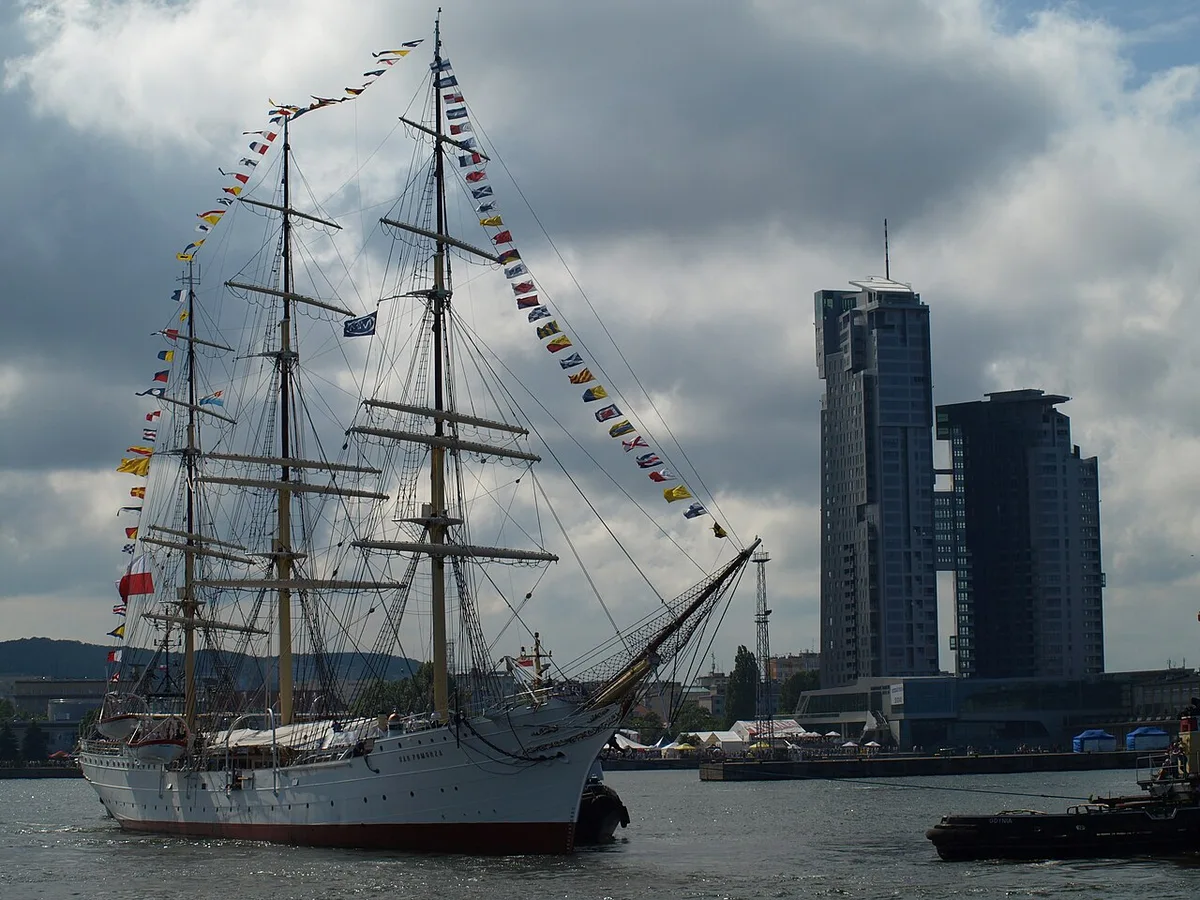
Walk to the end of Molo Południowe (Southern Pier) and you are immediately at Gdynia's headline attractions. The Dar Pomorza is the first thing that stops you: a fully-rigged white steel sailing frigate launched in 1909, "The Gift of Pomerania," once the training vessel of the Polish Naval Academy. She circumnavigated the globe; her masts rise above the whole waterfront. Entry is around 28 PLN (≈€6–7 — confirm at the ticket desk). Board her and take your time on the decks. For the full story of both ships, practical ticket details, and advice on timing, our Gdynia museum ships guide covers everything in depth.
Moored alongside is ORP Błyskawica ("Lightning"), a WWII Polish Navy destroyer and one of the oldest preserved warships of her type in the world. She defended Cowes harbour in 1942 and carries real battle history. Entry is around 30 PLN (≈€7). Budget about forty minutes aboard each ship — they complement each other well: the tall ship is romantic and photogenic, the destroyer is sober and precise. Together with the Gdynia Aquarium at the end of the pier (expect ~30–40 PLN; Baltic tanks plus a tropical and coral reef section), the Southern Pier fills a comfortable three to four hours.
Museum ship opening hours can be seasonal and may differ from what you find on general travel sites. Check the official Naval Museum (Muzeum Marynarki Wojennej) website before visiting, especially outside June–August. In 2026, the ships typically open around 10 am — arrive early if you want unhurried access to both before midday crowds build.
After lunch — fresh Baltic fish restaurants on and around Świętojańska offer cod, herring, and smoked flatfish at reasonable prices — walk to the Emigration Museum (Muzeum Emigracji) in the historic Marine Station (Dworzec Morski). This is the Modernist passenger terminal from which transatlantic liners like MS Batory once sailed, and the museum it now houses is one of the best-curated in Poland: sharp, well-translated into English, and genuinely moving. It traces the story of Polish emigration from the 19th century through the post-war diaspora, and the building itself — a 1930s functionalist landmark — earns a slow look. Allow 1.5 to 2 hours; entry is around 25–30 PLN (confirm on the museum's site).
From the Marine Station, walk into the Modernist city centre. Świętojańska is Gdynia's main commercial artery and worth strolling slowly — the 1930s functionalist blocks, rounded corner balconies, and ship-bow facades give the street a breezy nautical swagger. Gdynia holds one of Europe's richest concentrations of interwar Modernism and the centre is on the tentative UNESCO World Heritage list. A self-guided Modernism Trail (Szlak Modernizmu) with pavement plaques links the highlights; pick up the route at the tourist office.
End the afternoon at Kamienna Góra, a leafy hill a short walk from the centre with a historic funicular for the ascent. The viewpoint terrace at the top gives the best panorama in Gdynia: port, bay, city, and on a clear day the Hel Peninsula. Walk back down to the marina for a fresh-fish dinner — smażalnia ryb fish-fry bars and proper Baltic restaurants both line the route, at prices well below the Gdańsk Old Town.
- Day 1: Southern Pier, Emigration Museum, Modernist Core
- Morning: Skwer Kościuszki → Southern Pier → Dar Pomorza (~28 PLN) → ORP Błyskawica (~30 PLN)
- Midday: Gdynia Aquarium (~30–40 PLN) or walk straight to lunch
- Lunch: Fresh-fish restaurant on Świętojańska (~35–60 PLN a head)
- Afternoon: Emigration Museum / Marine Station (~25–30 PLN; 1.5–2 hrs)
- Late afternoon: Świętojańska Modernism Trail → Kamienna Góra viewpoint (funicular optional)
- Evening: Fresh-fish dinner near the marina; early night in Gdynia
Day 2: Orłowo Cliff & the Tricity — Sopot or the Hel Peninsula
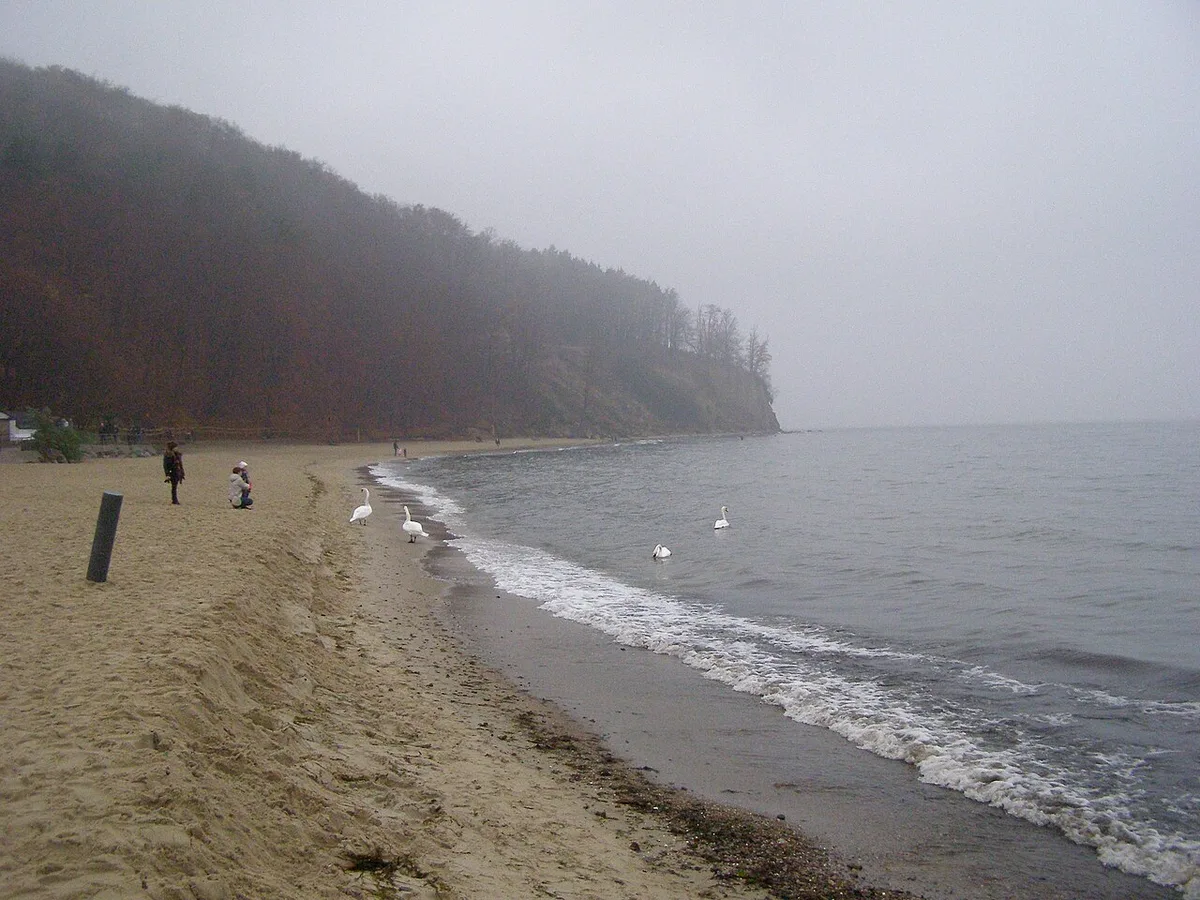
Take the SKM commuter rail from Gdynia Główna or any central platform to Gdynia Orłowo — about ten minutes and a few PLN on a standard ticket. The walk from the station to the cliff edge takes less than five minutes, and the view at the end — the eroding wooded Klif Orłowski curving above an open Baltic beach — comes as a complete surprise after the city-grid confidence of the Modernist centre.
Gdynia has no medieval old town; Orłowo is its signature quarter, and it earns that role. Walk the Kępa Redłowska nature reserve cliff paths above the sea first, then descend to the charming wooden Orłowo Pier (Molo w Orłowie) and the small beach where fishing boats still land. Genteel villa-lined streets and a handful of café terraces make Orłowo an easy place to spend two or three unhurried hours. The full loop — cliff path in, pier and beach, back along the seafront — takes roughly two to three hours depending on your pace. For a detailed breakdown of every stop and what to skip, our Gdynia Orłowo guide maps the walk in order.
Orłowo is a ten-minute SKM ride from the city centre and an easy morning stop before the midday beach crowd arrives. The Kępa Redłowska cliff paths are uneven and rooted in places — wear shoes you can walk in. In July and August the beach fills up by early afternoon; go in the morning for the cliff walk and leave the beach to the afternoon swimmers.
After Orłowo, you have a genuine choice for the afternoon. The SKM line connects Gdynia directly to Sopot — about ten to twelve minutes, one stop toward Gdańsk — and Sopot is worth at least three hours: Europe's longest wooden pier (the famous Molo), the absurdist Krzywy Domek (Crooked House) on Monte Cassino ("Monciak") street, and a belle-époque resort atmosphere that feels entirely different from Gdynia but completes the Tricity picture. The same SKM line continues to Gdańsk at the far end of the conurbation if you want to push even further. For the logistics of combining Gdynia with the Gdańsk side, our Gdynia from Gdańsk guide covers the full SKM journey and how to make the two cities work together.
Alternatively, in summer (roughly June through early September), passenger ferries to the Hel Peninsula depart from Gdynia's Southern Pier — a slower, more atmospheric crossing than the train. Hel town at the tip of the long sandspit has broad Baltic beaches on both sides, the Fokarium grey-seal sanctuary, and WWII coastal-defence fortifications. Jastarnia and Jurata are quieter resort villages mid-peninsula. Allow a full afternoon for the Hel trip; check the ferry departure and return times at the harbour that morning before committing your day to it.
- Day 2: Orłowo and Tricity
- Morning: SKM to Gdynia Orłowo (~10 min) → Klif Orłowski cliff walk → Orłowo Pier + beach (~2–3 hrs)
- Midday: Coffee or lunch in Orłowo (~30–50 PLN); SKM back toward Gdynia or onward
- Option A: SKM to Sopot (~10–12 min) — Molo pier, Monciak, Krzywy Domek (~3 hrs)
- Option B (summer): Summer ferry from Southern Pier to Hel Peninsula (~1 hr crossing) — Fokarium, beaches, WWII forts in Hel town
- Evening: Return by SKM; dinner in Gdynia or stay in Sopot for the evening
Practical Tips: SKM, Costs & Getting Around
The SKM Tricity commuter rail is the backbone of Day 2. Buy tickets at the machines on any SKM platform; validate before boarding. A single journey within Gdynia or to Sopot costs a few PLN. Day tickets are available if you plan several moves — check the ZKM Gdynia or SKM app for current fare tables. The city centre and waterfront are flat and entirely walkable for Day 1; you won't need a bus or taxi at any point on Day 1 unless you want to ride the Kamienna Góra funicular rather than walk up.
Gdynia is noticeably more affordable than the Gdańsk Old Town. Expect around 25–40 PLN per museum entry, 35–60 PLN for a sit-down fresh-fish lunch, and a few PLN per SKM ride. Cards are accepted almost everywhere in 2026; keep a little cash for beachside smażalnia fish bars and smaller Orłowo cafés.
Common Mistakes on a 2-Day Gdynia Trip
- Trying to add Gdańsk on Day 1. The SKM makes Gdańsk feel close — and it is — but the Gdańsk Old Town alone is a three-hour experience. Treat the two cities separately, or you will rush both. Two days in Gdynia, then move on.
- Booking the Hel ferry without checking the schedule. Summer ferries are timed around tides; the return crossing can be much later than you expect. Check times at the harbour that morning and build your afternoon around them.
- Skipping the Emigration Museum. It looks like a municipal heritage stop on paper; it is one of the best-curated museums in northern Poland. Do not trade it for more time at the pier.
- Arriving at the museum ships after 2 pm. Dar Pomorza and ORP Błyskawica may stop admitting visitors an hour or two before the posted closing time. Aim to board by 10 am for unhurried access to both; the ships are also more atmospheric before the midday crowds arrive.
- Missing Kamienna Góra. Most visitors focus on the Southern Pier and skip the hill entirely. The Kamienna Góra viewpoint is free, takes twenty minutes to reach on foot, and gives you the best panorama in Gdynia. Build it into the end of Day 1 — it pairs naturally with a nearby dinner on the walk back down.
Gdynia 2-Day Itinerary at a Glance
- Day 1 (on foot): Skwer Kościuszki → Southern Pier → Dar Pomorza (~28 PLN) + ORP Błyskawica (~30 PLN) → Gdynia Aquarium (~30–40 PLN) → Emigration Museum (~25–30 PLN; ~1.5 hrs) → Świętojańska Modernism walk → Kamienna Góra viewpoint → fresh-fish dinner.
- Day 2 (SKM): SKM to Gdynia Orłowo (~10 min) → Klif Orłowski cliff path + Orłowo Pier + beach → SKM to Sopot (1 stop, ~10–12 min) or summer ferry from Southern Pier to the Hel Peninsula (~1 hr crossing). Return by SKM.
- Getting around: Day 1 entirely on foot. Day 2 on SKM (buy ticket at platform machine, validate on board). Bolt and taxis available for any leg you want to skip.
- Daily budget: Museum entries ~25–40 PLN each; fresh-fish lunch ~35–60 PLN; SKM ~3–8 PLN per journey. Gdynia is consistently cheaper than Gdańsk Old Town restaurants and hotels.
- Useful links: Gdynia (Wikipedia) · Dar Pomorza (Wikipedia)
Frequently Asked Questions
Is 2 days enough for Gdynia?
Two days is the comfortable, unhurried version of Gdynia. Day one handles the Southern Pier museum ships (Dar Pomorza and ORP Błyskawica), the Emigration Museum, the Modernist city-centre walk, and the Kamienna Góra viewpoint. Day two adds Orłowo's cliff and pier in the morning, with a Tricity hop to Sopot or the Hel Peninsula in the afternoon. A third day opens up Gdańsk or a deeper Hel Peninsula trip. See our how many days in Gdynia guide for the full breakdown.
How do I get around Gdynia on a 2-day trip?
Day 1 is almost entirely on foot — the waterfront, the Southern Pier, Świętojańska, and Kamienna Góra are all walkable from the city centre. Day 2 runs on the SKM Tricity commuter rail: take the SKM from Gdynia Główna to Gdynia Orłowo (about 10 minutes), then continue the same line to Sopot (one more stop, another 10–12 minutes) or return to the city centre for the Hel ferry. Buy SKM tickets at platform machines and validate before boarding.
Should I go to Sopot or the Hel Peninsula on Day 2?
In summer, the Hel Peninsula is the more distinctive experience — a long sandspit with broad Baltic beaches, the Fokarium seal sanctuary, and WWII coastal fortifications in Hel town. The ferry from Gdynia's Southern Pier takes about an hour each way and is more scenic than the train. Sopot is better in shoulder season or when you want a shorter, more flexible afternoon: one SKM stop, easy to cut short if the weather turns. Both are excellent; the ferry makes the Hel day feel genuinely special.
What is the Emigration Museum in Gdynia?
The Emigration Museum (Muzeum Emigracji) is housed in the historic Marine Station (Dworzec Morski) — the Modernist passenger terminal from which transatlantic liners like MS Batory once sailed. The museum tells the story of Polish emigration across several centuries and is one of the best-curated museums in northern Poland. Entry is around 25–30 PLN; allow 1.5 to 2 hours. It sits on the waterfront, a short walk south of the Southern Pier and the museum ships.
What are the museum ships in Gdynia?
Gdynia's two museum ships are moored on the Southern Pier (Molo Południowe). Dar Pomorza is a fully-rigged white steel sailing frigate from 1909 — a former naval-academy training ship that circumnavigated the globe and is the most photogenic sight in the city. ORP Błyskawica is a WWII destroyer and one of the oldest preserved destroyers in the world; she defended Cowes harbour in 1942. Entry to each is roughly 28–30 PLN. The Gdynia Aquarium is at the same end of the pier and rounds out the visit nicely.
Two days in Gdynia earns its place in any Tricity or northern Poland itinerary. The morning walk out along the Southern Pier — salt air, the white masts of Dar Pomorza above you, the destroyer moored alongside — sets a tone the city maintains all the way to the Kamienna Góra viewpoint at the end of the day. Orłowo on Day 2 provides exactly the contrast Gdynia needs: cliff, quiet beach, fishing boats, and a leafy, villa-lined atmosphere you would not predict from the bold Modernist grid behind it.
For a broader introduction to every sight and the honest case for making Gdynia part of a Tricity trip, our things to do in Gdynia guide covers all fifteen attractions in depth. And if you are arriving from the Gdańsk side, our Gdynia from Gdańsk guide covers the full SKM journey, how long to allow at each end, and how to combine both cities in a single efficient day or over a longer Pomerania stay.
You might also like



Continue reading
More guides you'll find useful


