15 Best Things to Do in Gdynia, Poland
Last updated June 2026 — Gdynia is one of those cities that takes a moment to reveal itself, and once it does, you find something entirely unlike anywhere else in Poland. Walk out along the Southern Pier — the white hull of the Dar Pomorza tall ship glinting against the Bay of Gdańsk, the silhouette of a WWII destroyer moored just beyond it — and you understand immediately: this is not a consolation prize for visitors who couldn't get a Gdańsk hotel. It is a destination in its own right, with its own extraordinary story.
That story begins in 1918. When Poland regained independence, the Treaty of Versailles made nearby Gdańsk (Danzig) a "Free City" outside Polish control, leaving the reborn republic with only a thin strip of Baltic coastline and no working seaport. So Poland did something audacious — in the 1920s and 1930s, it built a brand-new deep-water port city from scratch out of a fishing village, turning Gdynia into one of the busiest harbours in the Baltic in under two decades. The city that emerged is boldly, defiantly modern: a dense concentration of interwar Modernist (functionalist) architecture, a working port, a museum fleet, and a cliff-backed coastline at Orłowo that rewards anyone willing to take the SKM two stops south of the centre.
For an honest Tricity comparison, our verdict on whether Gdynia is worth visiting makes the full case. If you're planning alongside Gdańsk — and you should be — the best things to do in Gdańsk covers the medieval old town that Gdynia conspicuously lacks. That's not a weakness; it's the city's identity. Here are the 15 best things to do in Gdynia in 2026.
Key Takeaways
- Gdynia has no medieval old town — it was built from scratch in the 1920s–30s as Poland's purpose-built Baltic seaport, and its defining architectural character is interwar Modernism: one of Europe's richest concentrations of 1930s functionalist buildings, currently on the tentative UNESCO World Heritage list.
- The Southern Pier (Molo Południowe) is the city's waterfront hub and packs in the two museum ships, the Gdynia Aquarium, the marina, and summer Hel-Peninsula ferry departures — a focused half-day covers the whole cluster.
- The Emigration Museum inside the historic Marine Station (Dworzec Morski) is consistently rated among the most impressive modern museums in Poland; allow at least 1.5–2 hours and don't rush it.
- Orłowo — Gdynia's signature seaside quarter — gives you the Orłowo Cliff (Klif Orłowski), a wooden pier, and a quiet beach with fishing boats in a leafy villa-lined setting that feels removed from the busy centre; it is reachable by SKM in roughly 10 minutes.
- Gdynia sits at the Tricity's northern end on the SKM line: Sopot is one stop south (~12 minutes) and Gdańsk is about 35 minutes — the whole agglomeration is easy to explore on a single trip, and Gdynia's calmer, cheaper atmosphere makes it an excellent base.
Why Gdynia Deserves a Spot on Your Tricity Trip
Most visitors to the Tricity arrive in Gdańsk, spend two days in the Długi Targ, and treat Gdynia as a half-day afterthought — a quick SKM hop to see the ships and back. That framing sells the city short. Stay overnight near Skwer Kościuszki, give it a full day and a half, and the assessment changes completely.
Gdynia works on two levels. On the surface, it's a tight, walkable waterfront city where everything converges on the Southern Pier: the museum ships, the aquarium, the Emigration Museum nearby, and the Modernism Trail threading through the centre blocks just behind. Deeper down, it is a story about national ambition — a city willed into existence in two decades and packed with buildings that broadcast confidence and modernity in the boldest architectural language available. For a wider picture of Poland, our places to visit in Poland guide gives useful context on how Gdynia fits a national itinerary. For a ready-made route through the highlights below, our 2-day Gdynia itinerary threads them into a practical plan.
15 Best Things to Do in Gdynia
The 15 picks below cover every layer of what Gdynia does well: its maritime heritage, extraordinary Modernist architecture, museum fleet, the Emigration Museum, the cliff-backed coast at Orłowo, the beaches, the food, and the festivals. I've arranged them from the waterfront outward, so they follow a natural route through the city. For the Southern Pier cluster in full detail — ships, aquarium, Naval Museum, logistics — the Gdynia museum ships guide has everything in one place.
| Attraction | Type | Time needed | Cost (approx.) |
|---|---|---|---|
| Skwer Kościuszki | Promenade & city square | 30 min stroll | Free |
| Southern Pier (Molo Południowe) | Waterfront pier hub | Half-day combined | Free pier; paid ships/aquarium |
| Dar Pomorza (tall ship) | Museum ship | 45–60 min | ~28 PLN (≈€6–7) |
| ORP Błyskawica (destroyer) | Museum ship / Naval Museum | 45–60 min | ~30 PLN (≈€7) |
| Gdynia Aquarium | Public aquarium | 1–1.5 hrs | ~30–40 PLN (confirm) |
| Emigration Museum | History museum | 1.5–2 hrs | ~25–30 PLN (confirm) |
| Naval Museum | Military museum + outdoor park | 1 hr | Combined with Błyskawica |
| Modernism Trail | Self-guided architecture walk | 2–3 hrs | Free |
| Kamienna Góra & funicular | Viewpoint + funicular | 1 hr | Small funicular fee |
| Orłowo Cliff & Pier | Nature walk & pier | 1.5–2 hrs | Free |
| Gdynia City Beach | Baltic beach | Half-day (summer) | Free |
| Świętojańska fish lunch | Food experience | 1 hr | ~35–60 PLN per head |
| Hel Peninsula ferry | Day trip (summer) | Full day | Ferry ~60–80 PLN (confirm) |
| Open'er Festival | Music festival (early July) | 1–4 days | Festival ticket required |
| Gdynia Film Festival | Cinema event (September) | Day–weekend | Some free screenings; accreditation for others |
- Walk Skwer Kościuszki — the city's grand promenade-square
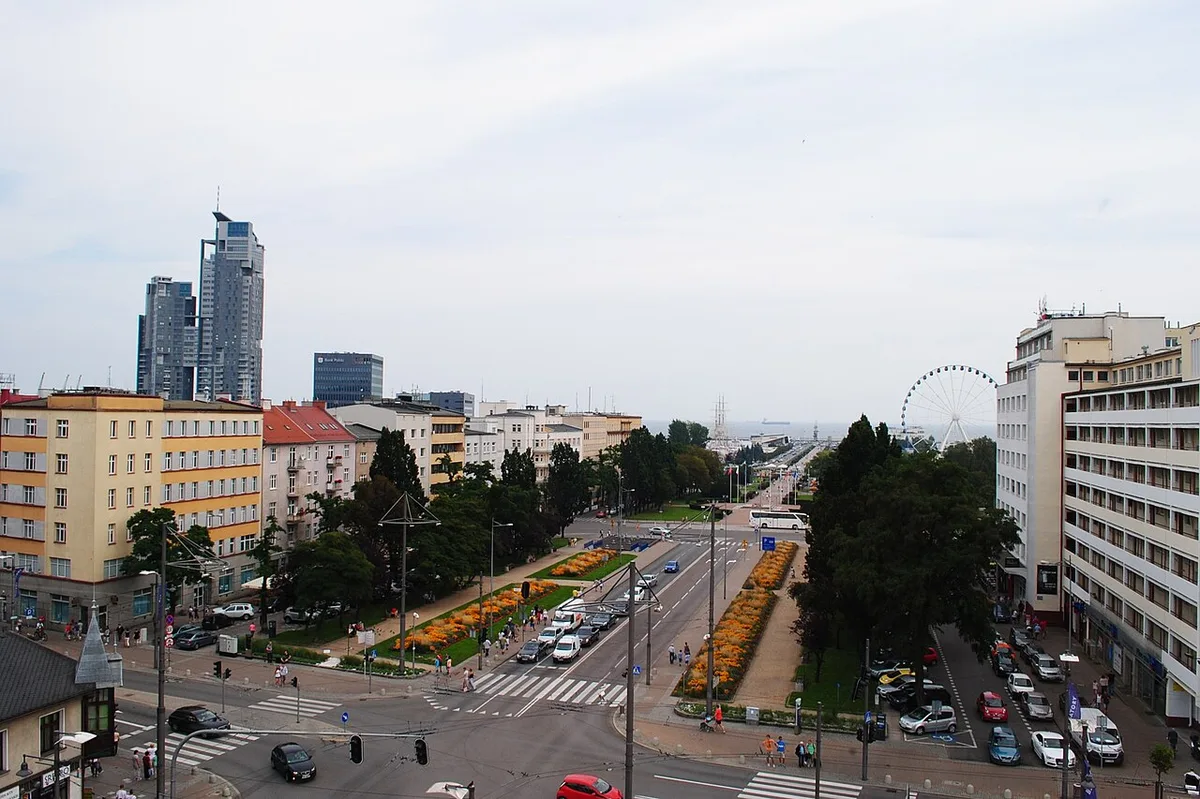
- Skwer Kościuszki is Gdynia's heartbeat: a wide, tree-lined avenue-and-square that runs in a straight line from the city centre to the Southern Pier and the sea. Everything in Gdynia radiates from here, and no visit makes sense without starting on it.
- The promenade is lined with cafés and benches, with the marina and the tip of the Southern Pier visible at the far end. As you walk south, the three masts of the Dar Pomorza tall ship appear above the rooftops before the pier comes fully into view — one of those city arrivals that actually delivers on the approach.
- Allow 20–30 minutes to walk its full length before turning to the individual sights. Early morning, when the light sits low over the bay and the city is quiet, is when Skwer Kościuszki is at its best.
- Explore the Southern Pier (Molo Południowe) — Gdynia's waterfront hub
- The Southern Pier is where Gdynia concentrates its maritime identity: museum ships, the aquarium, the marina, and summer ferries to the Hel Peninsula all depart from here. If you only have a few hours in the city, this is where you'll spend most of them.
- The pier itself is free to walk and worth the 20-minute stroll to the end for the views alone — across the bay to the north and back toward the city to the south, with the Dar Pomorza's rigging framing the skyline. Build a half-day around the full Southern Pier cluster.
- Board the Dar Pomorza — Poland's legendary tall ship
- Dar Pomorza ("The Gift of Pomerania") is a breathtakingly beautiful, fully-rigged steel sailing frigate launched in 1909 that served for decades as the training ship of the Polish Naval Academy — sailing around the world, winning the first-ever Cutty Sark Tall Ships Race in 1974, and carrying generations of cadets across every ocean.
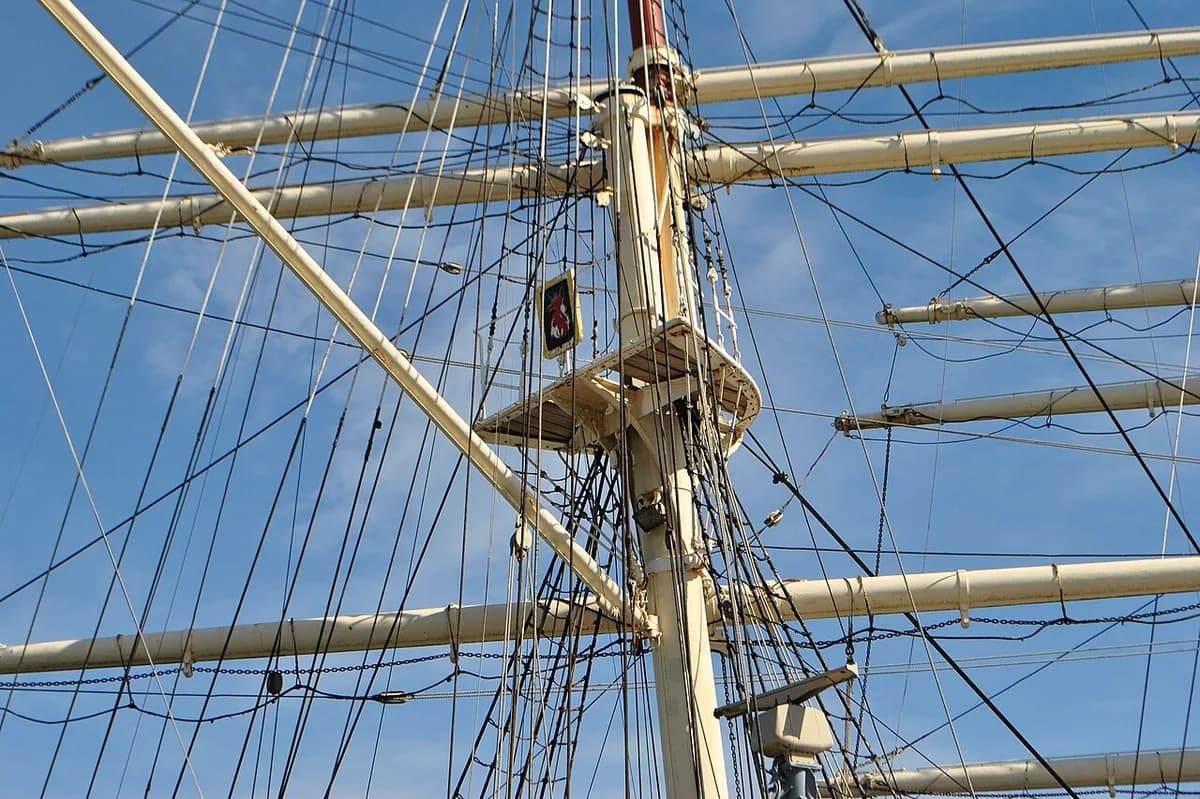
- Moored on the Southern Pier as a museum ship, she is the most photogenic sight in Gdynia by a considerable margin: white-hulled, three tall masts hung with rigging, set against the open bay. Going aboard takes you through the captain's quarters, the cadets' mess decks, and the engine room — a real ship that sailed real oceans, not a replica.
- Entry is around 28 PLN (roughly €6–7) — confirm current prices on the official site. This is a seasonal attraction; check opening hours if you're visiting outside the main summer season (roughly May–September).
- Visit ORP Błyskawica — one of the world's oldest preserved destroyers
- ORP Błyskawica ("Lightning") is a WWII Polish Navy destroyer moored immediately alongside the Dar Pomorza. She is one of the oldest preserved destroyers in the world — a decorated veteran that famously defended the town of Cowes on the Isle of Wight from German air attack in 1942 and earned the Freedom of the Borough in return.
- Going aboard is a markedly different experience from the Dar Pomorza: smaller, more cramped, with the feel of a fighting ship rather than a training vessel. The torpedo tubes, deck guns, and compact officer quarters give an immediate sense of the conditions these crews lived and fought in.
- She forms part of the Naval Museum's collection; admission runs around 30 PLN (≈€7), often combined with access to the Naval Museum's outdoor hardware park. Confirm entry and hours at the museum's official website before visiting.
- See the Gdynia Aquarium (Akwarium Gdyńskie)
- The Gdynia Aquarium on the Southern Pier, run by the National Marine Fisheries Research Institute, is a thoroughly solid attraction — Baltic and tropical tanks, sharks, a coral-reef section, and enough depth to keep adults and children engaged for over an hour.
- It's the most reliable rainy-day option on the Southern Pier cluster and an easy addition to a ships morning. Entry is around 30–40 PLN (confirm on the official website). The Baltic species section — showing exactly what lives in the water you've been looking at all day — is consistently the highlight.
- Spend proper time at the Emigration Museum (Muzeum Emigracji)
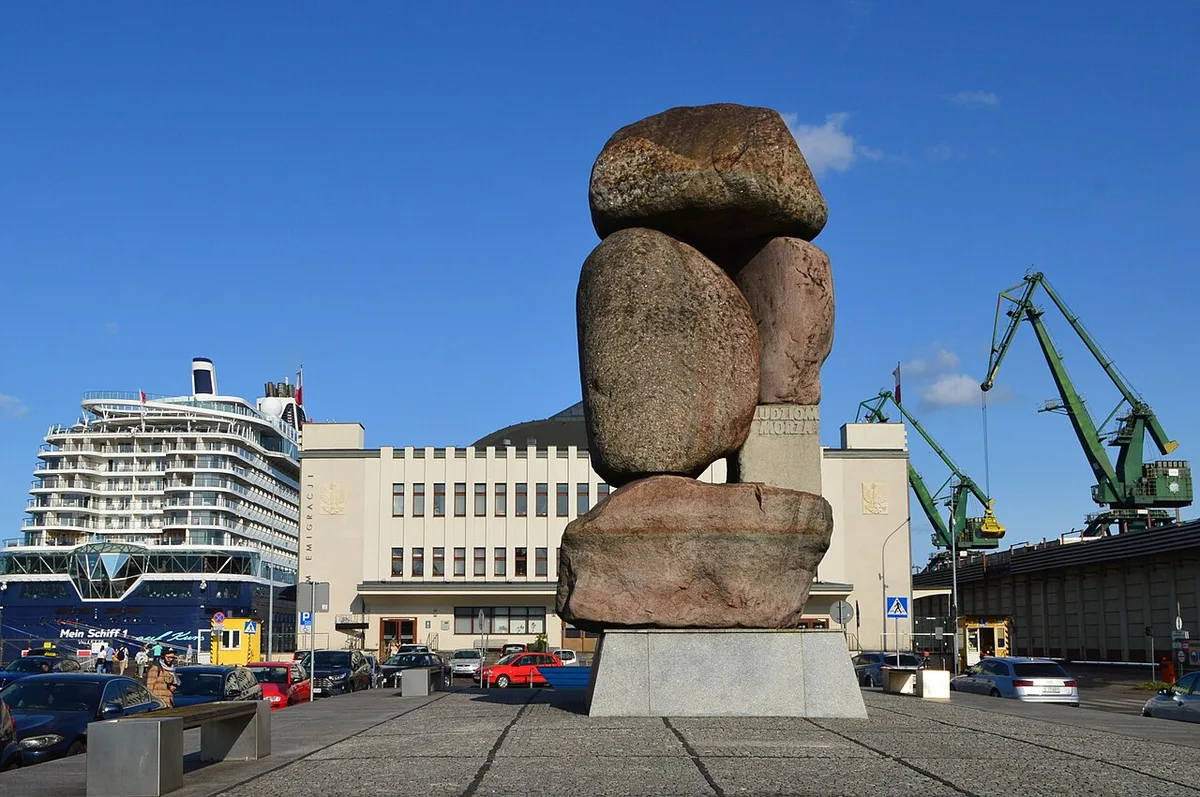
- This is, in my view, the single most impressive museum in the Tricity and one of the best modern history museums in Poland. The Emigration Museum occupies the original Dworzec Morski (Marine Station) — the functionalist Modernist passenger terminal from which transatlantic liners including the legendary MS Batory once sailed, carrying hundreds of thousands of emigrants to America and beyond.
- The museum tells the story of Polish emigration across centuries — from 19th-century economic migrants to post-war political refugees — through personal artefacts, oral history recordings, reconstructed ship interiors, and multimedia installations that treat the subject with genuine emotional intelligence.
- Expect around 25–30 PLN entry (confirm) and plan for 1.5 to 2 hours minimum. The building's curved, ocean-liner-inspired façade facing the port is part of the story; spend a few minutes outside taking it in before you go inside.
- Explore the Naval Museum (Muzeum Marynarki Wojennej)
- The Naval Museum near the waterfront divides into two parts: an outdoor park of hardware — guns, torpedoes, missiles, and full-scale military equipment laid out in the open — and indoor galleries tracing the history of the Polish Navy from its rebirth in 1918 to the present.
- The outdoor park works particularly well after the ORP Błyskawica visit, letting you compare the deck guns you've just seen aboard with the full-scale exhibits on the ground. Access to the outdoor park is typically combined with the Błyskawica ticket; allow about an hour for both sections together.
- Follow the Modernism Trail (Szlak Modernizmu)
- Gdynia holds one of Europe's richest concentrations of 1930s functionalist Modernist architecture — a cityscape that exists nowhere else in Poland in this density — and the self-guided Modernism Trail links the key buildings through the city centre with street-level plaques and a marked walking route.
- Flagship buildings include the Bankowiec and the Bohaterów Stalingradu apartment blocks (known as "the ocean-liner houses" for their horizontal lines and nautical details), the PLO building, the ZUS building, and the Marine Station you've already visited. Walking the route takes 2–3 hours at a leisurely pace.
- The city's modernist heritage has been proposed for UNESCO World Heritage status — an intact 1930s planned urban environment of this scale and coherence is genuinely rare in Europe. Walking these streets with that context in mind gives the whole city a different quality of attention.
- Ride the funicular to Kamienna Góra for the city's best free view
- Kamienna Góra ("Stone Mountain") is the elegant hill district between the city centre and Orłowo, reached from the seafront promenade via a short historic funicular — a cable-drawn car that has been running here for decades and is itself a small Gdynia institution.
- At the top, a terrace viewpoint gives you the best panoramic view of Gdynia from above: the port, the bay, the Southern Pier, the city centre, and — on a clear day — the arc of the coast curving toward Orłowo. The surrounding villa-lined streets are leafy, quiet, and a world away from the busy waterfront below. The funicular fare is a modest fee; the whole excursion takes under an hour.
- Walk the Orłowo Cliff (Klif Orłowski) in the Kępa Redłowska nature reserve
- Orłowo is Gdynia's signature seaside quarter — and because the city has no medieval old town, Orłowo effectively plays the role that a historic core plays elsewhere: it's where the city feels like it has a soul beyond its port and its architecture. Our dedicated Gdynia Orłowo guide covers the whole quarter in depth.
- The centrepiece is the Orłowo Cliff (Klif Orłowski): a dramatic, actively eroding wooded sea-cliff that drops directly to the beach within the Kępa Redłowska nature reserve. The clifftop paths give views straight down to the Baltic; the combination of crumbling clay, beech forest, and open sea is unlike anything in the Polish interior.
- Reach Orłowo by SKM to Gdynia Orłowo station (~10–15 minutes from Gdynia Główna), then walk down to the cliff. Allow at least 1.5–2 hours for a proper clifftop walk; wear sensible shoes — the paths are uneven and the cliff edge is real.
- Stroll the wooden Orłowo Pier (Molo w Orłowie) and the beach
- At the foot of the Orłowo Cliff, the charming wooden Orłowo Pier extends into the bay in the same tradition as Sopot's famous Molo but in a much quieter, more local register. Fishing boats tie up on the beach below it; on calm summer evenings the light over the bay from the end of the pier is one of Gdynia's genuinely beautiful moments.
- The Orłowo beach — a quieter alternative to the city beach near the centre — is flanked by the cliff on one side, with a handful of fish stalls and a generally local crowd. The late-afternoon light over the pier is the kind that keeps visitors an hour longer than planned. Combine the cliff walk and the pier into a single 2-hour morning or afternoon: walk the clifftop paths, descend to the beach, then stroll the pier before heading back to the SKM.
- Spend time at Gdynia City Beach (Plaża Miejska Śródmieście)
- Right beside the city centre — a few minutes' walk from Skwer Kościuszki — the Gdynia City Beach is the most convenient sandy stretch in the city: a classic Baltic beach with fine sand, seasonal cafés, and a backdrop of port cranes and masts that reminds you this is a working waterfront, not a resort.
- Baltic water is bracing — July and August are the practical swimming months, when water temperatures reach around 18–22°C. Outside summer the beach is still worth a walk, but bring a jacket. For a fuller picture of the coast, the Gdańsk beaches and Sopot guide sets the whole Tricity shoreline in regional context.
- Eat fresh Baltic fish on Świętojańska street
- Gdynia's calling card as a food destination is fresh Baltic fish and seafood: cod, herring, flatfish, and smoked fish served at waterfront restaurants and old-school fish-fry bars (smażalnia ryb) that cluster around the Southern Pier, the marina, and the city's main café-and-restaurant strip, Świętojańska street.
- A fish lunch on Świętojańska, eaten outside at a street-level table with modernist façades on either side, is one of the city's essential pleasures — and at notably gentler prices than the Gdańsk old town or Kraków. The Hala Targowa Gdynia market hall is worth a stop for fresh produce and quick cheap eats. For full restaurant picks by neighbourhood, see the where to eat in Gdynia guide.
- Take the summer ferry to the Hel Peninsula
- One of the best day trips from Gdynia in summer is the passenger ferry to the Hel Peninsula — the long, thin sandspit curving into the bay, reachable from the Southern Pier in a scenic crossing that is part of the experience. At the tip of the peninsula, Hel town has broad beaches, the Fokarium grey-seal sanctuary, and WWII coastal-defence fortifications; the resort villages of Jastarnia and Jurata line the spit.
- Ferries run seasonally (approximately June–September); confirm timetables and book ahead in July–August when they fill quickly. If you miss the ferry window, the base of the peninsula — Władysławowo and the kitesurfing hub of Chałupy/Kuźnica — are also reachable by SKM. Alternatively, Sopot is one SKM stop south (about 12 minutes) for its famous Molo pier and the Crooked House.
- Catch Open'er Festival or the Gdynia Film Festival
- Gdynia hosts two of Poland's most significant annual events. Open'er Festival (Heineken Open'er), held at the Gdynia-Kosakowo airfield in early July, is one of Europe's bigger outdoor music festivals — the city fills completely and the atmosphere is genuinely electric. The Gdynia Film Festival (Festiwal Polskich Filmów Fabularnych) in September is the premier showcase of Polish feature cinema, centred on the Gdynia Film Centre (Gdyńskie Centrum Filmowe) and the Musical Theatre, with some public screenings across the city.
- Either event demands early accommodation booking — Open'er week especially. For a full month-by-month breakdown, see our best time to visit Gdynia guide.
The Dar Pomorza and ORP Błyskawica are seasonal attractions with reduced or suspended hours outside the main summer season (roughly late September through April). Before building your day around them, confirm current opening times on the Naval Museum's official website. The Gdynia Aquarium on the same pier runs year-round, as does the Emigration Museum — both are solid anchors if the ships are closed or if the weather turns.
How to Get Around Gdynia
The city centre and waterfront are flat and genuinely walkable — Skwer Kościuszki to the Southern Pier is a 10-minute stroll, and the Modernism Trail runs through the same compact area. The main exception is Orłowo, a few kilometres south: take the SKM commuter rail to Gdynia Orłowo station, then walk to the cliff and pier. Gdynia is also one of only three Polish cities still running trolleybuses (alongside Lublin and Tychy) — the ZKM Gdynia trolleybus and bus network covers the wider city efficiently. Buy tickets from vending machines and validate immediately on board.
Gdynia Główna is the main train and SKM station; from here the SKM runs to Sopot (~12 minutes) and Gdańsk (~35 minutes) with frequent service. In summer, passenger ferries to the Hel Peninsula depart from the Southern Pier. For SKM frequencies, trolleybus routes, Hel ferry details, and getting in from Gdańsk or Warsaw, our full getting around Gdynia guide has everything you need.
Where to Stay in Gdynia
For a first visit, the city centre near Skwer Kościuszki or along Świętojańska street puts you within walking distance of the Southern Pier, the museum ships, the Emigration Museum, and the best restaurants — and lets you return to the waterfront in the evening when day-trippers have gone. The elegant Kamienna Góra hill district offers a quieter alternative with sea views and a short funicular ride to the centre. Orłowo is the choice for a calmer, beach-focused stay.
Gdynia is noticeably cheaper than the Gdańsk old town or the Sopot resort strip — your money stretches meaningfully further, even at mid-range hotels. Book early if you're coming during Open'er in early July or the Film Festival in September. For neighbourhood-by-neighbourhood picks and price guidance, see our where to stay in Gdynia guide.
Best Time to Visit Gdynia
Gdynia's Baltic climate means mild, breezy summers (typically 20–24°C in July–August) and cold, windy winters. The clearest sweet spot is late May through early September: the museum ships and aquarium run full hours, the beaches at Orłowo and the city strand are in play, and the summer events calendar — Open'er in early July, regattas and tall-ship visits through the season, and the Film Festival in September — gives the city real energy. Shoulder season (May–June and September) offers lower prices and manageable crowds.
Winter has its own logic: the Emigration Museum, the Naval Museum, and the Gdynia City Museum run year-round; the Modernist architecture looks dramatic under grey Baltic skies; and the city is refreshingly uncrowded. For a full month-by-month weather and events breakdown, see our best time to visit Gdynia guide.
Things to Do in Gdynia at a Glance
- Top sights: Dar Pomorza tall ship and ORP Błyskawica destroyer on the Southern Pier, Emigration Museum in the Marine Station, Modernism Trail through the 1930s city centre, Kamienna Góra viewpoint, and Orłowo Cliff and Pier — a full, varied day and a half combined.
- Most distinctive character: Gdynia has no medieval old town — it's a bold, purpose-built 1920s–30s seaport with one of Europe's richest concentrations of interwar Modernist (functionalist) architecture, a working port, and museum ships on the waterfront.
- Getting around: Walk the city centre and waterfront; take SKM commuter rail to Gdynia Orłowo for the cliff and pier; use ZKM trolleybuses and buses for the wider city — validate your ticket on board.
- How long to stay: One focused day covers the Southern Pier cluster and the Modernism Trail; two full days adds Orłowo, Kamienna Góra, and the Emigration Museum in proper depth. See our how many days in Gdynia guide for the full breakdown.
- Free highlights: Walking Skwer Kościuszki, the Southern Pier promenade itself (paid for ships/aquarium), the Modernism Trail, Orłowo Cliff paths, and Gdynia City Beach.
- Book ahead for: Open'er Festival (early July) and the Gdynia Film Festival (September) — accommodation sells out early in both periods.
- Useful links: Gdynia (Wikipedia) · Gdynia City (official)
Open'er Festival in early July is one of Europe's largest outdoor music events — it takes over the Gdynia-Kosakowo airfield for four days and fills every hotel and apartment across the Tricity. If you're not attending but planning a Gdynia trip around that time, book 2–3 months ahead or aim for the week before or after. If you are coming for Open'er, it's worth building in a Southern Pier morning around the festival dates — the city is genuinely electric during the event.
More Gdynia Sights & Hidden Gems
The 15 highlights above cover Gdynia's core layer — ships, Modernism Trail, Emigration Museum, Orłowo. A handful of additional sights crop up consistently on the SERP for this city in 2026 and don't always make shorter round-ups; they won't displace the main list, but they're worth knowing about if you have a spare afternoon or a specific interest.
- Torpedownia (Babie Doły) — Gdynia's most unusual and atmospheric sight is one that most visitors never reach: a rusting, partially collapsed WWII German torpedo-testing platform standing in the sea off the district of Babie Doły, at the city's northern edge. It is viewable from the shore — the industrial silhouette rising from flat water against an open Baltic horizon makes it one of the eerier and more photogenic spots on this stretch of coast. Access to the shoreline itself is free; the structure is not enterable. Worth a detour if you're drawn to industrial heritage or offbeat coastal scenery, though I'd verify local conditions before making a special journey — the area is not well-signed and the northern fringe of Gdynia is a different trip from the busy Southern Pier.
- Kolibki Adventure Park (near Orłowo) — Located in the Orłowo area, Kolibki is an outdoor adventure and activity park with zip-lines, rope courses, and forest trails — the kind of place that works well for families or active travellers who want something beyond the museum circuit. If you're already taking the SKM to Gdynia Orłowo for the cliff walk and wooden pier (covered in our Gdynia Orłowo guide), it's a natural extension of the same trip. Verify current opening hours and entry prices directly before visiting; these change seasonally and I can't confirm 2026 figures.
- The Bałtyk Building — one more Modernist standout — If the Modernism Trail (item 8 above) sharpened your eye for 1930s functionalism, the Bałtyk building is the one to find specifically: a sleek interwar office block whose horizontal lines and curved corners read almost like a ship's prow from the right angle. It's one of the most recognisable individual buildings in Gdynia's Modernist repertoire and sits right in the city centre — no detour required, just a slower pause on your Modernism Trail walk to take it in properly.
- Gdynia Marina & the waterfront promenade for an evening stroll — The marina district adjacent to the Southern Pier takes on a different atmosphere once the day-trippers have gone. In the long Baltic evenings of summer 2026, the combination of lit mast-tops, waterfront bars, and the Dar Pomorza silhouette at dusk makes for a genuinely pleasant hour without any admission fee. It's not a standalone destination, but it's the natural way to close a full Gdynia day before a fish dinner on Świętojańska.
Explore More Gdynia Guides
Plan every part of a Gdynia trip — from the museum ships and Orłowo's cliff coast to where to stay and eat, getting around by SKM trolleybus, and day trips to the Hel Peninsula and beyond.
Sights & Sea
- Gdynia Attractions: Tickets, Hours, and Visitor Tips
- Gdynia Museum Ships Travel Guide
- Gdynia Orłowo Travel Guide
Food, Stay & Nightlife
Getting Around & Practical
- Getting Around Gdynia Travel Guide
- Best Time To Visit Gdynia Travel Guide
- How Many Days In Gdynia Travel Guide
- Is Gdynia Worth Visiting Travel Guide
Itineraries & Day Trips
- Gdynia Itinerary 2 Days Travel Guide
- Day Trips From Gdynia Travel Guide
- Best Time to Visit Gdynia
- Best Day Trips from Gdynia
- Free Things to Do in Gdynia
- The Perfect 2 Days in Gdynia
- Gdynia Museum Ships Guide
- Gdynia Nightlife Guide
- Gdynia Orłowo Guide
- Gdynia Walking Tour Guide
- Gdynia With Kids
- Getting Around Gdynia
- How Many Days in Gdynia?
- Is Gdynia Worth Visiting? An Honest 2026 Verdict
- Where to Eat in Gdynia
- Where to Stay in Gdynia
Explore things to do in other cities
Frequently Asked Questions
What is Gdynia known for?
Gdynia is known as Poland's purpose-built Baltic seaport — a city constructed from scratch in the 1920s and 1930s after the Treaty of Versailles made Gdańsk a "Free City" outside Polish control, leaving the reborn republic with only a thin strip of coastline. It is famous for the Dar Pomorza tall ship and ORP Błyskawica WWII destroyer moored on the Southern Pier as museum ships, for holding one of Europe's richest concentrations of interwar Modernist (functionalist) architecture, for the Emigration Museum in the historic Marine Station, and for the Orłowo Cliff and wooden pier in its signature seaside quarter. It also hosts the annual Open'er music festival and the Gdynia Film Festival.
Is Gdynia worth visiting?
Yes — Gdynia is well worth visiting, particularly as part of a Tricity trip alongside Gdańsk and Sopot. It offers a genuinely distinct experience from either: no medieval old town, but museum ships, bold 1930s Modernist streets, the Emigration Museum, and the cliff-backed coast at Orłowo. It is calmer, cheaper, and less crowded than the Gdańsk old town, and the SKM commuter rail makes it easy to combine with both neighbours on a single trip.
How many days do you need in Gdynia?
One focused day covers the Southern Pier museum ships, the Gdynia Aquarium, the Emigration Museum, and a walk along the Modernism Trail. Two days is more comfortable and adds Orłowo cliff and pier, Kamienna Góra, a proper fish lunch on Świętojańska, and optionally a half-day hop to Sopot by SKM. If you plan a Hel Peninsula ferry day trip, budget a third day or fold it into a longer Tricity stay.
How do I get from Gdańsk to Gdynia?
The easiest way is by SKM (Szybka Kolej Miejska) commuter rail — frequent trains run between Gdańsk Główny and Gdynia Główna in approximately 35 minutes. Tickets are bought at platform machines and must be validated before boarding. The SKM runs every few minutes at peak times and connects Gdańsk, Sopot, and Gdynia into a single, stress-free transport unit — no need for a taxi or a car.
What is the must-see sight in Gdynia?
The Dar Pomorza tall ship moored on the Southern Pier is Gdynia's single most iconic sight — a beautiful, fully-rigged white sailing frigate that sailed the world's oceans as a naval training ship and is now a museum ship you can board and explore. Close runners-up are the ORP Błyskawica WWII destroyer moored alongside it, the Emigration Museum in the historic Marine Station, and the Orłowo Cliff and wooden pier in Gdynia's signature seaside quarter.
Gdynia rewards travellers who approach it on its own terms rather than measuring it against Gdańsk's medieval old town or Sopot's resort glamour. It is a city built in an act of national will — willed into existence in two decades and still legible in every white-hulled ship on the Southern Pier, every functionalist façade on the Modernism Trail, and every exhibit in the Emigration Museum about the people who left from this very harbour for lives they hoped would be better. Come for the ships, the Modernist streets, and the sea air; stay for Orłowo's cliff and the fish lunch on Świętojańska. It looks like nowhere else in Poland — because it was built like nowhere else in Poland.
For a practical route through everything above, the 2-day Gdynia itinerary sequences the highlights into two manageable days with meals and transport woven in. Check the events calendar against our best time to visit Gdynia guide to time the trip right — early July for Open'er, September for the Film Festival, or the quieter but rewarding shoulder seasons either side. And if you're building the wider Tricity plan, the Gdańsk guide is the natural companion — different city, same railway line, completely different story.
You might also like



Continue reading
More guides you'll find useful