
Is Gdynia Worth Visiting? An Honest 2026 Verdict
Last updated June 2026 — "Is Gdynia worth visiting?" is a question I hear from almost every traveller who has booked a trip to Gdańsk and is staring at the Tricity map wondering what the other two cities are for. The honest answer: yes, for the right traveller — and possibly more emphatically than you expect, once you understand what Gdynia actually is.
The complication is that "is it worth visiting" is the wrong frame. Gdynia is not Gdańsk and makes no effort to be. It has no medieval old town, no amber-shop cobblestones, no crane-backed historic harbour reconstructed after wartime bombing. What Gdynia has is a bold, purpose-built 1920s–30s seaport — an extraordinary interwar Modernist city built from a fishing village in under two decades — a white tall ship and a WWII destroyer moored on its Southern Pier, a cliff-backed beach quarter in Orłowo, and a breezy, refreshingly un-touristed confidence. Whether that is worth your time depends entirely on what you are looking for within the Tricity. Here is the honest version.
Is Gdynia worth visiting? The short answer
Yes — for a half-day to two-day stay as part of a Tricity trip, and with a clear-eyed understanding of what Gdynia is and is not. Most travellers who include it leave pleased; most who skip it later say they wish they had gone. The city is a natural complement to Gdańsk rather than a rival: you get the medieval majesty and the weight of Westerplatte in Gdańsk, then you get the sea air, the ships, and the clean-lined modernist streets in Gdynia. Together they form a surprisingly complete portrait of Polish Baltic history, separated by a 35-minute SKM commuter-rail ride.
What makes Gdynia distinctive is its origin story. After Poland regained independence in 1918, the Treaty of Versailles gave it access to the Baltic but placed nearby Gdańsk (Danzig) outside Polish control as a "Free City." Poland's response was to build Gdynia from scratch — turning a small fishing village into a brand-new deep-water seaport in barely fifteen years. That founding energy is still visible everywhere in the city: in the bold functionalist lines of the 1930s architecture, in the museum ships on the Southern Pier, in the Emigration Museum inside the beautiful old Marine Station. Gdynia is one of Europe's most remarkable planned cities, and most tourists fly straight past it. See the full things to do in Gdynia guide for the complete itinerary.
What Gdynia gets right — the genuine upsides
Let me start with the pros, because they are more substantial than the city's low profile suggests.
The museum ships are extraordinary. On the Southern Pier (Molo Południowe) sit two of the finest maritime museum pieces in Poland: the Dar Pomorza, a beautiful white-hulled 1909 steel sailing frigate that trained generations of Polish naval cadets and circumnavigated the globe; and the ORP Błyskawica, a WWII destroyer that is one of the oldest preserved destroyers in the world and a decorated combat veteran of the defence of Cowes in 1942. Seeing them side by side — the graceful tall ship and the grey warship — is one of the most unexpected pleasures a Baltic trip can produce. Entry to each runs around 28–30 PLN (≈€6–7); confirm hours officially as the ships operate seasonally.
The interwar Modernist architecture is a genuine European rarity. Gdynia holds one of the richest concentrations of 1930s functionalist Modernist buildings anywhere on the continent, and the city centre is a serious candidate for UNESCO World Heritage designation. The self-guided Modernism Trail (Szlak Modernizmu) links the signature buildings — the Bankowiec, the "ocean-liner houses" on Bohaterów Stalingradu, the PLO building, the ZUS building, the Marine Station — through the compact centre in a walk of under two hours. Architecture enthusiasts regularly rate this as the highlight of a Tricity trip, and on a clear spring afternoon it makes for genuinely one of the better two-hour walks any Polish city can offer.
The Emigration Museum is genuinely moving. Housed inside the beautiful Marine Station — the same modernist passenger terminal from which transatlantic liners including MS Batory once sailed — this thoughtful, well-designed museum tells the story of Polish emigration and the great ocean-liner era. Allow 1.5–2 hours; entry runs around 25–30 PLN (confirm officially). It is under-visited relative to its quality, and for travellers with family ties to the Polish diaspora it carries particular resonance.
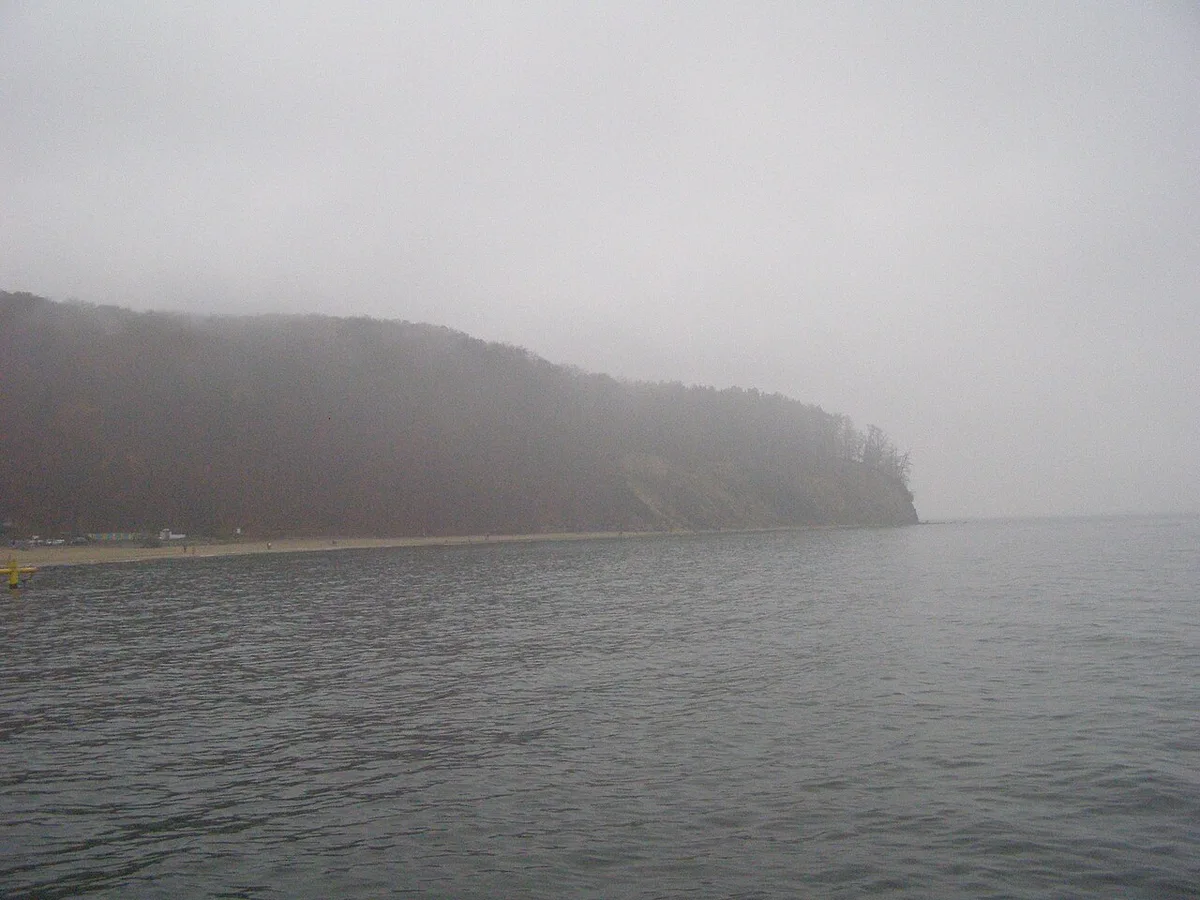
Orłowo is the closest thing Gdynia has to a signature quarter. Since the city has no medieval old town, Orłowo fills that role: the Orłowo Cliff (Klif Orłowski), a dramatic eroding wooded sea-cliff in the Kępa Redłowska nature reserve, the charming wooden Orłowo Pier, and a quiet beach with fishing boats. A genteel, leafy, villa-lined contrast to the busy centre, and free to explore on foot or from the Gdynia Orłowo SKM stop.
Prices are gentler than the Gdańsk old town. A sit-down fresh-fish meal in Gdynia — particularly around Świętojańska street or the marina — runs noticeably less than the equivalent in Gdańsk's Long Lane tourist corridor. Fresh Baltic fish and seafood, the city's culinary calling card, is excellent value at the old-school fish-fry bars (smażalnia ryb) near the waterfront.

The honest downsides — what Gdynia is not
Now the cons — and the main one is significant enough to be decisive for some travellers.
There is no medieval old town. This is not a caveat or a minor gap: Gdynia genuinely has no ancient cobblestone core, no Gothic cathedral dominating a Rynek, no layered-history streets that reward the kind of wandering that Gdańsk, Kraków, or Wrocław offer. The city is ninety years old. Its centre is handsome and interesting, but it is the interest of 1930s modernist planning — ordered, confident, occasionally severe — not medieval organicism. If what you came to Poland for is the real-city-as-living-museum experience, you need Gdańsk for that, a 35-minute SKM ride away.
The sights are compact and can feel thin beyond two days. Gdynia is not a city where you stumble on new discoveries for a week. The waterfront hub — Southern Pier, Skwer Kościuszki, Emigration Museum — can be covered in a focused half-day. Adding Orłowo and the modernism walk fills a full day comfortably. Beyond that, you are day-tripping to the Hel Peninsula or hopping the SKM to Sopot. This is not a flaw, exactly, but it sets expectations: Gdynia is a strong one-to-two-day city, not a five-day destination.
The museum ships and aquarium operate seasonally. Hours on the Dar Pomorza and ORP Błyskawica can be reduced or suspended outside the main tourist season. If seeing the ships is your primary reason for coming, check opening times officially before you travel — visiting in November and finding the pier attractions closed is a disappointment that is entirely avoidable.
Open'er week in early July is chaotic. The Heineken Open'er Festival, held at the Gdynia-Kosakowo airfield in early July, is one of Europe's biggest music festivals and packs the city — accommodation prices spike sharply and the city feels entirely different from its usual quiet self. Either lean into it and buy a ticket, or plan your Tricity visit around it.
Gdynia vs Gdańsk vs Sopot — the Tricity comparison
The most useful way to answer "is Gdynia worth visiting" is to map it against its neighbours in the Tricity, because almost no one visits only Gdynia. For full Sopot context, our guide to Gdańsk beaches and Sopot covers the resort side of the equation in detail.
| What you're judging | Gdynia | Gdańsk | Sopot |
|---|---|---|---|
| Historic core | No medieval old town — 1920s–30s Modernist city | Spectacular Gothic/Renaissance old town | Belle-époque resort town; smaller historic centre |
| Top draw | Museum ships, Modernism Trail, Orłowo Cliff, Emigration Museum | St. Mary's Basilica, Long Lane, Westerplatte, Amber Museum | Europe's longest wooden pier (Molo), beach resort atmosphere |
| Crowd level in summer | Low–moderate; mostly Polish visitors | High; very touristed centre | High in July–Aug; full holiday-resort feel |
| Beach quality | Decent — Orłowo & city beach; cliff backdrop | Limited near old town; better beaches north | Good — long sandy beach, right in the centre |
| Cost (food & hotels) | Cheapest of the three | Mid-range; old town pricier | Most expensive, especially seafront hotels |
| Atmosphere | Confident, breezy, under-touristed; working port | Grand, historic, tourist-facing in the centre | Relaxed, glamorous, holiday-minded |
| SKM time from Gdynia | — | ~35 min | ~10–12 min |
The practical verdict: if you are in the Tricity for two days or more, spend at least a half-day in Gdynia. If you are there for five days, consider basing yourself in Gdynia — it is calmer, cheaper, and the SKM makes Gdańsk and Sopot perfectly accessible. If you are there for one day only, Gdańsk is the harder-to-skip choice for first-timers.
The SKM Tricity commuter rail runs frequently and links Gdynia Główna to Sopot (around 10–12 minutes) and Gdańsk Główny (around 35 minutes). Buy tickets at machines and validate before boarding. Choosing Gdynia as your Tricity base saves money on accommodation while keeping all three cities within easy reach — the SKM is that reliable.
Who should visit Gdynia — and who should skip it
Visit Gdynia if you are drawn to maritime history and want to actually board a tall ship and a WWII destroyer rather than read about them; you are interested in 20th-century architecture and want to walk one of Europe's finest concentrations of 1930s functionalist Modernism; you are doing the Tricity and have more than one day; you want a calm, genuinely un-touristy beach base with good SKM access to Gdańsk and Sopot; or you are travelling with children who will be genuinely thrilled by the warship. The Emigration Museum, though undervisited, is also an excellent reason to come if Polish diaspora history resonates with your family background.
Consider skipping Gdynia — or keeping it to a few hours — if your single day in the Tricity must go to Gdańsk (it must: the old town is non-negotiable on a first visit); medieval architecture and ancient cobbled streets are your primary travel motivation; or you need a full beach resort with nightlife and seafront glamour, in which case Sopot is the correct answer. Gdynia will also disappoint anyone who arrives expecting something like a mini-Gdańsk — it is a fundamentally different kind of city, and judging it by that metric is the fastest way to be unfair to it.
As of 2026, I would frame the decision this way: Gdynia is not Poland's most spectacular city, but it may be its most underrated one. It has a clear, coherent identity — modern, maritime, Modernist — and it delivers on that identity very well. For the traveller who has already seen Kraków and Warsaw, or who is returning to Poland with time to look beyond the headliners, a day in Gdynia is one of the smartest additions you can make to a Baltic itinerary.
What a trip to Gdynia costs in 2026
Gdynia is the most affordable of the Tricity three, and the gap is meaningful. A sit-down fresh-fish main course at a waterfront restaurant or Świętojańska-area bistro runs around 35–55 PLN (roughly €8–13). A coffee costs about 10–15 PLN (€2.50–3.50). ZKM bus and trolleybus tickets are a few złoty per journey — expect around 4–6 PLN (about €1–1.40) per single ride. A mid-range hotel night in a central or Orłowo location typically runs around 160–300 PLN (€37–70), noticeably less than equivalent locations in the Gdańsk old-town area.
The paid attractions are reasonable. The Dar Pomorza and ORP Błyskawica museum ships each run around 28–30 PLN (≈€6–7) — together under €15 for both. The Gdynia Aquarium is roughly 30–40 PLN. The Emigration Museum is around 25–30 PLN. Confirm all prices and seasonal hours officially before you go. Walking the Modernism Trail, exploring Orłowo's cliff and pier, and strolling Skwer Kościuszki down to the marina are all free. You can have a very full Gdynia day for well under 100 PLN on admissions, with food and transport on top.
If you are visiting Gdynia during the Heineken Open'er Festival (early July) or the Gdynia Film Festival (September), book accommodation months in advance — prices spike sharply and central hotels sell out early. The shoulder months of May–June and late September offer the best balance of good weather, lower prices, and manageable crowds along the Baltic coast.
The Honest Case Against Gdynia (And Why I Still Rate It)
Before I give you my final verdict, I want to address what you will find if you dig into recent traveller forums and Reddit threads: Gdynia has a vocal group of critics, and some of their complaints are fair enough to deserve a proper answer rather than a dismissal.
The strongest version of the criticism goes something like this: the area around Gdynia Główna station — the main rail hub where almost everyone arrives — is genuinely underwhelming. The plaza in front of the station in 2026 is a tangle of roads, bus stops, and utilitarian post-war blocks that make a poor first impression. Travellers who walk straight out of Gdynia Główna and judge the city by the immediate surroundings will find something that reads more like a mid-sized regional transport hub than a Baltic highlight. That criticism is accurate, and I am not going to pretend otherwise.
A second thread of complaint is that large parts of Gdynia's residential hinterland are plain post-war panel blocks — concrete socialist-era housing estates that are unremarkable at best. These do not intrude on the tourist core, but they are there. Anyone wandering too far from the waterfront axis without a specific destination in mind may drift into neighbourhoods that feel interchangeable with the less distinguished parts of any large Polish city. Gdynia is not Gdańsk, where the old-town atmosphere follows you relatively far from the centre.
A third complaint I have seen raised repeatedly: parts of the city can feel car-heavy and not especially pedestrian-friendly beyond the Skwer Kościuszki promenade and Świętojańska street. Sections of the waterfront adjacent to the working port are not walkable in the way tourists expect from a seaside destination. These are real limitations for anyone who wants to wander freely without a plan.
Who will genuinely be disappointed? Travellers who judge a city primarily by the warmth of its arrival experience. Anyone who has seen Gdańsk first and comes to Gdynia expecting the same visual grandeur — a walkable, historically rich, architecturally layered centre — will almost certainly be underwhelmed. And anyone who spends their time in the immediate Gdynia Główna station zone and concludes from that that the city is not worth it is drawing conclusions from the worst 500 metres of it.
Why I still rate it. The key is that virtually everything worth seeing in Gdynia sits in a tightly concentrated strip between the Southern Pier and Orłowo, and none of it is near the station forecourt. Once you turn south-east from Gdynia Główna and walk the ten minutes down to Skwer Kościuszki and the marina, the city's character changes completely. The interwar Modernist blocks along Świętojańska, 10 Lutego, and Śląska — the real civic core — are handsome and coherent in a way that rewards close attention. The Southern Pier, with the Dar Pomorza and ORP Błyskawica moored side by side, is one of those travel discoveries that genuinely surprises you: the sea is right there, the ships are real, and the Emigration Museum inside the Marine Station is moving in a way that most visitors do not anticipate. Orłowo's wooded cliff, a 15-minute SKM ride south, is legitimately beautiful and costs nothing to visit.
Gdynia lacks Gdańsk's visual drama and historic depth — that is simply true, and no amount of advocacy changes it. But the city it actually is, viewed on its own terms, is a coherent, under-touristed Baltic port with a distinct personality and several sights that have no equivalent elsewhere in Poland. In 2026, the verdict that Gdynia is not worth visiting feels like a category error: it measures the city against Gdańsk's strengths rather than asking what Gdynia does well. See the full things to do in Gdynia guide to build a day that plays to those strengths, or start with where to stay in Gdynia if you are considering it as a base.
Is Gdynia Worth Visiting at a Glance
- Worth it for: the Dar Pomorza tall ship and ORP Błyskawica destroyer, one of Europe's finest 1930s Modernist city centres, the Emigration Museum, Orłowo's cliff and pier, and a calmer and cheaper Tricity base.
- How long: half a day to two days; combine with Gdańsk (35 min by SKM) and Sopot (10–12 min) for a complete Tricity picture.
- Top draws: Southern Pier museum ships, Modernism Trail (Szlak Modernizmu), Emigration Museum at the Marine Station, Kamienna Góra viewpoint, Orłowo Cliff & Pier.
- The honest catch: no medieval old town — if cobblestone history is the primary goal, Gdańsk is the correct choice; Gdynia has a fundamentally different character and should be judged on its own terms.
- Cost: the most affordable of the Tricity three — food, hotels, and admissions all run notably cheaper than in central Gdańsk.
- Useful links: Gdynia (Wikipedia)
Frequently Asked Questions
Is Gdynia worth visiting in 2026?
Yes, for half a day to two days as part of a Tricity trip. Gdynia has a clear identity — a modern, purpose-built maritime port city with one of Europe's richest concentrations of 1930s Modernist architecture, two extraordinary museum ships (the tall ship Dar Pomorza and the WWII destroyer ORP Błyskawica) on the Southern Pier, the excellent Emigration Museum in the historic Marine Station, and Orłowo's cliff-backed beach quarter. It is under-touristed, affordable, and an easy SKM ride from Gdańsk and Sopot. The honest caveat: it has no medieval old town — if that is your primary goal, Gdańsk (35 minutes away) is the right answer.
How does Gdynia compare to Gdańsk?
They are fundamentally different cities. Gdańsk has a spectacular reconstructed Gothic and Renaissance old town, a grand historic waterfront, and a weight of medieval and 20th-century history — it is Poland's most visited Baltic city for good reason. Gdynia has none of that medieval character; instead it offers bold 1930s functionalist architecture, the museum ships, and a calmer, more local atmosphere at lower prices. The two complement each other well and are only 35 minutes apart by SKM commuter rail — most Tricity visitors benefit from seeing both rather than choosing between them.
Is Gdynia or Sopot better for a beach holiday?
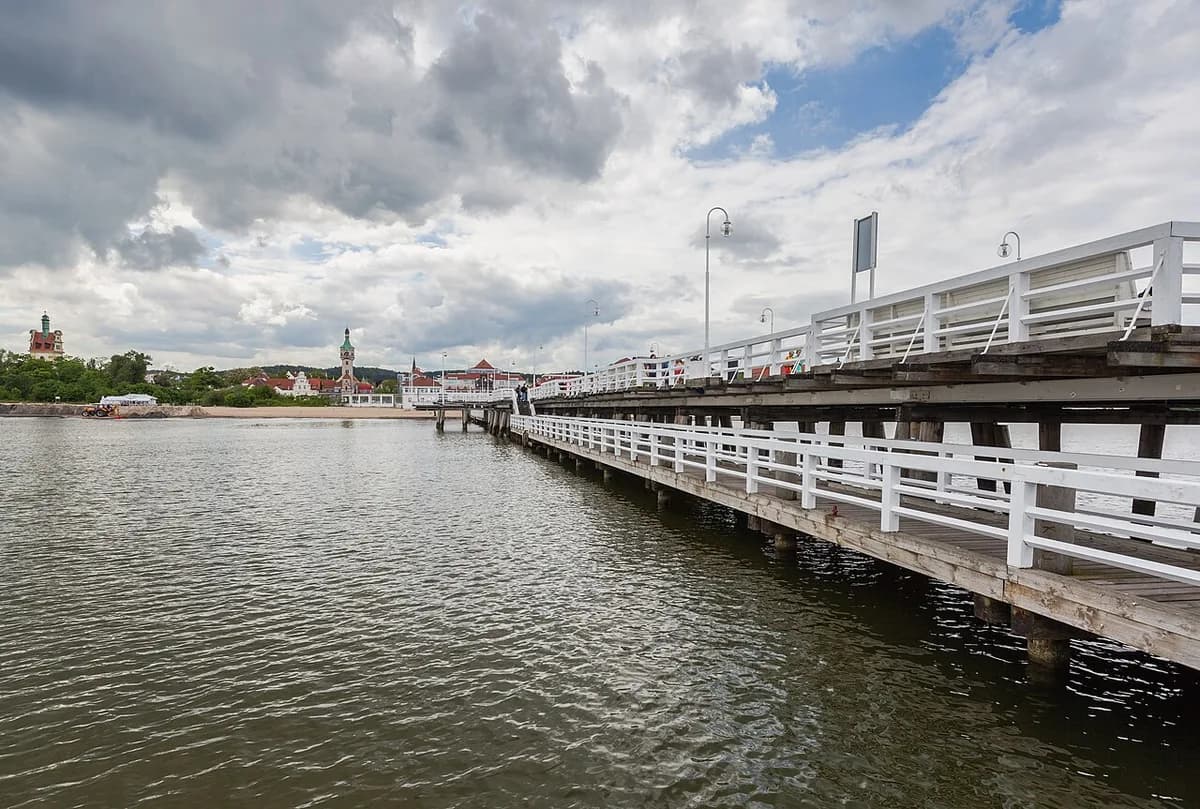
Sopot, for a classic beach resort experience — it has a longer, wider sandy beach right in the town centre, a glamorous seafront promenade, Europe's longest wooden pier, and a full holiday-resort energy. Gdynia's beaches at Orłowo (with its dramatic cliff backdrop) and the city beach are pleasant and less crowded, making Gdynia the better choice if you want a calm beach base with access to proper city sights rather than a resort. The two are only about 10–12 minutes apart by SKM, so a Gdynia base with day-trips to Sopot's beach is a practical and cost-saving combination.
How many days do you need in Gdynia?
One focused day covers the Southern Pier museum ships, the Emigration Museum, the Modernism Trail walk, and Kamienna Góra viewpoint. A second day adds Orłowo's cliff and pier properly, plus time to slow down over fresh fish on the waterfront. If you plan to use Gdynia as a base for the whole Tricity, two days works well — the SKM makes Gdańsk and Sopot straightforward day-trips. Beyond two days, Gdynia's own sights become thin; the Hel Peninsula ferry or a Kashubia excursion would fill the extra time.
Is Gdynia worth visiting without seeing Gdańsk on the same trip?
It depends on your interest in maritime architecture and history. Gdynia alone — with the museum ships, the Modernism Trail, Orłowo, and the Emigration Museum — is a satisfying one-to-two-day stop that stands entirely on its own terms. But most travellers will find the contrast with Gdańsk enormously enriching: the medieval grandeur of Gdańsk and the modernist, maritime confidence of Gdynia together tell a much more complete story of Poland's Baltic identity than either city tells alone. Seeing only Gdynia and skipping Gdańsk on a first Tricity visit would be an unusual and probably regretted choice.
So, is Gdynia worth visiting? My honest 2026 verdict is yes — with one clear condition: you need to arrive knowing what kind of city it actually is. This is not a medieval old-town destination. It is a bold, modern, maritime city built by a young nation determined to claim its own seacoast, and its sights — the white tall ship on the Southern Pier, the functionalist interwar streets, the cliff walk at Orłowo, the Emigration Museum — reflect that identity with uncommon clarity and pride. It is the Tricity's under-appreciated ace: affordable, uncrowded, and genuinely interesting for anyone who looks past the Gdańsk headline.
If you are ready to plan, start with the full overview of the best things to do in Gdynia, then sort your accommodation with our guide to where to stay in Gdynia. And if you are weighing the wider Tricity, our honest verdict on whether Gdańsk is worth visiting alongside the Gdańsk beaches and Sopot guide will help you build the complete picture for a Baltic Poland trip in 2026.
You might also like


Continue reading
More guides you'll find useful