
Is Lublin Worth Visiting? An Honest 2026 Verdict
Last updated June 2026 — "Is Lublin worth visiting?" is a question I hear most from travellers who have already done Kraków and Warsaw and are wondering what eastern Poland actually has to offer. My honest answer, built from several visits and one long weekend that turned into four nights: yes, for most curious travellers, and emphatically so if you want a real medieval Polish city without the queues and the souvenir-shop density that now define the country's headline stops.
What follows is a straight verdict, not a promotional piece. Lublin has genuine weaknesses and an image problem it has never fully shaken — too far east, too little known, too easy to skip on a tight itinerary. But those same qualities are precisely what make it interesting in 2026. Here is who should come, who should stay away, and exactly what I found when I climbed the Trinitarian Tower and stood in the shadow of Majdanek on the same afternoon.
Is Lublin worth visiting? The short answer
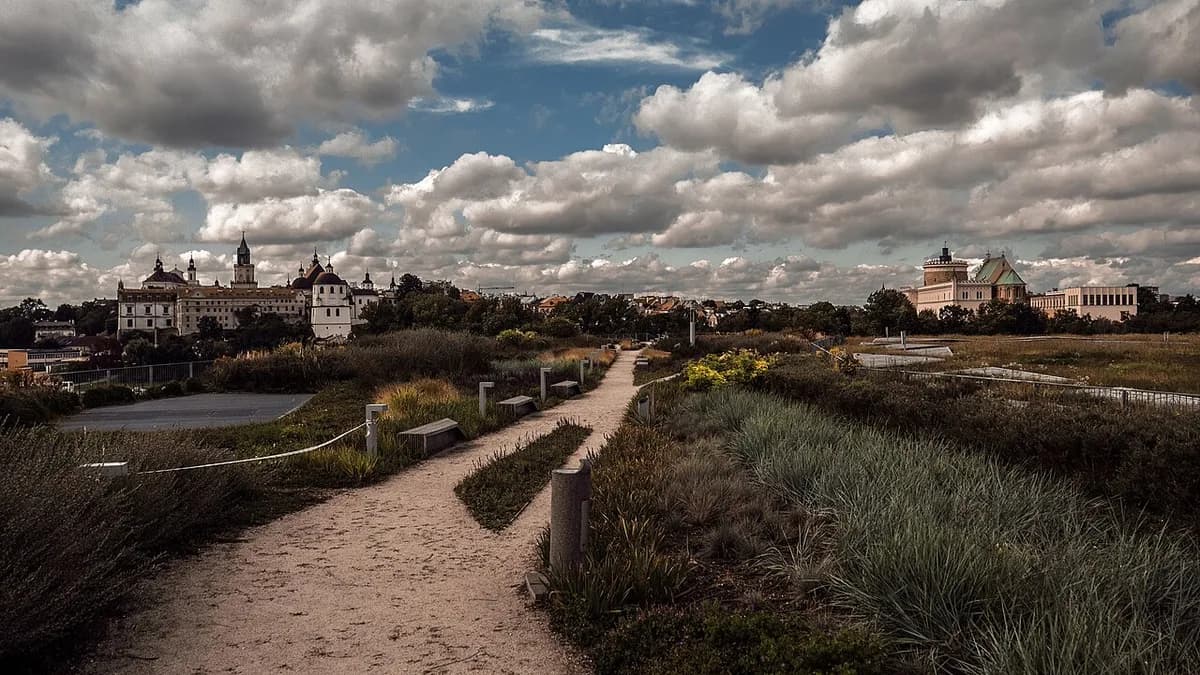
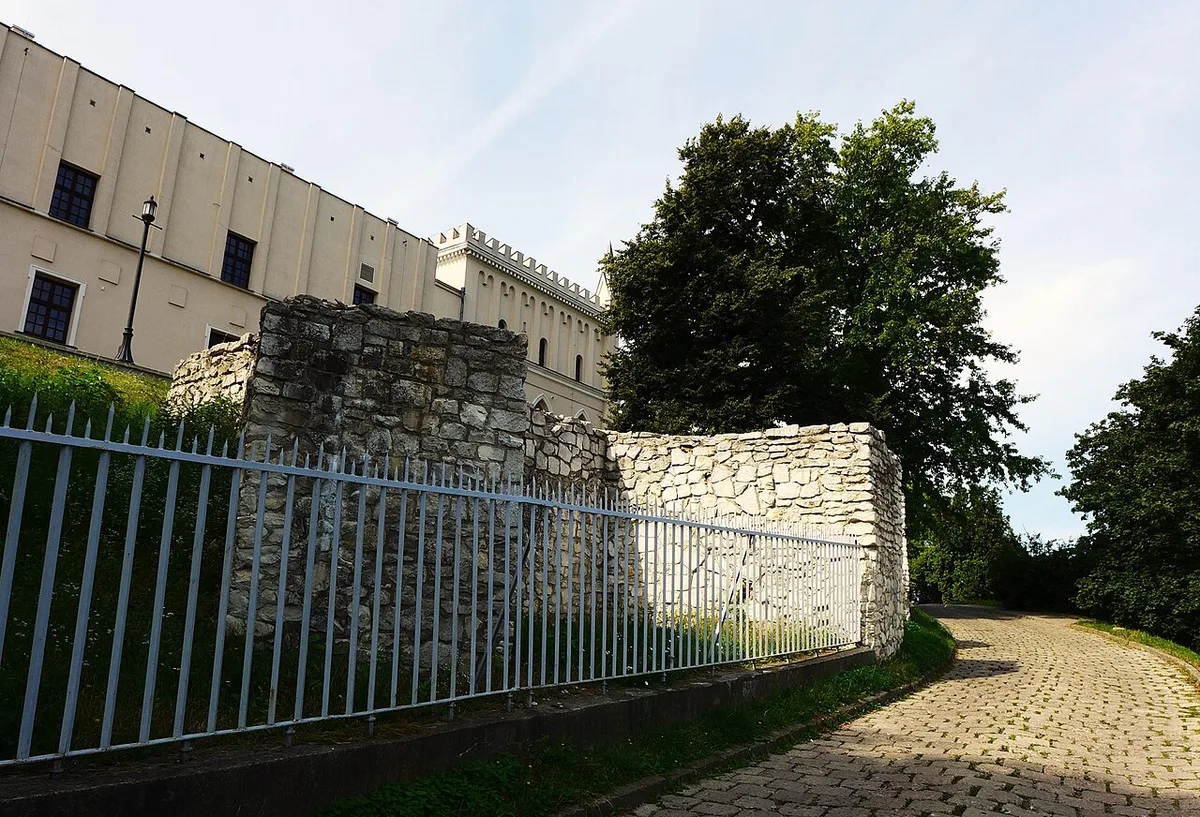
Yes — Lublin is worth visiting for one to two days, and most visitors who come leave wishing they had budgeted three. The city's centre of gravity is a genuinely atmospheric medieval Old Town — the Stare Miasto — built on a hilltop above a bend in the Bystrzyca river, with the white-and-Gothic Lublin Castle looming above it and a web of cobbled lanes running down toward the Kraków Gate. This is not a reconstructed old town or a pedestrianised façade: it is the real thing, complete with a 280-metre network of interconnected medieval cellars beneath the market square.
The headline argument for coming is straightforward: you get an experience close to Kraków's medieval core — the castle, the Old Town square, the towers, the walk-able lanes — at a fraction of the crowds, the prices, and the coach-tour density. If you arrive expecting Łódź's industrial reinvention story, you will be surprised; if you arrive expecting an overly polished tourist theme park, you will also be surprised. Lublin is something in between: a working eastern-Polish royal city with 330,000 residents, a large student population, and the kind of honest, local café culture that Kraków's Old Town largely traded away some years ago. Read our full rundown of the best things to do in Lublin to see the full case.
The real medieval city — why Lublin is different from what you expect
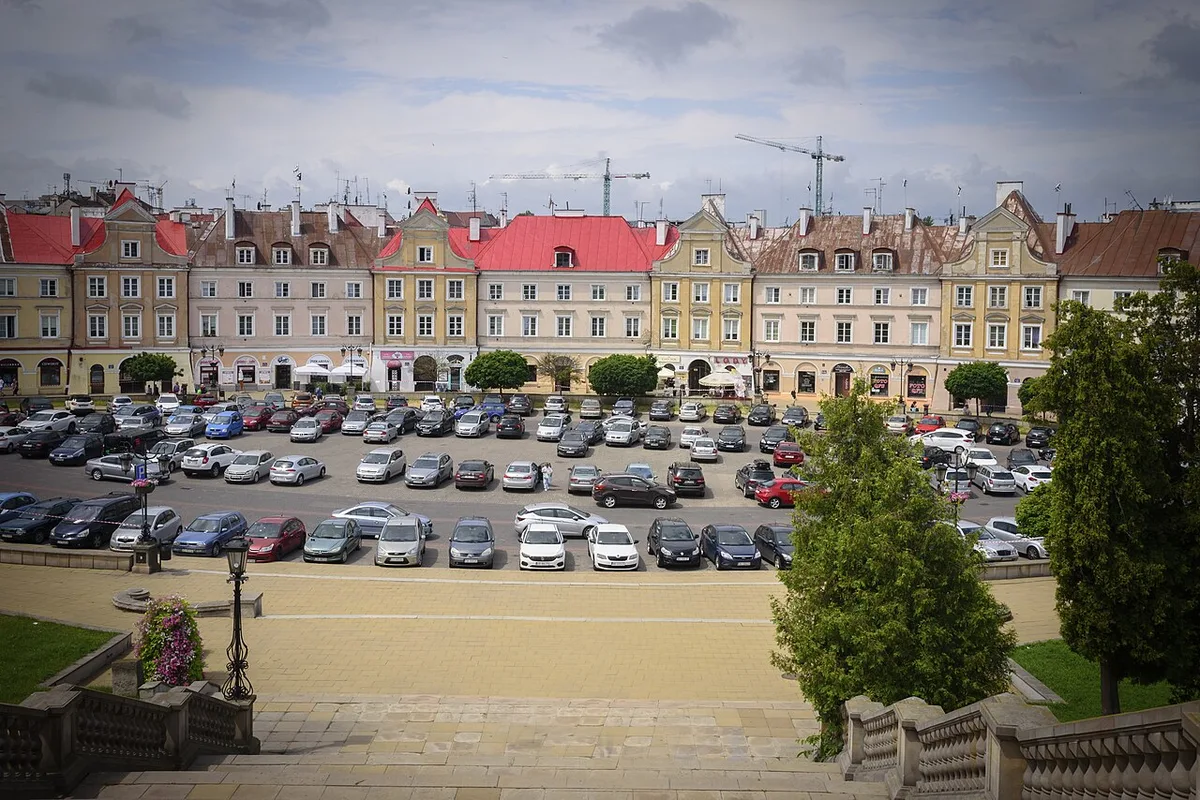
Most travellers reach eastern Poland having absorbed a mental picture of it as flat, industrial, and historically erased. Lublin contradicts that picture almost immediately. The Stare Miasto sits on a genuine medieval plan: the Rynek (market square), lined with restored Renaissance and Baroque tenement houses, anchors a dense core of lanes that climbs steeply in every direction. At its centre stands the Crown Tribunal — the former highest court of the Polish-Lithuanian Commonwealth's Lesser Poland, now the entrance to the Underground Route — and behind the rooftops the silhouette of Lublin Castle sits on its hill.
The weight of history here is real. The Union of Lublin of 1569, which merged the Kingdom of Poland and the Grand Duchy of Lithuania into one of Europe's largest polities, was signed in this city. Lublin was a royal city, a seat of courts, a trading crossroads between Catholic West and Orthodox East. When I first walked through the Kraków Gate — the 14th-century brick gatehouse that is Lublin's emblem — into the Old Town, I genuinely did not expect the scale of what was on the other side. The frescoes inside the Holy Trinity Chapel in the castle, a fusion of Gothic Catholic architecture and Byzantine-Ruthenian painting commissioned in 1418 by King Władysław Jagiełło, are among the finest medieval interiors I have seen anywhere in Poland. They are also almost unknown outside the country.
The honest downsides — what nobody tells you
Let me be straight about the cons, because they are real. Lublin is not easy to reach from western Europe. There are no major international hubs an hour away; the city sits about 170 km south-east of Warsaw, and flying into Lublin Airport (LUZ, in nearby Świdnik) means navigating a small regional airport with limited routes. Most visitors arrive by train from Warsaw — a journey of roughly 2–2.5 hours — which makes Lublin feel like an add-on decision rather than a primary destination, and that perception alone keeps many travellers away.
The city also carries the visible weight of its Jewish history in a way that can be psychologically heavy, particularly around Majdanek. The former Nazi German concentration and extermination camp sits on the south-eastern edge of the city — not in a forest somewhere, but close enough to the residential streets that postwar Lubliners walked past it daily. It is exceptionally well preserved: the barracks, the guard towers, the gas chambers, and the immense domed Mausoleum are all intact. Visiting takes two to three hours, it is free, and it is not recommended for children under around 14. This is not a downside in the sense of a flaw; it is a flaw in the itinerary-planning sense, in that it demands a full half-day of emotional bandwidth that some short-break travellers may not budget for.
Beyond the big headline: parts of the city beyond the Old Town and Krakowskie Przedmieście show their age and their eastern-provincial character. The architecture flattens quickly once you leave the Stare Miasto, and some of the outer residential areas look as grey as the rest of post-communist central Europe. As of 2026, Lublin's civic ambitions outrun its polish in places — but for the right traveller, that lived-in quality is exactly the appeal.
What makes Lublin genuinely special
Now the upsides — and there are more than the small footprint suggests. The Underground Route alone is worth the trip: some 280 metres of interconnected medieval merchant cellars beneath the Old Town Rynek, done as a guided walk of about 45 minutes that ends in a dramatic light-and-sound recreation of the Great Fire of Lublin in 1719. Book ahead; English tours run at set times. Expect roughly 20–30 PLN (around €5–7) and dress for about 8–12 °C underground.
The Jewish heritage is extraordinarily layered. The Grodzka Gate — the historic threshold between the Christian Old Town and the Jewish quarter that no longer physically exists — is now the home of the Grodzka Gate–NN Theatre centre, one of the most thoughtful memory institutions I have encountered in Poland. The Yeshiva of the Wise Men of Lublin on ul. Lubartowska was once the largest yeshiva in the world; the building still stands. For travellers interested in Central European Jewish history, Lublin offers a depth that goes well beyond a single museum.
The student energy is real and cheap. Two large universities — UMCS and the Catholic University KUL — put tens of thousands of students in the city, which translates into a lively, affordable café and bar scene along Krakowskie Przedmieście and around Plac Litewski. A decent sit-down meal in the Old Town area runs around 35–60 PLN (roughly €8–14); a coffee costs 10–18 PLN (about €2.50–4). And once a year, in late July, the city fills with new-circus and street-performance acts for the Carnaval Sztukmistrzów — arguably the liveliest festival I have seen in an eastern-Polish city, riffing on the local legend of Pan Twardowski, Lublin's own Faust figure.
Lublin vs Kraków — the most honest comparison
The fairest way to judge Lublin is against the city most travellers choose instead. Against Kraków, the comparison is closer than most people expect — and farther on a few axes that matter. Kraków wins outright on classic tourist infrastructure: the intact medieval Rynek is larger, the Wawel Castle complex is grander, and the day-trip options (Auschwitz-Birkenau, the Wieliczka Salt Mine, Zakopane) have no competition for scale. If your primary goal on a Poland trip is maximum medieval grandeur per day, Kraków remains the correct answer.
But if you have already been to Kraków, or if the prospect of fighting coach-tour queues for a two-second glimpse of the Wawel altarpieces sounds exhausting, Lublin offers something genuinely different: a comparable medieval Old Town with almost none of the crowds, at noticeably lower prices, with its own heavyweight history that Kraków does not replicate. The Holy Trinity Chapel frescoes are unique in Poland. Majdanek is something Kraków does not have at all. The student-city atmosphere on Krakowskie Przedmieście in the evening is more honest and more local than what you find on Grodzka in Kraków's tourist season.
Here is how I'd weigh the two against the axes that usually decide where a 2026 Poland trip goes:
| What you're judging | Lublin | Kraków |
|---|---|---|
| Medieval Old Town | Real, hilly, atmospheric, small — genuine cobbled lanes | Larger, grander, heavily restored and very touristed |
| Crowds & over-tourism | Low; mostly locals and domestic visitors | High; one of Europe's most touristed city centres |
| Cost | Noticeably cheaper across food, hotels, drinks | High in the Old Town; mid-range in outer areas |
| Signature draw | Castle frescoes, Underground Route, Majdanek, student energy | Wawel, Rynek Główny, Auschwitz day trip |
| Day-trip range | Kazimierz Dolny (1 h), Zamość (1.5 h) | Salt Mine (30 min), Auschwitz (1.5 h), Zakopane (2 h) |
| Time to do it justice | 1–2 days; 3 for day trips | 2–4 days minimum |
Who should visit Lublin — and who should skip it
Visit Lublin if you want a real medieval Polish city without Kraków's tourist density, you are interested in Jewish Central European history or WWII memorial sites, you have already done the big three (Warsaw, Kraków, Gdańsk) and want to go deeper into Poland, or you are planning to combine it with a day trip to Kazimierz Dolny or Zamość. The city is also an excellent choice for budget-conscious travellers: the gap between Lublin's prices and Kraków's old-town prices is significant, and many of the best things — the Old Town walk, the Grodzka Gate centre, the Cathedral — cost little or nothing. Our guide to where to stay in Lublin covers the best areas by budget to help you plan your base.
Skip Lublin — or at least keep it very short — if your Poland trip is your first and you have not yet seen Kraków or Warsaw, if your time is under four days total in the country and you need to prioritise the headline sights, or if Majdanek will form part of your itinerary and you are travelling with young children. Lublin rewards people who come with genuine curiosity and a day or two to spend at their own pace; it frustrates travellers who arrive on a tight schedule expecting a ready-made tourist circuit. For everyone in between, it is one of the best-value, most underrated stops in a broader Polish itinerary.
What a trip to Lublin actually costs in 2026
"Affordable" gets used loosely, so here are the rough numbers I work with from my most recent visit. A sit-down main course at a mid-range Old Town or Krakowskie Przedmieście restaurant runs around 35–65 PLN (roughly €8–15), a coffee costs about 10–18 PLN (€2.50–4), and city bus and trolleybus rides are only a few złoty — expect around 4–6 PLN (about €1–1.40) per journey. A solid mid-range hotel night in a central location typically lands around 180–320 PLN (€40–75), noticeably less than the equivalent in Kraków's Old Town district.
Several of the best things in Lublin are free or very cheap. Walking the entire Stare Miasto, passing through the Kraków Gate and the Grodzka Gate, climbing to look at the Castle exterior, strolling Krakowskie Przedmieście to Plac Litewski — all free. Museum entry at the Castle runs around 25–30 PLN (confirm officially); the Underground Route is roughly 20–30 PLN (€5–7). Majdanek is free. Budget a modest daily allowance for paid attractions and you can do Lublin very comfortably for less than comparable days in Kraków or Warsaw.
Book the Lublin Underground Route tour ahead online, especially in summer and around the Carnaval Sztukmistrzów festival in late July — English-language tour slots fill quickly and the cellars hold limited groups.
Is Lublin Worth Visiting at a Glance
- Worth it for: a real medieval Old Town without Kraków's crowds, the Holy Trinity Chapel frescoes, the Lublin Underground Route, Majdanek, and a lively, affordable student-city atmosphere.
- How long: one to two days; three if you add a day trip to Kazimierz Dolny or Zamość.
- Top draws: Stare Miasto & the Rynek, Lublin Castle + Holy Trinity Chapel frescoes, the Underground Route, the Grodzka Gate / NN Theatre, and Majdanek.
- The honest catch: not easy to reach from western Europe; Majdanek demands emotional bandwidth; city flatters quickly outside the Old Town and Krakowskie Przedmieście.
- Getting there: roughly 2–2.5 hours from Warsaw by train; budget noticeably less than Kraków once you arrive.
- Useful links: Lublin (Wikipedia)
Frequently Asked Questions
Is Lublin worth visiting in 2026?
Yes, for one to two days — and three if you add a day trip to Kazimierz Dolny or Zamość. Lublin has a genuine medieval Old Town with a hilltop castle, 14th-century brick gates, a spectacular underground cellars network beneath the market square, and the extraordinary Holy Trinity Chapel frescoes from 1418. It is significantly less crowded and less expensive than Kraków, with a lively student-city atmosphere. The one heavyweight addition to the itinerary is Majdanek, the exceptionally well-preserved former concentration camp on the city's south-eastern edge — free to enter and deeply important, but demanding a committed half-day.
How does Lublin compare to Kraków?
Both cities have real medieval Old Towns — Lublin's is smaller and hillier, Kraków's is larger and grander. Kraków wins on sheer scale of sightseeing and day-trip options. Lublin wins on affordability, authenticity, and the near-absence of mass tourism. If you have already seen Kraków and want a less-curated side of Poland, Lublin is a change of pace rather than a downgrade. If it is your first time in Poland and your time is limited, Kraków remains the easier first choice.
How many days do you need in Lublin?
One focused day covers the Old Town, Lublin Castle, the Underground Route, the Kraków Gate, the Grodzka Gate, and an evening on Krakowskie Przedmieście. A second day adds Majdanek (half a day minimum) and the Open-Air Village Museum. A third day is for a day trip — Kazimierz Dolny about an hour away, or Zamość about 90 minutes — which transforms a city break into a real introduction to eastern Poland. Most travellers find a weekend the sweet spot.
Is Lublin safe for tourists?
Lublin is generally safe for tourists, with the standard urban awareness you would apply in any Polish city. The Old Town, Krakowskie Przedmieście, and Plac Litewski are comfortable to walk by day and well into the evening. Some areas outside the centre feel grey and quiet after dark; use Bolt or the city trolleybuses for longer journeys at night. The city's large student population makes the centre lively without the rowdier edge that some heavily-touristed Polish cities attract at weekends.
Is Lublin good for a weekend trip?
Yes, a weekend is one of the best formats for Lublin. Two days lets you cover the Old Town and the Underground Route on day one, then Majdanek and the Open-Air Village Museum on day two — with time left over for the café and bar scene on Krakowskie Przedmieście in the evenings. The city is reachable from Warsaw in roughly two to two-and-a-half hours by train, which makes a Friday-evening arrival and Sunday-afternoon return entirely practical. Avoid late July if you dislike crowds — the Carnaval Sztukmistrzów festival fills the Old Town completely.
So, is Lublin worth visiting? My honest 2026 verdict is yes — and more confidently than the city's low profile would suggest. This is eastern Poland's best-kept medieval secret: a real castle, real cobbled lanes, real 15th-century frescoes, and a genuine open wound of 20th-century history at Majdanek that no amount of tourist polish can or should smooth over. Come with a couple of days, a willingness to slow down, and the knowledge that you are seeing a Polish city that still belongs primarily to the people who live there rather than to the people who photograph it.
If you are ready to plan, start with our overview of the best things to do in Lublin, then sort your base with our guide to where to stay in Lublin. Treat it as the honest counterweight to a polished Kraków trip — and one of the best-value stops in any serious tour of Poland in 2026.
You might also like


Continue reading
More guides you'll find useful


