

Getting Around Gdynia: SKM, Trolleybuses & Transport
Getting around Gdynia is simpler than its Tricity reputation might suggest. The city centre is flat, compact, and genuinely walkable — from Gdynia Główna station to the Southern Pier along the modernist boulevards takes less than fifteen minutes on foot, and most of the headline sights are strung along that same corridor. For everything else — day-tripping to Gdańsk or Sopot, reaching Orłowo's cliff and pier, or boarding the summer ferry to the Hel Peninsula — Gdynia gives you two strong options: the SKM fast commuter rail and ZKM Gdynia's trolleybuses and buses.
Two full days in the city are entirely doable without a single daytime taxi: the SKM handles the Tricity hops, the trolleybus covers the odd suburban stretch, and the rest is on foot. This guide covers the SKM network, Gdynia's signature trolleybus system (one of only three surviving in Poland), ticket types and validation, Gdynia Główna station, reaching Orłowo, the Hel ferry, and when to use Bolt. All prices are in PLN with rough euro equivalents. Last updated June 2026.
Is Gdynia Easy to Get Around?
Yes — for most visitors, Gdynia is one of the most navigable cities on the Polish Baltic coast. Unlike hilly Gdańsk, Gdynia's city centre is almost entirely flat. The grid of interwar Modernist streets between the station and the waterfront is easy to read, wide, and unintimidating, and the main commercial artery — Świętojańska street — runs in a straight line from Gdynia Główna station down to Skwer Kościuszki and the sea. Even with a suitcase on a grey November afternoon, the walk is barely an effort.
Where transport infrastructure earns its keep is for three things: reaching Orłowo (one SKM stop south of the centre), day-tripping the Tricity via the SKM, and connecting to the Hel Peninsula in summer. For choosing a base that puts the network to best use, see our guide to where to stay in Gdynia — a central Śródmieście address puts the SKM, the trolleybus corridors, and the entire walkable waterfront all within immediate reach.
The SKM: Your Tricity Lifeline
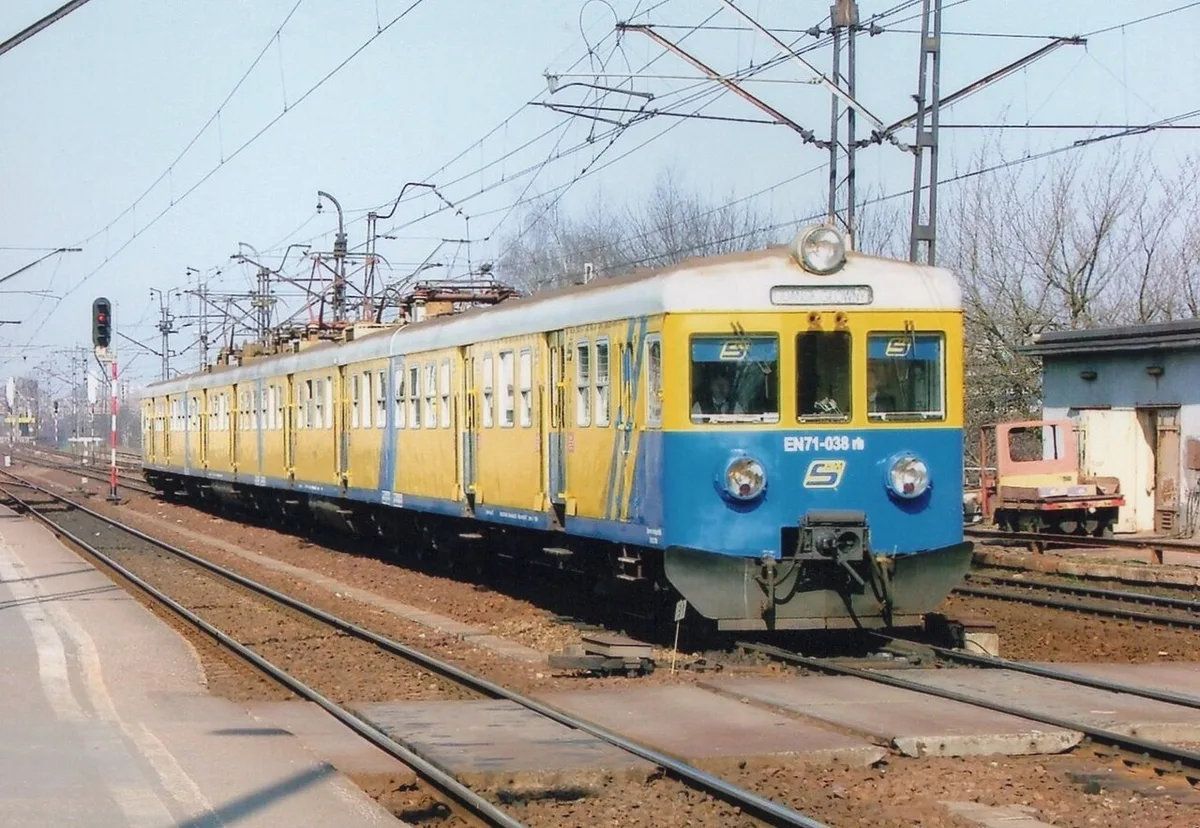
The SKM (Szybka Kolej Miejska — "Fast City Rail") is the backbone of the Tricity agglomeration and the single most useful piece of infrastructure for any visitor to Gdynia. Running along the coast, it connects Gdynia Główna with Sopot and Gdańsk Główny on a single line with trains roughly every ten to fifteen minutes at peak times and every twenty to thirty minutes off-peak. Journey times are short: Gdynia to Sopot is around 10–12 minutes; Gdynia to Gdańsk Główny the full length of the line in roughly 35 minutes.
The SKM is thoroughly dependable — the trains are modern, fares are low, and for a visitor based in Gdynia who wants to explore Gdańsk's old town or Sopot's beach and boardwalk, it's the obvious and cheapest way to do both in a single day. For a broader look at the shared Tricity network, our getting around Gdańsk guide covers the southern end of the same line in detail.
Tickets are bought at self-service machines at SKM stations (card and cash) or through the SKM mobile app. You must validate before boarding — feed the paper ticket into the yellow platform validators before going to the platform, not on the train. A single SKM journey Gdynia–Gdańsk spans two or three fare zones; expect roughly 5–7 PLN each way (confirm at the machine for current prices). The SKM ticket is separate from the ZKM city ticket — the two networks are priced independently.
Gdynia's Trolleybuses and ZKM Buses
Gdynia's trolleybus network is a genuine point of local pride. As of 2026, Gdynia is one of only three Polish cities that still operate trolleybuses, alongside Lublin and Tychy — and the overhead wire infrastructure that criss-crosses the main city corridors is a distinctive feature of the Gdynia skyline. The trolleybuses run on electric power, making them quieter, smoother, and cleaner than diesel buses, and on the central corridors they are frequent and comfortable.
ZKM Gdynia (Zarząd Komunikacji Miejskiej) — the city transport authority, with service updates posted via the official gdynia.pl portal — operates both the trolleybuses and the diesel/hybrid bus routes that extend to the suburbs and districts not covered by the overhead wires. The same ZKM ticket is valid across all trolleybus and bus lines — you do not need a separate ticket depending on which type of vehicle you board. For most visitors, the city bus network will rarely be necessary given how walkable the centre is, but it's there when you need it.
The Jakdojade app covers ZKM Gdynia routes fully, lets you buy ZKM tickets in English, and shows live departures for each stop. It also handles SKM route suggestions. Download it before you arrive — it removes all guesswork from the network within a few minutes.
Tickets, Validation, and Prices
ZKM Gdynia uses time-based tickets that allow unlimited transfers between trolleybuses and buses within their validity window. The approximate fare guide for 2026 is below — always confirm current prices on the ZKM Gdynia official website, as fares are reviewed periodically. Reduced fares (students, seniors, children) are typically around half the full rate.
| Mode / Ticket | Route or Use | Approx. Fare (PLN) | Notes |
|---|---|---|---|
| SKM — single | Gdynia ↔ Sopot (~12 min) | ~3–5 PLN | Validate on platform before boarding |
| SKM — single | Gdynia ↔ Gdańsk (~35 min) | ~5–7 PLN | Zone-based; confirm at machine |
| ZKM 20-minute ticket | Short city hop, one trolleybus ride | ~3.50–4 PLN (≈€0.80) | Covers unlimited transfers within 20 min |
| ZKM 60-minute ticket | Cross-city or one change | ~4.50–5.50 PLN (≈€1.10) | Best standard choice for most trips |
| ZKM 24-hour pass | All ZKM trolleybus + bus routes | ~17–20 PLN (≈€4–5) | Pays off after three or four rides |
| MZKZG Tricity integrated ticket | SKM + ZKM Gdynia + ZTM Gdańsk + Sopot operators | Confirm at mzkzg.com.pl | One ticket across all Tricity operators — valid on SKM trains and city buses across Gdańsk, Sopot & Gdynia |
| Hel ferry (summer) | Southern Pier → Hel Peninsula | ~50–80 PLN return | Seasonal; confirm on Żegluga Gdańska site |
| Bolt / taxi | Door-to-door, central Gdynia | ~15–30 PLN (≈€3.50–7) | Best for late nights and luggage |
Validation is non-negotiable. A ZKM paper ticket must be inserted into the on-board validator the moment you board — it is only valid from the moment it is stamped. An app ticket must be activated as you step on, not at the stop beforehand. Inspectors do carry out spot checks; an unvalidated ticket is treated as no ticket and carries a heavy on-the-spot fine. Validate the instant you board.
ZKM and SKM are two separate systems with separate tickets. A ZKM city pass covers trolleybuses and buses within Gdynia but not the SKM line to Sopot and Gdańsk. If you are doing a full Tricity day, budget for both: a ZKM day pass for city travel, and a separate SKM single for the Gdańsk or Sopot leg.
Gdynia Główna Station
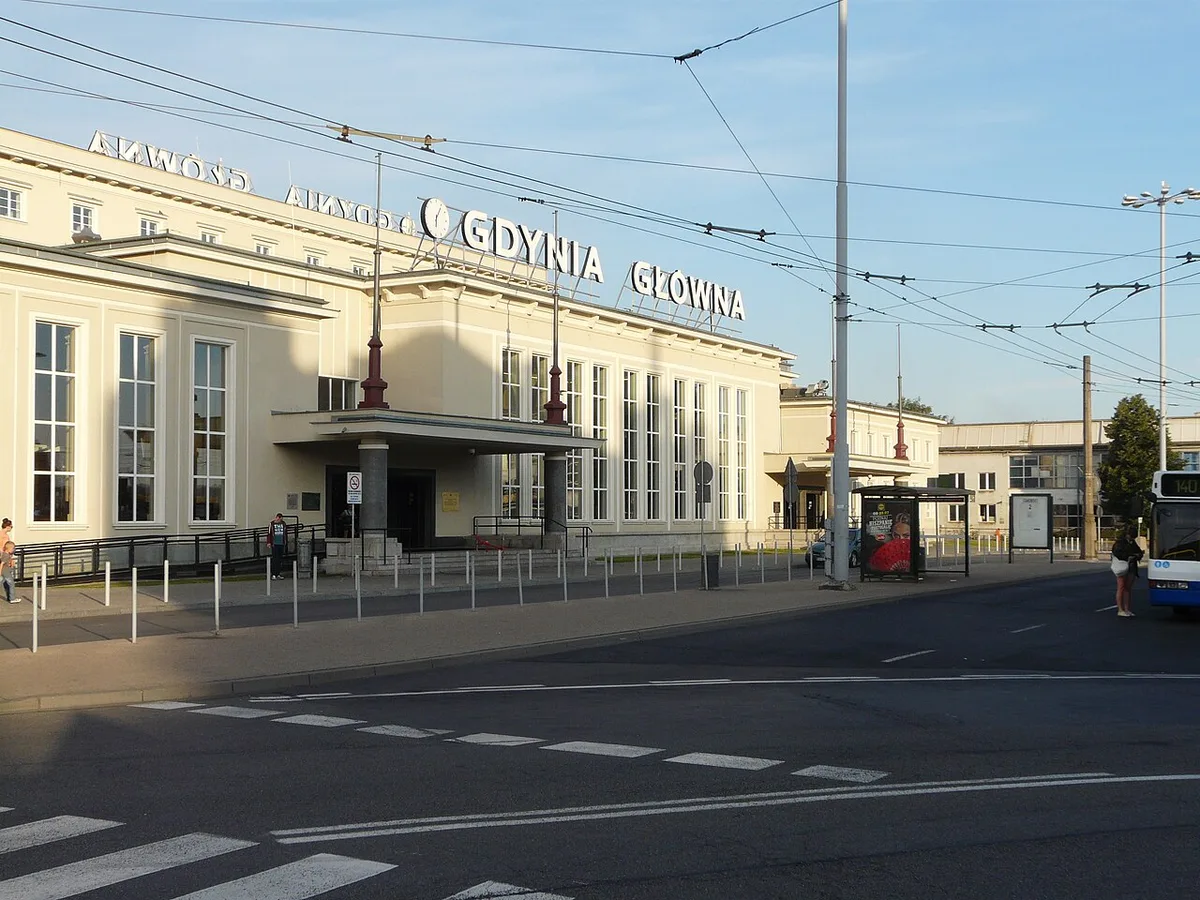
Gdynia Główna is the city's main rail and SKM terminus, sitting at the northern end of the SKM coastal line and the southern edge of the city centre. Long-distance PKP Intercity trains connect Gdynia Główna to Warsaw (roughly 3–3.5 hours on a fast IC service) and to Bydgoszcz, Poznań, and other Polish cities. For most international visitors, this is the arrival point after a transfer or a direct overnight service from the south.
If you plan to mix SKM trains with city buses across Gdańsk, Sopot, and Gdynia in a single day, check the MZKZG metropolitan integrated ticket (issued by the Metropolitalny Związek Komunikacyjny Zatoki Gdańskiej). One integrated ticket covers SKM commuter rail, ZKM Gdynia trolleybuses and buses, ZTM Gdańsk buses, and other Tricity operators — removing the need to buy separate SKM and ZKM tickets. Confirm current prices, ticket types, and 2026 fare structures at mzkzg.com.pl before you travel, as integrated fare tiers are updated periodically.
The station is well placed: Świętojańska street leads directly northward from the station forecourt to Skwer Kościuszki and the Southern Pier in a ten-minute walk. Adjacent to the main station building you'll find several ZKM trolleybus and bus stops plus the Gdynia Główna bus terminal. Always check PKP Intercity or the Koleo app for current intercity timetables before you travel.
Walking the Flat Centre and Waterfront
For the heart of any Gdynia visit, your own feet are the best transport by far. The modernist city centre is built on a flat coastal plain — there is no medieval hill to climb, no winding old-town alley network to decode. The walk from Gdynia Główna station along Świętojańska, through the bold 1930s functionalist blocks, down through Skwer Kościuszki, and out onto the Southern Pier to the museum ships takes under twenty minutes and is entirely level.
The Modernism Trail (Szlak Modernizmu) is a self-guided walking route with plaques linking the landmark interwar buildings through the city centre — the Bankowiec, the PLO building, the ZUS building, the Marine Station. It can be covered in one morning without any guide beyond the on-street signage. For a full run through what to see on foot, our things to do in Gdynia guide covers every sight in the central core.
Reaching Orłowo by SKM
Orłowo — Gdynia's signature seaside quarter with its eroding clifftop, wooden pier, and beach with fishing boats — is one SKM stop south of Gdynia Główna. The station is called Gdynia Orłowo and the journey takes around five minutes. From the station, a ten-to-fifteen-minute walk through genteel villa-lined streets brings you to the Orłowo waterfront and the start of the cliff path through the Kępa Redłowska nature reserve.
After a morning on the Southern Pier, it's fair to wonder whether the cliff is worth a separate journey. It is — the Orłowo Cliff path through the reserve is quietly spectacular and completely different in character from the urban waterfront. The SKM connection makes the round trip a relaxed half-day with no stress at all: train south in the morning, cliff and pier, train back for lunch near Skwer Kościuszki.
Summer Hel Ferry from the Southern Pier
Between roughly late June and early September (exact season varies — confirm dates and timetables on the Żegluga Gdańska website before you go), passenger ferries to the Hel Peninsula depart from Gdynia's Southern Pier (Molo Południowe). The crossing to the town of Hel at the tip of the long, thin sandspit takes around 1.5 to 2 hours each way, and costs roughly 50–80 PLN return depending on the operator and the season.
Boarding the ferry at the foot of the pier — steps from the Dar Pomorza tall ship — is one of those effortlessly evocative Baltic travel moments. The bay crossing with Gdynia's port behind you and the open sea ahead is far more atmospheric than the equivalent SKM-plus-local-train combination. For what to actually do when you arrive on the peninsula — the Fokarium seal sanctuary, Hel's WWII coastal fortifications, the windsurfing beaches at Chałupy and Kuźnica — our day trips from Gdynia guide covers all the Hel and Tricity options in detail.
Taxis, Bolt, and Ride-Hailing
Bolt is the standard ride-hailing app in Gdynia and across the Tricity. Uber also operates. Most central hops come in at around 15–30 PLN (roughly €3.50–7), with the upfront price in the app removing any ambiguity. Flagging a street taxi is possible, but ordering through an app is consistently safer — tourist-targeted inflated fares are a known risk from unlicensed vehicles outside busy tourist areas in Polish cities.
The situations where Bolt earns its place: arriving with luggage after a late train, the occasional out-of-centre errand not well served by trolleybus, and during major events like the Open'er Festival (early July) when the whole Tricity transport network is under pressure. For daytime sightseeing in the flat centre, walking is both faster and free — keep Bolt as your evening backup and luggage solution.
Getting Around Gdynia at a Glance
- City centre & waterfront: flat and walkable — station to the Southern Pier in under 20 minutes on foot; the Modernism Trail is self-guided on foot.
- SKM Tricity rail: the backbone for inter-city travel — Gdynia Główna to Sopot ~12 min, to Gdańsk ~35 min; trains every 10–30 min; tickets from machines or the SKM app; validate on the platform before boarding.
- ZKM Gdynia trolleybuses & buses: one of only three Polish cities with trolleybuses (alongside Lublin and Tychy); same ZKM ticket covers both; Jakdojade app for routes and tickets in English.
- ZKM tickets: time-based — around 3.50–4 PLN (20 min), 4.50–5.50 PLN (60 min), ~17–20 PLN for 24 hours; validate the moment you board.
- SKM and ZKM are separate systems with separate tickets — a ZKM city pass does not cover the SKM line.
- Tricity-wide MZKZG integrated ticket: covers SKM + ZKM Gdynia + ZTM Gdańsk buses + Sopot operators on one ticket — useful if you are mixing city buses and SKM across all three cities; check current prices at mzkzg.com.pl.
- Gdynia Główna: main rail and SKM terminus; direct intercity to Warsaw ~3–3.5 hours; short walk to the Southern Pier via Świętojańska.
- Orłowo: one SKM stop south (Gdynia Orłowo station) + a 10–15 min walk to the cliff and pier.
- Summer Hel ferry: seasonal departures from the Southern Pier (late June–early September); ~50–80 PLN return; confirm on the Żegluga Gdańska website.
- Bolt: go-to ride-hailing; most central hops ~15–30 PLN — best for late nights, luggage, and event days.
Explore getting around in other cities
Frequently Asked Questions
How do I get around Gdynia as a tourist?
Walk the flat city centre and waterfront — the station, Świętojańska, Skwer Kościuszki, and the Southern Pier are all within an easy twenty-minute walk of each other. Use the SKM commuter rail for Tricity hops to Sopot and Gdańsk, and the ZKM trolleybuses or buses for suburban destinations. Download the Jakdojade app for routes and ZKM tickets in English. Use Bolt for late nights and luggage runs.
How long does the SKM take between Gdynia and Gdańsk?
The SKM journey from Gdynia Główna to Gdańsk Główny takes around 35 minutes; Gdynia to Sopot is approximately 10–12 minutes. Trains run roughly every 10–15 minutes at peak times and every 20–30 minutes off-peak. Buy tickets at the station machines or via the SKM app and validate on the platform before boarding.
Does Gdynia have trolleybuses?
Yes — as of 2026, Gdynia is one of only three Polish cities that still operate trolleybuses, alongside Lublin and Tychy. ZKM Gdynia runs the trolleybus network and city buses on the same ticket system. The trolleybuses cover the main city corridors and are a distinctive local feature.
How much does public transport cost in Gdynia?
ZKM Gdynia uses time-based tickets. Expect around 3.50–4 PLN for a 20-minute ticket and 4.50–5.50 PLN for a 60-minute ticket; a 24-hour pass costs approximately 17–20 PLN. SKM single tickets for the Gdynia–Gdańsk run are roughly 5–7 PLN depending on zones. Always confirm current fares on the official ZKM Gdynia and SKM websites, as prices are reviewed periodically.
How do I get to Orłowo from central Gdynia?
Take the SKM commuter rail from Gdynia Główna south one stop to Gdynia Orłowo — the journey takes around five minutes. From the station, walk ten to fifteen minutes through the villa-lined streets to reach the Orłowo waterfront, the wooden pier, and the start of the Klif Orłowski cliff path. A single SKM ticket covers the short hop.
Gdynia keeps transport admirably simple: walk the flat modernist centre and waterfront for the headline sights, board the SKM for Sopot and Gdańsk, take one SKM stop south for Orłowo, and keep Bolt in reserve for late evenings and luggage days. The trolleybus network adds a local flavour and covers the few gaps the walkable centre leaves — and in summer the Hel ferry turns a transit connection into a highlight in its own right.
With the logistics sorted, the real question is what to fill the time with. Start with our roundup of the best things to do in Gdynia for the full sight breakdown — the Dar Pomorza tall ship, the Emigration Museum, and Orłowo's cliff are the non-negotiables — and pair it with our where to stay in Gdynia guide to pick a base that puts the SKM, the trolleybus corridors, and the Southern Pier all within easy reach. And if you are coordinating a wider Tricity trip, our getting around Gdańsk guide covers the other end of the same SKM line in the same depth.
You might also like



Continue reading
More guides you'll find useful