
Ultimate Bydgoszcz Granaries Visitor Guide: 10 Best Tips
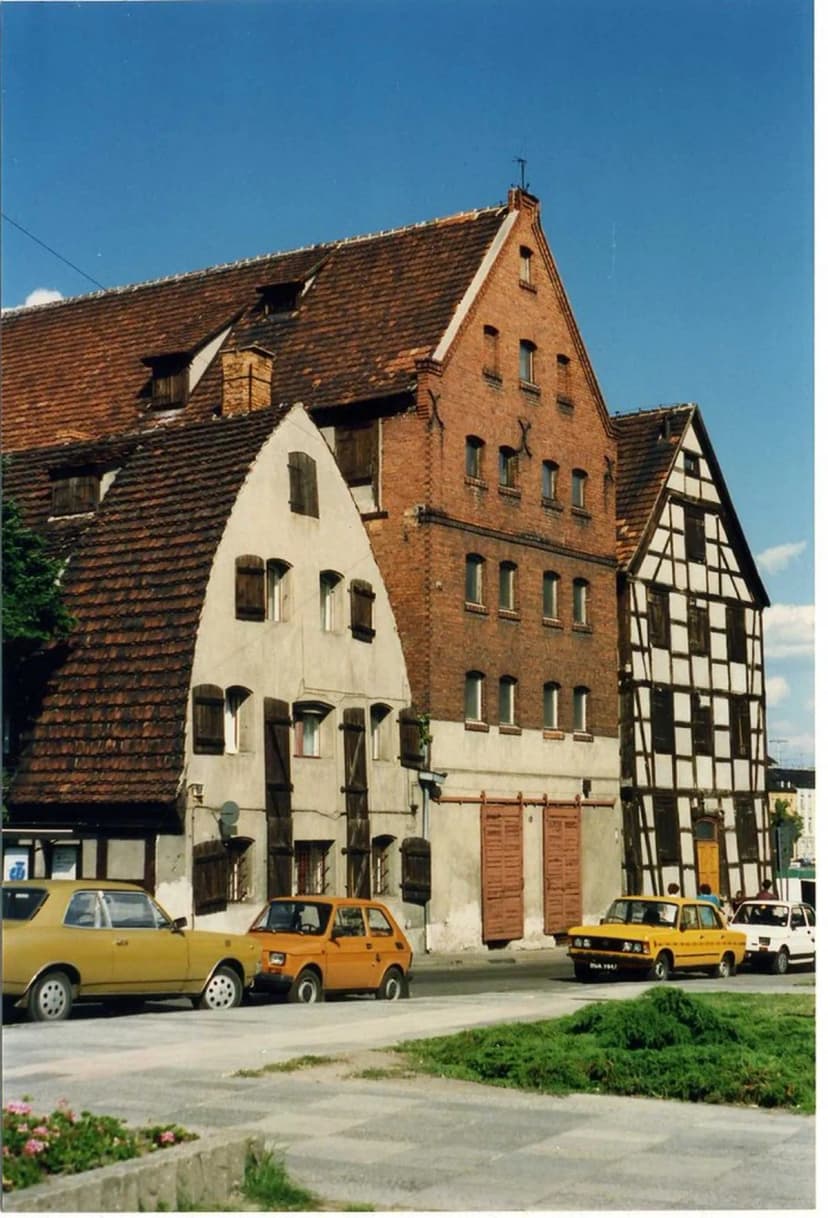
The historic granaries — known locally as Spichrze nad Brdą — stand as the most recognizable symbol of Bydgoszcz along the scenic Brda riverfront.
This 2026 bydgoszcz granaries visitor guide helps you explore the timber-framed beauty of these industrial landmarks, from free riverside views to the District Museum housed inside.
Visitors often marvel at how these late-18th-century structures transitioned from simple grain storage into vibrant cultural hubs.
You will find essential tips here on museum hours and tickets, the best photography angles, accessibility, and nearby attractions to help you plan a smooth visit.
Must-See Bydgoszcz Attractions
The granaries anchor the edge of the Bydgoszcz Old Town, and everything else in the historic core sits within a few minutes of their timber-framed silhouette.
Look up at the Mostowa Street bridge for "Przechodzący przez rzekę" (Man Crossing the River), a suspended balancing figure by sculptor Jerzy Kędziora that has become almost as photographed as the granaries themselves.
A five-minute walk brings you to the bronze Archer Lady in Jan Kochanowski Park, one of the city's lesser-explained symbols, and on to the Old Market Square, where the wooden figure of Master Twardowski steps out onto a tenement-house balcony at 1:13 PM and 9:13 PM.
- The Man Crossing the River sculpture on the Mostowa Street bridge, free to view at any hour and best lit in late afternoon.
- The bronze Archer Lady in Jan Kochanowski Park, a short stroll from the riverfront and one of the city's recognized symbols.
- Master Twardowski's appearance in the Old Market Square window, drawing a small crowd twice daily at 1:13 PM and 9:13 PM.
Museums, Art, and Culture in Bydgoszcz
The three surviving granaries at ul. Grodzka 7, 9 and 11 house the Leon Wyczółkowski District Museum, whose History, Ethnography, Music and Graphics departments turn the old grain stores into one of the city's most complete cultural stops.
In 2026 the museum keeps a single, non-seasonal schedule: closed Monday, open Tuesday to Thursday 10:00-18:00, Friday 12:00-20:00, and Saturday-Sunday 11:00-17:00, with last entry 30 minutes before closing — worth double-checking against older guides that still quote separate summer and winter hours.
Standard admission runs 17 PLN, reduced tickets 12 PLN, and a family ticket (up to five people, two of them adults) 50 PLN; permanent exhibitions are free every Thursday, the easiest way to bring the whole family without spending on entry.
Check the Official Museum Site before you go, since temporary exhibitions and occasional evening openings can shift the standard timetable.
Parks, Gardens, and Outdoor Spots in Bydgoszcz
The riverfront promenade along the Brda is Bydgoszcz's most relaxed green space, and Mill Island sits just a few minutes downstream, drawing both locals and visitors for picnics and river views.
For photographs, the classic angle is from the riverbank directly opposite the granaries, where the full timber-framed row reflects in the water; the view from the Mostowa Street bridge itself is tighter, better for isolating the Man Crossing the River sculpture against the granaries behind it, so plan for both spots rather than picking just one.
Between roughly May and September, watch for the seasonal water tram (tramwaj wodny) that calls at a pier close to the granaries — riding it, even for one stop, gives a low, boat's-eye photo angle that most visitor guides never mention, and tickets are bought on board for a modest fare.
Golden hour, about an hour before sunset, is still the most reliable light for the wooden facades; overcast or rainy days flatten the color considerably, so build in a backup afternoon if the forecast looks poor.
Family-Friendly and Budget-Friendly Options in Bydgoszcz
Viewing the exterior of the granaries costs nothing and is open around the clock, which makes the riverfront one of the easiest free stops to build a family day around.
The paved promenade is wide, flat, and stroller-friendly for most of its length, though the final stretch into the Old Town reverts to traditional cobblestones.
Pack a picnic for the grass at Mill Island, then budget the modest 17 PLN standard museum ticket (12 PLN reduced, 50 PLN for a family of five) if the kids want to see the exhibits — or simply come on a Thursday, when the permanent exhibition is free.
How to Plan a Smooth Bydgoszcz Attractions Day
The granaries sit at ul. Grodzka 7-11, making them the natural starting point for a walking day through the Old Town; find the exact spot via the Google Maps Location.
Budget 15-20 minutes for the exterior alone, or closer to two hours if you add the museum galleries; the museum is closed on Mondays, so shift an early-week visit to a riverfront-only plan and save the interior for later in the week.
Start early to beat the tour-bus crowds and catch the morning light, then work outward toward the Old Market Square for lunch before the afternoon photography window opens back up along the river.
- Begin at Grodzka Street around 9:00 AM for photographs before the crowds arrive.
- Reserve 1.5 hours for the museum galleries if the granaries are open when you visit, and check the current calendar for evening openings.
- Finish with a Polish lunch on the Old Market Square, a five-minute walk from the riverfront.
Church of the Assumption of the Blessed Virgin Mary
From the granaries, follow the river path past Opera Nova and cut up toward ul. Farna for roughly 350 meters — about a five-minute walk — to reach the Church of the Assumption of the Blessed Virgin Mary, often called the Poor Clares' Church.
Its interior blends Gothic bones with later Renaissance additions, and the quiet nave is a deliberate contrast to the busy riverfront you just left.
Since the walk passes directly by the granaries' best photo angles, it's worth timing this detour for either early morning or the golden-hour window rather than midday.
Old Granaries and Art Museum
The Leon Wyczółkowski District Museum's flagship show inside the granaries, "From the Old Market Square to Freedom Square: A Walk Through the Streets of Interwar Bydgoszcz," rebuilds the city's day-to-day life across its History, Ethnography, Music and Graphics collections.
Expect period photographs, shopfronts, and household objects that trace Bydgoszcz from its river-trade origins through the interwar decades, laid out across all three connected granary buildings.
Each of the three structures — numbered 7, 9 and 11 on ul. Grodzka — keeps its own timber framing and room proportions, so the exhibition feels like moving through three related but distinct buildings rather than one continuous hall.
Pair the visit with the nearby Museum of Soap for a more hands-on, contrasting stop on the same afternoon.
Granaries on the Brda Bydgoszcz
Locally called Spichrze nad Brdą, the granaries anchor the TeH2O industrial water and craft trail, a marked route connecting the city's key technical monuments along the river and the Bydgoszcz Canal.
The trail's throughline is how water shaped the local economy: grain moved by barge to Gdańsk and, after the canal opened, on toward Berlin, and the granaries themselves shifted to storing pottery and glass once the railway arrived in the mid-19th century.
Recent renovation work preserved the original timber framing while adding restrained glass elements, a pairing that reads as an industrial-to-cultural transition rather than a museum-piece freeze.
Walking the Brda from the canal locks to the granaries is the clearest way to see that transition firsthand, and it remains one of the least crowded stretches of riverfront in the Kuyavian-Pomeranian Voivodeship.
Information for People with Disabilities
The District Museum has invested in step-free access: a stair-climbing platform and an elevator are located inside the main entrance at Grodzka 7, and staff can operate both on request.
The riverfront promenade itself is mostly flat, wide, paved asphalt, suitable for wheelchairs and mobility scooters; the only rough patches are the traditional cobblestones once you turn into the Old Town streets.
Call ahead or ask at the entrance if you need staff assistance with the platform, since it isn't always staffed at every opening hour, particularly during the Friday evening slot.
An accessible restroom is available inside the museum building, and there's no separate charge for using the lift or platform beyond the standard entry ticket.
Frequently Asked Questions
Is visiting the Bydgoszcz Granaries free?
Yes, viewing the granaries from the riverside boulevards along the Brda is free and open 24 hours a day. Only entering the museum housed inside the buildings requires a paid ticket.
How old are the Bydgoszcz Granaries?
The surviving granaries were built between 1793 and 1800 by the merchant Samuel Gotlieb Engelmann, making them roughly 225 years old.
How many granaries are still standing?
Originally there were five granaries on this stretch of the Brda. Two were destroyed in a fire in February 1960, leaving the three that still stand today at ul. Grodzka 7, 9 and 11.
What museum is inside the granaries?
The three buildings house the Leon Wyczółkowski District Museum (Muzeum Okręgowe im. Leona Wyczółkowskiego), whose History, Ethnography, Music and Graphics departments include the permanent exhibition 'From the Old Market to Freedom Square: A Walk Through the Streets of Interwar Bydgoszcz'.
What are the opening hours?
The riverside exterior can be viewed at any time. The museum inside is closed Mondays, open Tuesday-Thursday 10:00-18:00, Friday 12:00-20:00, and Saturday-Sunday 11:00-17:00, with last entry 30 minutes before closing.
How much do museum tickets cost?
Standard admission is 17 PLN, reduced tickets are 12 PLN, groups of 10+ pay 10 PLN per person, and a family ticket (up to 5 people, including 2 adults) is 50 PLN. Permanent exhibitions are free to enter every Thursday.
What were the granaries originally used for?
They stored grain and other agricultural produce that was loaded onto barges on the Brda and shipped to Gdańsk, and later, via the Bydgoszcz Canal, toward Berlin. After railways arrived in the mid-19th century, the buildings were increasingly used to store pottery, glass and other goods.
Where are the granaries located?
They stand at ul. Grodzka 7-11 on the bank of the Brda River, right in Bydgoszcz's city center, a short walk from the Old Market Square.
Why are the granaries considered the symbol of Bydgoszcz?
Their distinctive half-timbered silhouette reflected in the Brda has become the most recognized image of the city, appearing widely in Bydgoszcz's tourism branding and city imagery.
In 2026, the Bydgoszcz granaries still do double duty as the city's most photographed backdrop and one of its most complete museum stops.
Give the riverfront alone 15-20 minutes, or build in the full two hours if the District Museum's galleries are open when you arrive.
Time your visit for golden hour, check the Monday closure before you plan a route through Grodzka Street, and let the walk carry you naturally toward the Old Town and the Church of the Assumption.
For official details, visit the Bydgoszcz Granaries on Wikipedia, Bydgoszcz Granaries on Wikipedia and Bydgoszcz Granaries official site.
For more Bydgoszcz planning, read our Things to Do in Bydgoszcz: 2026 Guide to the City's Best Sights.