

Where to Eat in Bydgoszcz: A 2026 Food Guide
Last updated July 2026 — Bydgoszcz keeps surprising food-minded visitors for a city its size. It isn't a "foodie destination" in the Kraków or Wrocław sense, and it doesn't try to be. What it has instead is honest Kuyavian home cooking, a genuinely lovely setting to eat it in, and prices that still feel reasonable compared to Poland's bigger tourist cities. Meals here tend to fall into one of three moods: a slow lunch on Mill Island with water on both sides of the terrace, a quick plate at a milk bar between museum stops, or an evening table somewhere around the Old Market Square with a view of the granaries.
This guide covers where those meals actually happen — the riverside district, the market square, the regional dishes worth ordering, and the cheap-eats options that keep a Bydgoszcz weekend affordable. If you haven't planned the rest of your visit yet, our Bydgoszcz things-to-do guide is the place to start, and if you're still choosing a base, see where to stay in Bydgoszcz — most of what's below is walkable from the centre.
Key Takeaways
- Mill Island (Wyspa Młyńska) has the best concentration of relaxed riverside cafés and restaurants, a short walk from the Old Market Square.
- The Old Market Square and the "Bydgoszcz Venice" district along the mill race are the atmospheric dinner-with-a-view option.
- Order Kuyavian and Polish staples honestly: pierogi, żurek, and — in season around St Martin's Day (11 November) — roast goose.
- Milk bars (bary mleczne) remain the cheapest sit-down option in the city centre, often under 30 PLN for a full meal.
- Card payments are near-universal now, but small milk bars and market stalls can still be cash-only — carry some PLN.
- There's no single invented "Bydgoszcz dish" — the city's food identity is regional Kuyavian and general Polish, not a manufactured specialty.
Riverside cafés and restaurants on Mill Island
If I only had one meal in Bydgoszcz, I'd have it on Mill Island (Wyspa Młyńska). The restored granary buildings around Rother's Mills (Młyny Rothera) and the White Granary (Biały Spichlerz) now house a handful of cafés and restaurants that spill out onto terraces facing the Brda's channels. It's a genuinely calm spot — a marina, a small urban beach, ducks on the water — and the food leans toward relaxed Polish and European menus rather than anything fussy. A coffee-and-cake stop here in the late afternoon, when the light on the water is at its best, is the classic move — then decide whether to stay on for dinner. In summer, expect the outdoor tables to fill up fast on weekend evenings, so aim to arrive by early evening if you want a riverside seat.
Dining around the Old Market Square
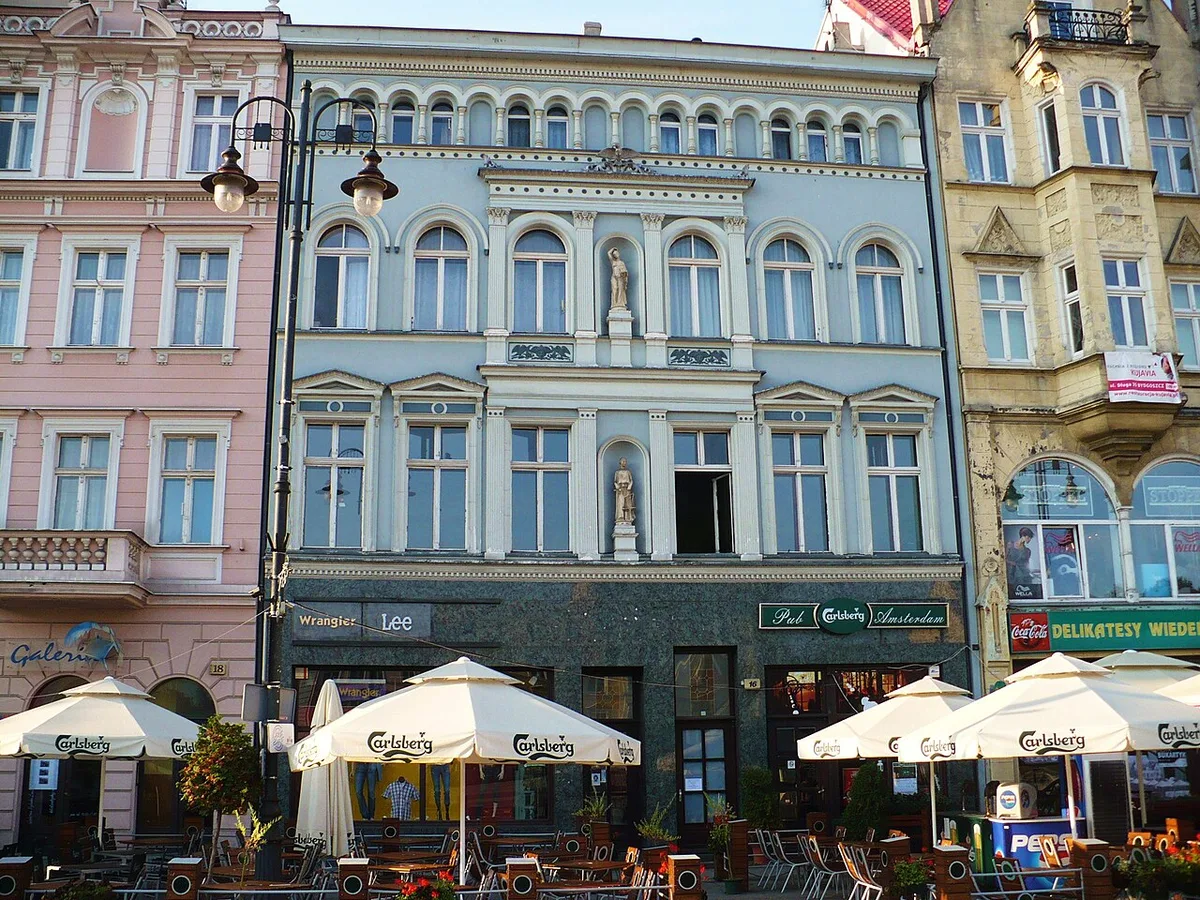
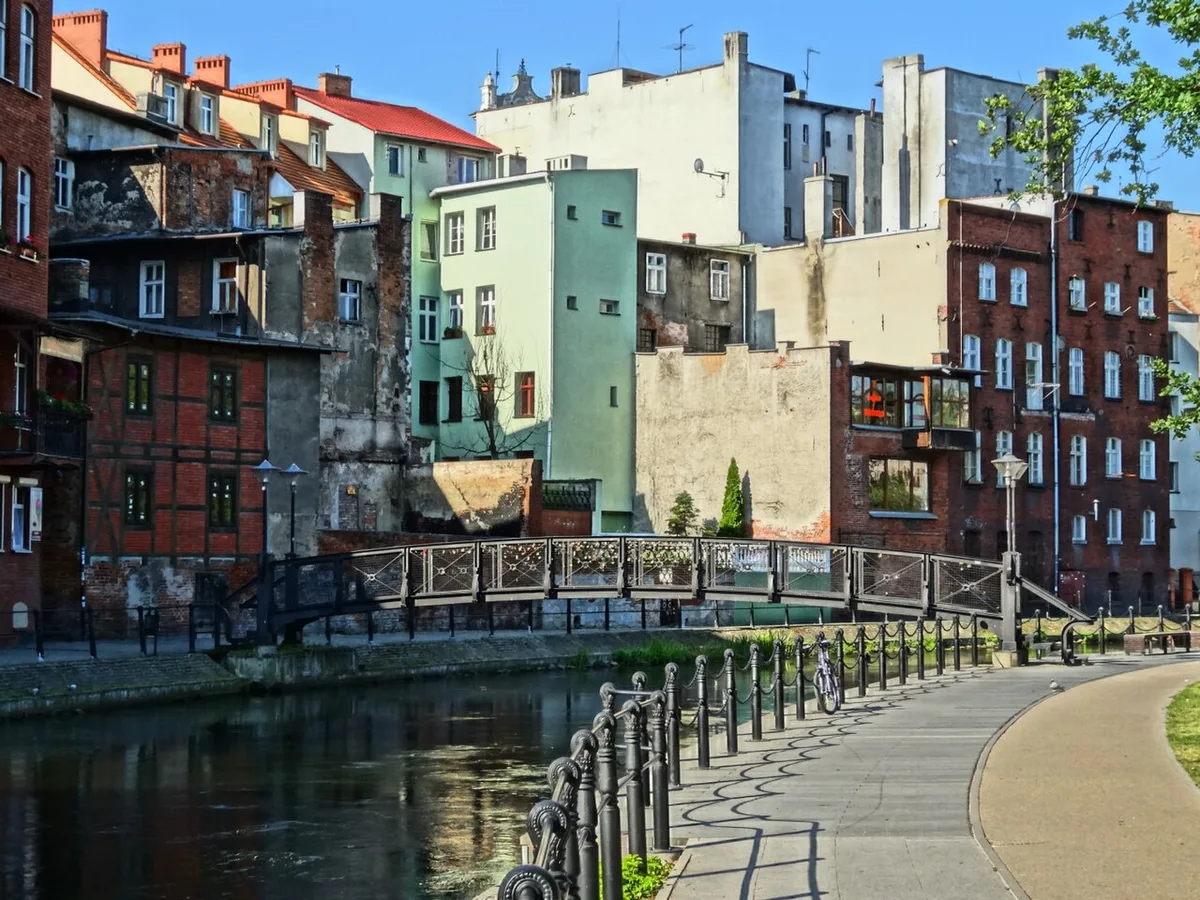
The Old Market Square (Stary Rynek) and the streets running down to the granaries on the Brda (Spichrze nad Brdą) are where I'd point anyone after a walk through the Old Town. This is the highest concentration of sit-down restaurants in the city — Polish and European kitchens mostly, with a few pizza and pasta spots for anyone who's had enough pierogi for one trip. The real draw isn't any single restaurant, it's the setting: colourful tenement facades, the parish church nearby, and — a few minutes' walk toward the river — the postcard view of the half-timbered granaries and the "Bydgoszcz Venice" tenements rising straight out of the mill race. I'd budget a bit more here than at a milk bar, but a main course at a mid-range restaurant is still usually well under what you'd pay for the equivalent in Kraków or Gdańsk.
Kuyavian and Polish dishes worth ordering
Bydgoszcz sits in the heart of Kuyavia (Kujawy), and the food here is honest regional Polish cooking rather than a single invented "local specialty." I'd rather be straight about that than sell you a dish that doesn't really exist. What you should actually order: pierogi in whatever filling the kitchen is proud of that day, a bowl of żurek (sour rye soup, usually with egg and sausage), and — if you're visiting in the run-up to 11 November — roast goose, tied to the Kuyavian and Wielkopolska St Martin's Day tradition. If you want to be adventurous, some traditional kitchens still serve czernina, a savory duck-blood soup that's more common in the region than most first-time visitors expect. None of these are exclusive to Bydgoszcz — they're regional Polish food you'll also find written up in our traditional Polish food guide and on Poland's official tourism portal — but this is real Kuyavian eating, not a tourist invention.
| Dish | What It Is | Rough Price (PLN / ≈€, as of 2026) |
|---|---|---|
| Pierogi (per plate) | Boiled dumplings, savory or sweet filling | 20–32 PLN / ≈4.50–7 |
| Żurek | Sour rye soup with egg and sausage | 15–22 PLN / ≈3.50–5 |
| Roast goose (seasonal, around St Martin's Day) | Kuyavian/Wielkopolska roast goose tradition, 11 Nov | 60–90 PLN / ≈13–20 |
| Czernina | Traditional duck-blood soup, sweet-sour broth | 16–24 PLN / ≈3.50–5.50 |
| Milk bar set lunch (obiad) | Soup + main + drink at a bar mleczny | 18–30 PLN / ≈4–6.50 |
Prices are a rough guide only — check current menus before visiting, as they shift year to year.
Roast goose is seasonal around St Martin's Day (11 November) — if you're visiting in late October or November, this is the time to try a Kuyavian tradition at its best.
Cheap eats: milk bars (bary mleczne)
For anyone travelling on a budget, or just curious about a genuinely Polish institution, seek out a bar mleczny. These are subsidized, canteen-style eateries that survived from the communist era into today's Poland, and Bydgoszcz still has a few operating in and around the centre. The format is always the same: a short handwritten or laminated menu, self-service trays, and a full meal — soup, a main, sometimes a drink — for a fraction of restaurant prices. I don't expect polish (small "p") here, I expect the kind of food a Polish grandmother would recognize, and that's exactly what you get. Cash is more likely to be needed at the smaller, older-style bars than at restaurants, so keep some PLN on hand.
Milk bar meals (bary mleczne) typically cost 18–30 PLN for a full soup-and-main meal — the cheapest sit-down option in Bydgoszcz's city centre.
The wider Brda waterfront
Beyond Mill Island itself, the Brda waterfront stretches past the Opera Nova and the "Man Crossing the River" sculpture, and there are a few more café stops along the promenade if you keep walking. In the warmer months, the Bydgoszcz Water Tram (Bydgoski Tramwaj Wodny) runs along this stretch, and it's a nice way to scout the riverside dining options from the water before deciding where to sit down. Wandering this route in the early evening and picking whichever terrace has the fewest tourists and the best breeze off the river rarely goes wrong — Bydgoszcz rewards that kind of unplanned wandering more than a lot of bigger Polish cities do.
Practical tips for eating in Bydgoszcz
Card payments are the norm now at nearly every restaurant and café in the centre, including on Mill Island, but I'd still carry some cash for milk bars and any market stalls. Tipping isn't obligatory the way it is in Western Europe — rounding up or leaving 10% at a sit-down restaurant is generally read as generous, not required. Reservations aren't usually necessary outside peak summer weekends, though if you have your heart set on a riverside terrace table on Mill Island on a Saturday evening, it doesn't hurt to book or arrive early — the official Visit Bydgoszcz portal keeps current listings for the riverside venues if you want to scout ahead. If you're combining a meal here with a longer stay, our guide to day trips from Bydgoszcz is worth a look — Toruń in particular has its own famous food tradition worth building a day around.
Frequently Asked Questions
Is there a signature Bydgoszcz dish?
Not really — Bydgoszcz's food identity is regional Kuyavian and general Polish cooking rather than one invented city specialty. Order pierogi, żurek, or (in season) roast goose and you're eating what locals actually eat.
Where can I find cheap eats in Bydgoszcz?
Milk bars (bary mleczne) in and around the city centre are the cheapest sit-down option, typically 18–30 PLN for a full soup-and-main meal. They're canteen-style, self-service, and a genuinely Polish experience.
Is Mill Island a good place to eat?
Yes — the restored granary buildings on Wyspa Młyńska house several relaxed cafés and restaurants with riverside terraces, and it's one of the most pleasant settings in the city for a slow lunch or coffee stop.
What is czernina and should I try it?
Czernina is a traditional Polish duck-blood soup with a sweet-sour broth, more common in this region than many first-time visitors expect. If you're curious about traditional Kuyavian cooking, it's worth trying at a kitchen that specializes in regional dishes.
Do Bydgoszcz restaurants take card payments?
Almost all restaurants and cafés in the centre, including on Mill Island and around the Old Market Square, accept cards. Smaller milk bars and market stalls are more likely to be cash-only, so carry some PLN as a backup.
Final Thoughts
Eating in Bydgoszcz isn't about chasing a famous dish or a single must-visit restaurant — it's about the combination of honest Kuyavian cooking and one of the best riverside settings in Poland to eat it in. Start with a coffee or lunch on Mill Island, work through the Old Market Square in the evening, and don't skip a milk bar at least once. For everything else worth doing between meals, head back to our main things to do in Bydgoszcz guide.
You might also like


Continue reading
More guides you'll find useful