
Opera Nova Visitor Guide
Opera Nova is Bydgoszcz's most photographed building and its busiest working stage - not a walk-in museum. Three white, interlocking cylinders rise from a bend in the Brda River, and the riverside terrace and exterior are free to see any day, any hour. Getting inside for an opera, ballet, or concert means buying a ticket to a specific performance; there is no general admission pass or self-guided tour of the auditorium. This 2026 **opera nova visitor guide** covers exactly what a visit involves either way - viewing the building for free, or booking a seat for a show.
The venue anchors the riverfront between Bydgoszcz's Old Town and Mill Island, and most visitors pair a performance with a walk through the surrounding canal district. It also runs a full convention wing, so business travelers and opera-goers use different parts of the same building - this guide covers both.
Essential Visitor Information (Location & Hours)
The address is Marszałka Ferdynanda Focha 5, 85-070 Bydgoszcz, right where the Brda River bends past Mill Island. Most visitors reach it on foot along the riverside promenade from the Old Town, or by crossing the footbridge from Wyspa Młyńska (Mill Island). Local trams toward the city centre also stop within a short walk, useful in winter or before an evening show.
The exterior, riverside terrace, and footbridge are open to the public at all times, free of charge. The box office runs on its own schedule: Tuesday-Thursday 8:30am-7:00pm, Monday and Friday 8:30am-3:00pm (plus one hour before that evening's performance), Saturday 3:00pm-7:00pm, and Sunday 4:00pm-6:00pm. Check the Official Opera Nova Website before you go, since hours shift around festival weeks.
Both the main auditorium and the chamber hall are wheelchair accessible via elevators and ramps, and the main hall reserves six accessible spaces among its 809 total seats. It is worth emailing the box office a day or two ahead so an aisle seat or accessible space gets held rather than assigned on arrival.
- Quick Logistics Summary
- Address: Marszałka Ferdynanda Focha 5, 85-070 Bydgoszcz
- Getting there: on foot from the Old Town, or across the footbridge from Mill Island; trams stop nearby
- Exterior, terrace, and footbridge: free and open at all times
- Box office: Tue-Thu 8:30am-7pm, Sat 3-7pm, Sun 4-6pm; Mon/Fri 8:30am-3pm plus 1 hour pre-show
Architectural Highlights: The Three Cylinders
Architects Józef Chmiel and Andrzej Prusiewicz won a national competition for the design, but construction stretched from 1973 to October 21, 2006, timed to open on the Bydgoszcz Opera company's 50th anniversary. The result is three sweeping circular volumes on the river bend, a sail-like silhouette visitors regularly compare to the Sydney Opera House, though the two were designed independently.
The structure covers more than 24,000 m² across six levels, with a glass facade that mirrors the Brda River at sunset. Each cylinder serves a different function - one holds the main stage and auditorium, another the chamber hall, and the third the rehearsal and administrative wings.
For photos, the three spots locals actually use are the Mill Island riverbank, the Focha Street bridge, and the entrance terrace. Mill Island gives the classic wide shot of all three cylinders reflected in the river, best in the last hour before sunset. The Focha Street bridge puts you level with the building and works well at midday when the glass catches direct light. The entrance terrace is close enough for detail shots of the cylinder joints and facade panels, and it stays lit for photography after dark year-round.
- Building Specifications
- Levels: 6 floors total
- Total Area: 24,400 m²
- Style: Modernist architecture
- Key Feature: Three interlocking cylinders
- Built: 1973-2006 (Chmiel & Prusiewicz)
Repertoire: Opera, Ballet, and the Bydgoszcz Festival
The main auditorium seats 809 people - 803 standard seats plus six accessible spaces - and hosts the large-scale productions: full operas, ballet, operettas, and touring musicals. The stage carries the rigging for complex set changes, and the room was built around its acoustics, so seats across most of the hall get clear, balanced sound rather than just the front rows.
The Bydgoszcz Opera Festival is the anchor event of the season, running every spring since 1994 and drawing opera and ballet companies from across Poland and abroad. The 2026 lineup is published on the official site closer to the season, and festival and gala tickets are priced separately from the regular repertoire, so budget more if a festival-week show is the plan.
The separate Chamber Hall seats 189 and is where the smaller-scale work happens: recitals, experimental theater, and children's productions that would not fill the main stage. Traveling with kids, or want a shorter, more intimate evening? Check the chamber hall listings specifically rather than assuming everything runs through the main auditorium.
Planning Your Visit: Tickets and Timing
Buy **Opera Nova Tickets** online through the official portal or in person at the box office. Regular repertoire runs roughly 40-160 zł: opera and ballet performances are 60-130 zł seated or 40 zł standing, while operetta and musicals run 70-160 zł seated or 50 zł standing, with discounted rates for students, seniors, and other eligible groups. Festival and gala performances, including the spring Bydgoszcz Opera Festival, are priced separately and typically cost more than a regular-season show.
Most performances run 2 to 3 hours including one or two intermissions. Doors open 30 to 45 minutes before curtain - enough time to find your seat, check a coat, and have a drink in the lobby without rushing. Popular ballet runs and festival-week shows sell out days to weeks ahead, so book before landing in Bydgoszcz rather than counting on same-day tickets.
There is no strict dress code, but smart-casual to formal is the norm - jeans suit a smaller chamber hall show, less so a main-stage gala. Coat check is available near the main entrance for a small fee, useful from November through March. Pair the evening with a stop in Bydgoszcz's Old Town beforehand, since the walk back along the river after a show is one of the better ways to see the building lit at night.
Venue Facilities: Meeting Rooms and Conventions
Opera Nova runs a genuine dual identity: by day, its convention wing hosts seminars and international congresses, and by evening, the same building becomes a working opera house. The Opera Nova Profile on Cvent lists the meeting room inventory business planners actually book against.
The two uses rarely overlap, and it is worth knowing which one applies. A business traveler attending a daytime conference uses the convention entrance and meeting-room floors and keeps regular business hours. A cultural traveler booking an evening show instead uses the main foyer and box office, arriving 30-45 minutes before curtain. Doing both on the same trip - a conference that lands during festival week, say - still means booking the show separately, since convention registration does not include performance tickets.
The building's six levels break down roughly like this: the ground floor holds the main foyer, box office, and coat check; the next level is the 809-seat main auditorium; the chamber hall occupies its own wing at a similar level; and the upper floors house the rehearsal studios, the Actor Club, and administrative offices, none open to the public. The convention center's meeting rooms sit on a dedicated floor apart from the performance spaces, which is why delegates and opera-goers rarely cross paths inside the building.
The Maestra Restaurant sits within the complex, serving a mix of Polish classics and modern European dishes - a solid choice for dinner before a show or a glass of wine after. Reservations are worth making ahead on performance nights.
Exploring the Neighborhood: Mill Island and Brda River
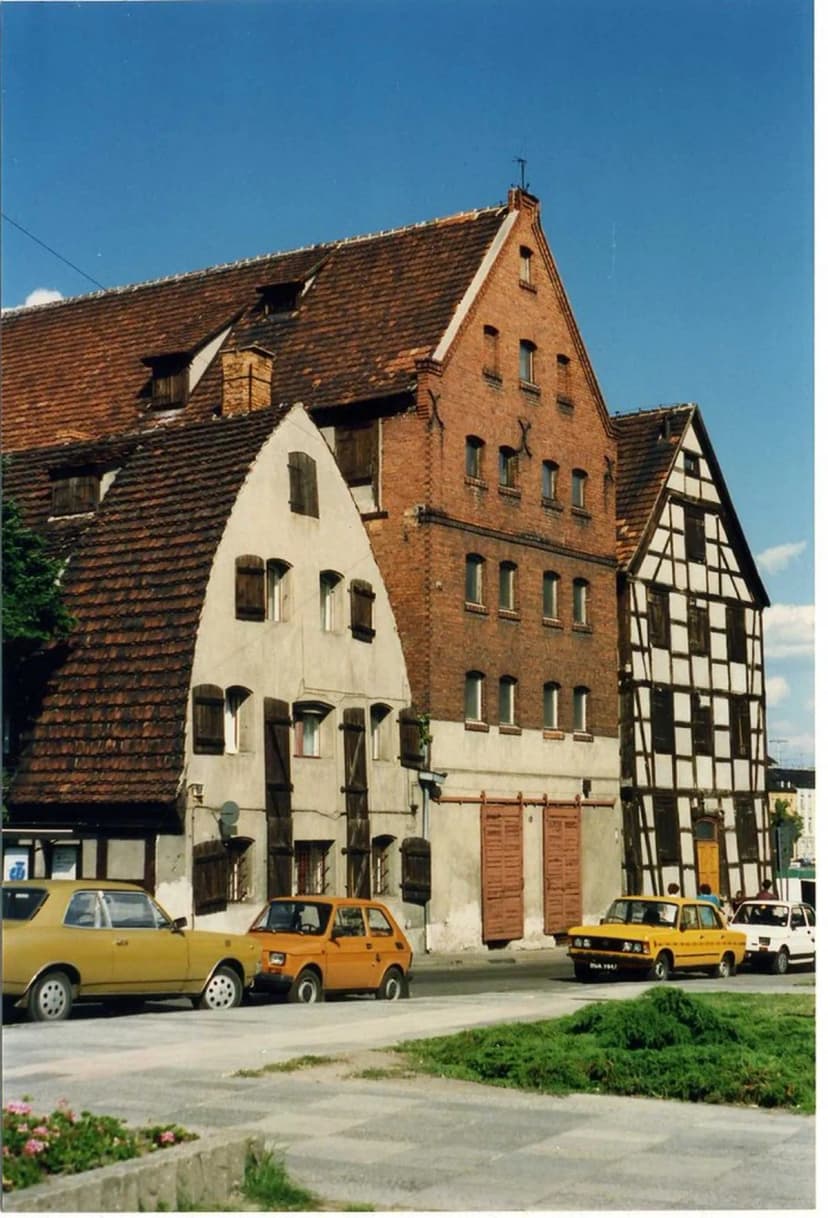
The opera house sits directly across a footbridge from Mill Island, a green riverside district of historic timber-framed granaries and open lawns. Its canals are why locals call the district "Bydgoszcz Venice" - cross the bridge before a show for photos in daylight, or after for the building lit up over the water.
A short walk along the river leads toward the Bydgoszcz Old Town district, passing the Bydgoszcz Granaries, symbols of the city's centuries of river trade. The riverfront path makes for a gentle stroll before or after a performance, with cafes and bars lining the banks and views of boats on the Brda.
With extra time, the Museum of Soap nearby is one of the more unusual stops in the city, with interactive workshops that work well for families. Pairing a museum visit with an evening opera makes for a full day of exploring. The Bydgoszcz Canal is also worth seeing for anyone interested in the city's historic waterway engineering, and it sits an easy walk from the opera house.
Frequently Asked Questions
Is Opera Nova in Bydgoszcz free to visit?
The exterior, riverside terrace, and footbridge to Mill Island are open and free to view at any time. Opera Nova is a working performance venue rather than a museum, so going inside to see a show requires a paid ticket - there is no general walk-in admission.
How much do tickets to Opera Nova cost?
Regular repertoire tickets run roughly 40-160 zł depending on the production and seating zone: opera/ballet performances are 60-130 zł (40 zł standing), and operetta/musicals are 70-160 zł (50 zł standing), with discounted rates for students, seniors, and other eligible groups. Festival and gala performances, including the spring Bydgoszcz Opera Festival, are priced separately and can run higher.
Why does Opera Nova look like the Sydney Opera House?
Opera Nova's design of three interlocking circular volumes set on a river bend gives it a sculptural, sail-like silhouette that visitors often compare to Sydney's landmark opera house, though the two buildings were designed independently. Architects Józef Chmiel and Andrzej Prusiewicz created the design for a national competition.
How long did Opera Nova take to build?
Construction began in 1973 and the building was not completed until October 21, 2006 - a span of more than three decades - with the opening timed to coincide with the 50th anniversary of the Bydgoszcz Opera company, which itself dates to 1956.
Can you tour Opera Nova without attending a performance?
There is no standing walk-in tour of the interior. The building's exterior, riverside terrace, and footbridge over the Brda to Mill Island are freely accessible, but seeing the auditorium or chamber hall requires a ticket to a scheduled opera, ballet, operetta, or musical performance.
When is the Bydgoszcz Opera Festival?
The Bydgoszcz Opera Festival has been held annually since 1994, typically in spring, and draws opera and ballet companies from Poland and abroad. Exact festival dates and programming change each year, so check the current season schedule at operanova.bydgoszcz.pl.
What are Opera Nova's box office hours?
The box office is open Tuesday-Thursday 8:30am-7:00pm, Saturday 3:00pm-7:00pm, and Sunday 4:00pm-6:00pm. On Monday and Friday it's open 8:30am-3:00pm, plus one hour before any Opera Nova performance that evening.
How many seats does Opera Nova have?
The main auditorium seats 809 people (803 standard seats plus 6 accessible spaces), and the venue's separate Chamber Hall seats 189, used for smaller-scale and children's productions.
What is near Opera Nova in Bydgoszcz?
Opera Nova sits on the Brda River between Bydgoszcz's Old Town and Downtown, connected by a footbridge directly to Mill Island (Wyspa Młyńska) with its historic granaries and mills, and within walking distance of the Bydgoszcz Cathedral and the riverside promenade.
Opera Nova is more than a theater - it is the working heart of Bydgoszcz's cultural calendar, and it is free to admire even without a ticket. Whether the plan is a daytime convention or an evening at the opera, knowing which side of the building applies to you saves confusion at the door. Check the current schedule, book ahead for festival week, and pair the visit with a walk across the footbridge to Mill Island for the view that makes this building famous.
For official details, visit the Opera Nova on Wikipedia and Opera Nova official site.
For more Bydgoszcz planning, explore our Things to Do in Bydgoszcz: 2026 Guide to the City's Best Sights and Mill Island Bydgoszcz: Complete 2026 Guide.