

Łódź Old Town Guide: Stare Miasto & Beyond
Last updated June 2026.
Let me save you a small disappointment: if you come to Łódź hunting for a cobbled medieval market square ringed with pastel burgher houses — the kind you find in Kraków, Wrocław or Gdańsk — you will not find it here. There is an area called Stare Miasto ("Old Town") and a square named Stary Rynek ("Old Market"), but the honest truth is that Łódź's old town is one of the least "old-town-like" in Poland. I think that's exactly why it's worth understanding before you visit.
Łódź is a 19th-century industrial boomtown. In 1820 it was a sleepy farming settlement of a few hundred people; within a century it had exploded into a textile metropolis of half a million, nicknamed the "Polish Manchester." That story rewrote the map. The original village core merits a short morning at most, while the red-brick mill complex that is now the city's real centre of gravity rewards a far longer afternoon. This guide does both: the modest genuine "old town" around Plac Kościelny, and the industrial-era heart that the rest of the world thinks of as historic Łódź.
Why Łódź Has No Medieval Old Town
Most Polish cities grew slowly around a market square laid out in the Middle Ages. Łódź skipped that chapter. It received town rights back in 1423, but for four hundred years it stayed a small agricultural village with a wooden church and little else — there was never a wealthy medieval merchant class to build a grand stone rynek. The city you walk today was conjured up from the 1820s onward, when the Polish government designated it a planned textile-manufacturing town and the looms, mills and worker tenements arrived almost overnight.
That means the "centre" of Łódź is not a square at all — it's a street. The 19th-century planners laid out the ruler-straight ul. Piotrkowska as the spine of the new city, and everything important strung itself along it: factories, banks, palaces of textile barons, ornate tenements. If you're looking for the "heart" of Łódź, start there rather than hunting for an old market square — our full Piotrkowska Street guide walks the whole 4.2 km. Lower your "old town" expectations, raise your appetite for raw industrial heritage, and the city makes a lot more sense.
Stare Miasto, Plac Kościelny & the Church of the Assumption
The genuine historic nucleus of Łódź sits north of the modern downtown, around Plac Kościelny ("Church Square") and the nearby Stary Rynek (Old Market). This is where the original village clustered — the one corner of the city that predates the textile boom in spirit. I'll be straight with you: it's a quick stop, not a half-day, but it's the right place to start if you want to understand how a farming hamlet became a metropolis.
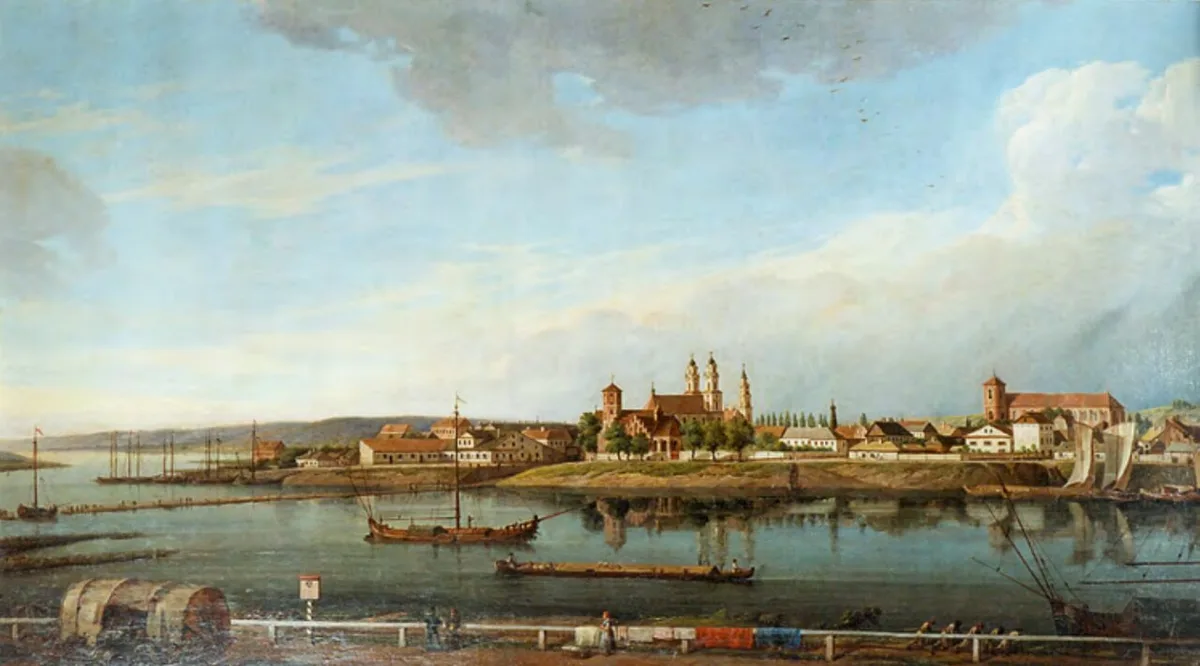
The landmark is the Church of the Assumption of the Blessed Virgin Mary (Kościół Wniebowzięcia Najświętszej Maryi Panny), often called the "Old Church" because it stands on the site of Łódź's earliest place of worship. The current red-brick neo-Gothic building, with its tall single spire, replaced the old wooden church in the later 19th century — so even the "oldest" church you can see is essentially Victorian-era. It's free to step inside outside Mass times. Just south is Stary Rynek, the original market square, today a fairly plain open space rather than a postcard plaza. This area sat at the edge of the wartime Litzmannstadt Ghetto, part of why it feels weighted and quiet rather than touristy.
What to actually do: walk Plac Kościelny and Stary Rynek as a 20–30 minute orientation loop, look at the church, then keep moving — because Stary Rynek sits directly south of the complex that most travellers (correctly) treat as Łódź's de-facto historic core.
Manufaktura: Łódź's De-Facto Historic Heart
If anything in Łódź functions the way an old town functions elsewhere — a single place you point newcomers to, where the city's identity is most concentrated — it's Manufaktura. This vast red-brick complex was the cotton-mill empire of the industrialist Izrael Poznański, one of the textile barons who built the city. Abandoned after the industry collapsed, it reopened in 2006 as a sprawling shopping, culture and dining destination, and it has quietly become the social and architectural centre of gravity that Łódź's flat, dispersed downtown otherwise lacks.
The scale is the point. A huge open square — among the largest in Europe — is surrounded on all sides by the original 19th-century factory walls, with fountains that fill with families and skaters in summer. It genuinely feels like a town square, just made of industrial brick instead of merchant townhouses. Inside the complex you'll find the ms² (Muzeum Sztuki) modern-art gallery, the Factory Museum on the mill and its workers, restaurants and food halls, a cinema, and seasonal events from Christmas markets to outdoor concerts. The square and grounds are free; individual museums charge modest tickets — expect roughly 15–30 PLN (about €3.50–7) each as of 2026, but confirm current prices on each venue's official site.
The Manufaktura square and grounds are open and free around the clock; the shops, museums and restaurants inside the complex generally run Monday–Saturday from about 9:00 to 22:00. Come at dusk on a warm weekend — the fountains light up and the great brick square is at its liveliest.
I'd budget two to three hours here, longer if you stop for a meal. It's also a comfortable base — if you'd rather sleep within walking distance, our where to stay in Łódź guide covers the Manufaktura / north-end area alongside the livelier Piotrkowska corridor.
Poznański Palace & the Museum of the City of Łódź
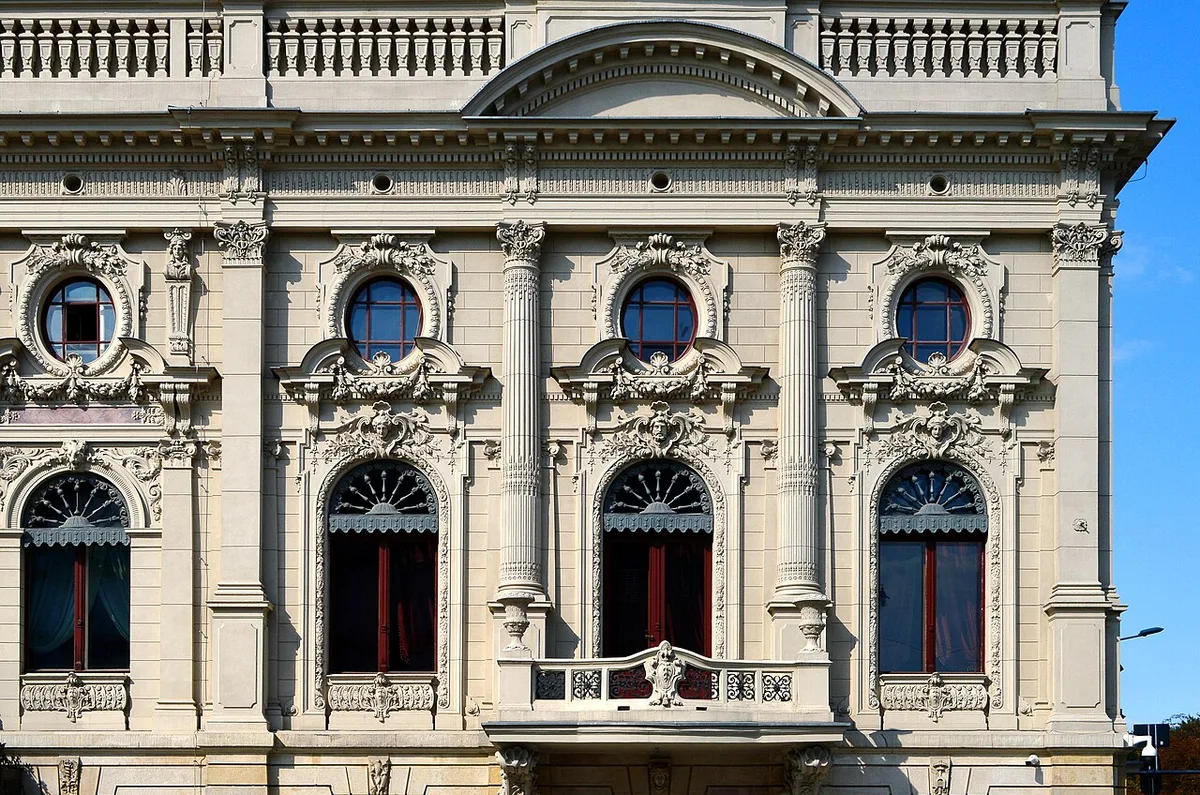
Right beside Manufaktura stands the building that, more than any church or square, captures what made Łódź: the Poznański Palace (Pałac Izraela Poznańskiego). Locals call it the "Louvre of Łódź," and the eclectic, neo-Baroque facade earns the nickname. This was the residence Izrael Poznański built next to his own mill — a statement of how far a single textile fortune could carry a man in the boomtown years. There's a well-worn line that he said he could afford to build it in whatever style he pleased, and looking at the riot of ornament, you believe it.
Today the palace houses the Museum of the City of Łódź (Muzeum Miasta Łodzi). If you only enter one interior in the whole city, make it this one: the restored ballroom and grand staircases show the industrialists' world at full volume, while the exhibitions trace the city's "Four Cultures" history — Polish, Jewish, German and Russian — and honour famous Łódź figures, including a room dedicated to pianist Artur Rubinstein. Tickets run around 20 PLN (roughly €4.50) at the time of writing, with at least one free-entry day each week; check the museum's official site for current hours and the free day before planning your visit. Together, the palace and Manufaktura are the closest thing Łódź has to a historic "old town" anchor — and far more revealing than the modest square that carries the name.
The Museum of the City of Łódź inside the palace charges around 22 PLN (≈€5), but its permanent exhibitions are free on Wednesdays — and it's closed Mondays. Plan a midweek visit and you can see the grandest interior in Łódź for nothing; just confirm the current free day on the museum's official site before you go.
What to Actually Do in the Old Town Area
Here's how I'd string this northern district together on a single visit. The area is compact enough to cover on foot in a half-day, leaving the rest for Piotrkowska or the museums. Here's a quick map of what the "old town" area actually holds and what each stop costs.
| Sight | What it is | Free? |
|---|---|---|
| Plac Kościelny & the Old Church | Neo-Gothic Church of the Assumption on the site of Łódź's first church — the genuine historic nucleus | Yes (interior outside Mass) |
| Stary Rynek | The original market square, on the edge of the wartime Litzmannstadt Ghetto | Yes (open square) |
| Park Staromiejski | Green "Old Town Park" linking the nucleus to Manufaktura, laid over the pre-war Jewish quarter | Yes |
| Manufaktura square | Vast red-brick mill courtyard with fountains — the de-facto town square | Yes (square & grounds) |
| ms² & the Factory Museum | Modern-art gallery and the mill-history museum inside Manufaktura | Paid (~15–30 PLN; check free days) |
| Poznański Palace / Museum of the City of Łódź | The "Louvre of Łódź" — the best interior in the city | Paid (~22 PLN; free Wed) |
| Księży Młyn | Scheibler's preserved worker-housing district, a quieter second "old town" | Yes (streets; Herbst Palace ~15–20 PLN) |
- Start at Plac Kościelny & the Old Church — 20–30 minutes for the genuine historic nucleus and the neo-Gothic Church of the Assumption.
- Walk down to Stary Rynek — a couple of minutes; absorb the quieter, weightier feel of the original market square and its wartime history.
- Cross into Manufaktura — the main event. Coffee or lunch on the great brick square, then pick one or two of the ms², Factory Museum, or other attractions.
- Tour the Poznański Palace — the single best interior in the city and the clearest window into how Łódź got rich.
- Drift south toward Piotrkowska — Manufaktura sits a short walk north of the top of ul. Piotrkowska, so it's natural to finish the day strolling down the great street and its monuments.
One note on timing: the Manufaktura square is at its best in the evening and on warm weekends, when the fountains and outdoor seating come alive; a grey weekday morning can feel flat. Do the church and Stary Rynek early, save Manufaktura and the palace for when the city has woken up. For how this northern core fits with everything else worth seeing, our pillar guide to the best things to do in Łódź lays out the full map.
Księży Młyn: Łódź's Other Industrial "Old Town"
If Manufaktura is the showpiece, Księży Młyn ("Priest's Mill") is the quieter, more atmospheric counterpart — and it is the corner of Łódź that feels most like wandering a self-contained old town. About a 25-minute walk (or a short tram ride) south-east of the centre, this is the near-complete factory-and-housing settlement that the other great textile baron, Karol Scheibler, built for his workers in the 1870s. Long parallel rows of red-brick worker tenements — the locals call them famuły — line cobbled lanes, with the spinning mill, a school, a fire station, a hospital and the owner's residence all within a few hundred metres.
What makes it worth the detour is that none of it was built for tourists — it's a living district that happens to be one of the best-preserved industrial-era ensembles in Europe. Wander the lanes, look for the old well and the converted lofts (many are now studios and small galleries), and step into the Herbst Palace Museum (Muzeum Pałac Herbsta), the restored villa of Scheibler's daughter, now a branch of the Muzeum Sztuki with period interiors and a formal garden. Tickets there run around 15–20 PLN (roughly €3.50–4.50) as of 2026, while the cobbled streets themselves are free to roam. I'd treat Księży Młyn as a second, slower "old town" to pair with Manufaktura rather than squeeze both into one rushed morning.
Reaching the Historic Core (and a Hidden Corner on the Way)
The good news is that everything in this guide is central and walkable. The Plac Kościelny–Stary Rynek nucleus sits at the northern end of downtown, with Manufaktura and the Poznański Palace a five-minute stroll away across Park Staromiejski (the "Old Town Park," a green ribbon laid out over what was the pre-war Jewish quarter). From the main station, Łódź Fabryczna, it's about a 20-minute walk north, or a couple of stops on one of the trams that thread the city — a single ride costs around 4–6 PLN (about €1–1.40) at 2026 fares. Most visitors simply walk the whole northern district on foot in a half-day.
One detour worth planning as you drift south toward ul. Piotrkowska: look for Pasaż Róży ("Rose's Passage") at Piotrkowska 3, a tenement courtyard that artist Joanna Rajkowska clad in thousands of fragments of mirror, so the walls shimmer with broken reflections. It's free, easy to miss, and one of the most photographed corners in the city. It isn't part of the official "old town," but it sits right on the natural walking line between Manufaktura and the great street, so it slots into the day with no extra effort.
Łódź "Old Town" at a Glance
- Reality check: Łódź is a 19th-century industrial boomtown with no medieval old town — no grand market square, no townhouse-ringed rynek.
- The genuine historic nucleus: Plac Kościelny and Stary Rynek, north of downtown — modest, quiet, worth ~30 minutes for the neo-Gothic Church of the Assumption of the BVM.
- The de-facto historic heart: Manufaktura, Izrael Poznański's red-brick cotton-mill complex reborn as a culture-and-dining hub with a vast brick square.
- Don't miss: the Poznański Palace ("Louvre of Łódź"), now the Museum of the City of Łódź — the best interior in the city, around 20 PLN (≈€4.50).
- How long: a half-day covers the church, Stary Rynek, Manufaktura and the palace, then walk south to ul. Piotrkowska.
- Useful links: Łódź (Wikipedia) · Manufaktura (official)
Frequently Asked Questions
Does Łódź have an old town?
Not in the usual Polish sense. Łódź grew from a small village into a textile metropolis in the 19th century, so it never developed a medieval market square or townhouse-ringed old town like Kraków or Wrocław. There is a "Stare Miasto" district with Plac Kościelny and Stary Rynek (Old Market), but it is modest. Most travellers treat the red-brick Manufaktura complex and the Poznański Palace as the city's de-facto historic heart instead.
What is the oldest part of Łódź?
The area around Plac Kościelny ("Church Square") and Stary Rynek, north of the modern downtown, is where the original farming village clustered before the industrial boom. The landmark is the Church of the Assumption of the Blessed Virgin Mary — the "Old Church" — a red-brick neo-Gothic building on the site of Łódź's earliest place of worship. It's a quick 20–30 minute stop rather than a half-day attraction.
Is Manufaktura Łódź's old town?
Not officially, but in practice it functions like one. Manufaktura is the vast 19th-century cotton-mill complex of industrialist Izrael Poznański, reopened in 2006 as a shopping, dining and culture destination built around a huge brick square. With its fountains, museums (ms² and the Factory Museum) and year-round events, it's the social and architectural centre of gravity that Łódź's dispersed downtown otherwise lacks — the closest thing the city has to an old-town anchor.
What is the Poznański Palace?
The Poznański Palace (Pałac Izraela Poznańskiego), nicknamed the "Louvre of Łódź," is the eclectic neo-Baroque mansion that textile baron Izrael Poznański built beside his own mill. Today it houses the Museum of the City of Łódź, with restored grand interiors and exhibitions on the city's "Four Cultures" history. Entry is around 20 PLN (about €4.50), with at least one free day each week — check the museum's official site for current hours.
How long do you need for Łódź's old town area?
A half-day is plenty. Spend 20–30 minutes at Plac Kościelny and Stary Rynek, then two to three hours in Manufaktura including the Poznański Palace and one museum. From there it's a short walk south to the top of ul. Piotrkowska, so the northern "old town" core slots naturally into the start or end of a wider day exploring the city.
Łódź's "old town" is a lesson in adjusting expectations — and being rewarded for it. There's no medieval square because there was never a medieval city; instead you get a modest, quietly moving nucleus at Plac Kościelny, and a magnificent industrial-era heart at Manufaktura and the Poznański Palace that tells you more about who Łódź is than any cobbled rynek could. Come for the brick, the barons' palace, and the strange thrill of a "historic centre" made of mills.
To build this into a fuller trip, pair it with our walk down ul. Piotrkowska, which starts just south of Manufaktura, and use our where to stay in Łódź guide to base yourself within walking distance of the whole district. For the complete picture, our pillar guide to the best things to do in Łódź ties the old-town core to the rest of the city's industrial heritage, street art and film history.
You might also like


Continue reading
More guides you'll find useful


