

Malbork Teutonic Castle: A Complete Visitor Guide
Last updated July 2026, this Malbork Teutonic Castle guide breaks down the High, Middle, and Lower Castle layout. It weighs the Historical Route against the Green Route and flags the time the 52-acre complex demands. Teutonic Knights built the fortress on the Nogat River between 1274 and 1406, and UNESCO lists it as a World Heritage Site.
Malbork Teutonic Castle: History and UNESCO Status
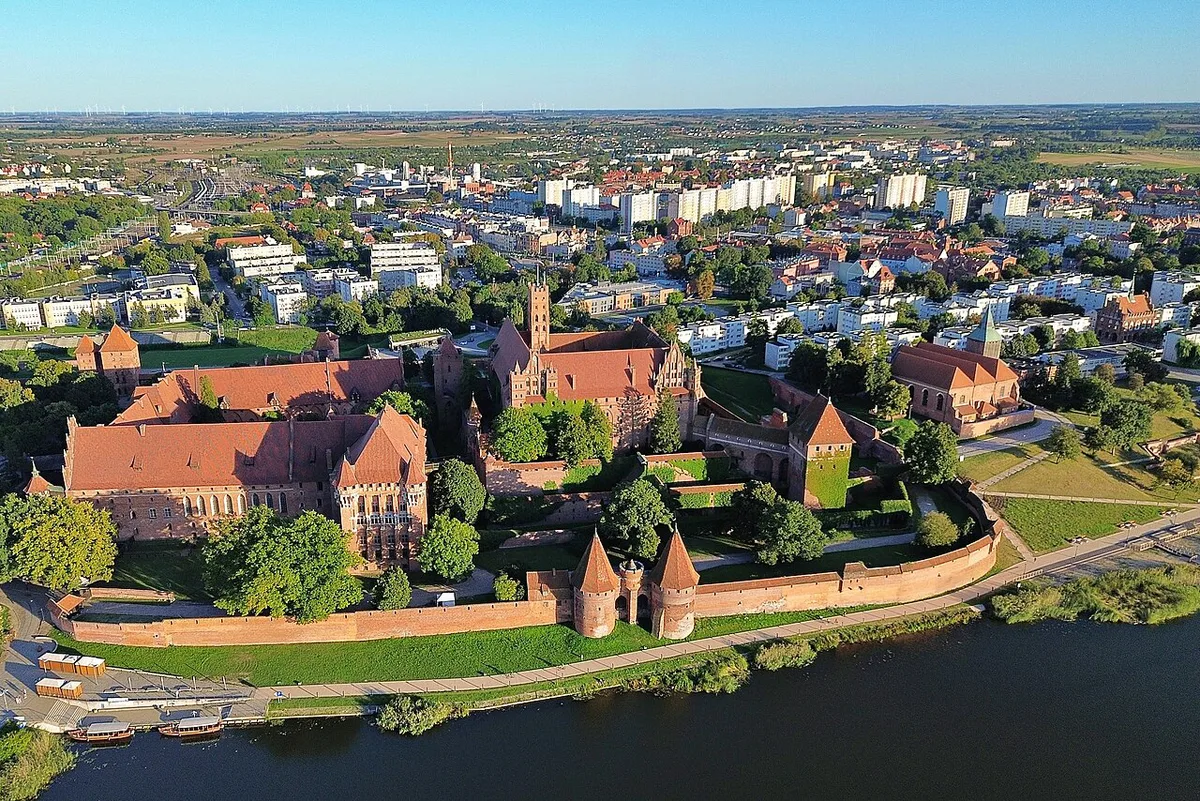
Teutonic Knights began building the fortress after suppressing the Great Prussian Uprising in 1274, and construction continued until around 1406. Historians still debate the exact start date, but the widely accepted range is the 132 years between 1274 and 1406. They named it Marienburg, after Mary, patron saint of the religious order, and set it on the southeastern bank of the Nogat River. Grand Master Siegfried von Feuchtwangen moved the order's headquarters here from Elbing in 1309, once Danzig and eastern Pomerania fell under Teutonic control. By the time building finished, the complex covered close to 21 hectares, or 52 acres, roughly four times the enclosed area of Windsor Castle. UNESCO's own protected, developed area covers about 18 hectares, or 44.57 acres, a smaller footprint than the full site within the outer walls. Upon completion in 1406, the fortress was already regarded as the largest brick castle in the world, a distinction it has held since. In 1457, during the Thirteen Years' War, Bohemian mercenaries sold the castle to King Casimir IV of Poland, and it became a Polish royal residence until the First Partition of Poland in 1772. German administration followed for close to 170 years, until 1945. UNESCO listed the Castle of the Teutonic Order in Malbork as a World Heritage Site in December 1997, citing criteria ii, iii, and iv. Poland separately designated it a national Historic Monument in 1994.
From Acre to the Baltic: Why the Teutonic Order Built at Malbork
The Teutonic Order began in 1191 as a Catholic crusading order based in Acre, in present-day Israel. When Acre fell in 1291, the Order relocated headquarters first to Venice, then to Prussia after subduing the local Baltic tribes. Grand Master Siegfried von Feuchtwangen made Marienburg the new headquarters in 1309, once the Order controlled Danzig and the Vistula Delta. Its location on the Nogat River gave barges and trading ships direct access from the Vistula to the Baltic Sea. Teutonic Knights collected river tolls from passing vessels here, similar to other castles along the same trade routes. They also held a monopoly on the regional amber trade, and Malbork hosted meetings of the Hanseatic League once the city joined that trading network. That trade position is part of why Marienburg grew into a fortress far larger than a typical monastic house.
Malbork's amber monopoly and river toll position drove the complex to eventually house roughly 3,000 knights and lay brothers—an army far larger than typical monastic orders, reflecting its dual role as fortress and trading center.
Planning a Visit: Getting to Malbork and Timing It Right
A regional PKP train connects Gdańsk with Malbork's station, making the castle reachable without a rental car. From the station, it is a short walk into town and across toward the castle gate. Driving adds flexibility for travelers combining Malbork with other stops in the region, though it also means finding parking near the historic center. Budget a minimum of three to four hours inside the complex. This 52-acre site takes longer to cross than most European castles. Visitors who also want the amber and ceramic collections, or a walk along the Nogat riverbank, should plan closer to half a day. Cobblestone courtyards and multiple staircases make some interior sections harder to navigate for visitors with mobility limitations. The museum's own accessibility information is worth checking in advance. Its Tourist Information and Discounts listing also covers reduced-rate categories separate from standard admission. Either approach, train or car, works, but factor the station walk into whichever timeline gets planned for the day.
The fortress took 132 years to build, from 1274 to 1406, yet the entire complex requires three to four hours to visit—a remarkable compression of medieval construction into a single afternoon.
Historical Route vs Green Route: Choosing Your Ticket
Malbork Castle sells two main ticket types, and picking the right one shapes the whole visit. The Historical Route covers interiors across the High, Middle, and Lower Castle, including the Grand Masters' Palace and the Chapter House. Green Route, meanwhile, stays outside, covering courtyards, dry moats, and the exterior walls without any interior rooms. Per the museum's published visiting hours, last entry for the grounds-only Green Route runs later in the day than last entry for the Historical Route. Cost-wise, the Historical Route sits at a premium over the Green Route, since it unlocks far more of the complex. Hours also shift by season, so confirm the current schedule on the museum's official site before setting out.
| Route | What It Covers | Typical Last Entry |
|---|---|---|
| Historical Route | Interiors of High Castle, Middle Castle, and Lower Castle, including the Grand Masters' Palace and Chapter House | 16:30 (per museum hours) |
| Green Route | Courtyards, dry moats, and exterior grounds only, no interiors | 18:30 (per museum hours) |
Inside the Complex: High Castle, Middle Castle, and Lower Castle
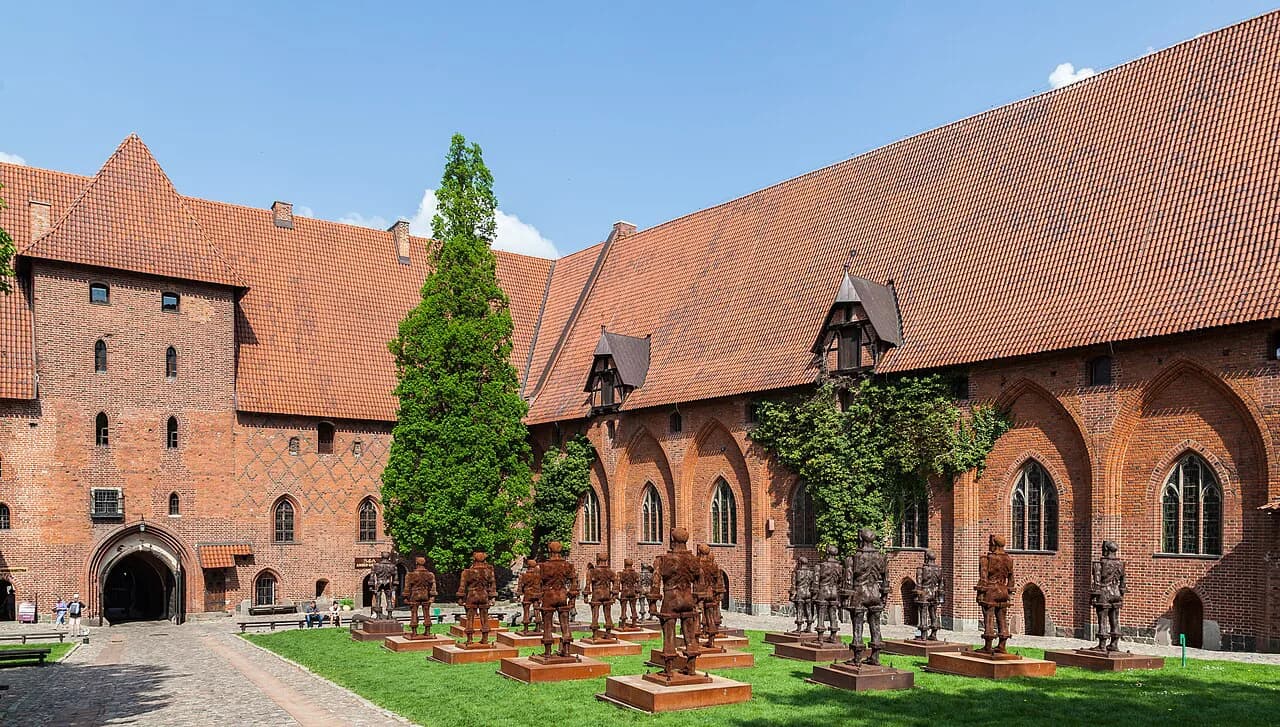
Three fortified zones make up Malbork Castle, each separated by dry moats and towers. High Castle forms the monastic core, built around a central courtyard where a row of armor-clad figures now stands on display. That courtyard display is one of the more photographed corners inside High Castle. High Castle's Chapel of St. Anne also serves as a mausoleum, holding burials of several Grand Masters of the Teutonic Order. Its Chapter House once hosted the Teutonic Order's most sensitive meetings, including elections for Grand Master. Middle Castle held the administrative and residential functions, centered on the Grand Masters' Palace and the Great Refectory, the largest hall in the complex. At its height, the complex housed roughly 3,000 knights and lay brothers, which explains the scale of dormitories and refectories built into Middle Castle. Lower Castle, also called the Outer Bailey, housed the armory, workshops, and a chapel serving the castle's garrison and staff. An EU-funded conservation project is currently upgrading historic buildings in the northern Outer Bailey. Parts of that section may carry construction notices, so check the museum's visitor updates before arrival. If time is short, prioritize High Castle and the Grand Masters' Palace in Middle Castle. Those two sections hold most of the architectural detail that separates Malbork from a generic ruin.
Must-See Collections: Amber, Ceramics, and Architectural Detail
Malbork's amber collection is one of the most specific reasons to allow extra time inside. Its pieces include a small sample of standout items below. The Ceramic Collection began in 1961 with 19th-century porcelain from Volhynia manufactories. It later expanded into utility ceramics from Polish and other European workshops. Architectural Detail Collection material comes directly from the castle's own restoration. Conrad Steinbrecht recovered medieval fragments from the rubble during the 19th-century regothisation project and reused them onsite. Two ongoing research efforts add context for repeat visitors. Since 2018, the War Losses Project has traced collection items scattered or lost during the Second World War. A parallel project called Beautiful Style, also launched in 2018, studies stone sculpture from Prussia dated to 1380-1400.
- A carved casket by Christoph Maucher, late 17th century
- A raw lump of amber with a preserved animal inclusion
- An athlete figure from Jacob Dobbermann's workshop, second quarter of the 18th century
- A 2009 addition: the Kolia Sferowiec necklace by Paulina Binek
Visitor Tips: What Actually Helps Inside Malbork Castle
A few practical choices make the difference between an efficient visit and a tiring one. Together, these small adjustments turn a rushed walkthrough into a visit that actually covers all three castles.
- Audio guide: signage inside the rooms is limited, so the museum's Family Audio Guide or a guided tour fills in most of the history.
- Footwear: courtyards and passages use original medieval cobblestones, uneven in places after three to four hours of walking.
- Arrival time: the museum opens at 9:00, and arriving close to opening avoids the later tour-bus crowds noted around midday.
- Photography: the museum lists a separate policy for professional photoshoots, and casual photography rules can vary room to room, so check posted signage at each entrance.
- Beyond the standard routes: the museum also lists a Night Tour of the Castle and specific pet policies, both worth checking before a visit outside typical daytime hours.
Beyond the Castle: Nogat River Views and Malbork Town
Nogat River's far bank gives the widest angle on the castle profile, reached by crossing the road bridge east of the castle. From there, the full profile of the High, Middle, and Lower Castle lines up across the water, especially in late afternoon light. That same riverside vantage point is worth a second visit after dark, especially on evenings tied to the museum's own Night Tour of the Castle offering. Malbork's town center sits within easy walking distance of the castle gate, with cafes and restaurants serving visitors between route sessions. For a fuller sense of what the town itself offers beyond the castle grounds, this 7 Best Things to Do in Malbork, Poland (2026 Travel Guide) guide covers dining and the riverside area in more depth. Travelers staying more than a single day often pair the castle with an extended trip north. An Elblag Canal day trip is a common add-on for anyone basing a stay in Malbork for two days or more.
The 1410 Siege and Malbork's Long Restoration
Malbork Castle withstood a siege in 1410, an event still marked today with a costumed reenactment festival held most summers. Centuries later, fighting in 1945 destroyed large sections of the complex near the end of the Second World War. Reconstruction has continued since 1962, piecing the castle back together using historical drawings and recovered fragments. Conrad Steinbrecht's earlier 19th-century restoration, sometimes called regothisation, supplied much of the medieval material still visible in the Architectural Detail Collection today. Together, these layered restorations are why Malbork Castle now looks closer to its medieval form than it did in the early 20th century.
Architectural Details to Notice in the Grand Masters’ Palace
The Grand Masters’ Palace rewards a slower look because its decoration also reveals how the Teutonic leadership lived and governed. In the Summer Refectory, notice the delicate vaulting supported by a single slender granite column. Large windows brought light into a room used for audiences, ceremonies, and formal meals.
The nearby Winter Refectory was smaller and easier to heat during Baltic winters. Medieval heating systems used basement furnaces and channels beneath the floors. Warm air rose through vents into the rooms above, an advanced arrangement for a fourteenth-century residence.
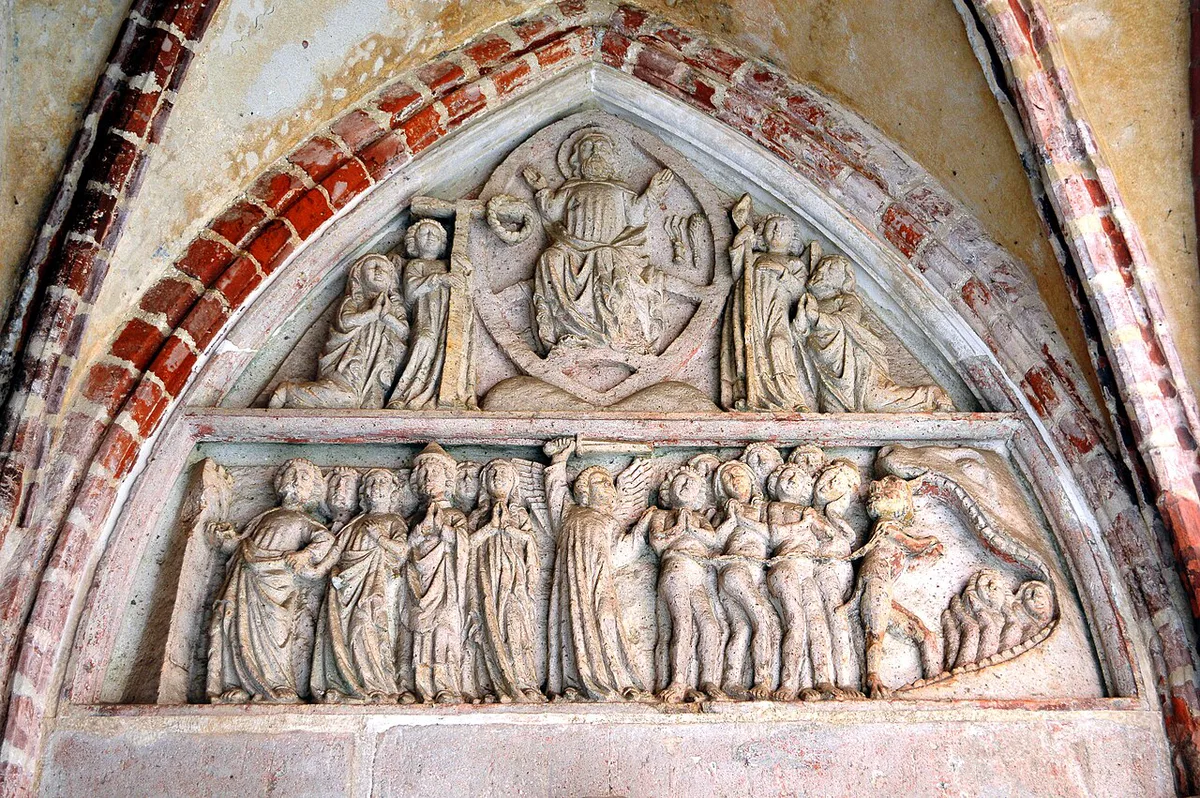
Continue into the Great Refectory in Middle Castle, one of the complex’s largest surviving halls. Its star-patterned vaults spread from narrow stone columns, creating an unusually open interior for a fortified building. Decorative capitals, carved portals, and reconstructed wall surfaces help distinguish original medieval work from later restoration.
These rooms show that Malbork was more than a defensive fortress. It also functioned as the political and ceremonial headquarters of a powerful religious state.
Frequently Asked Questions
How much time do you need to visit Malbork Castle?
Plan on a minimum of three to four hours for the Historical Route, since the complex spans 52 acres across three castles. Add extra time for the amber and ceramic collections, or for the walk across the Nogat River for photos.
What is the difference between the Historical Route and the Green Route?
Historical Route tickets include interiors across the High, Middle, and Lower Castle, including the Grand Masters' Palace. Green Route tickets cover only the grounds, courtyards, and dry moats, with no interior access.
Is Malbork Castle worth a day trip from Gdansk?
Malbork works well as a day trip, since a regional PKP train connects Gdańsk directly to Malbork's station. Budget most of a day once travel time and the 52-acre site are both factored in.
Do you need an audio guide at Malbork Castle?
An audio guide or a guided tour is worth adding, in our editorial assessment, since interior rooms carry limited English-language signage. The museum's own Family Audio Guide option is built for this exact gap.
When is the best time to visit Malbork Castle to avoid crowds?
Arriving close to the 9:00 opening tends to beat the larger tour-bus groups that build through midday. Summer also brings costumed festival weekends, like the Siege of Malbork reenactment, so expect heavier crowds around those specific dates.
What should you prioritize inside Malbork Castle if you are short on time?
High Castle and the Grand Masters' Palace in Middle Castle hold most of the architectural detail worth the extra effort. Skip deeper into Lower Castle only if the earlier two sections still leave time before closing.
Does Malbork Castle Museum offer group or family tickets?
Yes, the museum lists separate Group Visits options apart from individual admission. A Family Audio Guide is also available for travelers visiting with children, per the museum's own tour listings.
Is Malbork Castle open year-round?
Yes, the museum operates year-round, though exhibition areas open Tuesday through Sunday while Monday visits are limited to the castle grounds. Hours also shift between summer and winter schedules, so confirm current opening times on the museum's own site before finalizing plans.
You might also like


Continue reading
More guides you'll find useful