Wieliczka Salt Mine: The Complete 2026 Visitor Guide
Descending into the Wieliczka Salt Mine is one of the most astonishing experiences Poland has to offer. Carved out over seven centuries of continuous mining, this UNESCO World Heritage Site plunges you 135 metres below the surface into a subterranean world of sculpted chambers, glittering salt lakes, and a cathedral hewn entirely from rock salt. It is, without question, one of the essential things to do in Krakow and a landmark that earns its reputation as one of the great places to visit in Poland.
Unlike almost any other underground attraction in Europe, Wieliczka rewards you not just with geological curiosity but with genuine art and history. Miners who spent lifetimes in the dark created chapels, bas-reliefs, altarpieces, and chandeliers — all from salt. The sheer scale of human effort compressed into nine levels of tunnels is humbling. This guide covers everything you need to plan your visit in 2026: which tour to choose, how to book, what to wear, how long to allow, and how to combine it with other day trips from the region.
One important note before we begin: this guide focuses on the mine itself — its history, underground highlights, tour routes, and practical visiting details. If you need to know how to get from central Krakow to Wieliczka by minibus, train, or organised coach, that is covered separately on the Wieliczka Salt Mine day trip from Krakow page, which deals with transport logistics in full.
Seven Centuries of Salt: A Brief History
Salt mining at Wieliczka began in the thirteenth century, making this one of the oldest operating salt mines in the world. A founding legend, still told to visitors today, holds that the mine was discovered in 1252 when Saint Kinga of Poland — a Hungarian princess betrothed to Duke Bolesław V — dropped her engagement ring into a salt mine in Transylvania before departing for Poland. The ring miraculously reappeared in the first salt rock excavated at Wieliczka, and Kinga became the patron saint of Polish salt miners. The legend explains the chapel named in her honour and why the carved figure of Kinga appears repeatedly throughout the tunnels. For much of medieval and early modern Europe, salt was as valuable as gold — it preserved food, funded armies, and sustained kingdoms. The mine became so central to the Polish economy that its revenues helped finance the Jagiellonian dynasty's courts and wars for generations.
By the sixteenth century, the mine employed hundreds of workers at any given time, and an elaborate infrastructure of shafts, chambers, and horse-powered windlasses had been developed to haul rock salt to the surface. Polish kings, including Casimir the Great, drew substantial wealth from Wieliczka, and the mine is explicitly mentioned in accounts of medieval Polish prosperity. It was added to the very first UNESCO World Heritage List in 1978 — one of only twelve sites worldwide to receive that inaugural recognition.
Commercial salt extraction finally ceased in 1996, ending a run of more than seven hundred years of continuous production. Today the mine operates as a museum and tourist attraction, but it is also a living venue: the vast underground chambers host concerts, corporate events, and even a health spa. Walking through it, you sense that the place never fully stopped being used — it simply changed its purpose.
What You See Underground: The Main Highlights
The Tourist Route — the standard guided tour — covers roughly 3.5 kilometres of passages across three of the mine's nine levels, descending to about 135 metres below the surface. Even that fraction of the full mine is overwhelming in scope. Here are the chambers that define the experience.
| Highlight | Level | What Makes It Special |
|---|---|---|
| Chapel of St Kinga | Level 3 (101 m) | Largest underground chapel in the world, fully carved from salt including chandeliers and altar reliefs |
| Wieliczka Underground Lake | Level 3 | Still, emerald-green brine pool with eerie underground acoustics |
| Chamber of Staszic | Level 3 | One of the largest single chambers, with a vast vaulted ceiling of salt |
| Salt Sculptures and Dwarves | Levels 1-3 | Miners carved gnome figures (skarbnik) throughout the tunnels — folk tradition persists to this day |
| Historical Mining Equipment | Levels 1-2 | Horse-powered windlasses, buckets, and original extraction tools from different eras |
| Weimar Chamber | Level 1 | Where Goethe descended in 1790 — the visit is documented and the chamber named in his honour |
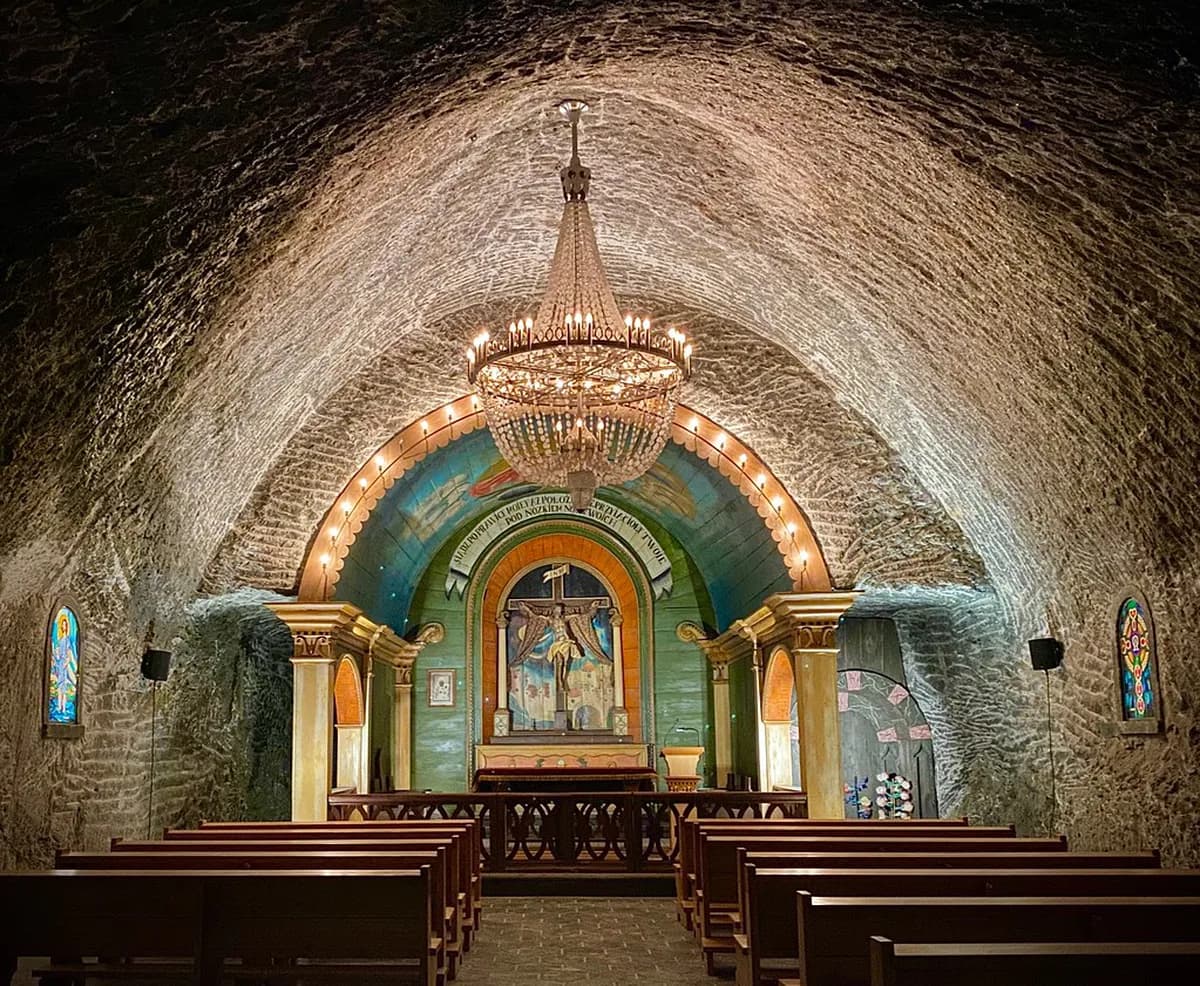
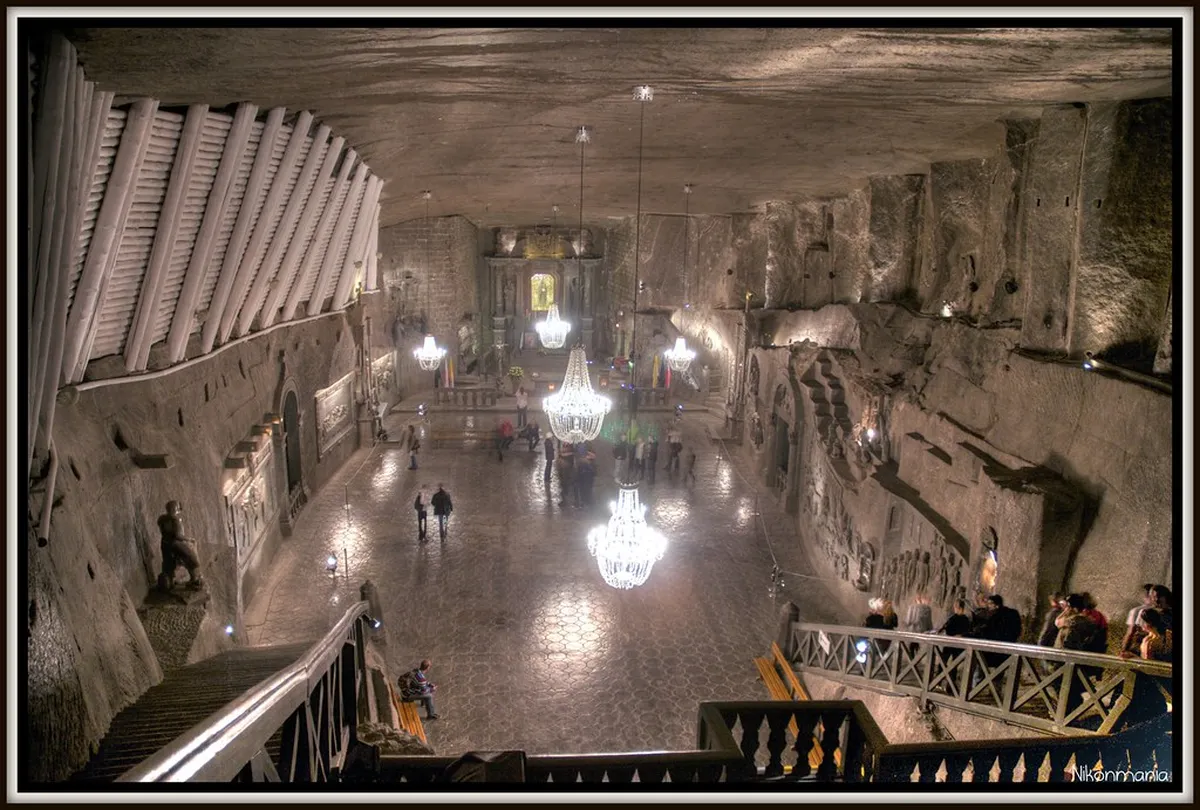
The Chapel of St Kinga deserves particular attention. Named after the Hungarian princess who became patron saint of Polish salt miners, the chapel took miners roughly sixty-seven years to carve — from 1895 to 1963. Every surface, from the intricate bas-relief depicting the Last Supper to the massive chandeliers dripping with salt crystals, was shaped by hand from the surrounding rock salt. It functions as a consecrated Roman Catholic chapel to this day, hosting regular Masses. Standing inside it for the first time, most visitors go genuinely quiet.
You can find more details about the site's history and visitor ratings on the Wieliczka Salt Mine attraction page, which covers opening hours, reviews, and quick-reference visitor data.
Tourist Route vs Miners Route: Which to Choose
The mine currently offers two main visitor routes, and choosing between them matters more than most travel articles acknowledge. The Tourist Route is the classic choice: a guided group tour of around 20–30 people, covering the main chambers including the Chapel of St Kinga. It runs for roughly two to two-and-a-half hours and requires no special fitness. You descend by a wooden staircase of 380 steps to reach Level 1, then continue along lit passages. The tour concludes with an elevator ride back to the surface — a welcome relief after so much descending. This is the right choice for first-time visitors, families, and anyone wanting a structured overview of the highlights.
The Miners Route is a more demanding, adventure-oriented experience. Groups are much smaller, you wear a miner's lamp and overalls, and the route takes you through lower, tighter passages not normally open to tourists. You will crawl through some sections, operate original machinery, and experience a portion of the mine in near-darkness as it would have felt for working miners. It lasts around three to four hours and costs noticeably more. If you have already done the Tourist Route and want to return with a different lens — or if you have a particular interest in industrial history — this is the upgrade worth making.
The Tourist Route is available in multiple languages including English, German, French, Italian, Spanish, and Polish. English-language tours run frequently throughout the day but can fill up quickly in summer. Book your preferred language and time slot online at wieliczka-saltmine.com well in advance — at peak season, same-day tickets in your language may simply not be available.
A third option — the Pilgrimage Route — focuses specifically on the mine's religious art and is particularly suited to groups with an interest in Catholic heritage. There is also a Graduation Tower salt therapy experience on the surface grounds, which is separate from the underground visit.
Tickets, Booking, and Opening Hours in 2026
Wieliczka Salt Mine is open every day of the year except specific maintenance closures. In 2026 the mine generally opens at 08:00 and runs its last tours into the late afternoon — exact last-entry times vary by season, so always check wieliczka-saltmine.com before you travel. The mine is busiest between April and October, and July–August sees serious queuing for on-the-day tickets.
Ticket prices for the Tourist Route in 2026 sit in the range of 100–130 PLN for adults and 70–90 PLN for children and students, with family tickets offering a modest saving. The Miners Route costs substantially more — typically 250–300 PLN per person — reflecting the smaller group size and longer duration. Prices are updated periodically; treat these as orientation figures and verify current prices when booking. Note that the entrance fee includes a mandatory guided tour: you cannot explore the Tourist Route independently without a guide.
Online booking is strongly recommended and, during summer, effectively mandatory if you want a specific language or time. Tickets sell through the official mine website. Walk-up tickets are available at the onsite box office in the shoulder season but cannot be relied on in peak months. Groups of ten or more must pre-book regardless of season.
Arrive at the mine entrance at least 20–30 minutes before your booked tour slot. Security checks and the process of being assigned to your language group take time, and guides will not delay departing for late arrivals. The descent staircase is steep: 380 steps down, no lift on the way in. If you have significant mobility difficulties, contact the mine directly — accessibility provisions exist but must be arranged in advance.
What to Wear and How to Prepare
The temperature underground stays constant year-round at 14–16 degrees Celsius. That sounds mild, but after two hours of walking slowly through passages, you will feel it — especially if you visit on a warm summer day and descend in a short-sleeve shirt. A light jacket or fleece is not optional; it is genuinely necessary for comfort. Most visitors who ignore this advice regret it within thirty minutes of descending.
Wear flat, closed-toe shoes with a grip sole. The passages are uneven, occasionally damp underfoot, and some sections involve steps without handrails. Sandals and heels are both poor choices. Trousers are better than shorts — the air is cool and some passages brush close to salt walls.
Photography is permitted throughout the mine and no flash restrictions apply in most areas. The lighting in chambers like the Chapel of St Kinga is dramatic and deliberately designed for visual impact — a wide-angle lens captures it far better than a phone camera pressed against your face. Tripods are not permitted on the Tourist Route due to group pace. The underground acoustics are extraordinary; if you have a moment in the Chapel, stay near the rear and listen to other visitors' voices bouncing off the salt walls.
Younger children can manage the Tourist Route comfortably — the descent staircase is the main physical challenge and most children over five handle it without difficulty. There is a cloakroom at the surface entrance for bags and bulky items. Carry only what you need: water, a camera, a layer.
How Long Does a Visit Take?
The Tourist Route itself takes two to two-and-a-half hours from descent to elevator return. Add time for the pre-tour security and assembly process (30 minutes), and time on the surface before and after, and a realistic total visit time is three to three-and-a-half hours from arrival at the mine entrance to departure. Budget four hours if you want to browse the mine's underground shop, grab a drink at the underground café, or linger in the Chapel of St Kinga longer than the guide allows.
The Miners Route runs three to four hours for the underground portion alone. Combined with pre-tour prep (changing into overalls, safety briefing) and surface time, allow five to six hours minimum for that experience.
One thing that surprises many visitors: the end of the Tourist Route includes a lift back to the surface, but you emerge at a different point to where you entered. The mine's grounds are large; factor in a short walk back to your transport or the town centre.
Combining Wieliczka with Auschwitz or Other Day Trips
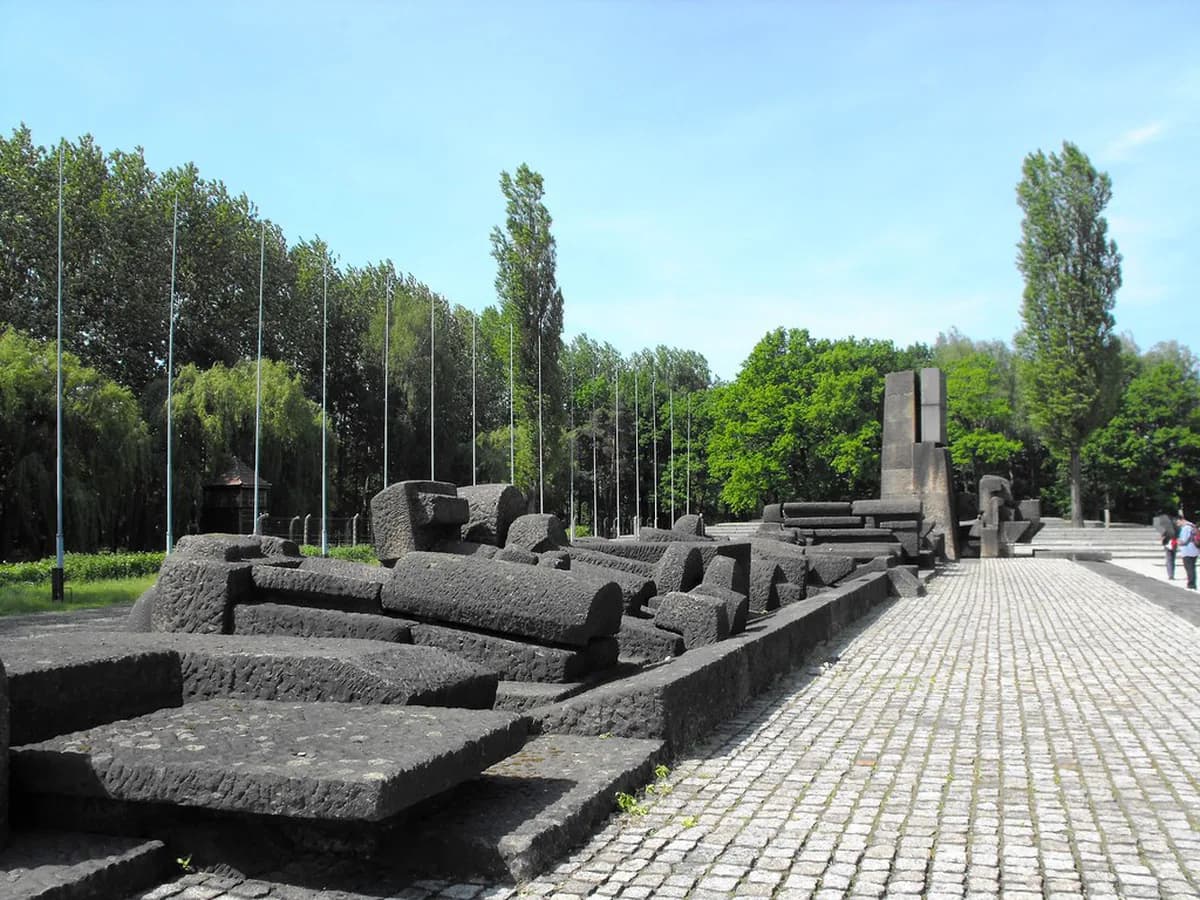
Wieliczka is frequently combined with other excursions from Krakow, and the logistics are worth thinking through carefully. The most common pairing is with Auschwitz-Birkenau, but doing both on the same calendar day is genuinely exhausting and emotionally ill-advised. The Auschwitz day trip from Krakow alone takes a full day when you include travel, waiting, and the time needed to absorb what you see. Wieliczka on the same day means rushing both experiences. A two-day approach — one site per day — serves each location far better.
If you are looking at the broader picture of day trips from Krakow, Wieliczka is the most accessible: it is only fourteen kilometres from the city centre and reachable in under thirty minutes. That makes it feasible as a half-day trip, leaving your afternoon free for Krakow itself. Auschwitz, Zakopane, and the Tatra Mountains all require full days.
Wieliczka town itself — above the mine — is a pleasant, quietly attractive Polish town with a market square, a few cafes, and the Wieliczka Salt Works Museum (separate from the underground mine). If you arrive early and your tour is booked for mid-morning, half an hour walking the town is time well spent.
The Underground Lake and the Mine's Lesser-Known Details
Most visitors focus their attention on the Chapel of St Kinga — justifiably — but the subterranean lakes at Wieliczka are among the most visually striking things underground in Europe. Brine accumulates naturally in lower chambers, and the still, green-tinted water reflecting the salt ceiling has an otherworldly calm. You walk along narrow boardwalk passages above these pools; the sound of your footsteps carries across the water in a way that makes conversation feel strangely intimate.
The mine's nine levels extend to 327 metres below the surface. The Tourist Route reaches Level 3 at around 135 metres. That means the vast majority of the mine — roughly two hundred metres of further depth — is never seen by visitors on the standard tour. Levels 4 through 9 are accessible only to researchers, mine engineers, and participants in specialist guided experiences. The total length of all tunnels combined exceeds 245 kilometres. You see perhaps 3.5 kilometres. That context reframes the experience: what you visit is the equivalent of a very impressive trailer for a film you will never fully watch.
The salt-carved dwarves (skarbnik) scattered through the passages are a genuine piece of mining folk culture, not a modern tourist gimmick. Miners believed in the skarbnik as a protective spirit of the underground — sometimes helpful, sometimes mischievous. Carving his likeness was a form of propitiation. The tradition of carving in salt persisted for centuries; different historical periods left different sculptural styles, and a knowledgeable guide can date carvings by their technique.
Accessibility, Families, and the Underground Spa
The Tourist Route is not fully accessible for visitors using wheelchairs or with significant mobility impairments. The 380-step descent is the primary barrier, and while an elevator exists for the ascent, there is no lift for the descent on the standard tour. The mine does offer a limited accessible tour for visitors with reduced mobility, but it covers a shorter section of the site and must be pre-booked directly with the mine management. If this applies to you or a member of your group, contact the mine's reservations team well before your intended visit date to confirm arrangements.
For families with young children, the Tourist Route works well from about age four upwards. The spacing between tour stops is not excessive, the chambers are large enough to prevent claustrophobia, and the mixture of sculpted figures, glittering walls, and the chapel provides strong visual stimulation for children. There are no serious safety hazards on the Tourist Route — barriers are in place along all drops and lake edges.
The Wieliczka Salt Mine also operates an underground health resort — the Sanatorium — in the deepest accessible chambers, where microclimate therapy is used to treat respiratory conditions. Visitors do not encounter this area on the Tourist Route; it is a separate booking with overnight stays possible. If you have asthma or chronic bronchitis and are curious about halotherapy, this is one of the more medically reputable underground salt therapy centres in Europe, used by Polish physicians since the 1950s.
Eating and Shopping Underground
Most visitors are surprised to find a full restaurant operating 125 metres below the surface. The Karczma Górnicza — the miners' tavern — serves traditional Polish dishes in a large chamber along the Tourist Route. Think bigos, żurek, and pierogi in a setting that is genuinely unlike any restaurant above ground. It is not a quick-grab café: tables are set, portions are substantial, and the acoustics of the salt chamber make for an oddly atmospheric lunch. Prices are reasonable by tourist-site standards, and the kitchen is used to managing large group traffic.
About halfway through the tour, a smaller snack bar offers drinks, light bites, and a chance to sit down briefly. Most guided groups stop here for a short break before continuing — the guide will indicate whether your group is visiting the snack bar or going straight through. Use the underground toilets here rather than waiting: there are only two toilet locations in the mine, and queues build up near the end of the tour.
Gift shops are distributed at several points along the route and in a larger hall near the exit. Salt lamps, rock salt grinders, crystal figurines, and locally produced salt-based skincare products are the standard offering. The quality is generally better than average for a tourist-site shop — the mine has been refining its retail offer for decades. If you plan to buy a salt lamp, check the weight before you carry it back up: they are heavier than they look.
Is the Wieliczka Salt Mine Worth It?
For the overwhelming majority of visitors, yes — but the answer depends on what you are expecting. If you arrive anticipating a short geological curiosity, you may find the scale and the detail of the Chapel of St Kinga genuinely stops you in your tracks. If you arrive with inflated expectations of a private, serene underground cathedral experience, the reality of sharing the tour with 25 other people in a guided group may land differently. The mine is enormously popular — over a million visitors a year — and in July and August it shows. That does not make it worse, but it does make it crowded.
The honest case against: the ticket price has risen steadily (roughly 120–134 PLN for a standard adult ticket in 2026), the guided tour pace does not accommodate lingering, and the underground restaurant, while atmospheric, is not where you will eat the best meal of your trip. If you are visiting Krakow for only two days, the mine competes with a lot: Wawel Castle, the Old Town, Kazimierz, and — for those who have not been — Auschwitz. On a three-day or longer visit, Wieliczka is an obvious addition. On a very compressed itinerary, weigh it against what else you will miss above ground.
One genuine alternative is the Bochnia Salt Mine, about 45 kilometres east of Krakow and considerably less visited. Bochnia is also a UNESCO World Heritage Site — listed jointly with Wieliczka — and offers similar underground chambers, religious carvings, and an underground lake. It draws a fraction of the visitors, which means smaller tour groups, a more relaxed pace, and the sensation of having discovered something most tourists skip. If the crowds at Wieliczka concern you, or if you have visited before and want a fresh angle on the same story, Bochnia is worth the extra travel time.
Frequently Asked Questions
How deep does the Wieliczka Salt Mine go, and how far down do tourists descend?
The mine has nine levels reaching a maximum depth of 327 metres. On the standard Tourist Route, visitors descend to Level 3, approximately 135 metres below the surface. The descent is made on foot via a wooden staircase of 380 steps; the return to the surface is by elevator. The deeper levels are not accessible to general visitors.
Do I need to book Wieliczka Salt Mine tickets in advance?
Yes, advance booking is strongly recommended and in peak summer months it is effectively essential. English-language guided tours fill up quickly, and same-day tickets in your preferred language may not be available during July and August. Book online at wieliczka-saltmine.com as early as possible, selecting your language and time slot. Walk-up tickets are more feasible in autumn and winter.
What should I wear inside the Wieliczka Salt Mine?
The temperature underground is 14–16 degrees Celsius year-round. Bring a light jacket or fleece regardless of the weather above ground. Wear flat, closed-toe shoes with a grip sole as passages can be uneven and occasionally damp. Avoid sandals and heels. Comfortable trousers are better than shorts in the cool, damp air of the tunnels.
What is the difference between the Tourist Route and the Miners Route?
The Tourist Route is a guided group tour of around two to two-and-a-half hours covering the main chambers including the Chapel of St Kinga. It is suitable for all fitness levels. The Miners Route is a smaller-group, more physical experience lasting three to four hours, involving lower passages, crawling sections, and miner's equipment — designed for visitors who want an immersive rather than sightseeing experience. It costs significantly more and should be booked well in advance.
The Wieliczka Salt Mine rewards visitors who arrive informed and unhurried. Seven hundred years of human effort shaped those passages, chambers, and sculptures — understanding even a fragment of that history transforms what you see underground from a collection of impressive rooms into something genuinely moving. Whether you choose the Tourist Route for its breadth or the Miners Route for its depth, allocate proper time, dress for the cold, and book your language slot early. The Chapel of St Kinga alone is worth the descent.
Wieliczka sits at the heart of a rich regional itinerary. Pair it with the best of Krakow above ground, plan your logistics through the day trips from Krakow overview, and consider the emotional weight of an Auschwitz visit as a separate day. Poland repays slow, deliberate travel — and few places underground anywhere in the world make a stronger argument for that pace than this one.
You might also like

Continue reading
More guides you'll find useful