

Polish Christmas Eve Dinner: Everything You Need to Know About Wigilia
Last updated July 2026. A Polish Christmas Eve dinner, known as Wigilia, is a meatless 12-dish meal eaten on December 24th once the first star appears in the evening sky. Every course, the shared wafer, the empty chair, and the hay under the tablecloth belongs to a single ritual built around waiting, not just eating. This guide breaks down the dishes, the customs, and how a traveler in Poland can actually book a seat instead of missing the evening entirely.
What Is Wigilia? Poland's Christmas Eve Dinner Explained
Wigilia is the Polish word for Vigil, and it names both December 24th and the meal eaten that night. Some Poles also call the evening Holy Night, tying the meal directly to the Nativity story that shapes every course on the table. The dinner falls at the end of Advent, the four-week run-up to Christmas observed across Poland's Catholic tradition. A Polish christmas eve dinner begins only after the first star is spotted, a sign families watch for as dusk settles. Most households fast for some or all of the day beforehand. The meal opens with a shared wafer, then moves through 12 meatless dishes, said to represent the 12 apostles; some regions count 13 instead. Church rules on eating meat during Advent have loosened over the years, but most Polish households still keep Wigilia itself strictly meatless. Alcohol is typically absent from the table too, until the meal has ended.
The 12 Dishes of a Traditional Wigilia Menu
Every dish on the table fits inside a meatless tradition covered in the guide to traditional Polish dishes. The number 12 gets explained two ways: the 12 apostles, or the 12 months of the year. Whichever version a family tells, etiquette calls for tasting each dish, since skipping one is said to risk bad luck in the year ahead. Two courses show how much the menu shifts by region and generation. Carp divides opinion more than any other dish. Traditionalists insist on it, fried whole or set in a spiced Old Polish gray sauce. Younger households increasingly swap it for salmon or trout instead. Fish preparation also varies by region. Some tables serve carp in that gray sauce. Others prefer a cold, vegetable-topped "Greek-style" fish. Soup choice varies too. Some homes open with barszcz z uszkami. Others start with a plain wild mushroom soup, depending on family and region.
- Barszcz z uszkami: clear beet soup with small mushroom-filled dumplings, usually the opening course.
- Wild mushroom soup (zupa grzybowa): a creamy alternative to barszcz served in some homes instead.
- Pierogi: dumplings filled with potato and cheese, or sauerkraut and mushroom, served meatless for the night.
- Carp (karp): the classic Christmas Eve fish, pan-fried or set in a spiced Old Polish gray sauce.
- Herring (śledź): served in sour cream, in oil, or with shredded apple and onion.
- Fish in aspic: white fish fillet set in savory gelatin with carrot and pea.
- "Greek-style" fish: battered fish topped with a cold vegetable mixture, despite the name's Greek reference.
- Sauerkraut with mushrooms (bigos jarski): the meatless version of Poland's hunter's stew.
- Kutia: wheat berries or noodle-like łazanki mixed with poppy seed, honey, and dried fruit.
- Kompot: a warm or chilled drink made from simmered dried fruit and sugar.
- Makowiec: a rolled poppy seed cake, also baked for Easter.
- Gingerbread cookies and cake (pierniki): the traditional sweet finish to the meal.
Key Rituals: Breaking the Opłatek and Watching for the First Star
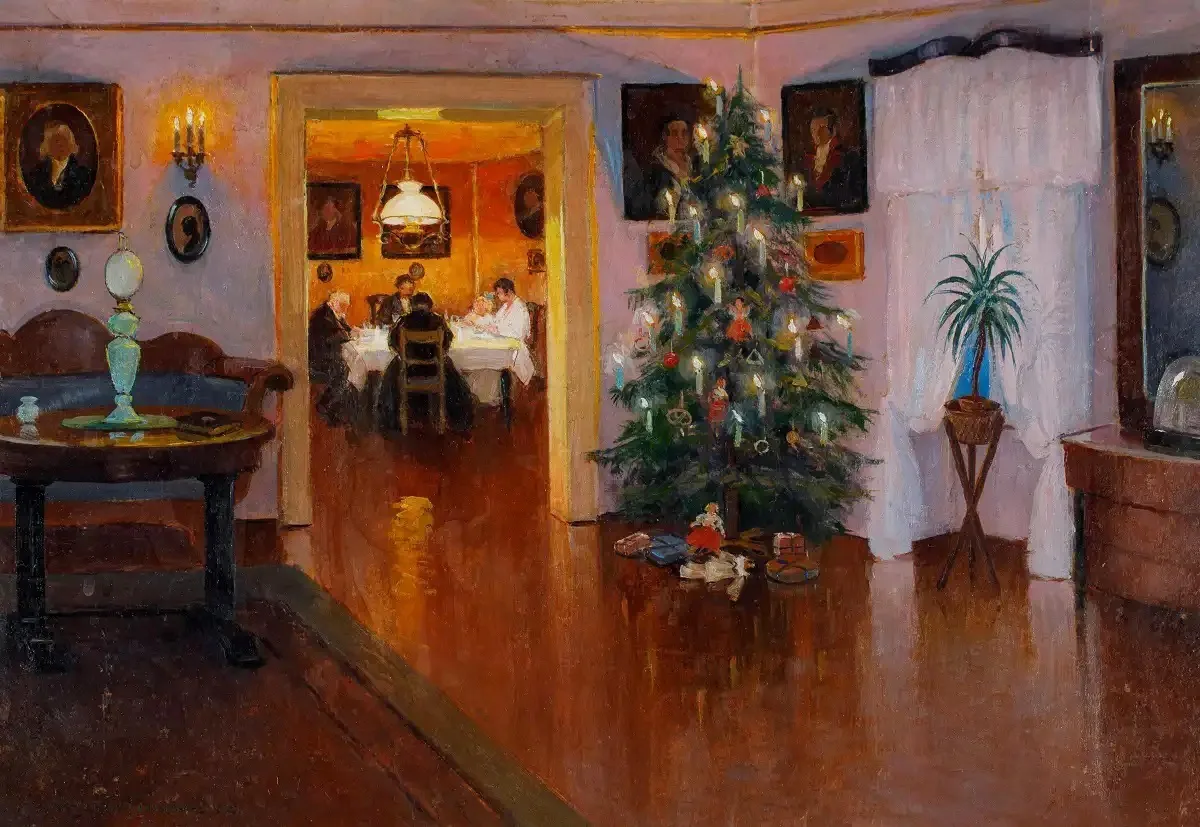
Two rituals anchor the start of a Wigilia dinner: breaking the opłatek and watching for the first star. Opłatek is a thin, embossed wafer, close in texture to a communion wafer. Before anyone sits down, each person breaks a piece from someone else's wafer, eats it, and exchanges a wish for the year ahead. In many households, everyone moves around the room exchanging wafer pieces individually, followed by hugs and good wishes. Some families keep a pink wafer aside to share with pets, following a folk belief that animals can talk on this one night. Dinner cannot start until the first star is spotted in the evening sky, so children are often given the job of watching for it. Poland's December sunsets come early, so the wait rarely runs late into the evening. Many households fast entirely, eating nothing at all, until that first star appears. Treat this as the evening's central rule, not a minor detail.
The Symbolism of the Table: Hay, White Cloths, and the Empty Chair
The table itself carries as much symbolism as the food. A thin layer of hay is tucked under the white tablecloth, a reminder of the manger in Bethlehem. White linen is standard, a step up from everyday table settings, and some families bring out china and silverware saved for this one occasion. One place at the table is always set and always left empty. It is reserved for a guest who might arrive unannounced, and in some homes it also honors family who cannot attend. No one sits in that chair; it stays there through the whole meal as a quiet welcome. Alcohol stays off this table too, in keeping with the evening's meatless, fasting-day character.
The hay under the tablecloth and empty chair represent unchanging spiritual symbols, yet Wigilia's 12 dishes change freely across regions and generations, with carp dividing opinion and younger families substituting salmon or trout.
Wigilia for Travelers: What to Expect and Where to Eat in Poland
Travelers visiting Poland in late December should plan around December 24th rather than through it. Most restaurants and shops close in the early-to-mid afternoon on Wigilia so staff can get home for their own family dinner. Public transport also thins out for the day, and December 24th functions as one of the quietest days of the year across the country. A traveler who wants a Wigilia dinner needs to book ahead at a hotel or restaurant that specifically advertises a Wigilia menu; walk-in tables are unlikely to be available. As of 2026, a hotel Wigilia dinner package commonly runs roughly 200 to 500 PLN per person, and venues that offer one typically ask for a booking by November. That lead time reflects both limited seating and the amount of prep the 12-dish menu demands. Always confirm opening hours and booking terms directly with the venue, since holiday schedules can shift from year to year.
| Aspect | Traveler (Hotel or Restaurant Wigilia) | Home Guest (Invited by a Polish Family) |
|---|---|---|
| Start time | Seated dinner typically begins early evening, before venues close for the night | Meal begins once the first star appears, usually around dusk |
| Dress code | Smart casual to formal, similar to a holiday banquet | Smart casual; better clothing is common but not required |
| Menu | Set 12-dish package, often fixed-price | 12 dishes, flexible and personal to the household |
| Gift timing | Not typically part of a hotel package | Gifts are usually opened after the meal ends |
| Booking reality | Book by November; expect roughly 200 to 500 PLN per person | No booking needed; arrive on time and bring a small gift |
Common Mistakes to Avoid at a Polish Christmas Eve Dinner
A few habits trip up first-time guests at a Polish Christmas Eve dinner. Most are easy to avoid once you know the custom behind them.
Arriving late after the first star or expecting meat and vodka at Wigilia both misunderstand the 12-dish meal's core: everyone fasts and gathers once the star appears, so timeliness is a ritual matter, not just courtesy.
- Arriving after the first star: the meal cannot begin until everyone is seated, so lateness holds up the whole household.
- Expecting meat or vodka: both are typically absent from the table until Wigilia officially ends.
- Skipping a dish: tradition holds that tasting all 12 dishes brings good luck for the coming year.
- Assuming restaurants stay open: most close in the early-to-mid afternoon on December 24th, so a Wigilia dinner must be booked well ahead.
- Treating the wafer casually: opłatek is exchanged with a spoken wish before the meal starts, not passed around mid-dinner.
- Arriving empty-handed: a small gift or bottle for the hosts is customary, usually given after the meal rather than before.
Beyond the Dinner: Pasterka and the Days That Follow
Wigilia doesn't end when the plates are cleared. Many families open gifts right after the meal, then head out to Pasterka, the midnight mass that marks the start of Christmas Day. Congregations sing kolędy, traditional carols, and many churches display a szopka, a nativity scene, through the season. Confirm the local parish's Pasterka start time in advance, since it can vary by town and church. December 25th and 26th, known as the First and Second Day of Christmas, extend the celebration with visits to extended family and friends. Meat and alcohol return to the table once the Wigilia fast has passed. Many households pour vodka to mark the first toast of the season. The guide to Polish vodka covers regional styles worth knowing before that toast. Homemade fruit liqueurs also make an appearance on the 25th. The guide to Polish nalewka explains how families flavor spirits with fruit and spice. Beer is a common match for the heavier meat dishes served over the following two days. The guide to Polish beer styles breaks down what's typically poured at a Polish table. Easter brings its own signature soup, żurek, a sour rye alternative to Wigilia's barszcz. The guide to Polish Easter food compares the two seasonal soup traditions in more detail.
Further reading: Poland on Wikivoyage · Poland on Wikipedia
Frequently Asked Questions
What are the 12 dishes served at a Polish Christmas Eve dinner?
The exact list varies by region and household, but common courses include barszcz z uszkami, wild mushroom soup, pierogi with potato or sauerkraut filling, carp, herring, fish in aspic, Greek-style fish, sauerkraut with mushrooms, kutia, kompot, and makowiec. Households that count 13 dishes usually add a second dessert.
Why is there an empty seat at the Polish Christmas table?
The extra place setting is reserved for an unexpected guest who might arrive on Christmas Eve, and in some homes it also honors family members who cannot be present. The seat stays empty through the whole meal as a quiet gesture of welcome.
Do Poles eat meat on Christmas Eve?
Traditional Wigilia menus are meatless, built around fish, mushrooms, cabbage, and grain-based dishes instead. Church rules on Advent meat have loosened over time, but most households still keep December 24th strictly meatless and save meat dishes for December 25th and 26th.
Can travelers find a Wigilia dinner at restaurants in Poland?
Some hotels and restaurants offer a set Wigilia menu, but most other venues close in the early-to-mid afternoon on December 24th. Book a Wigilia dinner well ahead, ideally by November, since seating is limited and the 12-dish menu takes real preparation.
What is the significance of the Christmas wafer, opłatek?
Opłatek is a thin, embossed wafer shared before the meal begins. Each person breaks a piece from someone else's wafer, eats it, and exchanges a wish for the year ahead, a ritual that opens the Wigilia dinner before any food is served.
You might also like


Continue reading
More guides you'll find useful