
Polish Easter Food: A Guide to Wielkanoc Dishes and Traditions
Last updated July 2026, Polish Easter food centers on a Holy Saturday basket blessing, a rye-soup breakfast, and a full cold-buffet table that runs from Sunday into Monday's water-throwing traditions. Wielkanoc combines Catholic ritual with dishes that rarely appear on Polish menus outside this one week of the year. This guide covers what belongs in the blessed basket, what to eat for breakfast and dessert, and how to plan a visit around Poland's Easter closures.
The Polish Easter Food Table: An Overview
Wielkanoc, meaning Great Night, is the most important holiday on the Polish Catholic calendar and the biggest food event of the year. Many households keep a meat-free, sweet-free Lenten fast in the weeks before Easter, so Sunday breakfast marks a deliberate switch to rich, meat-heavy dishes. Easter in Poland traditions extend well beyond food, into basket blessings and water fights, but the table is where most visitors start. Three items anchor almost every household: żurek, biała kiełbasa, and hard-boiled eggs from the blessed basket. Everything else, from salads to aspics to cakes, builds outward from that core. For Polish cooking beyond this one holiday week, the everyday Polish food guide covers the wider repertoire.
- Żurek – sour rye soup, the traditional Easter breakfast opener
- Biała kiełbasa – fresh, unsmoked white sausage, poached or roasted
- Hard-boiled eggs – shared first from the blessed Święconka basket

Święconka: Blessing the Easter Basket on Holy Saturday
Święconka is the basket of food Polish families bring to church on Holy Saturday for a formal blessing. Major urban cathedrals in cities such as Kraków and Warsaw schedule blessings roughly every 15 minutes that day to handle the volume of baskets. The contents follow a set symbolic pattern rather than personal preference. Visitors touring Old Town churches over the Easter weekend can often watch the blessing lines form outside, basket lids covered with white linen and boxwood sprigs.
Cathedrals schedule Święconka blessings roughly every 15 minutes in major cities to handle demand, which explains why restaurants and stores shut down on Easter Sunday and Holy Saturday afternoon—staff participate in this central family tradition.
- Bread
- A decorated egg (pisanka)
- Salt
- Sausage
- Cheese
- Horseradish
- Sugar lamb (Baranek wielkanocny)
Easter Weekend Timeline: What Happens When
Polish Easter unfolds over four days, and each one carries its own food rules. Visitors staying through the whole weekend should expect the biggest meal on Sunday and a quieter, leftovers-based Monday.
- Good Friday – the strictest fasting day of Lent; many households eat simply and skip meat.
- Holy Saturday – Easter baskets go to church for the Święconka blessing, and cooking wraps up at home.
- Easter Sunday – the fast breaks with breakfast: eggs from the basket, żurek, biała kiełbasa, and the full cold buffet.
- Easter Monday (Śmigus-Dyngus) – leftovers reappear alongside bigos, and the day is better known for water-throwing traditions.
Easter Breakfast: Żurek, Biała Kiełbasa, and the Centerpiece Roast
Two soups get confused by visitors: żurek and biały barszcz. Both are pale and sour, but they start from different bases. The table below breaks down the difference before the rest of the savory course. Biała kiełbasa is sold raw and unsmoked, unlike the smoked kielbasa found in delis year-round. Cooks poach or roast it just before serving, then plate it with horseradish and beets. Some households braise it instead in beer with onions and apples. The Polish Beer Guide 2026: Best Brands, Craft Breweries, and Drinking Rules explains which styles pair well with that version. Schab ze śliwką, a prune-stuffed pork loin, appears sliced cold as a centerpiece roast, its savory pork balanced against sweet dried fruit. Bigos, the hunter's stew of sauerkraut, cabbage, and smoked meat, is not part of Sunday breakfast itself. It shows up more often once Easter Monday leftovers take over the table.
| Dish | Base | Flavor Profile | Typical Garnishes |
|---|---|---|---|
| Żurek (sour rye soup) | Soured rye flour starter | Tangy, distinctly sour, savory | Boiled egg, slice of biała kiełbasa, marjoram |
| Biały barszcz (white borscht) | Fermented grain sourdough base, often finished with cream | Milder and creamier than żurek | Boiled egg, horseradish, sausage |
The Cold Buffet: Salads, Eggs, and Aspics
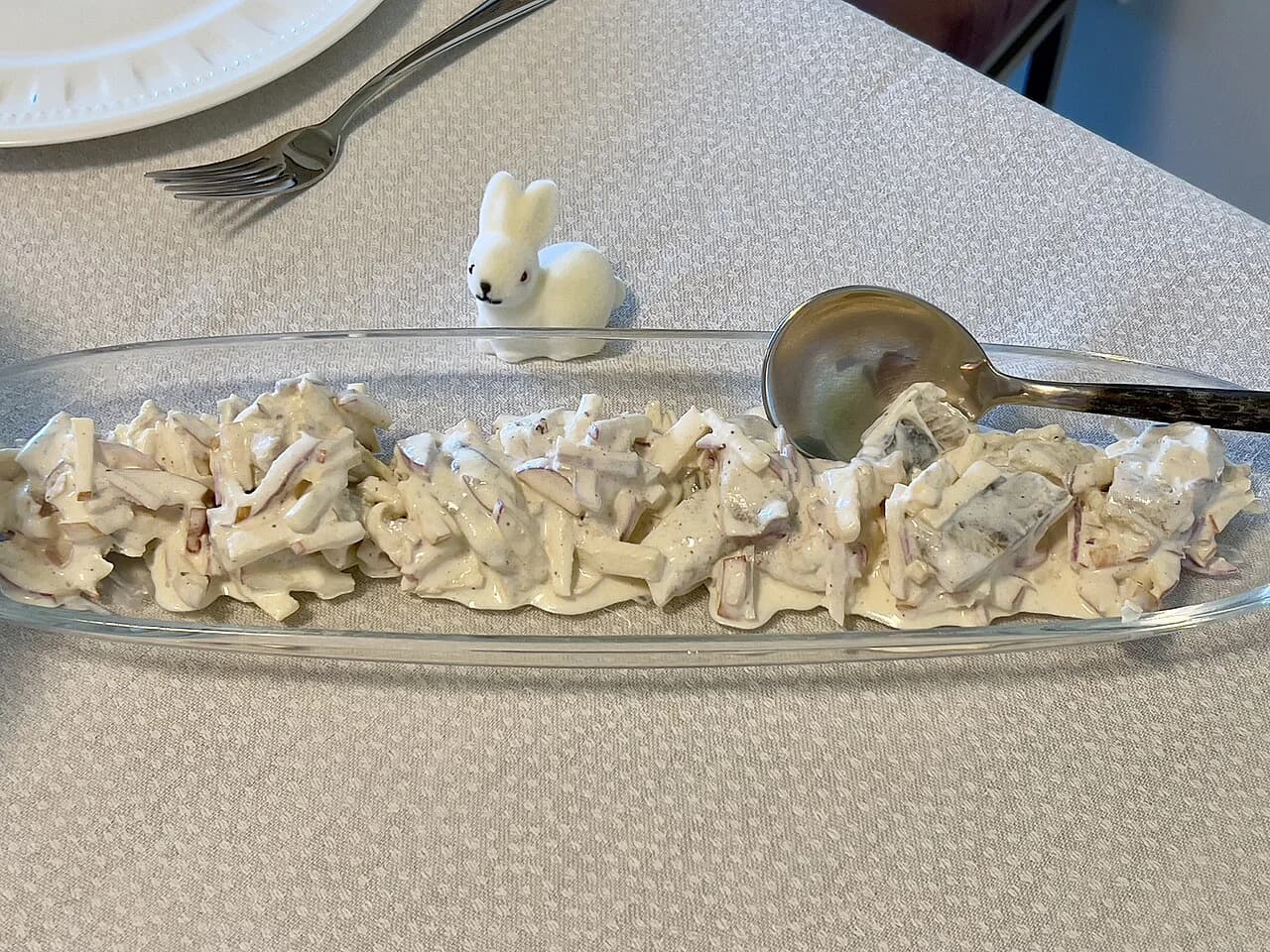
The rest of the Easter table is served cold and stays out for grazing across the whole weekend. Two different styles of deviled egg circulate. A mayonnaise-based version is closer to what many diners expect, while jaja po polsku mixes the yolk with sautéed mushrooms and horseradish before browning the tops. Sałatka jarzynowa, a diced root vegetable salad bound in mayonnaise, sits on nearly every table, and home cooks tune the mustard-to-mayonnaise ratio to taste. The buffet also includes two meats set in aspic and two condiments Poles treat as essential rather than optional:
- Galaretka z kurczaka – chicken suspended in savory gelatin
- Zimne nogi – a heavier pork aspic with vegetables and spices
- Ćwikła z chrzanem – horseradish mixed with shredded beets
- Sos tatarski – a tangy Polish tartar sauce
Traditional Easter Desserts: Mazurek, Babka, and Sernik
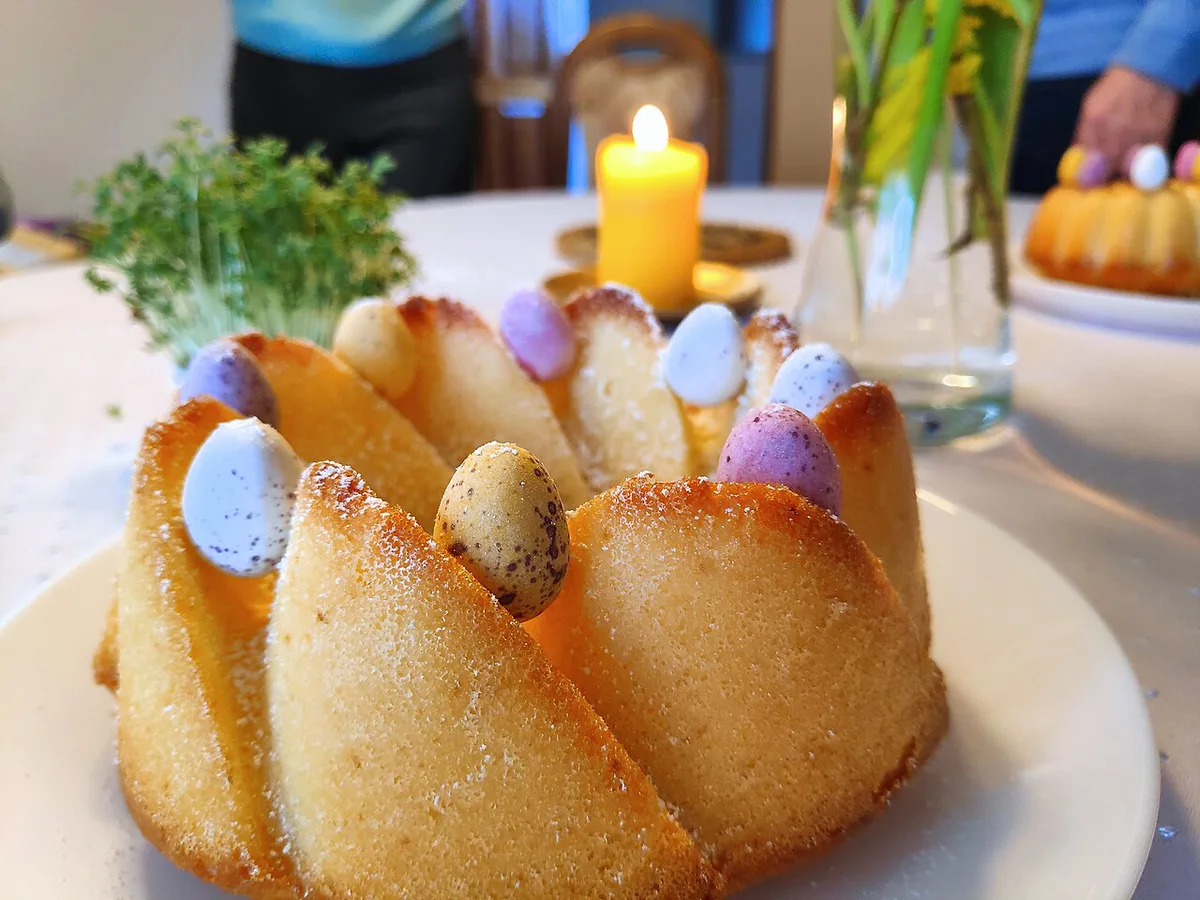
Dessert closes the meal, and Easter is when Polish home bakers compete hardest. Mazurek is a flat, heavily decorated shortcrust base, closer to a bar cookie than a layer cake. Toppings split into two camps: a dolce de leche and chocolate version, and a fruit-and-nut version topped with jam and sliced almonds. Babka is the traditional bundt-shaped Easter cake, and it comes in a few versions:
- Babka piaskowa – a soft, moist vanilla sand cake, the classic Easter version
- Babka marmurkowa – a marbled vanilla-and-chocolate bundt cake
- Yeast babka with raisins – a more involved, slower-rising version
Which Dishes Fit Which Traveler
Sernik, Polish cheesecake, relies on twaróg (farmer's cheese) rather than cream cheese, giving it a denser, slightly grainy texture than the American version. Makowiec, a rolled poppyseed cake, also appears on the Easter table, and it is the same cake many families serve at Christmas. The Christmas Eve dinner guide covers how that meat-free Wigilia menu compares to Easter's meat-heavy one. Not every dish on the table suits every palate, and in our editorial assessment the split below helps with ordering:
- Kid-friendly and low-risk: biała kiełbasa, mazurek, babka, and sałatka jarzynowa.
- An easier entry point for newcomers: żurek, since the sourness reads more like a tangy soup than a strong flavor.
- An acquired taste for many first-time visitors: the aspics, galaretka z kurczaka and zimne nogi, served cold and set in gelatin.
- Worth trying once even if unfamiliar: ćwikła z chrzanem, since the horseradish is central to how Poles balance the richer meats.
Traveler Logistics: Eating Polish Easter Food in Poland
Restaurants across Poland close or run reduced hours on Easter Sunday, since most staff are with their own families. Easter Monday sees similar closures in smaller towns, though some restaurants in Kraków and Warsaw reopen for holiday menus. As of 2026, Poland's Sunday trading restrictions still keep most large stores closed on the weekly Sunday, and Holy Saturday afternoon adds another rush as households finish shopping before the blessing. Plan grocery runs for Thursday or Friday morning instead. In the days leading up to Easter, milk bars (bar mleczny) serve żurek, sausage, and pierogi at low, canteen-style prices, and they stay open on a normal weekday schedule. Hotels in Kraków and Warsaw often run a holiday brunch spread over the Easter weekend itself, covering most of the dishes on this list in one seating. A hotel Easter brunch typically costs more than a milk-bar lunch and less than a multi-course tasting menu at a sit-down restaurant. Confirm the current price directly with the hotel, since Easter menus are usually posted only a few weeks ahead of the date. A shot of chilled vodka commonly follows the heavy meal to cut the fat. The Polish Vodka Guide 2026: Best Brands, Prices, and Drinking Etiquette covers the main styles worth knowing. Homemade fruit liqueur is another common Easter digestif. The Nalewka Guide: Everything to Know About Poland's Infused Spirits breaks down the regional styles.
Common Mistakes to Avoid
A few mix-ups trip up first-time visitors and home cooks alike:
- Treating bigos as a Sunday breakfast dish – it belongs to the Easter Monday leftover table, not the Sunday spread.
- Assuming grocery stores stay open Holy Saturday afternoon – shops close early so staff can prepare their own baskets and meals.
- Skipping the horseradish – ćwikła and plain horseradish are treated as essential accompaniments to the rich meats, not an optional garnish.
What the Święconka Foods Symbolize
Each food in a Święconka basket carries a traditional meaning, although details vary between Polish regions and families. The blessed portions return home for Easter Sunday breakfast. Family members share them before the larger meal begins.
- Bread: Christ and the hope that the household will never lack food.
- Egg: resurrection, renewed life, and the end of the Lenten fast.
- Salt: purification, preservation, and protection from hardship.
- Sausage: abundance and the return of meat after Lent.
- Cheese: harmony between people, animals, and the natural world.
- Horseradish: strength and endurance, with its bitterness recalling Christ’s suffering.
- Baranek wielkanocny: the Lamb of God and Christ’s victory over death.
The lamb may be made from sugar, butter, dough, or chocolate. It often carries a small red-and-white banner marked with a cross. Decorated eggs, white linen, and boxwood sprigs make the basket ceremonial, but the blessing applies to the food inside.
Further reading: Poland on Wikivoyage · Poland on Wikipedia
Frequently Asked Questions
What is the traditional Polish Easter breakfast?
The core Easter Sunday breakfast centers on żurek, biała kiełbasa, and hard-boiled eggs shared from the blessed Święconka basket. Cold dishes like sałatka jarzynowa and meats in aspic typically join the table soon after.
What is Święconka?
Święconka is the basket of food Polish families bring to church for a blessing on Holy Saturday. It typically holds bread, a decorated egg, salt, sausage, cheese, horseradish, and a sugar lamb (Baranek wielkanocny).
What's the difference between żurek and biały barszcz?
Żurek is based on a soured rye flour starter, giving it a tangy, savory depth. Biały barszcz uses a different fermented grain base and comes out milder and creamier. Both are usually served with a boiled egg and a slice of sausage.
Are restaurants open in Poland on Easter Sunday?
Many restaurants close or run reduced hours on Easter Sunday since staff are with their own families. Some hotels in Kraków and Warsaw run Easter brunch service instead, and milk bars (bar mleczny) are a reliable option in the days leading up to the holiday.
What desserts are served at Polish Easter?
The main desserts are mazurek (a flat, decorated shortcrust), babka (a bundt-shaped cake in vanilla or marble versions), sernik (cheesecake made with twaróg), and makowiec (a rolled poppyseed cake also served at Christmas).
You might also like



Continue reading
More guides you'll find useful