
Polish Desserts: A Traveler's Guide to the Best Sweets and Pastries
Last updated July 2026, this guide maps out Polish desserts for travelers deciding what to order and where to find it. Poland's bakery counters mix twaróg cheesecakes, fruit-filled yeast buns, and fried carnival treats rarely seen outside the country. Expect specific names, current prices, and the calendar dates that decide whether a bakery even stocks a given sweet.
Poland's Sweet Culture: What Makes Polish Desserts Different
Polish desserts follow a different sweetness logic than American or British baking. Bakers lean on tart fruit, honey, and poppy seed rather than heavy frosting or refined sugar. The clearest example is twaróg, a dry, crumbly curd cheese with little in common with cream cheese. Twaróg gives Polish sernik its dense, slightly grainy texture, unlike the smooth, rich crumb of a New York-style cheesecake. Fruit fillings lean tart rather than syrupy, and yeast doughs stay light instead of overly rich. Sugar tends to be a finishing touch, not the main flavor. For the wider culinary context around these sweets, the traditional Polish cuisine guide covers savory staples built on the same dairy and yeast-dough techniques.

The Big Three: Sernik, Szarlotka, and Makowiec
Three cakes dominate almost every Polish bakery counter: sernik, szarlotka, and makowiec. Each one shows up at family tables and cukiernia display cases nationwide. All three travel well, so they make sensible souvenirs from a bakery visit as well as a cafe order.
| Cake | What It Is | Where to Find It |
|---|---|---|
| Sernik | Baked cheesecake made with twaróg curd cheese; dense and only lightly sweet | Any cukiernia or bakery counter |
| Szarlotka | Apple cake on a shortcrust base, often topped with crumble or meringue | Cafes; usually served warm with whipped cream |
| Makowiec | Yeast roll wrapped around a dense poppy seed and raisin filling | Bakeries year-round, especially at Christmas and Easter |
Cafe Case Regulars: Karpatka, Wuzetka, Ptyś, and Krówki
Beyond the big three, Polish cukiernia counters stock several other cakes and candies worth learning to recognize on sight. Knowing these names by their window display helps when the counter staff doesn't speak English.
- Karpatka: a cream pie with custard-like filling between two choux pastry layers.
- Wuzetka: chocolate sponge and cream filling; originated in Warsaw and still carries the city's name.
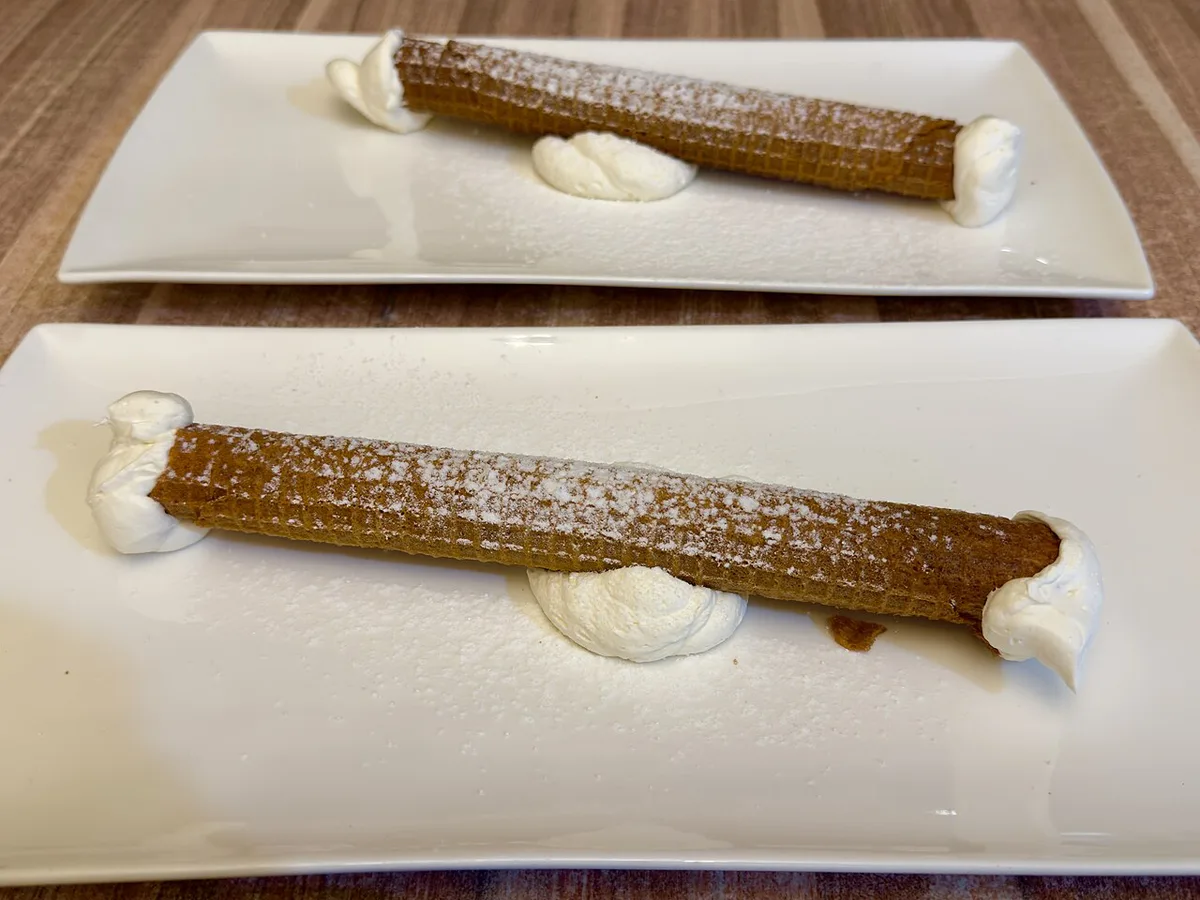
- Ptyś: a small, round choux pastry filled with whipped cream and dusted with powdered sugar.
- Krówki: soft milk toffee candies, essentially Polish fudge, sold by weight at candy counters.
- Ptasie mleczko: a chocolate-covered candy filled with soft meringue, an E. Wedel staple.
Pączki, Faworki, and Drożdżówki: Poland's Fried and Yeast Treats
Tłusty Czwartek, Fat Thursday, is the single day almost every Pole eats a pączek. Bakeries fill these deep-fried, yeast-dough buns with rose petal jam or plum butter, then dust them with powdered sugar. Faworki, thin strips of fried dough dusted with powdered sugar, appear alongside pączki during the same pre-Lenten carnival season. Piekarnia counters sell fresh drożdżówki, yeast buns topped with cheese, fruit, or streusel, each morning. Expect to pay roughly 4 to 8 PLN per drożdżówka at a typical bakery in 2026. For a savory contrast from the same bakery counters, the Polish Street Food Guide: What to Eat and Where to Find It covers zapiekanka alongside pączki.
Jagodzianki and Plum Knedle: Poland's Seasonal Fruit Sweets
Jagodzianki, soft yeast buns stuffed with wild bilberries, show up on bakery shelves mainly in July and August. Knedle, potato dough dumplings wrapped around a whole plum, follow shortly after as late-summer stone fruit ripens. Vendors top knedle with browned butter and breadcrumbs, then finish the dish with sugar or sour cream. Outside these summer months, expect frozen-fruit versions rather than the fresh-fruit original. Farmers markets covered in the Polish Food Markets Guide: Best Bazaars and Food Halls in Poland often stock fresh bilberries and jars of plum butter used in both fillings.
Sweet Dinners: When Dessert Is the Main Course
In Poland, some sweet dishes are not dessert at all. Leniwe, or lazy dumplings, combine twaróg cheese and flour into soft noodles served with browned butter and sugar. Kasza Manna, a semolina porridge cooked in milk, appears as a supper dish rather than an afterthought. Both are milk bar staples in Warsaw and Kraków, priced well below cukiernia cake slices. The milk bars guide lists specific bar mleczny locations where these dishes appear on the daily menu.
Home-Style and Carnival Favorites: Racuchy, Kutia, and Pierniczki
A few home-style sweets round out the Polish dessert calendar beyond the headline names. Racuchy are pan-fried yeast fritters studded with grated apple, often served warm with powdered sugar as a dessert or sweet breakfast. Kutia is a sweet grain pudding built from wheat berries, poppy seed, honey, and dried fruit. It traces back to the Orthodox and Greek Catholic communities of eastern Poland, particularly Podlasie and the Lublin region. There, it still appears on Christmas Eve tables. Pierniczki, small spiced gingerbread cookies, show up at Christmas markets and home kitchens through the holiday season. None of these three require a special-occasion bakery visit; neighborhood bakeries make them regularly during their respective seasons.
Regional Specialties Worth Seeking Out
A handful of Polish sweets are tied to one city or region and rarely travel far. Toruń gingerbread, toruńskie pierniki, has been made in that city long enough to support dedicated shops and gingerbread-making demonstrations. Rogal Świętomarciński, a croissant packed with white poppy seed filling, is baked in Poznań specifically around November 11 for St. Martin's Day. Sękacz, a spit-roasted layered cake with a spiky ridged surface, and Marcinek Podlaski are harder to track down outside their home regions or specialty confectioners. Kremówka, a cream-filled puff pastry also known as napoleonka, carries an extra story. Bakeries in Wadowice, the birthplace of Pope John Paul II, still trade on the "papal cream cake" legend attached to the cake. Seek it out there if the story matters to your itinerary.
Cukiernia vs Piekarnia: Where and How to Order
Piekarnia and cukiernia serve different purposes, and knowing which to walk into saves time. A piekarnia is a bakery selling bread and morning pastries like drożdżówki. Visit before mid-morning while stock is freshest. A cukiernia is a patisserie built for sitting down with cake and coffee. Poles often visit in the late afternoon, a ritual called podwieczorek. Display cases at a cukiernia are glass-fronted counters with labeled cakes sliced and ready to point at. Ordering by pointing works even without Polish. Expect a slice of cake at a sit-down cukiernia to run 12 to 22 PLN in 2026, roughly double a bakery pastry.
Piekarnia pastries run 4 to 8 PLN versus 12 to 22 PLN for cukiernia cakes; both offer fresh options, but early bakery visits maximize selection and savings before mid-morning stock dwindles.
Polish Dessert Prices and a Seasonal Calendar
Prices and availability both shift with the Polish calendar, so timing matters as much as location. Use this table to plan around the biggest gaps between what's on the shelf and what isn't.
| When | Dessert | Why It Matters |
|---|---|---|
| Tłusty Czwartek (Fat Thursday, pre-Lent) | Pączki | Bakeries often sell out by early afternoon |
| Easter | Mazurek | Thin, flat cake made almost exclusively for the holiday |
| July-August | Jagodzianki | Fresh wild bilberry filling, tied to bilberry picking season |
| November 11 (St. Martin's Day) | Rogal Świętomarciński | Baked in Poznań specifically for the holiday |
| Christmas | Makowiec | Poppy seed roll appears on most Christmas Eve dessert tables |
- Drożdżówka at a piekarnia: roughly 4 to 8 PLN in 2026.
- Cake slice at a sit-down cukiernia: roughly 12 to 22 PLN in 2026.
- Milk bar sweet dishes like leniwe and kasza manna: priced below typical cukiernia cake slices.
- Don't ask for extra sugar; the profile runs less sweet than US or UK bakes by design.
- Don't expect frosting-heavy layer cakes; most Polish cakes use cream, fruit, or glaze finishes instead.
- Confirm the size before ordering at a cukiernia; slices are cut to order and price follows size.
- Ask about dairy-free options directly, since gluten and dairy are the default in most traditional recipes.
Further reading: Poland on Wikivoyage · Poland on Wikipedia
Frequently Asked Questions
What is the most popular dessert in Poland?
Sernik and pączki are the two most commonly cited answers in coverage of Polish desserts. Sernik appears on nearly every cukiernia counter year-round, while pączki dominate the calendar around Fat Thursday, Tłusty Czwartek.
Are Polish desserts very sweet?
No. Polish desserts generally run less sweet than American or British counterparts. Bakers favor tart fruit and twaróg cheese over heavy sugar and frosting, so the finish is lighter than many travelers expect.
What is a sweet dinner in Poland?
A sweet dinner is a savory-hour meal built around a sweet dish rather than dessert. Leniwe (lazy dumplings) and plum knedle are common examples, both served as a main course rather than an after-meal treat.
Where can I find authentic Polish gingerbread?
Toruń is the reference point for Polish gingerbread, toruńskie pierniki. The city has made the spiced cookies long enough to support dedicated gingerbread shops and tastings, so plan a stop there if this pastry is a priority.
What's the difference between a cukiernia and a piekarnia?
A piekarnia is a bakery for bread and morning pastries, best visited before mid-morning. A cukiernia is a sit-down patisserie for cake and coffee, typically visited in the late afternoon during podwieczorek.
You might also like



Continue reading
More guides you'll find useful