
Polish Food Markets: From Historic Halls to Local Bazaars
Last updated July 2026, this guide covers Poland's best Polish food markets, from Warsaw's grocery-focused halls to Kraków's oldest open-air stalls. It breaks down what to buy, when the best items sell out, and the unwritten etiquette that keeps a market visit running smoothly. Use it alongside city stops in Warsaw, Kraków, Wrocław, and Gdańsk to plan produce runs, snack breaks, and pantry hauls around a Poland trip.
Why Polish Food Markets Are Worth Your Time
Polish food markets sell what households actually cook with, not souvenirs aimed at visitors. A morning at Hala Mirowska or Stary Kleparz shows sausage varieties, pickled vegetables, and seasonal produce rarely displayed this way in a supermarket. Vendors know their regular customers, prices shift with the harvest, and the stalls themselves change from week to week.
For travelers, a market visit works as both a grocery run and a short cultural lesson. You see what a Polish kitchen actually stocks: rye bread, smoked meats, root vegetables, and jars of preserves lined up by the dozen. Compare that to a restaurant menu, and a market fills in the gaps, showing where ingredients come from and which varieties locals actually buy. Even a short walk through one hall gives a clearer picture of everyday Polish food than a single restaurant meal can.

Hala Targowa vs Targowisko: The Two Types of Markets
Hala Targowa means market hall in Polish. It describes a permanent, roofed building with fixed stalls, typically housed in an older, purpose-built structure. Kraków, Wrocław, and Gdańsk each have a market hall carrying the Hala Targowa name, and each sits in a different building. Warsaw's equivalent traditional hall goes by a different name, Hala Mirowska, though the format is the same: butchers, dairy counters, produce stalls, and a deli section under one roof.
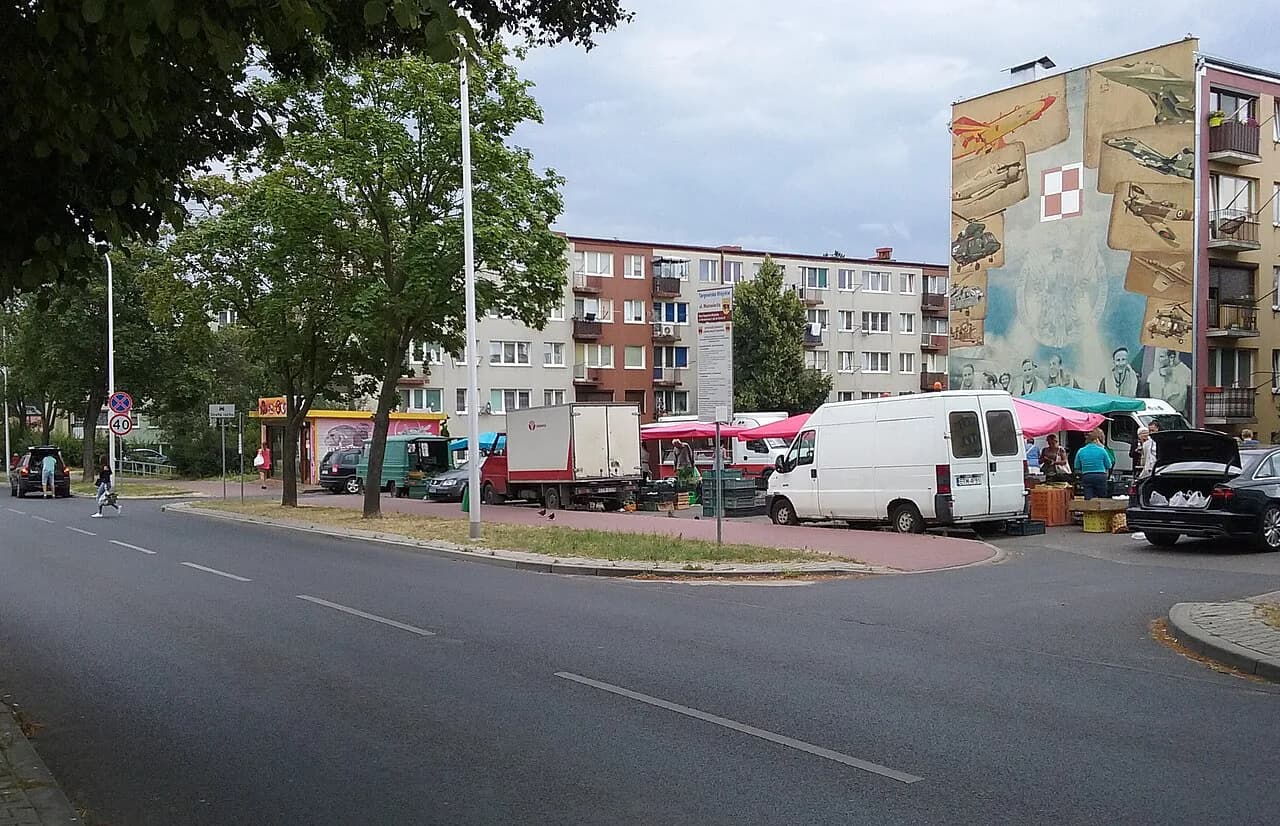
Targowisko describes an open-air bazaar instead. Picture a fenced lot where farmers and small vendors set up tables, stands, or vans, often with a more limited or rotating stock than a permanent hall. Plac Imbramowski in Kraków fits this looser, neighborhood-market mold.
A separate modern category has emerged too. Renovated food halls such as Koszyki in Warsaw, or the weekend sessions at Hala Gwardii, lean toward dining rather than grocery shopping, with vendors selling plated meals and drinks instead of raw ingredients. Traditional halls like Hala Mirowska and Stary Kleparz stay focused on everyday produce, meat, and dairy, which is the format most of this guide covers.
Top Food Markets by City
These four cities cover Poland's most established markets, spanning traditional halls, weekend food halls, and organic-focused stalls. Use the list below as a starting point, then confirm each hall's current hours before visiting.
While best selection generally vanishes by 11:00 AM, Kraków's Hala Targowa notably stays open into evening with reliable sausage availability, making it a fallback for late arrivals seeking smoked meats.
| City | Market | Known For |
|---|---|---|
| Warsaw | Hala Mirowska | Traditional produce, meat, and deli stalls |
| Warsaw | Hala Gwardii | Weekend food hall built around prepared dishes and dining |
| Warsaw | BioBazar | Organic and small-producer stalls |
| Kraków | Stary Kleparz | The oldest market in Kraków |
| Kraków | Plac Imbramowski | Neighborhood market popular with local shoppers |
| Kraków | Hala Targowa | Sausage stalls that stay open into the evening |
| Wrocław | Hala Targowa | Brick-built market hall in the city center |
| Gdańsk | Hala Targowa | Market hall built over excavated archaeological remains |
What to Buy: A Walk Through the Stalls
Produce stalls stack apples, root vegetables, and leafy greens according to what is in season that week. Bread stalls sell dense rye loaves and rolls, often baked earlier that same morning. Dairy counters sell twaróg, the fresh farmer's cheese used in pierogi filling and cheesecake, alongside butter and soft cheeses. For a full rundown of plant-based options at these stalls, see the vegetarian food in Poland guide.
Oscypek, a smoked sheep's milk cheese from the Tatra highlands, turns up at larger halls and some open-air bazaars. Deli counters slice kielbasa in a dozen smoked and fresh varieties, plus cold cuts and headcheese. Barrels of fermented cucumbers, called ogórki, and sauerkraut sit near the deli section. A jar of smalec, a seasoned lard spread, is a market staple worth trying alongside dark bread.
Some stalls grill kielbasa on the spot or sell obwarzanek rings to eat while you shop. For more ready-to-eat options like these, check the street food guide.
Bio and Organic Stalls: A Growing Niche
Organic and small-producer stalls have grown into their own category inside Polish markets. BioBazar in Warsaw groups vendors selling certified organic produce, dairy, and preserves, often sourced directly from a named farm rather than a wholesale supplier. Expect a narrower selection than a full grocery hall, but more detail about how and where each item was grown.
These stalls generally charge more than a conventional produce stand for a comparable item, in line with organic pricing patterns at supermarkets too. They suit travelers looking for a specific dietary profile, gift-worthy preserves, or a shorter supply chain, rather than a full weekly grocery run. Larger traditional halls like Hala Mirowska sometimes host a smaller Bio corner alongside their standard stalls.
Seasonal Calendar: What's in Season
Market inventory shifts sharply through the year, more than at a supermarket where imported produce fills the gaps year-round. Timing a visit to the right season pays off, especially for produce that has a short window.
- Spring (March-May): white asparagus, rhubarb, first radishes and lettuce
- Summer (June-August): strawberries, currants, cherries, and fresh honey
- Autumn (September-November): wild mushrooms, apples, pumpkins, and late root vegetables
- Winter (December-February): stored cabbage, potatoes, preserved pickles, and jarred honey
Popular Polish Dishes Built from Market Ingredients
Pierogi start with twaróg, potatoes, or seasonal mushrooms bought straight from these stalls. Bigos, the slow-cooked hunter's stew, leans on sauerkraut, smoked kielbasa, and market mushrooms. Żurek, a sour rye soup, and gołąbki, cabbage rolls stuffed with meat and rice, draw on the same deli and produce counters. Kompot, a lightly sweetened fruit drink, often uses whatever berries or stone fruit are in season that week.
For the wider context on how these dishes fit into everyday Polish cooking, see the Traditional Polish Food: A Guide to 20 Dishes You Must Try (2026). Milk bars across Poland serve many of these same dishes cafeteria-style at low prices, using ingredients sourced the same way markets do. Check the milk bars guide for one near a market on your list.
Planning Your Visit: Timing, Hours, and the Sunday Trading Rule
Most halls and bazaars open early, often by 6:00 AM, and start closing stalls by 2:00 PM or 3:00 PM. Exact hours vary by hall and by season, so treat these as a general window rather than a fixed schedule. The best smoked meats and fresh bread tend to sell out before 11:00 AM. A mid-morning visit beats an afternoon one for selection.
Market halls typically close by 2:00 PM or 3:00 PM, but arrivals targeting smoked meats, bread, or seasonal produce face a much earlier practical deadline—stock vanishes by mid-morning even as stalls remain open.
Poland restricts most Sunday retail trading, and food halls and bazaars often trim their hours or close outright on Sundays. The exact rule varies by city, by individual market, and by whether a given vendor counts as exempt. Confirm the current posted hours for a specific hall before building a Sunday stop into an itinerary. A Saturday morning is the safer default across all four cities.
Costs and Payment: Cash vs Card
Produce, bread, and dairy at a market typically cost less than the same items at a supermarket, since you are buying closer to the source. Artisanal or organic stalls, such as those at BioBazar, charge more than conventional supermarket equivalents for a comparable item, in line with organic pricing patterns generally. Payment habits vary by stall type:
- Larger halls like Hala Mirowska increasingly accept cards.
- Small stalls and open-air Targowisko vendors are often cash-only.
- Carry small bills and coins for produce, pickle, and bakery counters.
- Card machines at food-hall dining counters, like those at Koszyki, tend to be more reliable than at a produce stall.
Market Etiquette: Mistakes to Avoid
A few habits separate an easy market visit from an awkward one.
- Don't handle the produce yourself. Point at what you want and let the vendor bag or weigh it, unless a stall is clearly self-service.
- Don't assume every stall takes cards. Small vendors at open-air bazaars often want cash only.
- Don't arrive after 11:00 AM expecting the best smoked meat or bread selection.
- Don't skip the barrels of pickles and sauerkraut, or the lard spread called smalec. These staples anchor Polish market shopping.
- Don't rely on English everywhere. Older vendors in traditional halls may speak only Polish, so a translation app or a phone camera translator helps with produce names and prices.
Getting There: Accessibility and Transport
Most of the halls covered here sit close to each city's historic center. Many are reachable on foot from a central square or main rail station. Local tram and bus networks serve all four cities, and a transit app is the fastest way to find the nearest stop to a specific hall.
Older hall buildings can have step entries, uneven stone floors, or narrow aisles between stalls. Open-air Targowisko lots are flatter underfoot but can turn muddy after rain, since many sit on unpaved ground. If step-free access matters, contact the specific market's management ahead of a visit to confirm current conditions.
Useful Polish Phrases for Ordering at Market Stalls
A few Polish phrases make shopping easier at traditional counters in Hala Mirowska, Stary Kleparz, and Plac Imbramowski. Begin with “Dzień dobry” for “good morning” or “good day.” Pointing is acceptable, but state the quantity before the vendor weighs or bags anything.
- “Poproszę…” means “I would like…” and works before an item name.
- “Pół kilo” means half a kilogram, while “ćwierć kilo” means a quarter kilogram.
- “Dwie sztuki” means two pieces, useful for bread rolls, apples, or cheese portions.
- “Ile kosztuje?” means “How much does it cost?”
- “Czy można płacić kartą?” asks whether card payment is accepted.
Prices may be shown per kilogram rather than per item. Check the label before ordering cheese, sausage, mushrooms, or berries. At deli counters, use “plasterki” for slices and “kawałek” for a piece. Finish with “Dziękuję,” meaning “thank you.” Keep a translation app ready for unfamiliar regional products or handwritten signs.
Further reading: Poland on Wikivoyage · Poland on Wikipedia
Frequently Asked Questions
What's the difference between a Hala Targowa and a Targowisko?
A Hala Targowa is a permanent, roofed market hall with fixed stalls, while a Targowisko is an open-air bazaar, usually a fenced lot where farmers and small vendors set up tables or vans.
Are Polish food markets open on Sundays?
Not always. Poland restricts most Sunday retail trading, and many halls and bazaars trim their hours or close outright on Sundays. Rules vary by city and by market, so confirm the specific hall's posted hours before planning a Sunday visit.
What time should you arrive to get the best selection?
Aim to arrive before 11:00 AM. Smoked meats and fresh bread are often the first items to sell out, and most stalls start closing by 2:00 PM or 3:00 PM.
Do market vendors accept credit cards?
It depends on the stall. Larger halls such as Hala Mirowska increasingly accept cards, but small stalls at open-air bazaars are often cash-only, so carry small bills and coins.
Can shoppers pick out their own produce at a market stall?
Generally no. At most traditional stalls, point to what you want and let the vendor select and bag it for you, rather than handling the produce yourself. Some self-service stalls are the exception.
How much time should I plan for a market visit?
A single hall can be covered in under an hour, but pair it with a slow walk through the deli, dairy, and pickle sections to actually compare vendors. Arriving mid-morning leaves time to browse before the best stock sells out.
What's a good food souvenir to buy at a Polish market?
Shelf-stable picks travel well: honey, dried wild mushrooms, jarred preserves, and vacuum-packed smoked kielbasa are common choices. Check current customs rules for bringing meat or dairy products into your home country before you buy, since these can change.
You might also like



Continue reading
More guides you'll find useful