Citadel Park (Park Cytadela) Visitor Guide
Park Cytadela stands as the largest green space in Poznań and offers a unique blend of nature and history. Spanning nearly 100 hectares, this hilltop park occupies the site of a former 19th-century Prussian fortress. Modern travelers visit the area to explore military museums, admire massive art installations, and relax in lush gardens.
Planning a trip requires some local knowledge because the terrain is vast and filled with hidden ruins. This citadel park (park cytadela) visitor guide will help you navigate the winding paths and historical landmarks efficiently. You will find everything from practical transport tips to the best spots for seasonal photography.
Exploring this site is one of the top attractions in Poznań for families and history enthusiasts alike. The park serves as a living museum where war memorials sit alongside peaceful meadows and modern playgrounds. Every corner of the park tells a story of the city's resilient and complex past.
Must-See Citadel Attractions and Historical Highlights
The monumental staircase at the southern entrance is the grand approach to the park's high ground, and it's still the busiest route in for first-time visitors. These wide stone steps lead up toward the Bell of Peace and Friendship Among Nations, a bronze bell that rings out during city ceremonies and Remembrance Day events. It doubles as a natural meeting point if you're coordinating a group before a walking tour.
Military cemeteries line the southwestern slope and give the hill its quieter, more reflective character. The grounds hold a British/Commonwealth war cemetery for Allied airmen and POWs — including Pawel Tobolski, one of the escapees from the 1944 "Great Escape" — alongside Polish and Soviet military burial plots. Walking through these well-kept sections makes the strategic weight this hill carried in 1945 easier to grasp than any plaque can explain.
The Amphitheatre, set inside a natural hollow with unusually good acoustics, still hosts concerts and open-air performances through the warmer months, including the long-running Bittersweet Festival. Checking Poznań's 2026 events calendar before you go is worth the two minutes — a live show here, with the old fortress earthworks as a backdrop, is one of the park's better surprises.
Museums, Art, and Culture: From Armaments to "Unrecognized"
The Armaments Museum is the faster, more visual stop: vintage tanks, artillery, and aircraft sit out in the open air on the old fortress grounds, and most visitors move through in 30–45 minutes without reading a single wall label. It's the better pick if you're traveling with restless kids or short on time, since the machinery tells most of the story on its own.
The Poznań Army Museum rewards a slower pace. Its indoor galleries of uniforms, documents, and small arms trace the specific units that defended the city through the Prussian era, the 1918–1919 Wielkopolska Uprising, and both world wars. Budget closer to an hour here for the fuller narrative — it suits older visitors and history buffs more than young children who want to see something move.
Tickets are inexpensive either way: the Armaments Museum charges 15 PLN (10 PLN reduced) and the Army Museum charges 10 PLN (6 PLN reduced), with a combined ticket covering both for 20 PLN (12 PLN reduced). The detail most visitors miss is that both museums are free to enter every Tuesday — worth building your schedule around if you're traveling on a budget.
Magdalena Abakanowicz's "Unrecognized" (Nierozpoznani) fills a meadow near the fortress ruins with 112 headless, footless cast-iron figures, all facing the same direction as if marching toward the war cemeteries beyond. The Polish sculptor, better known internationally for Agora — a similar crowd of 106 figures in Chicago's Grant Park — installed this Poznań version in 2014. Unlike the Chicago piece, this one stands on an actual former battlefield, so the anonymous figures read less as urban commentary and more as a memorial to the war dead on the hill below them.
Parks, Gardens, and Outdoor Recreation Spots
The Rosarium is the park's horticultural centerpiece, hitting full bloom in June when hundreds of rose varieties fill the air with fragrance along geometric, hedge-lined paths. Benches scattered throughout give you plenty of quiet spots for reading or resting between the museums and the war memorials.
Cyclists and joggers use the wide, paved alleys that loop around the park's perimeter, and the grade is gentle enough for most fitness levels. Renting a bike near the Old Market Square and riding out is an efficient way to cover the full 100 hectares without retracing your steps on foot.
Beyond the formal gardens, open meadows give plenty of room for frisbee, yoga, or simply lying in the grass on a warm afternoon. These fields are popular with Poznań locals escaping the city center, and the ancient trees along the edges offer shaded, less-crowded corners for a quieter picnic.
Family-Friendly and Budget-Friendly Visiting Tips
Entry to the park grounds themselves is free around the clock — there are no gates, ticket booths, or fences at any of the entrances. The only admission fees on site belong to the two museums (see above for the exact 2026 pricing), which makes Citadel Park one of the most cost-effective full days out in Poznań, especially if you time your visit for a Tuesday.
Two fenced playgrounds near the Rosarium and the central meadows cover a wide range of ages, with slides, climbing frames, and a small train-shaped play structure that younger children gravitate toward. Both sit close enough to benches and shade that parents can supervise comfortably without chasing toddlers across open lawn.
Pack your own food: the park has only two proper restaurants — including Umberto, known locally for its vegan menu — plus a handful of mobile ice cream and coffee carts near the main entrances, so it isn't set up for casual sit-down meals deeper inside. Several marked picnic areas have tables and bins, and a self-packed lunch on the lawn near the Rosarium is the cheapest, and often the nicest, way to spend an hour here.
How to Plan a Smooth Citadel Attractions Day
The main entrance on Aleja Armii Poznań is the easiest starting point by public transport — about a 15–20 minute walk (1.5 km) from the Old Market Square, with MPK Poznań trams and buses on the Aleja Solidarności corridor stopping within a few minutes of the gate. The Jakdojade app gives live transit times and is more reliable than generic map apps for local tram schedules.
The park's 100 hectares are easy to get lost in — the wooded northern half looks similar in every direction and the paths curve rather than run straight. Photograph the map boards at each entrance before setting off, or download an offline map, since cell signal drops out in the deeper valleys near the old bunkers.
If you're pushing a stroller or using a wheelchair, stick to the paved loop from the southern gate past the Bell of Peace and the Rosarium. The northern paths toward the ruins and cemeteries are gravel and packed earth with some slope, and get muddy after rain — budget extra time or skip that stretch if smooth terrain matters for your group.
Allocate three to four hours for both museums plus a full loop. The art installations, cemeteries, and ruins sit farther apart than a basic tourist map suggests, and the hilly terrain slows everyone down more than first-time visitors expect.
- Main Gate on Aleja Armii Poznań: paved, and closest to the museums, the monumental staircase, and the tram/bus stops.
- North Entry via the Winogrady side: unpaved past the gate, better suited to a quiet walk than a fast loop.
Fortress Heritage: Exploring the Site of Fort Winiary
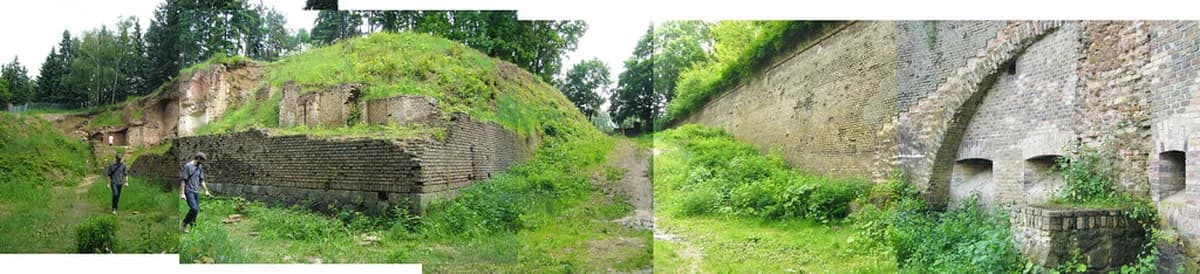
The park sits on the footprint of Fort Winiary, the core stronghold of the 19th-century Festung Posen — a ring fortress Prussia built to secure its eastern frontier. Construction began in the early 1800s, with engineers piling earth into bastions, ravelins, and redoubts thick enough to absorb artillery fire; that engineered topography is why the ground still rises and falls so sharply instead of sitting flat like a typical city park.
Several original fortifications are still identifiable: Bastion II and Redoubt I anchor the western defensive line, Ravelin I sits forward of the main wall as a triangular outwork, and the Northern Gate marks the original entrance from that side. None are heavily signposted, so a downloaded map or the audio guide (below) helps connect the earthworks to their names. The (Historical background) covers the engineering history in more technical detail than most English-language guides.
The fort's grim final chapter came in February 1945, when it became the last major German strongpoint in the Battle of Poznań. Soviet forces — including the 8th Guards Army under General Vasily Chuikov, who later led the final assault on Berlin — spent nearly a month reducing the garrison before it fell on 23 February 1945, which is why so much of the terrain remains uneven and moss-covered reinforced-concrete bunkers still dot the woods.
Audio Guides and Digital Tools for Navigating the Park
The VoiceTour audio guide offers a structured way to learn the park's history without booking a human guide. This digital tool narrates stories at specific GPS-marked stops as you walk, and it's a solid option for solo travelers who want deeper historical context at their own pace.
If you only have 90 minutes, the audio guide is the more efficient choice, since it routes you between the marked sites without backtracking. A fully self-guided walk allows more spontaneous exploration of the smaller forest trails and hidden garden corners, but you'll likely miss the subtler significance of the bastions and ruins along the way.
Mobile apps with offline maps are worth having regardless, since cell service can be spotty in the deeper wooded valleys. Marking the museum locations before you enter the park saves time, and most digital tools also list current opening hours for both indoor exhibits.
Best Times to Visit: Weather and Seasonal Events in Poznań
Autumn is arguably the best season for photography, with afternoon highs typically dropping into the low-teens (°C) and thousands of trees turning gold and red. The crisp air and softer light make the "Unrecognized" statues look particularly dramatic against the changing leaves, and it's a noticeably quieter time to visit once the peak summer crowds have left.
Spring brings the park back to life with fresh greenery and the first blooms in the Rosarium, with daytime temperatures usually climbing into the mid-teens by May. It's the ideal window for long walks before summer afternoons — which often reach the mid-20s°C on the hottest days — make the uphill sections more tiring. Official updates on seasonal events are posted at the (Official city tourism info) page.
Winter turns the fortress ruins into a stark, somber landscape that highlights the park's military past, with daytime highs frequently hovering right around freezing. Some paths get slippery, but the bare trees give clearer sightlines to the underlying fortress architecture. Check the forecast before a January or February visit to make sure the museum paths are clear.
Beyond the Park: Itineraries and Nearby Destinations
After finishing your park tour, a short tram ride takes you directly to the Poznań Old Market Square. This lets you combine a morning of history and nature with an afternoon of dining and colorful architecture, and the shift from quiet park to bustling square is a classic Poznań contrast.
If you have more energy left, head east for the recreational offerings at Lake Malta. That area has mini-golf, a summer toboggan run, and lakeside paths for a lighter kind of outdoor fun that complements the Citadel's heavier historical weight.
A full-day itinerary in 2026 might start at the Citadel in the morning, move to Cathedral Island in the early afternoon, and finish with a traditional dinner downtown. This route covers the city's most significant historical periods in one logical flow, and most stops along it are well-connected by Poznań's tram system.
Frequently Asked Questions
Is Citadel Park free to visit?
Yes, the park itself is free and open 24 hours a day with no gates or tickets. Only the two museums inside it — the Poznań Army Museum and the Armaments Museum — charge separate admission.
What museums are inside Citadel Park?
The park houses two branches of the Greater Poland Military Museum (Wielkopolskie Muzeum Niepodległości): the Armaments Museum (Muzeum Uzbrojenia) and the Poznań Army Museum (Muzeum Armii "Poznań"), both set in former fortress buildings.
How much do the museum tickets cost?
As of 2026, the Armaments Museum charges 15 PLN (10 PLN reduced) and the Poznań Army Museum charges 10 PLN (6 PLN reduced). A combined ticket covering both is 20 PLN (12 PLN reduced), and both museums are free to enter every Tuesday.
What happened at Fort Winiary?
Fort Winiary was the core of the 19th-century Prussian Festung Posen fortress system. In 1945 it became the last German stronghold in the Battle of Poznań and was heavily damaged in the fighting before Soviet troops captured it on 23 February 1945.
Is Citadel Park good for families with children?
Yes. Alongside its war memorials and museums, the park has several playgrounds (including a large fenced one with slides and a small train), open lawns, walking paths, and two restaurants, making it a popular spot for local families.
What war cemeteries are in Citadel Park?
The southwestern slope of the park holds several military cemeteries, including a British/Commonwealth war cemetery for Allied airmen and POWs — among them Pawel Tobolski, a participant in the 1944 "Great Escape" — plus Polish and Soviet military burial grounds.
How big is Citadel Park?
At roughly 100 hectares, Citadel Park is the largest park in Poznań. It was laid out between 1963 and 1970 on the grounds of the former fortress.
How do you get to Citadel Park from central Poznań?
The main entrance on Aleja Armii Poznań is about a 15–20 minute walk (roughly 1.5 km) from the Old Market Square, and the park is also served by several city tram and bus lines.
Park Cytadela is a must-visit destination that perfectly captures the dual nature of Poznań's history and modern identity. Whether you are climbing the monumental stairs or reflecting at the Bell of Peace, the site offers deep cultural value. It remains a place where the scars of war have been transformed into a beautiful public sanctuary.
By following this 2026 guide, you can navigate the 100-hectare grounds with confidence and see the best military and artistic highlights on the first attempt. Remember to wear comfortable walking shoes, check which paths suit a stroller or wheelchair if that matters for your group, and bring a camera for the "Unrecognized" statues. Your visit to this historic fortress will likely be a highlight of your time in Poland.
For the latest official information, see the Citadel Park (Park Cytadela) on Wikipedia and Citadel Park (Park Cytadela) official site.
For broader Poznań exploration, check out our 12 Best Things to Do in Poznań for 2026 Travel Guide and the Poznan Christmas Market Guide: 10 Things to Know for 2026.