Brama Poznania (ICHOT) Visitor Guide: 10 Things to Know
Brama Poznania serves as the modern gateway to the history of Poznan and the Polish state. This interactive center sits on the bank of the Cybina River. It connects the old and new parts of the city through innovative storytelling. Visitors often start their journey here before exploring the historic Cathedral Island nearby.
The building itself is an architectural masterpiece that stands out against the historic backdrop. You will find that it is not a traditional museum filled with dusty artifacts. Instead, it uses multimedia technology to tell stories that bring the past to life for all ages. Planning a visit here is essential for anyone interested in the roots of Poland.
As you walk through the galleries, you will learn about the Piast dynasty and the founding of the nation. The center acts as a hub for the best things to do in Poznan during your stay. It provides a deep context for the monuments you will see later in the day. This guide covers everything you need to know for a perfect visit in 2026.
What is Brama Poznania (ICHOT)?
The name ICHOT stands for the Interactive Center for the History of Ostrów Tumski. Most locals and tourists simply refer to it as Brama Poznania, which means the Gate of Poznan. This center focuses on the heritage of the island where the Polish state began over a thousand years ago. It uses light, sound, and touch to engage visitors in a journey through time.
The building serves as a pentaprism through which we view the history of the site. It does not hold physical objects from the past like a standard museum. The goal is to prepare you for a real-world walk through the nearby cathedral and ruins. It effectively bridges the gap between modern technology and ancient history.
You will find the center located at the intersection of several historic districts. It acts as the primary starting point for the Royal-Imperial Route. This route leads travelers through the most significant landmarks in the city. The center provides the necessary background to appreciate these sites fully.
Essential Visitor Information: Tickets and Hours
A regular adult ticket costs 35 PLN, and a bilet ulgowy (reduced ticket for students, seniors 65+, school pupils, and visitors with disabilities) costs 29 PLN. The family ticket — up to 5 people, maximum 2 adults — is 75 PLN, and children under 6 always enter free. You can check current rates and book your entry through the Official Ticket Portal to skip the queue at the desk.
The money-saving move most short guides skip is the combined 10-day ticket, priced from 49 PLN, which also covers the Poznań Cathedral Museum and the Genius Loci archaeological reserve on the island. Buying it here instead of three separate admissions saves a few złoty per person and lets you spread the three sites across your whole stay rather than rushing them into one afternoon.
Brama Poznania is open Tuesday to Friday, 9:00 AM to 6:00 PM (first exhibition entry 9:20 AM, last entry 5:00 PM), and Saturday to Sunday, 10:00 AM to 7:00 PM (first entry 10:20 AM, last entry 6:00 PM). It is closed on Mondays year-round, so build that into your 2026 Poznań itinerary before planning the rest of the day. Check the Official Website for holiday-schedule shifts around Polish public holidays.
The ticket office closes one hour before the galleries shut for the day, and buying online in advance is the best way to lock in your preferred entry slot on summer weekends. Audio guides are included in the ticket price and available in multiple languages. Keep your ticket or QR code handy — you will need it again to cross the glass bridge partway through the visit.
How to Get to Brama Poznania (Gdańska 2)
Brama Poznania is located at Gdańska 2 in the vibrant Śródka district. It is easily accessible from the Poznan Old Market Square by public transport. Several tram lines stop at the nearby Rondo Śródka station. From the tram stop, it is just a short five-minute walk to the main entrance.
If you prefer walking, the journey from the city center takes about twenty minutes. The route takes you through scenic streets and over the river bridges. You can use the Google Maps Location to find the quickest path on foot. Cycling is also a popular option as there are many bike paths in the area.
Parking near the museum can be difficult during peak tourist hours. There are small paid parking zones in the Śródka neighborhood. Public transport remains the most convenient way to reach the site without stress. Taxis and ride-sharing services are also widely available throughout the city.
The Interactive Exhibition Experience
The exhibition is divided into several rooms that represent different eras of history. Each space uses immersive screens and interactive displays to tell a story. You will learn about the early settlements and the baptism of Poland. The narrative is designed to be engaging for both history buffs and casual tourists.
One of the most impressive features is the use of light to highlight architectural details. The galleries do not follow a strict chronological order in a boring way. Instead, they focus on themes like power, faith, and daily life on the island. This approach makes the complex history of the Piast dynasty much easier to grasp.
Budget roughly 1.5 to 2.5 hours for the exhibition itself. Entry runs in small timed groups of up to 30 people every 20 minutes, and the audio guide paces you through four thematic halls rather than letting you wander at random. If you also plan to cross the glass bridge onto Cathedral Island afterward, add another hour or so — the combined outing easily fills a half-day.
Choosing Your Route: Family vs. Individual Paths
The center offers two distinct sightseeing routes to cater to different audiences. The Individual Path is perfect for adults who want a deep dive into historical facts. It provides detailed context about the political and social changes in early Poland. This route is the standard choice for most solo travelers and couples.
The Family Path is a fantastic option for those visiting with younger children. It uses a storytelling and game format to keep kids engaged throughout the tour. Children follow a specific character who guides them through various challenges and puzzles. This interactive approach ensures that even the youngest visitors enjoy their time.
Both routes cover the same physical space but offer very different audio content. You can choose your preferred path when you pick up your audio guide at the start. The staff can help you decide which version is best for your group's interests. Switching between paths is not usually possible once the tour has started.
- The Individual Path suits adults and runs about 1.5 to 2 hours; it leans academic, working through the political and social history of early Poland in detail, and is the default choice for solo travelers, couples, and history enthusiasts.
- The Family Path suits children roughly 5 to 12 and runs closer to 1 to 1.5 hours; it trades dense history for a gamified, character-led storyline that keeps younger visitors engaged from station to station.
Architectural Highlights: The Glass Bridges
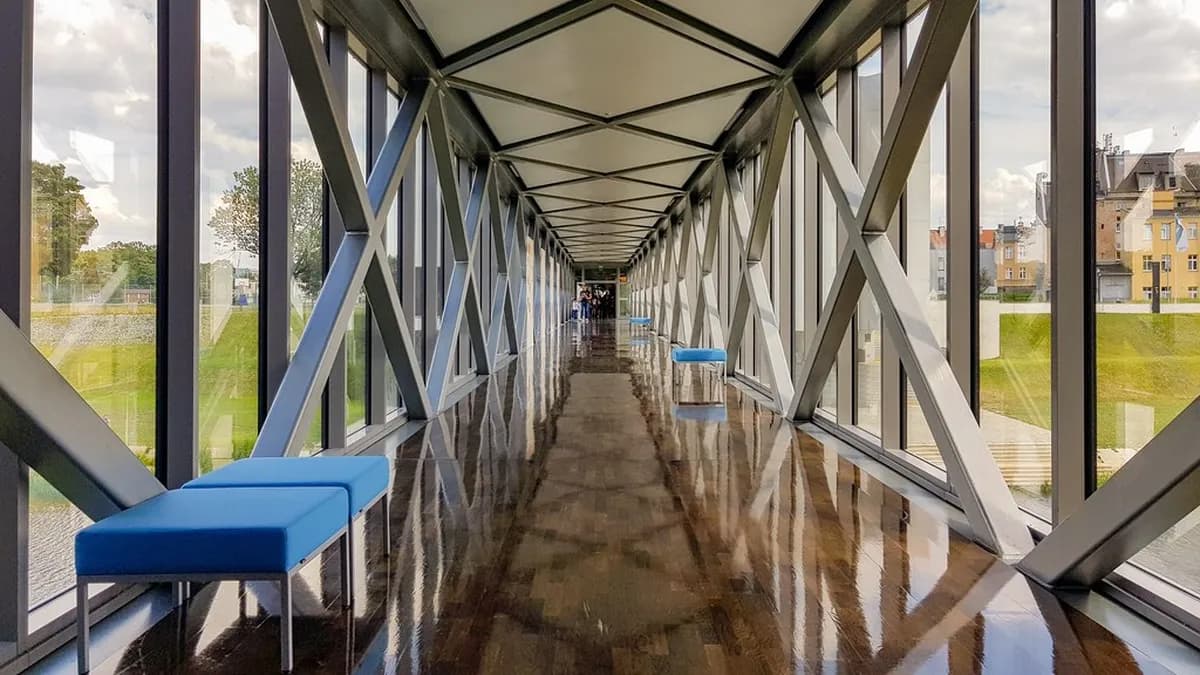
The architecture of Brama Poznania is just as famous as its indoor exhibits. A massive glass bridge connects the modern concrete building to the historic Cathedral Lock. This bridge offers stunning views of the river and the cathedral towers. It symbolizes the connection between the modern world and the ancient past.
Look for the architectural 'crevice' that runs through the center of the main building. This narrow opening perfectly frames the view of the Cathedral for a great photo, and the best light for it falls mid-morning to early afternoon, when the sun hits the brick facade directly instead of leaving it in shadow. It is one of the most popular spots for photography in the entire city. The contrast between the gray concrete and the red brick cathedral is striking.
The transition into the Sluza Tumska, or Cathedral Lock, is a unique experience. You move from an ultra-modern space into a Prussian-era military structure. This historic lock once played a vital role in the city's defense system. It now hosts temporary exhibitions and offers a different perspective on the river.
Exploring Ostrów Tumski (Cathedral Island)
After finishing the museum tour, you should head across the bridge to the island. The island sits at the point where the Cybina River meets the Warta, Poznań's main river — the stretch of land chroniclers point to as the birthplace of the Polish state. Ostrów Tumski is home to the Poznan Cathedral, the oldest in Poland. You can walk through the quiet streets and admire the historic clerical buildings.
Many visitors enjoy visiting the Genius Loci Archeological Reserve nearby. This site shows the original wooden and earth fortifications of the early stronghold. It complements the digital experience of Brama Poznania with physical evidence. If you picked up the combined 10-day ticket back at Brama Poznania, admission here is already covered, so there's no second ticket queue to join.
The walk around the cathedral is especially beautiful during the late afternoon. You can see the foundations of the first Polish palace near the church entrance. Informational plaques are scattered throughout the island to guide your self-guided tour. This area is a must-visit for anyone exploring Poland attractions in the region.
The Śródka District and Hidden Murals
The Śródka district is located immediately behind the Brama Poznania building. It was once a separate town and still retains a cozy, village-like atmosphere. You will find many small cafes and restaurants serving traditional Polish cuisine. It is the perfect place to grab lunch after your morning museum visit.
The most famous attraction in this neighborhood is the giant 3D mural. This artwork depicts the history of the district in a colorful and detailed style. It is located on a large wall near the main square of Śródka. Pro Tip: Stand at the corner of the street to get the full 3D effect in your photos.
Śródka has become a hub for local artists and foodies in recent years. You can explore the small side streets to find hidden art installations. The area is much less crowded than the Old Market Square. It offers a more authentic look at local life in Poznan today.
Practical Tips for a Smooth Visit
Wear comfortable walking shoes — you'll be on your feet through several gallery levels plus the walk to Cathedral Island. The building is step-free throughout: lifts reach every floor and the glass bridge itself, ramps cover the short level changes near the entrance, and staff can point out the smoothest route for a wheelchair or stroller on request. One detail shorter guides tend to skip: several galleries use dim, low-light projections paired with directional audio to heighten the multimedia effect, which can feel disorienting for visitors sensitive to sound or low light — ask at the desk and staff will flag which halls to take more slowly, or to skip.
Because the exhibition itself is entirely indoors, Brama Poznania works on any forecast, but the rest of your day should flex with the weather. On a wet morning, do the museum first, linger at each interactive station, and save Cathedral Island and Śródka for a shorter dash between showers, ducking into a Śródka café if the rain settles in. On a clear day, flip that order: cross the glass bridge while the light is still good for photos at the crevice, walk the island at a relaxed pace, then treat the museum as your indoor break in the early evening before it closes. Either way, leave heavy coats and bags in the lockers near the entrance.
Photography is allowed inside the galleries, though flash is discouraged since it disrupts other visitors and washes out the projections. Try to visit on a weekday morning to avoid the largest weekend crowds, especially in July and August 2026. Checking the local attractions list can help you fold the rest of Poznań into the same day.
Is Brama Poznania Worth It?
Brama Poznania offers a world-class experience that is worth every penny. It provides a clear and engaging overview of Polish history that is hard to find elsewhere. The combination of modern architecture and interactive tech makes it unique in Europe. Both adults and children will find something to enjoy during their visit.
The center successfully makes history feel relevant to the modern world. It is the best starting point for any tour of Poznan's historic landmarks. You will leave with a much deeper appreciation for the city and its people. It remains a top-rated destination for travelers from all over the world.
Plan to spend a full morning or afternoon in this part of the city. Combining the museum with a walk through Śródka makes for a perfect day. You will discover why Poznan is considered the cradle of the Polish nation. It is an essential stop for anyone traveling through Poland in 2026.
Frequently Asked Questions
What is Brama Poznania?
Brama Poznania (officially ICHOT — Interactive Center for the History of Ostrów Tumski, known internationally as Porta Posnania) is a modern multimedia heritage center that opened in 2014. It tells the story of the birth of the Polish state and the history of Ostrów Tumski (Cathedral Island) through interactive exhibitions, projections, and audio guides rather than physical artifacts.
How much are tickets to Brama Poznania?
A regular adult ticket costs 35 PLN and a discounted ticket (students, seniors 65+, school pupils, people with disabilities) costs 29 PLN. A family ticket for up to 5 people (max. 2 adults) is 75 PLN, and children under 6 enter free. A combined 10-day ticket covering Brama Poznania, the Poznań Cathedral Museum, and the Genius Loci archaeological reserve is also available from 49 PLN.
What are the opening hours?
Brama Poznania is open Tuesday to Friday from 9:00 AM to 6:00 PM and Saturday to Sunday from 10:00 AM to 7:00 PM. It is closed on Mondays, and last entry is one hour before closing.
How does Brama Poznania connect to Ostrów Tumski?
The center's modern main building on the Śródka bank is linked to a restored 19th-century Cathedral Lock building on Ostrów Tumski by a 63-meter glazed footbridge spanning the Cybina River, so visitors walk directly from the exhibition onto Cathedral Island itself.
Is Brama Poznania good for kids?
Yes — the interactive screens, projections, and hands-on multimedia stations are engaging for children and families, and the family ticket (up to 5 people) makes a visit affordable. However, some visitors note there are no physical historical artifacts on display, so very young children may find the audio-guide-driven format less engaging than a traditional museum.
How long does a visit take?
Most visitors spend around 1.5 to 2.5 hours exploring the exhibition, as entry is timed in small groups (up to 30 people every 20 minutes) with an audio guide that paces the visit through the four thematic halls.
Who designed the Brama Poznania building?
The building was designed by architects Arkadiusz Emerla and Maciej Wojda of the Kraków-based studio Ad Artis, with structural design by Marcin Matoga. Its austere, largely windowless concrete facade was deliberately built to contrast with — and draw attention to — the historic surroundings of Ostrów Tumski.
Is Brama Poznania worth visiting?
Most visitors rate it highly for its immersive, self-paced multimedia storytelling and the rooftop terrace view over the Cybina River valley toward Poznań Cathedral. A minority of reviewers note the lack of authentic artifacts, since the exhibition relies entirely on screens and projections rather than physical relics.
Brama Poznania is more than just a history museum for the city of Poznan. It is a bridge that connects modern visitors to the very beginning of the Polish state. With its interactive exhibits and stunning architecture, it offers a truly memorable experience. Make sure to include this site in your next trip to Poland.
Whether you are a history enthusiast or a family with kids, you will find value here. The combination of the museum, the cathedral, and the Śródka district creates a full day of discovery. Enjoy your journey through the gateway of Poznan and explore the roots of a nation. The stories you learn here will stay with you long after you leave the city.
For official details, visit the Brama Poznania (ICHOT) on Wikipedia.
For more Poznan planning, read our 12 Best Things to Do in Poznań for 2026 Travel Guide and Poznan Christmas Market Guide: 10 Things to Know for 2026 guides.