Ostrów Tumski Visitor Guide
Ostrów Tumski remains the most spiritual and historic part of Wrocław. Known as Cathedral Island, this quarter offers a peaceful escape from the busy streets just across the river — walking its cobbled lanes feels like stepping into a much older version of Europe, built almost entirely around a single Gothic cathedral.
This visitor guide covers the district's must-see churches, its free and paid attractions, and the practical details — transit, timing, accessibility, where to actually stay — that most competing guides skip. Visitors in 2026 can expect well-preserved monuments and a welcoming, unhurried atmosphere even at peak season.
This guide helps you avoid the mistakes most first-time visitors make, from rushing the district in twenty minutes to assuming you can book a hotel on the island itself. Prepare to discover why this quiet quarter is the true heart of local culture.
Must-See Ostrów Attractions
The Cathedral of St. John the Baptist serves as the primary focal point for most visitors. This massive Gothic structure features two tall towers that dominate the local skyline. Climbing to the observation terrace costs 32 PLN (27 PLN reduced) and rewards you with a panoramic view over the Oder River and the Old Town; access is partly by elevator and partly by stairs, so budget extra time if you're not moving quickly.
The cathedral's nave is free to enter and open Monday–Saturday 10:00–17:00 and Sunday 14:00–16:00, though it closes to sightseers during services. Check the official Visitwroclaw.eu page for the current 2026 mass schedule before you plan around it. The Baroque chapels, ticketed separately at 27 PLN, keep the same hours as the tower and nave.
Another essential stop is the Church of the Holy Cross, a short walk from the cathedral toward the Tumski Bridge. This unusual two-story brick church holds two separate parishes stacked one above the other. Entry is free, and it offers a quieter experience than the cathedral during the midday tour-bus rush.
Museums, Art, and Culture in Ostrów
The Archdiocesan Museum, just beside the cathedral's main portal, houses one of Poland's most valuable collections of religious art. Its sculptures and paintings date back several centuries, and it holds the Book of Henryków, the manuscript containing the first written sentence in Polish. Plan for about an hour to see the main halls without feeling rushed.
The building itself is a historical monument in its own right, with quiet courtyards worth a slow walk. In 2026, its opening hours still track the cathedral's own schedule, so pair your museum visit with a tower climb or chapel visit during the same window.
Connected venues nearby occasionally host temporary art shows tied to the Archdiocese's own calendar rather than the city's general listings. Checking the parish noticeboards near the entrance, rather than general tourism sites, is often the only way to catch these smaller openings.
Parks, Gardens, and Outdoor Spots in Ostrów
The Wrocław Botanical Garden sits at the northern edge of the district and offers a genuinely quiet green retreat that many day-trippers skip entirely. It holds thousands of plant species around several ponds, and it's one of the few paid attractions on the island with nothing to do with religion. Families tend to linger longest during the spring and summer flower displays.
Walking the river banks along the Oder gives some of the best photo angles on the island, especially looking back toward the cathedral's twin towers. The paths are well maintained with benches at regular intervals, and small river boats pass by often enough to make the wait worthwhile.
Seasonal blooms change the garden's character every month it's open. It typically closes earlier in the day than the cathedral, so check current hours before you arrive rather than assuming they match the rest of the island.
Family-Friendly and Budget-Friendly Options in Ostrów
Hunting for the famous Wrocław dwarfs is a favorite activity for children and adults alike. Several of these small bronze statues hide near the churches and bridges of the island, making for a free scavenger hunt while you explore.
The evening lantern lighting costs nothing to witness and remains the single best free experience in the district. A costumed lamplighter still lights close to 100 gas lamps by hand each dusk and extinguishes them before sunrise — Wrocław and Zagreb are the only two European cities keeping this ritual alive, though Wrocław's version covers a full working neighborhood rather than a single showcase street.
Budget travelers can see the best of the architecture without paying a single ticket — only the cathedral tower and the Baroque chapels charge admission, and buying them together works out cheaper than paying for each separately. Pack a snack for the riverbank rather than the two small cafes on ul. Katedralna, which cater to tour groups and price accordingly.
How to Plan a Smooth Ostrów Attractions Day
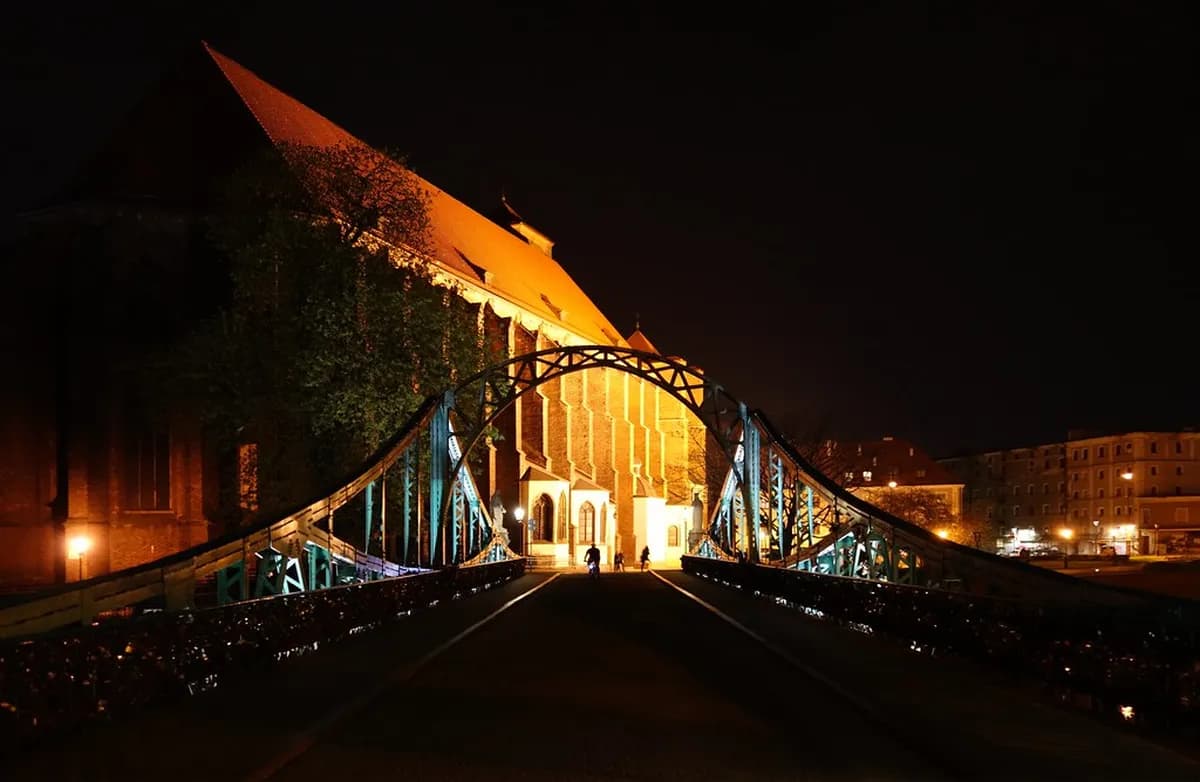
Walking from the Rynek (Market Square) to the island takes about 15 to 20 minutes for most people, entirely flat and traffic-free. You will likely cross the Tumski Bridge, the district's most famous entrance, once covered in newlyweds' padlocks but now fully restored to its original green ironwork. There's no tram or bus stop directly on the island; the nearest stops sit a few minutes back across the bridge, which is why most visitors simply walk over.
Wear comfortable, flat-soled shoes — the cobblestones are uneven and genuinely difficult in anything with a heel or a thin sole. For visitors using a wheelchair or with limited mobility, the streets themselves are manageable with assistance, but the cathedral tower is only partly elevator-accessible (the final stretch to the terrace is stairs-only), so check with staff before paying for that specific ticket.
Morning visits are best if you want to avoid the largest tour groups, which tend to arrive from around 11:00 onward. Allocate at least two hours for the main sites and a coffee; add another hour for the museum or chapels. Evening visits, timed to the lamplighter's rounds at dusk, offer a completely different and more romantic atmosphere.
Ostrów Tumski
The name of this district translates to "Cathedral Island" in Polish. It was a genuine island on the Oder River — not just evocative naming — until town planners filled in one of the river's branches in 1810 to reduce flooding. Before that, this was the seat of power for the region's earliest bishops and rulers, with the first bishopric in Lower Silesia established here around AD 1000.
You can learn more about the regional history at the Dolnyslask.travel portal. The neighborhood survived significant damage during past wars and, more recently, high water during Poland's catastrophic 1997 river floods, though its churches came through largely intact.
A quick fact many visitors miss: despite losing its island status in 1810, almost every building on Ostrów Tumski still belongs to the Wrocław Archdiocese. That's why the district has so few shops, cafes, or places to stay compared to the rest of the city, and it remains that way in 2026. Motor vehicles are restricted, which helps preserve the historic and peaceful environment.
Plans like a pro. Thinks like you
Many travelers suggest arriving just before sunset, when the lamplighter's rounds line up with a golden-hour skyline over the cathedral. Locals often mention how quiet the island feels compared to the Market Square just minutes away — a genuine escape rather than a themed extension of the tourist center.
The most common mistake is treating Ostrów Tumski as a 20-minute photo stop between bigger sights. Sit in the botanical garden for ten minutes, or step into one of the smaller chapels, and the district reveals a different pace entirely.
Choosing between a guided tour and a solo walk mostly comes down to how much history you want spoken aloud versus absorbed quietly. Guided tours, bookable through local tourist information near the Rynek, add context on the Piast dynasty; a solo walk with a printed map does the job just as well if you'd rather set your own pace.
Also see other Wrocław attractions
The famous Wrocław Market Square is only a short walk from the island, and it's the better choice if you have one hour and want restaurants, cafes, and street life instead of quiet reflection.
Art lovers should not miss the Racławice Panorama nearby, a massive circular painting depicting a historic battle in extraordinary detail — budget 45 minutes to an hour, since entry is timed to guided viewing sessions.
For modern architecture, the Centennial Hall is a must-see UNESCO site a bit further out, easily reached by tram. It suits travelers who want to pair Wrocław's oldest quarter with its most ambitious 20th-century building, and its multimedia fountain show is worth timing your day around.
Book a place to stay in Wroclaw
Don't plan to actually stay on Ostrów Tumski itself — nearly every building on the island belongs to the Archdiocese, so there are essentially no hotels or guesthouses within the district. The nearest lodging is across the bridge, and which side you pick matters more than raw proximity to the cathedral.
The Old Town (Rynek) side puts you within a 10–15 minute walk of the island and close to the best restaurants and nightlife, but it's also the most expensive option and can be noisy on weekends. You can browse boutique options near the island on Expedia.com.
A less obvious pick is Nadodrze, just north across the river — a formerly rundown district now filled with independent cafes, street art, and noticeably cheaper apartment rentals, still only a 15–20 minute walk to the cathedral. It's the better call for budget travelers or anyone who wants a quieter, more local base than the Rynek hotels. Book a few months ahead for the summer season either way, and look for river-view rooms if you want the island skyline from your window.
Frequently Asked Questions
Is Ostrów Tumski free to visit?
Yes. The island itself is open to the public at all times with no entrance fee, and you can walk its streets, cross its bridges, and enter the Wrocław Cathedral's main nave for free. Only the cathedral tower/observation terrace and the Baroque chapels charge a ticket (32 PLN and 27 PLN respectively for a full-price individual ticket, with reduced and combined rates available).
Can you go up the Wrocław Cathedral tower?
Yes, the cathedral has an observation terrace reached partly by elevator and partly by stairs. A ticket costs 32 PLN full price / 27 PLN reduced, and it's open the same hours as the cathedral (Monday–Saturday 10:00–17:00, Sunday 14:00–16:00), though access can depend on weather conditions.
How do you get to Ostrów Tumski?
Cathedral Island sits just northeast of Wrocław's Old Town, an easy 10–15 minute walk from the Market Square (Rynek) along Piasek Island and over the Tumski Bridge (Most Tumski), the traditional 'lovers' bridge' hung with padlocks.
What time does the lamplighter light the gas lamps in Wrocław?
The lamplighter makes his rounds each evening around dusk, lighting around 100 gas lamps by hand with a long pole, and returns before sunrise to extinguish them. Wrocław is one of only two places in Europe (along with Zagreb) that still keeps this tradition alive, and it's a favorite moment for photographers and evening strollers.
Is Ostrów Tumski worth visiting?
Yes — it's widely considered Wrocław's most atmospheric neighborhood, combining nearly 1,000 years of religious history, red-brick Gothic architecture, quiet cobbled lanes, and the unique gas-lamp tradition, all within easy walking distance of the Old Town.
How long do you need to see Ostrów Tumski and the Cathedral?
Most visitors spend 1.5–2 hours exploring the island's churches, gardens, and streets, plus extra time if climbing the cathedral tower or visiting the Baroque chapels. Many travelers time their visit for early evening to also catch the lamplighter.
Was Ostrów Tumski really an island?
Yes. It was a genuine island in the Oder River until the 19th century, when the old riverbed on its southern side was filled in, connecting it to the rest of the city — though it still keeps its historic 'island' name and identity.
What is the oldest part of Wrocław?
Ostrów Tumski is the oldest settled part of Wrocław, with roots going back to a 10th-century wooden stronghold, and it has been the seat of the city's Catholic bishops since the bishopric was established around AD 1000.
Ostrów Tumski is a place where history and modern life meet in a beautiful way. Whether you come for the religious art or the quiet walks, the island never fails to impress. Plan your visit for 2026 to see the best of what this historic district offers.
Remember to take your time and soak in the unique atmosphere of the gas-lit streets. This island remains the soul of the city and a highlight of any Polish adventure. Enjoy your journey through the oldest and most charming corner of the region.
For more Wrocław planning, read our 15 Best Things to Do in Wrocław (2026 Guide) and The Best Time to Visit Wrocław (Month by Month, 2026) guides.
For official details, visit the Ostrów Tumski on Wikipedia and Ostrów Tumski official site.