Tumski Bridge Visitor Guide
Tumski Bridge stands as a timeless gateway to the oldest part of Wroclaw. This iconic iron structure connects the modern city to the spiritual heart of Ostrów Tumski. Visitors often feel like they are stepping back in time when they cross this historic crossing. It offers some of the most romantic views in all of Poland.
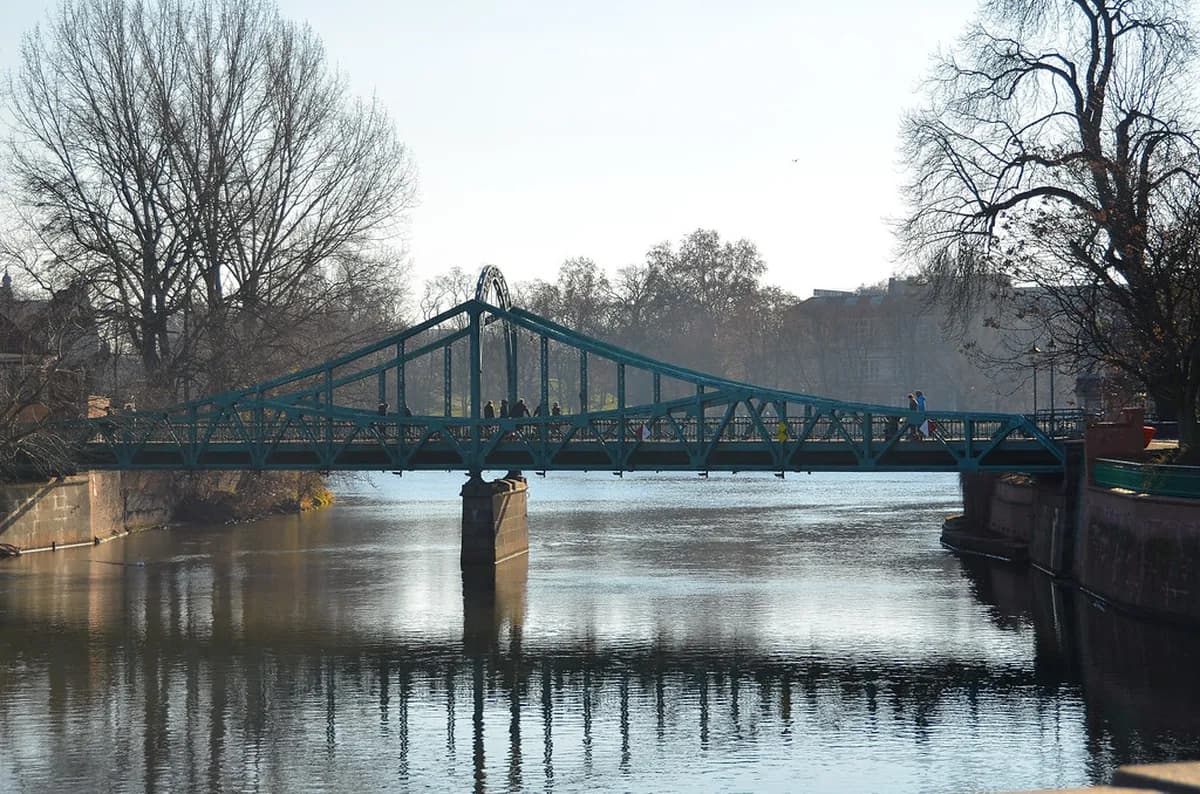
The bridge is famously known for its vibrant green color and historic gas lamps. It serves as a vital starting point for any Wroclaw sightseeing itinerary. You will find the atmosphere here shifts beautifully from day to night. This 2026 guide covers the bridge itself, the wider Cathedral Island district around it, and the practical details you need for a smooth visit.
History and Significance of Tumski Bridge
The current steel bridge was built in 1889 to replace a succession of wooden crossings that had linked the two islands since the Middle Ages. It survived the heavy destruction of the city during the 1945 siege of Festung Breslau, one of the last major WWII battles in Europe, and you can still spot shrapnel scars on the green steel beams. The structure was formally registered as a historical monument in 1976.
The bridge historically marked the border between civic Wroclaw and the ecclesiastical enclave of Ostrow Tumski, where the Piast Dynasty built a princely castle in the 1260s. At the entrance, statues of Saint Hedwig, patron saint of Silesia, and Saint John the Baptist, patron of Wrocław, have watched over travelers for over a hundred years.
Engineers designed the riveted steel truss structure for heavy industrial-era traffic; the bolted joints and green paintwork showcase classic late-19th-century craftsmanship. Today it is reserved mostly for pedestrians and cyclists, and remains one of the most photographed landmarks in Lower Silesia.
The Love Lock Tradition and Recent Changes
Starting around 2009, thousands of padlocks began covering the bridge as couples snapped them shut and threw the keys into the Odra River, making it a famous destination for romantic travelers for roughly a decade. But the cumulative weight of the metal eventually threatened the structure, bending and rusting the steel. City officials removed about 17 tonnes of locks during a 2019 renovation, and hanging new ones is now strictly forbidden — city services and local guards regularly strip any that reappear.
Wrocław's 2019 clean-up mirrors a wider European reckoning with padlock bridges: Paris removed an estimated one million locks, around 45 tonnes, from the Pont des Arts in 2015 after a railing panel gave way under the load, replacing the mesh with lock-proof glass panels. Tumski Bridge's 17 tonnes were modest by comparison, but the engineering logic — accumulated metal weight bending historic ironwork — was the same. You can still enjoy the romantic atmosphere without a physical lock; many visitors now prefer the clean lines of the restored green coating.
- Then vs Now Comparison
- Past: 17 tonnes of locks
- Present: Clean steel beams
- Past: Visible rust damage
- Present: Restored green coating
Top Things to See in Ostrów Tumski
Ostrów Tumski is often called Cathedral Island, but it is actually a peninsula today. In 1810, town planners filled in a branch of the Odra river to reduce flooding and allow urban expansion. This change joined the former island to the mainland permanently. Despite this, the area retains its secluded and peaceful atmosphere.
The district is home to beautiful brick buildings and narrow, cobbled alleys. Katedralna Street carries the postcard views, while quieter Idziego Street runs parallel and is still lit by original gas lamps — arguably the more atmospheric route for an evening walk. Look for small brass statues hidden around the bridge entrance; searching for Wroclaw dwarfs is a fun way to explore the neighborhood.
Photography enthusiasts should visit the bridge during the golden hour. The sunset light reflects beautifully off the twin towers of the Cathedral, and the best angles are usually from the middle of the bridge looking toward the Archbishop's Palace.
Museums and Cultural Sites on the Island
Beside the cathedral, the former Archbishop's Palace now houses the Archdiocese Museum, with a collection of Silesian sacred paintings, liturgical vestments, and ecclesiastical silverware spanning several centuries. It is an easy add-on stop before or after the cathedral tower climb.
St. Martin's Church, tucked near the cathedral, is a remnant of the Piast princely castle built at the turn of the 12th and 13th centuries — one of the oldest surviving structures on the island. Nearby St. Idzi (Giles) Church, a Late Romanesque building from the early 13th century, is generally considered the oldest standing church in Wrocław.
Just across Most Piaskowy on neighboring Piasek (Sand) Island, the Baroque-era University of Wrocław library holds illuminated manuscripts and historic collections open to visitors. It sits only a few minutes' walk from Tumski Bridge, so it is easy to combine into the same afternoon.
The Cathedral of St. John the Baptist
The Archcathedral of St. John the Baptist is the crown jewel of the district. Historians count the current building as the fourth cathedral on this site, dating to the turn of the 13th and 14th centuries, with 21 chapels added over time. The interior houses the famous silver altar commissioned by Bishop Andreas Jerin in 1591 at a cost of 10,000 thalers — roughly the price of a mid-sized town at the time.
Visitors can take a lift to the top of the North Tower for a view stretching as far as the Sky Tower in Wroclaw on clear days. Tickets for the tower are sold separately from the main entrance.
The cathedral has been rebuilt several times, including after a 1540 fire and again following 17th-century wars. The 1945 siege of Festung Breslau destroyed roughly 70 percent of it — vaults, roof, tower helmets, organ, and most paintings. Reconstruction made it usable again by 1951, though the tower helmets weren't replaced until the 1990s. Check VisitWroclaw.eu for current mass times.
Parks, Gardens, and River Views
The Wrocław Botanical Garden, run by the University of Wrocław since 1811, sits just steps from the cathedral and is one of the most peaceful, overlooked corners of the district. It makes a good rest stop after the cathedral tower climb, especially in spring and summer.
Most visitors actually enter the district over Most Piaskowy (Sand Bridge) before reaching Tumski Bridge itself. The current 1861 bridge replaced a crossing point that had carried the Amber Road trade route — linking the Baltic Sea to Venice — since the 11th century, making it one of the oldest continually used crossings in the city.
Both riverbanks along the Odra offer good vantage points of the cathedral's twin towers, and in warmer months you will often see rowers and pleasure boats passing beneath the bridges.
Witnessing the Wroclaw Gas Lighter
One of the most magical experiences in Wroclaw happens every single evening: a traditional gas lighter, in a black cape and tall top hat, walks through the streets to ignite the lamps by hand. Ostrów Tumski is one of the few places left in Europe where this still happens.
The lighter manually operates more than 100 original gas lamps, using a long pole to reach the valves and spark each flame. The full round takes about 30 to 45 minutes and depends entirely on the local sunset — he may not appear until late in summer, but starts much earlier in winter. The walk usually begins near the bridge and ends at the Cathedral.
- Approximate Gas Lighter Schedule
- January: 3:45 PM to 4:15 PM
- April: 7:30 PM to 8:00 PM
- July: 8:45 PM to 9:15 PM
- October: 5:45 PM to 6:15 PM
Practical Tips: Getting There and Timing
The bridge is an easy 15-minute walk from the main Wroclaw Market Square area. Simply follow the signs toward the river and the university district. The route takes you through some of the city's most charming streets.
If you prefer public transport, several trams stop near the bridge entrance, with the closest stops usually on Piaskowa or Sienkiewicza streets. Check local schedules on InYourPocket Wroclaw for the best routes.
Tumski Bridge itself is flat and step-free, fine for wheelchairs, strollers, and rolling luggage — but the island's own streets are cobbled sett pavement, slower going on wheels and awkward in heels. The district also has very little in the way of shops or public restrooms, so plan a bathroom stop before you cross.
Visit early morning to dodge tour groups, who fill the area on weekend afternoons; late evening suits a quiet stroll timed to the gas lighter. Combine your visit with a trip to the Wroclaw Zoo nearby.
Where to Stay Near Cathedral Island
There are essentially no hotels directly on Ostrów Tumski — nearly every building on the island belongs to the Wrocław Archdiocese, and the district stays deliberately quiet after dark. Plan to base yourself just across the river instead.
The Old Town around the Market Square is the most convenient choice, putting you 10 to 15 minutes on foot from the bridge with the widest range of guesthouses and hotels. It also keeps you close to restaurants and nightlife the island itself lacks.
If you are pairing your visit with Centennial Hall, Wrocław's UNESCO World Heritage site on the eastern side of the city, it can make sense to book near the Hala Stulecia tram stop instead — roughly 20 minutes by tram from Cathedral Island, with direct connections back into the historic center.
Frequently Asked Questions
Why do people put locks on Tumski Bridge?
Starting around 2009, couples began attaching padlocks engraved with their names to Tumski Bridge's railings as a symbol of eternal love, then throwing the keys into the Oder River below. The tradition made it famous as Wrocław's 'Bridge of Lovers,' though it is no longer permitted.
Is Tumski Bridge free to visit?
Yes. Tumski Bridge is a public pedestrian bridge with no admission fee and no ticket required — anyone can walk across it at any time.
When is the best time to see Tumski Bridge lit up?
Visit at dusk, when Wrocław's traditional lamplighter manually lights the gas lamps on the bridge and along Ostrów Tumski, creating the district's famous romantic, gas-lit atmosphere.
How do you get to Tumski Bridge?
The bridge is a short walk (about 15-20 minutes) from Wrocław's Market Square (Rynek), or reachable by several tram and bus lines that stop near Ostrów Tumski, on the edge of the city center.
What is Tumski Bridge made of?
It's a riveted steel truss bridge built in 1889, replacing a series of wooden bridges that had crossed the same spot on the Oder since the Middle Ages. It was registered as a historical monument in 1976.
Can you still attach a padlock to Tumski Bridge today?
No. Following a 2019 renovation that removed thousands of padlocks weighing around 17 tonnes, city services now regularly strip any newly added locks to protect the bridge's structural integrity.
What does Tumski Bridge connect?
It links Piasek Island (Sand Island) with Ostrów Tumski (Cathedral Island), Wrocław's oldest and most historic district, home to the city's Gothic cathedral and gas-lit streets.
Why is Tumski Bridge nicknamed the Bridge of Lovers?
The nickname comes from its decades-long padlock tradition and its romantic setting — a gas-lit crossing into Ostrów Tumski's historic cathedral quarter — that has made it a popular spot for proposals and couples' photos.
Tumski Bridge is much more than just a simple river crossing. It represents the deep history and romantic spirit of Wroclaw. Whether you visit for the architecture, the museums, or the gas lamps, it will leave an impression on your 2026 trip to Poland.
For authoritative information, refer to the Tumski Bridge on Wikipedia and Tumski Bridge official site.
For more Wroclaw planning, read our 15 Best Things to Do in Wrocław (2026 Guide) and The Best Time to Visit Wrocław (Month by Month, 2026) guides.