

Exploring the Masurian Lakes District in Poland
The Masurian Lakes stretch across northeastern Poland in a maze of forests and blue water. Locals call this region Mazury, and it holds more than 2,000 lakes linked by rivers and canals. Sailors, kayakers, and history buffs all find a reason to slow down here. This guide covers the top sights, outdoor routes, and planning details for 2026 travel.
Mikołajki and Giżycko anchor the busiest lake towns, each with a different pace of life. Nearby forests hide a wartime bunker complex and quiet villages rarely mentioned in guidebooks. Expect warm summers on the water and much quieter shoulder seasons for budget travel.
Must-See Spots Around the Masurian Lakes District
Mikołajki serves as the busiest base for exploring the Masurian Lake District. Restaurants, bars, and rental shops line its marina, all within easy walking distance. Summer weekends draw large crowds, so reserve accommodation weeks ahead for July and August.
Giżycko sits on Lake Kisajno and works as the region's main sailing hub. A rotating swing bridge across the Łuczański Canal opens on the hour to let yachts pass. Rail service from Olsztyn makes this town an easy stop without a rental car.
The Wolf's Lair bunker complex sits about 10 kilometers east of Kętrzyn, deep in the forest. Eighteen hectares of overgrown concrete bunkers once served as a Nazi military headquarters during World War II. Entry has historically cost a modest ticket fee, though rates can shift from year to year. Sturdy shoes help on the uneven forest paths between structures.
Lake Śniardwy and Lake Mamry rank as the two largest lakes in the district. Both connect to smaller lakes through channels, forming long sailing and ferry routes. Ruciane-Nida works as a quieter gateway town for reaching Lake Śniardwy's southern shore.
- Mikołajki, the lively lake resort town
- Type: marina town
- Best for: dining and nightlife
- Access: central Mazury by car
- Tip: book summer stays early
- Giżycko, sailing hub on Lake Kisajno
- Type: sailing port town
- Best for: yacht charters
- Access: rail link from Olsztyn
- See: rotating swing bridge
- Wolf's Lair bunker complex near Kętrzyn
- Type: WWII historic site
- Location: 10km east of Kętrzyn
- Entry: modest ticket fee
- Tip: wear sturdy walking shoes
- Lake Śniardwy and Lake Mamry, the giants
- Type: largest connected lakes
- Best for: sailing and ferries
- Nearby: Ruciane-Nida gateway town
- Tip: rent a boat locally
A Natural Wonder Finalist With a Wartime Past
The Masurian Lake District reached the finalist round in the New7Wonders of Nature global contest. That vote, organized to celebrate outstanding natural landscapes worldwide, shortlisted the region alongside 27 other finalists. The nomination reflects the sheer density of lakes, forests, and wetlands packed into one province. It also draws steady attention from nature photographers and drone videographers each summer.
Long before tourism took hold, these same waters shaped a major World War I campaign. German and Russian armies clashed here in September 1914, in what became known as the Battle of Masurian Lakes. General Paul von Hindenburg and General Erich Ludendorff led roughly 145,000 German troops against Russian General Pavel Rennenkampf's larger force. Russian losses reached about 227,000 soldiers, mostly captured, while German casualties stayed near 30,000.
Traces of that era remain scattered through the forests east of the lakes. History-focused travelers can pair a lake-town stay with a half-day detour to wartime sites. Locals treat the period as one chapter in a much longer regional story, not the main draw.
Outdoor Adventures on Water and Trails
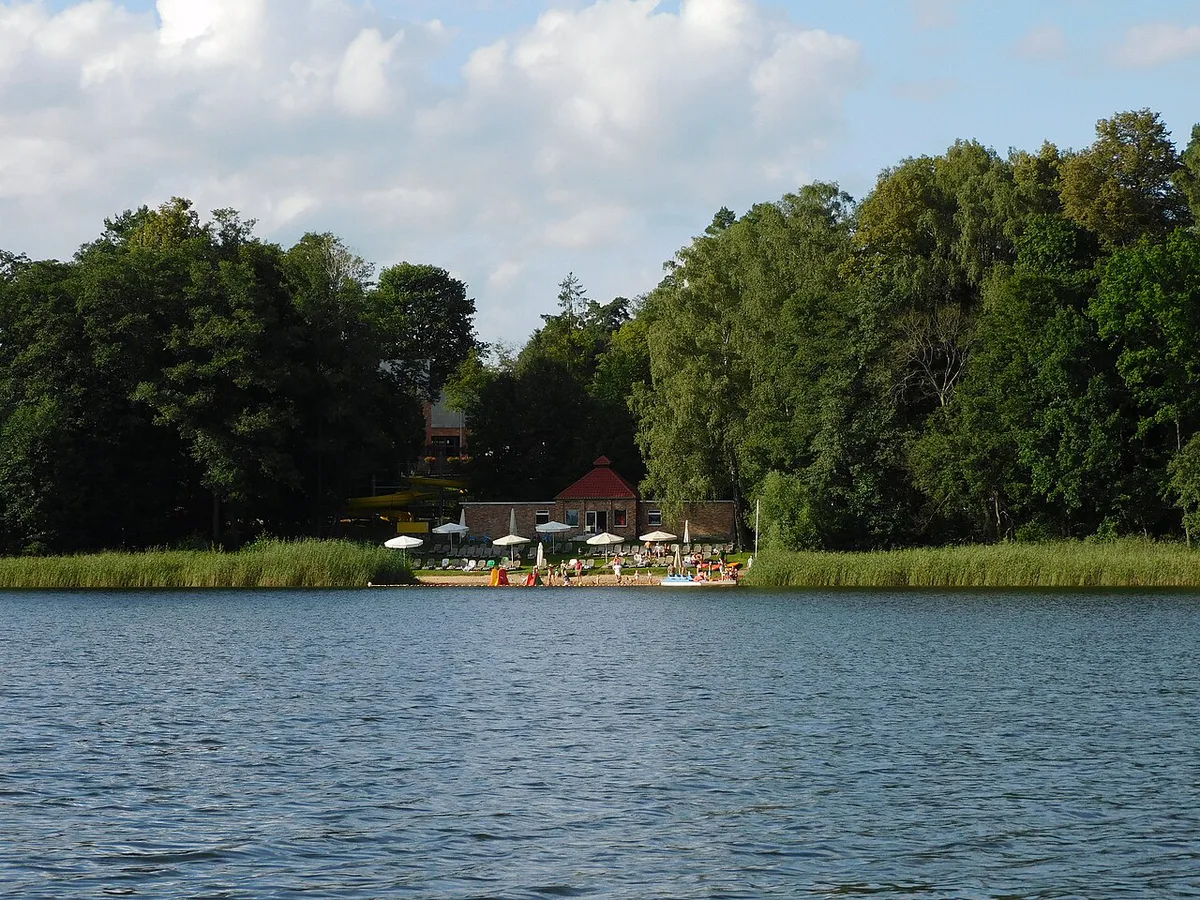
Paddling the Krutynia River ranks among the most relaxed ways to see rural Mazury. Outfitters run guided routes of roughly 13 kilometers, gliding past reed banks, herons, and an old watermill. Kayak rental has historically run around 40 zloty for two hours, though rates shift by season. Confirm current pricing directly with local outfitters before a summer trip.
Giżycko sits on Lake Kisajno and remains the region's best-known sailing base. Yacht charters, sailing schools, and a swing bridge over the Łuczański Canal keep the marina busy all summer. Explore the full range of routes and rental options in our Giżycko sailing guide. Passenger ferries also connect towns like Mikołajki and Ryn across Lake Tałty.
Flat lakeside roads and forest tracks make cycling an easy add-on to a paddling trip. Circuits of 20 kilometers or more link small villages, farmland, and quiet swimming spots. For a wider look at Poland's outdoor regions, see our Nature in Poland: Travel Guide 2026. Each trail rewards a slower pace over a rushed checklist of sights.
Family-Friendly and Budget-Friendly Options
Families often base themselves in Mikołajki for easy access to beaches and boat rentals. Shallow swimming spots near the marina suit younger children better than open lake crossings. Playgrounds and ice cream stands line the promenade during the summer season.
Shoulder season travel in May, June, or September significantly cuts accommodation costs. Public buses and regional trains connect major towns for less than a rental car and fuel, making budget travel easier outside summer peaks.
| Accommodation Type | Cost | Access | Best For |
|---|---|---|---|
| Marina hotel | Higher nightly rate | Walk to boats and dining | Short stays |
| Village guesthouse | Lower nightly rate | Car or bike needed | Longer stays |
| Lakeside campsite | Lowest nightly rate | Own transport helpful | Summer only |
Shoulder season travel, in May, June, or September, cuts accommodation costs significantly. Public buses and regional trains connect major towns for less than a rental car and fuel. Self-catering apartments near the lakes often work out cheaper than hotel breakfasts for a family group.
Choosing between a lakeside hotel and a village guesthouse comes down to convenience versus quiet. Hotels near the marina cost more but skip the need for a car to reach activities. Guesthouses further out save money but mean planning transport for meals and day trips.
- Marina hotel for convenience seekers
- Cost: higher nightly rate
- Access: walk to boats and dining
- Best for: short stays
- Village guesthouse for budget travel
- Cost: lower nightly rate
- Access: car or bike needed
- Best for: longer stays
- Lakeside campsite for tightest budgets
- Cost: lowest nightly rate
- Access: own transport helpful
- Best for: summer only
How to Plan a Smooth Masurian Lakes Trip
Olsztyn-Mazury Airport offers the closest regional air link, with seasonal budget carrier routes from the UK. From Olsztyn, regional trains and buses reach Giżycko and Mikołajki within about two hours. Driving from Warsaw takes roughly three hours along the S8 and S61 routes.
Book marina-side hotels and popular kayak routes at least a month ahead for summer weekends. Check current opening hours, ferry schedules, and admission prices on www.poland.travel before finalizing plans, as rates shift year to year.
Peak summer, July and August, brings the warmest water and the busiest marinas. Late spring and early autumn offer calmer lakes, lower prices, and easier restaurant bookings. Winter travel suits only those chasing quiet forest walks, since many boat rentals close for the season.
Book marina-side hotels and popular kayak routes at least a month ahead for summer weekends. Check current opening hours, ferry schedules, and admission prices on the official Www.poland.travel site before finalizing plans. Rates and schedules shift year to year, so confirm details close to a travel date.
A common planning mistake is cramming too many lake towns into one short trip. Mazury rewards a slower itinerary built around one or two bases rather than constant repacking. Travelers craving mountains instead of lakes can compare notes in our Bieszczady Mountains Travel Guide.
Local Food and Regional Dishes to Try
Mazury's lake towns build much of their food scene around freshwater fish. Smoked eel, pike, and zander (sandacz) show up on nearly every marina restaurant menu, often served with dill potatoes or a simple cucumber salad. Roadside stalls near Mikołajki and Giżycko sell whole smoked fish straight from wooden smokehouses, a cheap way to eat well between boat trips.
Beyond fish, regional kitchens lean on classic Polish comfort food adapted to a lake-country pace: pierogi with potato and farmer's cheese, żurek (sour rye soup), and placki ziemniaczane (potato pancakes) served with sour cream or goulash. Bakeries in smaller towns like Ruciane-Nida and Ryn sell yeasted plum or poppy-seed cakes worth grabbing for a picnic on a kayak trip.
- Marina-side restaurants: fresh fish, higher prices, best views
- Village milk bars (bar mleczny): filling Polish staples at low cost
- Roadside smokehouses: cheapest way to try lake fish
Reservations rarely matter outside July and August, but popular marina spots in Mikołajki fill up fast on summer evenings.
Frequently Asked Questions
How many lakes are in Masuria?
Masuria holds more than 2,000 lakes across its forests and wetlands, which is why locals call it the land of a thousand lakes. Lake Śniardwy and Lake Mamry rank as the largest, both popular for sailing. The dense lake network also linked into rivers and canals used for centuries.
Who won the Battle of Masurian Lakes?
German forces under General Paul von Hindenburg and General Erich Ludendorff won the Battle of Masurian Lakes in September 1914. They repelled the Russian First Army's invasion of East Prussia, though they failed to fully encircle Russian troops under General Pavel Rennenkampf. The Russian withdrawal ended the immediate threat to the region.
How many people died in the Battle of Masurian Lakes?
Historical records count Russian casualties near 227,000, mostly soldiers captured rather than killed, while German losses stayed around 30,000. Exact death tolls within those totals remain unclear from surviving records. The battle still ranks among the larger clashes of the early Eastern Front in World War I.
Are Masurians Polish?
Masuria sits fully within Poland today, though the region belonged to East Prussia, Germany, before World War II. Most current residents are Polish nationals, and the area's culture blends historical German, Polish, and Prussian influences. Local dialects and place names still reflect that layered history.
How much time should travelers plan for a Masurian Lakes trip?
Plan at least three to four days to cover one or two lake towns without rushing. A week allows time for kayaking, a Wolf's Lair visit, and slower village stops. Check more Poland travel guides on the blog when building a longer regional itinerary.
Masurian Lakes travel rewards visitors who trade a packed checklist for a slower pace on the water. Sailing towns, quiet kayak routes, and a well-preserved wartime history give the region real depth. A few well-chosen bases beat trying to see every lake in one trip.
Pair a Mazury trip with another Polish outdoor region for a longer nature-focused itinerary. Mountain scenery near Szklarska Poręba offers a striking contrast to the flat lake country. Whichever route travelers choose, booking ahead for summer weekends keeps the trip stress-free.
You might also like



Continue reading
More guides you'll find useful


