

Where to Eat in Sopot: Best Restaurants & Cheap Eats in 2026
Last updated June 2026 — Sopot feeds you well if you know where to look. Walk Bohaterów Monte Cassino on a warm June evening — ice cream in hand, the Pier gate lit up ahead, the Baltic salt hanging in the air — and it is immediately clear that eating here is part of the resort experience, not a sideshow. The city has one gear for food: pleasure. Whether that means a smoked herring sandwich grabbed from a seafront stall at midday or a long dinner at the Grand Hotel Sopot with a view of the sea, the logic is the same — you are on holiday, and the food should feel like it.
This guide covers where to eat in Sopot in 2026: the restaurants and cafés strung along Bohaterów Monte Cassino (locally called Monciak), the Baltic fish spots near the seafront and Pier, cheap milk-bar and pierogi lunches, ice cream rituals, the fine-dining tier, and the seasonal beach bars that appear between the Pier and the sea wall from May through September. For the full sweep of what Sopot offers beyond the plate, our guide to things to do in Sopot is the place to start.
Key Takeaways
- Monciak is the dining spine: Bohaterów Monte Cassino runs from the SKM station to the Pier gate — virtually every café, restaurant, and ice cream kiosk in central Sopot sits on or just off this pedestrian strip.
- Baltic herring (śledź) and smoked fish are the essential Sopot eat — look for seafront fish stalls and smażalnie near the Pier approach.
- Milk bars and pierogi spots near Monciak deliver filling Polish meals for under 35 PLN (around €8) — the best budget option in a resort town with resort pricing.
- Grand Hotel Sopot (Sofitel) anchors the fine-dining tier; a handful of other upscale restaurants within walking distance of the Pier complete the picture.
- Seasonal beach bars between the Pier and the promenade sea wall serve cold drinks and quick snacks from May to September — some of the best of the Tricity's summer terrace eating.
- Sopot is the priciest Tricity city for restaurants, but mid-range eating (40–70 PLN / €10–17 per main) is still strong value by Western European standards.
Monciak: Sopot's Eating Spine
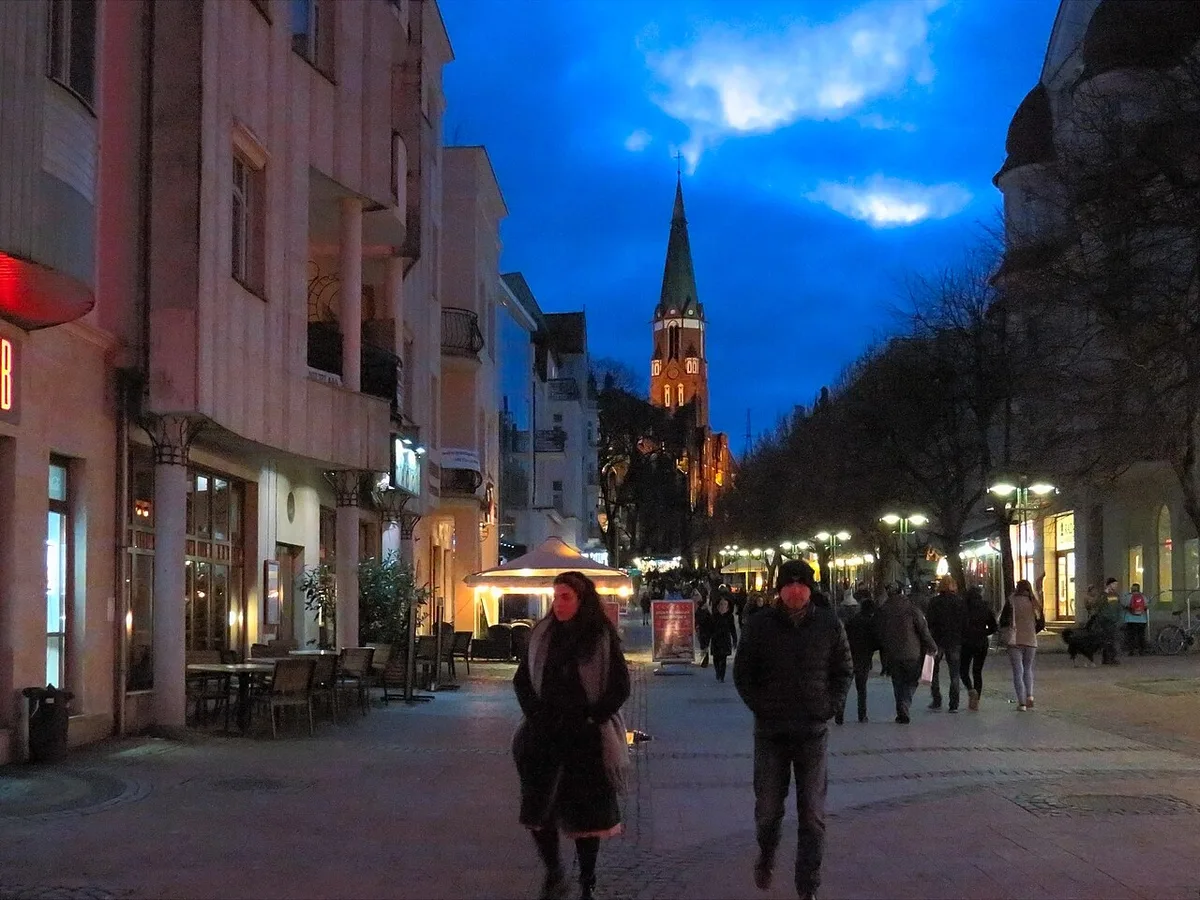
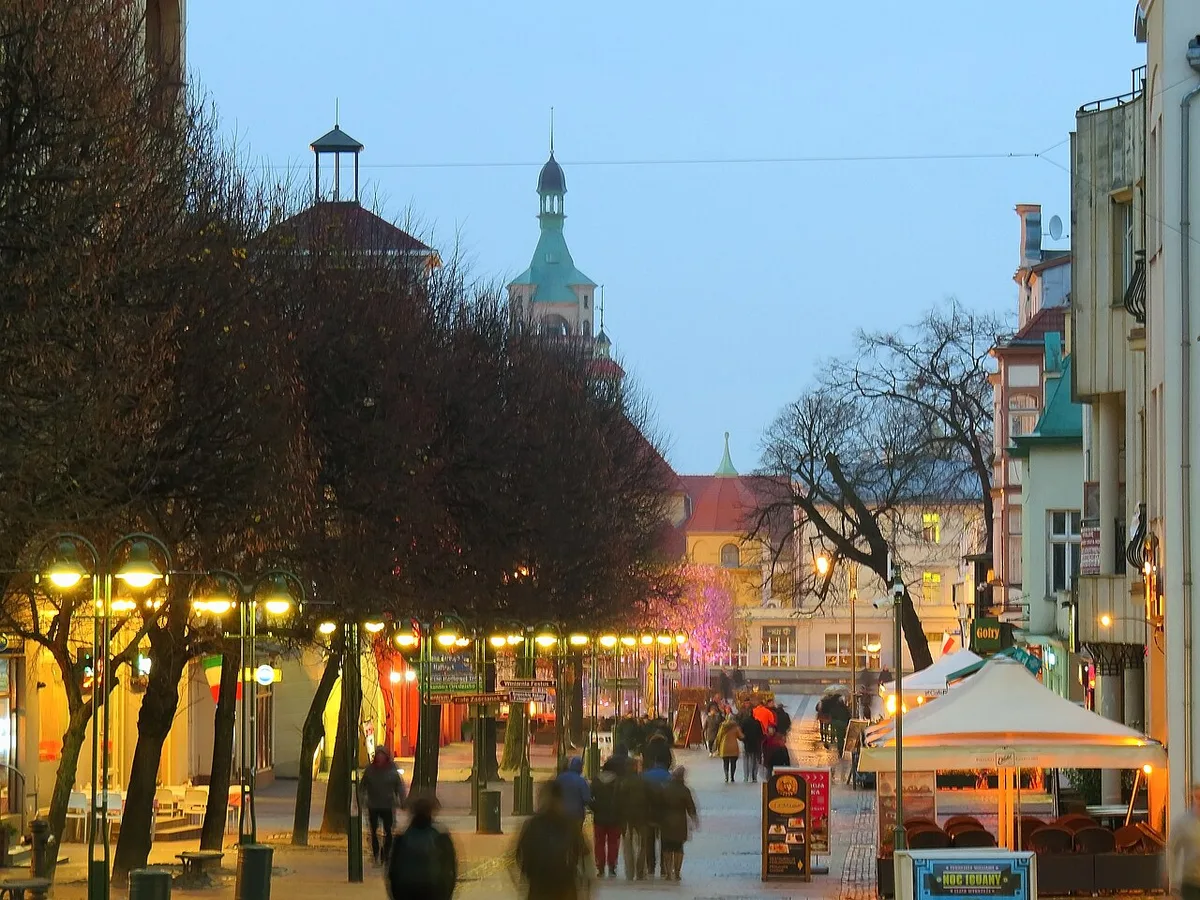
Bohaterów Monte Cassino — universally called Monciak — is a roughly 800-metre pedestrian street that runs downhill from the SKM commuter-rail station to the gate of the Pier (Molo). It is the axis of Sopot life, and it is where most of the city's eating happens. Cafés, restaurants, gelaterias, ice cream kiosks, bistros, and a few beer gardens spill off both sides of the strip, with the density thickest in the middle section where the Crooked House (Krzywy Domek, the surreal building opened in 2004 that now houses a shopping and restaurant complex) provides a focal point.
Eating on Monciak is, frankly, a little more expensive than eating in Gdańsk or Gdynia — Sopot has always known its resort status and priced accordingly. A café main course runs roughly 40–70 PLN (€10–17); a full restaurant dinner for two with wine will clear 200 PLN (around €48) without difficulty. That said, the mid-range tier is genuinely good: fresh ingredients, capable kitchens, and a terrace culture that makes lingering over a meal feel natural rather than forced. For the full character of the promenade beyond its restaurants — the street performers, the Crooked House, the walk down to the Pier gate — our Sopot Monte Cassino guide covers it in detail.
The practical advice: walk Monciak once before you commit to eating anywhere. The chalkboard specials, terrace sizes, and crowd levels tell you more in five minutes than any fixed list can. In July and August the strip fills fast; arriving at 6 pm rather than 8 pm saves queues at the more popular spots.
Baltic Fish, Herring & Smoked Fish near the Pier
The seafront approach to the Pier — the stretch of promenade between the end of Monciak and the Molo ticket gate — is where Sopot's fish culture concentrates. Smoked fish stalls and small smażalnie ryb (fish-fry bars) appear here each summer, selling herring (śledź bałtycki), smoked flatfish, and occasionally smoked eel. These are not sit-down restaurants. They're counter operations with plastic tables, the smell of oak smoke, and prices that feel almost out of place next to the resort hotel rates a hundred metres away.
Baltic herring is Sopot's signature fish dish and worth treating as a deliberate meal rather than a snack. The preparation range is wide: śledź w śmietanie (herring in sour cream with onion), marinated herring with apple, or simply smoked and served on dark rye bread with a cold beer. A generous portion with bread typically runs 25–40 PLN (roughly €6–10 in 2026). Smoked flatfish and smoked salmon are the premium options — expect 35–55 PLN (€8–13) for a portion.
The smażalnie near the Pier operate seasonally (typically May to September) and keep irregular hours that shift with the weather and the catch. Go mid-morning or at lunch for the best freshness; by late afternoon some stalls run out of certain fish. For the broader context of Baltic and Pomeranian cuisine — what to eat beyond fish, the regional dishes worth knowing — our traditional Polish food guide from Gdańsk covers the full picture.
The smoked fish stalls near the Pier gate are cash-only and don't always display prices upfront — ask before ordering. The best quality signal is freshness of the smoke: fish smoked that morning has a clean, dry exterior with no tackiness. If the fish looks wet or glistening, it was smoked longer ago than ideal. Trust your nose, and don't hesitate to ask what came in today.
Milk Bars & Pierogi: Budget Eating in a Resort Town
Sopot is not naturally a budget-food city — the resort premium runs through most of its menus. The exception is the bar mleczny (milk bar) tradition and a handful of honest pierogi spots tucked off the main tourist flow, usually a street or two back from Monciak. These are the places where locals eat on weekday lunches when they're not performing the resort ritual: no tablecloths, no English menu, but full and satisfying Polish cooking at prices that haven't inflated to match the hotel rates nearby.
A full milk-bar meal — soup (zupa dnia) and a main of pierogi, kotlet schabowy (breaded pork cutlet), or potato pancakes (placki ziemniaczane) — typically comes in at 22–38 PLN (around €5–9) as of 2026. That's a meaningful saving versus Monciak terrace restaurants for essentially the same traditional-Polish-cooking category. For pierogi specifically, look for spots with handmade versions (pierogi ręcznie lepione) rather than factory-frozen — the difference is immediately obvious in the texture of the dough.
The milk-bar option in Sopot is not as developed as in Gdańsk or Gdynia — the city's tourism orientation pushes most kitchens upmarket — but a short walk off the main pedestrian strip almost always turns up at least one budget-honest lunch spot. Our guide to where to eat in Gdańsk has a fuller milk-bar section for comparison, useful if you're doing a Tricity circuit and want to benchmark the experience.
Cafés & Ice Cream on Monciak
Ice cream (lody) on Monciak is not optional. It is a Sopot ritual — the long walk down the promenade toward the Pier is almost definitionally done with a cone in hand. Polish artisan gelaterias now sit alongside the older-style kiosks, and the quality range is wide: the best offer homemade scoops of seasonal fruit, cream cheese, and salted caramel that are genuinely excellent; the worst are generic frozen product with too much air. Look for lody rzemieślnicze (artisan ice cream) signs, which indicate scratch-made product. Two generous scoops run 12–18 PLN (around €3–4) in 2026.
The cafés on and just off Monciak split between the terrace-and-espresso type — good for a flat white and a slice of cake while the promenade passes below you — and the fuller café-bistro format with breakfast plates, lunch salads, and an all-day menu. Coffee quality has improved noticeably in Sopot over the past few years; expect specialty espresso at 14–19 PLN (around €3–4), which is good value for a resort strip. The breakfast culture (9 am to noon) is worth leaning into: a full café breakfast — eggs, bread, cold cuts, coffee — typically runs 35–55 PLN (around €8–13) and sets you up for a morning at the beach or the Pier before the lunch rush.
Fine Dining: Grand Hotel Sopot & the Upscale Tier
The Grand Hotel Sopot — now operated as Sofitel Grand Sopot — is the defining luxury address in the city: a Wilhelmine-era heritage building directly on the seafront promenade, where Kaiser Wilhelm II once stayed and where the Sopot Music Festival held its grand finale events in the communist era. Its restaurant and grand café are the headline fine-dining option in Sopot: a formal room, a menu that leans classical European and Polish, and a setting that is genuinely beautiful. Mains run 120–200 PLN (around €29–48) at the hotel restaurant; the grand café is somewhat more accessible, with coffee, cakes, and lighter dishes in the 25–65 PLN (€6–16) range. Book ahead for dinner, especially in July and August — the hotel's own website is the reliable booking channel.
Beyond the Grand Hotel, Sopot has a small but serious tier of upscale restaurants within walking distance of the Pier. Look for modern Polish menus that build on Baltic and Pomeranian ingredients — the best kitchens here use the same Gdańsk Bay fish and Kashubian produce as their counterparts in Gdańsk's old town, but with a lighter, more contemporary touch. Expect to spend 70–130 PLN (around €17–31) per main at this tier, plus wine. Book at least two to three days ahead on weekends in summer peak.
The fine-dining scene in Sopot is smaller and less varied than Gdańsk's — the city is compact and its restaurant economy runs on seasonal resort trade rather than year-round dining tourism. But the quality ceiling is high, and the setting — most of the upscale restaurants here sit close enough to the seafront to carry a sea-breeze atmosphere — compensates for the limited range. If you're weighing a special-occasion dinner between the Tricity cities, Sopot's intimacy and the Grand Hotel's setting make it the most romantic option, even if Gdańsk's old town has more choices.
If you're staying in Sopot for a fine-dining visit, our guide to where to stay in Sopot covers the best areas and hotels — including the accommodation options closest to the restaurants mentioned here.
Beach Bars & Seasonal Spots along the Seafront
From May through September, Sopot's beach and the promenade sea wall between the Pier and the southern beach access points come alive with seasonal bars, beach clubs, and open-air food stalls. These are the defining summer eating-and-drinking experience in Sopot — plastic cups of cold Żywiec beer, grilled sausage (kiełbasa z grilla) from a charcoal drum, and the sound of the Baltic. The beach club culture here is more developed than anywhere else in Poland: some spots have proper kitchen operations serving burgers, salads, and fish dishes alongside the drinks; others are purely drink-focused with minimal food.
Prices at the beach bars are predictably resort-inflated: a beer runs 15–22 PLN (around €4–5); a grilled sausage with bread, 18–28 PLN (around €4–7); a beach-club main course, 45–80 PLN (around €11–19). These are not budget options, but the setting — literally on the sand with the Pier visible to the north — is what you're paying for. The best beach bars in Sopot also serve as late-afternoon DJ and live music venues from early evening onward, so they work both as a food stop and a transition point into the evening.
The beach bars are seasonal and some open only in July–August peak. Most begin closing their kitchen around 10 pm even when the bar runs late. The spots closest to the Pier gate tend to be the most established and reliable for actual food; the further south you walk along the beach, the more drink-focused and less food-focused the venues become. If you're after a proper meal rather than snacks and drinks, position yourself close to the Pier approach.
Sopot Restaurants at a Glance
The table below is a working 2026 reference for the main options across budget tiers. Prices are estimates — confirm current menus directly with each venue before visiting, as seasonal schedules and pricing change.
| Restaurant / Venue | Cuisine / Vibe | Price Feel (2026) | Best For |
|---|---|---|---|
| Grand Café at Sofitel Grand Sopot | Heritage fine dining, European–Polish | Splurge — 120–200 PLN (€29–48) per main | Special occasion, heritage setting |
| Upscale seafront restaurants (modern Polish) | Contemporary Polish, Baltic fish | Upscale — 70–130 PLN (€17–31) per main | Fine dining, book ahead |
| Monciak café-bistros | Polish and European café fare | Mid-range — 40–70 PLN (€10–17) per main | Terrace dining, all-day menus |
| Smażalnia ryb / seafront fish stalls | Baltic fish, informal counter | Budget–mid — 25–55 PLN (€6–13) per portion | Herring, smoked fish, fresh cod |
| Bar mleczny / milk bar | Traditional Polish canteen | Budget — 22–38 PLN (€5–9) full meal | Pierogi, kotlet, soup — cheapest hot meal |
| Ice cream kiosks on Monciak | Artisan lody, gelato | 12–18 PLN (€3–4) for two scoops | The essential Sopot promenade ritual |
| Beach bars (seasonal May–Sep) | Grilled snacks, drinks, DJ | 15–80 PLN (€4–19) depending on order | Beer, kiełbasa, evening atmosphere |
Polish Dishes to Try in Sopot
Sopot's resort character means the menu leans European alongside the Polish standards — but these are the dishes worth seeking out specifically while you're here. For the full regional dish guide covering Kashubian and Pomeranian specialties, see our Polish food guide; Poland's official tourism portal poland.travel also keeps a good national primer on regional cuisine.
| Dish | What It Is | Where to Find It |
|---|---|---|
| Śledź (herring) | Baltic herring — pickled with onion and cream, marinated, or smoked on dark rye | Seafront fish stalls, restaurant starters, deli counters |
| Wędzone ryby (smoked fish) | Smoked eel, flatfish, or salmon from Baltic trawlers — sold by weight | Fish stalls near Pier, take-away smażalnie |
| Pierogi ruskie | Dumplings filled with potato and farmer's cheese, pan-fried or boiled, served with sour cream | Milk bars, traditional Polish restaurants |
| Żurek | Fermented rye-flour soup with hard-boiled egg, white sausage, and horseradish | Traditional restaurants, milk bars |
| Placki ziemniaczane | Potato pancakes — crisp-fried, served with sour cream or goulash sauce | Milk bars, traditional restaurants |
| Lody rzemieślnicze | Polish artisan ice cream in seasonal flavours — cream cheese, strawberry, salted caramel | Artisan gelaterias on Monciak |
| Kiełbasa z grilla | Grilled Polish sausage, charcoal-smoked, served with mustard and dark bread | Beach bars, seasonal outdoor stalls |
Frequently Asked Questions
What is the best food to eat in Sopot?
Sopot's signature eat is Baltic herring (śledź bałtycki) — pickled, marinated, or smoked — served at seafront fish stalls and smażalnie near the Pier (Molo). Smoked fish more broadly (eel, flatfish, salmon) is the other essential. Beyond fish, the resort's café culture makes ice cream on Monciak a near-mandatory experience. For a full sit-down meal, the upscale tier around the Grand Hotel Sopot delivers contemporary Polish cooking with Baltic ingredients at its best.
Is eating in Sopot expensive?
Sopot is the priciest of the three Tricity cities for food. A mid-range restaurant main runs 40–70 PLN (around €10–17) in 2026; fine dining at the Grand Hotel tier reaches 120–200 PLN (€29–48) per main. Budget options — milk bars and smażalnia fish portions — still come in at 22–40 PLN (€5–10). Beach bars run 15–22 PLN (€4–5) for a beer. It's not cheap by Polish standards, but it's still strong value compared with equivalent resort towns in Western Europe.
Where do locals eat in Sopot?
Sopot residents tend to avoid the most tourist-facing restaurants on Monciak's main strip and gravitate toward: the seafront smażalnie and fish stalls near the Pier for casual fish meals; milk bars a street or two back from Monciak for cheap daily lunches; and established café-bistros in the residential streets off the promenade. In summer evenings, beach bars are mixed locals-and-visitors. The further you get from Monciak's tourist core, the more local the crowd and the more honest the pricing.
Do I need to book restaurants in Sopot in advance?
For fine-dining restaurants — particularly the Grand Hotel Sopot and the upscale seafront restaurants — book at least two to three days ahead in July and August, and further ahead for weekends. For mid-range Monciak bistros, same-day reservations or walk-ins are usually possible on weekdays; weekends in peak summer fill fast. Fish stalls, milk bars, ice cream kiosks, and beach bars are all walk-up only. The Sopot MICE week and the Sopot Festival in late July and early August are the highest-demand periods — book further ahead if visiting then.
Are there vegetarian or vegan food options in Sopot?
Sopot's restaurant scene has improved significantly on vegetarian and vegan options over the past few years. Most café-bistros on Monciak now carry clearly labelled vegetarian dishes — grilled vegetable plates, salads, pasta, and egg-based options are standard. The best milk bars offer pierogi ruskie (potato-cheese filling, naturally vegetarian) and placki ziemniaczane with sour cream. Dedicated vegan menus are less common but increasingly available at the more contemporary bistros. The fish-focused smażalnie and fine-dining hotel restaurants are the least accommodating — check menus in advance if plant-based eating is a priority.
Final Thoughts
Sopot doesn't let you eat badly if you make a few good choices. Eat your herring near the Pier, walk Monciak with an ice cream, have at least one long terrace lunch watching the resort promenade pass by, and if the budget allows it, book a dinner at the Grand Hotel for the experience. The city is small enough that the best of its eating scene is never more than fifteen minutes' walk from wherever you're based. For everything else Sopot offers beyond the table — the Pier, the beach, the Forest Opera — our guide to things to do in Sopot covers the full picture. Smacznego.
You might also like


Continue reading
More guides you'll find useful


