

Where to Eat in Szczecin: A Local's Guide for 2026
Last updated July 2026 — the first time I ordered paprykarz szczeciński, I honestly didn't know what I was getting into. It showed up as a reddish, slightly spicy paste spread thick on rye bread at a milk bar two blocks off the main square, and it tasted nothing like anything else I'd eaten in Poland. That's more or less the story of eating in Szczecin: a port city with its own dish, a stubborn love of cheap communal canteens, and, more recently, a wave of proper cafés and restaurants that have opened up around the riverside promenade.
This guide covers what I'd actually tell a friend visiting for the first time — the milk bars worth queueing at, where the paprykarz is genuine rather than a supermarket shortcut, and which cafés near Wały Chrobrego are worth the extra złoty for the view. If you're building out a full day of sightseeing around the castle and the embankment, pair this with the main things to do in Szczecin guide so you know what's within walking distance of each meal.
Key Takeaways
- Paprykarz szczeciński — a spiced fish-and-rice paste invented locally in the 1960s-70s — is the one dish you shouldn't leave Szczecin without trying, best from a milk bar or a proper delikatesy counter, not a plastic supermarket tub.
- Milk bars (bary mleczne) near the Old Town and around Plac Żołnierza Polskiego still serve full traditional Polish lunches for a fraction of restaurant prices.
- The cafés strung along Wały Chrobrego (Chrobry Embankment) trade a bit on price for the Oder river view, and are the right spot for a slower breakfast or afternoon coffee.
- As a working port and shipbuilding city, Szczecin has a genuine seafood tradition beyond paprykarz — look for herring, smoked fish, and Baltic catch on menus near the harbour.
- Expect 2026 prices roughly: milk bar lunch 15-25 PLN (≈€3.50-6), mid-range restaurant mains 35-65 PLN (≈€8-15), café coffee-and-cake 25-40 PLN (≈€6-9) — always check current menus, as prices shift.
- If you want a livelier evening after dinner, the city's bar and club scene is covered separately in the Szczecin nightlife guide.
Paprykarz szczeciński: Szczecin's own dish
Paprykarz szczeciński is a spread made from minced fish (traditionally sourced from the distant-water trawler fleets that once worked out of Szczecin), rice, tomato concentrate, onion, and a blend of spices that gives it a warm, slightly peppery kick — hence the name, which loosely translates to "Szczecin pepper paste." It was developed in the local fish-processing industry in the 1960s-70s, when the city's deep-water fishing fleet brought in more fish than the fresh market could use, and it became a pantry staple across Poland from there. Locals still spread it cold on bread, though I've also had it warmed and served with boiled potatoes, which turns it into more of a proper meal.
The tinned, supermarket version is fine as a souvenir, but the fresh version — sold by weight from a chilled deli counter — has a rounder, less vinegary flavor and is worth seeking out. Milk bars almost always have it as a cold starter or a spread option with bread, and it's usually one of the cheapest things on the board. If you only try one strange-sounding local food in Szczecin, make it this one.
Fresh paprykarz szczeciński from a deli counter has a rounder, less vinegary flavor than supermarket tins and is worth seeking out at milk bars or delis.
Milk bars (bary mleczne): cheap, honest, communal
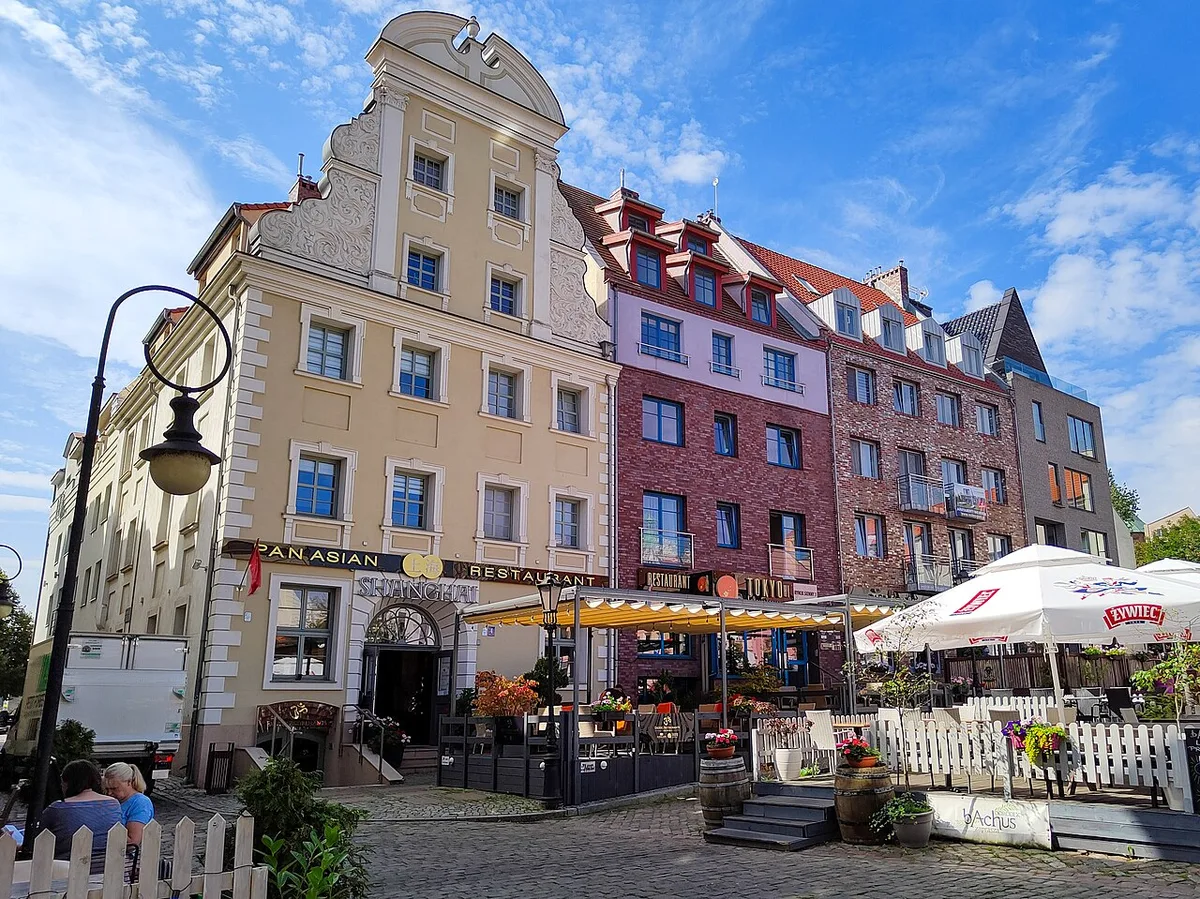
Milk bars are a Polish institution that survived from the communist era largely because they're still the best value lunch in the country. They're self-service, the décor rarely changes, and the menu is written in Polish on a board or a laminated sheet — but the food is home-style Polish cooking at a price that's hard to believe the first time you pay the bill. In Szczecin, the best ones cluster around the Old Town and near Plac Żołnierza Polskiego, a short walk from the castle.
Expect pierogi (usually several fillings — potato-and-cheese, meat, or sweet fruit versions), żurek (sour rye soup, often served in a bread bowl), gołąbki (cabbage rolls), schnitzel-style breaded pork cutlets, and — when it's on the board — that paprykarz szczeciński I mentioned above. Ordering can feel intimidating if you don't read Polish, but staff are used to pointing and gesturing works fine, or ask if there's an English menu card. Bring small bills; some of the older-style bars still prefer cash.
| Where to eat | Typical dish | Approx. 2026 price | Best for |
|---|---|---|---|
| Milk bar (bar mleczny) | Pierogi, żurek, paprykarz | 15-25 PLN / €3.50-6 | Cheap, fast, authentic lunch |
| Delikatesy / deli counter | Fresh paprykarz, smoked fish, cold cuts | 10-20 PLN per portion | Picnic supplies, souvenirs to try later |
| Café near Wały Chrobrego | Coffee, cake, breakfast plates | 25-40 PLN / €6-9 | River views, slower mornings |
| Sit-down restaurant (Old Town / harbour) | Baltic fish, seafood, modern Polish | 35-65 PLN mains | An evening meal with a view |
Note: I've kept these as ranges rather than exact figures — check current menus before visiting, since prices in 2026 have been moving upward across Poland.
Cafés along Wały Chrobrego
The Chrobry Embankment is the obvious place to linger over coffee, and the cafés set into and around the early-1900s buildings along the promenade lean into that. You're paying a small premium versus a backstreet café, but the view over the Oder — especially with a ship or barge moving past — earns it, particularly in the late afternoon when the light comes in low over the river. A few spots have terrace seating in summer that fills up fast on weekends, so arrive earlier rather than later if you want an outdoor table.
I'd treat this as a between-sights stop rather than a full meal destination — pair a coffee and a slice of sernik (Polish cheesecake) or szarlotka (apple cake) with a walk past the National Museum building and the Maritime Academy, then head back toward the castle or the cathedral for the rest of the afternoon. If cafés with a water view are your thing generally, you'll notice the same style repeated near the harbour further along the Oder, closer to where fishing and cargo boats still dock.
Seafood, port-city cooking, and sit-down restaurants
Szczecin's identity as a Baltic and Oder river port shows up on menus well beyond paprykarz. Smoked and pickled herring, freshwater fish from the Szczecin Lagoon, and simply prepared Baltic catch turn up regularly, particularly at restaurants closer to the harbour and the marina area. It's a more understated seafood scene than you'd find on the coast proper in places like Świnoujście, but it's genuine, tied to the same shipbuilding and fishing heritage that shaped the city.
For an evening meal, the Old Town and the streets around the castle have a mix of modern Polish restaurants, a few Italian and Asian options, and the odd upscale spot doing contemporary takes on regional ingredients. None of this is cheap by milk-bar standards, but mains in the 35-65 PLN range are typical for a proper sit-down dinner as of 2026 — always worth checking a current menu or booking ahead on weekend evenings, since good tables near the water fill up. If you're staying central, most of what's covered in the Szczecin Old Town guide is within a 10-15 minute walk of these restaurant streets.
Two named spots worth planning an evening around
If you want one place that sums up how Szczecin eats and drinks by the water, head down to the newly renovated castle terraces built into the slope below the Pomeranian Dukes' Castle — locals call them the Zamkowe Tarasy, and the geometric flowerbeds and river views make it a nice spot to end up for a pre-dinner walk before heading into the Old Town for a proper meal. For something genuinely on the water itself, book a table at Ładoga — a restaurant and hotel set aboard a real ship permanently moored on the Oder along Wały Chrobrego, serving Russian and Baltic dishes, with an open-deck terrace in spring and summer that's one of the more memorable settings for dinner in the city.
A couple of practical points that don't come up elsewhere in this guide: a 10% tip is the informal norm at sit-down restaurants (round up or leave cash — card terminals rarely have a built-in tip prompt), but it's not expected at a milk bar where you're paying at a till before you eat. Vegetarians aren't an afterthought either — milk bars almost always have pierogi ruskie (potato and cheese) and placki ziemniaczane (potato pancakes) on the board without needing to ask for a special menu, and Poland's Sunday trading restrictions apply to shops, not restaurants, so kitchens across the city run a normal Sunday service even when the surrounding stores are shuttered.
Tip 10% at sit-down restaurants, but it's not expected at milk bars where you pay at the till before eating. Restaurants and kitchens operate normally on Sundays, even when shops are closed.
How Szczecin's food fits into Poland's food scene
If you're traveling more broadly around Poland, Szczecin's food culture is a useful case study in how regional the country's cooking still is — paprykarz szczeciński simply doesn't show up on menus the same way once you're a few hundred kilometers inland. For the broader staples (pierogi, żurek, bigos, and the milk-bar tradition generally), the traditional Polish food guide is the right companion piece to this one; think of Szczecin as the place that adds its own regional dish on top of that shared foundation. Poland's official tourism portal, poland.travel, also keeps a solid overview of regional cuisines if you want to compare what changes from province to province.
Because Szczecin sits so close to the German border — Berlin is roughly two hours away by direct train — you'll also notice a bit more cross-border influence in bakeries and delis than you'd find deeper in Poland, though the core of what's on offer is still firmly Polish.
Frequently Asked Questions
What is paprykarz szczeciński and where should I try it?
It's a spiced paste of minced fish, rice, tomato, and onion invented in Szczecin's fish-processing industry in the 1960s-70s. Try it fresh from a deli counter or as a milk bar starter rather than the tinned supermarket version for the best flavor.
What is a milk bar (bar mleczny) and is it tourist-friendly?
A milk bar is a self-service canteen serving traditional Polish home cooking at very low prices. They're tourist-friendly in practice — pointing at the board or asking for an English menu usually works — even though many still operate mostly in Polish.
How much does a meal cost in Szczecin in 2026?
Roughly 15-25 PLN (about €3.50-6) for a milk bar lunch, and 35-65 PLN (about €8-15) for a main course at a sit-down restaurant. Always confirm current prices, as they change year to year.
Where can I get a coffee with a view in Szczecin?
The cafés along Wały Chrobrego (the Chrobry Embankment) overlook the Oder river and are the classic spot for coffee and cake, especially in the late afternoon.
Is Szczecin known for seafood?
Yes, in a low-key way — as a Baltic and Oder river port with a long fishing and shipbuilding history, Szczecin menus regularly feature herring, smoked fish, and Baltic catch, particularly near the harbour.
Final Thoughts
Eating well in Szczecin doesn't require chasing a "best restaurant" list — it means alternating between a cheap, honest milk-bar lunch, a slower café stop by the river, and one proper sit-down dinner near the harbour or Old Town to try the local seafood. Start with the paprykarz, work your way through a milk bar menu, and save an evening for something more polished. For the rest of your itinerary around these meals, the Szczecin things-to-do guide has everything within walking distance of where you'll be eating.
You might also like


Continue reading
More guides you'll find useful


