

Poland Currency: A Practical Guide to the Złoty (PLN) for Travelers
Last updated July 2026, this guide answers the question every first-time visitor asks about poland currency before they even land: no, Poland does not use the euro, even though it has been an EU member for two decades. The official currency is the Polish złoty (PLN), and knowing how it works, from Kantor exchange offices to ATM prompts, saves real money on every transaction. This guide breaks down cash versus card habits, exchange traps, and the confusing złoty/złote/złotych plurals so you can spend confidently from the airport onward.
The Basics: What Is the Polish Złoty?
The official currency and legal tender of Poland is the Polish złoty, abbreviated PLN and symbolized as zł. It subdivides into 100 groszy (gr), the way a dollar splits into cents. The złoty is issued by the National Bank of Poland (Narodowy Bank Polski, or NBP) and manufactured exclusively by the Polish Security Printing Works and Mennica Polska. As a member of the European Union, Poland is technically obligated to adopt the euro eventually, but there is no fixed timeline for meeting the conditions, and Poland currently sits outside the European Exchange Rate Mechanism (ERM II) that would precede any switch. For context on the broader relationship, see Poland's EU membership status. In practice, this means euros are not standard legal tender. A handful of tourist-facing hotels or shops near major attractions may accept euro cash in a pinch, but the exchange rate applied is almost always poor, so treat it as a last resort rather than a plan.

Does Poland Use the Euro? Cash vs. Card Payment Culture
Card acceptance is high across Polish cities, and contactless tap-to-pay is the norm in Warsaw, Krakow, Gdansk, and other major destinations, covering everything from restaurants to public transport. Paying by card also tends to get travelers closer to the mid-market exchange rate than exchanging cash. That said, cash still matters in specific situations: small mountain villages, traditional open-air markets, some public toilets, and Bar Mleczny (milk bar) canteens that serve inexpensive traditional Polish food often expect PLN in hand. A practical rule for a trip covered in the wider 12 Poland Travel Tips for First-Time Visitors (2026) guide is to default to card for most purchases while keeping roughly 100 to 200 zł in cash on hand for emergencies, small vendors, or places where card readers are unreliable.
- Card and contactless payments are standard in cities and most tourist areas
- Keep 100-200 zł cash as a buffer for markets, toilets, and milk bars
- Small mountain villages and rural stalls are more likely to be cash-only
Exchanging Money: How to Use a Kantor
A Kantor is a private currency exchange office found throughout Polish city centers, shopping malls, and near train stations. Unlike bank exchange counters, Kantors are typically fee-free on paper but make their margin through the spread, the gap between the buy and sell rate they post. Signs advertising 0% commission can be misleading, since a wide spread can cost more than an honest flat fee would. Airport Kantors are usually the worst value, often significantly less favorable than city-center or shopping mall locations, so changing only a small amount of cash on arrival and doing the bulk of any exchange once in town is the more cost-effective approach. Before committing to a Kantor, search for one on Google Maps and check recent reviews specifically mentioning fair rates, since informal reputations shift over time. Digital-first alternatives like Revolut or Wise are also widely used by travelers for competitive in-country exchange rates without hunting down a physical counter.
ATM Strategy and Avoiding the Dynamic Currency Conversion Trap
Polish ATMs, run by major banks including PKO, Pekao, and Santander, plus the widespread independent operator Euronet, are common throughout cities and towns. When withdrawing cash, many machines display a prompt asking whether to be charged in your home currency or in PLN, a practice known as Dynamic Currency Conversion (DCC). This prompt is designed to look like a convenience but applies a poor exchange rate set by the ATM operator rather than your card network. Always choose Decline Conversion or Charge in Local Currency (PLN) when given the option, since your own bank's exchange rate is virtually always better. Note that Euronet ATMs, while extremely common, often carry higher withdrawal fees for foreign cards than the major Polish banks, so comparing options when possible is worthwhile. The same DCC prompt appears at card terminals in shops and restaurants; the rule is identical, decline the home-currency conversion and pay in PLN. To see what that choice is actually worth on your own trip, our złoty payment calculator puts card, ATM cash and a DCC offer side by side using your bank's real fees and an NBP reference rate. Details on entry logistics and what to prepare before arrival are covered in the Do You Need a Visa for Poland? 2026 Entry Requirements Explained guide.
Understanding Polish Banknotes and Coins
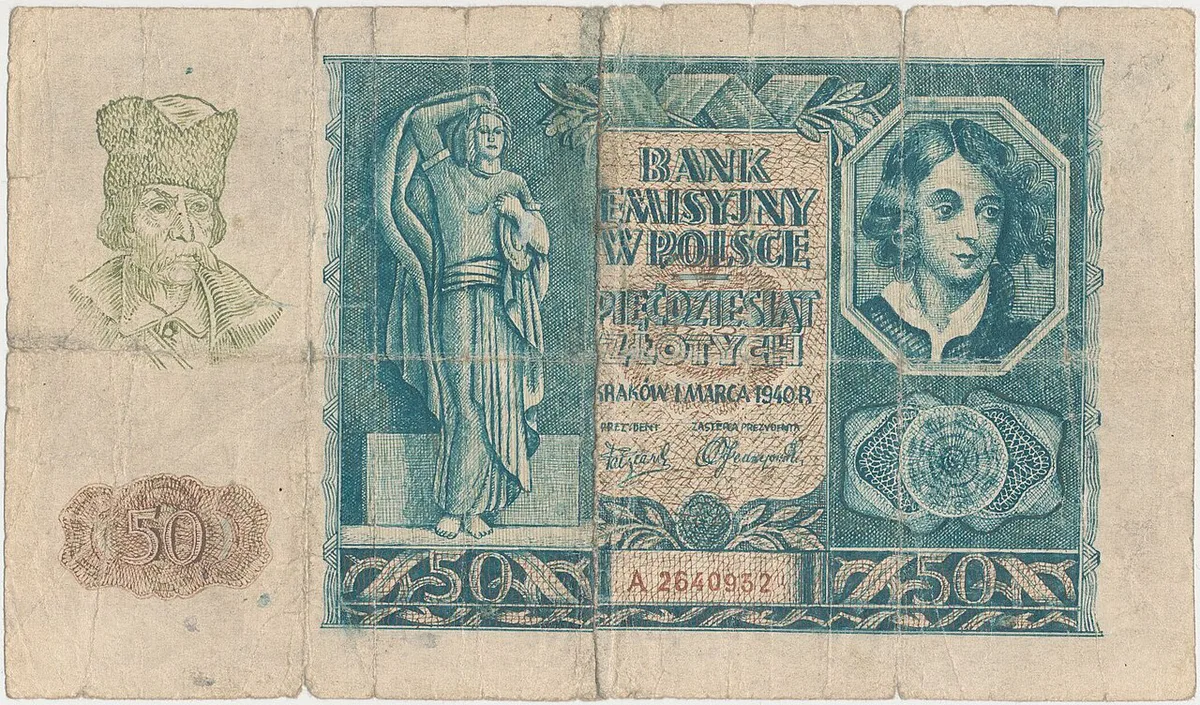
Polish banknotes come in six denominations: 10, 20, 50, 100, 200, and 500 zł, though the 500 zł note is rare in everyday circulation and can be difficult to break at small businesses. Coins come in 1, 2, and 5 zł pieces, plus smaller grosz coins in 1, 2, 5, 10, 20, and 50 gr denominations. Each banknote features a portrait of a Polish king, which offers a quick visual way to distinguish values at a glance once familiar with them. Because many small shops and market stalls struggle to make change for 100 or 200 zł notes on a small purchase, it is worth keeping a stock of 10s and 20s for everyday spending like coffee, snacks, or bus tickets.
- Banknotes: 10 zł, 20 zł, 50 zł, 100 zł, 200 zł, 500 zł (500 is uncommon)
- Coins: 1 zł, 2 zł, 5 zł, plus 1, 2, 5, 10, 20, and 50 groszy
- Keep smaller notes (10s and 20s) on hand for small everyday purchases
Linguistic Guide: Złoty, Złote, or Złotych?
Polish grammar applies different plural forms of złoty depending on the number involved, which can confuse travelers reading a menu or a market sign. A simplified rule covers most everyday situations: use złoty for the number 1, złote for 2, 3, and 4, and złotych for 5 and above, including 0. So a coffee priced at 1 złoty is written differently than one priced at 3 złote or 12 złotych. Restaurant bills, price tags, and market signage will use these forms interchangeably depending on the amount, so recognizing the pattern helps travelers read prices accurately even without speaking Polish. Note that English-language sources and many native English speakers often simplify by using złoty for every amount, so hearing złoty used loosely in tourist contexts is common and not incorrect for practical communication.
Budgeting and Daily Cash Needs
How much PLN cash to carry each day depends on travel style. Since card payments cover most city expenses, the cash portion of a daily budget is mainly a buffer for markets, small vendors, tips, and rural stops rather than a full daily spend. For a fuller breakdown of overall trip costs and what to expect for accommodation, food, and transport in złoty, see the dedicated Is Poland Expensive? 2026 Travel Budget & Cost Guide guide, which pairs well with this currency overview when building a trip budget.
Although 100–200 zł in cash covers daily emergencies and small vendor visits, denomination choice is crucial: shops in markets and villages struggle to change 100+ zł notes, so prioritizing 10 and 20 zł bills ensures spending flexibility despite the smaller total amount.
Common Mistakes to Avoid With Poland Currency
A few recurring mistakes cost travelers unnecessary money or hassle. Avoid exchanging more than a small amount, roughly the equivalent of $10 to €10, at airport Kantors given their weak rates; do the rest once in the city center. Be alert for old currency confusion: Poland redenominated its currency in 1995, when 10,000 old złoty (PLZ) became 1 new złoty (PLN), so any old pre-1995 notes encountered are not valid legal tender today. On tipping, the standard practice in restaurants is around 10 percent, and it is usually left in cash even when the main bill is paid by card, since card terminals do not always offer a tip-adjustment step. Finally, always decline dynamic currency conversion at both ATMs and card terminals, and double-check Kantor spreads rather than trusting a 0% commission sign alone.
Both ATM operators via DCC and Kantors via spreads employ hidden markups to profit. At ATMs, reject home-currency conversion to use your bank's better rate. At Kantors, ignore '0% commission' signs and verify the spread against NBP, Wise, or Revolut rates.
How to Read a Kantor Rate Board
Before exchanging cash, look at both columns on the Kantor board, not just the largest number in the window. Polish exchange offices usually label rates as kupno and sprzedaż: kupno is the rate at which the Kantor buys foreign currency from you, while sprzedaż is the rate at which it sells foreign currency back. If you are arriving with euros, pounds, or dollars and want złoty, the kupno rate is the one that matters.
A fair office keeps the gap between those two numbers relatively narrow for major currencies such as EUR, USD, or GBP. To sanity-check the offer, compare the board with the current mid-market rate shown by the National Bank of Poland, Wise, Revolut, or a reliable currency app before handing over cash. Always confirm the exact PLN amount before the clerk processes the transaction, especially near airports, train stations, and Old Town tourist streets.
Frequently Asked Questions
Does Poland use the euro?
No. Despite being an EU member, Poland uses its own currency, the złoty (PLN), and has no fixed date for euro adoption. Some tourist businesses may accept euro cash, but the exchange rate is typically poor, so paying in złoty is the better choice.
What is the best way to exchange money in Poland?
City-center or shopping mall Kantor exchange offices generally offer better rates than airport counters. Check the spread between buy and sell rates rather than trusting a 0% commission sign, and consider apps like Revolut or Wise for competitive digital exchange as an alternative.
Should I decline currency conversion at Polish ATMs?
Yes. When an ATM or card terminal asks whether to charge in your home currency, choose Decline Conversion or Charge in Local Currency (PLN). This avoids Dynamic Currency Conversion, which applies a worse exchange rate than your own bank offers.
How much cash should I carry in Poland?
Since cards are widely accepted in cities, keeping roughly 100 to 200 zł in cash covers small vendors, markets, milk bars, and rural stops where card payment may not be available.
What are Polish banknotes and coins called?
The złoty (zł) is the main unit, subdivided into 100 groszy (gr). Banknotes come in 10, 20, 50, 100, 200, and 500 zł, while coins range from 1 grosz up to 5 zł.
Use this guide
Make the next planning decision
These tools use the same Poland-specific context, but turn it into an answer for your trip.
You might also like



Continue reading
More guides you'll find useful