Visiting Fara Church: St. Stanislaus Parish Church Guide
Poznan hides a pink jewel just steps away from the bustling market square. The Fara Church, formally known as the Parish Church of St. Stanislaus, stands as a premier example of Baroque design in Poland. Visitors often feel stunned by the contrast between the narrow streets and this massive, ornate facade. This fara church (parish church of st. stanislaus) visitor guide provides everything you need to explore this historic Poznan landmark.
Stepping inside reveals a world of gold leaf, dramatic sculptures, and soaring ceilings. The atmosphere inside remains cool and quiet even during the peak of a busy summer afternoon. Travelers seeking both spiritual reflection and architectural beauty will find this site essential. Planning a visit in 2026 ensures you see the recently restored details of the sanctuary.
A Masterpiece of Baroque Architecture in Poznan
Construction began in 1651 under the guidance of the Jesuit order, then stalled for five years during the Swedish Deluge before resuming and reaching consecration in 1705. The facade features a striking pink and white color palette that catches the light beautifully during sunset. Architects Bartłomiej Nataniel Wąsowski and Giovanni Catenazzi were the primary creative minds behind the structure.
The interior layout follows a traditional basilica plan with three distinct naves. Marble columns and altars line the central space, creating a sense of overwhelming scale for visitors. You will notice how the light filters through high windows to illuminate illusionistic ceiling frescoes depicting the life of St. Stanislaus.
The church survived numerous conflicts and fires throughout its long history. Its resilience makes it one of the most authentic Baroque sites in Central Europe today, and in 2010 Pope Benedict XVI elevated it to the rank of minor basilica — its full formal name is the Basilica of Our Lady of Perpetual Help, St. Mary Magdalene and St. Stanislaus, though locals simply call it Fara. Modern restoration has preserved the vibrant colors that define its aesthetic.
Inside the Parish Church of St. Stanislaus
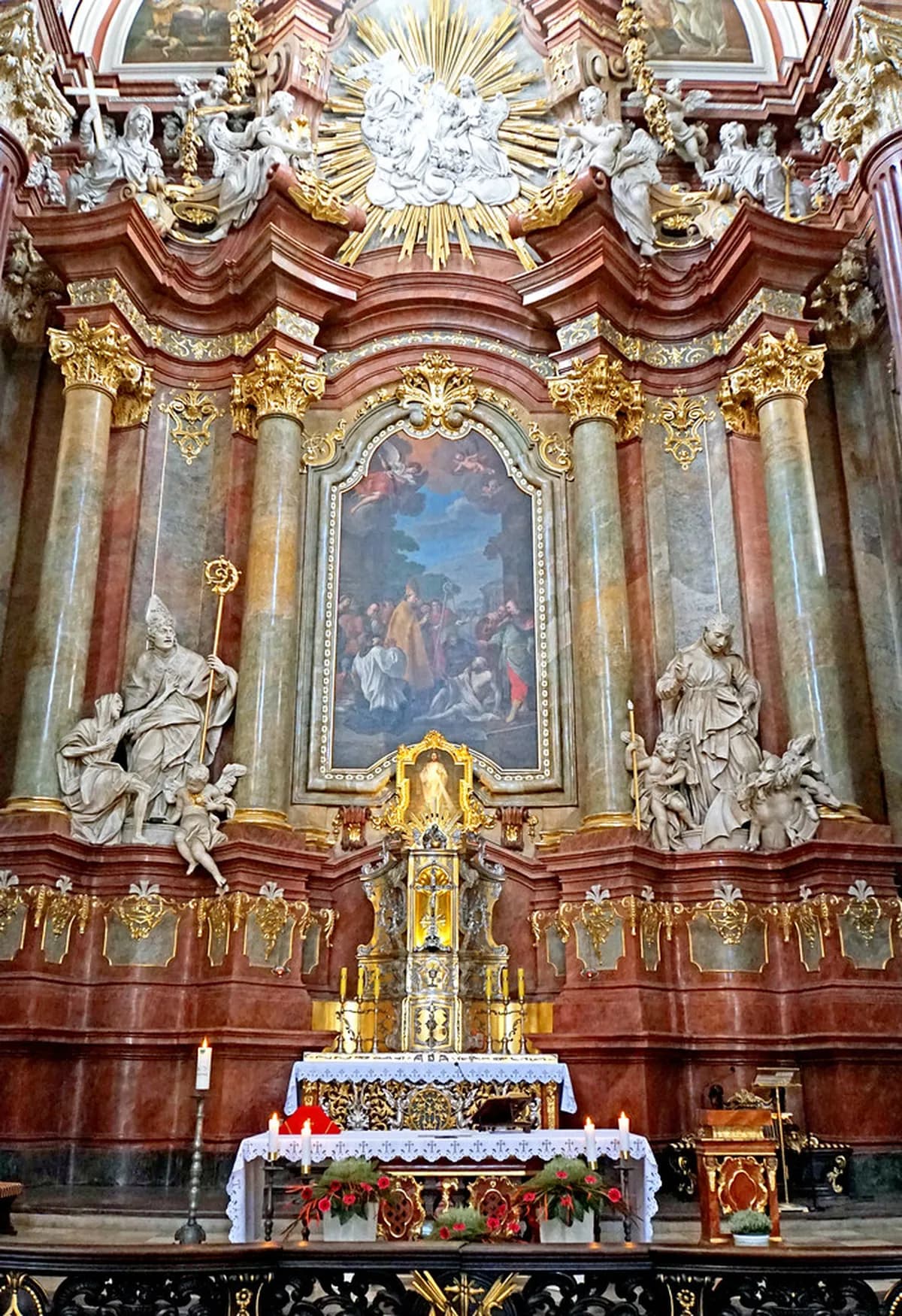
The 17-meter marble high altar serves as the focal point of the entire sanctuary. Italian architect Pompeo Ferrari completed it in 1727 as part of a finishing campaign that ran until 1732, adding a grand painting of St. Stanislaus and sculptures of patron saints around it. The design uses forced perspective to exaggerate the sense of scale.
The Ladegast organ remains the church's most famous interior treasure. Installed in 1876, this instrument contains more than 2,600 pipes and produces a powerful, rich sound — one of the largest historic organs in Poland. Music lovers should check the Saturday schedule for a chance to hear it in person. The organ loft itself is a work of art, featuring ornate carvings and gilded details.
Side chapels offer quieter spaces for reflection and detailed viewing of Baroque art. Each chapel honors different saints through unique paintings and marble carvings, revealing the true depth of the church's 17th- and 18th-century craftsmanship.
Quick Facts at a Glance
Here is the essential information at a glance.
- Address: ul. Gołębia 1, Poznań Old Town (61-841) — a two-minute walk from the Old Market Square
- Entry: free to the nave; around 5 PLN donation is customary for the guided crypt and sacristy tour
- Hours: daily, 6:00 AM to 7:30 PM, with sightseeing paused during Mass
- Organ concerts: every Saturday at 12:15 PM, free, followed by a guided tour of the hidden interiors around 12:45 PM
- Built: 1651 to 1705 for the Jesuit order; interior finished 1727 to 1732 by Pompeo Ferrari
- Status: minor basilica since 2010
Planning Your Fara Church Visit
Entry to the church is free for all visitors throughout the year. You should plan your arrival outside of scheduled Mass times to ensure full access to the naves. Most tourists find that mid-morning or early afternoon on a weekday offers the best lighting for photography and the fewest interruptions.
The church opens its doors daily from 6:00 AM to 7:30 PM. Since this is an active place of worship, modest dress is required for entry, meaning shoulders and knees covered. Avoid using flash photography while people are praying or during religious services, and keep phones silenced throughout your visit.
Located on Gołębia Street, the church sits just a two-minute walk from the Poznan Old Market Square. Many visitors combine a trip here with a stop at the nearby Croissant Museum for a full morning itinerary. This central location makes it easy to find using public transit or on foot.
- Optimal Visiting Hours for Tourists
- Time: 10:00 AM - 1:00 PM
- Reason: Best natural lighting
- Access: Outside mass times
- Cost: Free admission
- Visitor Conduct and Rules
- Dress: Shoulders and knees covered
- Photos: No flash permitted
- Noise: Maintain strict silence
- Phones: Set to silent mode
Organ Concerts and Hidden Details
Every Saturday at 12:15 PM, the church hosts free organ concerts for the public. These performances showcase the incredible range of the historic Ladegast organ. Arriving twenty minutes early helps secure a seat in the central pews for the best acoustics. The program usually includes pieces by Bach and other classical composers.
Legends about a "Ghostly Lady" in black have circulated among locals for generations. Some say she appears near the organ loft, though most visitors only see the stunning architecture. Right after the Saturday concert, around 12:45 PM, a guided tour opens the hidden entrance to the crypts and sacristy for a small donation of roughly 5 PLN — this is a weekly fixture, not a rare festival-only event, and it is the easiest way to see beneath the nave.
The church basement holds traces of the city's medieval past, and the Saturday tour is the only regular way to see the ancient foundations most day-trippers skip entirely.
Getting to Fara Church and Timing Around Mass
From Poznań Główny, the city's main train station, Fara Church is about 1.7 km away — a 20 to 25 minute walk north through Święty Marcin, or a short tram ride toward the Stary Rynek stop followed by a five-minute walk. Drivers should park outside the pedestrianized Old Town core, since street parking near Gołębia Street is scarce and metered.
The single most common first-timer mistake is showing up on a Sunday between 11:00 AM and 1:00 PM, when back-to-back Masses (6:00, 9:00, 11:00, 12:30 and 6:30 PM) mean sightseeing is paused and casual visitors are asked to wait quietly at the rear or come back later. Weekday mornings, or Saturday around the organ concert, are the reliable windows instead.
If you only have time for one Baroque-versus-medieval comparison in Poznań, Fara Church wins for pure Baroque grandeur, the free weekly organ concert, and a zero-transit location a two-minute walk from the market square; the Poznan Cathedral on Ostrów Tumski wins if you want older Gothic-era crypts and the tombs of Poland's first rulers, but it requires a tram ride or a 30-minute walk across the river. Starting at Fara before 10 AM leaves enough time to do both before lunch.
Exploring the Old Town Surroundings
After leaving the pink facade, wander through the cobblestone alleys of the Old Town. You are within walking distance of the Poznan Town Hall and its famous mechanical goats. The surrounding area is packed with cafes serving traditional Polish pastries and coffee. This neighborhood captures the essence of historical Poland in every street corner.
For deeper history beyond Fara's Baroque grandeur, Ostrów Tumski — the cathedral island and the oldest part of the city — sits a short tram ride away.
If you need a break from historical sites, head toward Citadel Park for some greenery. This massive park sits north of the center and offers plenty of walking paths. It serves as a perfect spot to relax after a busy morning of sightseeing. You can also visit Brama Poznania nearby to learn about the city's origins.
Frequently Asked Questions
Is Fara Church in Poznań free to visit?
Yes. Entry to the church nave is free, though donations toward the upkeep of the building and its historic organ are welcomed. A small donation (around 5 PLN) is customary for the guided tour of the sacristy, Chapter House and crypts.
What makes Fara Church special?
Fara Church is widely considered one of the finest Baroque interiors in Poland — built 1651–1701 for the Jesuit order, it features soaring red marble columns, a 17-meter marble high altar by Pompeo Ferrari, illusionistic ceiling frescoes depicting the life of St. Stanislaus, and one of Europe's great historic pipe organs.
Are there organ concerts at Fara Church?
Yes. The 'Koncerty Farne' (Parish Concerts) are held every Saturday at 12:15 PM on the 1876 Friedrich Ladegast organ — one of the largest historic organs in Poland, with over 2,600 pipes. Admission is free, and a guided tour of the church's hidden interiors follows at around 12:45 PM.
What are the opening hours of Fara Church?
The church is open daily from 6:00 AM to 7:30 PM. Sightseeing is paused during Mass, so visitors touring outside of the organ-concert slot should check the daily Mass schedule first.
How old is Fara Church in Poznań?
Construction began in 1651 for the Jesuit order, was interrupted during the Swedish Deluge (1655–1660), and the church was consecrated in 1705; the interior was completed by Pompeo Ferrari between 1727 and 1732 — making it over 300 years old.
Can you climb a tower at Fara Church for views?
No — unlike some other Poznań landmarks, Fara Church does not offer public tower access or a viewing platform. Its twin towers are not open to visitors; sightseeing focuses on the nave, sacristy, Chapter House and crypts.
Where is Fara Church located in Poznań?
Fara Church stands at ul. Gołębia 1 in Poznań's Old Town, just a short walk south of the Old Market Square (Stary Rynek), close to the Poznań Town Hall and the Chocolate Museum.
Is Fara Church a basilica?
Yes. Formally the Basilica of Our Lady of Perpetual Help, St. Mary Magdalene and St. Stanislaus, it was elevated to the rank of minor basilica by Pope Benedict XVI in 2010.
Fara Church remains a cornerstone of Poznan's cultural and architectural identity. Its vibrant pink exterior and soaring Baroque interior create an unforgettable atmosphere for every traveler. Whether you visit for the music or the history, this landmark deserves a spot on your 2026 itinerary. Take your time to soak in the details of this magnificent parish church.
For authoritative information, refer to the Fara Church (Parish Church of St. Stanislaus) on Wikipedia and Fara Church (Parish Church of St. Stanislaus) official site.
For more Poznan planning, read our 12 Best Things to Do in Poznań for 2026 Travel Guide and Poznan Christmas Market Guide guides.