
Kórnik Castle Poznań: A Guide to Poland's Neo-Gothic Island Residence
Last updated July 2026, this Kórnik Castle Poznań guide walks through transport, tickets, and the White Lady legend at the Neo-Gothic residence 25 km southeast of the city. Inside, a working library and museum sit beside the Moorish Hall, while the surrounding Kórnik Arboretum ranks as Poland's oldest and largest. Use the sections below to decide how much time to give Kórnik, and how to pair it with nearby Rogalin or other Greater Poland stops.
What Is Kórnik Castle? A Quick Overview
Kórnik Castle sits on a small island about 25 km southeast of Poznań, in the Wielkopolska region. Its origins date back centuries. The Neo-Gothic look you see today comes from an 1855 remodel commissioned by Tytus Działyński, based on plans from German architect Karl Friedrich Schinkel. The Działyński family, and later Count Władysław Zamoyski, filled the castle with a research library, art, and natural-history collections. Shortly before his death in 1924, Zamoyski willed the entire estate, including the Kórnik Arboretum, to the Polish state. Today the castle operates as a museum and library. It holds official status as a Historic Monument of Poland (Pomnik historii), designated on June 15, 2011.
How to Get to Kórnik Castle from Poznań
Kórnik sits close enough to Poznań for an easy half-day trip, but the three main routes differ in convenience. Choose based on your schedule and how much flexibility you want.
| Transport | Details | Travel Considerations |
|---|---|---|
| Car | About 25 km from central Poznań via route S11 | Direct, mostly rural-road drive |
| Bus | Regional buses from Poznań's Rataje transport hub | Schedules shift by season; check before visiting |
| Train | Nearest railway stop is Szczodrzykowo (not in Kórnik) | Requires local bus or taxi transfer; plan extra time |
- By car: Kórnik Castle is about 25 km from central Poznań via route S11, a direct, mostly rural-road drive.
- By bus: regional buses run from Poznań's Rataje transport hub toward Kórnik. Check current timetables before you go, since schedules can shift by season.
- By train: the nearest railway stop, Szczodrzykowo, is not actually in Kórnik itself. From there, plan on a local bus or taxi to reach the castle, and add extra time to your journey.
The Neo-Gothic Exterior and Architecture
Kórnik Castle looks the part of a defensive stronghold, even though its current form is a 19th-century remodel. The main entrance sits on the north side, marked by a four-centred arch above the doorway. Until the interwar period, visitors entered through a barbican-style chamber called the babiniec; it was demolished between 1925 and 1939. The west side opens onto a terrace overlooking Lake Kórnik. The south side is dominated by a chaitya arch, likely modeled on the Royal Pavilion in Brighton and on Islamic architecture from India. On the east side, a Gothic Revival tower in red brick contrasts with the rest of the facade; Tytus Działyński added it during the 1855 remodel. A moat rings the whole structure, giving Kórnik the island setting that sets it apart from most other Wielkopolska residences. For a contrast in scale and era, Ogrodzieniec Castle's medieval ruins show a rougher, older defensive style from a different region of Poland.
Inside the Castle: Museum, Library, and the Moorish Hall
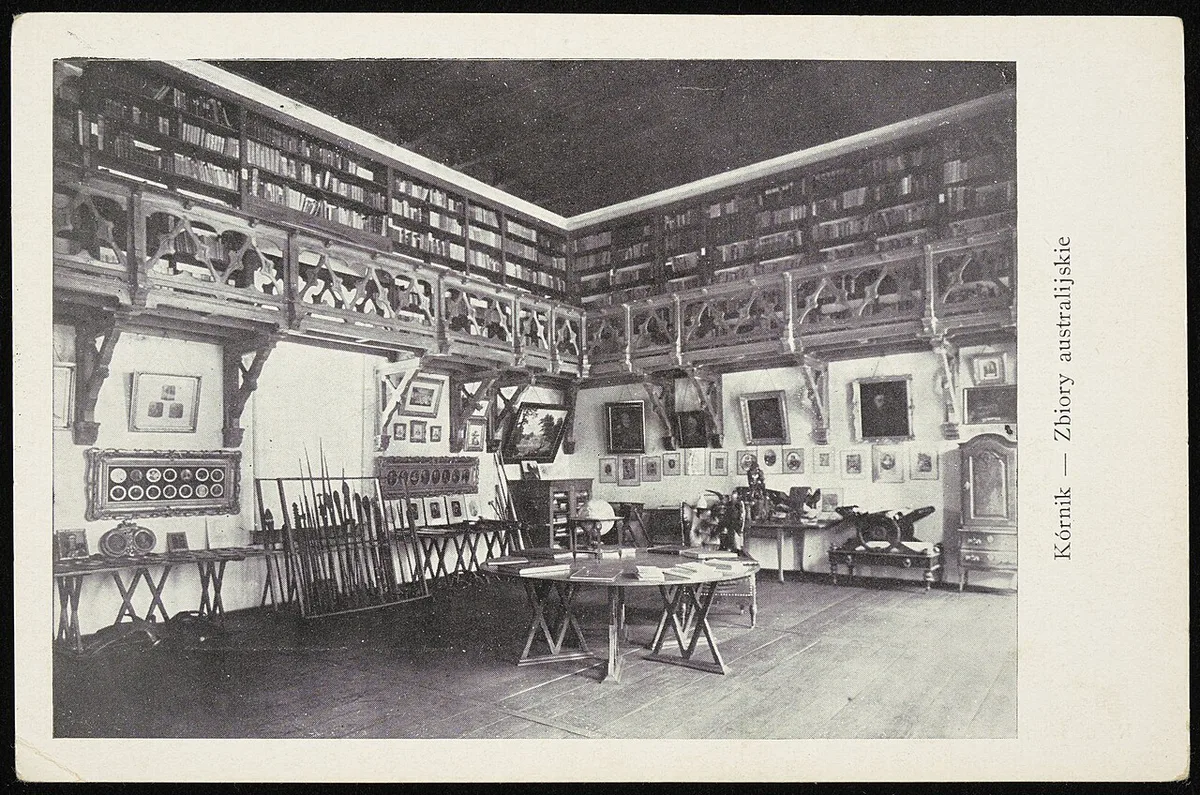
The most striking interior space is the Moorish Hall, known in Polish as Sala Mauretańska, inspired by the Court of the Lions at the Alhambra in Spain. It was originally planned as library space, then converted into a museum room for national artworks. The Kórnik Library holds items of real historical weight, including the original manuscript of Adam Mickiewicz's Dziady, Part III, and a handwritten novella by Napoleon, Clisson et Eugénie. Museum galleries display paintings by Polish and European masters, numismatic collections, and Polish and Eastern military accessories. In the room below the tower, you'll find ethnographic and natural-history collections from Australia and Oceania, brought back by Count Władysław Zamoyski after he inherited the estate in 1881. If Kórnik's interiors interest you, Książ Castle's sheer scale offers a useful comparison — a much larger residence built on a different scale of ambition.
During 19th-century Prussian partition, the Kórnik Library—holding manuscripts like Mickiewicz's Dziady and Napoleon's handwritten novella—became a cultural repository for Polish identity. Count Zamoyski later expanded these holdings with ethnographic and natural-history pieces from Australia and Oceania after inheriting the estate in 1881.
The Legend of the White Lady (Biała Dama)
Kórnik Castle's best-known story is the legend of the White Lady, or Biała Dama. Local tradition holds that a ghostly female figure haunts several of the castle's rooms, tied to the Działyński family history. Official Poznań tourism materials frame a visit as a chance to come face to face with the White Lady, built around a portrait connected to the legend and held within the castle's collection. The story has become part of how the castle markets itself alongside its architecture and library. Ask on-site guides where the legend is most closely tied to the collection if the story interests you.
Kórnik Arboretum and Lake Kórnik
Treat the Kórnik Arboretum as a core part of any visit, not a bonus stop tacked onto the castle tour. Tytus Działyński founded it in the first half of the 19th century, and it has grown into the oldest and largest arboretum in Poland.
Tytus Działyński founded the Kórnik Arboretum during Poland's 19th-century partition, when the family was preserving Polish culture. Today the 40-hectare grounds, with over 3,300 tree and shrub taxa, remain Europe's fourth-largest arboretum and integral to any castle visit.
- Size: around 40 hectares of grounds surround the castle and lake.
- Collection: more than 3,300 taxa of trees and shrubs, making it the fourth-largest arboretum in Europe.
- Distance from the castle: the arboretum sits about 0.2 km away, an easy walk from the entrance.
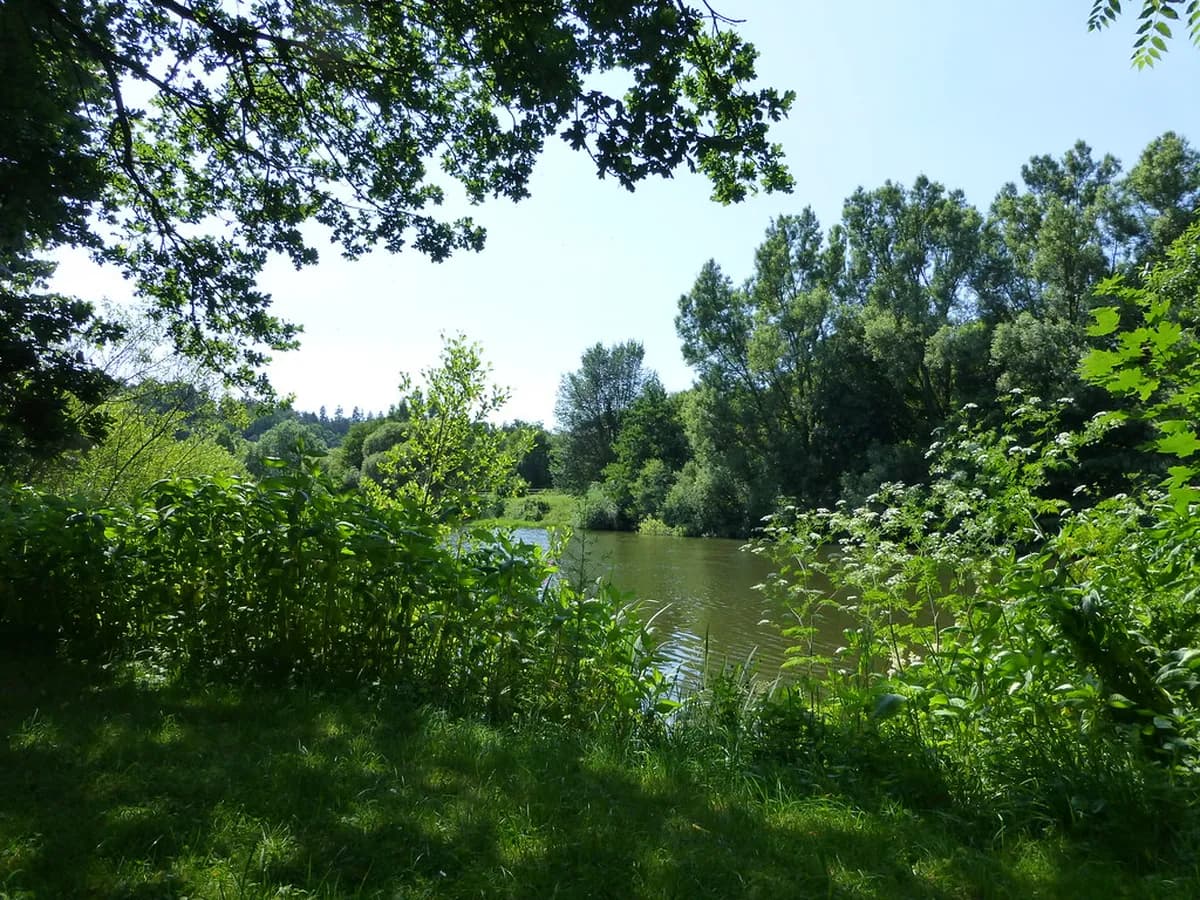
- Lake Kórnik: a lakeside promenade runs about 0.5 km from the castle, with boat trips departing nearby.
Kórnik's Role in Polish History
Kórnik Castle carries weight beyond its architecture. During Poland's 19th-century partitions, when Prussia controlled Wielkopolska, the Działyński family used the library and collections here to help hold Polish culture and identity together under foreign rule. That role continued into the 20th century. During the German occupation in World War II, between 1939 and 1940, a secret printing house of the Polish resistance operated inside the castle. It produced an underground newspaper called Biuletyn Radiowy. Explore this thread further in our guide to Poland's history and WWII, and compare it with the wartime story at Westerplatte's WWII history on the Baltic coast, where the war's opening battle took place.
Practical Visitor Information: Tickets, Hours, and Etiquette
A few practical details will save time before you go.
- Address: Kórnik, ul. Zamkowa 5.
- Contact: reservations go through the castle's email, rezerwacja@bk.pan.pl; phone contact is also listed on the official booking page.
- Poznań City Card: holders get a reduced ticket price at the door.
- Hours: opening times shift between summer and winter seasons. Confirm current 2026 hours on the official castle page before visiting.
- Groups: larger groups typically need advance arrangement. Contact the castle ahead if you're traveling with a large party.
Etiquette, Access, and Photography
Many Polish palace museums ask visitors to wear protective slippers or shoe covers over original floors. Ask at the ticket desk whether that applies during your visit. Photography rules vary by room, and flash is commonly restricted in historic interiors like this one, so check signage or ask staff before you shoot. The castle's age means stairs and narrow passages in parts of the interior. If you or someone in your group has mobility limitations, contact the castle ahead of time to ask what access looks like on the day you plan to go.
Is Kórnik Castle Worth It? Comparing Nearby Options
Kórnik earns its place on a Poznań itinerary, but how much time you give it depends on what else is on your list. A half-day covers the castle interior and a walk through part of the arboretum. A full day lets you add Rogalin Palace, another Greater Poland residence with Działyński-family ties, for a broader look at the region's 19th-century estates. Unlike Kórnik's moated island setting, Niedzica Castle on Czorsztyn Lake sits above open water in southern Poland — a useful comparison if you're weighing which lakeside or island castle fits your trip. For food, Kórnik has small local options near the castle grounds. You can also save dining for the return to Poznań, where choices are wider.
Where to See the White Lady Portrait
The White Lady story is easiest to follow when you know which object anchors it. The portrait shows Teofila Działyńska, later Szołdrska-Potulicka, in a white dress. It hangs in the castle's Dining Hall, not in a separate ghost exhibit. Look for it among the family portraits during the standard museum route.
Teofila was born in Kórnik in 1714 and died there in 1790. She reshaped the old defensive residence into a baroque palace with gardens, fountains, aviaries, and orangery buildings. The legend says she leaves this portrait at night and walks toward the garden, where a knight waits on horseback. Treat it as local folklore, but it helps connect the room with Kórnik's 18th-century history. If you take a guided tour, this is the best place to ask about the Działyński family story.
Further reading: Poland on Wikivoyage · Poland on Wikipedia
Frequently Asked Questions
How far is Kórnik Castle from Poznań?
Kórnik Castle sits about 25 km southeast of central Poznań, reachable by car via route S11, by bus from the Rataje transport hub, or by train with a transfer at Szczodrzykowo station.
Is the train station close to Kórnik Castle?
No. The nearest railway stop, Szczodrzykowo, is not actually in Kórnik itself. Plan on a local bus or taxi to cover the last stretch if you travel by train.
What is the White Lady legend at Kórnik Castle?
The White Lady, or Biała Dama, is a ghost said to haunt several rooms in the castle, tied to Działyński family history and a portrait held in the collection. Poznań's official tourism materials frame a visit as a chance to see her legend up close.
Can you visit Kórnik Castle and Rogalin Palace in one day?
Yes. Many visitors pair the two Greater Poland residences for a full day trip, since both have Działyński-family ties and sit within reach of Poznań.
Does the Poznań City Card get you a discount at Kórnik Castle?
Poznań City Card holders receive a reduced ticket price at Kórnik Castle. Bring the card to the ticket desk when you arrive.
Is Kórnik Castle accessible for visitors with mobility limitations?
The castle's age means stairs and narrow passages in parts of the interior. Contact the castle ahead of your visit to ask about access on the day you plan to go.
You might also like


Continue reading
More guides you'll find useful